






Stephen Fowl
How Was Jesus God?
A new reading of the New Testament shows that the earliest Christology is also the highest.
Go and Do Likewise
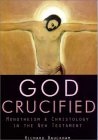
Monothiesm and Christology in the New Testament
by Richard Bauckham
Eerdmans, 1999
79 pp.; $12, paper
The virtues of this superb book lie as much in its critique as in its constructive proposal. In a thin volume—compressed from his Didsbury Lectures at the British Isles Nazarene College, slightly revised and lightly annotated—Richard Bauckham lays out the outlines for a decisive shift in contemporary approaches to New Testament Christology. The compression of Bauckham's argument comes at a cost. He leaves out the fuller marshalling of textual evidence to support his claims, and he promises a volume that will take up that task in the near future. Yet there is a sense in which this support is not necessary to the central theses of his argument, because the argument does not primarily depend on bringing new evidence to bear on an old problem. Rather, Bauckham proposes a new—clearly superior—way of reading the evidence about the relationship between the New Testament's claims about Jesus' identity and the identity of God as understood within the context of Second Temple Judaism.
Over the past generation, the most common way of presenting New Testament Christology has been a History of Religions approach, which seeks to relate the New Testament's claims about Christ to conceptions of monotheism current in early Judaism. On this view, the more strict the monotheism of the Second Temple period, the more difficult it becomes for the first Jewish followers of Jesus to attribute real divinity to him.
The solution, from a History of Religions standpoint, lies in revising our understanding of Jewish monotheism at this time by attending to the numerous semi-divine intermediary figures who appear in Jewish literature of the period. Such an approach reveals that early Judaism did not conceive of monotheism as strictly as one might think. Hence the first Christians could rely on views about these intermediary figures for the conceptual and theological tools they would need to fashion their accounts of Jesus' connection to God. The New Testament's claims about Jesus' divinity, then, are not all that radical. Rather, they represent a sort of ratcheting up of the already existing notion of semi-divine intermediary figures.
Bauckham proposes a radical departure from this way of approaching New Testament Christology by focusing on the way God's identity was perceived. "What has been lacking in the whole discussion of this issue has been an adequate understanding of the ways in which Second Temple Judaism understood the uniqueness of God," he writes. "By acquiring such an understanding, we shall be able to see that what the New Testament texts in general do is take up the well-known Jewish monotheistic ways of distinguishing the one God from all other reality and use these precisely as ways of including Jesus in the unique identity of the one God as commonly understood in Second Temple Judaism."
As Bauckham presents the problem of relating Jesus and Jewish montheism, the key issue has little to do with intermediary figures. Rather, the crucial first step is characterizing the unique identity of the God of Israel. A full account of God's unique identity would be beyond the scope of Bauckham's work here. His account, however, is sufficient to advance the several key claims.
First, two features were primarily characteristic of God's identity: "the one God is the sole Creator of all things and. … the one God is the sole Ruler of all things." Further, worship of this one God corresponds to God's identity. Worship entails recognition of God's unique identity and can only be offered to the Creator and Ruler of all, not to any created subject beings. Finally, as the intermediary figures are clearly created and subject, they are unambiguously distinct from God's identity. They can in no way provide a bridge over which New Testament thinking about Christ can inch its way toward divinity.
Personifications of God, however, such as Word and Wisdom, obviously can be included within God's identity without ever compromising the singularity of that identity. Thus, Bauckham asserts, "The decisive step of including Jesus in the unique identity of God was not a step that could be facilitated by prior, less radical steps. It was a step which, whenever it were taken, had to be taken simply for its own sake and de novo."
This paves the way for Bauckham to make two related but separable claims. The first is historical: The earliest Christology in the New Testament is also the highest. At this point Bauckham can only delimit the contours of his argument. In short, he notes the role of Psalm 110:1 ("The Lord says to my Lord: 'Sit at my right hand until I make my enemies a footstool for your feet'—NIV; this verse is cited 21 times in the New Testament) in early Christology, as well as Philippians 2:6-11. In these and other texts, it becomes clear that the New Testament writers ascribe to Christ the same sort of sovereignty over all things that is constitutive of God's identity. Further, though less widespread, the New Testament also includes Christ in God's creative activity.
These brief expositions set up Bauckham's second and, more significant, claim: The New Testament does not simply associate Christ with God—a move that would compromise the singularity of God's identity. Rather, it includes Christ within God's identity. The New Testament's claims about Christ's inclusion within God's identity, however, do require further specification of God's identity. In his third chapter, Bauckham explores one way in which this is done. His example goes right to the heart of the matter.
The crucifixion provides the occasion at which the first Christians must further elaborate God's identity, he writes. "The profoundest points of New Testament Christology occur when the inclusion of the exalted Christ in the divine identity entails the inclusion of the crucified Christ in the divine identity, and when the christological pattern of humiliation and exaltation is recognized as revelatory of God, indeed as the definitive revelation of who God is."
One of the keys for the New Testament writers as they articulate this claim is Isaiah 40-55. Bauckham presents three examples of early Christian readings of Isaiah 40-55: Philippians 2:6-11, Revelation, and John. Again, these discussions will require further detail in the larger volume. Nevertheless, there is enough detail here to allow even those who disagree on specific details to agree on the basic thrust of Bauckham's presentation.
Let me reiterate that this is an excellent book. In clear, concise terms, it makes a compelling case for scholars to redirect their attentions when it comes to New Testament Christology. Moreover, it manifestly displays the fruitfulness of focusing on God's identity as a key to understanding New Testament Christology.
One of the great advantages of reviewing a book that points so directly to a larger subsequent volume is that one can use the occasion to make suggestions about things that might be taken up in the work to come. I have three suggestions in this regard.
First, although he may not see his work this way, Bauckham's focus on God's identity implicitly poses sharp and probing questions to the entire History of Religions approach to New Testament Christology. As Bauckham shows, issues of God's identity and the ways in which the New Testament positions Christ in relation to that identity require close attention to the relevant texts and an unpacking of the logical and theological implications of holding those texts to be true. Such an approach is much like providing a grammar for the use of terms like "God" and "Christ" in the biblical writings. If this is correct, it would seem to marginalize severely the importance of using background material in ways typical of a History of Religions approach. A brief discussion of this from Baukham's perspective would prove interesting.
The two further suggestions take up some isolated comments that Bauckham offers regarding the constructive theological appropriation of his work. Bauckham makes no direct arguments about how his approach to New Testament Christology might be placed within a larger narrative of the shape of Christology leading to Nicea and Chalcedon. Nevertheless, in the few offhand remarks he does make, he appears to accept the view that post- New Testament Christological reflection seems to make a decisive shift from Jewish to Greek categories, from concerns with the identity of the God as rendered in the Old Testament to concerns about God's being.
While I do not want to build too much on these isolated comments, I think there is a strong body of patristic scholarship that recognizes Nicene dogma as a serious, scripturally grounded pattern of judgments designed to explicate further implications of the New Testament's inclusion of Christ within the identity of the one God of Israel. I agree with Bauckham's strong thesis about New Testament Christology, but he does not seem to recognize the intense pressure that the New Testament's Christological claims exert on the singularity of God's identity.
It is one thing to note that personifications of divine attributes such as Word and Wisdom can be included in God's identity without compromising monotheism. When those personifications are also then applied to the Christ, the Son of the living God, it is clear that the New Testament is including Christ within God's singular identity. What is not clear enough in the New Testament is how this inclusion avoids fracturing the singularity of that identity. What is further required—and what orthodox developments provide—is a more developed, scripturally normed grammar of divine singularity. I would, therefore, be interested in seeing a further chapter both recognizing the pressure New Testament Christology puts on monotheism and tracing the continuities between Bauckham's thesis and later Christological developments.
Finally, Bauckham's closing sentences must be called to account. Here he accuses patristic theologians of failing to come to grips with the key feature of God's identity as revealed in the New Testament, that is, that God's identity is revealed in the human life and crucifixion of Jesus. "That God was crucified is indeed a patristic formulation," he writes, "but the Fathers largely resisted its implications for the doctrine of God. Adequate theological appropriation of the deepest insights of New Testament Christology. … will not occur until Martin Luther, Karl Barth and more recent theologies of the cross [viz., Moltmann]."
If the recent work of the Lutheran theologian Robert Jenson is correct, however, Christian theology from Justin through Cyril of Alexandria and Maximus the Confessor was a sustained, if not always comfortable, struggle to account for the fact that the incarnate crucified one was also God. Moreover, in the embodied
theology of the early martyrs there seems to be ample material to suggest that theologies of the cross were both understood and lived throughout the patristic period.
I offer these suggestions and concerns not so much as criticisms, but as a way of suggesting how theologically fruitful I expect Bauckham's work here to be.
God Crucified would make a fine classroom text and would work well with church groups. Bauckham has laid out the skeleton of a significant and, to my mind, correct argument for a major revision of both the procedures and the results of New Testament Christology, and I eagerly await the subsequent volume.
Stephen Fowl is professor of theology at Loyola College in Maryland. Coeditor of the journal Modern Theology from 1990 to 1995, he is the author most recently of Engaging Scripture: A Model for Theological Interpretation (Blackwell).
Copyright © 2001 by the author or Christianity Today/Books & Culture magazine.
Click here for reprint information on Books & Culture.
 Email Newsletter
No comments
See all comments
*