




One of my first Barna research projects introduced me to trauma. No, that's not a joke. In 1997, emerging from the sheltered life of Christian college, I completed a study for Prison Fellowship on how—and if—churches help people who had been raped, robbed, or in other ways victimized.
It was an eye-opening experience. It taught me that for millions of people—and nearly all of us at some point—life is tainted by extraordinarily difficult and challenging circumstances. It reminded me in stark statistical terms that local church leaders have to minister, almost literally, at the bleeding edge of these realities. However, it was also surprising how few churches offered intentional support to people dealing with trauma.
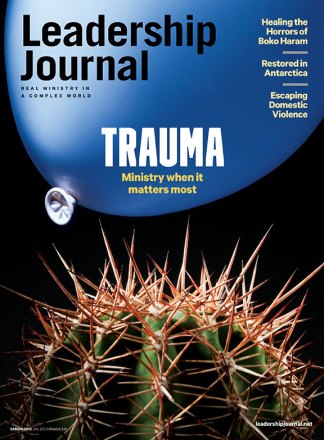
Avoidance is not a strategy. We can't bubble-wrap people. Help them find solace in Christian community.
Since then, our team has learned a lot on this topic. Here are four things we've found about people undergoing trauma and how the church is responding.
1. Trauma is broader than we imagine. We tend to think of trauma in terms of sudden, violent mishaps like rape or robbery. But it's much broader. It includes upheavals in any area of life, from family, finances, health, or safety—any development that overwhelms a person's sense of security and stability.
2. People are most concerned with things that affect them personally. We asked adults to identify their concerns related to violence. Respondents largely identified concerns that could directly affect them or people they know: bullying at school (36% of adults were very concerned about this), gangs (34%), and domestic violence (33%) outpaced foreign wars (32%) and violence in entertainment (19%) as issues people worry about. In our polling, which was completed before Ferguson, one in 10 adults said that police brutality was a major concern. This was a top concern of nearly one in four African-Americans. The big, scary "out-there" problems get most news coverage, but it's the threats that reach our communities, streets, and homes that concern us most.
3. Trauma ministries are rare in U.S. churches. A lot of churches fail to offer help to those dealing with trauma. Many pastors feel that providing counseling services is going to be sufficient. And while that's not a bad place to start, it leaves a lot of ground uncovered. For example, less than one in every 20 churches in the U.S. has organized efforts to help victims of domestic violence or to assist sexual abuse or rape victims.
4. Trauma can lead to transformation. Major life events typically categorized as "trauma" are actually some of the most fertile periods for transformation. People are most likely to experience profound and lasting spiritual transformation during major crises, such as divorce; financial traumas like periods of unemployment, home eviction, or bankruptcy; incarceration or victimization of themselves or a close family member; a major medical crisis or death of a loved one. No one wishes these kinds of traumatic events on others. Yet they are frequently linked with spiritual development in people, especially when others effectively come alongside.
People generally pursue equilibrium in life. They want to return to normalcy and continue life without interruptions or derailments. If we're being honest, a lot of human communities (such as workplaces, neighborhoods, even churches) are most comfortable when life is normal, predictable, and safe. Sometimes it's easier to keep the messy stuff out of sight.
But life in a fallen world will always involve trauma. Avoidance is not a strategy. We can't bubble-wrap people to protect them from experiencing trauma. What we can do: prepare to help people find solace in Christian community, perspective in Scripture, and hope in Jesus.
David Kinnaman is president of Barna Group and co-author of The Hyperlinked Life (Zondervan, 2014).
Copyright © 2015 by the author or Christianity Today/Leadership Journal. Click here for reprint information on Leadership Journal.