



Recreating the Dynamics of the Text
Shape your sermon around what the text is trying to do, not just what it’s trying to say.
CT Pastors Newsletter
Delivered weekly, each issue equips you with the best wisdom and practical tools for church leadership.
Thanks for signing up.
Please click here to see all our newsletters.
Sorry, something went wrong. Please try again.
Trending Topics





Preaching on Easter
How do you keep Easter preaching intellectually engaging for skeptics while also fresh and practical for believers?

Finding and Crafting the Sermon’s Big Idea
Get clear, get simple, and get focused with your big ideas.
Praying for Your Sermon
Practical and creative ways to rekindle and then integrate prayer into your preaching routines and rhythms.
Sermon Application
How to apply effectively, dangers to avoid, and a fresh challenge to point to Jesus in your applications.

Shepherding the Shepherd Bundle
Save on the full series of Shepherding the Shepherd books from Lee Eclov!
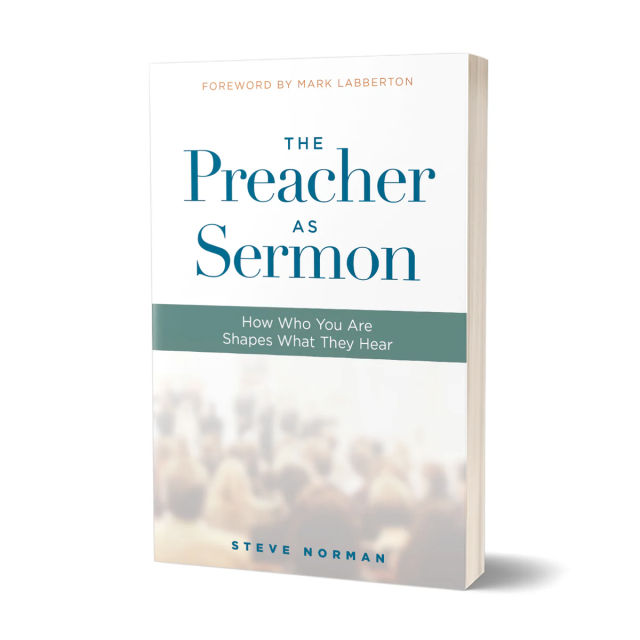
The Preacher As Sermon
It’s easy to forget that we’re meant to first be impacted by the message ourselves – that our preaching would be the natural overflow of our own spiritual transformation.

The Model Sermon
You’re called to be a faithful and effective communicator of God’s Word. But what exactly are the core principles of a “biblical sermon”?
Latest on Preaching
Finding Freedom from Panic Attacks
Kyle Zunker began suffering terrifying panic attacks in his late teens, which only worsened over time. By 2015, desperate for answers, he underwent an MRI while clinging to anxiety medication and hope. The scan was clear, leaving doctors puzzled and Kyle still searching for relief.
Seven years earlier, Kyle had left home for college. Though raised Christian, his faith was nominal and quickly unraveled. He writes, “I wanted to be the most successful and important person in the world. The more self-oriented my life became, the more I subscribed to intellectual arguments against the existence of God. By my early 20s, I was a staunch atheist.”
As he chased achievement, his health collapsed. His first panic attack at 19 left him desperate and overwhelmed. Anxiety became a constant presence, and he bounced from doctor to doctor, self-medicating to cope. He pinned his hope on passing the bar exam and proposing to his girlfriend, Hannah. When both dreams came true, he was shocked to find no peace: “If those hadn’t brought peace, then what could?”
Before their wedding, Kyle and Hannah often passed Pearl Street Church in San Antonio. Hoping to boost his respectability, he suggested they attend. Expecting to scoff, he was instead moved by a sermon on Genesis 22. Kyle recalls, “God’s instruction to Abraham was not a sadistic test; it prophetically foreshadowed the work of Jesus… God did not require Abraham to pay that price but chose instead to pay it himself.”
Over the next months, he read the New Testament and kept attending church, but anxiety persisted. One sleepless night, exhausted and broken, he finally prayed, “Thy will be done.” He writes, “Everything changed that night. The peace of God… changed my life. It gave me power over anxiety and fear, and my body began to heal as joy and hope replaced depression and despair.”
Source: Kyle Zunker, “Testimony,” CT magazine (July/Aug, 2024), pp. 25-28
Scripture
Faithfulness in the “Swamp” Where God Still Works
In Japan, the average Protestant church has fewer than 50 people. Missionaries quietly refer to Japan as a “graveyard.” No wonder one famous Japanese author wrote, “Japan is a swamp… whenever you plant the sapling of Christianity, the roots begin to rot.” And yet—God has not given up on Japan.
Consider Pastor Lam Wai Chan, a reluctant missionary from Singapore. He arrived in Tokyo assuming he would “fix” a struggling congregation. Instead, he discovered a few elderly believers who had weathered decades of disappointment and still showed up, still prayed, still loved Christ. Lam felt God confronting him gently: “They have faithfulness. What about you?”
So Lam offered the whole sinking church back to God. No flashy programs. No clever marketing. Just prayer. Slowly—beautifully—the church doubled. Children returned. New families wandered in without invitation. Lam tells anyone who listens: “God promised to preserve this church, and He has never failed me once.”
Or consider Pastor Mizuno, who has served the same rural congregation for nearly 50 years. When she returned to simply helping each person meet God daily in Scripture, the congregation revived, growing from a handful to more than a hundred. Her testimony is simple: “I made mistakes. But I was faithful. God sustained us.”
Japan remains less than 1% Christian. The soil still seems hard. Revival may come slowly. But faithfulness is its own miracle.
Source: Sophia Lee, “Growth Is Good. Survival Is, Too,” Christianity Today, March/April 2025.
Sin Is Like the Bear in the Crawl Space
When Ken Johnson of Altadena, California, noticed bricks scattered under his house and the crawl-space frame torn apart, he suspected a raccoon or maybe a stray dog. But when he installed a camera, he woke up one morning to a shocking discovery: a 550-pound black bear had moved in. Not for a visit. Not for a night. It had settled in.
For more than a week, Johnson heard the bear’s heavy breathing and dragon-like hissing through a vent beneath his kitchen floor. He watched it stroll down the sidewalk like it owned the place. It rummaged through his garbage, dragged bricks around, and made itself increasingly at home. He tried everything to send it packing—leaf blowers, air horns, blasting music, even running the washing machine on spin cycle.
Nothing worked. The bear grew more comfortable, not less. Experts told him the real danger wasn’t the bear’s presence—it was allowing it to remain long enough to believe the crawl space was its den. Once that happened, getting it out would be far harder and far riskier.
It’s a striking picture of how certain things enter our lives. Not all at once, and not always with obvious danger. A small compromise here, a quiet resentment there, a habit that begins with a shrug. At first it seems manageable, even harmless. But left unchallenged, it begins to rearrange the interior of our lives the way that bear rearranged the bricks under Johnson’s house—slowly, persistently, until it settles in.
And once it settles, it does not leave easily.
Source: Christine Hauser, “Black Bear, Uninvited, Moves Into California Man’s Crawl Space,” The New York Times, Dec. 3, 2025.
The Real Story Behind Handel’s Messiah’s Message of Hope
Nearly 300 years ago, Messiah was born not out of cultural confidence but out of anxiety, grief, and deep uncertainty. George Frideric Handel lived in a world marked by disease, political unrest, and religious division. Families buried children regularly. Nations argued over legitimacy and power. Beneath the wealth of empire lay human enslavement and moral fracture. It was not a hopeful age.
The words of Messiah did not come from Handel himself but from Charles Jennens, the troubled aristocrat who assembled its biblical text. Jennens suffered recurring despair and depression. He had lost a brother to suicide. Searching for a way through his darkness, he turned to Scripture—not to argue, but to endure. He gathered passages that traced a path from promise to suffering to redemption, beginning not with triumph but with a whisper: “Comfort ye, my people.”
Handel composed the music in just 24 days. At its premiere in Dublin in 1742, one of the most haunting moments came when Susannah Cibber stepped forward to sing, “He was despised and rejected of men, a man of sorrows and acquainted with grief.” Cibber herself had been publicly shamed and abused. The audience knew her story. As she sang of Christ’s suffering, silence filled the hall. One listener reportedly stood and said, “For this be all thy sins forgiven.” The gospel was no abstraction that night—it was embodied.
Later, Messiah became linked to care for abandoned children through performances benefiting London’s Foundling Hospital. Words like “For unto us a child is born” rang out beneath balconies filled with the forgotten.
Messiah endures because it names grief, injustice, and death—and then insists, with Scripture, that they are not the final word.
Source: Clarissa Moll, interview with Charles King, The Bulletin; Charles King, Every Valley: The Desperate Lives and Troubled Times That Made Handel’s Messiah.
Before Hitler the Leader There Was Hitler the Nomad
In the winter of 1909, a young man trudged through the streets of Vienna..His beard was unkempt. His coat—bought at a pawnshop—was threadbare, and his shoes looked ready to fall apart. He had no home, no destination, and no community. The man was Adolf Hitler.
He drifted from flophouse to flophouse, sleeping in doorways when he had no money for a bed. He sold crude postcards he painted for tourists and often went hungry. He was consumed by a longing to belong. It is almost impossible to imagine that this homeless drifter would, within three decades, command one of the most murderous regimes in history. But Hitler’s years of vagrancy—what he later called the period when he “grew hard”—offer a chilling lesson about what happens when human beings are severed from home, place, and spiritual community.
From 1908 to 1913, Hitler was rootless in every sense. He had been rejected twice by the Vienna Academy of Fine Arts. His mother was dead. He had no family, friends, no trade, no church, and no sense of purpose. He was spiritually adrift.
And in that homelessness, he found something dark to cling to. Vienna’s toxic antisemitic culture offered him an explanation for his suffering and, more importantly, a community defined by resentment. It gave him identity through blame and belonging through hatred.
We were made for place, for people, and for purpose. When those bonds are severed we become desperate who will cling to anything that offers identity, even if it is monstrous.
But the Church remains a home, calling to wanderers: Come in. Find rest. Find belonging. Find hope. The Church is the answer to nomadic modernity.
Source: Eddie Larow, “Nomadic Modernity,” First Things (12-17-25)
Escape from North Korea
Joseph Kim grew up in North Korea with loving parents, but his world changed during the Great Famine of the 1990s. When he was 12, his father died of starvation, and soon after, his mother and sister left for China in search of food. His mother returned alone, having sold his sister into bride slavery-a common fate for young North Korean refugees. Later, his mother was imprisoned by the North Korean government, leaving Joseph alone and homeless on the streets.
For three years, Joseph survived by begging and sleeping in the mountains. At 15, facing starvation, he made the dangerous decision to escape North Korea by crossing into China. There, an elderly Chinese Korean woman advised him to seek help at a church. He found a church, where members gave him small amounts of money and temporary shelter. The kindness of these Christians, who helped a stranger without expecting anything in return, sparked his curiosity about their faith.
At another church, he saw the words, “Come To Me, All You Who Are Weary And Burdened, And I Will Give You Rest.” Joseph recalls, “It was as if someone was talking directly to me. I thought I heard a voice saying, ‘I understand how exhausted you are and what a hopeless situation you are in. I will take care of you.’” A Christian woman took him in, encouraged him to read the Bible, and gave him the name “Joseph.” He prayed, “God, I don’t know who you are or whether you exist as the Bible and Christians claim. But I need your help.”
With help from activists and Liberty in North Korea (LiNK), Joseph eventually escaped to the United States in 2007 as a refugee minor, attended high school, and began to build a new life. Reflecting on his journey, Joseph writes, “I had been alone in the world. Finding Christians in China, I found hope again. Caring for strangers, acting compassionately without expecting anything in return: That is the beauty of the gospel.”
Source: Joseph Kim, “Escape from North Korea,” CT magazine (May, 2015),
Scripture
Is Life a Computer Simulation?
It might be human nature, especially for those who don’t look to religion for answers, to try to come up with a theory of reality and life, the purpose of us being here and how long will all this last. An article in the Wall Street Journal reported on Elon Musk’s theory.
“It can be hard to understand Elon Musk’s reality—especially as he appears to be on track to become the world’s first trillionaire this year. Even he questions that reality. For the longest time, Musk has talked about the possibility that we’re living in a computer simulation.
“I do have this theory about predicting the future, which is that the most interesting outcome is the most likely,” Musk said during a podcast appearance a few weeks ago.
It is an idea rooted in the thinking that if our reality really is a simulation, we would get shut down if we were boring.
“Another way to think of it is like we could be an alien Netflix series and that series is only going to get continued if our ratings are good,” Musk said. “If you apply Darwin to simulation theory then only the most interesting simulations will continue. Therefore, the most interesting outcome is most likely because it’s either that or annihilation.
“So,” he added, “really, we have one goal: Keep it interesting.”
Source: Tim Higgins, Musk’s Surreal Year Could Make Him Founding Member of Trillionaire Club, The Wall Street Journal, January 5, 2026, B1.
Scripture
When a Secular Culture Starts Leaning Toward God Again
In central London in 2009, red buses had a bold message stretched across their sides: “There’s probably no God. Now stop worrying and enjoy your life.” It was the high tide of New Atheism—Richard Dawkins filling stadiums, and the cultural mood tilting hard against faith. Belief in God felt not only outdated but unfashionable. But something unexpected happened.
In a small radio studio near Westminster Abbey, a young broadcaster named Justin Brierley started inviting atheists and Christians to have honest conversations. No shouting. No mocking. Just listening, questioning, and seeking understanding. At the time, critics warned him:
“You’re giving atheism a platform! Christians will lose their faith!”
Atheists started listening, and some—even very public ones—began to reconsider. Scroll through YouTube comments today under Brierley’s debates with people like Richard Dawkins, and you’ll see an astonishing pattern. Atheists writing things like: “I don’t believe in God, but this conversation made me think.” “This is the first Christian space where I’ve felt respected.” “I’m an atheist… but I’m curious again.”
One journalist calls it a “softening.” A growing number of public intellectuals have begun speaking publicly about Christianity as morally beautiful, culturally essential, and spiritually compelling.
Brierley calls it a “surprising rebirth of belief in God.” Many people—especially young men—are quietly asking again: “What if there is more?” Sometimes God moves by opening cracks in even the most confident doubt.
Source: Madeleine Davies, “Justin Brierley Goes from Unbelievable to Re-Enchanting,” Christianity Today, March/April 2025.
A Heart Patient’s Callous Attitude Toward His New Heart
E.R. Nurses is the 2021 book of over 100 personal stories of E.R. nurses all over the United States. Victoria Lindsay served in the US Navy as a gunner’s mate for several years before she left and decided to become a nurse. She began working with heart-transplant patients and now specializes in cardiothoracic surgery nursing.
Lindsay gives a first-person account of a special incident with Ken, a patient, who she is prepping for a heart transplant. She advises him he now needs a serious change in lifestyle:
“‘Whatever you were doing before, you need to really come at it from different points and change. You need to be able to eat healthy and exercise to the best of your ability.’
“Ken nods in agreement, but he doesn’t know what I do.
“Not everyone who gets a new heart actually takes care of it. I’ve seen heart transplants ruined pretty quickly over a few years because patients didn’t control their diabetes. They end up basically throwing the whole … heart away.
“I’ve had heart-transplant patients come back in and say: ‘You know what? I’m just not going to take my immuno-suppression medication anymore.’
“And I say: ‘You do realize someone died for you, right? That this heart you’ve got could have gone to anyone a little bit healthier or younger – someone who could have done something more with their life. But it was given to you, and now you don’t want to take your … drugs?'”
As of the book’s publishing in 2021, Ken has followed her advice. Not everyone does. In the same way, some believers and non-believers alike adopt a callous and ungrateful attitude toward a certain Someone who died for them and offered them a new Life.
Source: James Patterson and Matt Eversmann, E.R. Nurses, Little, Brown and Company, 2021, pages 76-77
The Christmas Special That Almost Didn’t Happen
Sixty years ago, when Charles Schulz (“Sparky” to his friends) and his small creative team first brought the Peanuts gang to life on television, executives thought the project was doomed. Everything about it seemed wrong for network TV. The pacing was slow. The voice actors were children instead of professionals. And worst of all—in the eyes of executives—Schulz insisted that Linus stand onstage and recite the nativity story straight from the Gospel of Luke.
One executive flatly said that including Scripture in a Christmas special was too religious, too risky. But the air date had already been set, so CBS reluctantly agreed to broadcast it—once. They didn’t expect to do it again.
Then came December 9, 1965. Fifteen million people tuned in. And everything the executives had criticized—the simplicity, the sincerity, the Scripture—became everything viewers loved. The next morning’s reviews were glowing. Families had gathered around their televisions and heard, perhaps for the first time on primetime TV, the angels’ announcement: “Glory to God in the highest, and on earth peace, good will toward men.”
The special became a classic not because it followed the trends, but because it gently pointed back to something deeper than commercialism or sentimentality. Schulz once told his colleagues, “If we don’t tell the story, who will?”
This little, unlikely cartoon dared to tell the Bible’s story of Christmas. And decades later, the world is still listening.
Source: Emma Eicher, “A Charlie Brown Christmas Almost Never Made It to TV,” WORLD Radio, The World and Everything in It, November 2025.
Scripture
Crash Course on Jesus
Seventeen-year-old Casey Crease’s life changed forever after a night of partying at his parents’ house. Frustrated with his friends, he left the party around 1 a.m., despite their attempts to stop him from driving drunk. Ignoring their warnings, Casey sped away in his Camaro, only to lose control and crash near his home.
Casey recalls waking up, “covered in glass, a deployed airbag lying in my lap.” In shock, he repeatedly screamed, “Who did I hit?!” until a friend assured him he’d only hit trees. But at the hospital, a state trooper delivered devastating news: “There’s been a fatality.” Casey’s friend John, trying to stop the car, had been struck and killed. “Before the accident, I thought my life was falling apart. After the accident, I wanted to die,” Casey writes. Yet, in his deepest despair, he sensed God’s presence.
Raised in a Christian family, Casey had begun to doubt his faith before the crash. Afterward, desperate for hope, he returned to church and resolved to read the New Testament. Still, he wrestled with guilt and wondered, “The more I tried to be a Christian, the emptier I felt.”
Everything changed during a revival service in his senior year. The preacher asked, “Do you want to be well?”-echoing Jesus’ words to the paralyzed man in Jerusalem. Casey remembers, “If Jesus will heal me, I want to be well… It was a quiet moment between the Lord and me but that day he began to soften my heart. He made me his own.” Over time, Casey realized his sins were forgiven, “not because of anything I had done but because of what Jesus accomplished on the cross.”
With newfound faith, Casey faced the consequences of his actions-including probation and community service-and began speaking to other teens about the dangers of drinking and driving. He concludes, “I am confident that Jesus is the Son of God, that he is able to forgive sins, and that he is in the business of making broken people brand new.”
Source: Casey Crease, "My Crash Course on Jesus" Christianity Today Jul/Aug 2013
Scripture
Perpetua Shines Like a Star in Martyrdom
On March 7, in the year 203, a young Christian woman named Vibia Perpetua was killed in an arena somewhere in Roman North Africa. As enemies of the Roman order, Christians of the time were intermittently subjected to arrest, detention, torture and execution, often in public and in ways designed to humiliate them. For Perpetua, the authorities had prepared a wild cow. The spectacle of a terrified young woman being trampled or gored was meant to entertain the baying crowd gathered to celebrate the birthday of an imperial prince.
Perpetua had other ideas. In the arena, she was courageous and cool. When she was tossed by the cow, her tunic ripped. She modestly hitched up the garment, asked for a clip for her hair, which had come undone, and then went to help a fellow condemned Christian who had been knocked down. Since the cow failed to kill her, Perpetua was led to the center of the arena to be executed more conventionally. The novice gladiator assigned this grisly task at first merely wounded her so she moved his trembling hand to her throat to finish the job. She was only about 22.
We know all this because within a few years of Perpetua’s martyrdom a remarkable dossier was compiled, telling her story from arrest to death in the arena. This included a diary she had written while in prison, an extremely rare ancient account of a woman’s life by the woman herself….
Perpetua tells us what it was like to be in a Roman prison: the stifling heat and the press of bodies. She talks about her intense anxiety for her infant son, whom she was still breastfeeding when she was arrested. She recounts bitter arguments with her father, who was desperate for her to abandon her faith to save her life…
As one Wall Street Journal reviewer notes, Ms. Ruden makes Perpetua quite modern: “I call her the twenty-first-century woman’s remote ancestor.” This is a self-aware martyr, assertive and vulnerable, …
Source: Sacks, Sam. Review of Perpetua: The Woman, the Martyr, by Sarah Ruden. Wall Street Journal, Weekend edition, December 20–21, 2025, C7–C8
Scripture
The Twin Towers or Mount St. Helens–Two Ways to Respond to Suffering
The Twin Towers in New York in 2001 and the explosion of Mount St. Helens in Washington State in 1980. Both destinations were nationally known, fatal, fiery, and traumatic. Both left behind visual carnage, and in both cases, people wondered if the damage could ever be repaired.
Imagine you were charged with the task of restoration. In the case of the Twin Towers, the devastation was simply destructive. The first task of the restorer would be to cart away all the remnants of the old buildings; the smoldering bricks and twisted steel girders would simply be detritus that impeded restoration. But in the case of Mount St. Helens, the debris from the eruption—fallen trees, volcanic ashes—was the starting point of reforestation. These elements were not merely compatible with recovery; it was conducive to it. Within 15 years, the site of the Mount St. Helens eruption was a thriving forest whose trees were unusually tall for their age because the ash abated competing weeds and foliage in their early years. Then other plants began to grow in the now-enriched soil. Wildlife returned. By 1997 there were more species of birds in the area than there were in the 1980 pre-eruption study of the same region.
The difference between rebuilding the Twin Towers and Mount St. Helens forest is simple: one disaster left debris that was in the way, and the other left debris that helped the restoration. In the same way, some people respond to suffering like the Twin Towers–it’s just in the way. Other people respond to suffering like the debris around Mount St. Helens–they take the ashes of their suffering and turn it into something that helps them flourish.
Source: Edited by Heather and Fred Ginrich, Treating Trauma in Christian Counseling (IVP Academic, 2017), pages 39-40
The Enemy Who Prayed for Me
When Yassir Eric was 16, he believed he knew exactly who his enemies were. One of them was a new boy at school named Zakariya—quiet, brilliant, gentle, and unmistakably Christian, with the fan-shaped scars on his forehead marking him as part of the Dinka people. For Yassir, raised in an elite Sudanese Muslim family steeped in jihadist zeal, that was enough to justify hatred. Every day at noon prayers, he asked God to destroy Zakariya.
Two years later, he and his friends ambushed the boy on a dark path. They beat him, stabbed him, and walked away assuming he was dead. Zakariya vanished from school, and the memory was buried under Yassir’s growing religious pride.
But life unraveled his certainties. His respected uncle unexpectedly became a Christian. His young cousin, near death, miraculously revived after the prayers of two Egyptian Coptic believers. Yassir secretly began reading a Bible, feeling the foundations of his world shift. When he eventually confessed his faith in Jesus, he lost everything—family, inheritance, even his name. He was arrested, beaten, and hunted, yet he rebuilt a new life far from Sudan.
Years later, now a Christian minister in Cairo, he finished preaching at a conference when a man approached him, walking slowly with a limp. His right eye was frozen from an old injury. His hand was twisted.
“Don’t you recognize me?” the man asked. “I’m Zakariya.” He opened his Bible. On the first page was a handwritten prayer list. At the top was Yassir’s name. “Because you hated me so deeply,” Zakariya said, “I always prayed for you.”
Sometimes the people we try hardest to erase are the very ones carrying our names—quietly, faithfully—before God.
Source: Yassir Eric with Jayson Casper, “I Was the Enemy Jesus Told You to Love,” Christianity Today, Sept/Oct 2025.
What Flourishing Really Looks Like
A group from a suburban church once returned from a service trip overseas with an unexpected story. They had spent a week building simple homes in a small village—places with tin roofs, dirt floors, and none of the conveniences most of us consider basic. What surprised them most was the people they met.
These families, who lived with so much less, somehow seemed to have so much more. They laughed easily, shared freely, and treated guests like long-lost relatives. Many had strong faith, tight-knit families, and friendships that threaded through the whole community. One volunteer admitted that she wasn’t sure she knew anyone back home who seemed as joyfully grounded as the grandmother who offered her the last mango from the tree behind her house.
A massive new global study—the Global Flourishing Study—suggests something deeper is going on. Researchers followed more than 200,000 adults in 22 countries and found a surprising pattern: nations with the highest incomes often had lower levels of overall human flourishing.
People in places countries with far lower GDP reported higher levels of meaning, stronger relationships, richer community life, and more positive emotions than people in some of the world’s wealthiest nations. One factor stood out: Dense webs of loving relationships—family, friends, neighbors, and often, shared religious life. In fact, weekly participation in a worshiping community was strongly associated with higher flourishing across most of the globe.
Source: Global Flourishing Study findings reported in “What Makes for a Flourishing Life,” Christianity Today, April 30, 2025.
Becoming Smaller Before a Greater God
Researcher Arthur Brooks tells the story of a college student enrolled in an introductory astronomy class. She wasn’t a science major. She walked into class each week carrying the same worries we all carry, but after 90 minutes in class studying galaxies, nebulae, and the billions of stars swirling above us, she would walk out of class feeling strangely… relieved. Why? Because, she said, “I am just a speck on a speck.”
It sounds like an insult—but for her, it was liberation. Standing in awe before something vast made her smaller, and in becoming smaller, she found peace. Brooks argues that we become miserable when we try to make ourselves big—important, admired, at the center of everything. But when we shrink in honest humility, we lose ourselves in wonder.
And this, Scripture says, is exactly where God meets us: “The fear of the Lord is the beginning of wisdom” (Prov. 9:10). And “When I consider your heavens… what is man that you are mindful of him?” (Ps. 8:3–4).
We are, as Brooks puts it, “specks”—but “beloved specks.” In the vast universe God created, He knows your name, your needs, and calls you His own. True humility is not thinking less of yourself—it’s seeing yourself honestly before a God immeasurably great.
Source: Arthur C. Brooks, “To Get Happier, Make Yourself Smaller,” The Atlantic, (11-20-25)
Scripture
Research Shows How to Learn Gratitude
Researcher Arthur C. Brooks gave a summary based on numerous studies on the benefits of gratitude: Thankfulness raises human beings’ happiness. It stimulates the ventromedial prefrontal cortex, part of the brain’s reward circuit. Gratitude can make us more resilient, and enhance relationships by strengthening romantic ties, bolstering friendships, and creating family bonds that endure during times of crisis. It may improve many health indicators, such as blood pressure and diet. Gratitude can make us more generous with others, more patient, and less materialistic.
Gratitude also appears to be something that you can improve through practice. For example, in a 2018 study, four psychologists randomly split a sample of 153 human subjects into groups that were assigned to either remember something they were grateful for or think about something unrelated. The grateful remembering group experienced more than five times as much positive emotion as the control group. Regularly practicing gratitude and praise to God really will make us more thankful people.
Source: Arthur C. Brooks. “How to Be Thankful When You Don’t Feel Thankful.” The Atlantic, (11-24-21)
Scripture
It’s Only Drowning
Some disregard man’s need to be rescued as a mere trifle. David Litt, a former Obama speechwriter, describes his efforts to learn surfing. While his daredevil brother-in-law joked, “It’s only drowning” Litt describes in his book, “It’s Only Drowning” one of his worst wipeouts.
“For a long time I was weightless. In free fall. Bracing myself to hit the water with a full-body slap. But the impact never came. The crashing lip, as powerful as a jackhammer, blasted through the surface, and I flew down the resulting sinkhole until my right hip bounced against the sand. Then the sea washed over me like a coffin lid and the hold-down buried me alive.
At first I held it together. Don’t worry. Wait it out. But I’d developed a mental hourglass…and I could feel it running dry. I’d never been underwater this long before. I’d never pinwheeled so violently. I raised an arm, expecting to punch through the ocean’s surface, but all I felt was more ocean. Water streamed up my nose and down my throat. How deep am I? How long have I gone without breathing? Something’s wrong. Panic setting in, I thrashed frantically upward, water surging through the corners of my mouth each time I fought to suppress a breath. When, finally, the wave lost interest, I burst into the sunlight and took shallow, rapid breaths. My neck was sore with whiplash, my tonsils swollen from salt.”
—
Drowning is no joke. Separation from God is no joke. Spurgeon’s quote could be paired with this illustration.
“A man who is drowning does not need to be told how to swim; he needs to be pulled out of the water. And so the sinner, sinking under the weight of his sin, does not want directions, but deliverance. He is not a free agent who can save himself if he will; he is a captive, bound hand and foot, unless the strong arm of grace shall rescue him.”
C. H. Spurgeon, The Metropolitan Tabernacle Pulpit, vol. 11 (London: Passmore & Alabaster, 1865).
Source: David Litt, It’s Only Drowning, Gallery Books, 2025, 255.
Scripture
The Besetting Sin of Gossip
Author and journalist Kelsey McKinney is co-creator of the podcast “Normal Gossip” and has written for The New York Times, Vogue, GQ, Cosmopolitan and Vanity Fair. In her 2025 book “You Didn’t Hear This from Me: (Mostly) True Notes on Gossip”, McKinney explores the world of gossip in pop culture, celebrities and in everyday life. In one chapter entitled “Thou Shalt Not Gossip”, she details her evangelical upbringing and her struggles between trying not to sin and her innate need and desire to gossip.
“I was taught growing up that everyone had a thorn shoved deep into their side, impossible to dig out on their own. The thorn couldn’t be ripped out with pliers or cut out with a scalpel because it was inside of you from birth, a kind of predetermined bodily failure created just for you. The thorn was a metaphor, of course, but it was a metaphor that would ruin your life if you let it, because the thorn was the thing that kept you from holiness, from goodness, from the shiny pearly gates of Heaven. For some, the thorn was greed or pride or wrath or lust or gluttony. But I learned quickly that my thorn was made of whispers and cupped hands and wide eyes. The thorn I thought I needed God to rid me was the one thing I loved most in the world: gossip.”
Even during a sermon McKinney often couldn’t get her thoughts away from gossip:
“No matter how hard I tried to tell myself that gossiping was wicked, and that God hated it, the stories just stuck to my brain. Nothing else stuck there: not multiplication tables or vocabulary words or what I had done over the weekend. But the gossip stayed. I could not remember the citation for important verses in the Bible, but I could remember that at Bible study last week, a girl had asked for everyone to pray for her ability to have patience with her parents as they fought. While the pastor guided the focus of the congregation into a close reading of verses about humility and Jonah, I watched her parents, seated far away from me, and noticed how they leaned apart. Would they get divorced? It was so much easier to focus on the drama than on anything the Bible said.”
McKinney offers a good metaphor for her experience of gossip:
“And every single time I gossiped, it felt like my body was a two-liter soda bottle all shaken up. The drama and the intrigue and the secrets fizzed inside of me. Sometimes the story was too good, a Mento swallowed before I could convince myself not to, and it would all come bubbling out to the surface in a geyser of gossip.”
McKinney gives a stark and flagrant portrayal of the inner workings of choosing sin over holiness:
“In high school I wrote in dry-erase marker on the mirror in my room Ephesians 4:29, in my curly, looping handwriting, ‘Do not let any unwholesome talk come out of your mouths, but only what is helpful for building up others according to their needs, that it may benefit those who listen.’ I read the verse a half-dozen times every day, branded the words and their cadence into the soft tissue of my brain so that later, those grooves would burn when I ignored them and chose sin instead.”
As a young woman she soon chose to walk away from the Gospel:
“I stopped praying for God to take away my desire to gossip and eventually I stopped praying altogether. Without the fear of sin, I was able to stop policing my engagement with gossip, which in turn let me gossip more …… Maybe being a gossip is simply part of my identity and personality, unremovable and consistent.”
Source: Kelsey McKinney, “You Didn't Hear This from Me: (Mostly) True Notes on Gossip," Grand Central Publishing, 2025.
Scripture
Christians Made Him Rethink His Hatred of Christians
Randy Loubier and his family were reeling from a series of tragedies: his son’s girlfriend, Kira, had just died in a car crash, and less than three weeks earlier, another son’s girlfriend, Ashley, had committed suicide. On top of this, Randy’s career in finance had collapsed after he was fired for being a whistleblower, and his family was at risk of losing their home.
At Ashley’s funeral, a family friend named Debbie was the only light in their darkness, offering support and kindness. Later, at Kira’s wake, Randy was surprised when Kira’s mother, despite her own grief, expressed concern for Randy’s son: “I am so sorry Zach lost Ashley… When all this is over, would it be okay if I spend a little time with Zach?” Randy was stunned: “She just lost her daughter, her best friend, and she wants to care for my son? Who does that?”
Debbie then introduced Randy to her pastor, who invited both sons to a new grief group. Moved by the compassion of these Christians, Randy’s wife announced, “I’m going to start going to church.” Soon after, Randy’s father-in-law sent him a Bible. Though previously skeptical of Christianity, Randy decided to read it: “God, if you are in this book, I am going to be super upset, because I will have been wrong for 50 years. But I guess…I want to know.”
As he read, Randy was convicted about his own failings and gradually fell in love with Scripture. Weekly meetings with the pastor deepened his faith. When he reached the Gospels, he realized, “Jesus had been speaking to me all along.” Randy reflects, “Jesus, the Word, is everything to me. He saved me… But make no mistake, the church first sparked my curiosity. If God’s people hadn’t made me wonder about their peculiar love, I never would have cracked open God’s Word, and I never would have fallen in love myself.”
Source: Randy Loubier, “Christians Made Me Rethink My Hatred of Christians,” CT magazine, pp. 102-104