
Welcome to the new LeadershipJournal.net! Click here to tell us what you think or ask a question.

The New Leadership Journal Is Here
Jump directly to the content
subscribe:
magcover

Already a subscriber?

Home > Issue > 2000 > Winter > The Great Delivery Debate
Average rating:

Performing Without a Net

Why I practice the discipline of paper-free preaching
Jerry Andrews

No manuscript. No outline. No notes. These guidelines have made me a better preacher.

I wasn't always a paperless preacher. In seminary, I was trained to prepare manuscripts, conditioned to believe that writing out my sermon would help me think more clearly.

My first pastorate shook me. It was a rural church in western Pennsylvania; most of the people were farmers. Fresh out of school, I was eager to share the fruit of my two master's degrees. Within six months, it became painfully obvious that the congregation didn't care for my polished, scholarly manuscripts. I failed to connect.

I consciously began reducing my manuscript to an outline, my outline to a page of notes, my page of notes to a three-by-five card, and my three-by-five card to nothing. The process took nine months, but once I was manuscript-free, it was much easier to engage my people.

Today, I still believe paperless preaching is the best way to nurture that weekly conversation between the preacher, the congregation, and their God. Here's why.

I want to preach, not read

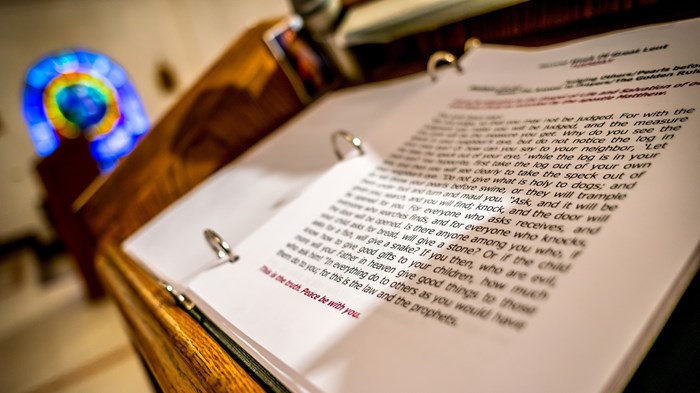
The pulpit is made for preaching; the lectern for reading. When I am in the pulpit, I need to preach, not read. Preaching is urgent. It is God's Word spoken to my congregation. I want to look people in the eye and change their hearts by reforming their minds. That's less likely to happen if I'm reading to them.

Certainly, an argument can be made for writing out a manuscript and then memorizing it, but I don't know many preachers who can actually do that. What they typically do is write out a manuscript that helps them think through their sermon more clearly. By the time they step into the pulpit, they've abandoned the manuscript because they've now mastered the material. The difference between that approach and mine is that they spend extra time writing a manuscript. I don't.

I want to learn, not cram

Preparing a manuscript eats up a lot of time that could be better spent prayerfully interacting with the subject. The words of my seminary professor are not lost on me: "One hour in preparation for every minute of preaching." Usually this is considered impractical because it is often understood as "one hour this week for every minute this Sunday." If so, it is poor counsel.

Better to understand it as "much learning before some teaching," or "much knowing before any proclamation." If I have not read, reflected upon, and wrestled with the holiness of God for at least 20 hours, I am not ready to proclaim it publicly for 20 minutes. But I need not do it all the previous week.

Studying only in the week prior to preaching is like cramming, and cramming is the surest way to misspend lots of learning time with the least long-term results. Next week I'll have forgotten what I crammed for this week and be in the same predicament each week for the remainder of my ministry.

However, if I spend those hours reading and reflecting, I'll be in a stronger position ...

log in

To view the rest of this article, you must be a subscriber to LeadershipJournal.net.
Print subscriber? Activate your online account for complete access.

From Issue: Wordcasting, Winter 2000 | Posted: January 1, 2000

Related Training

from BuildingChurchLeaders.com
Digital Disciple

Digital Disciple

What does it mean to use technology well?
Why Churches Don't Grow

Why Churches Don't Grow

Five barriers to church growth.

Subscribe to read more

Subscribe Today!

  • One risk-free issue
  • Instant access to all Leadership Journal web content
  • OFFER DETAILS

Print subscriber?Activate your online account for complete access.

Shopping
Scripture Search
Go Deeper