


Welcome to the new LeadershipJournal.net! Click here to tell us what you think or ask a question.

The New Leadership Journal Is Here
Jump directly to the content
subscribe:
magcover

Already a subscriber?

Home > Issue > 2007 > Summer > Virtual Virtue and Real Presence
Average rating:

I've had a couple of semi-sleepless nights lately because some members of my congregation got into trouble and needed my pastoral help. Their situation seems so messy, so ugly, so intractable, and I feel the weight of trying to help them get through it with their faith intact. I confess, though, that I've wished at times I could be one of those pastors who never actually has to deal with people, who simply "shows up" (interesting term) on screen, not in person.

I am certainly not against "video venues." Nor am I against Christian websites. Nor (obviously) am I against the use of books and journals (like the one that connects us here). I am for the thoughtful and careful use of technology in ministry, whether we're talking about the printing press, the telephone, radio, the internet, or satellites.

But we would be foolish to rush into new technologies unaware of their unintended consequences, the side effects that Marshall McLuhan began warning about back in the 1960s and 1970s (see Shane Hipps's The Hidden Power of Electronic Culture: How Media Shapes Faith, the Gospel, and Church, Zondervan, 2006).

Every technological innovation, McLuhan would say, is an amputation. For example, with the invention of the wheel or lever or chain saw, we use our muscles less. With the invention of the calculator, our mental computational skills grow rusty. While microphones help us whisper to thousands, they also make it less necessary for us to learn enunciation and vocal projection. And spell-checkers … make it EZ for us never to lern the lie of the grammaratical land.

What of technologies that in a sense amputate presence? The television and the DVD, the videoconference and perhaps increasingly, the hologram, project our presence, but do they in some way amputate presence as well?

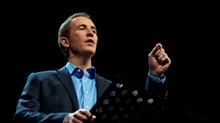
I recently heard someone say that preaching is going the way of the Eucharist: we're moving from "real presence" to "virtual presence." The preacher seen via projection or download is "with us," but only in an abstract sense.

Projection is a fascinating word, especially when contrasted with incarnation. I imagine the first chapter of the fourth gospel reading, "the Word was projected into our world to be observed among us," and I wonder what difference it would have made.

One difference: you can't crucify a digital image. And that, to me, is one of the great amputations that comes from "virtual presence" or "projected presence" replacing incarnational presence. Looking back on my years as a pastor, I have to say that preaching was relatively easy and fun. But being close to people, being present in a community, often was downright agonizing.

Many of us have thought to ourselves, Ministry would be great if it weren't for the people, and increasingly it has become possible to "have a ministry" without ever having to actually live, in your flesh, with people in their flesh. In fact, vicarious ministries (via books, radio, TV, or whatever) have a higher status in the minds of many than the ...

log in

To view the rest of this article, you must be a subscriber to LeadershipJournal.net.
Print subscriber? Activate your online account for complete access.

From Issue: Visualcy, Summer 2007 | Posted: July 1, 2007

Related Training

from BuildingChurchLeaders.com
Worship Architects

Worship Architects

Why should churches invest in arts ministry?
Digital Disciple

Digital Disciple

What does it mean to use technology well?

Subscribe to read more

Subscribe Today!

  • One risk-free issue
  • Instant access to all Leadership Journal web content
  • OFFER DETAILS

Print subscriber?Activate your online account for complete access.

Shopping
Scripture Search
Go Deeper