
Welcome to the new LeadershipJournal.net! Click here to tell us what you think or ask a question.

The New Leadership Journal Is Here
Jump directly to the content
subscribe:
magcover

Already a subscriber?

Home > Issue > 2008 > Winter > The Divine Commodity
Average rating:

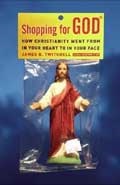
It's an eye-catching cover and snappy title: Shopping for God. But page one reads, "This book is not about God." The discrepancy between cover and content, between the pitch and the product, is what James Twitchell has built his career upon. A professor of advertising at the University of Florida, he knows even the most sacred things have been reduced to commodities in our consumer culture.

Twitchell is a self-confessed "cold Christian" and "apatheist," someone who cares little about his own faith. But he is interested in "how religious sensation is currently being manufactured, branded, packaged, shipped out, and consumed."

What can church leaders gain here? A lot. Most of what we read about ministry leadership, outreach, and management is infused with a heavy dose of spiritual language—including the content of this fine journal. Twitchell propels the pendulum the other way. By removing God language, he asserts that most of what we assume to be fueled by divine power may actually be the result of market forces.

For example, based on research he says, "Chances are that if you go to your church and see a hymnal or a pew Bible in the rack in front of you, you are seeing the end of your church in the distance."

Commenting on mainline churches where over half the members are women over 60, Twitchell writes, "As any advertiser will tell you, when you see this demographic, you are not looking down the barrel, you have already swallowed the bullet."

With the precision of an academic and the wit of a humorist, Twitchell covers both historical and contemporary church issues. Like, how has the First Amendment impacted church competition? And even the origins of the ubiquitous altar call and church sign with movable type. He explains how the largest churches thrive by appealing to men.

Perhaps most helpful is Twitchell's explanation of the economic concepts of branding. He writes, "While thinking about believers as customers seems almost too vulgar, thinking about consumers as believers is precisely what modern marketing is all about." Purchases determine identity. Church leaders can't afford to ignore the effects of living in a consumer culture. Today, the way people choose a church is almost the same as how they shop for groceries.

In 1955 only 4 percent of people moved away from the church of their parents. In 1980 it was 30 percent. Today it's 50 percent. According to Twitchell, "Religion is a choice pretending to be a calling." And the fastest growing denominations are those focused on selling their product (via outreach) because "The value of the next sale (the convert) proves the value of the previous sale (yours)."

No discussion of the American church scene would be complete without an exploration of the megachurch phenomenon. This is where Twitchell provides his most irreverent but eye-opening analysis. In a chapter titled, "The Megachurch: 'If You are Calling about a Death in the Family, Press 8,'" he chronicles how just 10 churches drawing more than ...

log in

To view the rest of this article, you must be a subscriber to LeadershipJournal.net.
Print subscriber? Activate your online account for complete access.

From Issue: Is Our Gospel Too Small?, Winter 2008 | Posted: March 7, 2008

Related Training

from BuildingChurchLeaders.com
Digital Disciple

Digital Disciple

What does it mean to use technology well?
Why Churches Don't Grow

Why Churches Don't Grow

Five barriers to church growth.

Subscribe to read more

Subscribe Today!

  • One risk-free issue
  • Instant access to all Leadership Journal web content
  • OFFER DETAILS

Print subscriber?Activate your online account for complete access.

Shopping
Scripture Search
Go Deeper