Jump directly to the content
subscribe:
magcover

Already a subscriber?

Home > Issue > 2011 > Summer > Pastor in the Present Tense
Average rating:

PREVIOUSFIRSTPAGE 1 of 5NEXTLAST

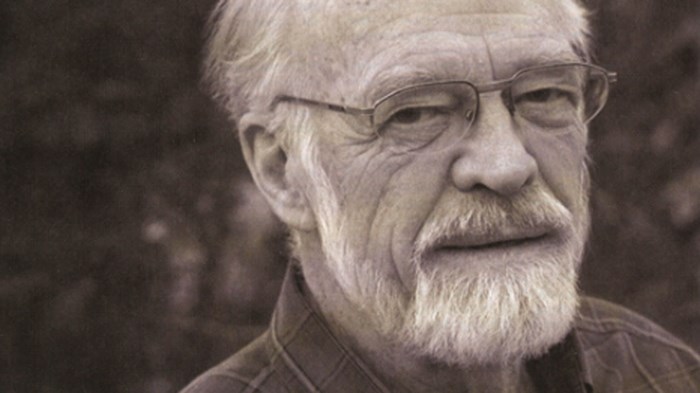
Eugene Peterson has, over the course of his distinguished career, been a poet, professor, Bible translator, spiritual director, and bestselling author. It's easy to forget his principal calling: pastor. In his new memoir, The Pastor, Peterson takes readers from his idyllic childhood in a lakeshore cabin in Montana, along his winding journey to the pastorate, and through his subsequent years in ministry, pausing at each turn to share rich reflections on what it means to be a pastor. We talked with Peterson about the book, his calling, and the role of a pastor.

Why did you write this memoir?

I had no interest in writing a memoir. And I didn't know how to do it. But enough people said enough things about writing it that I thought I should really consider it. I've always had a text to work from when I write. This time, however, my life was the text, and I didn't know how to do that. So for six months I wrote stuff and then threw it away. I just couldn't get the hang of it. Then I began to think about my childhood, working in my father's butcher shop, all of that was instrumental in my calling as a pastor. That was a revelation to me. And my years in New York City when I thought I was going to be a professor, and later writing The Message. It all played a part in my journey.

Is calling a one-time thing, or something that evolves over a lifetime?

For me it evolved. I was 25 years old when I knew there was a name for what I'd become "a pastor." It's different for everybody. Some feel called to be a pastor from an early age. And there are people who discover their calling in midlife. So there's not always a lot of clarity. But I believe God takes the things in our lives—family, background, education—and uses them as part of his calling. It might not be to become a pastor. But I don't think God wastes anything.

I always thought I'd be a professor. And for the first two years or so in the church, I was acting as a professor, giving people knowledge and telling them what was true. I finally realized this is not what pastors do. Church is not like a classroom where subjects are cut and dried, black and white, and true or not true. Everybody's living a life that contains ambiguity and complexity. My task is to enter that world, find a language, and preserve the ambiguity without giving up the truth.

As pastor, what is your essential role?

My task as pastor was to show how the Bible got lived. Of course it's important to show that the Bible is true, but we have theologians and apologists for that. I just accepted the fact it was true and didn't bother much about that. I needed to be a witness to people in my congregation that everything in the Bible is livable and to try to avoid abstractions about big truths, big doctrines. I wanted to know how these ideas got lived in the immediate circumstances of people's lives at work, in the town, and in the family.

The role of the pastor is to embody the gospel. And of course to get it embodied, which you can only do with individuals, not in the abstract. And so that's why, for me, a small congregation was so essential. It enabled me to know the people I was preaching to, teaching, and praying with.

PREVIOUSFIRSTPAGE 1 of 5NEXTLAST

From Issue:Authority Issues, Summer 2011 | Posted: September 19, 2011

Related Training

from BuildingChurchLeaders.com
Forming the Team

Forming the Team

Get the right people in the right positions and watch them flourish.
Make Meetings Amazing

Make Meetings Amazing

Consider four “pieces” to meetings that could bring about major changes in your church, community, or even the world.

Subscribe to read more

Subscribe Today!

  • One risk-free issue
  • Instant access to all Leadership Journal web content
  • OFFER DETAILS

Print subscriber?Activate your online account for complete access.

rating & comments

Average User Rating: Not rated

Rate and comment on this article: *

Low

High

1000 character limit

* Comments may be edited for tone and clarity.

From Powerlifter to Powerless

Meditation

From Powerlifter to Powerless

How physical debility strengthened my reliance on God.

Why Civic Engagement Belongs in Every Church's Mission Statement

This Is Our City

Why Civic Engagement Belongs in Every Church's Mission Statement

Churches can commission their members to vocationally bless their community, says California pastor Michael Decker

more | current issue

Christian Bible Studies

Unbalanced Blessings

Unbalanced Blessings

The balancing act of...

Books & Culture

Quiet

Quiet

Shhh! Introverts working...

Preaching Today

NFL Star Junior Seau Searched for Peace

Small Groups

Prepare with Prayer

Prepare with Prayer

Don't leave out this...

Shopping
Scripture Search
Go Deeper