









from Today's Christian
MenWomen

 
Main  |  Archives  |  Contact Us
Site Search


Great Stories of Faith, Hope, and God's Love

Subscribe to Today's Christian

People of Faith

Stories of Hope

Today's Culture

Build Your Faith

Laughing Matters


 • We aren't taking a vacation this summer.
 • We're using public transportation.
 • We're riding bikes or walking more often.
 • We scope out the cheapest gas and drive to get it.
 • We're just generally staying closer to home.
 • Other

Vote here, and see how your answer compares to others'.
Take the poll

HOLIDAYS & EVENTS

Related Channels
Men
Women
Singles
Movies
Music
Bible & Reference
Christian Bible Studies
Small Groups
Faith in the Workplace


The Jesus We Never Got

The Gospel at the Games

In Tune with Each Other


Home > Today's Christian > Stories of Hope > Missions

Sign up for our free newsletter:


Today's Christian, May/June 2004

Here Comes the World
As refugees seek a better life in the U.S., American Christians are discovering a mission field outside their front door.
By John W. Kennedy

Here Comes the World
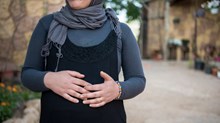
Jane Cassidy (center) surrounded by the Almousawi family from Iraq

Wes and Jane Cassidy are missionaries. But not the kind who travel overseas. The Cassidys do their "missionary work" right here in the United States from the familiar confines of their suburban home.

Many American Christians are looking for practical ways to fulfill the Great Commission without traveling around the globe to do so. For the Cassidys, that has meant opening their home to the numerous foreign refugees who are seeking a new life of freedom and relative tranquility in this country.

Only two days after touching down at O'Hare International Airport, Cvijetin and Zdenka Gligerevic from Tuzla, Bosnia, settled in comfortably at the Cassidys' home near the Chicago suburb of West Dundee, Illinois.

As is typical with refugee families, the Gligerevics, both 48, are more reserved than their children, Boris, 22, and Bojan, 21. And as is often the case, the youth understand more English than the elders: Bojan, handsome and 6-foot-6 inches tall, knows the language best, having picked up words and phrases from English-speaking security forces, and from watching Jerry Springer on television in his homeland.

On this Saturday morning, the Cassidys are serving as World Relief refugee hosts through their local church, Harvest Bible Chapel. They have opened their home eight times before to not only Bosnians but also Iraqis, Sudanese, Cubans, and Serbians who were trying to begin a new life in the U.S. With a dozen children of their own—six of whom still live at home—the Cassidys are used to a full house.

As volunteer hosts, the Cassidys help acclimate the refugees, who by definition are people driven out of their own country due to persecution because of their race, religion, ethnicity, or political beliefs. World Relief advises hosts to befriend the newcomers, but not to allow them to become too comfortable; to defuse the apprehension about the new culture, but encourage the family to be in their own apartment within two weeks as an important step toward independence. In the past five years, Harvest Bible Chapel has sponsored more than 25 refugee families.

"Host families and churches are critical in making the refugee resettlement work."—Dorie Dinsmore, World Relief

"The Cassidys are an excellent example of how a family can demonstrate Christ's love in tangible ways," says Dori Dinsmore, executive director of the World Relief Chicago office. "Host families and a church sponsor are absolutely critical in making resettlement work."

Helping others comes naturally to Wes, one of 14 children himself. "I was raised in a culture of helping whomever the Lord brings in your sphere of influence," says Wes, a 55-year-old part-owner of a small business that manufactures customized metal parts. "It's our hope to impact our guests with a sense that we're living for Christ in a real way."

This morning, Bojan, a guitar player who wants to be a professional musician, sings along with the praise songs playing in the home, although he doesn't understand some of the lyrics. He asks what some of the words such as "worship" and "adore" mean.

The Cassidys invite refugees staying with them to participate in a Bible study and prayer meeting held in their home on Thursday nights. They also gently encourage refugees to accompany them to Sunday-morning church services. "We pray that the Lord will open their eyes to who Jesus is," says Jane.

Making the rounds
Later in the morning, Jane, 43, drives to Chicago as she does every few weeks to visit with recent houseguests. An Iraqi family, Lafteh and Halimeh Almousawi and their six young children, arrived a few months ago. The neighborhood is a genuine melting pot, with Chinese, Mexican, Vietnamese, and Greek shops located within two blocks of the family's three-story apartment building. As Jane enters, the children smother her with hugs. Lafteh kisses her hand and cheek.

Jane has brought along two large plastic bags full of clothes collected from others to help outfit the family. She tenaciously tracks down used clothing and furniture to assist refugees.

Before arriving in the U.S., Lafteh and his kin spent three years in Iran after being blacklisted in Iraq. He says Saddam Hussein ordered his cousin to be hanged, making it difficult for him and other relatives to find work.

The family has no phone, no vehicle, no work, and they comprehend little English. Still, the Almousawis are content with their cramped quarters. The children are in school, intensive English classes are preparing Lafteh for job opportunities, and, perhaps most importantly, everyone is safe.

The next stop is a housing complex two blocks from Lake Michigan. Jane visits the studio apartment of Valentin Martinez, his wife Gicela Gato, and their 16-year-old son Yanier, who arrived two months earlier from Cuba. Gicela kisses Jane's arms when she arrives.

Valentin, a retired construction worker, ran afoul of Fidel Castro and spent three years in prison. Gicela, a former special education teacher, wipes away tears as she shows Jane photos of the recent wedding of her 23-year-old son who remains in Cuba.

Lost-and-found lives
Refugees sometimes spend their life savings and sell all their belongings to bribe officials in fleeing their homeland. All incoming refugees have a sponsor, but World Relief, which assists an average of more than 5,200 families annually, is the only evangelical resettlement agency authorized by the State Department. Because of tighter security restrictions since the terrorism attacks of 9/11, only 28,000 refugees were admitted into the United States last year, down from a high of 132,100 in 1992.

Sponsoring congregations typically pay rent for refugees the first three months. Refugees are immediately eligible for food stamps and public aid, which includes a medical card and cash assistance.

In some cases, especially with the now-famous "Lost Boys" of Sudan, Jane acts more like a mother than a host because they are so unaccustomed to modern conveniences. The boys, among the thousands left to fend for themselves after the murder or capture of their parents in Sudan's bloody civil war, had no idea how to clean a toilet or use a refrigerator. Jane's eyes mist up as she remembers the condition of some of the boys when she first met them. She recalls how one, Maketh, still has a scar from injuring his foot while fleeing his home as a 5-year-old orphan.

"He had no one to protect him, no one to comfort him, no one to clean or bandage his wound," Jane laments.

Amazingly, though, those who escape from foreign lands with limited understanding of American life always seem to find jobs soon and make it on their own.

Joseph Wol, a Sudanese Lost Boy who is now 22, arrived two years ago. An orphan since age 5, he spent nine years in Ethiopian and Kenyan refugee camps. Now he drives his own car and is a supermarket produce worker while majoring in computers at a local community college. "Jane provided clothes for us," he says. "She taught us how to cook."

The Cassidys' first guest, Melvid Porcic, who came from Bosnia in 1999, had extensive health problems and stayed six months. He suffered a gunshot wound to his leg during the war with Serbia and developed a bone infection. Porcic arrived not knowing anyone in the United States or a word of English. Now, he speaks English fluently and works in airport security. "I was like a child," Porcic recalls. "Jane and Wes took care of me."

'This house is family'
Back in the Cassidy home on Saturday evening, the Gligerevics recount the ethnic tensions that caused them to lose their home, as well as job and educational opportunities in Tuzla, the largest Muslim city in Bosnia.

Cvijetin, a Serbian furniture maker, spent two years in jail. Both Boris and Bojan left girlfriends behind, but they know their future is in the United States.

Alethea, the Cassidys' 17-year-old daughter, says hosting refugees has opened her eyes. "People staying with us has helped me understand suffering," she explains. "I can't believe what a step of faith it must be to start over."

The prayer Wes offers at dinner is full of gratitude to the Lord for his provision. Jane adds a personal note to the Gligerevics: "We have you in our home because God put a love for you in our hearts, even before you came."

After dinner, Cvijetin musters a compliment with a couple of English words he has learned. He then leads his family in a burst of applause for Jane's homemade chicken potpie.

"This house is family," Bojan says. "When I'm old and have a family, I hope it is just like this."

John W. Kennedy is news editor of Today's Pentecostal Evangel.

What Can I Do?
These aid organizations can help churches and individual Christians connect with needy refugee families both in the U.S. and abroad.


Copyright © 2004 by the author or Christianity Today International/Today's Christian magazine.
Click here for reprint information.

May/June 2004, Vol. 42, No. 3, Page 52


What did you think of this story?

Please to give us your feedback.


Read more … Read more from 'Stories of Hope'


Browse More Today's Christian
Home  |  People of Faith  |  Stories of Hope  |  Today's Culture
Build Your Faith  |  Laughing Matters  |  Archives  |  Contact Us

Try an Issue of Today's Christian
Free!
Subscribe to Today's Christian
Name
Street Address
City/State/Zip
E-mail Address

No credit card required. Please allow 4-6 weeks for delivery. Offer valid in U.S. only. Click here for International orders.

If you decide you want to keep Today's Christian coming, honor your invoice for just $17.95 and receive five more issues, a full year in all. If not, simply write "cancel" across the invoice and return it. The trial issue is yours to keep, regardless.

Give Today's Christian as a gift
Buy 1 gift subscription, get 1 FREE!

FREE Newsletter
Subscribe to the Today's Christian Newsletter
   RSS Feed   RSS Help


ChristianCollegeGuide.net


Free Newsletter
Sign up for the free Today's Christian Newsletter:


452
ChristianityToday.com
Home CT Mag Church/Ministry Bible/Life Communities Entertainment Schools/Jobs Shopping Free! Help
Books & Culture
Christianity Today
ChristianityTodayLibrary.com
Church Finance Today
Church Law & Tax Report
Church Secretary Today
Ignite Your Faith
Leadership Journal
Men of Integrity
Today's Christian
Today's Christian Woman
Your Church
BuildingChurchLeaders.com
ChristianBibleStudies.com
Christian College Guide
Christian History Back Issues
Christian Music Today
Christianity Today Movies
Church Products & Services
Church Safety
ChurchSiteCreator.com
PreachingToday.com
PreachingTodaySermons.com
Seminary/Grad School Guide
Christianity Today International
www.ChristianityToday.com
Copyright © 2008 Christianity Today International
Privacy Policy | Contact Us | Advertise with Us | Job Openings