








from Today's Christian
MenWomen

 
Main  |  Archives  |  Contact Us
Site Search


Great Stories of Faith, Hope, and God's Love

Subscribe to Today's Christian

People of Faith

Stories of Hope

Today's Culture

Build Your Faith

Laughing Matters


 • We spend time in Scripture and prayer every day.
 • We go to marriage counseling.
 • We have a regularly set "date night" or other activity.
 • We take frequent getaways.
 • We intentionally have one-on-one time each day.
 • We're part of a marriage-focused small group or Bible study.
 • Other

Vote here, and see how your answer compares to others'.
Take the poll

HOLIDAYS & EVENTS

Related Channels
Men
Women
Singles
Movies
Music
Bible & Reference
Christian Bible Studies
Small Groups
Faith in the Workplace


In Tune with Each Other

God's Grace

More than Skin Deep


Home > Today's Christian > Today's Culture > Health & Healing

Today's Christian, January/February 2006

Does God Care What We Eat?
Are the Old Testament's strict food laws relevant for today's church? Absolutely, says Messianic Jewish author Hope Egan.
By Jennifer Schuchmann

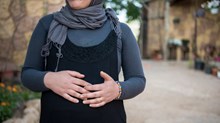
Image from Digital Vision

The petite, 5-foot-4 woman stepped up to the podium at a Chicago church and lowered the microphone; her auburn curls framed the gentle smile on her face. Hope Egan doesn't look like a revolutionary, but her recent book, Holy Cow! Does God Care About What We Eat?, and her passionate endorsement of Old Testament food laws for today's New Testament Christians have been stirring up discussion wherever she goes.

This crowd of 200 Christian women listened intently as Egan shared her struggles with compulsive eating, her discovery of a "biblically kosher" diet, and God's role in the journey.

"I was consumed with thoughts of food," she began. At work, she visited the candy machine several times a day. Though she sat at the same table when eating with others, she wasn't fully present. Instead, she fixated on the food, obsessing about something as simple as a plate of cookies: How many should I eat? We each get three, but I've already eaten my three; there won't be enough if I eat more. Why aren't they eating their share of the cookies? Don't they like these cookies? Will anyone notice if I eat just one more?

Faith in food
Hope grew up in a secular Jewish community where faith was more cultural than religious. "When I was little, I remember asking my parents whether we were Jewish or Christian because I would forget," she says.

Like most of her Jewish girlfriends, she attended synagogue, took Hebrew lessons, and had a Bat Mitzvah. For Hope, the best part of synagogue was the location—across the street from Carson's Ribs, home of her favorite meal. While the family dabbled in celebrating religious holidays, Hope's memories are of the food, not the faith. "God just wasn't on our radar screen," she says.

Hope's food issues affected those who loved her. As a CPA, she was analytical about balancing input and output. Knowing that she could maintain her weight through compulsive exercise, she would forsake time with friends and family to spend it in the gym.

"If it was sweet, I couldn't have it in the house," she recalls. She didn't stop after one doughnut or cookie; she ate the whole box or bag. "I would throw food into the trash and then later pull it out and eat it." She learned to take drastic steps like pouring water on food before throwing it away.

Hope thought she was in control until a car accident left her unable to exercise. Frustrated by her food compulsions and fearful of gaining weight, she joined a 12-step program—Overeaters Anonymous. The first three steps involved admitting she was powerless over food, acknowledging a higher power, and giving Him control.

"I was leery but desperate," says Hope, who began attending meetings. "Didn't God have anything better to do than keep me from eating another chocolate chip cookie?" But the changed lives around her were compelling. "I began to dabble in the steps and think maybe God could change me."

On her knees, she accepted the God of Abraham, Isaac, and Jacob as her own and gave Him control over her life. "I had been doing such a lousy job eating and managing my relationships, but after that moment they improved just enough for me to believe that God was real and active in my life."

Rethinking Jesus
That Jesus was not the Messiah was a belief deeply entrenched in Hope's family history, but her newfound appreciation for God and His ability to work miracles caused her to reconsider. "If God could create the world in six days, maybe the Jesus stuff was true too," says Hope. She sought the truth with an open mind, discovering information about Jesus that contradicted her traditionally held beliefs. That truth eventually produced fruit in every area of her life. While her family didn't celebrate her choice, they were pleased to see the positive changes.

As a new believer, Hope was encouraged to read the whole Bible and to take it literally. She did, starting with Genesis. She quickly came upon some things that disturbed her new beliefs. "It seemed a lot of Jewish things that were in the Christian Bible weren't in Christianity." She was used to things adding up, and this one didn't. "I was shaken because the Bible didn't reconcile with the way I saw Christians practicing their faith."

For most of us, the connection between God and food is a loose one; maybe we pray before eating or meditate during Communion. But ordinarily, the God we serve has little to do with the food we serve.

That's what confused Hope. Most Christians ignored Old Testament food laws. This became a stumbling block as she tried to grow in her new faith.

"I took in the Christian beliefs about eating pork and shellfish through osmosis. Even when I got in and read the Bible, I continued to ignore the Scriptures because it was easy to go with the flow. People smarter than me were eating these things."

When Hope asked why Christians ate foods that were contrary to the guidelines in Leviticus 11, she received theological answers about why it was okay. The apostle Peter's dream in Acts 10 was often referenced. "It was the answer I wanted to hear," she admits. She continued to eat ribs.

Sick of food
Later, however, a chronic illness forced Hope to revisit the food issue. The only cure was a strict diet that eliminated common foods and ingredients such as sugar and wheat. She could no longer eat out; she learned to cook healthy and tasty meals from scratch.

"It was a huge blessing," she says. "My body healed, I lost a few pounds, and I began feeling better."

But a big question remained: How should she eat for the rest of her life?

Again, Hope turned to the Bible to see what God had to say. She sought the counsel of Christian doctors, scholars, and others who had done similar research. She was surprised to find an entire Christian subculture that followed biblical food laws, believing that the Hebrew Scriptures are still relevant. This gave her the confidence to study the food-related scriptures herself.

Brian, her husband, was concerned. He feared her questions had more to do with her Jewish heritage than her Christian faith. He adamantly quoted New Testament verses that seemed to promote eating pork.

"God had always been the glue that kept us together, but my husband was extremely opposed to the road I was going down."

A wedge formed between them, until Brian reluctantly studied the issues on his own. This became their turning point. "After he did his homework, he joined me on the journey," says Hope.

Together they learned that just as mothers have opinions on the foods their children should eat, God our Father cares about the foods we eat. From Genesis, Hope learned the importance of plant-based foods, such as fruits, nuts, vegetables, grains, and seeds. But other scriptures were confusing. Did God arbitrarily declare some animals clean and other animals unclean? Again, the CPA tried to reconcile things.

The 'clean/unclean' dilemma
Hope discovered that God's classification system wasn't as arbitrary as it seemed. On a surface read of Leviticus 11 it appeared that God randomly chose which animals were clean and which were unclean, but a closer look revealed that these distinctions were in place since the time of Noah.

Further investigation showed that the classification of clean and unclean animals was part of an intelligent plan. Clean mammals have a "split hoof" and "chew the cud." These animals are herbivores; in other words they eat plants. Herbivores avoid many of the diseases, parasites, and worms that meat-eating animals acquire, so they are a healthier food choice for humans. Herbivores, like the cow, process their food differently than other animals. As the food works its way through their multi-stomach digestive system, the food is purified before toxins are absorbed into the animals' bodies.

Compare the cow to an unclean animal such as a pig (which has a split hoof but doesn't chew the cud); a pig's food goes to the stomach where it is directly absorbed during the digestive process. When you consider that pigs are omnivores—they eat everything: plants, dead animals, small rodents, garbage, and even feces—this is an important difference. Animals like the cow, chicken, or tuna were designed as safe food sources, and God designated these animals as clean. Others, like pigs, catfish, and vultures, were created to be scavengers to clean the environment and were designated as unclean. Hope learned that God's commands regarding clean and unclean animals weren't arbitrary but rather an indication of His love for us.

When God's plan is ignored—like feeding ground-up cattle parts to cows to get them to grow faster—we end up with unintended effects, like Mad Cow Disease. Hope's study of God's food laws strengthened her faith as she saw His intelligent design.

Excited by what she learned, Hope stopped eating the meat of unclean animals, including ribs. She also increased the amount of fruit, vegetables, nuts, and seeds in her diet. Today, at 39, her health has never been better, nor her faith stronger.

While Hope has finally found the answers that "add up" for her, she acknowledges that not everyone is bothered by the same questions. "There are theologians who have drawn different conclusions," she says.

Her intention in writing her book wasn't to get everyone to stop eating pork and shellfish, but rather to encourage Christians to study the issue for themselves, just as she and Brian did. She hopes her testimony will inspire believers to improve both their physical and spiritual health.

Whats on Gods Menu?

Clean Meats
  • Beef

  • Lamb

  • Goat

  • Elk

  • Venison

  • Chicken

  • Turkey

  • Water creatures with fins and scales

Unclean Meats
  • Pork

  • Snake

  • Rabbit

  • Vulture

  • Water creatures without fins and scales

Source: Leviticus 11 and Deuteronomy 14:1-21

Discussion Starters
  • Do you think believers should obey the Old Testaments food laws? Why, or why not?

  • Read Mark 7:1-23. What do you think Jesus is trying to tell the religious leaders in this passage?

  • Read Acts 10. What do you think Peters dream means?

  • What are your eating habits like? Could you see yourself adopting a biblically kosher diet?


Jennifer Schuchmann is the author of Your Unforgettable Life: Only You Can Choose the Legacy You Leave (Beacon Hill Press). For more information about Hope Egan and her book, visit www.holycownews.com.

Copyright © 2006 by the author or Christianity Today International/Today's Christian magazine.
Click here for reprint information.

January/February 2006, Vol. 44, No. 1, 40


What did you think of this story?

Please to give us your feedback.


Read more … Read more from 'Today's Culture'


Browse More Today's Christian
Home  |  People of Faith  |  Stories of Hope  |  Today's Culture
Build Your Faith  |  Laughing Matters  |  Archives  |  Contact Us

Try an Issue of Today's Christian
Free!
Subscribe to Today's Christian
Name
Street Address
City/State/Zip
E-mail Address

No credit card required. Please allow 4-6 weeks for delivery. Offer valid in U.S. only. Click here for International orders.

If you decide you want to keep Today's Christian coming, honor your invoice for just $17.95 and receive five more issues, a full year in all. If not, simply write "cancel" across the invoice and return it. The trial issue is yours to keep, regardless.

Give Today's Christian as a gift
Buy 1 gift subscription, get 1 FREE!

FREE Newsletter
Subscribe to the Today's Christian Newsletter
   RSS Feed   RSS Help


ChristianCollegeGuide.net


Free Newsletter
Sign up for the free Today's Christian Newsletter:


452
ChristianityToday.com
Home CT Mag Church/Ministry Bible/Life Communities Entertainment Schools/Jobs Shopping Free! Help
Books & Culture
Christianity Today
ChristianityTodayLibrary.com
Church Finance Today
Church Law & Tax Report
Church Secretary Today
Ignite Your Faith
Leadership Journal
Men of Integrity
Today's Christian
Today's Christian Woman
Your Church
BuildingChurchLeaders.com
ChristianBibleStudies.com
Christian College Guide
Christian History Back Issues
Christian Music Today
Christianity Today Movies
Church Products & Services
Church Safety
ChurchSiteCreator.com
PreachingToday.com
PreachingTodaySermons.com
Seminary/Grad School Guide
Christianity Today International
www.ChristianityToday.com
Copyright © 2008 Christianity Today International
Privacy Policy | Contact Us | Advertise with Us | Job Openings