Editor’s Note …

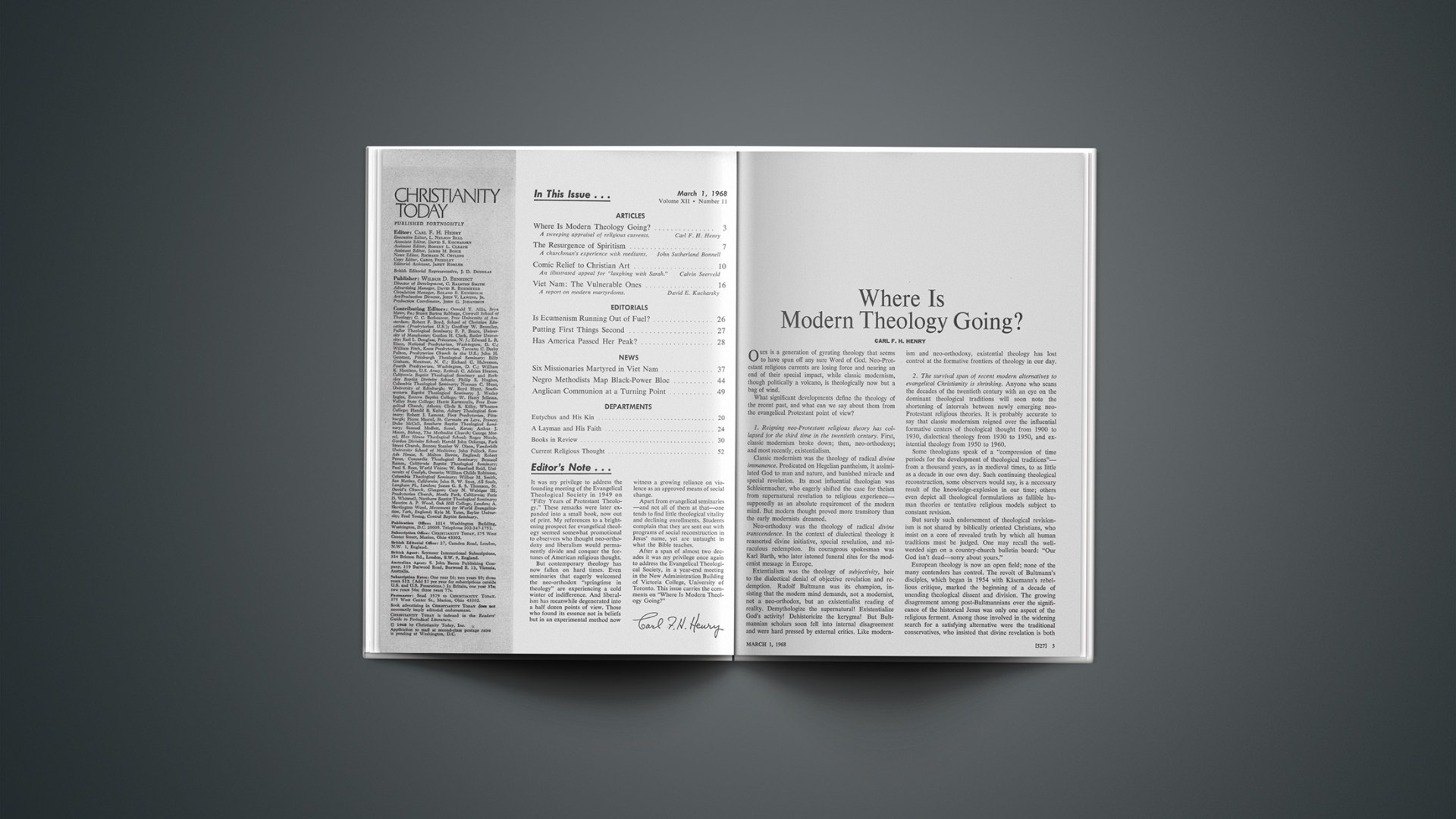
It was my privilege to address the founding meeting of the Evangelical Theological Society in 1949 on “Fifty Years of Protestant Theology.” These remarks were later expanded into a small book, now out of print. My references to a brightening prospect for evangelical theology seemed somewhat promotional to observers who thought neo-orthodoxy and liberalism would permanently divide and conquer the fortunes of American religious thought.

But contemporary theology has now fallen on hard times. Even seminaries that eagerly welcomed the neo-orthodox “springtime in theology” are experiencing a cold winter of indifference. And liberalism has meanwhile degenerated into a half dozen points of view. Those who found its essence not in beliefs but in an experimental method now witness a growing reliance on violence as an approved means of social change.

Apart from evangelical seminaries—and not all of them at that—one tends to find little theological vitality and declining enrollments. Students complain that they are sent out with programs of social reconstruction in Jesus’ name, yet are untaught in what the Bible teaches.

After a span of almost two decades it was my privilege once again to address the Evangelical Theological Society, in a year-end meeting in the New Administration Building of Victoria College, University of Toronto. This issue carries the comments on “Where Is Modern Theology Going?”

Also in this issue

The CT archives are a rich treasure of biblical wisdom and insight from our past. Some things we would say differently today, and some stances we've changed. But overall, we're amazed at how relevant so much of this content is. We trust that you'll find it a helpful resource.

Our Latest

News

Died: John M. Perkins, Who Lived and Preached Racial Reconciliation

The civil rights leader believed in a gospel bigger than race or self-interest.

Review

Decoding the Supreme Court

Three books to read this month on politics and public life.

The Bulletin

Cost of Iran War, Quiet Southern Border, and Anglican Church Split

Mike Cosper, Clarissa Moll, Russell Moore

The financial and moral toll of war, immigration slows but ministry continues, and why denominations split.

The Year of the Evangelical

America prepared for a bicentennial, and religious identity dominated the presidential campaign.

Q&A: Eric Mason on Ministering to Men and Witnessing in Politics

Interview by Benjamin Watson

The Philadelphia-based pastor discusses how the church can engage Black men and have a biblical approach to government.

Review

‘The Secret Agent’ Explores Memory and Authoritarianism in Brazil

Mariana Albuquerque

The Oscar-nominated film reminds viewers to learn from the past—and to share our stories with the next generation.

Jan Karon Looks Back on 89 Years of God’s Faithfulness

The author of the Mitford Years series married at 14, protested segregation, and wrote her first book at 57.

The Just Life with Benjamin Watson

Michel Lusakueno: Why the World Can’t Ignore Congo

Exploring the sobering connection between modern convenience and human suffering.

Apple PodcastsDown ArrowDown ArrowDown Arrowarrow_left_altLeft ArrowLeft ArrowRight ArrowRight ArrowRight Arrowarrow_up_altUp ArrowUp ArrowAvailable at Amazoncaret-downCloseCloseEmailEmailExpandExpandExternalExternalFacebookfacebook-squareGiftGiftGooglegoogleGoogle KeephamburgerInstagraminstagram-squareLinkLinklinkedin-squareListenListenListenChristianity TodayCT Creative Studio Logologo_orgMegaphoneMenuMenupausePinterestPlayPlayPocketPodcastprintRSSRSSSaveSaveSaveSearchSearchsearchSpotifyStitcherTelegramTable of ContentsTable of Contentstwitter-squareWhatsAppXYouTubeYouTube