





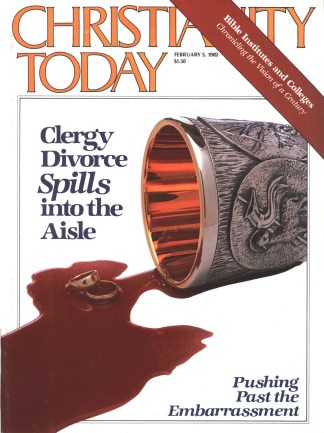
1982 marks the hundredth anniversary of the Bible college movement. Evangelicals are deeply grateful to the Bible institutes and Bible colleges that have dotted not only the United States and Canada, but have spread around the world. Although begun as centers to train lay people, they have become a chief source of ministers and missionaries for the evangelical church. Through the passing decades, not a few evolved into liberal arts colleges and seminaries—Gordon, Berkshire, Barrington, Miami, Malone, Trinity, Evangel, Biola, and Westmont, to name only a few. President George Sweeting of Moody Bible Institute tells the dramatic story of the movement’s deep roots in colonial history, its small beginnings a century ago, and its marvelous growth as Bible schools nourished the churches of North America and the mission fields of the world.
In the great betrayal of the early decades of the twentieth century, most Christian colleges repudiated their evangelical heritage. Many evangelicals reacted against higher education. A few founded new Christian liberal arts colleges. More looked to the Bible institutes for training in Bible and doctrine, leaving the liberal arts and sciences to “godless” universities and Christian colleges now turned secular. This issue’s editorial probes the new role of the Bible college in current evangelicalism.
Gloria Swanson and Jeanne Ward reveal some interesting facts about what seminaries are or are not doing to prepare young people for pastoral ministry. And Clark Pinnock completes the picture by discussing the educational task of our contemporary seminaries and challenging them to return to the unified theological education for ministry characteristic of seminaries in former years.
Today we hear much about the Americanization of the church. The sharp edges of biblical doctrine and biblical ethics are smoothed off so as to fit comfortably into American culture. Clergy divorce, however, has long been a barrier to pastoral ministry in the church—especially the evangelical church. Robert Stout shows how seriously that wall has been breached.
With the advance of modern medicine, the moral issue of euthanasia becomes ever more pressing. Grace Chapman reveals her personal agony in facing decisions at the death of her father. Joe Bayly and two Christian physicians, Dr. Jeanne Blumhagen and Dr. Gordon Addington, offer counsel to her and to all of us who may soon have to make similar choices.







