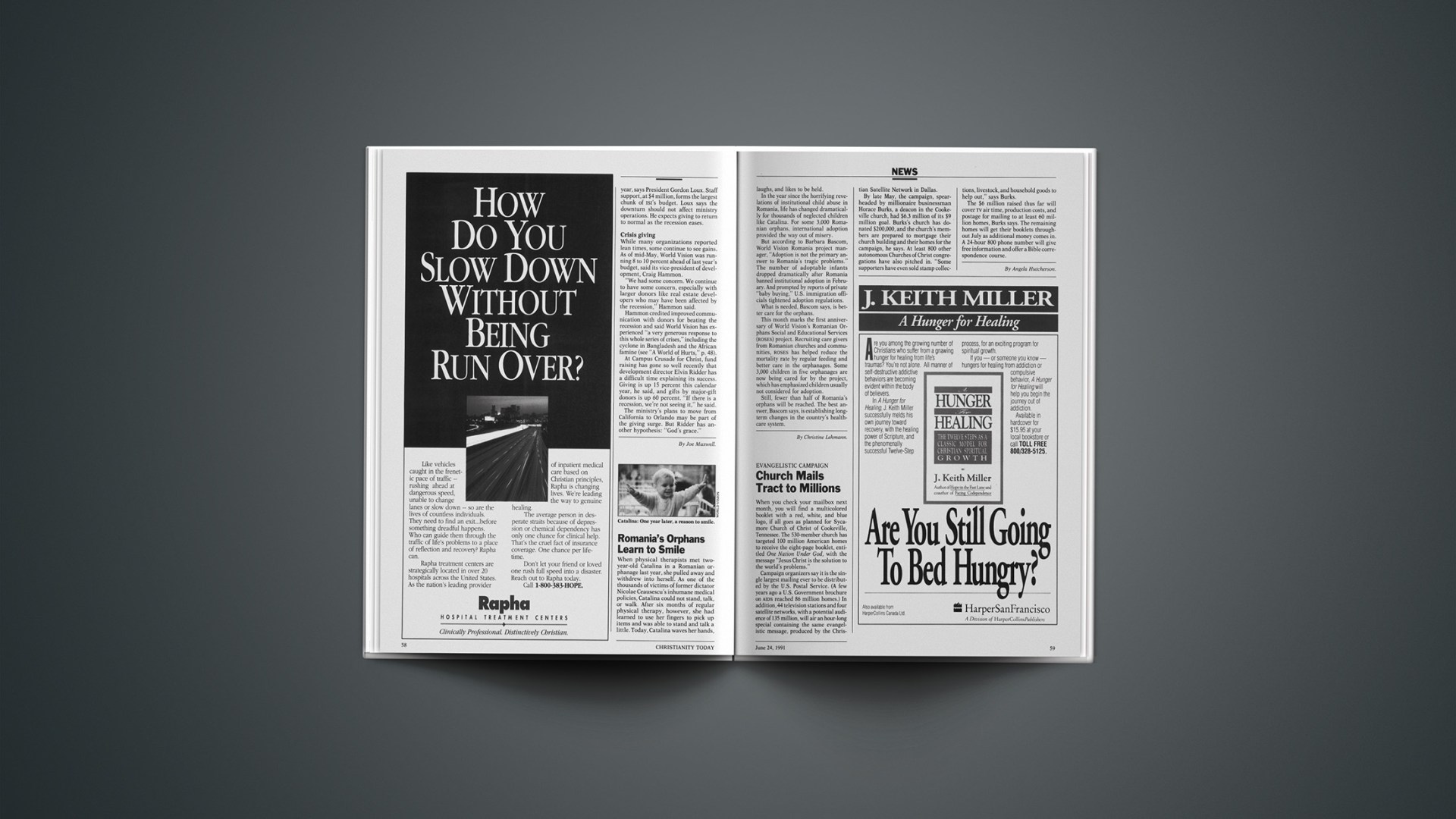
Romania’s Orphans Learn to Smile

When physical therapists met two-year-old Catalina in a Romanian orphanage last year, she pulled away and withdrew into herself. As one of the thousands of victims of former dictator Nicolae Ceausescu’s inhumane medical policies, Catalina could not stand, talk, or walk. After six months of regular physical therapy, however, she had learned to use her fingers to pick up items and was able to stand and talk a little. Today, Catalina waves her hands, laughs, and likes to be held.

In the year since the horrifying revelations of institutional child abuse in Romania, life has changed dramatically for thousands of neglected children like Catalina. For some 3,000 Romanian orphans, international adoption provided the way out of misery.

But according to Barbara Bascom, World Vision Romania project manager, “Adoption is not the primary answer to Romania’s tragic problems.” The number of adoptable infants dropped dramatically after Romania banned institutional adoption in February. And prompted by reports of private “baby buying,” U.S. immigration officials tightened adoption regulations.

What is needed, Bascom says, is better care for the orphans.

This month marks the first anniversary of World Vision’s Romanian Orphans Social and Educational Services (ROSES) project. Recruiting care givers from Romanian churches and communities, ROSES has helped reduce the mortality rate by regular feeding and better care in the orphanages. Some 3,000 children in five orphanages are now being cared for by the project, which has emphasized children usually not considered for adoption.

Still, fewer than half of Romania’s orphans will be reached. The best answer, Bascom says, is establishing long-term changes in the country’s health-care system.

By Christine Lehmann.
Also in this issue

The CT archives are a rich treasure of biblical wisdom and insight from our past. Some things we would say differently today, and some stances we've changed. But overall, we're amazed at how relevant so much of this content is. We trust that you'll find it a helpful resource.

Our Latest

Analysis

Q&A: Some Israelis See Esther’s Story in the Attacks on Iran

The Bulletin with Yossi Klein Halevi

Journalist Yossi Klein Halevi speaks to CT about Jewish reflections on the US and Israel-led war.

Excerpt

Joy Is in the Waiting

Grace P. Pouch

An excerpt from Savoring Childhood: Practical Wisdom for Slowing Down.

Ministering to Women Includes Physical Health

Caitlin Estes

Counseling women through infertility and other medical issues may feel awkward. Church leaders have an obligation to do it anyway.

Helping the Church Think Clearly

A note from CT’s President in our March/April issue.

Churches Haven’t Forgotten Portland

Churches partner with business and city leaders in Portland’s downtown core.

The Vigil of Birth

For low-risk pregnancies, midwife care can offer mothers the birth resources they need: patience, attention, and time.

Review

Congress Is Overwhelmed and Incompetent

Haley Byrd Wilt

Self-interested and self-loathing, it’s unable to represent the American people well. A new book suggests solutions.

Qualms & Proverbs

What’s the Difference Between Privilege and Blessing?

Karen Swallow Prior, Kevin Antlitz, and Kiara John-Charles

CT advice columnists also weigh in enjoying unnecessary luxuries and the nature of fun.

Apple PodcastsDown ArrowDown ArrowDown Arrowarrow_left_altLeft ArrowLeft ArrowRight ArrowRight ArrowRight Arrowarrow_up_altUp ArrowUp ArrowAvailable at Amazoncaret-downCloseCloseEmailEmailExpandExpandExternalExternalFacebookfacebook-squareGiftGiftGooglegoogleGoogle KeephamburgerInstagraminstagram-squareLinkLinklinkedin-squareListenListenListenChristianity TodayCT Creative Studio Logologo_orgMegaphoneMenuMenupausePinterestPlayPlayPocketPodcastprintRSSRSSSaveSaveSaveSearchSearchsearchSpotifyStitcherTelegramTable of ContentsTable of Contentstwitter-squareWhatsAppXYouTubeYouTube