
The words were familiar, but not in this setting.
“I want every head bowed, every eye closed,” said pastor Billy Kim of Seoul, studying a capacity crowd in the Kremlin’s 6,500-seat Hall of Congresses. “I want you to speak this prayer, after me: ‘Dear Jesus, I’m a sinner. Please come into my heart.’ ”
Only 20 days earlier, leaders of a Soviet coup held this stage as they defended last-ditch efforts to uproot democracy and save the Communist party. Now an evangelist was preaching in the very legislative chamber used by the Supreme Soviet. At least half of those at a September 7 gospel music festival stood to make a profession of faith, after Kim’s testimony.
“UN-be-lievable,” whispered Jim Groen, chairman of Youth for Christ International, watching from backstage along with other leaders of the Moscow Project, a multi-ministry wave of gospel concerts and Bible-distribution efforts. “We prayed for this. We worked for this around the clock. None of us gave up. But it’s still hard to believe what we’re seeing.”
As if an altar call in the Kremlin wasn’t enough, other sights and symbols throughout Moscow bear witness to the rebirth of the Soviet Union.
A white-blue-and-red Russian Federation flag flies on the walls above Lenin’s tomb. Russians continue to heap fresh flowers atop the faded blossoms and the icons at unofficial shrines at the underpass where three men were killed the night of August 20, during the darkest hours of the coup. Russian graffiti nearby proclaims: “Father, forgive them, for they know not what they do.” Work crews have repaired the wall, but they have left the message.
Soviet soldiers have, on occasion, helped unload truckloads of Bibles. Police often provide protection when crowds rush teams offering Scriptures. On many days, free New Testaments are available in Red Square.
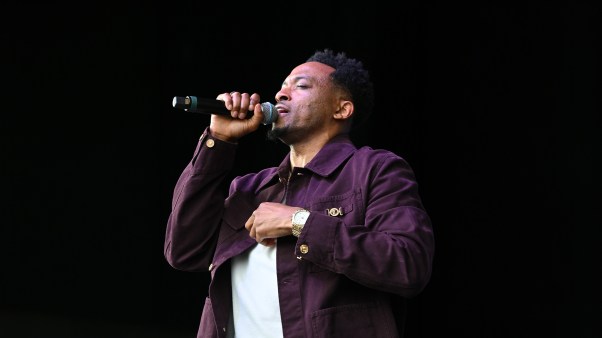
Hours before the Kremlin concert—which featured singer Larnelle Harris, the Spirit of America choir, the Korea Men’s Chorus, Denver’s Holy Smoke Band, and other Christian performers—the head of the Hall of Congresses’ security and maintenance staff approached Moscow Project leaders and requested 1,000 New Testaments.
“What can I say? We are living in very unusual circumstances. But everything appears to be part of God’s plan,” said Pavel Nilou, explaining that he wanted to give a New Testament to each member of his Kremlin staff.
The rush of change has produced one negative side effect: the cancellation of the government-sponsored Moscow Book Fair, scheduled for early September. It was the fervor of 1989 crowds at an Evangelical Christian Publishers Association book-fair booth that inspired this summer’s Moscow Project. Two years ago, 10,000 free Russian New Testaments vanished in a few hours. Another 17,000 people filled out cards requesting Bibles. Scripture distribution at this year’s fair was to have been a key event in the Moscow Project.
Nevertheless, this summer Soviet and American volunteers have distributed nearly 4 million volumes of Scripture. The project coalition included 16 Soviet Christian groups and eight from the United States and Europe.
One of those groups, the International Bible Society (IBS), will move on to a “Soviet Southwest” project in 1992. The goal: 1.3 million New Testaments in Ukrainian and 500,000 in the language of the people of Georgia.
“We have at least touched Moscow and the major cities,” says Paul Chandler, director of international ministries for the IBS. “But this is a land that is ten time zones wide. There is more to this than the major cities.… We all know we’re just getting started.… But there is much to celebrate. The Bible brings people together, and we can trust that will continue to happen.”
By Terry Mattingly in Moscow.