Evangelical Wins Peaceful Election

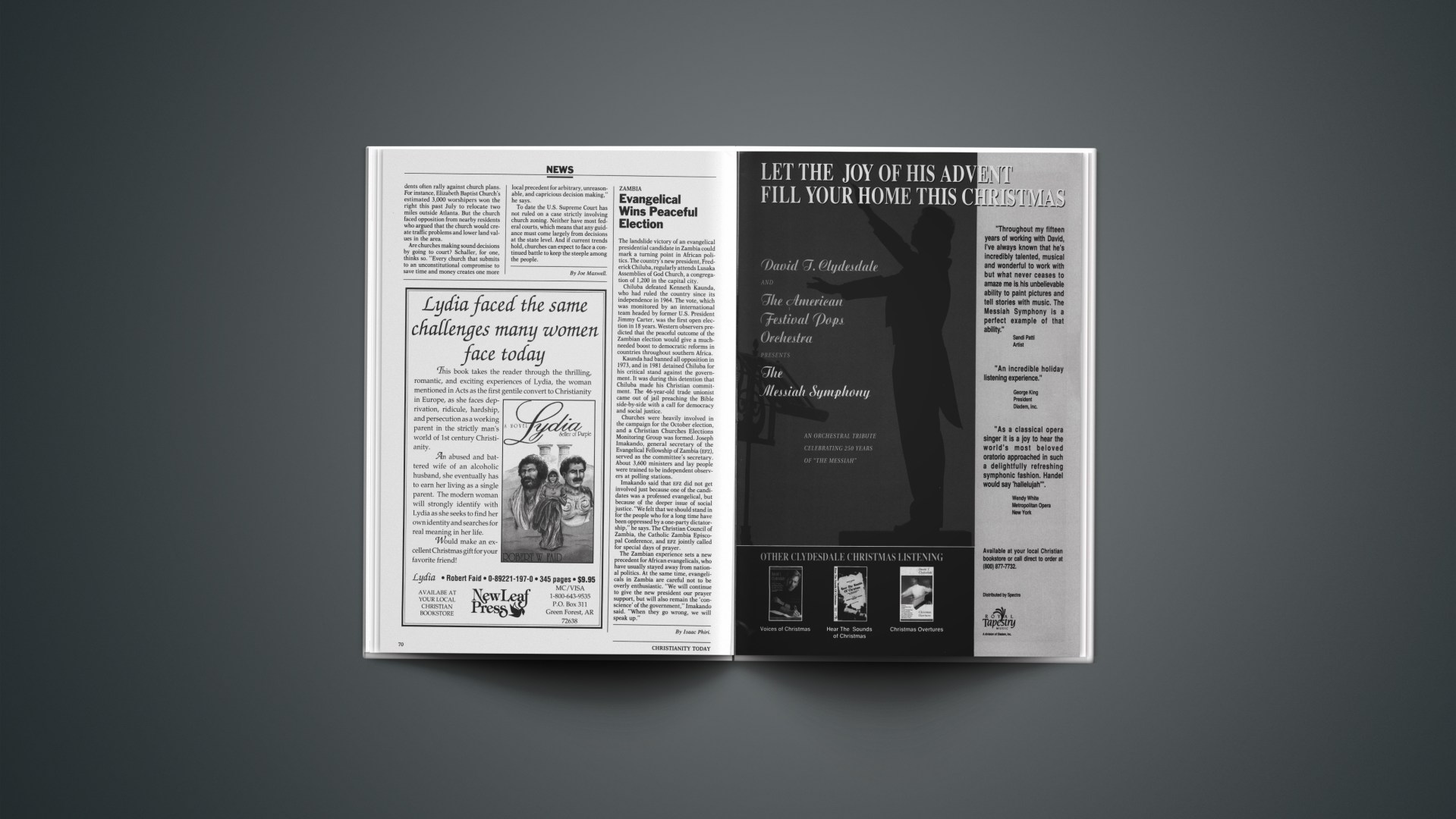
The landslide victory of an evangelical presidential candidate in Zambia could mark a turning point in African politics. The country’s new president, Frederick Chiluba, regularly attends Lusaka Assemblies of God Church, a congregation of 1,200 in the capital city.

Chiluba defeated Kenneth Kaunda, who had ruled the country since its independence in 1964. The vote, which was monitored by an international team headed by former U.S. President Jimmy Carter, was the first open election in 18 years. Western observers predicted that the peaceful outcome of the Zambian election would give a much-needed boost to democratic reforms in countries throughout southern Africa.

Kaunda had banned all opposition in 1973, and in 1981 detained Chiluba for his critical stand against the government. It was during this detention that Chiluba made his Christian commitment. The 46-year-old trade unionist came out of jail preaching the Bible side-by-side with a call for democracy and social justice.

Churches were heavily involved in the campaign for the October election, and a Christian Churches Elections Monitoring Group was formed. Joseph Imakando, general secretary of the Evangelical Fellowship of Zambia (EFZ), served as the committee’s secretary. About 3,600 ministers and lay people were trained to be independent observers at polling stations.

Imakando said that EFZ did not get involved just because one of the candidates was a professed evangelical, but because of the deeper issue of social justice. “We felt that we should stand in for the people who for a long time have been oppressed by a one-party dictatorship,” he says. The Christian Council of Zambia, the Catholic Zambia Episcopal Conference, and EFZ jointly called for special days of prayer.

The Zambian experience sets a new precedent for African evangelicals, who have usually stayed away from national politics. At the same time, evangelicals in Zambia are careful not to be overly enthusiastic. “We will continue to give the new president our prayer support, but will also remain the ‘conscience’ of the government,” Imakando said. “When they go wrong, we will speak up.”

By Isaac Phiri.

Also in this issue

The CT archives are a rich treasure of biblical wisdom and insight from our past. Some things we would say differently today, and some stances we've changed. But overall, we're amazed at how relevant so much of this content is. We trust that you'll find it a helpful resource.

Strategy: Can the West Be Won?

George G. Hunter Iii

Buried in Data

Letters

A Friend of God’s, a Friend of Mine

If Mother Teresa Were a Baptist in Houston

Editorial

Recovering the Apostles' Zeal

Recovering the Apostles’ Zeal

Behold!: Behold the Lamb of God: Calligrapher Timothy Botts Points His Pens at Handel’s Messiah and Makes the Words Sing

Interview By David Neff And Carol Thiessen

A Little Religion at Christmas

John G. Stackhouse, Jr.

‘Go Fetch Baxter’

Timothy Beougher And J. I. Packer

Where Would We Be without Staupitz?: Behind the Great Leaders of the Church Stood Others Who, through Their Lives and Teaching, Provided Inspiration. Here Is a Look at Five Unsung Heroes Church History Could Not Have Done Without

Bruce L. Shelley

Evangelism in the ’90s: There’s a Wideness in Our Witness

CT Survey Report: Who’s Really Doing Evangelism?

James F. Engel

Bible Study: Saint John’s Four Laws

Christopher Hancock

Take It to the Streets

Big Nanny Is Watching You

Classic & Contemporary Excerpts from December 16, 1991

The Doctor as Executioner

1991 In Review: Enter the New World Order

In the News: 1991’s Top Ten Stories

News from the North American Scene: December 16, 1991

Church/State: Court Hears Prayer Case

Election Update: Prolifers Claim Gains in Midst of Voter Turmoil

World Scene: December 16, 1991

Episcopal Church: Traditionalists Form New Diocese

Church and Law: Zoned Out

Gypsy Church Thrives in Europe, Worldwide

Hostages Released

Why 1989 Happened

View issue

Our Latest

News

Displaced Ukrainian Pastor Ministers to the War’s Lost Teens

“Almost everybody has lost somebody, and quite a few people have lost very much.”

So What If the Bible Doesn’t Mention Embryo Screening?

Silence from Scripture on new technologies and the ethical questions they raise is no excuse for silence from the church.

The Chinese Evangelicals Turning to Orthodoxy

Yinxuan Huang

More believers from China and Taiwan are finding Eastern Christianity appealing. I sought to uncover why.

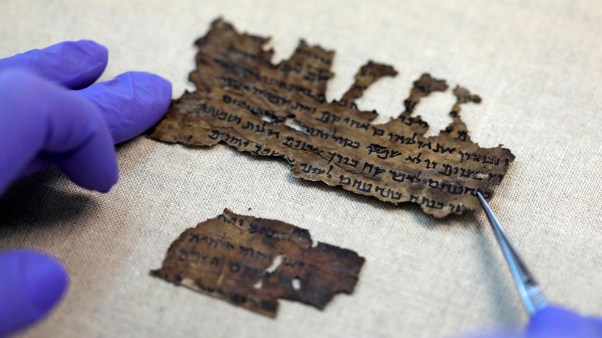
Archaeology in the City of David Yields New Treasures

Gordon Govier

Controversial excavation in Jerusalem reveals new links to the biblical record.

Public Theology Project

Why Christians Ignore What the Bible Says About Immigrants

Believers can disagree on migration policies—but the Word of God should shape how we minister to vulnerable people.

Review

Apologetics Can Be a Balm—or Bludgeon

Daryn Henry

A new history of American apologetics from Daniel K. Williams offers careful detail, worthwhile lessons, and an ambitious, sprawling, rollicking narrative.

Hold the Phone?

Anna Mares

Faced with encouragement to lessen technology use, younger Christians with far-flung families wonder how to stay connected.

The Russell Moore Show

Joseph Loconte on the War for Middle-Earth

What if the most decisive battles in our time aren’t fought with ballots or bombs—but with the imagination?

Apple PodcastsDown ArrowDown ArrowDown Arrowarrow_left_altLeft ArrowLeft ArrowRight ArrowRight ArrowRight Arrowarrow_up_altUp ArrowUp ArrowAvailable at Amazoncaret-downCloseCloseEmailEmailExpandExpandExternalExternalFacebookfacebook-squareGiftGiftGooglegoogleGoogle KeephamburgerInstagraminstagram-squareLinkLinklinkedin-squareListenListenListenChristianity TodayCT Creative Studio Logologo_orgMegaphoneMenuMenupausePinterestPlayPlayPocketPodcastRSSRSSSaveSaveSaveSearchSearchsearchSpotifyStitcherTelegramTable of ContentsTable of Contentstwitter-squareWhatsAppXYouTubeYouTube