History

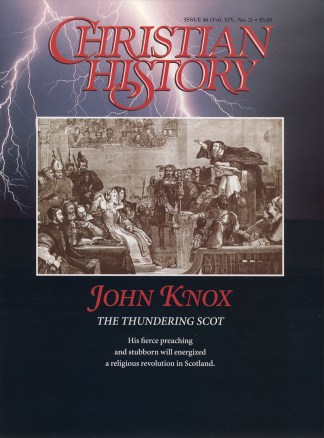
John Knox and the Scottish Reformation: From the Editor – The Hard-To-Like Knox

The command to love one’s neighbor does not require one to like one’s neighbor. That subtle distinction has helped me weather many a relationship. It’s also helped me get through this issue on John Knox.

I found Knox difficult to like. Knox could be arrogant, proud, stubborn, and cantankerous. He called Catholic Queen Mary I of England, to put it in modern parlance, “a freak of nature.” The universally acclaimed beauty of Cranmer’s Book of Common Prayer Knox described as a “mingle-mangle.”

One man standing before Knox’s open grave said it as diplomatically as possible: “Here lies a man who neither flattered nor feared any flesh.”

Of course, tact is not a gift usually lavished on a prophet, which is the best way to understand Knox. He was a Hebrew Jeremiah set down on Scottish soil—in a relentless campaign of fiery oratory, he sought to destroy idolatry and purify national religion. In the end, his cause triumphed.

Purifying religion I like. But the man? Then again, I don’t care much for prophetic types. Had I lived in their days, I would have dismissed Jeremiah as a whiner and John the Baptist as eccentric. This dislike of outspoken and decisive heralds is no doubt a serious character flaw on my part.

On the other hand, whether I happen to like this historical figure or that, well, that’s a modern eccentricity. For Knox and Jeremiah and John, the issue was not whether someone was likable, but whether he or she stood on the side of truth.

I don’t agree with all of Knox’s assessments and actions, but ultimately Knox was on the right side. For that, for his raw courage and tenacity, and for his legacy—Scottish, American, and world-wide Presbyterianism—we honor him.

Copyright © 1995 by the author or Christianity Today/Christian History magazine. Click here for reprint information on Christian History.

Our Latest

So What If the Bible Doesn’t Mention Embryo Screening?

Silence from Scripture on new technologies and the ethical questions they raise is no excuse for silence from the church.

The Chinese Evangelicals Turning to Orthodoxy

Yinxuan Huang

More believers from China and Taiwan are finding Eastern Christianity appealing. I sought to uncover why.

Archaeology in the City of David Yields New Treasures

Gordon Govier

Controversial excavation in Jerusalem reveals new links to the biblical record.

News

Displaced Ukrainian Pastor Ministers to the War’s Lost Teens

“Almost everybody has lost somebody, and quite a few people have lost very much.”

Public Theology Project

Why Christians Ignore What the Bible Says About Immigrants

Believers can disagree on migration policies—but the Word of God should shape how we minister to vulnerable people.

Review

Apologetics Can Be a Balm—or Bludgeon

Daryn Henry

A new history of American apologetics from Daniel K. Williams offers careful detail, worthwhile lessons, and an ambitious, sprawling, rollicking narrative.

Hold the Phone?

Anna Mares

Faced with encouragement to lessen technology use, younger Christians with far-flung families wonder how to stay connected.

The Russell Moore Show

Joseph Loconte on the War for Middle-Earth

What if the most decisive battles in our time aren’t fought with ballots or bombs—but with the imagination?

Apple PodcastsDown ArrowDown ArrowDown Arrowarrow_left_altLeft ArrowLeft ArrowRight ArrowRight ArrowRight Arrowarrow_up_altUp ArrowUp ArrowAvailable at Amazoncaret-downCloseCloseEmailEmailExpandExpandExternalExternalFacebookfacebook-squareGiftGiftGooglegoogleGoogle KeephamburgerInstagraminstagram-squareLinkLinklinkedin-squareListenListenListenChristianity TodayCT Creative Studio Logologo_orgMegaphoneMenuMenupausePinterestPlayPlayPocketPodcastRSSRSSSaveSaveSaveSearchSearchsearchSpotifyStitcherTelegramTable of ContentsTable of Contentstwitter-squareWhatsAppXYouTubeYouTube