History

Curious Mix in the Continental Congress

How Christians and deists worked together in the war effort.

Wikimedia Commons

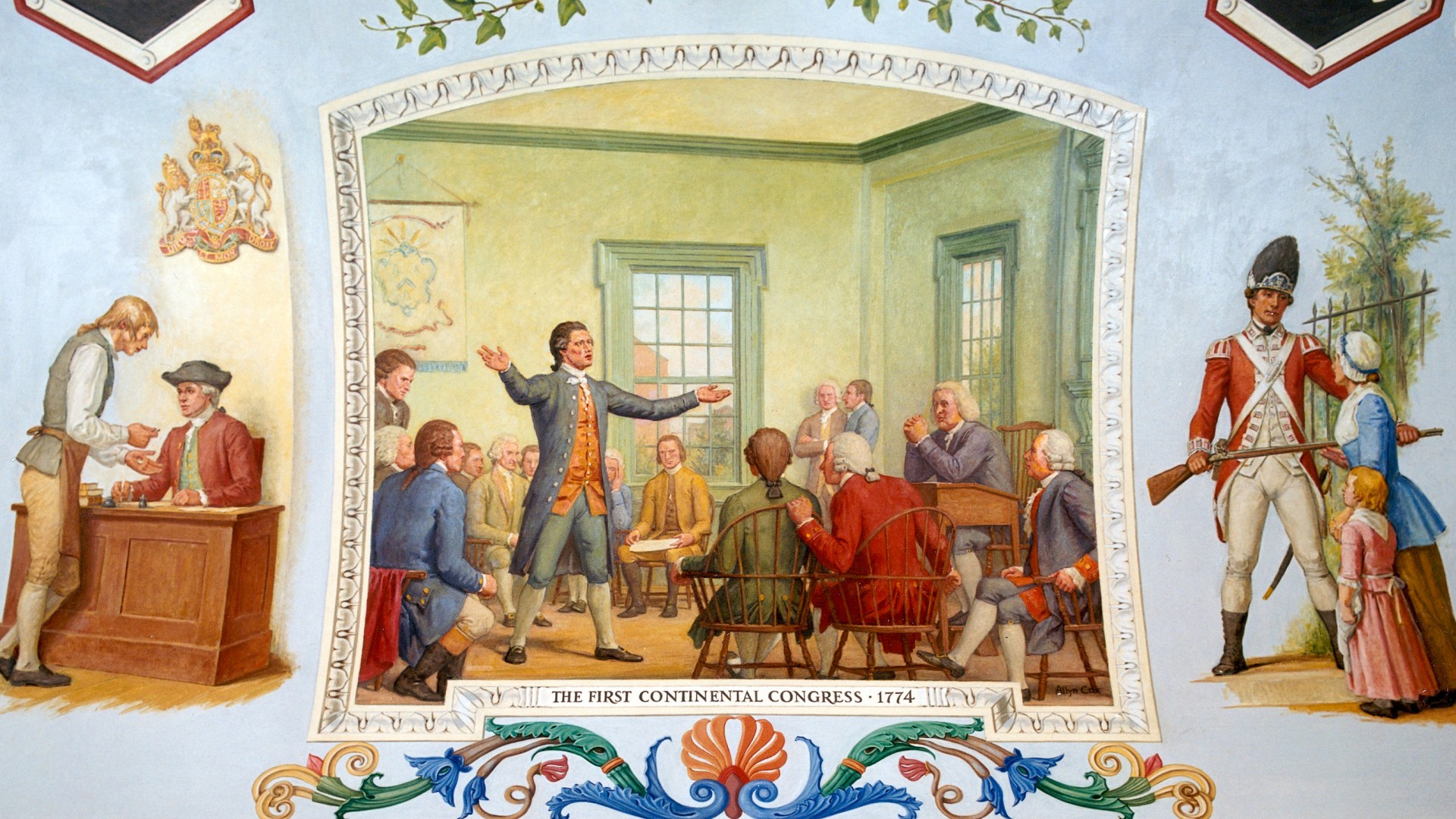
Many supporters of the Revolution were deists. With leadership from Benjamin Franklin and Thomas Jefferson (and arguably John Adams and George Washington), they maintained a dominant presence in the Continental Congress, the body that governed American affairs from 1774 to 1789. At the same time, the Continental Congress was populated with traditional Christians like John Jay.

Congress, however, sought to model the kind of cooperation between Christians and rationalists that it hoped would be observed across the colonies. For example, the Declaration of Independence, in its four references to God—“Nature’s God,” the “Creator,” the “Supreme Judge of the World,” and “Divine Providence”—were essentially deist terms that Christian congressmen consented to because they in no way denied Christian truth.

Yet during the eight-year Revolutionary War, the annual thanksgiving and fast-day proclamations issued by Congress and observed throughout the colonies were written with the awareness that the overwhelming majority of religious Americans were Christian. The proclamations therefore regularly invoked the name of Jesus Christ and asked for his blessings upon the war effort.

Derek H. Davis is director of the J.M. Dawson Institute of Church-State Studies at Baylor University in Waco, Texas.

Copyright © 1996 by the author or Christianity Today/Christian History magazine. Click here for reprint information on Christian History.


Our Latest

So What If the Bible Doesn’t Mention Embryo Screening?

Silence from Scripture on new technologies and the ethical questions they raise is no excuse for silence from the church.

The Chinese Evangelicals Turning to Orthodoxy

Yinxuan Huang

More believers from China and Taiwan are finding Eastern Christianity appealing. I sought to uncover why.

Archaeology in the City of David Yields New Treasures

Gordon Govier

Controversial excavation in Jerusalem reveals new links to the biblical record.

News

Displaced Ukrainian Pastor Ministers to the War’s Lost Teens

“Almost everybody has lost somebody, and quite a few people have lost very much.”

Public Theology Project

Why Christians Ignore What the Bible Says About Immigrants

Believers can disagree on migration policies—but the Word of God should shape how we minister to vulnerable people.

Review

Apologetics Can Be a Balm—or Bludgeon

Daryn Henry

A new history of American apologetics from Daniel K. Williams offers careful detail, worthwhile lessons, and an ambitious, sprawling, rollicking narrative.

Hold the Phone?

Anna Mares

Faced with encouragement to lessen technology use, younger Christians with far-flung families wonder how to stay connected.

The Russell Moore Show

Joseph Loconte on the War for Middle-Earth

What if the most decisive battles in our time aren’t fought with ballots or bombs—but with the imagination?

Apple PodcastsDown ArrowDown ArrowDown Arrowarrow_left_altLeft ArrowLeft ArrowRight ArrowRight ArrowRight Arrowarrow_up_altUp ArrowUp ArrowAvailable at Amazoncaret-downCloseCloseEmailEmailExpandExpandExternalExternalFacebookfacebook-squareGiftGiftGooglegoogleGoogle KeephamburgerInstagraminstagram-squareLinkLinklinkedin-squareListenListenListenChristianity TodayCT Creative Studio Logologo_orgMegaphoneMenuMenupausePinterestPlayPlayPocketPodcastRSSRSSSaveSaveSaveSearchSearchsearchSpotifyStitcherTelegramTable of ContentsTable of Contentstwitter-squareWhatsAppXYouTubeYouTube