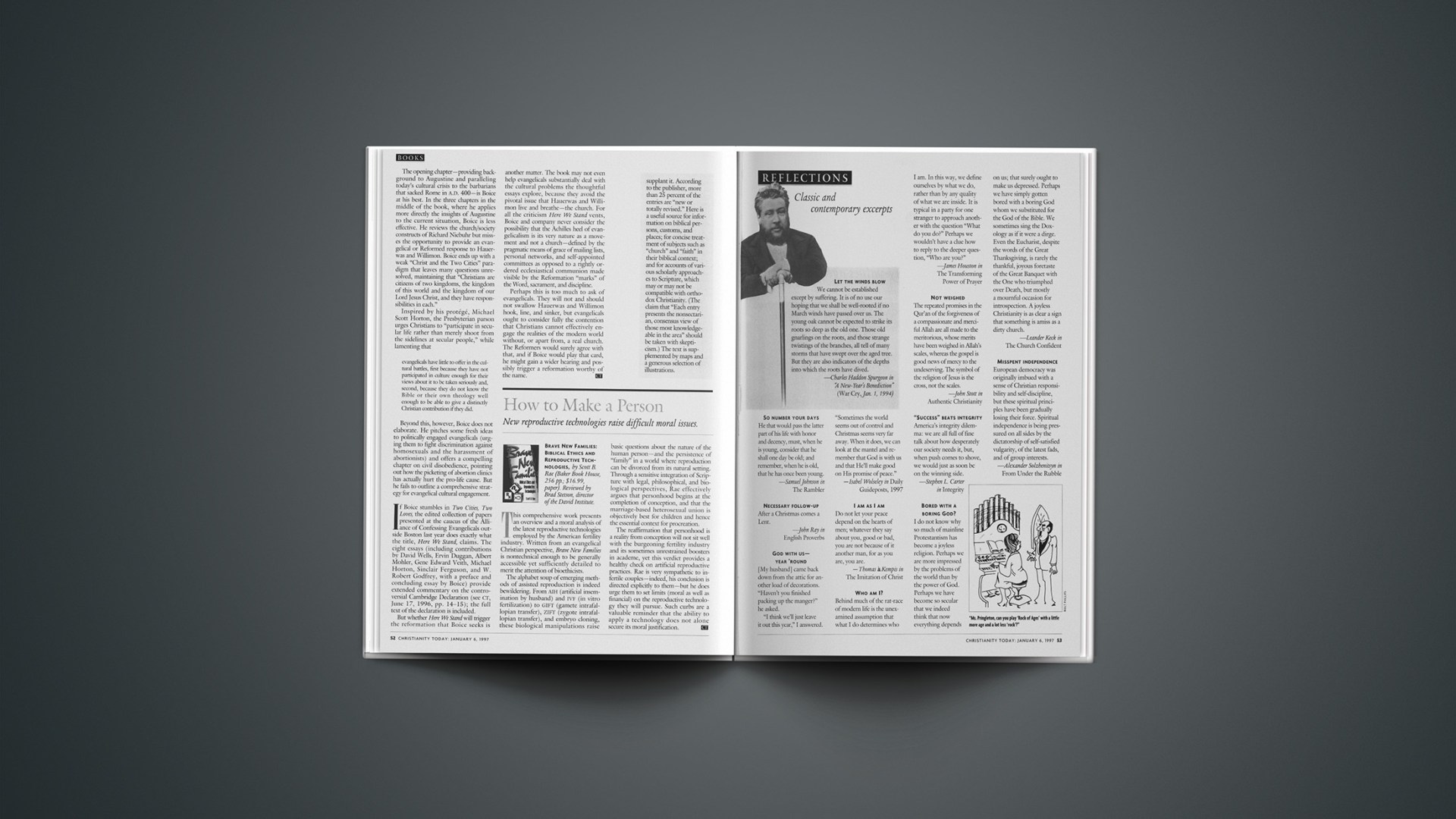
How to Make a Person

New reproductive technologies raise difficult moral issues.

Brave New Families: Biblical Ethics and Reproductive Technologies, by Scott B. Rae (Baker Book House, 256 pp.; $16.99, paper). Reviewed by Brad Stetson, director of the David Institute.

This comprehensive work presents an overview and a moral analysis of the latest reproductive technologies employed by the American fertility industry. Written from an evangelical Christian perspective, Brave New Families is nontechnical enough to be generally accessible yet sufficiently detailed to merit the attention of bioethicists.

The alphabet soup of emerging methods of assisted reproduction is indeed bewildering. From AIH (artificial insemination by husband) and IVF (in vitro fertilization) to GIFT (gamete intrafallopian transfer), ZIFT (zygote intrafallopian transfer), and embryo cloning, these biological manipulations raise basic questions about the nature of the human person—and the persistence of “family” in a world where reproduction can be divorced from its natural setting. Through a sensitive integration of Scripture with legal, philosophical, and biological perspectives, Rae effectively argues that personhood begins at the completion of conception, and that the marriage-based heterosexual union is objectively best for children and hence the essential context for procreation.

The reaffirmation that personhood is a reality from conception will not sit well with the burgeoning fertility industry and its sometimes unrestrained boosters in academe, yet this verdict provides a healthy check on artificial reproductive practices. Rae is very sympathetic to infertile couples—indeed, his conclusion is directed explicitly to them—but he does urge them to set limits (moral as well as financial) on the reproductive technology they will pursue. Such curbs are a valuable reminder that the ability to apply a technology does not alone secure its moral justification.

Copyright © 1997 Christianity Today. Click for reprint information.

Our Latest

Public Theology Project

The Bible Doesn’t Justify War Crimes

Old Testament warfare ultimately points us to the Cross, where God’s justice and mercy meet in Christ.

The Rise of the Religious Right

CT called for caution as evangelicals flocked to vote for Ronald Reagan.

Analysis

Social Media Addiction Attorneys See Themselves As Good Samaritans

A Q&A with the father-daughters legal team behind the landmark ruling against Meta.

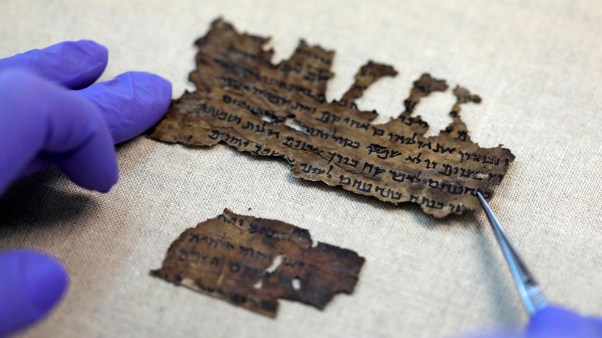
New Dead Sea Scrolls Exhibit Is the Real Deal

Gordon Govier

After an embarrassing snafu in 2020, the Museum of the Bible celebrates an authentic documents display.‌

The Russell Moore Show

Malcolm Gladwell on Radical Forgiveness and the Death Penalty

What if the justice we rely on to bring closure is actually keeping us from it?

Wire Story

Pastors Want More Ways for Immigrants to Arrive and Remain Legally

Aaron Earls - Lifeway Research

Study: While pastors are divided on the Trump administration’s deportation campaign, a large majority oppose deporting persecuted Christians and blocking refugees.

News

Mobile Food Ministries Adapt to High Gas Prices

Despite soaring costs, two Christian groups in California persevere—and trust for God’s provision

Review

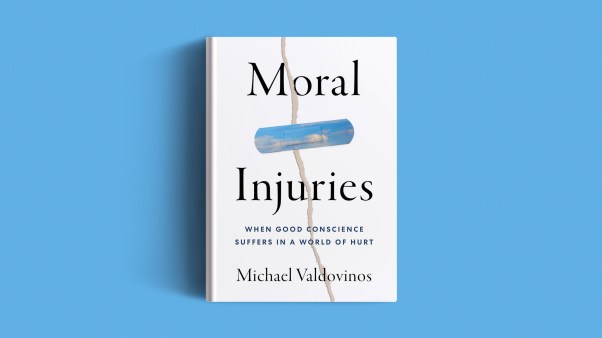
How Can You Live with Yourself After Doing Evil?

Michael Valdovinos’s book offers coping strategies, which are a start. But what we truly need is forgiveness.

addApple PodcastsDown ArrowDown ArrowDown Arrowarrow_left_altLeft ArrowLeft ArrowRight ArrowRight ArrowRight Arrowarrow_up_altUp ArrowUp ArrowAvailable at Amazoncaret-downCloseCloseellipseEmailEmailExpandExpandExternalExternalFacebookfacebook-squarefolderGiftGiftGooglegoogleGoogle KeephamburgerInstagraminstagram-squareLinkLinklinkedin-squareListenListenListenChristianity TodayCT Creative Studio Logologo_orgMegaphoneMenuMenupausePinterestPlayPlayPocketPodcastprintremoveRSSRSSSaveSavesaveSearchSearchsearchSpotifyStitcherTelegramTable of ContentsTable of Contentstwitter-squareWhatsAppXYouTubeYouTube