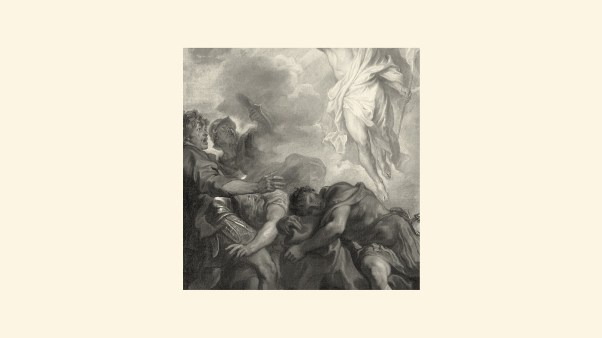
"I was years and years upon the brink of hell-I mean in my own feeling. I was unhappy, I was desponding, I was despairing. I dreamed of hell. My life was full of sorrow and wretchedness, believing that I was lost."
Charles Spurgeon, the most widely heard preacher of the nineteenth century and one of the most widely read today, used these strong words to describe his adolescent years. Despite his Christian upbringing (he was christened as an infant, and raised in the Congregational church), and his own efforts (he read the Bible and prayed daily), Spurgeon woke one January Sunday in 1850 with a deep sense of his need for deliverance.
Because of a snowstorm, the 15-year-old's path to church was diverted down a side street. For shelter, he ducked into the Primitive Methodist Chapel on Artillery Street. An unknown substitute lay preacher stepped into the pulpit and read his text-Isaiah 45:22-"Look unto me, and be ye saved, all the ends of the earth; for I am God, and there is none else."
Spurgeon's Autobiography records his reaction:
"He had not much to say, thank God, for that compelled him to keep on repeating his text, and there was nothing needed-by me, at any rate-except his text. Then, stopping, he pointed to where I was sitting under the gallery, and he said, 'That young man there looks very miserable' … and he shouted, as I think only a Primitive Methodist can, 'Look! Look, young man! Look now!' … Then I had this vision-not a vision to my eyes, but to my heart. I saw what a Savior Christ was. … Now I can never tell you how it was, but I no sooner saw whom I was to believe than I also understood what it was to believe, and I did believe in one moment.
"And as the snow fell on my road home from the little house of prayer, I thought every snowflake talked with me and told of the pardon I had found, for I was white as the driven snow through the grace of God."
Upon his return home, his appearance caused his mother to exclaim, "Something wonderful has happened to you."
For the next months young Spurgeon searched the Scriptures "to know more fully the value of the jewel which God had given me … I found that believers ought to be baptized." And so he was baptized, by immersion, four months later in the River Lark, after which he joined a Baptist Church.
Mary Ann Jeffreys was the editorial coordinator at Christian History from 1990 to 1999. She wrote this piece for issue 29: Charles Haddon Spurgeon, which is available at http://christianhistorystore.com/ch29spurgeon.html.