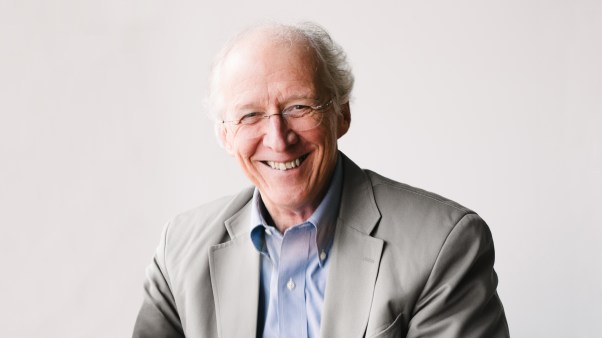
Some estimate that Muslims comprise about one percent of the U.S. population, but due to immigration and conversion they are one of the fastest growing groups in the country. Naeem Fazal was raised in Kuwait and came to the United States shortly after the country was liberated from Iraqi occupation in 1991. Today he is the lead pastor of Mosaic Church, a multi-ethnic congregation in Charlotte, North Carolina. We spoke with Fazal about his supernatural conversion from Islam to Christianity and what others should do, and avoid, when reaching out to Muslims.
What were the key factors God used in drawing you to faith in Christ?
First was community. I found community in a group of Christians through Fellowship of Christian Athletes (FCA) in college. We developed great friendships even though I was a Muslim.
Second was spiritual environments. I attended midweek gatherings on the college campus and weekend services at different churches because of my friendships with these Christians. I even attended a prayer meeting just because I was curious. These environments helped soften my heart toward the gospel.
The third factor was certain people in my life—particularly my brother and his roommate—who exemplified the gospel to me in a tangible way.
Last, it was the Holy Spirit—the power and the presence of God. I had a supernatural interaction one night in which I experienced Jesus in my room. That encounter forever shifted the course of my life.
Is your experience common among Muslim converts to Christianity?
Yes and no. There is no formula; there isn’t one thing that occurs in all Muslims’ lives that makes them follow Jesus. Yet I have found that all four factors I mentioned seem to play a part in Muslim conversion, some more than others. However, the majority of the conversion stories I hear seem to involve dreams and visions inspired by the Holy Spirit in which Christ is supernaturally revealed.
How can pastors in areas with growing Muslim populations learn to minister more effectively?
One of the worst things is to only read textbooks about Islam. You can’t read a few books on Christianity and expect to know how to engage all Christians. The same is true with Muslims. Most Islamic practices differ from community to community. It is essential to have a good knowledge of basic Islamic teachings, but it is critical to know how those teachings are carried out in the Muslim community in your town.
The best thing is to establish friendships and partnerships. By friendships I mean one on one interaction with Muslim people in your community in which you and your family interact with their families on a foundation of mutual respect. By partnerships, I mean being intentional about collaborating with Islamic leaders in your area for humanitarian projects.
In seeking to reach Muslim neighbors, what strategies should a church employ and which should they definitely avoid?
I would avoid public debates. I think debates in the context of a friendship are where a breakthrough can be expected. Relational strategies are the best, but I also think partnerships with Islamic associations around local causes also have a lot of potential. Partnering with international clubs and colleges is also a great way to reach the Muslims of the next generation. We recently did a series at our church called “Faithology,” in which I interviewed several religious leaders in our community. One was a Muslim leader and activist. The conversation led him to invite me to be a part of a project that he is doing within the community.
What struggles do Muslim converts to Christianity face, and how can the church help them?
Rejection and loneliness are common struggles for Muslim converts. They feel rejected and alone when they become followers of Christ, because they have left a community and not just a religion. They may have broken strong ties with friends and family and now face the challenge of building new relationships within the Christian community.
Initially, a Muslim will feel extremely accepted and celebrated as a new convert. But after the newness of his conversion has faded away, ex-Muslims can feel out of place unless they have been able to make real friendships. For this reason I think churches should intentionally help ex-Muslims get into small groups or Bible studies. A growth track that allows them to detox from their former beliefs and establish a growth process with new relationships is vital.
Copyright © 2009 by the author or Christianity Today/Leadership Journal.Click here for reprint information on Leadership Journal.