The novel, Georg Lukacs claimed, is “the epic of a world that has been abandoned by God.” Most accounts of the modernist novel tend to rely on a standard narrative of secularization, in which modernity is said to have brought about what Max Weber influentially called “the disenchantment of the world.” At once a chronicle and a product of secularization, modernist literature marks “the disappearance of God” (in J. Hillis Miller’s phrase) or offers a kind of eulogy at “God’s funeral” (as A. N. Wilson put it, after the title of a poem by Thomas Hardy).

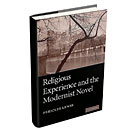
Pericles Lewis takes issue with these accounts, arguing that modern novelists challenged the secularization hypothesis that was being developed in the social sciences around the same time. While most critics “tend to read back into them a blithely secular point of view,” Lewis shows how modernist writers, far from celebrating secularization, were ambivalent if not anguished about the loss of belief, and their fiction offered new accounts of the sacred for an age of continued religious crisis. “If God died in the nineteenth century,” Lewis quips, “He had an active afterlife in the twentieth.”
Lewis juxtaposes each of his exemplary novelists with a major sociologist or psychologist of the period: thus Henry James is paired with his brother William; Marcel Proust with Émile Durkheim; Franz Kafka with Sigmund Freud; and Virginia Woolf with Max Weber. This clever structural device allows Lewis to demonstrate that modernist writers developed similar if somewhat less codified ways of understanding residual forms of the sacred in a profane world. Like social scientists, novelists explored the varieties of religious experience outside institutional religion: in the magical power of words, for instance, or in borderline states of consciousness that took on a kind of mystical character, or in secular epiphanies that testified to an ongoing relationship between social life and sacred power. Unlike social scientists, however, the novelists tended to be more skeptical about claims for the essentially secular character of modernity. They described, instead, a re-enchantment of the world.
Mark Eaton is professor of English at Azusa Pacific University. He is co-editor, with Emily Griesinger, of The Gift of Story: Narrating Hope in a Postmodern World (Baylor Univ. Press).
Copyright © 2010 Books & Culture. Click for reprint information.