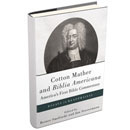
Despite laudable efforts by several scholars over a period of several decades, the Puritan polymath and pastor Cotton Mather continues to suffer from an unusually negative reputation. To be sure, in any accounting, Mather must be considered his own worst enemy. His support for the Salem Witch Trials of 1692 made it easy for later observers to view him as a sucker for superstition. The self-preoccupation of his extensive diary offered a field day for amateur historian-psychologists. And Mather’s fever for authorship, which led to the publication of over 400 separate works, left a figure who is much easier to lampoon than to assimilate. Yet careful students have long since shown that taking Mather seriously yields great rewards, both for an individual life marked by extraordinary learning and great (if tortured) piety as well as the open window this life opens on to his times. Richard Lovelace’s The American Pietism of Cotton Mather: Origins of American Evangelicalism (1979) performed this service for Mather’s significant anticipations of revivalist evangelicalism (Mather was the first to use the word “revival” in its modern sense); Winton U. Solberg’s critical edition of Mather’s 1721 The Christian Philosopher (1994) did the same for Mather’s significant place in bridging the older world of Puritan dogmatism and the new era of Enlightenment reason.
Now a scholarly effort of extraordinary dimensions is reinforcing the image of Mather as a significant theologian/intellectual/pastor to whom attention must be paid. The project is the publication of Mather’s Biblia Americana, a huge manuscript of scriptural commentary, natural theology, and miscellaneous theological reflection. Mather worked on this project much of his adult life, but because of its bulk he was never able to see it published. The wait for publication, however, has come to an end with a 10-volume edition announced by Mohr Siebeck and Baker Academic (the first volume, on Genesis, edited by Reiner Smolinski, has recently been published).
As a way of promoting the publication and as a self-standing academic contribution in its own right, the project’s editorial directors in 2008 convened an all-star lineup of early American scholars to consider Mather and his significance. This book is a result of that conference. Its essays explain, among other important matters, how Mather’s treatment of the epistle of James compares to the largely similar treatment by Jonathan Edwards; why Mather changed his mind about prophecy when a former authority on whom he had relied “came out” as a heretical Arian; how Mather’s complex attitude to slavery (acknowledging the legitimacy of the institution while condemning the “manstealing” in Africa that made modern slavery possible) resulted from trying to follow the Bible literally rather than from anything like modern racism; how Mather’s reputation has varied widely over time, revealing much about later American religious and intellectual life; and, most of all, expanding earlier insights from Lovelace and Solberg—why Mather’s singular combination of Puritan, pietist, and Enlightenment convictions reveals so much about the entire Protestant world in the decades immediately before the emergence of modern evangelicalism. The collection is both solidly researched and surprisingly readable; even its most esoteric chapters shed much light on Mather. And the book as a whole amounts to a powerful advertisement for the 10-volume project.
Mark Noll is Francis A. McAnaney Professor of History at the University of Notre Dame. He is the author most recently of The New Shape of World Christianity: How American Experience Reflects Global Faith (InterVarsity Press).
Copyright © 2011 Books & Culture. Click for reprint information.