In a previous post, we presented reasons churches should NOT oppose gay marriage. Now we present Matthew Lee Anderson’s case for churches to oppose same-sex marriage legislation.
Few aspects of our public witness on ethical and political questions are as contentious and difficult as the questions of gay marriage and gay rights. The watershed announcement by President Obama that he too now supports full marriage equality for gays and lesbians (though he incoherently wants to leave that “right” to the states) has ignited introspection among many conservatives over whether it would be better to no longer defend traditional marriage in the public square. The danger is that articulating this particular social good has the byproduct of creating resentment and hostility from those who disagree, thereby corrupting Christianity’s attractiveness by unnecessarily aligning it with a political stance.
It’s worth noting, I think, that the legal developments around marriage have the appearance of being victories for conservatives but are essentially nothing more than rearguard actions. The moment a position has to be codified into law it has ceased to be the law of the land.
And yet, as someone with broadly conservative instincts I’m not yet ready to give up articulating a traditional view of marriage in public and working to support it theologically, socially, and by even by law. After all, gay marriage may not be the “foregone conclusion” that many folks think it is.
The generational voting pattern in North Carolina was considerably closer than people might have thought, and polling may be less conclusive on the side of gay marriage than it appears.
What’s more, untangling the religious liberty issues that will arise upon the expansion of marriage rights to gay and lesbian couples will, I suspect, prove far more challenging than many people realize. This is especially true if the logic of the case for gay marriage treats anyone who opposes it as bigots—regardless of whether they are or not. Yet calls to end “religious based bigotry,” a phrase that simply targets anyone who believes homosexuality is wrong for religious reasons, are common fare for public discourse on the question. The strategy of equating opposition to gay marriage to opposition to interracial marriage leaves no room for people to object to that form of union for any reason whatsoever without being fundamentally bigoted. And that will create considerable social problems for Christians in many areas of life. A wedding services provider, for instance, who objects to gay weddings for religious reasons may have to decide between staying in business or violating their conscience. There’s no easy answer to that situation—my only point is to suggest that not opposing gay marriage may not solve Christianity’s image problems like we are increasingly promised.
At its core, the question of gay marriage is not simply one of tax benefits or social prestige: it is a question about how our society will organize itself and whether we can recognize permanent gay unions without marginalizing people who disagree. As Christians, we have no need to fear marginalization. It is simply what we can expect as long as we follow Jesus. But as Christians living in a participatory democracy, we are given a seat at the table and allowed to chime in on deliberations. Which means having the freedom to not run after stigmatization, either.
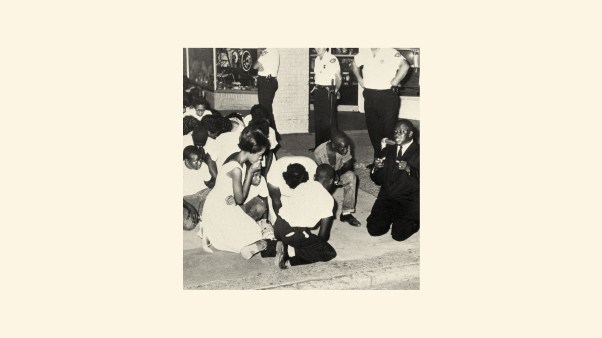
Perhaps the most important reason to continue to organize our society around defending and promoting tradition marriage is that, well, it’s true. We may take it as true on special revelation, but what’s true there is true from general revelation as well. The effects of sin may make secular reasoning less persuasive, but that is not a new problem and, by and large, it has not stopped Christians from playing in public in the past. In fact, one of the most successful social reform movements in American history—the Civil Rights movement—used a combination of secular and religious arguments the way traditional marriage defenders are trying to do now.
None of this means that traditional marriage proponents can or should continue with the sort of strategies they have employed in the past. But cheerfully, winsomely, and steadfastly stating the truth is what we are called to do. That message will be harder to hear if our dominant institutions—like our government—are set up in such a way as to oppose it.