News

Philistine Digs Define David and Solomon

Early Israelite dig helps define David and Solomon.

Philistine Digs Define David and Solomon

Philistine Digs Define David and Solomon

Two small portable shrines are giving Bible scholars new clues about Israelite religious practices during the time of David and Solomon. They also indicate a pendulum swing in the world of biblical archaeology.

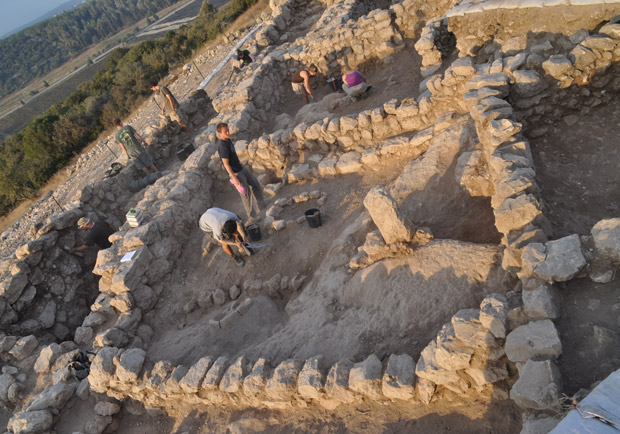
Hebrew University archaeologist Yosef Garfinkel showcased the shrines at a news conference in May. They were discovered during last summer’s excavations at Khirbet Qeiyafa, a ruin overlooking Israel’s Elah Valley dated to 1020-980 B.C.

The Elah Valley was where David brought down the giant Goliath, signaling the beginning of the end of Philistine hegemony over the Israelites. Similarly, the discoveries at Khirbet Qeiyafa herald the diminishing influence of minimalist Bible critics who have discounted the importance of the biblical kings.

John Monson, an archaeologist at Trinity Evangelical Divinity School, is excavating at Khirbet Qeiyafa this summer. He believes Garfinkel’s excavations are revealing a fortress built to defend one of the most important routes between the Israelites in the Judean hills and the Philistines on the coastal plain.

“This is a front-row seat to what transpired in that ebb and flow between Israel and the Philistines, as we see it recorded in 1 and 2 Samuel,” he said.

Archaeologists have been arguing for decades over whether David and Solomon had the kingly stature described in the Bible or were more like tribal chieftains. Garfinkel is helping clear up the dispute.

More archaeologists are now focusing on this border region. “I see a gold rush mentality now in the lowlands of Judah,” Monson said.

This summer, archaeologists are beginning a new excavation at nearby Azekah. Socoh, another site overlooking the Elah Valley, will open up soon. These will join ongoing excavations at nearby Tel Burna, Tel es-Safi (Gath), and Tel Zayit.

Steve Ortiz, professor of archaeology at Southwestern Baptist Theological Seminary, thinks Khirbet Qeiyafa may predate both David and Solomon. “As early as the time of King Saul,” he said. “[It] represents that change from a tribal society to one with centralized cooperation.”

Ortiz excavated with Garfinkel at Tel Mikne-Ekron, a Philistine site, and now co-directs excavations at Tel Gezer, another border site.

Both Ortiz and Monson note the lack of iconography on the two shrines and the absence of idols with them. That would seem to conform to Scripture’s admonition against graven images.

Also intrigued is Wheaton College archaeologist Daniel Master, who directs the ongoing excavations at Ashkelon, a coastal Philistine city.

“We will be trying to understand Garfinkel’s finds for some time to come,” Master said. “Since this period is not well understood in Judah, it is somewhat difficult to know how representative these finds are for the highlands as a whole.”


Also in this issue

The CT archives are a rich treasure of biblical wisdom and insight from our past. Some things we would say differently today, and some stances we've changed. But overall, we're amazed at how relevant so much of this content is. We trust that you'll find it a helpful resource.

Cover Story

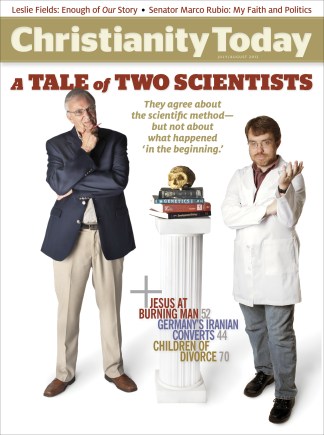
A Tale of Two Scientists: What Really Happened 'In the Beginning'

Tim Stafford

Cover Story

The Evolution of the Debate: Divided on Origins

CT Staff

Cover Story

Infographic: America's View on Evolution and Creationism

Graph by Column Five / Courtesy of The BioLogos Foundation

Review

The God Who Is (and Isn't) There

John Wilson

How to Drive Out Demons

The Cosmos's Best-Kept Secret

The Hymns That Haunt Us

Wilson's Bookmarks

John Wilson

The Problem with ‘Incarnational Ministry’

J. Todd Billings

Excerpt

Ashamed No More: A Pastor's Journey Through Sex Addiction

T. C. Ryan

Finding Jesus at Burning Man

Phil Wyman

NASCAR Driver Blake Koch Takes a Stand for Jesus

Mark Moring

Review

How Narratives Can Prepare Hearts for the Gospel

Jerry Root

The Gospel Is More Than a Story: Rethinking Narrative and Testimony

Rejoicing in the Wrath: Why We Look Forward to the Judgment Day

Trevin Wax

Editorial

Why Gay Marriage Is More Than a Legal Issue

How Maya Moore Brings Style and Grace to the U.S. Olympic Women's Team

Mark Moring

Gospel Goes Global

Elissa Cooper

Rich Mouw on Why Evangelicals Need to Be Quick to Listen to Mormons

Interview by Peggy Fletcher Stack

News

Childproofing Churches

C. L. Lopez

Why Divorce Calls Children's Existence into Question

Andrew Root

News

Foreign Adoptions in Short Supply

Ken Walker

The Other Iranian Revolution

Matthias Pankau and Uwe Siemon-Netto

News

Mixed Views on Vanderbilt Veto

Sarah Eekhoff Zylstra

Review

Go and Do

Matt Reynolds

Review

Where Sin Abounds

Matt Reynolds

Review

Enough

Matt Reynolds

My Top 5 Books On Special Needs

Letters to the Editor

Louis C. K. Disses Himself

Jessica DeCou

News

Passages

News

Gleanings

News

Go Figure

News

Should Pastors Be Guaranteed Job Security?

Compiled by Ruth Moon

News

Quotation Marks

A Season of Change at Christianity Today

Harold Smith

Review

Fighting to Die: Confusion About the Purpose of Martyrdom

Joe Carter

Should Churches Display the American Flag in Their Sanctuaries?

Douglas Wilson, Lisa Velthouse, and Russell D. Moore

News

Syria's Last Chance

Dale Gavlak in Amman, Jordan, and Cairo, Egypt

Q & A: Marco Rubio on His Faith of Many Colors

Interview by Sarah Pulliam Bailey

View issue

Our Latest

Death of a Eulogy

Matthew D. Love

Christian funerals are increasingly secular. But how can Christians go quiet on the gospel at these of all moments?

The Vanishing Gifts of Boredom

The Bulletin with Christine Rosen

How technology steals uncomfortable yet formative human experiences.

Christianity Today: A Declaration of Principles

Where we stand at seven decades—and how readers can help.

Being Human

Steve Cuss & Clarissa Moll: How Your Communication Style Fuels Reactivity—and How to Change It

Communication styles that reduce anxiety: rigid vs fluid, rapid vs deliberate

When the Times Were ‘A-Changin’’

CT reported on 1967 “message music,” the radicalism on American college campuses, and how the Six-Day War fit into biblical prophecy.

From Panic Attacks to Physical Discipline

Justin Whitmel Earley

How one new year turned my life around spiritually and physically.

Reexamining Thomas Jefferson

Thomas S. Kidd

Three books on history to read this month.

Where Your Heart Is, There Your Habits Will Be Also

Elise Brandon

We won’t want to change until we know why we need to and what we’re aiming for.

Apple PodcastsDown ArrowDown ArrowDown Arrowarrow_left_altLeft ArrowLeft ArrowRight ArrowRight ArrowRight Arrowarrow_up_altUp ArrowUp ArrowAvailable at Amazoncaret-downCloseCloseEmailEmailExpandExpandExternalExternalFacebookfacebook-squareGiftGiftGooglegoogleGoogle KeephamburgerInstagraminstagram-squareLinkLinklinkedin-squareListenListenListenChristianity TodayCT Creative Studio Logologo_orgMegaphoneMenuMenupausePinterestPlayPlayPocketPodcastRSSRSSSaveSaveSaveSearchSearchsearchSpotifyStitcherTelegramTable of ContentsTable of Contentstwitter-squareWhatsAppXYouTubeYouTube