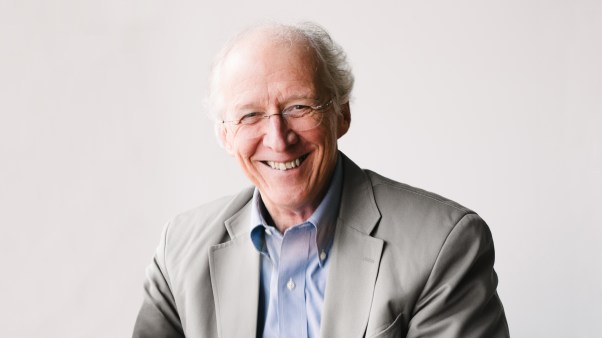
Today’s interview is with Jake Hanson. Jake is a preacher, teacher, and retreat speaker. His latest book Igniting the Fire: The Movements and Mentors Who Shaped Billy Graham looks at the influences on the evangelist that helped shape him into the man he became.
1) There are many good books written on the life and impact of Billy Graham. What separates yours from their work?

In Igniting the Fire I try to give an answer to the question of how Billy Frank Graham, a North Carolina farm-boy, became Billy Graham, a world-renowned evangelist. I focus particularly on the years 1934-1949 to do so. What I discovered as I did my research is that there was this marvelous evangelistic environment from which Graham’s ministry was ‘birthed,’ so to speak. So I painted a picture of that environment during the 1930s and 40s, including the institutions where he was educated, the movements that he involved himself in, and the mentors who invested in him.
2) In your view, what was the most cataclysmic event in the early life of Billy Graham?
As I see it, there are really three cataclysmic events in Billy Graham’s early life which set the trajectory of his ministry. In 1938, he was dumped by his girlfriend, in 1949 he wrestled with doubt over the authority of the Word of God in conversation with his friend Charles Templeton, and in 1957 he had a major split with fundamentalist friends like Bob Jones. Each of these events led him to reevaluate his life and ministry and set its trajectory in important ways.
So while I can’t say any is “the most” cataclysmic event, there likely wouldn’t be ‘evangelist Billy Graham’ without his having been dumped by his girlfriend.
The break-up caused him to reassess his life and priorities that late spring and summer, and it caused him to come face-to-face with his doubts about his abilities as a preacher. He took long, late-night walks around the golf course that surrounded the campus praying to God for direction and comfort. He heard the Lord telling him that he wanted him to preach, but Billy began to ‘argue’ with the Lord. “I can use you … I need you … You make the choice, I will find the place.” There, on the 18th green of the golf course, he knelt down with tears in his eyes, and surrendered himself: “Lord, I’ll go wherever you want me to go, and I’ll preach wherever you want me to preach.”
There likely wouldn’t be ‘evangelist Billy Graham’ without his having been dumped by his girlfriend.
3) How did his time at Bob Jones College, the Florida Bible Institute and Wheaton College impact his future ministry?
The impact of Bob Jones (Sr. and Jr.) on Billy Graham is often overlooked or downplayed because of the fundamentalist controversy in the 1950s. Billy Graham really did look up to them for advice in both evangelism and as an educator, a role that Graham held as president of Northwestern Bible School. Perhaps it was simply a bit of hyperbole, but in 1951 Graham said that at Bob Jones College “I first learned about evangelism. It was there that I received my passion for the souls of men and began to realize the desperate need of a world outside of Christ.”
It was at the Florida Bible Institute (now Trinity College of Florida) as a student where he got his first real opportunities to be trained in evangelism. The founder of the institute, Dr. W.T. Watson, had a view that students training for ministry should get their feet in the fire of ministry as soon as possible. So almost as soon as Billy got to campus, he was preaching on street corners, in trailer parks, and had his first church preaching opportunities—which led to his first revival meetings around the state of Florida and in the deep south.
I think at Wheaton he began to really mature and gain confidence in his gifts. His horizons were also broadened by the liberal arts education he received at Wheaton. His chosen major of Anthropology suggests that while he had a good foundation in the Bible, he was learning something of how people work and how they to reconcile God and humanity—the role of the evangelist.
4) Who was the most formative spiritual mentor in Billy Graham's life?
Billy Graham had several people who invested in him and mentored him, but Graham confided to others that no mortal had a greater influence on his life than the beloved president of Wheaton College from 1940-1965, Dr. V Raymond Edman.
The two met when Billy arrived on the campus of Wheaton in 1940, and Dr. Edman immediately began to encourage the homesick student from the South. Edman also gave the young preacher opportunities to preach and opened the door for him to pastor the small church he served while a student. At Dr. Edman’s death, Billy Graham said that he never made a major decision without first consulting Dr. Edman. But I think where Dr. Edman’s greatest impact comes is in his spiritual encouragement. Edman wrote little notes of encouragement as his ministry took off which were, according to Graham, “among the most encouraging things that I receive[d].”
When Billy faced his greatest opposition from fundamentalists in the mid-1950s, along with the support of his father-in-law L. Nelson Bell, Edman helped walk him through the firestorm. Billy invited him to Crusades and retreats with his team to share devotions and pray with the ministry members, and so his influence moved past just Billy.
Billy Graham was raised to be a good, hard working, honest farmer, more than he was raised to become an evangelist. But God had other plans.
5) How did Billy Graham’s upbringing, specifically the religious practices of his parents, shape his future ministry?
There is a little bit of mixed evidence about where his parents were spiritually during Billy’s youth. His mother trained him in memorizing the Westminster catechism, and held ‘family altars’ or devotions, but his hard-working father only began to really take his faith seriously after a near-fatal accident in 1932. This spiritual progress of his parents came to fruition when Billy was a teen, when, like most teenagers, he was trying to find his own independence. In short, Billy Graham was raised to be a good, hard working, honest farmer, more than he was raised to become an evangelist. But God had other plans.
This is demonstrated in one of the most striking examples of God’s sovereign work in the calling of Billy Graham. In 1934, Billy’s father, Franklin Graham, Sr., was part of a group of men who gathered together for a series of day-long prayer meetings to pray for the spiritual condition of Charlotte. One of these meetings was on the Graham farm, where the prayers of the men grew more confident and one of the participants prayed, “Lord, I pray that you would raise up someone to preach the gospel around the world.”
Billy was on the farm that day. But he was not interested in the prayer meeting, telling another that the group was just some ‘fanatics’ who had talked his father into using his farm for the day.
We know the rest of the story, of course. Out of those prayer meetings came the Ham-Ramsey evangelistic meetings where Billy Graham made his decision for Christ, and he became the answer to that bold prayer over the next half century.
Daniel Darling is vice-president of communications for the Ethics and Religious Liberty Commission. He is the author of several books, including his latest, Activist Faith.