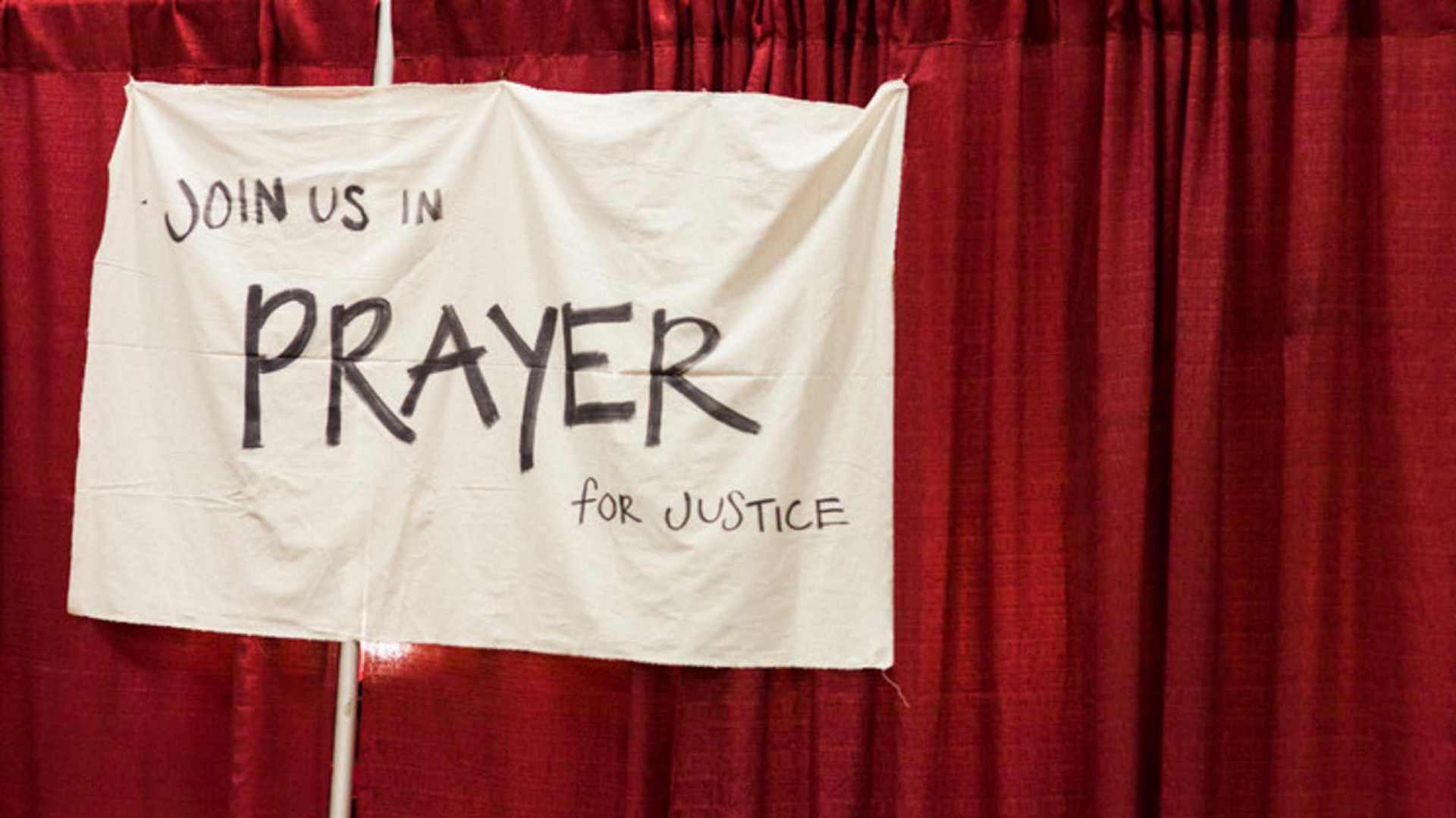
For the past two decades, International Justice Mission (IJM) has been advocating for the disenfranchised around the world. Recently, one of its best-known causes, the fight against sex-trafficking, has become a “Christian cause célèbre.” While CEO Gary Haugen says he’s cognizant of the grim reality that today “there are more people in slavery than any other time in history,” he also sees a historic opportunity: the chance to end trafficking once and for all by inviting local churches into the struggle.
“The fact is, the church—that is, common Christian communities around the world—can have a decisive role,” Haugen said. “They just don’t know about it.”
This week, IJM will be unveiling a new campaign aimed at educating American Christians through their local congregations. Haugen and senior vice president of global advancement Melissa Russell recently spoke with Christianity Today’s assistant editor Morgan Lee about IJM’s broader mission, its new campaign, and why they need churches to join the fight.
IJM may be best known for its work against sex trafficking, but your work is actually far broader, right?
Haugen: Our focus from the beginning has been to protect the poor from violence, whether slavery, land grabbing, the exploitation of widows and orphans, sexual violence against women and girls, or police abuse. After 25 years, you want to do more than just rescue victims; you want to prevent those abuses from ever happening in the first place.
So how do you go about doing this?
Haugen: It begins locally. Over 94 percent of our staff on the ground are local nationals. We focus on building coalitions to transform broken criminal justice systems. It means working with not only individual cases, but also faith communities and the private sector to build a coalition of forces that can actually accomplish systemic change.
Do you see the church as just one of the actors in these coalitions, or does it play a larger role?
Haugen: I think that it has a decisive role to play. The church has the extraordinary capacity to wake people up—look at what it did in the West 200 years ago. The church also has this pivotal role of being a prophetic voice to the authorities and government. Today, we’re in a situation where slavery is illegal everywhere in the world, but the laws are just not enforced. It’s the church’s job, then, to go before the authorities and say, “You have been empowered by God to restrain evil, and if you don’t do that, you are actually complicit with evil and we need to speak with you about that.”
What is your vision for how the local church can help IJM fulfill its mission?
Russell: IJM has traditionally done a great job at engaging one-on-one with churches, but if we want to engage the whole church, we’ve got to equip people to bring the message of justice to their own communities. We’re trying to equip people to go to communities where they have the circle of influence and talk about the scriptural basis for justice and what is going on in the world.
It seems like a broader community also keeps the mission sustainable.
Haugen: When we talk to churches, we say two things are indispensable: rootedness in Scripture and doing it in community. Many times you have two or three justice “freaks” take up the banner passionately, but they’re not part of the broader community; they’re not usually supported, and these causes are not embedded in the actual life of that church family. Our new approach is an opportunity to get churches engaged in this struggle over the long haul. We will always end up feeling overwhelmed by the size and scope of the problem, but the answer from Jesus has always been the body of Christ.