Our Jan/Feb Issue: Rejoice, Tremble, and Keep on Reading

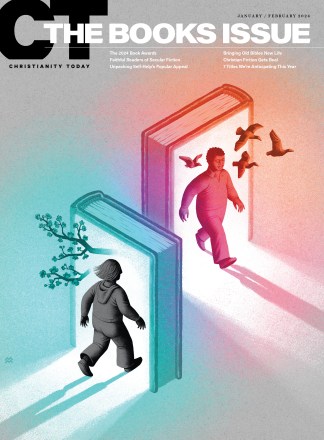
A look inside our books issue.

Illustration by Miriam Martincic

People who write books love the moment when their books are unveiled before the watching world. They’ve labored, hard—thinking and rethinking, writing and revising, dreaming of the day when that folder of half-finished Word files emerges as something holdable and readable, complete with cover art, numbered pages, and a barcode.

And so they celebrate. Some authors host launch parties, gathering friends, fans, and members of publishing teams. Some record themselves unboxing early batches of finished copies. Some document first encounters with their handiwork on the shelves of a library or brick-and-mortar bookstore.

Yet if books are occasions for rejoicing, they are often monuments to suffering as well. Many wouldn’t exist if not for some pain or injustice either endured directly or witnessed in others. (I was struck, while reviewing this year’s CT Book Awards, that both winners in our Christian-living category deal frankly with the agony of mental illness.) Even for writers tackling happier subjects, the ordeal of getting words on paper can be physically taxing and emotionally scarring.

Books, one might say, frame a wide spectrum of human experience, spanning triumph, tragedy, and everything in between. They are as expansive, varied, and unpredictable as life itself. Surely some of them shouldn’t be handled without a measure of fear and trembling.

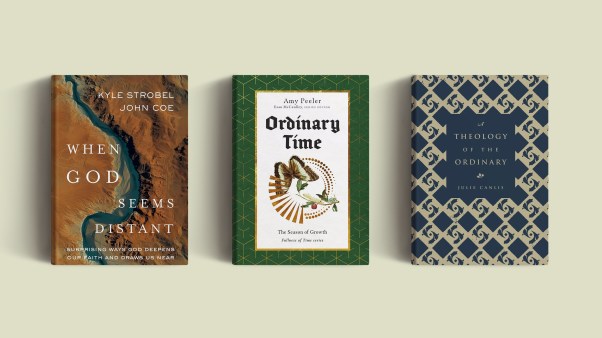
Hopefully, this issue of CT gestures toward the fullness of what books can do, say, and be in the lives of Christian readers. In keeping with recent tradition, we’re devoting ample space to the Book Awards themselves, which commend some of the previous year’s top titles in areas like theology, discipleship, apologetics, and missions. Other features analyze the popularity of self-help books among Christian audiences, survey the changing landscape of Christian fiction, and—speaking of fiction—mount a case for appreciating contemporary literature (p. 60).

And pardon the unseemly gloating, but I’m positively stoked to try out an idea I’ve entertained for years: asking a group of renowned Christian authors to throw off the fetters of professional obligation, ascend to a realm of pure creative freedom, and sketch out a theoretical book they’d love to write—but probably never will.

As you enjoy this issue, thank God for the gift of books. Say a prayer for everyone involved in making them. And keep on reading.

Matt Reynolds is CT’s senior books editor.
Also in this issue

In keeping with recent tradition, we’re devoting our first issue of the new year to the place of books and reading in the Christian life. Alongside the annual CT Book Awards—which commend some of the previous year’s top titles in areas like theology, discipleship, apologetics, and missions—we’ve included adapted excerpts from several finalists. Other features analyze the popularity of self-help books among Christian audiences, survey the changing landscape of Christian fiction, and mount a case for better appreciating contemporary literature. As a bonus, we’ve asked eight accomplished Christian authors to daydream about a book they would love to write—even though, realistically, they’ll never pull it off.

Our Latest

Public Theology Project

Why Christians Ignore What the Bible Says About Immigrants

Believers can disagree on migration policies—but the Word of God should shape how we minister to vulnerable people.

Review

Apologetics Can Be a Balm—or Bludgeon

Daryn Henry

A new history of American apologetics from Daniel K. Williams offers careful detail, worthwhile lessons, and an ambitious, sprawling, rollicking narrative.

Hold the Phone?

Anna Mares

Faced with encouragement to lessen technology use, younger Christians with far-flung families wonder how to stay connected.

Norman Podhoretz Leaves a Legacy of Political Principle

Michael Cosper

The Jewish intellectual upheld the Judeo-Christian tradition.

The Russell Moore Show

Joseph Loconte on the War for Middle-Earth

What if the most decisive battles in our time aren’t fought with ballots or bombs—but with the imagination?

News

A House of Worship Without a Home

One year after the Palisades and Eaton fires, congregations meditate on what it means to be a church without a building.

‘The Image of God Was Always In My Mother’

Kate Lucky

Responses to our Sept-Oct issue.

Disintegration is the Church’s Greatest Threat

A note from Mission Advancement about the Big Tent Initiative and One Kingdom Campaign.

Apple PodcastsDown ArrowDown ArrowDown Arrowarrow_left_altLeft ArrowLeft ArrowRight ArrowRight ArrowRight Arrowarrow_up_altUp ArrowUp ArrowAvailable at Amazoncaret-downCloseCloseEmailEmailExpandExpandExternalExternalFacebookfacebook-squareGiftGiftGooglegoogleGoogle KeephamburgerInstagraminstagram-squareLinkLinklinkedin-squareListenListenListenChristianity TodayCT Creative Studio Logologo_orgMegaphoneMenuMenupausePinterestPlayPlayPocketPodcastRSSRSSSaveSaveSaveSearchSearchsearchSpotifyStitcherTelegramTable of ContentsTable of Contentstwitter-squareWhatsAppXYouTubeYouTube