A church floor was discovered in Israel in 2004 in the ancient city of Megiddo. It was found a few miles down the road from Tel Megiddo, one of the most famous archaeological sites in the Holy Land, inside a prison.
“It was in fact directly inside the walls,” said Jeffrey Kloha, former head of curation at the Museum of the Bible.
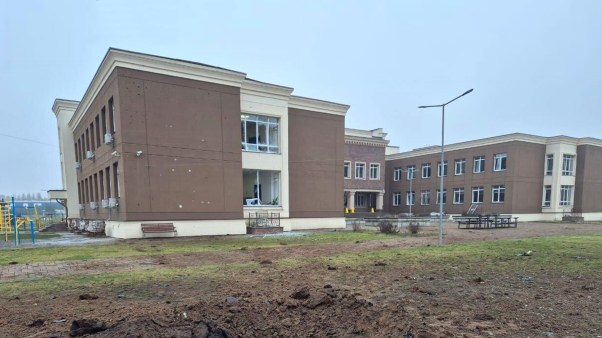
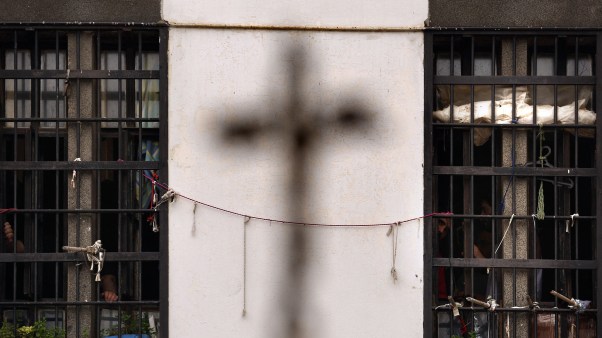
Archaeology is hard enough under normal conditions. Megiddo Prison, which holds more than 1,000 Palestinians believed to be security threats and has been a source of serious controversy in Israel, made things a lot more complicated.
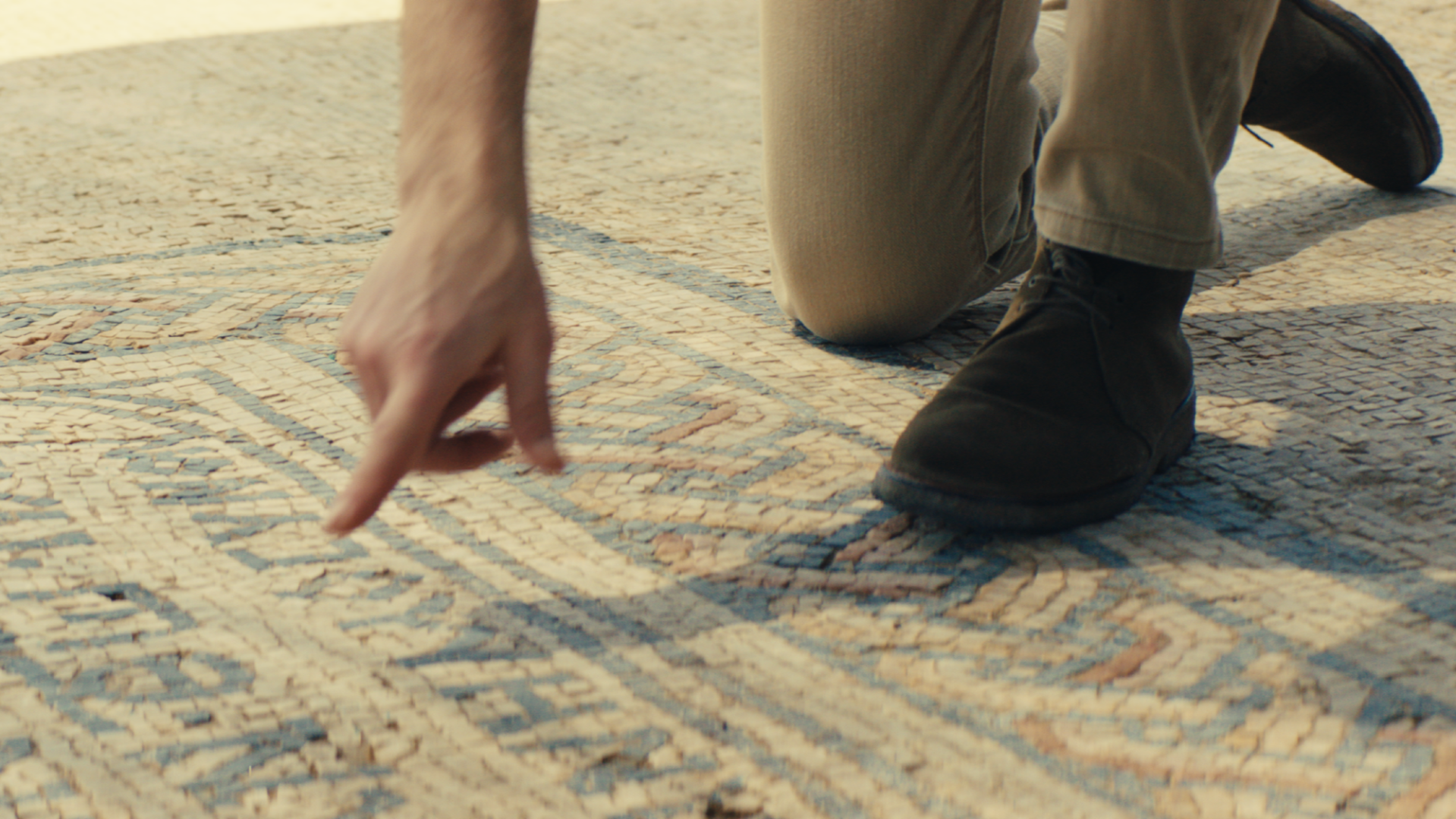
But in 2024, the Israel Antiquities Authority (IAA) finally excavated the 580-square-foot mosaic, conserved it, and offered it to the Museum of the Bible for its first public appearance in a temporary display in Washington, DC.
IAA experts cut the mosaic into ten pieces. They packed them up and shipped them to America, where the pieces were reassembled at the Bible museum.
The mosaic is being touted by the museum as “one of the most groundbreaking archaeological discoveries since the Dead Sea Scrolls.”

Christopher Rollston, George Washington University professor of biblical and Near Eastern languages and civilizations, said the display is “stunning.”
Rollston is an expert in ancient inscriptions and internationally renowned as a skeptical voice, frequently raising questions and concerns about bold archeological claims. But he has no hesitation endorsing the significance of the Megiddo Mosaic.
“From my perspective,” Rollston said, “there’s not a whole lot to quibble with here.”
Israeli archaeologists say the church floor was built around AD 230. They were able to give a precise date based on coins found during excavation, as well as from the style of mosaic and the type of pottery uncovered at the site.
This is, to date, one of the oldest-known church buildings and the first to be constructed specifically for the purpose of worship. A century later, after the Roman emperor Constantine legalized Christianity, churches began to proliferate throughout the Mediterranean. Only three churches from before that time have been discovered by archaeologists: a house church in Capernaum, a house church in eastern Syria, and now this structure in Megiddo.
The mosaic floor appears to have been built for a Roman soldier named Gaianus. A perfectly preserved inscription reads, “Gaianus, also called Porphyrius, centurion, our brother, has made the mosaic at his own expense as an act of generosity. Brutius has carried out the work.”
Gaianus was previously unknown to historians but now joins Cornelius (Acts 10) and the unnamed centurion of Capernaum (Matt. 8; Luke 7) as one of the first converts to the Christian faith in the Roman army.
A second inscription in the mosaic is even more exciting to scholars of early Christianity. It reads, “Akeptous, the friend of God, has offered the table to God Jesus Christ [for] remembrance.”
This is the earliest archaeological mention of Jesus Christ and is evidence early Christians thought Jesus was not just a good teacher, but actually God. Some historians had previously argued that the first followers of Christ didn’t believe in the Incarnation and only later came to see Jesus as divine. The inscription shows this early community affirmed Jesus was God.
The reference to the table also offers additional evidence of the early Christian practice of gathering around Communion.
“It doesn’t change the way we look at things,” Rollston said, “but it certainly corroborates some of the things we know from other sources.”
Near the center of the mosaic is a large stone block. The archaeologist’ report on the discovery does not say that it is a Communion table, but Rollston thinks it is probably the one mentioned in the inscription.
“It’s hard for me to believe it’s not,” he said.
The floor also has an octagonal medallion with a depiction of two fish. Fish were common Christian symbols. The Greek word for fish, ichthys, was used as an acronym for the phrase Jesus Christ, Son of God, Savior, and served to remind Jesus’ followers of his instructions to “fish for people” (Matt. 4:19).
The church floor has a third inscription that says, “Remember Primilla and Cyriaca and Dorothea, and moreover also Chreste.” No indication is given why they should be remembered. Perhaps these four—all women—were killed for their faith during a period of persecution. At the very least, the inscription testifies to the prominent role of women in the early church.
The whole mosaic is so well preserved that when people see it, many initially think it’s a replica, said Robert Duke, the new chief curator at the Museum of the Bible.
“They are stunned when they realize it’s the actual mosaic floor from back in the third century,” said Duke, who previously taught Old Testament at Azusa Pacific University. “People were celebrating the Eucharist in this room.”
Archaeologists believe Christians worshiped in the church in Megiddo for about 70 years. Sometime around the year 300, the floor was covered in pottery shards, which helped protect it for the next 1,700 years.
It is not clear why the church stopped being used. The Roman army base at Megiddo was decommissioned at about that time, so maybe everyone just left. There was also a wave of Roman persecution, so perhaps the believers were no longer able to meet openly in a dedicated worship space.
When Israel built a prison in the same spot in the 1970s, no one had any idea that it had once been a church with an amazing floor paid for by a Roman soldier who loved “God Jesus Christ.”
The Megiddo Mosaic will be on display at the Museum of the Bible through July. After that, the IAA may loan it to other institutions, allowing it to be seen by more people in other parts of the US. It will ultimately return to Israel. Officials are working to move the prison and establish a tourist site for the ancient church.
Gordon Govier writes about biblical archaeology for Christianity Today, hosts the archaeology radio program The Book and The Spade, and is the editor of Artifax.