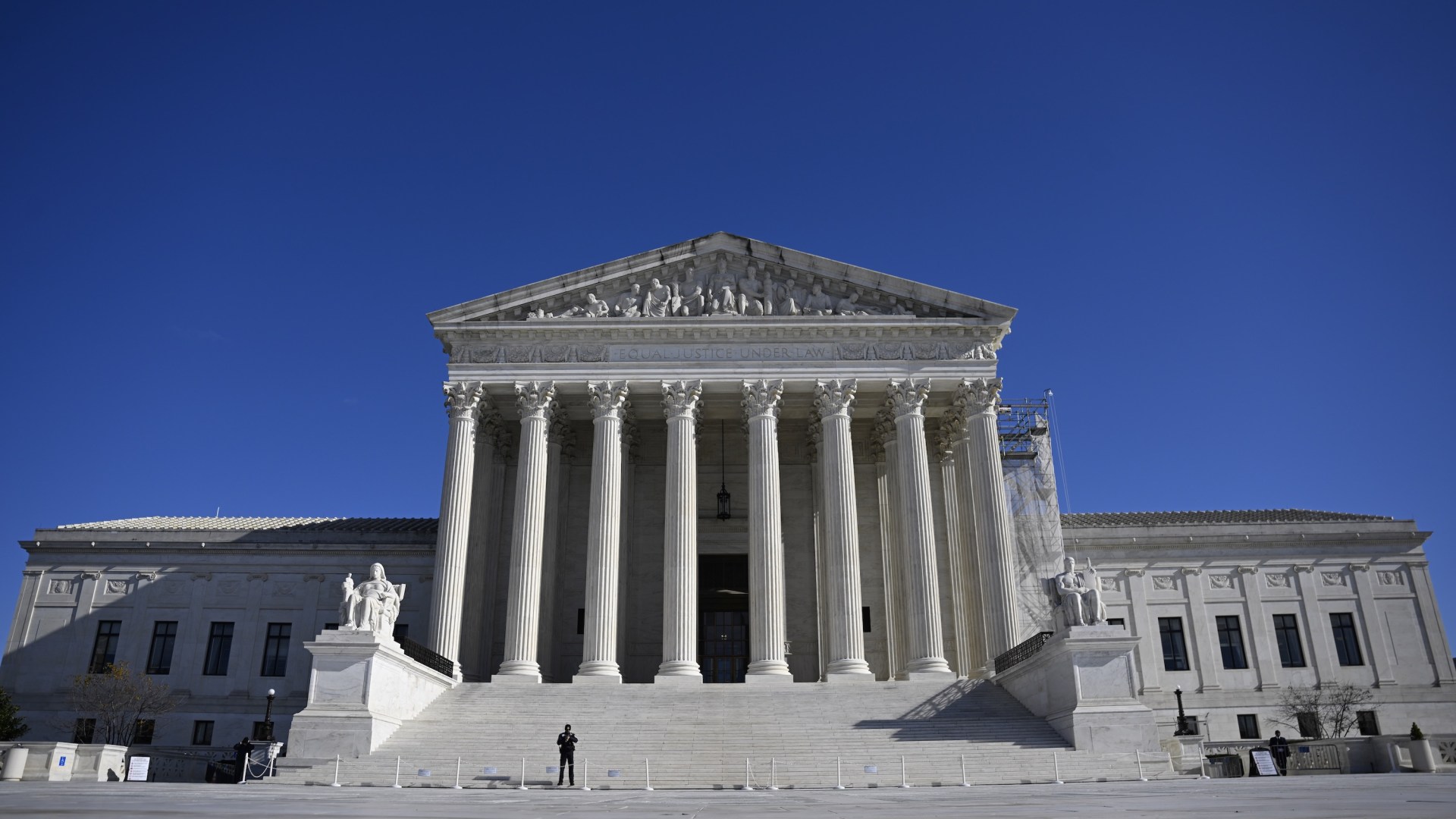
In one of the most anticipated rulings of its term, a divided Supreme Court blocked Oklahoma from launching the nation’s first religious charter school.
The justices deadlocked 4-4, resulting in them affirming the lower court ruling in the case. The 2024 Oklahoma Supreme Court ruling found the proposed Catholic charter school to be a violation of both the Oklahoma Constitution and the US Constitution’s establishment clause, the part of the First Amendment which bans state-sponsored religion.
In 2023, Oklahoma’s charter board approved the founding of St. Isidore of Seville as a Catholic charter school. St. Isidore would be a virtual, K–12 school run by the Roman Catholic Archdiocese of Oklahoma City and the Diocese of Tulsa and funded by the state.
The high court’s ruling on Thursday was unsigned, leaving no clues of the breakdown of votes. At the hearing on the case just a few weeks ago, five of the eight participating justices appeared in favor of the arguments for the religious charter school. Justice Amy Coney Barrett had recused herself from the case.
Charter schools are taxpayer-funded and operate like public schools but without the same curriculum requirements. The Catholic charter school planned to include teaching about the Catholic faith.
Though the Supreme Court has previously upheld vouchers for individual students to attend religious schools, it has not ruled on a state entirely funding a religious school.
Under Chief Justice John Roberts, the court has expanded the legality of government aid to religious organizations, one example being the 2017 Trinity Lutheran case that allowed a church to receive a government grant for recycled tires for its playground.
But Roberts made a comment during the April arguments about the Catholic charter school indicating that he saw this case differently than those other cases.
“You rely heavily in your brief on a number of cases, Trinity Lutheran, Espinoza, Carson. Those involved fairly discrete state involvement,” Roberts said to one of the lawyers representing the Catholic charter school and the state charter board. “This does strike me as a much more comprehensive involvement.”
Justice Elena Kagan, who voted with Roberts in favor of the government grants for Trinity Lutheran Church back in 2017, also felt this case was different than the other government aid cases the court had heard.
“These [charter] schools look like regular public schools,” she said.
A number of Christian churches and organizations had filed briefs on the side of the Catholic charter school, including the Assemblies of God, Christian Legal Society, National Religious Broadcasters, and the US Conference of Catholic Bishops.
The case had interesting dividing lines, with the Republican attorney general of Oklahoma arguing the case against the Oklahoma charter board and the Catholic charter school. Meanwhile the Trump administration joined on the side of the Catholic charter school.
The Oklahoma Supreme Court, whose ruling was affirmed by the Supreme Court, found the case to be very clear-cut.
“St. Isidore, a public charter school, is a governmental entity and state actor,” the state supreme court wrote last year. “The funding will go directly to St. Isidore, dissimilar from giving scholarship funds to parents. … The state will be directly funding a religious school and encouraging students to attend it.”
The state court continued, “St. Isidore cannot justify its creation by invoking Free Exercise rights as a religious entity. St. Isidore came into existence through its charter with the state and will function as a component of the state’s public school system.”
Therefore, the court ruled, it “violates state and federal law and is unconstitutional.”