The Christian Reformed Church in North America (CRC) will consider how Calvin University deals with faculty who have “personal difficulties” with the church’s confessional standards—specifically the standards on human sexuality.
More than 175 delegates are gathering at Redeemer University in Ancaster, Ontario, on Friday for the annual, week-long denominational synod. The agenda includes at least six overtures to modify the way the CRC handles gravamens, heavy issues where members or church leaders are not in complete agreement with the denomination’s doctrine. Since 2022, that doctrine has included a statement condemning homosexual sex, along with adultery, premarital sex, extra-marital sex, polyamory, and pornography. Last year, the denomination said that leaders of the church, including professors at CRC-affiliated schools, must actively work to resolve their differences and cannot hold their gravamens indefinitely.
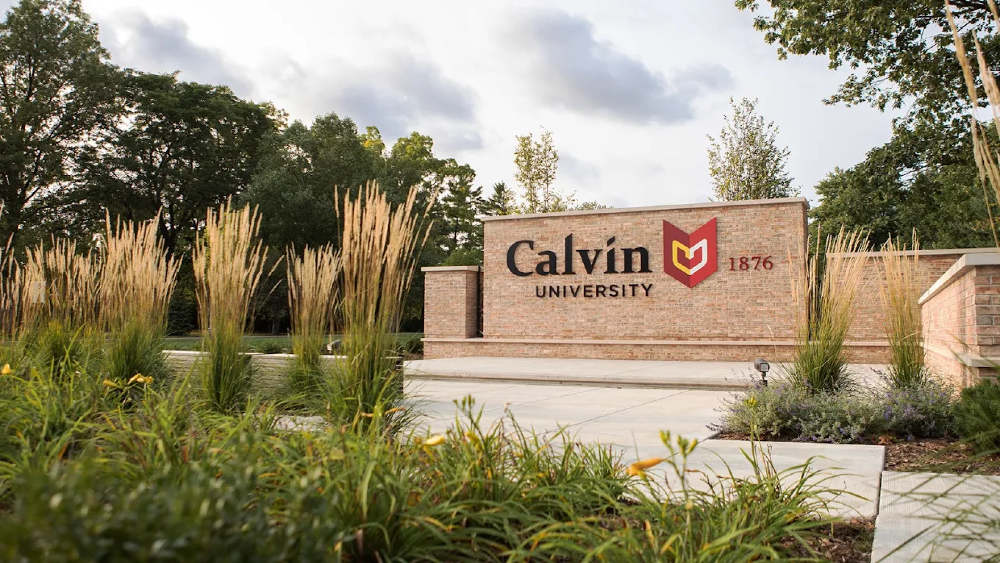
Delegates will hear how Calvin plans to work through doctrinal disagreements. The trustees of the Grand Rapids, Michigan, school have submitted a 27-page report.
The basic tension undergirding the debate is not new, CRC general secretary Zachary King told Christianity Today.
“I think the question is ‘What is the way that our denomination and Calvin University in particular will navigate the tensions between confessional adherence and academic freedom?’” King said. “And that’s been a tension for a long time.”
King said the denomination had a similar debate in the 1990s over issues of creation and evolution. Other common gravamens include issues of infant baptism and questions about predestination. The denomination has long recognized that professors don’t have exactly the same authority as ministers—and there’s even a distinction between seminary professors and those who teach other subjects—but the CRC still wants professors aligned with church confessions.
“But that push and pull has landed in different places over the course of the decades,” King said.
The trustees’ plan, going forward, is to give faculty a few years to work out personal reservations. They propose “an initial three-year onboarding period” where faculty members are not required to sign on to all the denomination’s confessional statements. Trustees also say they will allow “some indefinite exceptions only after at least six years of service,” which is the typical timeline to tenure.
The report says that the process will involve a period of discernment and mentoring, with “serious theological study and prayerful consideration.” In the case that an exception is granted, Calvin would “still require alignment of personal and professional conduct” including “teaching, scholarship, advocacy, and public pronouncements, as well as advising, guiding, and mentoring students.”
The plan will also require faculty to sign annually. Previously, leaders in the denomination signed only once.
Frans van Liere, a history professor at Calvin, said many faculty members have grave concerns about the recent synod decisions. Nearly 150—including van Liere—signed a letter saying the denomination “could undermine the academic freedom of faculty and our standing as a reputable academic institution.” The faculty said that sexuality should not rise to the level of essential doctrine and the synod was “playing into the narrow culture wars’ conception of orthodoxy.”
Van Liere said he was disappointed the synod went ahead anyway, but he thinks Calvin’s report is a good-faith effort to comply with the denomination’s new rules. He’s still unsure, however, how the trustees’ plan to deal with gravamens on sexual ethics will impact faculty. A lot of questions remain about implementation.
The report does not say how many exceptions will be granted to long-standing faculty, he said, or what aligning “personal and professional conduct” means practically. For instance, would telling students who are struggling with their sexual identity that God loves them as they are be considered advocacy? Van Liere isn’t sure. He believes that Calvin can hold its faculty to ethical standards but that attempting to police pastoral relationships with students and strict-but-changing confessional statements is both dystopian and impractical.
“I don’t know what the outcome is,” he told CT. “But I trust the board of trustees to do the right thing in this matter—to guide Calvin in a way that is good for Calvin.”
Some faculty members have suggested it is time for the university to break from the denomination. Philosophy professor James K. A. Smith wrote an article for the school newspaper arguing for separation.
“The denomination’s ethos has changed considerably and drifted away from the ethos we aspire to at Calvin,” Smith wrote. “We can either continue to be the capacious and adventurous Reformed university celebrated in the academy and around the world, or we can continue to be tethered to today’s version of the Christian Reformed Church.”
Ahead of synod, however, leaders at Calvin have rejected that option. A split is not being considered.
“We remain firmly committed to our covenantal relationship with the Christian Reformed Church,” said university spokesman John Zimmerman.
According to Zimmerman, the university’s report on its plan to resolve faculty members’ confessional difficulties is evidence of the school’s commitment to the CRC and the fact it is not wavering from its mission or its Christian commitments.
He declined to comment on how the delegates would receive the report or whether the plan going forward would be met with approval.
“We believe it is important to allow the synodical process to proceed without presumption about its direction or outcomes,” Zimmerman said.
Denominational leadership also declined to comment on the possible outcomes of the synod’s discussions. King praised Calvin’s trustees for their work on the report, saying the document shows a “deep desire” to commit to both confessional commitments and academic inquiry.
Now it will go to the delegates in Ontario, and they will have a discussion.
“I don’t know where it will go,” King said. “I’m praying that wisdom and good conversation and openness and the gifts of the Spirit will be part of the conversation and will prevail.”