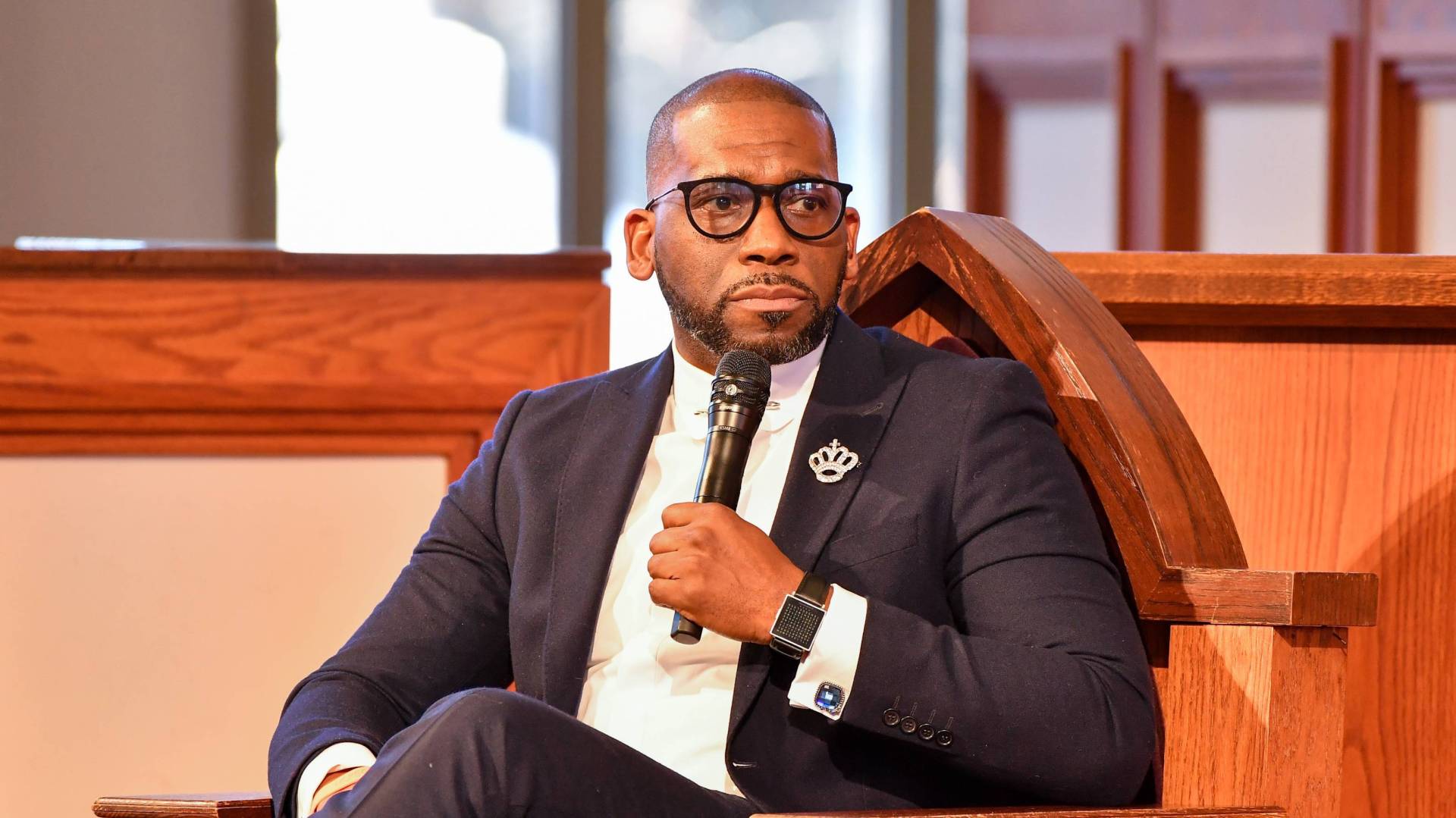
Jamal Bryant, a prominent Georgia-based minister, is criticizing four Black denominations that he claims have together accepted a $300,000 donation from Target at a time when many are boycotting the company for scaling back its diversity, equity, and inclusion (DEI) initiatives.
Bryant, who pastors New Birth Missionary Baptist Church in Stonecrest, Georgia, launched the boycott as a 40-day economic fast against Target during Lent. In April, he announced the fast would continue as a full boycott because the retailer had not met demands, including depositing $250 million into Black-owned banks and restoring its DEI principles.
Speaking to his megachurch on Sunday, Bryant said he believed Target was going around him to engage with other Black church leaders.
He also claimed the company gave a $300,000 donation—“chump change,” he said—split between four Black denominations estimated to represent roughly 17 million congregants: the National Baptist Convention USA (NBCUSA), the National Missionary Baptist Convention of America, the National Baptist Convention of America International, and the Church of God in Christ.
“I do not have ire with the Black church, because I recognize the fingerprints of satanic principality,” Bryant told his church, which was previously led by the late bishop Eddie Long. “I am not declaring war on any of those Baptist conventions. I am declaring war [on] the spirit of division.”
Bryant has emphasized the collective power of Black consumers and has used faith as a rallying cry to stick to demands that Target meet its pledges to economically empower the community.
related


One of the denominations he mentioned has previously acknowledged donations from Target, but none responded to a request for comment sent by Christianity Today. An NBCUSA spokesperson told The Christian Post Wednesday the “four presidents of the Convention” will gather and respond before the end of the week.
NBCUSA’s president, Boise Kimber, highlighted the denomination’s partnership with Target during the denomination’s convention in Montgomery, Alabama, this month.
In an undated news release circulating on social media, Kimber wrote that NBCUSA and Target are working on a three-year plan around economic development and educational support that would be “very beneficial to the African American community.”
Kimber said Target has also given the denomination a “generous donation” that will help it “provide scholarships, support senior citizens, and invest in entrepreneurship programs that uplift our people and the future.”
“If I thought Target was not sincere in their commitment to the African American community—I would be the first one on the picket line,” Kimber wrote. “Our communication with Target has been at the highest level and we are continuing the dialogue.”
A spokesperson for Target declined to confirm the amount it gave but said in a statement that the company is “proud to be partnering with NBCUSA to make a meaningful impact in communities across the country by supporting access to education, economic development initiatives, and entrepreneurship programs.”
Many companies turbocharged their DEI policies after the police killing of George Floyd, which sparked nationwide protests for racial justice and conversations about lingering racial inequities in America. Target, in particular, was outspoken about its DEI initiatives and was honored for its work in 2022 by an organization that focuses on developing Black executives.
When the company began phasing out some DEI initiatives in January, it said it would end goals around hiring and promoting more women and racial minorities. The Associated Press reported at the time that the retailer would also end its goals around recruiting more suppliers and businesses owned by racial minorities, women, veterans, LGBTQ people, and people with disabilities. The company further said it would no longer participate in an annual index put together by the Human Rights Campaign, an LGBTQ-advocacy organization.


Other companies have also retreated from DEI policies in the past year. Legal scrutiny on the programs have increased since the fall of affirmative action. Corporations also feel renewed pressure from President Donald Trump’s anti-DEI executive orders and from conservative activists who argue the policies are themselves discriminatory against many white and Asian people.
Two years ago, Target faced a major backlash—and a boycott—from conservatives after it sold swimsuits that were designed for transgender people as well as designs from a brand that sold occult-themed LGBTQ clothing and accessories outside of Target.
Bryant has invited an LGBTQ-affirming guest on his podcast and preached at a conference hosted by an affirming church in Atlanta, but his boycott messaging has focused on the race portion of Target’s DEI policies rather than on LGBTQ representation.
Last month, Bryant announced the boycott would extend to Dollar General, which reportedly fired its chief diversity officer and removed language around diversity from a recent financial filing.
When speaking to his congregants on Sunday, Bryant said he had called the president of one denomination and told him he had a week to confirm in writing that his organization stands with the boycott.
“White supremacy takes delight in us fighting one another,” he said on Sunday. “Do you understand how powerful we would be if Black people would just stick together and stop stabbing each other in the back and live with love of Jesus Christ?”
Haleluya Hadero is the Black church editor at Christianity Today.