Please enjoy this thoughtful reminder of the place for sacred, uncaptured experience in spirituality and worship. It's a needed reminder for Generation Instagram. -Paul
Walter Mitty: When are you going to take [the picture]?
Sean O'Connell: Sometimes I don't. If I like a moment, for me, personally, I don't like to have the distraction of the camera. I just want to stay in it.
Walter Mitty: Stay in it?
Sean O'Connell: Yeah. Right there. Right here.
If you've not seen the most recent screen version of The Secret Life of Walter Mitty, let me quickly put the above exchange into context for you. Mitty (the classic risk-averse, day-dreaming desk worker) has just braved an active volcano, narrowly survived treacherous Icelandic seas, and finally scaled the Himalayas in search of world renowned photographer Sean O'Connell.
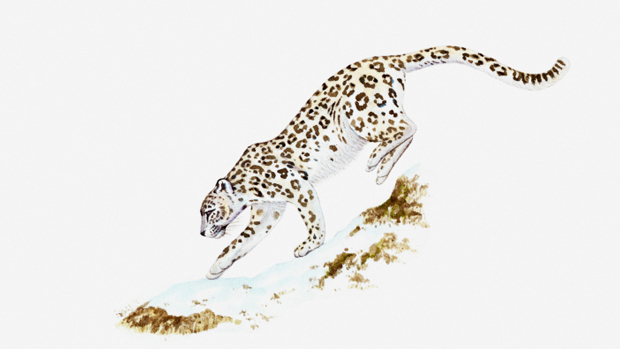
O'Connell, for who knows how long, has hoped to catch even a glimpse of the elusive snow leopard. This creature, according to the film's lore, is fickle, fleeting, and rarely, if ever, photographed. Mitty arrives just as O'Connell is about to capture the image he's long awaited. Then, something magical and unexpected happens. With the "ghost cat" in his camera's crosshairs, O'Connell steps back from the lens and just lets the nearly mythical creature pass. What O'Connell knew is that some things are just too sacred to photograph. There is something incomplete, almost irreverent about taking a photograph when it cannot capture the beauty and power of an instant. Sometimes the moment, the memory of the moment, is enough.
There is something incomplete, almost irreverent about taking a photograph when it cannot capture the beauty and power of an instant. Sometimes the moment, the memory of the moment, is enough.
Tech-tension and holy moments
Recently, my church conducted a baptism service. Several families celebrated as their children partook in this holy ceremony. Just before the festivities commenced, one of our pastors asked congregants to not take pictures. This request had a two-fold purpose. The first is pragmatic: it's distracting to have everyone mucking about and taking flash photography of children (some of whom are already a little cranky about being publicly dunked in water). The second reason is a bit more spiritual: no photo can really capture the fullness of the holy event taking place.
It is much more beneficial to be spiritually present for the sacred event, rather than hunting for the perfect filter, angle, or social hashtag.
There is an undeniable tension between how we use technology in worship and how we are distracted by it. As ministry leaders, we are forced to admit that we don't have full control over the choices of others when it comes to cell phones and cameras. But that doesn't mean that we can't help set the tone of sacred moments. Some things are too robust, some spiritual realities are too full, to capture with a lens. When we help others recognize that they've reached a point of technological diminishing returns, we help protect the integrity of the moment. We honor the sacred space.
Iconoclasts … before it was cool
A similar controversy existed in the mid 8th century. While not perfectly analogous, it's helpful. As Christian art became a more prominent form of worship and expression, there arose of group of Christians who believed that icons were inherently inappropriate. This group became known as the "Iconoclasts." Some Christians disagreed with the Iconoclasts. These icon-lovers, or "Iconophiles," believed that icons could be used to educate and even remind illiterate believers of the acts of God. They believed that images were useful and could be venerated, but not worshiped. While these disagreements ebbed and flowed, much Christian art was destroyed … and much was created. Eventually, at the second Council of Nicaea in 787 CE, the Church ruled in favor of allowing icons so long as they were properly used (and not worshiped).
While perhaps those present at the 7th Ecumenical Council did not have camera phones in mind, they saw the value of remembrance in images. But they also realized their limitations.
While perhaps those present at the 7th Ecumenical Council did not have camera phones in mind, they saw the value of remembrance in images. But they also realized their limitations. There is a place for technology and the capturing of events in the contemporary church. But what ministry leaders need to do is identify—for their community—when the use of those tools detracts from worship.
So, I'm not suggesting we jettison ProPresenter or throw out our soundboards, projectors, or iPhones. But do we protect those "ghost cat" moments; those moments best experienced in their purity and unadulterated by tweets, instagrams, status updates, or laser light shows? All of those things stand as filters, barriers even, as we try to encounter the Holy.
How much more beautiful, how much more powerful would it be, if we are simply able to be in those moments and bask in the presence of the Sprit? Some sacred moments cannot, maybe should not, be captured. They exist for us to embrace them, to adventure into them. If we're honest with ourselves, aren't we forced to admit that no image could do justice to what we've seen on the mountain?
All we can really offer is a soulful beckoning for others to "come and see."
Andrew Stoddard works in student development at Wheaton College and as an adjunct professor for the Moody Bible Institute. In addition to being a bit of Patristic enthusiast, he loves working with college students both in and out of the classroom.