





Rethinking “Worldview”
The title of Simon Kennedy’s new book, Against Worldview, is meant to be at least somewhat provocative. On its face, the sentiment seems to clash with popular evangelical frameworks for equipping our minds, answering skeptics, and confessing Christ’s lordship over all things. Aren’t Christians supposed to cultivate a properly Christian way of thinking, rather than drift along with the currents of secular philosophy? Doesn’t Scripture instruct us to “take every thought captive,” in obedience to Christ?
Kennedy, a writer and researcher based in Australia, wouldn’t contest any of that. His objection to “worldview formation,” especially as conceived of and practiced in Christian college classrooms, is that it puts the cart before the horse, treating a Christian worldview as a roadmap for training in wisdom rather than the desired result of that training. (Kennedy’s subtitle is “Reimagining Christian Formation as Growth in Wisdom.”)
Justin Ariel Bailey, a theology professor at Dordt University, reviewed the book for CT.
As he writes of Kennedy’s argument, “if worldview is the goal, then wisdom is the way. The biblical concept of wisdom connects the human search for understanding to the structure of created reality, finding its ultimate coherence in Jesus Christ, the wisdom of God (1 Cor. 1:24). The quest for wisdom means that Christian education is about helping students piece bits of wisdom together, building toward a Christian worldview rather than on top of it.
“Kennedy conveys the two approaches in contrasting images. A deductive approach to worldview is more akin to ‘painting by numbers.’ It treats Christian education as an exercise in providing all the ‘correct answers’ and ‘applying predetermined solutions.’ Since we already possess a Christian worldview, we seek to fit everything into existing theological schemata like Creation-Fall-Redemption-Consummation. But this foreign framework quickly undermines ‘the intellectual integrity of the educational process,’ especially for disciplines like civics or biology where such a schema may feel forced.
“Unlike the ‘paint by numbers’ method, Kennedy’s inductive approach reimagines education as the laying of tesserae on a grand mosaic. Educators and their students work as teams who assist the mosaicist by preparing surfaces, cutting the pieces, and laying them in place. The work is vital, but only the master planner can see the whole. While ‘we might have some sense of the overall plan of the Christian worldview,’ writes Kennedy, ‘it is only God who possesses the entire, perfect view of reality. It is our job to try and ascertain the truth about that reality in whatever limited manner we can.’
“In this chastened image, there is not one Christian worldview; there are as many faithful Christian worldviews as there are faithful Christians, and ‘a person who has imbibed, internalized, and acts on Christian wisdom, wisdom that rests upon truth about self, God, and the world, has a Christian worldview.’”
Natural, Supernatural, and Hypernatural
Much of what happens in the world has a natural cause, rooted in God’s ordinary providential governance. The sun rises and sets each day because God designed it that way. The grass grows and withers each year for the same reason.
Other events have clearly supernatural causes. No law of nature can explain how Jesus was born on earth without an earthly father. The child who entered Mary’s womb had been “conceived by the Holy Spirit,” as the Apostles’ Creed attests.
In Faith and Science: A Primer for a Hypernatural World, Kenneth Keathley, a professor at Southeastern Baptist Theological Seminary, outlines a third category suggested in his subtitle. As Keathley understands it, something hypernatural occurs when God uses the ordinary workings of nature to produce miraculous outcomes.
John Van Sloten, author of the book God Speaks Science, reviewed Keathley’s work for CT.
“Taking in Keathley’s definition,” writes Van Sloten, “part of me wondered if hypernaturalism already exists within the parameters of providence. Since God made everything, then surely everything is already, by nature, tinged with God’s miraculous capacity. If so, why create a distinct category of hypernature?
“Perhaps this category helps people hold two opposites together: that the world operates in an empirically explainable way (a more basic definition of providence) and that God occasionally intervenes to accomplish his will (through an exercise of special providence). Hypernaturalism describes one facet of how providence and miracle overlap.
“Keathley sees hypernaturalism as having one basic goal: ‘to demonstrate that providence, not simply chance or necessity, is the driving force behind all of creation.’ In his view, there are no gaps between the natural workings of the cosmos and the supernatural providence of God.”


don’t miss

I teach at a Christian university founded some 70 years ago by Dutch immigrants. Although it has become more diverse in recent years, the student body and faculty still draw…
According to the Bible, Jesus has a great aptitude with physics, chemistry, and biology. As verses like Hebrews 1:2 and John 1:3 attest, the whole universe was made through him!…
in the magazine
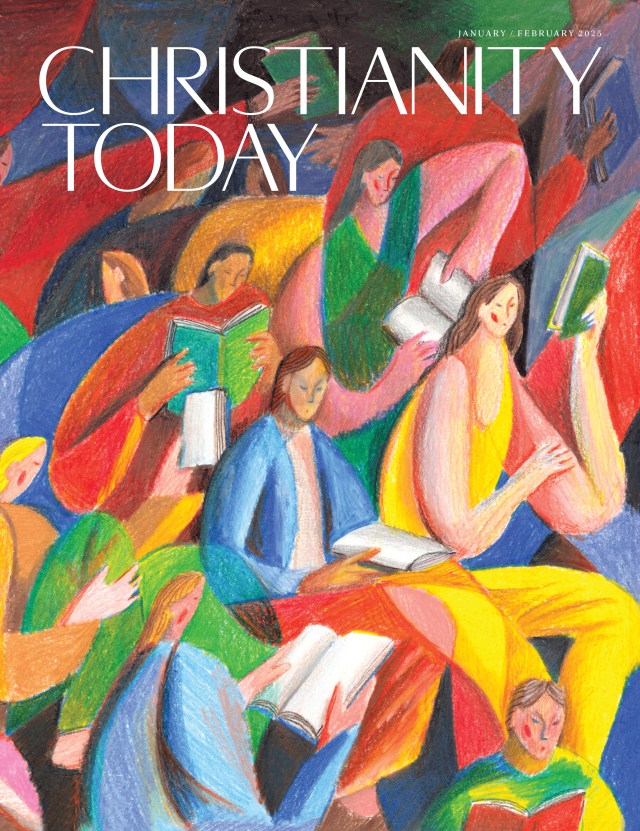
This first issue of 2025 exemplifies how reading creates community, grows empathy, gives words to the unnamable, and reminds us that our identities and relationships proceed from the Word of God and the Word made flesh. In this issue, you’ll read about the importance of a book club from Russell Moore and a meditation on the bookends of a life by Jen Wilkin. Mark Meynell writes about the present-day impact of a C. S. Lewis sermon in Ukraine, and Emily Belz reports on how churches care for endangered languages in New York City. Poet Malcolm Guite regales us with literary depth. And we hope you’ll pick up a copy of one of our CT Book Award winners or finalists. Happy reading!
more from christianity today
related newsletters
CHRISTIANITY TODAY WEEKLY: CTWeekly delivers the best content from ChristianityToday.com to your inbox each week.
CT PASTORS: Each weekly CT Pastors issue equips you with the best wisdom and practical tools for church ministry.
CT books
Each issue contains up-to-date, insightful information about today’s culture, plus analysis of books important to the evangelical thinker.
Delivered free via email to subscribers weekly. Sign up for this newsletter.
You are currently subscribed as no email found. Sign up to more newsletters like this. Manage your email preferences or unsubscribe.




Christianity Today is a 501(c)(3) nonprofit organization.
“Christianity Today” and “CT” are the registered trademarks of Christianity Today International.
Copyright ©2025 Christianity Today, PO Box 788, Wheaton, IL 60187-0788
All rights reserved.