In the work of storytelling, we never know the power our words might have to shape the world.
One morning in 1997, back when Bill and Melinda Gates were the dawning hope of a supposedly bright era of billionaire philanthropy, the couple was in bed reading The New York Times. They had been looking for ways to donate part of their considerable fortune, and on that day’s front page was a story titled “For Third World, Water Is Still A Deadly Drink,” about the millions of people suffering and dying around the world due to unsanitary water and diarrhea.
The story jolted the couple into action, helping shape the direction of the Gates Foundation, which has now donated millions of dollars to the cause of water sanitation.
The byline on that story belonged to Nicholas Kristof, a Pulitzer Prize–winning foreign correspondent and a then-rising star at The Times. The issue of unclean water was only one of many humanitarian crises that Kristof has since covered in his far-flung, decades-long career.
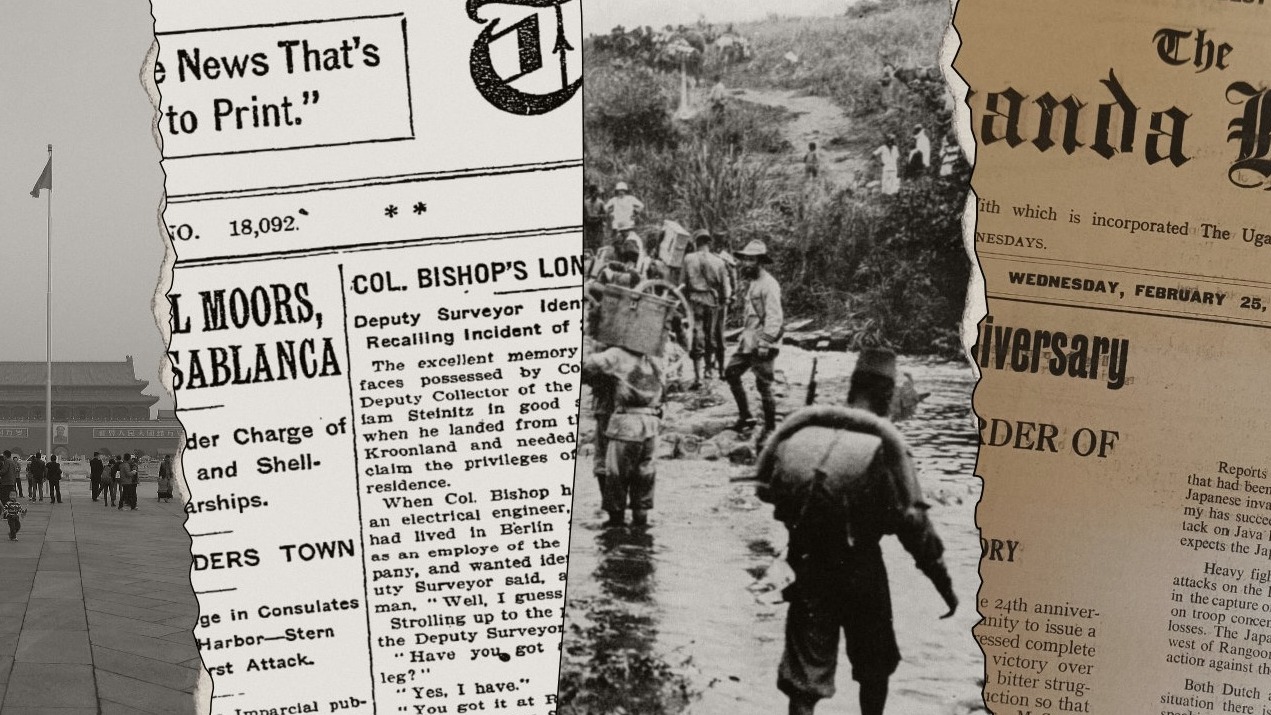
He was there in 1989 when the tanks rolled into Tiananmen Square, eventually co-winning a Pulitzer with his wife, also a Times journalist, for their coverage of the massacre. He was on the ground when Sudan descended into genocide and when Congo was riven by civil war. He has covered malaria in Cambodia, famine in Yemen, and the plight of dying mothers in Cameroon. In total, Kristof, who grew up in rural Oregon, has reported from more than 100 countries.
He has many accolades—two Pulitzers, a Harvard degree, and a Rhodes scholarship. But what I admire most about Kristof is not only his courage in traveling to some of the world’s most perilous places but also his unwavering faith in the power of writing to bend the arc of the moral universe toward justice.
A case in point: His investigation into the dark corners of Pornhub, in which videos of child rape and other forms of sexual assault were rampant, prompted widespread outcry and led to major changes in the site.
“Inconsistently, imperfectly, we can manage to drive change,” Kristof told me. “It doesn’t work as well as we would like. It’s often frustrating. But can one have an impact? Absolutely. And I think there are, in fact, few professions where one can have so much impact.”
In a phone call with Inkwell, Kristof discussed his pursuit of justice, how he maintains hope despite witnessing many tragedies, and his advice for young writers. The interview has been edited for length and clarity.
How did you carve out a beat focused on humanitarian causes and the pursuit of justice?
I went into journalism because I wanted to find some kind of larger purpose. But in the first few years, I floundered a little bit. When I first joined The New York Times, I was covering business, exchange rates, and oil prices. It was hard to find moral purpose there. But in 1989, I covered the Tiananmen Square massacre, and when you see a modern army use weapons of war against peaceful pro-democracy protesters, that really changes you. That pushed me much more toward covering human rights issues for the rest of my career. It also led me to cover some gender issues, including violence.
Then in the 2000s, I would come back from covering these overseas humanitarian crises to find that my home community in rural Oregon was going through its own humanitarian crisis. And so I began to write more about issues like addiction and the struggles of the working class. My generation entered journalism after Watergate. So we saw it as a genuine public service.
It’s been really inspiring to read these stories of yours and to see the impact they have. Sometimes, when you’re starting out as a journalist, it can feel like you’re writing into a void and there’s not really a tangible change that happens.
Well, it tends to be unpredictable. The story that had more impact than any other was one I wrote about global health at the beginning of 1997. I never imagined it would have any particular impact, and then it just happened that Bill and Melinda Gates were looking for a cause to invest their philanthropy in, and that New York Times article caught their eye. That was just a complete fluke and totally unpredictable.
I think there’s a misperception that if we write about topics that are on the agenda, the ones people are already talking about, that’s where we have impact. But I think we have the greatest impact where we play the gatekeeper role, shining our spotlight on issues that are not getting attention, thereby propelling them onto the agenda—whether that’s kids dying of diarrhea or Pornhub or human trafficking.
What does faith mean to you today and throughout your journalism career?
My dad was a Catholic and my mom was a Presbyterian, bridging their own divide. When I was a kid, I was dragged to both Mass and the Presbyterian service, and that felt like an overdose to me. So I’m much more skeptical in my own world of faith now.
But I’ve also tended to think that in journalism we under cover religion. Evangelical Christianity is a huge driver of politics, of social behaviors, and of family dynamics in America. And somewhere in journalism, we’ve been more intellectually curious about the faith of people in Afghanistan than the faith of people in Missouri. There are many times when I tear my hair out at evangelical behaviors, but I think there’s also been plenty of completely misdirected scorn from my secular liberal world to the evangelical world in a way that’s misplaced and inappropriate.
Would you say it’s important that there are Christians in newsrooms?
It is true that newsrooms are often disproportionately liberal, especially in social ways. There is a certain antagonism toward people of faith and especially evangelicals, which is one of the last kinds of discrimination acceptable in liberal circles. But I’m a deep believer that news outlets do a better job when they have more diverse journalists.
In the 1960s, news organizations floundered at covering Black neighborhoods because they didn’t have many Black reporters. My encouragement to Christians who are interested in journalism is that you may face challenges, but we need you. You may have a narrative advantage because you can cover faith communities in ways that many of your colleagues will not be able to.
You’ve reported on some horrific things, like genocide, human trafficking, and sexual exploitation. How do you write about these dark things while also maintaining hope in God and faith in the dignity of human beings?
So my memoir was titled . It seemed a little bit of a contradiction that I’ve had this long career chasing terrible things and emerged talking about hope. Part of it is that, side by side with the worst of humanity, you invariably find the very best.
I remember I was once in eastern Congo, which had the most lethal conflict since World War II, in an area where warlords had been attacking and all the Western groups had fled. The only aid worker left was a Polish nun, and she was single-handedly running an orphanage, an emergency feeding center, and keeping the warlord at bay. I was just awed by her courage. I felt like I wanted to sign up and be a Polish nun.
During the Rwandan genocide, the only American who stayed in the capital was this Seventh-day Adventist who was ordered out by his church, but he refused to leave. Every day, he risked his life trying to get people through checkpoints. He could have been killed repeatedly, but somehow he survived. He was a hero to those who knew of it, including the many Rwandans he’d saved.
What advice do you have for our Inkwell readers who are young writers trying to hone their craft?
Read writing that you admire, and read it carefully. Read it with this view: How did that person manage to drag me through this story? How did they do that lede? Where do they put their quotes? How did they manage to write such a good piece? And then write a lot.
Christopher Kuo is a writer based in New York City. His work has been published in The New York Times, The Los Angeles Times, Duke Magazine, and elsewhere.
Related