Handel’s Messiah is one of the most popular classical compositions played at the holidays. Filled with biblical passages and soaring vocal and orchestral arrangements, Messiah takes listeners through the story of Scripture with an eye for the timeless theme of hope.
Clarissa Moll of The Bulletin sat down with Charles King, author of Every Valley: The Desperate Lives and Troubled Times That Made Handel’s Messiah,to learn more about who formed this important work and why, almost 300 years later, it resonates with those holding on to faith when life seems darkest. Listen to the entire conversation with special musical selections from Calvin University in episode 130. Here are edited excerpts.
Paint the landscape of George Frideric Handel’s world. How was it similar to or different from our own?
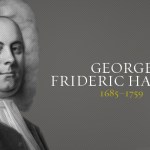
Charles King: Handel was born in 1685 in what would become Germany in the long shadow of conflicts in the Holy Roman Empire in Central Europe. This was the Enlightenment, a time of rationality, reason, and advances in science, but anybody who lived through that period would not have thought of it in that way. Disease was rampant, and many families buried more children than they ever saw to adulthood. Handel’s father was a barber surgeon and the local official charged with managing epidemics like typhus or the plague. From boyhood, Handel knew intimately what it was like to live in a worried and anxious age.
Handel spent most of his career in London as court composer to the royal family. He was at the absolute center of the political system of his day, but there was great division and dissension over politics, religion, and the shape of society. A sizable portion of British society thought that King George I, the king whom Handel served, was illegitimate. He had taken the throne in a dynastic change in 1714, and many felt he was the wrong selection. Underpinning everything in the British Empire was human enslavement and its accompanying wealth, including that of the patrons on whom Handel depended.
In many ways, Handel’s world looked much like the world we know today. This period of deep worry about the state of the world produced what is arguably our greatest musical monument to the possibility of hope. Those things go together for a reason. People were looking for some way to think, feel, and believe their way toward a more hopeful world.
How did religion function within this setting? Was Handel himself a religious man?
Handel was religious in the normal 18th-century way but not in a “wear your religion on your sleeve” sense. The king he served was also the head of the established English church, so Handel composed music for the church and religious and courtly ceremonies all the time. It wasn’t until later in his life that he started going to church regularly and evinced a real sense of personal belief and devotion.
Messiah is completely composed of sacred texts, and we want Handel to be aware that he is divinely inspired. We want an angel to be sitting on his shoulder. But when Handel composed it, there’s no real evidence that he thought of it in that way, for one simple reason: His work didn’t predispose him to that kind of reflection. In addition to being a courtly composer, Handel also composed for the stage—working quickly, churning through new ideas, using whatever he had at hand, and then moving on.
The truest spiritual father of Messiah is probably Charles Jennens, the librettist who created the structure and assembled the text. Jennens was from one of the wealthiest families in Britain, and he wanted for nothing. He also suffered from what we would now call chronic depression or maybe bipolar disorder. His preserved letters show incredible periods of manic work followed by deep depression, where despair, doom, and hopelessness enshrouded him.
In the late 1730s or early 1740s, Jennens began attempting a systematic way to climb out of this mental state. As a believing Christian, he turned to Scripture and books on theology and philosophy. From this, he assembled the text of what we now know as Handel’s Messiah. He was trying to create his own personal, lighted pathway through the Bible. In the library at Gopsall Hall, his estate house in Leicestershire, England, he had surrounded himself with beauty—art and sculpture and painting—to pull him out of this state. He looked at Scripture similarly and thought, I have to get out of the state I’m in. How can I use the words that are most meaningful to get me there?
A decade or so earlier, Jennens’s brother had died by suicide, a death that hit his family very hard. Not only had they lost a family member, but the reason they lost him struck very deep. The family believed he had died by suicide because he had essentially gone off to Oxford University, met free thinkers, and lost his faith in college. When Jennens sat down to write the text of Messiah, he was also thinking about this and the role of faith in a person’s life: Is religion a thing that you think your way to? Is God a presence that you reason toward? Or is there something deeply ineffable, mysterious, awesome, and wonderful here? That pursuit infuses Messiah entirely.
The first words you hear, from 1742 to the present, are “Comfort ye.” The words come like a trumpet up above the violins in the way that Handel orchestrated it. Quoting the prophet Isaiah, it’s as though Jennens says, “How would you live your day, your week, your life differently if you knew from the outset that things are going to be okay? How would you look for evidence of that in the world?”
There’s also something even deeper. In Isaiah 40, Jennens sees not just that you need comfort but that you need to be the one who’s comforting. “Comfort ye, my people”—that’s directed at us. Considering Jennens’s story, that is so profound. It’s as though he’s telling himself, “In the middle of my despair, in the middle of how awful everything is, I need to be the one to comfort others.” It’s amazing to me that in the 18th century, someone found that truth and wrote it down as the first thing they wanted someone to hear in this piece of art.
After receiving Jennens’s libretto, Handel waited before sitting down to write what he called a sacred oratorio in preparation for a tour to Dublin. After composing Messiah in 24 days, he asked a rather-complicated social figure to come with him and sing. Tell us about her.
Susannah Cibber had begun a career on the London stage 15 years earlier as an ingénue in tragic roles. At the time, everyone was trying to capitalize on the Italian opera craze, and Cibber’s tradesman father recognized her musical talent and insisted that a better way for her to get into show business was to marry into it. He married her off to a man named Theophilus, who turned out to be a nightmare: a tough guy, serially unfaithful, terribly abusive, often drunk. Even worse, Theophilus sold visits with Susannah—sexual and otherwise—to young men who would pay his bar tab or his gambling debts.
To complicate matters, Susannah fell in love with one of these men that she met in this way, a man named William Sloper. Theophilus sued her for divorce and her lover for damages. When the court found the lover guilty, the most intimate details of Susannah’s private life were aired in that London courtroom, and her life was ruined. People took down the testimony, accompanying the content with pornographic cartoons. After this, Susannah disappeared, appearing for the first time in Dublin at exactly the time that Handel was there. He casts her in the premiere in April 1742.
Handel must have been aware of Susannah’s story because, among other things, he wanted her to sing, “He was despised and rejected of men, a man of sorrows and acquainted with griefs”—that amazing aria about the depths of Jesus’ suffering—this moment from which the entirety of Christian theology springs.
In Neale’s Musick Hall on Fishamble Street in Dublin, with two cathedral choirs and the equivalent of a military band, she steps forward from the choir to sing this. You could have heard a pin drop. Everybody there knew her story, and they could do the gender switch themselves. She was despised, rejected, a person of sorrows, and deeply acquainted with grief.
As the story goes, silence followed that performance until a reverend in the audience who had just buried his wife stood up and said, “Woman, for this be all thy sins forgiven.” Of course, it really wasn’t her sins that were at issue; it was other people’s sins. But this was a transformative moment. This work of art about the power of redemption became the vehicle of this individual’s redemption at the premiere.
Susannah Cibber became the most highly paid, most successful tragedian of her generation.
After the Dublin performance, how did Messiah become associated with Christmas?
Thomas Coram, an agent for philanthropists, was burdened for impoverished foundlings in London. A foundling was a child who still had one or more parents alive but, because of poverty, was largely abandoned to his or her own fate on the streets. Few people cared about these children; most thought leaving them alone would teach their parents a lesson.
For 20 years, Coram worked to create the Foundling Hospital, an institution that served as a foster-care system for them. Just as Handel was about to pack Messiah away in his filing cabinet, if you like, the Foundling Hospital opened with a chapel, and a group of patrons asked him to do a benefit concert, where he repurposed some of Messiah for the event.
After that, Messiah became an annual fundraising concert for the Foundling Hospital. Not in a grand cathedral or music hall but in this institution for abandoned and unwell children, many more people first heard this piece of music. As they looked up to the balcony in the chapel and saw the foundlings, people were very moved to think that the music was somehow helping the kids who were there. “For unto us a child is born.” Messiah is arguably the greatest piece of participatory art ever created.
Do we, like Susannah Cibber and Charles Jennens and those foundlings, need life to bring us to our knees so we can receive this piece of music in the way it was intended? Is there a desperation that is almost necessary to apprehend Messiah’s message?
Every generation has felt that Messiah is somehow written for them, because Jennens focuses on biblical passages that highlight contemporary anxieties. “Why do the nations so furiously rage together, and why do the people imagine a vain thing?” a soloist asks. Or “death, where is thy sting? O grave, where is thy victory?”
For Jennens, that was the essence of the Christian story. Every piece of evidence is going to tell you that life will not be okay. The mystery of faith is how you believe the first thing you sang and believe it all the way to the final amen. Eighteenth-century audiences could feel that, and we feel it today.
What’s more amazing, and hopeful too: Despite being very good friends, Handel and Jennens were political enemies. Jennens’s family supported the old Stuart dynasty that had been exiled when King George I, Handel’s employer, had come to power. These two people stood on opposite sides of the greatest political divide of their moment yet came together to create this. The story of Messiah reminds me that it takes all of us together to craft something new and hopeful in a deeply troubled and despairing world.
Related