My New Testament professor Gordon Fee said something in class that sticks with me to this day. “Let me hear you sing. Let me hear you pray,” he said, “and I will write your theology.” His point was that Christians, as a matter of conviction, typically set to music the things they most cherish about God. What we cherish about God on the evidence of our Christmas carols, however, should make us wonder.
In carol after carol, we sing “of the Father’s love begotten” and we extol the one in whose “name all oppression shall cease.” We sing our praises, that is, of the Father and the Son but rarely of the Holy Spirit. In the second stanza of Charles Wesley’s 1744 hymn “Come, Thou Long Expected Jesus,” we petition Christ’s “eternal Spirit” to rule in our hearts alone. And that’s just about it. The Holy Spirit is breathtakingly absent from our canon of carols.
Our Christmas hymns give glory, laud, and honor to the first and second persons of the Trinity, but we fail to give similar praise to the Third Person. In doing so, we not only fail to give honor to whom honor is due; we also fail to bear faithful witness to the record of Scripture. If our music gives evidence of what we cherish most about God, the God of our Christmas carols is binitarian, not Trinitarian.
Why is there such a stark absence of the Spirit in our repertoire of carols? How does this stand in contrast to the witness of Matthew and Luke? And what might we do about it?
First, the majority of our carols come to us by way of the medieval age, with the exception of a handful of 18th-century hymns. Medieval Christianity placed a dominant emphasis on Christology, and Franciscan piety prioritized an affective encounter with the events of the manger. Mary’s tender love, the shepherd’s astonished faces, the angels’ celestial acclamation, the noble adoration of farm animals?
These images of Christ’s birth captured the imagination of the poets of this age. The prior events, such as Mary’s Spirit-overshadowed pregnancy or Zechariah’s Spirit-inspired song, remained offstage and secondary to the main-stage events.

A second reason is cultural. Our usual celebration of Christmas in America is shaped less by the accounts of Matthew and Luke and more by the stories and songs of 19th-century Western life, as I’ve written previously. Many of our most beloved carols, including “It Came upon the Midnight Clear” by Edmund Hamilton Sears and “Do You Hear What I Hear?” by Noël Regney, were penned, in fact, not by Trinitarian but by Unitarian Christians.
The carol “O Holy Night,” which Unitarian minister John Sullivan Dwight translated into English from the poem “Cantique de Noël” and which remains a beloved favorite on Christmas Eve services, was originally written by a French poet who later apostatized.
Charles Dickens, while officially Anglican, attended a Unitarian chapel while he wrote A Christmas Carol, and for him, it was the spirit of Christmas, not the Spirit of Christ, that ought to mark the celebration of the season. Such a conviction echoes the desire of many Americans today. They’re happy to sing about peace on earth and joy to the world, but only because these things are generically religious goods. It’s much harder to sing about the Prince of Peace who endures the Cross for the joy set before him (Heb. 12:2). Such a song would be scandalous rather than innocuous.
Christians often tag along with this way of thinking about Christmas music, because they too love the “traditional” songs. They clamor for “The First Noel” and “Silent Night” on Christmas Eve because they say, “This is what we’ve always done.” Except that we haven’t. The way American Christians have typically celebrated Christmas is only 150 years old. It is not a terribly long tradition, and it is not fully biblical, at least not as it relates to the ministry of the Holy Spirit, and it owes more to the market than to our theological convictions.
The “canon” of Christmas carols is closed because the market says so, and with it any possibility that the Holy Spirit might gain entrance into our habitual practices of communal singing. That’s the third reason: the market is the boss, not our biblical faith.
When we look at how Matthew and Luke tell the story of the Incarnation, however, we see that the Spirit plays a central rather than peripheral role. Luke writes that John the Baptist “will be filled with the Holy Spirit even before he is born” (1:15). In the same chapter, the angel tells Mary that the Spirit will come upon her and, as at the beginning of all things, the power of the Most High will hover over her (v. 35).

In Luke 1:41, Elizabeth is filled with the Spirit the moment she hears Mary’s greeting. In Luke 1:67, the Spirit fills Zechariah in order that he might prophesy to the Lord’s future doings through his son, John. In Luke 2:25, we encounter an elderly man, Simeon, upon whom the Spirit rested. And in Matthew 1:18–20, finally, the angel reassures Joseph that what Mary bears in her womb is the Holy Spirit’s doing.
All this Spirited activity has its roots in Isaiah’s vision of what was to come, and it climaxes in the events of Pentecost. In his 2017 essay “The Holy Ghost of Christmas Past, Present, and Future,” John Witvliet reminds us of the Book of Isaiah’s status as “the fifth Gospel,” for it is here that we read of the role the Spirit of the Lord would play in the Messiah’s life. All the Old Testament prophets, in fact, who bore witness to this future Messiah did so because the Spirit of Christ was within them (1 Pet. 1:11).
Witvliet summarizes Luke’s gospel this way:
Luke depicts the entire Christmas drama as fully Trinitarian, involving God the Son, who was born in a manger, God the Father, who sent him, and also God the Holy Spirit, who was mysteriously active in so many moments in the drama.
To put the matter bluntly, there is no Incarnation apart from the power of the Holy Spirit. There are no miraculous births without the work of the indwelling Spirit. There is no ability to confirm or to recognize the true identity of the Christ child apart from the illuminating ministry of the Third Person of the Trinity. The Spirit is very much visible, not invisible, in the Nativity narratives, and an active rather than passive agent in Luke’s “account of the things” (1:1).
For the Gospel writers, this isn’t a negligible or dismissible matter. The Spirit’s presence in the Nativity is emphatically newsworthy. Luke especially magnifies the Spirit of God in his tale of Christ’s birth. Why do we not also?
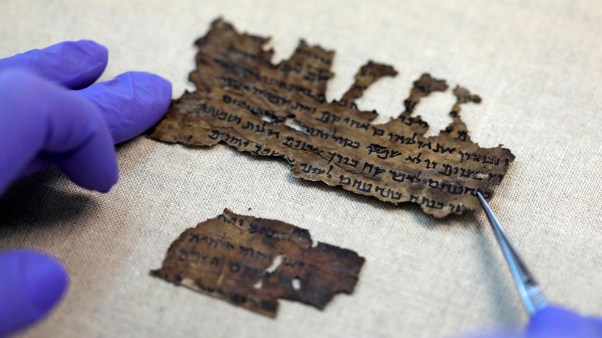
One thing we could do is to recover and repurpose ancient texts. This might include medieval hymns, such as “Creator of the Stars at Night,” with its sixth stanza that gives explicit praise to God the Spirit:
To God the Father, God the Son,
And God the Spirit, Three in One,
Praise, honor, might, and glory be,
From age to age eternally.
It could include the hymn by the fourth-century poet, Prudentius, “Of the Father’s Love Begotten,” with its robust witness to the Holy Ghost. A second thing we could do is to set to music a greater number of Charles Wesley’s Nativity hymns. This might include Hymn 8 with these lines:
And while we are here,
Our King shall appear,
His Spirit impart,
And form his full image
of love in our heart.
Or these lines from hymns 9 and 17, respectively:
And meekly in his Spirit live
And in his love increase! …
His Spirit is our surest guide
His Spirit glimmering in our hearts.

The other way forward is to sing new songs. It is extraordinarily difficult to find such songs—songs that are suitable, that is, for congregational worship. If Spirit-themed songs have been written about the Nativity story, they’re usually of a devotional sort, suitable for personal or nonliturgical enjoyment.
Who then will write the hymns that will help us magnify the Holy Spirit? Who will raise a hallelujah to the comprehensive ministry of the Third Person of the Trinity in the stories of the Gospel writers?
Which singer-songwriters will help us to sing of the God who chooses to use the most unlikely characters, not just the teenage Mary or the doubting Zechariah, but also tax collectors and sinners, the grafted-in Gentiles, and the one-time-violent figure of Paul?
Which church musicians will help us to sing of the God who did the impossible through the wombs of both Mary and Elizabeth and who continues to do the impossible by healing the sick and the traumatized, raising the dead to life, and causing our wildernesses to blossom with life?
Which worship leader will help us to sing of the God who inspires prophetic speech that bears witness to the divine promise to raise the lowly, scatter the proud, fill the hungry, and extend mercy to all those who sorely need it?
Songs such as these will not only do our faith good, they will offer us a chance to acclaim the person and work of the Holy Spirit with all our heart, soul, mind, and strength, in the manner of the ancient hymn:
Christ! to thee with God the Father,
And O Holy Ghost, to thee,
Hymn and chant and high thanksgiving
And unwearied praises be,
Honor, glory, and dominion,
And eternal victory—
Evermore and evermore.
Amen and amen.
W. David O. Taylor is associate professor of theology and culture at Fuller Theological Seminary and the author of Open and Unafraid and Prayers for the Pilgrimage. He posts about art and theology @davidtaylor_theologian on Instagram.