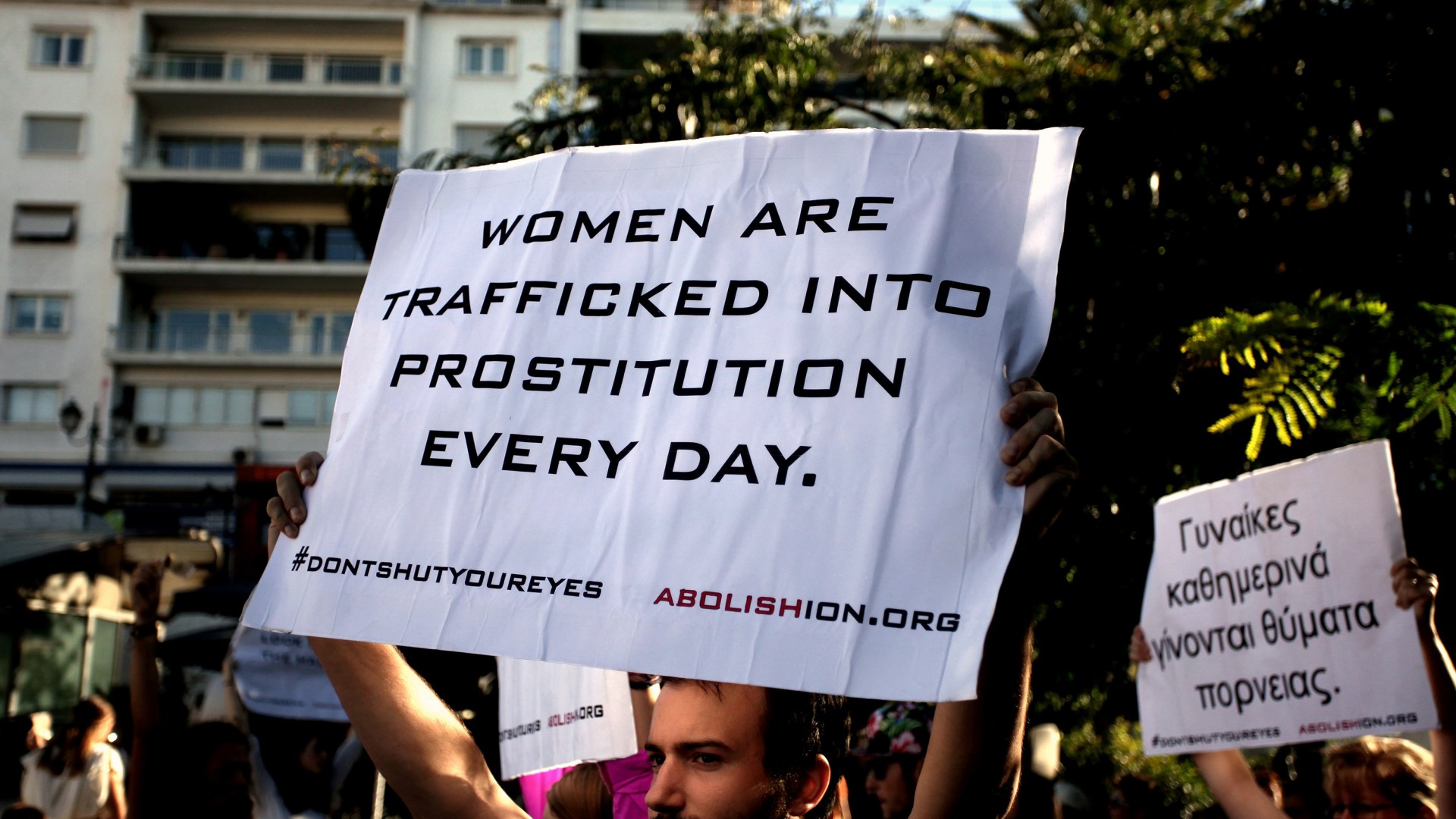
When Cristhina first arrived in Bologna, Italy, more than a decade ago, she was surprised by how public prostitution seemed to be.
Girls stood along suburban roads and in family neighborhoods, sometimes in broad daylight, visibly soliciting passersby in cars and on foot. “They were everywhere,” she recalled. “Downtown, residential areas. Being prostituted out in the open.”
Cristhina, a Colombian who grew up in Florida and studied social work, learned about the realities of abuse and exploitation in the sex industry through her volunteer work in Miami. Feeling called to bring her knowledge and experience to Italy, she moved to Bologna after college in 2013 to join what was then a small outreach to prostitutes at a local church called Nuova Vita (New Life). Cristhina asked to use only her first name due to threats from traffickers, pimps, and the Mafia.
Before she arrived, church members under the leadership of an American missionary approached women on the streets with cups of hot tea, baskets of snacks, and handwritten notes listing helpline numbers and safe houses. Volunteers received training from ministry workers in Greece and the Netherlands.
“The idea was to listen,” Cristhina said. “To befriend them. To share hope and a way out.”
In 2011, the church converted the outreach program into a full-fledged ministry called Vite Trasformate (Transformed Lives), which works with women and children trafficked for sexual exploitation.
“In the evangelical world [of Italy], we were among the first doing outreach in this field,” Cristhina said. “It’s grown since, mainly through the influence of American missionaries.” Cristhina herself received training from a Chicago-based outreach ministry.
Cristhina said the long-standing efforts of evangelical ministries in the United States have been key in apprenticing those on the frontlines in Europe. The European evangelical anti-trafficking movement, which emerged about two decades ago, has now spread to cities like Amsterdam, Rome, Naples, Berlin, and Athens.
Yet these ministries face unique challenges due to the differing legal statuses of prostitution and solicitation across the continent. As a result, they need to tailor their responses country by country.
For example, in Germany prostitution is legalized and regulated as a profession with specific laws. Sweden and France employ the Nordic model, which penalizes the buyer of sex but not the seller. In Lithuania, both buying and selling sex are criminalized.
Italy, Cristhina said, has a sort of legal limbo that offers little clarity or protection. Prostitution exists in a gray zone: Selling sex is allowed, but brothels and solicitation in public (street prostitution) are prohibited. The result, Cristhina said, is that sex workers get caught in a “tolerated and unregulated” trap that allows exploitation to flourish.
“The law provides an easy way out for the government,” she said, with women often punished for being taken advantage of.
This is where ministries like Vite Trasformate step in.
Data on sex work in Europe reveal that sexual exploitation is the most common form of human trafficking reported in the European Union, accounting for nearly half of registered victims in 2024.
Criminal activity involving sex work is often linked to trafficking rings that are highly mobile and prey on people mostly from outside the EU. Traffickers use technology—mostly social media and messaging apps—to identify vulnerable women, build trust with them through fake personas, and lure them with empty promises of jobs, education, or romantic relationships that can quickly turn coercive.
Many of the women Cristhina encounters come from Nigeria or Eastern Europe, some arriving via Mediterranean migrant routes. None of the women she’s met, however, wanted to do this. “Most were coerced,” Cristhina said. “Even when it looks voluntary, they don’t control their money, their movements, their lives.”
Italy’s cultural attitudes, she said, can compound the harm. Some view the women as criminals, others as individuals who have freely chosen prostitution. In her experience, social services frequently fail to recognize coercion or trauma, leading to revictimization. “They are treated like perpetrators when they are victims,” she said.
Cristhina’s ministry responds with practical care: accompanying women to doctor appointments, helping with documents, contacting shelters, and assisting with job training. After the COVID-19 pandemic pushed much of the sex trade indoors and online, Vite Trasformate shifted to phone and digital outreach with existing contacts or women whom volunteers connect with online. This strategy allowed the ministry to encounter new populations, including transgender migrants and women advertised through illegal apartment brothels.
Meanwhile, in Hungary, where prostitution is legal but tightly regulated, Zsuzsa Mecséri-McNamara works with women across four cities through the Christian nonprofit Set Free. She said her teams, much like Cristhina’s ministry in Bologna, focus on local needs.
High-profile cases involving children’s homes have led Mecséri-McNamara and her team to focus on education at schools and care facilities. For instance, news of the Szőlő Street scandal gripped the headlines as a series of revelations exposed widespread and systemic mistreatment of children in state-operated care facilities, including accusations of human trafficking and forced labor. So the Set Free team provides training and raises awareness to prevent young women from being groomed or otherwise lured into prostitution.
“Growing up in a state home, a lack of stability, lack of education, coming from broken families—too many in Hungary are vulnerable to trafficking,” she said.
But Mecséri-McNamara emphasized that national responses must be backed by Europe-wide coordination. Set Free, for example, now spans 14 countries and more than 55 projects, linking prevention, education, and survivor care across borders. Mecséri-McNamara said she could not do her work without drawing on the resources and experience of her partners in Europe and abroad.
This transatlantic evangelical presence has also drawn criticism.
Scholars like religion professor Carly Daniel-Hughes argue that some evangelical groups blur distinctions between trafficking and consensual “sex work,” relying on sensational narratives that fuel moral panic and marginalize prostitutes who emphasize agency or labor rights. She also questions whether evangelical definitions of freedom risk imposing what she considers conservative norms around sexuality and family life.
Cristhina acknowledges the tension but rejects the idea that her work is about moral control. Vite Trasformate’s safe house—opened in 2023, with a second apartment added this year—serves women of all faiths. “We don’t force religion on anyone,” she said. “Each woman has her own story and her own process.” One current resident is Muslim.
Cristhina noted that internally, ministry workers call the people they work with “treasures” to reflect a theological conviction about human worth, not a denial of complexity. “We emphasize what has happened to them,” she said. “Trafficked. Exploited. This is about restoring dignity.”
Gian Luca Derudas, pastor at Nuova Vita, said Vite Trasformate is a “vital” ministry for his church and the city of Bologna. “For 14 years, I have seen the vision grow and take root, bringing real transformation,” he said. “As a church, we have witnessed miracles—women finding freedom, healing, and restored dignity as people created in God’s image.”
As the ministry grows and develops, seeing more women emerge on the other side of exploitation, Derudas said he hopes Vite Trasformate can be an example for churches in other cities to follow.
But rebuilding life after exploitation, Cristhina added, is slow and fragile—especially for older women aging out of prostitution or migrants navigating hostile systems. “Only the strong survive,” she said quietly. “But the gospel changes the way you treat others. And that changes everything.”