





 |
Jonathan Edwards: A Life George M. Marsden |
This is the definitive biography, quite comprehensive (600 pages) and enjoyable to read.
|
* * * |
 The fallen spirits bone up on contemporary theological trends.The Devil was perched on a hot crag reading a book, with smoke curling gently about his face as if he were in Marlborough Country. Nearby sat Spitfire, one of his underlings.“You have found a good—pardon me, sir!—a bad book?” asked Spitfire.Satan lowered the volume and looked thoughtfully off into the smoky distance. “Little brother,” he said, “there’s something going on in the earth today. God, they are saying, is meaningless to the modern mind. You can’t talk sense about him in these times of advanced psychology and physics. Those who hold with Dietrich Bonhoeffer have decided that the traditional God has expired; he has gone the way of Nebo and Bel. The Bultmannians try to define God existentially, through much demythologizing of the Word. Harvey Cox of Harvard insists man must forget the very Name of God and try to break through to him in modern secularization.”Satan lifted the book he had been reading. “We also have ‘process theology,’ as expressed here in A Christian Natural Theology, by the late Alfred North Whitehead. Here we have a different slant on Deity. God has not grown up yet! He’s still attending school. He hasn’t matured.” Satan chuckled. “Why worry over whether mankind will ever attain maturity, when the Creator has the same problem?”“Ha!” said Spitfire. “Har!”Satan shrugged. “The Creator of Christian truth who transcends all and by divine fiat ordered life out of nothingness; who ruled the cosmos outside creation; who bears such attributes as Omnipotent, Omniscient, Almighty, and Eternal—he has had his funeral. He rests among the once lively gods who frolicked on Mount Olympus.”“That,” said Spitfire, grinning a twisted grin, “should make it clear to people why you haven’t been done in! It should clear up the mystery of sin. They won’t have to worry now over why an all-powerful God couldn’t get rid of evil—it simply was just too much for him!”Satan nodded. “To be sure, he is valiantly trying to overcome evil. Perhaps we can presume that countless eons hence he will have achieved his purpose—if that man, who is helping him toward victory, doesn’t come over on my side in too big a way!”“So God is growing!” cried Spitfire.“God is ‘becoming’ something, little brother. We may take it for granted he will eventually grow up. Which, of course, provokes a question in my mind. When he reaches maturity, will he become unchanging, like the God of classical Christian theology? But that, I suppose, the process theologians will hold as a future problem; meanwhile God is progressing nicely, getting more and more capable of handling the universal situation he has got himself into. What will happen when God comes to perfection? That’s a far-off problem. One mustn’t be too inquisitive, you know, else he will find himself right back where his fathers were who couldn’t explain why an all-powerful God couldn’t get rid of evil!”“Ha!” shouted Spitfire. “Har!”“They have the satisfaction of feeling, when they flunk at some point, that the Almighty—I beg your pardon!—the Creator is also going by trial and error. This should be quite comforting, especially to those whose pride has made it so difficult for them to submit to a sovereign Being. God is less awesome as a big struggling Brother than as an omnipotent Father. They won’t feel so much like humbling themselves in the Presence, nor feel so wicked when they fail to measure up to the old standards taught by the old-timers. The fact is, man can be pretty irreverent and not feel very guilt-stricken; and he can rid himself of old judgment fears. Since God is having his own trouble with things, surely he wouldn’t want to judge men who have missed the mark. A God wouldn’t want to invent a judgment that he might have to face!”“Hmmm,” said Spitfire. “Growing up with God. Nobody’s perfect—they’ve been saying that since Adam. How meaningful that is in this process theology! Not even the Lord can measure up!”“Consider, little brother, what this does for me! The old idea that I was foredoomed to destruction is out. I still have a chance! Spit, what if I should grow faster than God? As of now, I have perhaps more people on my side than he has; if I can help them on to sinful perfection, perhaps my old dream of taking over creation might be realized!”“Heil!” cried Spit. “Hooray!”Satan smiled a crooked smile and spat on a hot rock, and the spittle sizzled weirdly. “Maybe the believers better hope nothing happens to stunt God’s development—or they that hold with him will have had it! Wonder how they’d like seeing me take over, sending the bad ones to heaven and the good ones to hell?”Spit almost collapsed with glee. The Devil said, “But man is funny. The Buddhists smile en route to Nirvana and the existentialists smile en route to nihilism. The process theologians will carry their heads high, even if the Maker finds the going rough. Should he slip somewhere and lose the war—well, it will have been a magnificent try!”“However things turn out,” Satan continued, “even if neither God nor the believers ever reach perfection, it will have been nice suffering for his cause. They will get to bear the cross and deny themselves, to walk the narrow way, to resist evil, and perhaps to die for their Maker. That should mean something. Shouldn’t it?”“Shouldn’t it?” screamed Spit, quaking with laughter.Satan sat with his crooked smile on his face, with smoke curling gently about it as if he were in Marlborough Country. Then he went back to his book, still grinning his crooked grin.—THE REV. LON WOODRUM, Hastings, Michigan. The fallen spirits bone up on contemporary theological trends.The Devil was perched on a hot crag reading a book, with smoke curling gently about his face as if he were in Marlborough Country. Nearby sat Spitfire, one of his underlings.“You have found a good—pardon me, sir!—a bad book?” asked Spitfire.Satan lowered the volume and looked thoughtfully off into the smoky distance. “Little brother,” he said, “there’s something going on in the earth today. God, they are saying, is meaningless to the modern mind. You can’t talk sense about him in these times of advanced psychology and physics. Those who hold with Dietrich Bonhoeffer have decided that the traditional God has expired; he has gone the way of Nebo and Bel. The Bultmannians try to define God existentially, through much demythologizing of the Word. Harvey Cox of Harvard insists man must forget the very Name of God and try to break through to him in modern secularization.”Satan lifted the book he had been reading. “We also have ‘process theology,’ as expressed here in A Christian Natural Theology, by the late Alfred North Whitehead. Here we have a different slant on Deity. God has not grown up yet! He’s still attending school. He hasn’t matured.” Satan chuckled. “Why worry over whether mankind will ever attain maturity, when the Creator has the same problem?”“Ha!” said Spitfire. “Har!”Satan shrugged. “The Creator of Christian truth who transcends all and by divine fiat ordered life out of nothingness; who ruled the cosmos outside creation; who bears such attributes as Omnipotent, Omniscient, Almighty, and Eternal—he has had his funeral. He rests among the once lively gods who frolicked on Mount Olympus.”“That,” said Spitfire, grinning a twisted grin, “should make it clear to people why you haven’t been done in! It should clear up the mystery of sin. They won’t have to worry now over why an all-powerful God couldn’t get rid of evil—it simply was just too much for him!”Satan nodded. “To be sure, he is valiantly trying to overcome evil. Perhaps we can presume that countless eons hence he will have achieved his purpose—if that man, who is helping him toward victory, doesn’t come over on my side in too big a way!”“So God is growing!” cried Spitfire.“God is ‘becoming’ something, little brother. We may take it for granted he will eventually grow up. Which, of course, provokes a question in my mind. When he reaches maturity, will he become unchanging, like the God of classical Christian theology? But that, I suppose, the process theologians will hold as a future problem; meanwhile God is progressing nicely, getting more and more capable of handling the universal situation he has got himself into. What will happen when God comes to perfection? That’s a far-off problem. One mustn’t be too inquisitive, you know, else he will find himself right back where his fathers were who couldn’t explain why an all-powerful God couldn’t get rid of evil!”“Ha!” shouted Spitfire. “Har!”“They have the satisfaction of feeling, when they flunk at some point, that the Almighty—I beg your pardon!—the Creator is also going by trial and error. This should be quite comforting, especially to those whose pride has made it so difficult for them to submit to a sovereign Being. God is less awesome as a big struggling Brother than as an omnipotent Father. They won’t feel so much like humbling themselves in the Presence, nor feel so wicked when they fail to measure up to the old standards taught by the old-timers. The fact is, man can be pretty irreverent and not feel very guilt-stricken; and he can rid himself of old judgment fears. Since God is having his own trouble with things, surely he wouldn’t want to judge men who have missed the mark. A God wouldn’t want to invent a judgment that he might have to face!”“Hmmm,” said Spitfire. “Growing up with God. Nobody’s perfect—they’ve been saying that since Adam. How meaningful that is in this process theology! Not even the Lord can measure up!”“Consider, little brother, what this does for me! The old idea that I was foredoomed to destruction is out. I still have a chance! Spit, what if I should grow faster than God? As of now, I have perhaps more people on my side than he has; if I can help them on to sinful perfection, perhaps my old dream of taking over creation might be realized!”“Heil!” cried Spit. “Hooray!”Satan smiled a crooked smile and spat on a hot rock, and the spittle sizzled weirdly. “Maybe the believers better hope nothing happens to stunt God’s development—or they that hold with him will have had it! Wonder how they’d like seeing me take over, sending the bad ones to heaven and the good ones to hell?”Spit almost collapsed with glee. The Devil said, “But man is funny. The Buddhists smile en route to Nirvana and the existentialists smile en route to nihilism. The process theologians will carry their heads high, even if the Maker finds the going rough. Should he slip somewhere and lose the war—well, it will have been a magnificent try!”“However things turn out,” Satan continued, “even if neither God nor the believers ever reach perfection, it will have been nice suffering for his cause. They will get to bear the cross and deny themselves, to walk the narrow way, to resist evil, and perhaps to die for their Maker. That should mean something. Shouldn’t it?”“Shouldn’t it?” screamed Spit, quaking with laughter.Satan sat with his crooked smile on his face, with smoke curling gently about it as if he were in Marlborough Country. Then he went back to his book, still grinning his crooked grin.—THE REV. LON WOODRUM, Hastings, Michigan. |
The Princeton Companion to Jonathan Edwards Sang Hyun Lee, editor |
A wonderful compilation of expert chapters on key aspects of Edwards's doctrinal theology. Make sure you're ready for meaty theology before you purchase this book.
|
* * * |
 Christianity is not making a great impact upon the vast numbers who inhabit the Asian countries, and the cause is as much the influence of the West on Asia as the basic resistance to the Gospel of Asians.In the first place, the West has persistently regarded Asia as a unity, often in the face of contradictory evidence. This has propelled the Asian countries into seeking their own collective identity vis-à-vis the West. It was once remarked of India’s late President Nehru that his strongly anti-American streak was simply the British side of him. And it would be more than a half-truth to say that his pan-Asian feelings were a product of his British education rather than of his actual experience. Today Asians look for common ground with other Asians, and the Western view of Asia is fed back to the West by Japan, India, Formosa, the Philippines, and other Eastern countries.There has also been a nationalist aftermath, centered in an attempt to keep pan-Asianism alive in order to deal with outside powers. The fact of the cold war has brought tensions into Asia that it might have escaped but for Western fears. And most countries have passed through successive phases of pro-Western, pro-Communist, or neutralist attitudes before gradually rejecting all of these for balanced considerations of national interest.In this climate Christianity has suffered.Christianity, seen against the antiquity of the Eastern cultures, is very much a newcomer. And relative to the population, Christians are few. Christianity in Asia largely descends from the work of Roman Catholic missionaries, who began in various places around the year 1500 but did not carry their work forward on a large scale until the nineteenth century; or of Protestant missionaries, who began in India in 1706, in China in 1807, and in Japan in 1859. In areas other than South India, Christianity is usually not more than 150 years old and is sometimes much younger. Except in the Philippines, in the most Christian parts of South India, in parts of Indonesia, and in Korea, Christians of all sorts are normally a tiny percentage of the population. They are seldom more than 5 per cent and often less than 1 per cent.Thus, by any acceptable standard of definition, we must concede either that Christianity has failed as a movement or that it has never really begun to have a significant impact on the culture. Dr. K. M. Panikkar, the Indian scholar-diplomat, speaks of what he calls the “Vasco da Gama epoch” of Asian history. Panikkar notes that Christianity in Asia shared with certain other aspects of Western culture the stigma of association with the imperialist expansion of the West during this era. He concludes that the Christian mission in Asia has “definitely failed” (Asia and Western Dominance, London, 1953).Panikkar is not alone in this judgment, it is widely held by many Asian intellectuals and by many churchmen, even in the West. Gabriel Herbert, for instance, made considerable use of Panikkar’s work in his analysis of missionary weaknesses (God’s Kingdom and Ours), though he did not adopt Panikkar’s conclusions.But the evidence does not point to the failure of Christianity in and of itself; it points to the failure of the vehicle by which it was communicated. If Christianity has been rejected by Asians along with Westernism, the fact only supports Kenneth Latourette’s contention that the Church is never successfully planted in an alien culture unless there is also a profound and extensive communication between the Christian culture from which the missionaries came and the alien culture to which they go (The History of the Expansion of Christianity, Vol. VII, chap. 16, Harper, 1945). This depth of communication has been largely lacking in many Asian countries.Significantly enough, some confirmation of this analysis is to be found in the writings of Asian Christians in recent years, in which the necessity of some form of dialogue with the great Asian religions has formed a persistent theme. Many argue that the need for dialogue has become more imperative as these religions have become more militant, with demands from their extreme right wings for the expulsion of Western missionaries and the removal of Western cultural and financial influence.A promising key to the success of Christianity in this encounter is the depth and extent of the gospel witness presented by indigenous groups in several countries. Instinctively, these indigenous groups, with their simple New Testament approach to principles and practices, have fastened on the crux of the approaching religious confrontation—the Incarnation of the Son of God.The Incarnation has been called the “scandal of particularity,” and it is the greatest obstacle to Asians’ acceptance of Christianity. But whereas in the past Asian intellectuals were able to reject the “scandal” because of its associations with “Western notions of superiority” in the various Western denominational missions, they are now being presented with Christ by Asian nationals in Asian terms.In the days when churches were wholly dependent on Western missions, theology was almost totally laid down by missionaries and accepted by nationals. Today an increasing number of Asian Christians are realizing that they are responsible both for the purity of the Church’s faith and for the intelligibility with which it communicates that faith. Out of this double concern is arising a true theology, a theology that is not just an empty imitation of Western formulations but an attempt to express the whole counsel of God in terms their fellow countrymen can make their own.Spiritual enthusiasm being generated by those Asians—from peasants through professors to politicians—who are experiencing the outworking of the Scriptures in their everyday living has to be felt to be believed. And all around them the great Asian religions are becoming increasingly anachronistic in the twentieth century. When these religions do attempt adjustment, it is in secular terms through a dubious participation in national politics.Apostolic Christianity—which is not primarily a religion for men to practice but rather a message from the living God embodied in the incarnated, crucified, and resurrected Christ—is relevant, practicable, and above all “Asian.” Sermons, worship, hymms, church gatherings, discipline, and outreach are all being interpreted in Asian terms in several countries, from totalitarian China to democratic India. And this means, as theological dialogue increases in the next few years, that we may yet see, not only the greatest expansion of Christian witness in Asia since the early centuries, but also perhaps a significant contribution to a Western Christendom that is increasingly baffled by rigid denominational demands.Wonderful Counselor“For to us a child is born, to us a son is given; and the government will be upon his shoulder, and his name will be called ‘Wonderful Counselor …’ ” (Isa. 9:6).Some years ago as I was reading the then new Revised Standard Version, I noticed the very slight change in the wording of this grand old Christmas text. The King James version reads: “His name shall be called Wonderful, Counselor.…” The change is minute, merely the omission of a comma, and it does not really alter anything. If Christ is Wonderful and if he is also Counselor, then certainly he is the Wonderful Counselor.The change did mean something to me, though, because by profession I am a counselor and a trainer of school counselors. The reminder that what I try to do with all my frailties, Christ with infinite love and wisdom is willing to do for me and for everyone, has brought blessing at every Christmas season since then.Counseling involves a special kind of relationship between two people. The person being counseled commits a portion of his life to the counselor, reveals something of himself and his problems, has some intention of finding direction through his meeting with the counselor. The Wonderful Counselor asks and deserves more. To him alone we are free to commit our entire problem—all of life, and all of eternity.The counselor must always accept and try to understand the person seeking help. His basic committal is to receive the counselee without blame or criticism, to accept him as he is, to look with him at his life, his goals. Perhaps there is the suggestion here of something, or rather someone, beyond the counselor who can in a fuller sense accept and forgive. The Wonderful Counselor can and does accept all who come. He can, because his acceptance is not a mere passing over sin—he died for sin. And he understands fully all that the human counselor can only vaguely sense.Even in human counseling there is a powerful force. Most counselors have at some time had the kind of experience one counselor describes as standing almost “at a moment of Creation.” That is, sometimes, in the atmosphere of understanding and acceptance, the counselee shows growth, decision, and new life. And at times like this the counselor feels as though any other work in the world would be trivial. Yet he can offer only human understanding, and that is very limited. Christ brings his Spirit, his strength. Through him there is a new birth. With him there is not an “almost” but an actual moment of Creation.Not at Christmas time alone but through all of life the Wonderful Counselor offers full acceptance, total forgiveness, complete understanding. This relationship with him gives strength and courage, and also peace. It leaves a person not only more fully himself but a more completely fulfilled self. And it lasts through time and eternity.—Clifford Nixon, professor of education, East Carolina College, Greenville, North Carolina.Milton D. Hunnex is professor and head of the department of philosophy at Willamette University, Salem, Oregon. He received the B.A. and M.A. degrees from the University of Redlands and the Ph.D. in the Inter-collegiate Program in Graduate Studies, Claremont, California. He is author of “Philosophies and Philosophers.” Christianity is not making a great impact upon the vast numbers who inhabit the Asian countries, and the cause is as much the influence of the West on Asia as the basic resistance to the Gospel of Asians.In the first place, the West has persistently regarded Asia as a unity, often in the face of contradictory evidence. This has propelled the Asian countries into seeking their own collective identity vis-à-vis the West. It was once remarked of India’s late President Nehru that his strongly anti-American streak was simply the British side of him. And it would be more than a half-truth to say that his pan-Asian feelings were a product of his British education rather than of his actual experience. Today Asians look for common ground with other Asians, and the Western view of Asia is fed back to the West by Japan, India, Formosa, the Philippines, and other Eastern countries.There has also been a nationalist aftermath, centered in an attempt to keep pan-Asianism alive in order to deal with outside powers. The fact of the cold war has brought tensions into Asia that it might have escaped but for Western fears. And most countries have passed through successive phases of pro-Western, pro-Communist, or neutralist attitudes before gradually rejecting all of these for balanced considerations of national interest.In this climate Christianity has suffered.Christianity, seen against the antiquity of the Eastern cultures, is very much a newcomer. And relative to the population, Christians are few. Christianity in Asia largely descends from the work of Roman Catholic missionaries, who began in various places around the year 1500 but did not carry their work forward on a large scale until the nineteenth century; or of Protestant missionaries, who began in India in 1706, in China in 1807, and in Japan in 1859. In areas other than South India, Christianity is usually not more than 150 years old and is sometimes much younger. Except in the Philippines, in the most Christian parts of South India, in parts of Indonesia, and in Korea, Christians of all sorts are normally a tiny percentage of the population. They are seldom more than 5 per cent and often less than 1 per cent.Thus, by any acceptable standard of definition, we must concede either that Christianity has failed as a movement or that it has never really begun to have a significant impact on the culture. Dr. K. M. Panikkar, the Indian scholar-diplomat, speaks of what he calls the “Vasco da Gama epoch” of Asian history. Panikkar notes that Christianity in Asia shared with certain other aspects of Western culture the stigma of association with the imperialist expansion of the West during this era. He concludes that the Christian mission in Asia has “definitely failed” (Asia and Western Dominance, London, 1953).Panikkar is not alone in this judgment, it is widely held by many Asian intellectuals and by many churchmen, even in the West. Gabriel Herbert, for instance, made considerable use of Panikkar’s work in his analysis of missionary weaknesses (God’s Kingdom and Ours), though he did not adopt Panikkar’s conclusions.But the evidence does not point to the failure of Christianity in and of itself; it points to the failure of the vehicle by which it was communicated. If Christianity has been rejected by Asians along with Westernism, the fact only supports Kenneth Latourette’s contention that the Church is never successfully planted in an alien culture unless there is also a profound and extensive communication between the Christian culture from which the missionaries came and the alien culture to which they go (The History of the Expansion of Christianity, Vol. VII, chap. 16, Harper, 1945). This depth of communication has been largely lacking in many Asian countries.Significantly enough, some confirmation of this analysis is to be found in the writings of Asian Christians in recent years, in which the necessity of some form of dialogue with the great Asian religions has formed a persistent theme. Many argue that the need for dialogue has become more imperative as these religions have become more militant, with demands from their extreme right wings for the expulsion of Western missionaries and the removal of Western cultural and financial influence.A promising key to the success of Christianity in this encounter is the depth and extent of the gospel witness presented by indigenous groups in several countries. Instinctively, these indigenous groups, with their simple New Testament approach to principles and practices, have fastened on the crux of the approaching religious confrontation—the Incarnation of the Son of God.The Incarnation has been called the “scandal of particularity,” and it is the greatest obstacle to Asians’ acceptance of Christianity. But whereas in the past Asian intellectuals were able to reject the “scandal” because of its associations with “Western notions of superiority” in the various Western denominational missions, they are now being presented with Christ by Asian nationals in Asian terms.In the days when churches were wholly dependent on Western missions, theology was almost totally laid down by missionaries and accepted by nationals. Today an increasing number of Asian Christians are realizing that they are responsible both for the purity of the Church’s faith and for the intelligibility with which it communicates that faith. Out of this double concern is arising a true theology, a theology that is not just an empty imitation of Western formulations but an attempt to express the whole counsel of God in terms their fellow countrymen can make their own.Spiritual enthusiasm being generated by those Asians—from peasants through professors to politicians—who are experiencing the outworking of the Scriptures in their everyday living has to be felt to be believed. And all around them the great Asian religions are becoming increasingly anachronistic in the twentieth century. When these religions do attempt adjustment, it is in secular terms through a dubious participation in national politics.Apostolic Christianity—which is not primarily a religion for men to practice but rather a message from the living God embodied in the incarnated, crucified, and resurrected Christ—is relevant, practicable, and above all “Asian.” Sermons, worship, hymms, church gatherings, discipline, and outreach are all being interpreted in Asian terms in several countries, from totalitarian China to democratic India. And this means, as theological dialogue increases in the next few years, that we may yet see, not only the greatest expansion of Christian witness in Asia since the early centuries, but also perhaps a significant contribution to a Western Christendom that is increasingly baffled by rigid denominational demands.Wonderful Counselor“For to us a child is born, to us a son is given; and the government will be upon his shoulder, and his name will be called ‘Wonderful Counselor …’ ” (Isa. 9:6).Some years ago as I was reading the then new Revised Standard Version, I noticed the very slight change in the wording of this grand old Christmas text. The King James version reads: “His name shall be called Wonderful, Counselor.…” The change is minute, merely the omission of a comma, and it does not really alter anything. If Christ is Wonderful and if he is also Counselor, then certainly he is the Wonderful Counselor.The change did mean something to me, though, because by profession I am a counselor and a trainer of school counselors. The reminder that what I try to do with all my frailties, Christ with infinite love and wisdom is willing to do for me and for everyone, has brought blessing at every Christmas season since then.Counseling involves a special kind of relationship between two people. The person being counseled commits a portion of his life to the counselor, reveals something of himself and his problems, has some intention of finding direction through his meeting with the counselor. The Wonderful Counselor asks and deserves more. To him alone we are free to commit our entire problem—all of life, and all of eternity.The counselor must always accept and try to understand the person seeking help. His basic committal is to receive the counselee without blame or criticism, to accept him as he is, to look with him at his life, his goals. Perhaps there is the suggestion here of something, or rather someone, beyond the counselor who can in a fuller sense accept and forgive. The Wonderful Counselor can and does accept all who come. He can, because his acceptance is not a mere passing over sin—he died for sin. And he understands fully all that the human counselor can only vaguely sense.Even in human counseling there is a powerful force. Most counselors have at some time had the kind of experience one counselor describes as standing almost “at a moment of Creation.” That is, sometimes, in the atmosphere of understanding and acceptance, the counselee shows growth, decision, and new life. And at times like this the counselor feels as though any other work in the world would be trivial. Yet he can offer only human understanding, and that is very limited. Christ brings his Spirit, his strength. Through him there is a new birth. With him there is not an “almost” but an actual moment of Creation.Not at Christmas time alone but through all of life the Wonderful Counselor offers full acceptance, total forgiveness, complete understanding. This relationship with him gives strength and courage, and also peace. It leaves a person not only more fully himself but a more completely fulfilled self. And it lasts through time and eternity.—Clifford Nixon, professor of education, East Carolina College, Greenville, North Carolina.Milton D. Hunnex is professor and head of the department of philosophy at Willamette University, Salem, Oregon. He received the B.A. and M.A. degrees from the University of Redlands and the Ph.D. in the Inter-collegiate Program in Graduate Studies, Claremont, California. He is author of “Philosophies and Philosophers.” |
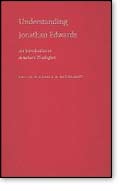
Understanding Jonathan Edwards: An Introduction to America's Theologian Gerald R. McDermott, editor |
A more accessible (but equally reliable) introduction to Edwards's thought than The Princeton Companion, this book emerged from a major conference on Edwards in Budapest.
|
* * * |
 |
Jonathan Edwards for Armchair Theologians James P. Byrd |
A graceful and witty book aimed at the general lay reader.
|
* * * |
 Christianity is not making a great impact upon the vast numbers who inhabit the Asian countries, and the cause is as much the influence of the West on Asia as the basic resistance to the Gospel of Asians.In the first place, the West has persistently regarded Asia as a unity, often in the face of contradictory evidence. This has propelled the Asian countries into seeking their own collective identity vis-à-vis the West. It was once remarked of India’s late President Nehru that his strongly anti-American streak was simply the British side of him. And it would be more than a half-truth to say that his pan-Asian feelings were a product of his British education rather than of his actual experience. Today Asians look for common ground with other Asians, and the Western view of Asia is fed back to the West by Japan, India, Formosa, the Philippines, and other Eastern countries.There has also been a nationalist aftermath, centered in an attempt to keep pan-Asianism alive in order to deal with outside powers. The fact of the cold war has brought tensions into Asia that it might have escaped but for Western fears. And most countries have passed through successive phases of pro-Western, pro-Communist, or neutralist attitudes before gradually rejecting all of these for balanced considerations of national interest.In this climate Christianity has suffered.Christianity, seen against the antiquity of the Eastern cultures, is very much a newcomer. And relative to the population, Christians are few. Christianity in Asia largely descends from the work of Roman Catholic missionaries, who began in various places around the year 1500 but did not carry their work forward on a large scale until the nineteenth century; or of Protestant missionaries, who began in India in 1706, in China in 1807, and in Japan in 1859. In areas other than South India, Christianity is usually not more than 150 years old and is sometimes much younger. Except in the Philippines, in the most Christian parts of South India, in parts of Indonesia, and in Korea, Christians of all sorts are normally a tiny percentage of the population. They are seldom more than 5 per cent and often less than 1 per cent.Thus, by any acceptable standard of definition, we must concede either that Christianity has failed as a movement or that it has never really begun to have a significant impact on the culture. Dr. K. M. Panikkar, the Indian scholar-diplomat, speaks of what he calls the “Vasco da Gama epoch” of Asian history. Panikkar notes that Christianity in Asia shared with certain other aspects of Western culture the stigma of association with the imperialist expansion of the West during this era. He concludes that the Christian mission in Asia has “definitely failed” (Asia and Western Dominance, London, 1953).Panikkar is not alone in this judgment, it is widely held by many Asian intellectuals and by many churchmen, even in the West. Gabriel Herbert, for instance, made considerable use of Panikkar’s work in his analysis of missionary weaknesses (God’s Kingdom and Ours), though he did not adopt Panikkar’s conclusions.But the evidence does not point to the failure of Christianity in and of itself; it points to the failure of the vehicle by which it was communicated. If Christianity has been rejected by Asians along with Westernism, the fact only supports Kenneth Latourette’s contention that the Church is never successfully planted in an alien culture unless there is also a profound and extensive communication between the Christian culture from which the missionaries came and the alien culture to which they go (The History of the Expansion of Christianity, Vol. VII, chap. 16, Harper, 1945). This depth of communication has been largely lacking in many Asian countries.Significantly enough, some confirmation of this analysis is to be found in the writings of Asian Christians in recent years, in which the necessity of some form of dialogue with the great Asian religions has formed a persistent theme. Many argue that the need for dialogue has become more imperative as these religions have become more militant, with demands from their extreme right wings for the expulsion of Western missionaries and the removal of Western cultural and financial influence.A promising key to the success of Christianity in this encounter is the depth and extent of the gospel witness presented by indigenous groups in several countries. Instinctively, these indigenous groups, with their simple New Testament approach to principles and practices, have fastened on the crux of the approaching religious confrontation—the Incarnation of the Son of God.The Incarnation has been called the “scandal of particularity,” and it is the greatest obstacle to Asians’ acceptance of Christianity. But whereas in the past Asian intellectuals were able to reject the “scandal” because of its associations with “Western notions of superiority” in the various Western denominational missions, they are now being presented with Christ by Asian nationals in Asian terms.In the days when churches were wholly dependent on Western missions, theology was almost totally laid down by missionaries and accepted by nationals. Today an increasing number of Asian Christians are realizing that they are responsible both for the purity of the Church’s faith and for the intelligibility with which it communicates that faith. Out of this double concern is arising a true theology, a theology that is not just an empty imitation of Western formulations but an attempt to express the whole counsel of God in terms their fellow countrymen can make their own.Spiritual enthusiasm being generated by those Asians—from peasants through professors to politicians—who are experiencing the outworking of the Scriptures in their everyday living has to be felt to be believed. And all around them the great Asian religions are becoming increasingly anachronistic in the twentieth century. When these religions do attempt adjustment, it is in secular terms through a dubious participation in national politics.Apostolic Christianity—which is not primarily a religion for men to practice but rather a message from the living God embodied in the incarnated, crucified, and resurrected Christ—is relevant, practicable, and above all “Asian.” Sermons, worship, hymms, church gatherings, discipline, and outreach are all being interpreted in Asian terms in several countries, from totalitarian China to democratic India. And this means, as theological dialogue increases in the next few years, that we may yet see, not only the greatest expansion of Christian witness in Asia since the early centuries, but also perhaps a significant contribution to a Western Christendom that is increasingly baffled by rigid denominational demands.Wonderful Counselor“For to us a child is born, to us a son is given; and the government will be upon his shoulder, and his name will be called ‘Wonderful Counselor …’ ” (Isa. 9:6).Some years ago as I was reading the then new Revised Standard Version, I noticed the very slight change in the wording of this grand old Christmas text. The King James version reads: “His name shall be called Wonderful, Counselor.…” The change is minute, merely the omission of a comma, and it does not really alter anything. If Christ is Wonderful and if he is also Counselor, then certainly he is the Wonderful Counselor.The change did mean something to me, though, because by profession I am a counselor and a trainer of school counselors. The reminder that what I try to do with all my frailties, Christ with infinite love and wisdom is willing to do for me and for everyone, has brought blessing at every Christmas season since then.Counseling involves a special kind of relationship between two people. The person being counseled commits a portion of his life to the counselor, reveals something of himself and his problems, has some intention of finding direction through his meeting with the counselor. The Wonderful Counselor asks and deserves more. To him alone we are free to commit our entire problem—all of life, and all of eternity.The counselor must always accept and try to understand the person seeking help. His basic committal is to receive the counselee without blame or criticism, to accept him as he is, to look with him at his life, his goals. Perhaps there is the suggestion here of something, or rather someone, beyond the counselor who can in a fuller sense accept and forgive. The Wonderful Counselor can and does accept all who come. He can, because his acceptance is not a mere passing over sin—he died for sin. And he understands fully all that the human counselor can only vaguely sense.Even in human counseling there is a powerful force. Most counselors have at some time had the kind of experience one counselor describes as standing almost “at a moment of Creation.” That is, sometimes, in the atmosphere of understanding and acceptance, the counselee shows growth, decision, and new life. And at times like this the counselor feels as though any other work in the world would be trivial. Yet he can offer only human understanding, and that is very limited. Christ brings his Spirit, his strength. Through him there is a new birth. With him there is not an “almost” but an actual moment of Creation.Not at Christmas time alone but through all of life the Wonderful Counselor offers full acceptance, total forgiveness, complete understanding. This relationship with him gives strength and courage, and also peace. It leaves a person not only more fully himself but a more completely fulfilled self. And it lasts through time and eternity.—Clifford Nixon, professor of education, East Carolina College, Greenville, North Carolina.Milton D. Hunnex is professor and head of the department of philosophy at Willamette University, Salem, Oregon. He received the B.A. and M.A. degrees from the University of Redlands and the Ph.D. in the Inter-collegiate Program in Graduate Studies, Claremont, California. He is author of “Philosophies and Philosophers.” Christianity is not making a great impact upon the vast numbers who inhabit the Asian countries, and the cause is as much the influence of the West on Asia as the basic resistance to the Gospel of Asians.In the first place, the West has persistently regarded Asia as a unity, often in the face of contradictory evidence. This has propelled the Asian countries into seeking their own collective identity vis-à-vis the West. It was once remarked of India’s late President Nehru that his strongly anti-American streak was simply the British side of him. And it would be more than a half-truth to say that his pan-Asian feelings were a product of his British education rather than of his actual experience. Today Asians look for common ground with other Asians, and the Western view of Asia is fed back to the West by Japan, India, Formosa, the Philippines, and other Eastern countries.There has also been a nationalist aftermath, centered in an attempt to keep pan-Asianism alive in order to deal with outside powers. The fact of the cold war has brought tensions into Asia that it might have escaped but for Western fears. And most countries have passed through successive phases of pro-Western, pro-Communist, or neutralist attitudes before gradually rejecting all of these for balanced considerations of national interest.In this climate Christianity has suffered.Christianity, seen against the antiquity of the Eastern cultures, is very much a newcomer. And relative to the population, Christians are few. Christianity in Asia largely descends from the work of Roman Catholic missionaries, who began in various places around the year 1500 but did not carry their work forward on a large scale until the nineteenth century; or of Protestant missionaries, who began in India in 1706, in China in 1807, and in Japan in 1859. In areas other than South India, Christianity is usually not more than 150 years old and is sometimes much younger. Except in the Philippines, in the most Christian parts of South India, in parts of Indonesia, and in Korea, Christians of all sorts are normally a tiny percentage of the population. They are seldom more than 5 per cent and often less than 1 per cent.Thus, by any acceptable standard of definition, we must concede either that Christianity has failed as a movement or that it has never really begun to have a significant impact on the culture. Dr. K. M. Panikkar, the Indian scholar-diplomat, speaks of what he calls the “Vasco da Gama epoch” of Asian history. Panikkar notes that Christianity in Asia shared with certain other aspects of Western culture the stigma of association with the imperialist expansion of the West during this era. He concludes that the Christian mission in Asia has “definitely failed” (Asia and Western Dominance, London, 1953).Panikkar is not alone in this judgment, it is widely held by many Asian intellectuals and by many churchmen, even in the West. Gabriel Herbert, for instance, made considerable use of Panikkar’s work in his analysis of missionary weaknesses (God’s Kingdom and Ours), though he did not adopt Panikkar’s conclusions.But the evidence does not point to the failure of Christianity in and of itself; it points to the failure of the vehicle by which it was communicated. If Christianity has been rejected by Asians along with Westernism, the fact only supports Kenneth Latourette’s contention that the Church is never successfully planted in an alien culture unless there is also a profound and extensive communication between the Christian culture from which the missionaries came and the alien culture to which they go (The History of the Expansion of Christianity, Vol. VII, chap. 16, Harper, 1945). This depth of communication has been largely lacking in many Asian countries.Significantly enough, some confirmation of this analysis is to be found in the writings of Asian Christians in recent years, in which the necessity of some form of dialogue with the great Asian religions has formed a persistent theme. Many argue that the need for dialogue has become more imperative as these religions have become more militant, with demands from their extreme right wings for the expulsion of Western missionaries and the removal of Western cultural and financial influence.A promising key to the success of Christianity in this encounter is the depth and extent of the gospel witness presented by indigenous groups in several countries. Instinctively, these indigenous groups, with their simple New Testament approach to principles and practices, have fastened on the crux of the approaching religious confrontation—the Incarnation of the Son of God.The Incarnation has been called the “scandal of particularity,” and it is the greatest obstacle to Asians’ acceptance of Christianity. But whereas in the past Asian intellectuals were able to reject the “scandal” because of its associations with “Western notions of superiority” in the various Western denominational missions, they are now being presented with Christ by Asian nationals in Asian terms.In the days when churches were wholly dependent on Western missions, theology was almost totally laid down by missionaries and accepted by nationals. Today an increasing number of Asian Christians are realizing that they are responsible both for the purity of the Church’s faith and for the intelligibility with which it communicates that faith. Out of this double concern is arising a true theology, a theology that is not just an empty imitation of Western formulations but an attempt to express the whole counsel of God in terms their fellow countrymen can make their own.Spiritual enthusiasm being generated by those Asians—from peasants through professors to politicians—who are experiencing the outworking of the Scriptures in their everyday living has to be felt to be believed. And all around them the great Asian religions are becoming increasingly anachronistic in the twentieth century. When these religions do attempt adjustment, it is in secular terms through a dubious participation in national politics.Apostolic Christianity—which is not primarily a religion for men to practice but rather a message from the living God embodied in the incarnated, crucified, and resurrected Christ—is relevant, practicable, and above all “Asian.” Sermons, worship, hymms, church gatherings, discipline, and outreach are all being interpreted in Asian terms in several countries, from totalitarian China to democratic India. And this means, as theological dialogue increases in the next few years, that we may yet see, not only the greatest expansion of Christian witness in Asia since the early centuries, but also perhaps a significant contribution to a Western Christendom that is increasingly baffled by rigid denominational demands.Wonderful Counselor“For to us a child is born, to us a son is given; and the government will be upon his shoulder, and his name will be called ‘Wonderful Counselor …’ ” (Isa. 9:6).Some years ago as I was reading the then new Revised Standard Version, I noticed the very slight change in the wording of this grand old Christmas text. The King James version reads: “His name shall be called Wonderful, Counselor.…” The change is minute, merely the omission of a comma, and it does not really alter anything. If Christ is Wonderful and if he is also Counselor, then certainly he is the Wonderful Counselor.The change did mean something to me, though, because by profession I am a counselor and a trainer of school counselors. The reminder that what I try to do with all my frailties, Christ with infinite love and wisdom is willing to do for me and for everyone, has brought blessing at every Christmas season since then.Counseling involves a special kind of relationship between two people. The person being counseled commits a portion of his life to the counselor, reveals something of himself and his problems, has some intention of finding direction through his meeting with the counselor. The Wonderful Counselor asks and deserves more. To him alone we are free to commit our entire problem—all of life, and all of eternity.The counselor must always accept and try to understand the person seeking help. His basic committal is to receive the counselee without blame or criticism, to accept him as he is, to look with him at his life, his goals. Perhaps there is the suggestion here of something, or rather someone, beyond the counselor who can in a fuller sense accept and forgive. The Wonderful Counselor can and does accept all who come. He can, because his acceptance is not a mere passing over sin—he died for sin. And he understands fully all that the human counselor can only vaguely sense.Even in human counseling there is a powerful force. Most counselors have at some time had the kind of experience one counselor describes as standing almost “at a moment of Creation.” That is, sometimes, in the atmosphere of understanding and acceptance, the counselee shows growth, decision, and new life. And at times like this the counselor feels as though any other work in the world would be trivial. Yet he can offer only human understanding, and that is very limited. Christ brings his Spirit, his strength. Through him there is a new birth. With him there is not an “almost” but an actual moment of Creation.Not at Christmas time alone but through all of life the Wonderful Counselor offers full acceptance, total forgiveness, complete understanding. This relationship with him gives strength and courage, and also peace. It leaves a person not only more fully himself but a more completely fulfilled self. And it lasts through time and eternity.—Clifford Nixon, professor of education, East Carolina College, Greenville, North Carolina.Milton D. Hunnex is professor and head of the department of philosophy at Willamette University, Salem, Oregon. He received the B.A. and M.A. degrees from the University of Redlands and the Ph.D. in the Inter-collegiate Program in Graduate Studies, Claremont, California. He is author of “Philosophies and Philosophers.” |
Jonathan Edwards and the Ministry of the Word: A Model of Faith and Thought Douglas A. Sweeney |
My own attempt to write an engaging book on Edwards for Christians who are interested in models of faith and practice.
|
* * * |
Douglas A. Sweeney is professor of church history and the history of Christian thought and director of the Carl F. H. Henry Center for Theological Understanding at Trinity Evangelical Divinity School
Copyright © 2009 by the author or Christianity Today/Christian History & Biography magazine.Click here for reprint information on Christian History & Biography.







