
Truly I tell you, unless you change and become like little children, you will never enter the kingdom of heaven.” (Matt. 18:3)
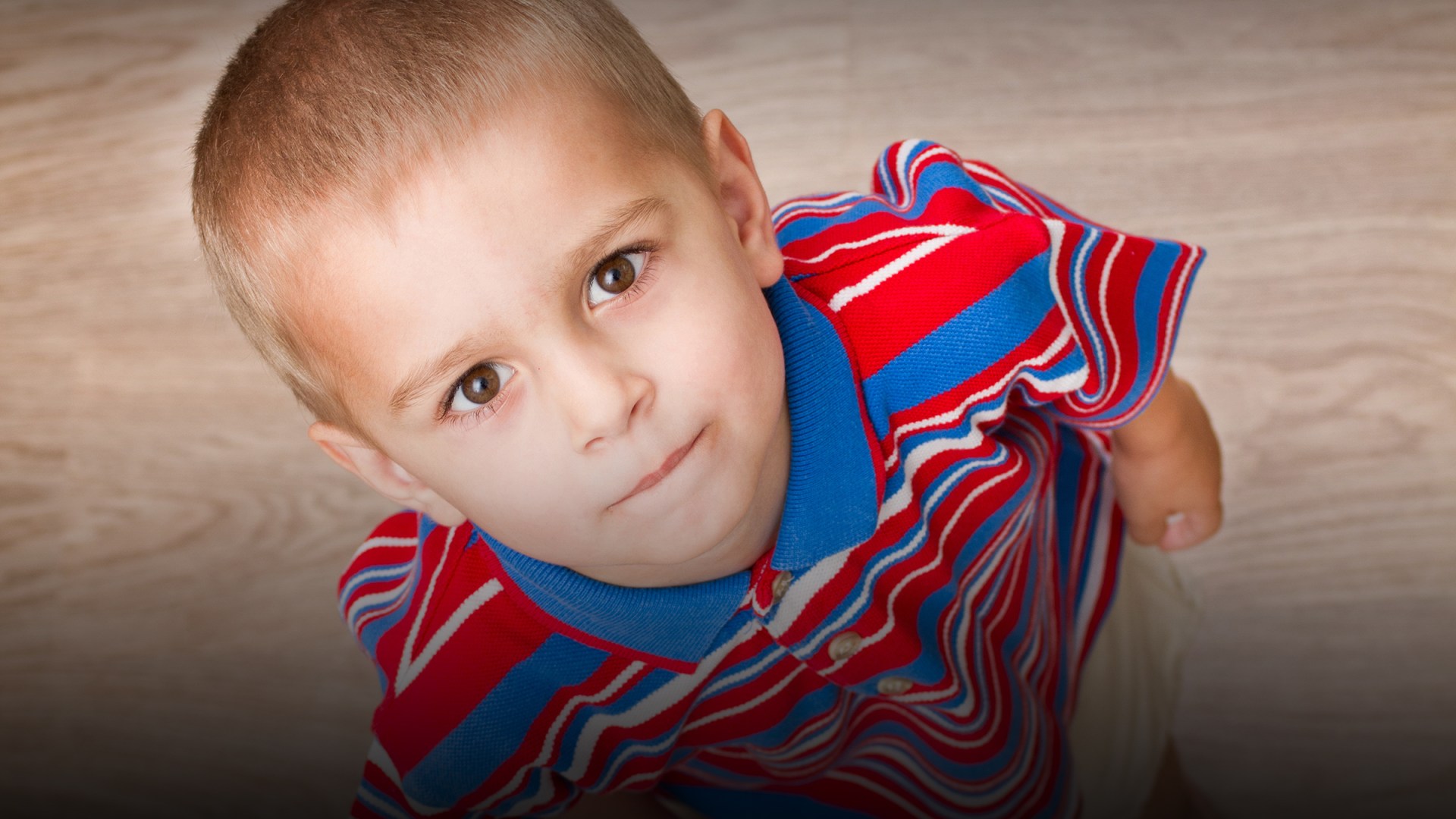
Before I had kids of my own, this passage often conjured images of Precious Moments figurines or a calendar of baby pictures. Sometimes we read this verse and think Jesus meant that to encounter the kingdom, we must reduce our spiritual lives to simple recitations of faith and embrace the unquestioning trust of a child. But ever since my first child was born five years ago, she has served as an iconoclast to that interpretation. An informal estimate put a child’s questions above 200 a day—to one parent alone. It goes without saying: “unquestioning” is the last word most parents would use to describe their children.
“Did God love Goliath?” my daughter once asked. This one question forays into the heart of many centuries-long theological debates. In just four words, it touches on human value, the use of violence, God’s sovereignty. As my daughter encounters God’s unconditional love, she has endless questions of what, exactly, that could mean. If his love really is a “wonderful, never stopping, never giving up, unbreaking, always and forever love” (as The Jesus Storybook Bible says), then a million questions follow. For my daughter, one big question is, “How did Jesus feel when Gaston died in Disney’s Beauty and the Beast?”
Not just sponges
Child psychiatrist Robert Coles reported that of all his endeavors, studying the spiritual lives of children was the most difficult to find support for. After 30 years of work with children, he had written books on politics, morality, fear, and resilience in the lives of children, but struggled to secure funding for qualitative research on children’s spirituality. Eventually, he found it, and published The Spiritual Life of Children in 1990.
The Spiritual Life of Children confirms one widespread assumption: children’s beliefs usually reflect their parents’ and or church leaders’ beliefs as they understand them. Children also connect their behavior to God’s relationship with them. An 8-year-old girl announced, “Daddy said each person can have a visit from God. He’ll be smiling or he’ll be sad—it’s up to you.” A boy informed Coles that each week, the priest reminds his low-income community that “Jesus loved the poor.” The boy added, “My mamma says there has to be some advantage to being poor!” Coles’s work also demonstrates how children look to parents to see what God is like. One girl was fixated on Jesus’ clearing of the temple, and whether or not he often became so angry. In time, Coles learned that the importance of the story was related to the domestic violence in this child’s home, a result of her father’s uncontrolled anger. She wondered, as many children do, whether her parents were trustworthy representations of God.
But Coles shows that children do a lot of theology work themselves, too—usually in the form of questions. One child asserted that God decides when we are born and when we die, and another child responded, “But how does he decide?” Another asked, “Do you think God gets rained on?” A fourth-grader reflected on the truth that God created all people: “A lot of them aren’t so nice, and he’s nice, so why did he do it?” Contemplating the trouble in the world, one boy even had the audacity to ask, “What has he [Jesus] been doing since he died and left?” As I read, I resonate with these children as they struggle with the problem of evil, even inside the walls of an elementary school.
Questions about and questions to
When we grow up, we start to avoid our own questions. We want to appear to have all the answers, to be theologically sound. Or perhaps, we think, our questions might make others uncomfortable. Asking questions might seem disrespectful to God, even spiteful or ungrateful. Maybe questions could discourage others’ faith. And sometimes, we’re afraid to admit, we’re worried about those questions seeming doubtful because we actually are doubtful.
After a morning of theological discussion with Coles, one girl came back from lunch and asked, “Do you think God heard us talk here this morning?” He replied, “I hope so,” and all the children enthusiastically agreed. In that moment, this child turned the discussion about God into a conversation with God—a prayer, in which she presumed he could handle listening to any questions that arise.
All these questions—the ones recorded in The Spiritual Life of Children and the ones my own kids ask me—are how children strive to get to know the God they hear so much about. Children are not yet scholars or theologians, at least not by our usual definitions of those terms. But they are certainly pilgrims, as Coles calls them, authentically seeking God. Like the children who once ran up to Jesus, the children in our lives stumble along toward him without pretense, unconcerned by the religious protocol we might assume as adults. They trust that he will accept and embrace them, whether or not they use the right words or ask the wrong questions.
Maybe “childlike faith” isn’t about being “unquestioning,” after all. Maybe it’s just the opposite, doing just as my daughter does: asking any and all questions that come to mind, without hesitation or equivocation, trusting that our Heavenly Father will listen.
Krispin Mayfield, a counselor living in Minneapolis, earlier wrote for The Behemoth about “The Shalom of Neurochemistry.”