News

Immigrants Welcome in Thomas Kinkade Paintings

And other news from Christians around the world.

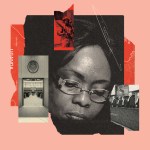
A digital collage showing government soldiers, the American flag, and fragments of a painting.
Illustration by Blake Cale

The family foundation of the late Thomas Kinkade demanded that the Department of Homeland Security (DHS) stop posting his art on social media. According to the family, the government agency misused “Morning Pledge”—which depicts children holding hands to hearts as an American flag is raised—“to promote division and xenophobia.” DHS posted the image on X with the message “Protect the Homeland.” The rest of the government agency’s social media feed was filled with posts cheering the mass deportation of immigrants. Kinkade, the self-branded “painter of light” whose art has been frequently criticized as sentimental, originally said he wanted “Morning Pledge” to capture the promise of liberty and justice for all. 

United States: Students Get AI  Help

Cedarville University is claiming the title of first evangelical college to launch a campus-wide artificial intelligence initiative. The Ohio school is subscribing to ChatGPT Edu and making it available to its more than 6,000 students. According to a school spokesman, the chatbot program will help them “think biblically about AI, be more prepared for the rapidly changing marketplace, and become more time-efficient—leaving additional time for personal and spiritual growth.” A 2024 marketing study found that more than a third of college freshmen use AI to take notes, study, and write essays. A similar number of instructors use AI for their jobs.

Dominican Republic: No to Gold and Copper Extraction

Thousands of evangelicals marched in protest against a Canadian company’s plans to mine gold and copper in the San Juan Valley. GoldQuest says it will extract between 7 million and 21 million tons of precious metals in “a low-impact underground mining development opportunity with the potential to serve as a significant economic driver.” But evangelicals, organized by five ministerial organizations, fear environmental disaster. “The gold mine in its current location will cause irreversible damage,” said a statement read by pastor Ramón Campechano. “Our forests do not belong to any transnational company that only seeks to profit.”

Argentina: Evangelical Existence on the Books

Argentina will now legally recognize non-Catholic religious groups, a change evangelicals have wanted for 30 years. Until now, the country protected religious freedom but only granted legal status to the Roman Catholic Church, which the Argentine constitution calls the “apostolic faith.” 

Sweden: Nation Watches Church Move

An iconic wooden church, often described as one of Sweden’s most beautiful buildings, has been moved across town to make way for an iron ore mine. Thousands of people, including King Carl XVI Gustaf, lined the streets to watch the three-mile trip unfold carefully over 48 hours. More witnessed the event on live TV. The 131-foot tall, 741-ton Lutheran church in Kiruna was designed with a mix of architectural styles, paying tribute to Gothic cathedrals, Norwegian stave churches, and Indigenous Sami huts. The altar is art nouveau. Bishop Olof Bergqvist, a major force behind the effort to translate the Bible into Sami, consecrated the church in 1912. Now, the ground it was built on is in danger of collapsing due to continued mining. Around 3,000 homes are also being moved to safety.

Germany: No Sanctuary in Sanctuaries

Police arrested an asylum-seeking Christian convert at an Independent Evangelical-Lutheran Church where he sought sanctuary in Berlin. The man is from Afghanistan, according to German pastor Gottfried Martens, and faces “immediate danger to life and limb” if he’s deported. He first entered Europe in Sweden, however, and, according to current rules, is only eligible for asylum if he applies there. The mayor of Hamburg, a center-left Social Democrat, attacked his center-right counterpart, the mayor of Berlin, for letting churches stand in the way of deportation. The number of immigrants seeking sanctuary in churches has risen from 335 in 2020 to 2,386 in 2024, according to government records. An individual’s right to asylum is protected in the German constitution, but some current leaders have suggested that was a mistake and should be amended. The Berlin pastor who has Afghans living in his church said he believes refugees from Muslim countries have been sent by Christ.

Ghana: Government to Review Prophecies

The Presidential Envoy for Interfaith and Ecumenical Relations has told religious leaders to submit any prophecy concerning national leaders, national security, or public stability to the government for review. Elvis Afriyie Ankrah, who works for the presidential administration, said the review process will prevent unnecessary panic and instability. In the run-up to the last election, one prophet declared that Mahamudu Bawumia would defeat John Mahama, causing some to doubt the results when Mahama won with 56 percent of the vote. At several 2025 watch night services, prophets foretold the impending deaths of prominent people (whom they did not name). The government request has sparked debate over the legitimacy of prophecy and government regulation of churches.

Eritrea: Seven Pastors Still Imprisoned

Voices for Justice, a consortium of Christian groups concerned about religious liberty, called on the government to release seven church leaders who have been imprisoned without any charges for 21 years. There are some reports that the pastors are held in solitary confinement.

Turkey: Biblical City Excavated

The archaeological excavation of Colossae has begun. The ancient city was a significant settlement at least 500 years before Christ, but Colossae is most famous as the home of the early church that received two New Testament epistles: Paul’s letters to the Colossians and to Philemon. The excavation, supervised by experts from Pamukkale University, may shed light on the “human tradition and the elemental spiritual forces of this world” (Col. 2:8) that Paul worried would distract Christians from the truth that “God made you alive with Christ” (v. 13).

Israel: No Chicken in Church Meals

Gaza Baptist Church has stopped serving chicken. According to pastor Hanna Massad, who moved to the US in 2008, meat has become too hard to find or too expensive. Plates now contain only rice and a vegetable, often eggplant, and cost the ministry $7 to $10 each. The church has handed out more than 47,000 hot meals since the war began with Hamas’s attack on Israeli civilians in 2023. A three-month blockade early in 2025 caused a hunger crisis in Gaza. The World Health Organization reported 63 people died of complications related to malnutrition in July. Israeli authorities dispute the report and Israel’s supporters point to persistent problems with UN food distribution. Ken Isaacs, a VP with Samaritan’s Purse, said he witnessed “thinning he hadn’t seen since Bosnia,” but noted there’s no good way to deliver aid in a war zone like Gaza. “It’s just a tough situation,” he told CT, “and at the end of the day, it’s only going to be resolved by getting enough food down on the ground.” 
China: Bible Art Moves a Nation

Beijing pastor Wang Wenfeng and his church, SanQi, wanted 1,189 people to each hand-copy a chapter of Scripture in 2019 for the 100th anniversary of the Chinese Union Version translation of the Bible. Within days of sharing the idea online, however, thousands volunteered, including members of underground house churches, people who are part of officially recognized Three-Self Patriotic Movement congregations, and nonbelievers who love the art of calligraphy. To date, millions of Chinese people have taken up the Bible art challenge. Wang has collected many of the handwritten Bible texts in a five-story house in Wenzhou. It was open to the public until authorities raised concerns about the influx of visitors disrupting traffic. Wang shut it down in March 2025.

News

When Believers Kill Believers

Members of the Chin ethnic minority in Myanmar—85 percent of whom profess Christianity—are fighting each other.

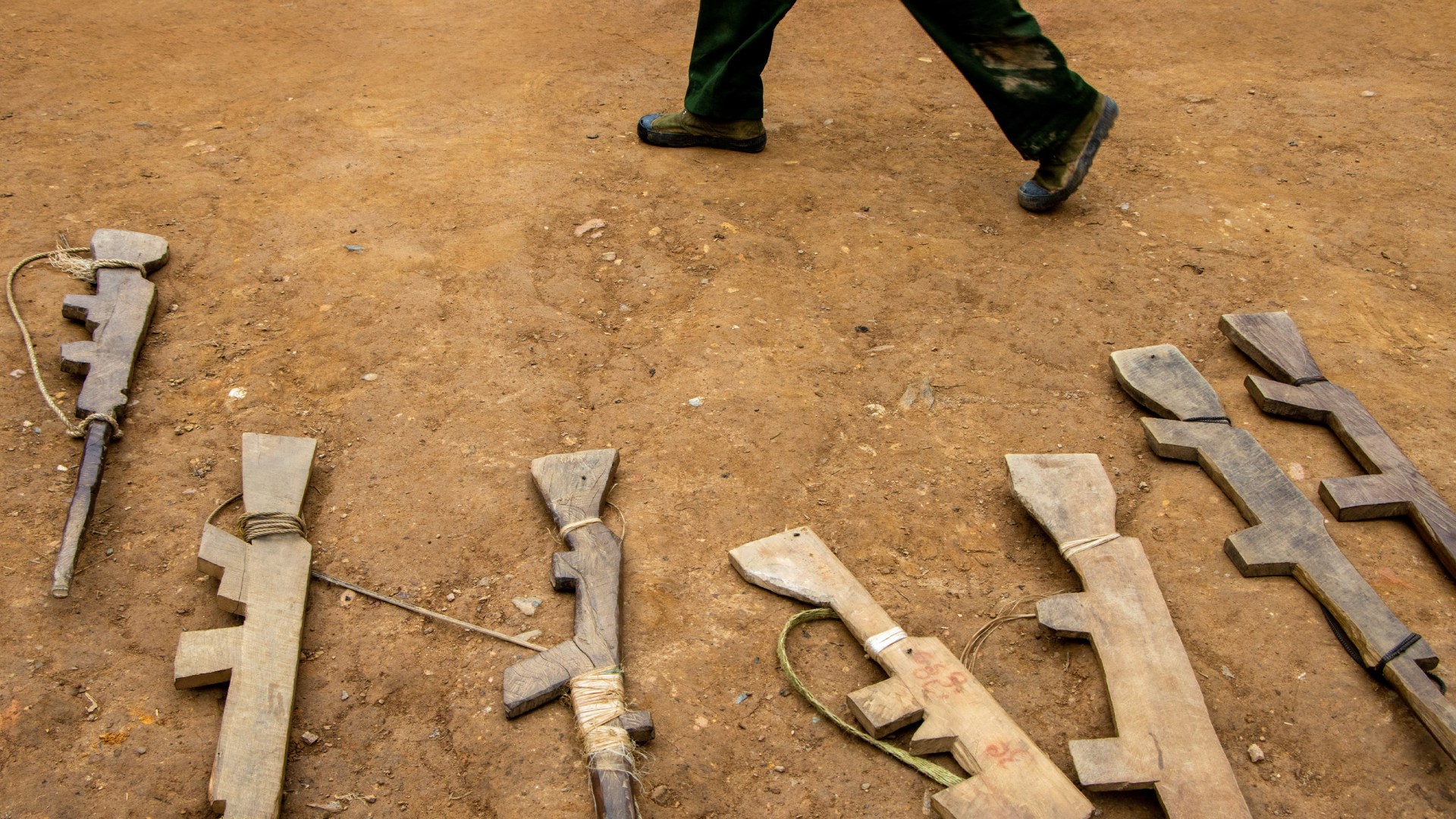
Wooden drill rifles at a camp in Myanmar in 2022.

Wooden drill rifles at a camp in Myanmar in 2022.

Christianity Today November 5, 2025
SOPA Images / Contributor / Getty

Since Myanmar’s military coup in February 2021, ethnic armed groups in Chin State have fought the junta. In the past four and a half years, the Myanmar army has destroyed Chin churches, killed and displaced civilians, and wiped out entire cities.

Yet beyond resisting military rule, ethnic armed groups in Chin State have also been fighting one another to extend territorial ambitions in the rugged, hilly region.

In July, fierce fighting erupted between the veteran Chin National Army and the newer Chin National Defense Force. The violence left dozens of combatants dead and forced more than 4,000 civilians to flee across the border into the Indian state of Mizoram.

Chin pastors lament the infighting, as 85 percent of the Chin population profess to be Christians. As a part of the Christian minority in the officially Buddhist country, they have faced religious persecution for decades. Chin diaspora groups in the US often raise awareness of these injustices and call on the US government to take action against the junta.

Yet unity between the more than 50 subtribes within Chin State—many with its own language—has been long been a challenge.

“We grew up under the Bible’s teachings, but when these disputes break out, where is the Bible?” asked Khuang Lian, an ethnically Chin pastor who lives outside the state. “Chin people who are concerned about God’s Word are pained by what’s happening. We cry and we feel discouraged.”

The July clashes were the latest in a series of skirmishes between the rival armed groups in the last two years. While Chin resistance groups have managed to weaken the military’s grip on the state, intensifying conflict between the Chin National Front and the Chin Brotherhood has emerged as another threat to peace.

The Chin National Front, formed in 1988 to fight against the junta, was the state’s main armed group until the 2021 coup. Nonetheless, many Chin people have access to firearms, as hunting is a way of life in the remote state often neglected by the central government. This allowed civilians to assemble quickly into numerous militias after the coup.

Several of these militias banded together to form the Chin Brotherhood, Chin National Front’s rival. Global think tank Crisis Group described relations between the two as “toxic,” noting the fatal clashes and highly charged online rhetoric from supporters in each camp. That the Chin Brotherhood has allied itself with the powerful Arakan Army from neighboring Rakhine State is particularly alarming for those with the Chin National Front, who worry the outside interference could endanger Chin autonomy.

Some Christian leaders have urged both sides to engage in peaceful dialogue, to little avail.

Salai Za Uk Ling, executive director of the Chin Human Rights Organization (CHRO), said it is disappointing to see how each faction has allowed selfish goals to take over the initial struggle for collective survival.

“Those in power have gone back to the old, oppressive ways of turf wars that are not necessarily in the best interests of the people who are suffering,” he said.

Even before the coup, nearly 6 in 10 people in the state lived below the poverty line, while 1 in 10 children were projected to die before they turned five, according to UNICEF. Today, almost 40 percent of the state’s 500,000 residents have been displaced, owing largely to the junta’s attacks and infighting, according to the nonprofit Institute of Chin Affairs.

Faith has little bearing on those leading the divided resistance, Salai Za Uk Ling added.

The warring sides are “behaving like nonbelievers,” said a pastor in Myanmar’s Sagaing Region adjacent to Chin State. He asked to remain anonymous out of fear of imprisonment given the junta’s hostile stance toward Christianity.

“Christians should be fighting for the truth, not fighting one another,” said the pastor.

His Chin counterparts have been struggling to counsel congregants who are involved in the fighting. “With tensions so high, Christian leaders have found it difficult, and some may even be afraid to approach the armed groups under such lawless circumstances,” he said. “Besides praying for God to intervene, there is little they can do.”

The first Christian missionaries to the Chin people, American Baptists Arthur and Laura Carson, arrived in the capital of the state, Hakha, in the late 1800s. Over the next century, a large majority of the Chin abandoned their traditional animistic beliefs and professed faith in Christ.

Khuang Lian, the Chin pastor, wants his people to return to their faith.

“Although my family does not stay in Chin State, I am still very concerned about the political situation because these are my people,” Khuang Lian said. “This is my homeland. I don’t want to see them attacking each other. I want to see peace and reconciliation. I want to see them go back to the Bible.”

Some pastors have even taken sides in the conflict, putting their tribal interests above God, Khuang Lian and Salai Za Uk Ling pointed out.

“They are supposed to be shepherding their flock according to God’s Word, but instead they are teaching erroneously under the cloak of Christianity,” said Salai Za Uk Ling.

The military junta plans to hold elections starting December 28, which outside observers widely view as a way to legitimize the military’s power. The junta has disbanded dozens of opposition parties, and voting will not take place in many areas due to the ongoing fighting. Meanwhile, the military has regained several strategic towns near the Chinese border after the Ta’ang National Liberation Army signed a cease-fire deal brokered by China.

As Myanmar’s civil war drags on, Salai Mang Hre Lian, head of CHRO’s human rights documentation team, urged fellow believers to “let go of our egos and self-interests.”

“We are all under the same God and in one blood. We should be living in fear and reverence of him, not of one another,” he said.

Culture
Review

‘Lewis & Tolkien’ Pours Pints at Museum of the Bible

The original play is a paean to male friendship, uninterrupted conversation, and, of course, the pub.

A photo of MWO Management’s Lewis & Tolkien.

MWO Management’s Lewis & Tolkien.

Christianity Today November 5, 2025
Image courtesy of MWO Management’s Lewis & Tolkien

A 90-minute play about two men talking through their feelings might not sound particularly gripping—thought-provoking, maybe, but not edge-of-your-seat entertaining. Yet Lewis & Tolkien, showing at the Museum of the Bible in Washington, DC, through the end of November, is exactly that.

Watching the show is like following a close boxing match, as those old Oxford dons C. S. Lewis (Bo Foxworth) and J. R. R. Tolkien (Arye Gross) go toe to toe. The fictional confrontation—set during a relational rift near the end of their lives—is convincing. The two modern titans of Christian thought might have sparred this way, referencing their past debates and slipping in jests about each other’s work.

They dance from anger to affection, from intellectual theorizing to unburdening their souls, from waxing poetic about fantasy novels to reminiscing on nights spent sitting close enough to the fire to bite the coals in their regular haunt, The Eagle and Child pub. The whole time, they’re gulping pint after pint of imaginary beer (it’s water, really) until, regrettably, Lewis concludes it is time to accept the “lament that comes from seeing the bottom of my upturned mug.”

The conversation is accessible to any theatergoer thanks to pub waitress Veronica (Anna DiGiovanni), a charming audience stand-in. But longtime fans of these writers in particular will find plenty of inside jokes to love. The story is rich, the acting is impressive, and the pacing keeps viewers captivated throughout.

The play also leaves audiences asking earnest questions about their own friendships.

“It’s so much about male friendship,” writer Dean Batali told Christianity Today in an interview shortly before the show’s opening last week. “And I didn’t even know that’s what I was writing at the time.”

That theme feels especially relevant now. Two men reconciling over an unhurried, in-person conversation, nestled in a snug pub, defies everything about modern society’s bitter ideological divisions and disembodied digital distractions. Not a single iPhone in sight. No email notifications. No Slack messages interrupting the conversation. Prolonged eye contact, full attention, and a radical willingness to stay in the same room even when wounded by the other.

Batali said viewers often draw a comparison to their own lives in this fractured age. Sure enough, at the end of the show on opening night, I overheard a man in the audience tell Batali that the conversation had him thinking about Thanksgiving. Which political affiliations or ideas might get someone uninvited from breaking bread (or carving turkey) together?

“The world is infiltrating the church,” that man bemoaned.

Lewis & Tolkien is an ambitious project, with no intermission and a torrent of multisyllabic words for the actors to memorize. It was also a daunting script for Batali to shepherd, given Lewis’s and Tolkien’s fierce admirers. He drew from the men’s books and letters, but he said he’s still a bit nervous about being corrected about some small detail or another, two years after first writing the script.

The Museum of the Bible has often hosted productions like this one in its World Stage Theater, including a recent Narnia play, which was produced by a different, overtly Christian company. Lewis & Tolkien is a more eclectic undertaking. Batali is a Christian—he told CT he had a sudden, undeniable conversion experience as a teenager and has followed Christ ever since—but the actors didn’t need to pass any theological litmus tests to get the gig, and the show wasn’t intended as an apologetic.

“Was it my purpose to tell the story of C. S. Lewis’s conversion so the people in the theater would hear a conversion story? No,” Batali said. “It came out of the story. And it’s a natural part of the story. Was it my purpose to show two friends reconciling as we’re supposed to, as demonstrated by Jesus? No. That came out of the story too. I’m very excited that it did.”

The show’s director, Andrew Borba, emphasized that anyone should feel welcome to see the play. Borba himself isn’t sure about faith, describing himself as a “seeker” after becoming disillusioned with the Catholic church.

“I apologize to anyone this offends, but there are things not in the practice of Catholicism but the structure of Catholicism that, just, I had to leave,” said Borba, a seasoned actor and director who grew up going to school with Batali in their hometown of Tacoma, Washington. “I found that it was not at all, in my opinion—my very, very faulted and humble opinion—a real practice of Christianity.”

It isn’t lost on Borba and Batali that they are old friends working together on a play about another pair of old friends who likewise shared a relationship centered around ideas and art, one of whom eventually helped push the other into embracing Christ.

“What’s going on with Lewis and Tolkien is not dissimilar to a lot of aspects of our friendship,” Borba told CT. Like Lewis and Tolkien, he reflected, he and Batali have had “many, many times where we would get together for lunch or coffee and talk religion or politics or life, and would, in the very best way, full of love and respect, engage each other.”

If there’s one overarching message to Lewis & Tolkien, it’s that: a celebration of fellowship, even when the way is narrow and the road is hard. But Batali and Borba hope this play will work for both a broader DC audience and visitors to the Museum of the Bible as a story told for the sake of simply telling a good story.

“I work a lot with new plays,” Borba confided, “and maybe the biggest challenge is that they—almost all of them—come with a strong point of view about life and then pretend to create a discussion or an argument [or] a dramatic event around it. But so clearly the playwright is like, ‘This is right thinking. Here’s my agenda.’”

“Good theater doesn’t do that,” he said. “Good storytelling doesn’t do that. It breathes and opens into the things that matter.”

Borba is convinced Batali’s work does just that. Still, the show’s location at the Museum of the Bible may keep DC’s more liberal theater fans at bay, many of them wary of setting foot in a building associated with conservative Christianity.

But they needn’t worry. The play “doesn’t preach,” Batali said. “It’s just characters expressing what they believe, which might challenge you a little bit, but that’s not the intent.”

“And also, by the way,” he added, “You can get in and out of here without seeing a Bible.”

Batali is used to occupying this in-between space after spending more than 30 years in Hollywood as both a Christian and a writer. He wrote for That ’70s Show and Buffy the Vampire Slayer, among other productions.

He recalled once pitching a story line where Buffy teams up with the local Christian youth group. It didn’t make the cut, although he did manage to write a conversation about God into That ’70s Show.

“They happened to be high at the time,” he noted. “But.”

Batali told CT he often faces pushback from Christians who are suspicious of the art world.

“Christians need to open their minds to what stories do,” he said. “‘In the world, not of it,’ … but we still have to engage culture.” After 35 years making that argument, Batali still feels that the church is “playing catch-up,” which is why it’s “so satisfying to be here in a theater with 490 seats, with a professional director and actors with years of experience.”

The play does come across as professional. The primary danger in seeing it, more so than being around uncomfortable ideas, is the extreme longing afterward to find a similar pub nearby where one’s own friends can gather for hours by a cozy fire.

Even if I find a suitable venue, cell phones will still exist. And my friends and I haven’t spent nearly enough time translating Beowulf to enjoy the same caliber of conversation.

I’ll have to cherish the memory of this play, in the meantime, and the genuine affection it displayed for two writers I adore.

“You kind of lean forward, listening to them,” Batali said of the dialogue. “They enjoy language.”

Language, yes. And for Tolkien and Lewis, quite a few pints too.

Haley Byrd Wilt is a writer based in Washington, DC.

News

ChatGPT Announces New Erotica Feature

How ChatGPT’s new turn offers opportunities for the gospel.

A man looking into virtual reality goggles.

A man looking into virtual reality goggles.

Christianity Today November 5, 2025
Kegfire / Envato / Edits by CT

Sam Altman, CEO of OpenAI, recently announced that ChatGPT will roll out a new erotica feature in December, part of an adaptation that will loosen restrictions and “treat adult users like adults.”

The Bulletin sat down with Russell Moore, Mike Cosper, and Brandon Rickabaugh, public philosopher and founder and CEO of the Novus Initiative, to discuss AI chatbot companions, the illusion of online intimacy, and the call of Jesus in a world of rapidly changing technology. The entire interview can be heard in episode 221. Here are edited excerpts.

What are AI companions, and how are they used?

Brandon Rickabaugh: AI companions constitute a host of potential relationships. These bots could purchase things for you on Amazon or do work for you. Mental health bots have been around for a long time, predating ChatGPT. You also have companion bots that are trained to behave like a close friend, romantic partner, or spouse. Now you’ve got companion bots that can serve the purpose of erotica too.

Most of the research about these companions piggybacks off the psychology and sociology of pornography use. Psychology models also predict the kinds of behaviors people have with these chatbots. When people use these, they anthropomorphize; they attribute humanlike properties like mind, consciousness, and agency to these bots.

Elon Musk’s SuperGrok subscribers can pay $30 a month to access AI companions that offer erotic content. Is it accurate to compare this to drug dealing, selling something we know is going to make you an emotional addict and is dangerous for your health?

Russell Moore: Yes. A recent report in Harper’s Magazine spoke of “freebasing” pornography (like heating and smoking a drug so the high is particularly intense). AI companions possess all of the problems of digital pornography plus an illusion of emotional connection. God’s design is sexuality in the context of relationship, and relationship in the context of covenant, and covenant in the context of God. Now you have the illusion of relationship and sexuality without covenant, without genuine reality at all. 

I talk with pastors dealing with men who say, “I’ve fallen in love with a chatbot. She understands me better than my wife does.” This algorithmic technology is specifically designed to reflect back to that person what he expects from a partner and a relationship. When you add sexual content to that longing for connection, that is a really dangerous combination. We haven’t even figured out how to deal with the old-school porn problem in our churches, much less this.

Rickabaugh: When we say that they “understand,” that is anthropomorphizing. The truth is that chatbots have no understanding. There’s no sentience behind them at all. I encourage computer scientists to use non-anthropomorphic language in their models and also their interface, but it sneaks in. We cannot talk about chatbots knowing or feeling things because there is no sentience in them. 

That’s helpful, Brandon, because what Russell’s describing is this person’s perception of connection. It seems very deceitful that someone perceives an understanding when it’s not really there. 

Mike Cosper: The language I have found helpful here is “frictionless relationships.” A normal relationship between a man and a woman has some friction, conflict, difficulties connecting and communicating. We have to get through that friction to preserve intimacy or repair relationships when they’ve been harmed. 

With these AI chatbots, that friction’s removed. The algorithm always adapts to keep the human being in the relationship happy. The goal is to get your attention and keep you logged in. The danger is greater for young people, but also for the elderly and lonely. These things are profoundly seductive.

I do not believe these companies care about age verification. My state, Kentucky, has tried to require age verification for porn sites; but there are easy ways to get around those safeguards. Companies will diligently stay ahead of that to protect young people from getting addicted to this stuff? That’s a giant joke.

We often hear the church needs to step up and provide community for lonely people. While certainly that’s a part of what is needed here, does the church have larger work when it comes to companionship AI? 

Moore: The church needs to recognize this in a way that doesn’t treat it as freakish, science-fiction-y, and weird. Otherwise, people don’t want to talk about it. Also, it’s awkward to talk about sexual and relational temptation in anything but abstract terms. A pastor who stands up and talks about erotic chatbots will have people coming up after and saying, “Why did you bring that up? That’s risque.”

The New Testament does not have that kind of reticence about dealing with temple prostitution and other issues in the first-century world. We need to acknowledge how vulnerable we all are. Technology has shaped all of us in some ways we can see and others we can’t. We should not laugh at this and treat it as futuristic or outlandish. This is real. This is here right now.

Rickabaugh: Jesus talks about technology. The Sermon on the Mount has a fundamental debate about mechanization versus non-mechanization of persons. Technology can operate beneath the surface, at the level of the will, heart, emotions, and thoughts, where we treat ourselves and others as non-people. In contrast, the Sermon on the Mount makes clear that personhood matters. We are children included in God’s kingdom. Jesus talks about this all over the place. You can understand that as a kind of discussion about technology, if you get clear on what counts as a technology.

Moore: The Bible speaks directly to issues of technology and spiritual formation, some in ways that might not have even been understandable until now. Isaiah and Jeremiah talk about the man who constructs an idol, creates its mouth, creates its ears, and then expects it to speak to him and to hear him. He experiences disillusionment and disappointment because it’s not there to respond to him when he cries to it. That’s exactly what I’m seeing right now, even apart from the sexual content. People say, “I’ve really been trusting my chatbot to tell me what to do. Now I’m starting to feel like it’s just giving back to me what I’m expecting.” That prompts some people to ask, “What am I doing? What’s happening? What’s actually real?”

Rickabaugh: Disillusionment is the perfect description. If you look at the AI community, at Silicon Valley and the beginning of the AI movement, you’ll see people radically enchanted but disillusioned with themselves. 

Cosper: Most artificial intelligence is not designed with an ethical superstructure, but within a very humanistic framework of logic, ethics, and human relationships. If that’s the case, there’s no metaphysics that values humanity and offers some way of processing ethical issues. The conversation will constantly move into places that are very dark and full of evil.

Steven Adler, an AI researcher who led product safety at OpenAI, recently wrote an op-ed for The New York Times on this topic. He said, “To control highly capable A.I. systems of the future, companies may need to slow down long enough for the world to invent new safety methods—ones that even nefarious groups can’t bypass.” Talk to me about the value of slowness in the midst of this rapidly developing technology.

Moore: We can pump the brakes in terms of cultivating slowness in our own lives, but there is no mechanism to slow down technological development when you have large, multinational companies. We haven’t even figured out policy or cultural standards for how to deal with the old social media companies and search engine companies, much less what’s happening right now. 

When I talk to people in Silicon Valley who are working on this technology, often they will say, “If we’re not doing it, China’s doing it” or “If China’s not doing it, India’s doing it,” or someone else. The language is really similar to nuclear weapons technology: “This isn’t great, but we have to be on top of it.” That makes it difficult for any individual or even for any state or nation to get a handle on this. Because of this, churches and Christians need to say, “How can I cultivate slowness and spiritual formation even in the midst of all of that that I cannot control?”

Rickabaugh: We can slow down and ask, “Can we buy a license at ChatGPT now?” You can make a strong case that Christians need to say no. There are many different applications of AI we can say no to—to the mental health use, to music selection in an app. I can’t do anything about large-scale AI, but I can say no to all sorts of things that are within the effective range of my will. 

As we do this, we take seriously what Jesus says about humanity and realize that the Spirit is just as powerful as the Spirit’s always been. These technologies do not push on any new button in terms of human nature. The answer to human flourishing is becoming more and more like Jesus in terms of our whole person. That’s going to require pulling away from a lot of things, including various kinds of technology. 

I am very hopeful about what the church can do if the church switches its understanding of spiritual formation. Within the past decade, people have turned spiritual formation into a kind of technology. When people talk about the spiritual disciplines being the thing that transforms you, I want to say, “Hold on, hold on. It is the Spirit that transforms us.” You can do the disciplines all day and become an angrier person. 

If you turn spiritual disciplines into the sort of thing that you can do a particular amount of time on a particular kind of schedule in a particular kind of way, that’s turning it into a technology. That’s very dangerous. Apps are coming out that are intended to take the role of pastors. You’re going to have spiritual guides that track all of your health data.

So what does it look like to follow Jesus in the church? I think it requires us to be very mindful about what these technologies are and what they do, what we can say no to, what it would take to be the kinds of people that say no to that. The history of technology and the history of the church have got this profound relationship that has affected spiritual formation. I’m actually very hopeful about being able to do a lot of great good when people are radically disillusioned, like Russell said. The church has the capacity to show people what people are.

‘Can We Just Ignore It? Nope.’

Responses to our July/August article about AI and other stories.

Photo of CT's July August issue
Source image: Envato

This year at CT, we’ve been focusing (understandably so!) on questions around artificial intelligence, particularly generative AI tools—models like Grok and Claude that use prompts to create original text or images. In addition to many of the stories in our July/August issue, our online coverage has recently taken on what ChatGPT means for Christian education, the efficacy of AI prayers, and whether churches should use AI tools to answer seekers’ questions.

But AI also underlies many of the technologies we’ve come to think of as more mundane, including dating apps. “I had similar experiences with apps to what is described and ended up finding my current spouse through offline means from a personal connection,” wrote Wes Hurd of Washington, DC, in response to reporter Harvest Prude’s story on algorithmic matchmaking, “What Algorithms Have Brought Together.”

So how can the church actually help young people connect with each other? Speed dating programs? Swing dancing and pickleball? “I think the cure for this is not necessarily new programs or paradigms,” Hurd added, “but a restoration of soul care, pastoral care, and relationality between pastors and the people who come to their churches.”

We’ll keep covering these interplays at the heart of AI discourse—between the digital and the embodied, new interventions and steadfast tradition—in the months ahead.

Kate Lucky, senior editor, features

What Is (Artificial) Intelligence?

Kudos to Christianity Today for raising thoughtful questions, including the vital starting point “What is intelligence?” How can we navigate AI if we can’t first define human intelligence? That said, I was surprised the roundtable didn’t include experts in human intelligence. Behavioral scientists have grappled with this. While definitions vary, psychology offers well-established frameworks—like Howard Gardner’s multiple intelligences, Robert Sternberg’s wisdom-based models, and John Flavell’s work on metacognition—that speak directly to these questions. The lack of consensus in psychology reveals the profound complexity of the issue. Ignoring these insights risks reinventing the wheel without a clear foundation, perpetuating guesswork even while raising thoughtful questions. This may be one of Silicon Valley’s core missteps: developing AI without grounding in theological, philosophical, or psychological understandings of what it means to be human. Yes, biology and psychology have at times been at odds with an imago Dei framework—but even through secular insights, God’s truth can shine.


Stephanie Wilsey, Beaver Falls, PA

A possible Christian definition of intelligence is the ability to make righteous choices before God. This, we believe, is where our greatest utility, happiness, or well-being lies. If we stick to the definition above, it is hard to imagine how AI systems will ever be able to optimize their own well-being in the way just described. To ascribe this sort of intelligence to AI would be nonsensical. The increase in human well-being that AI can bring will always be limited and instrumental. AI can make our lives more comfortable, and that is of course a very commendable end. It may even be pleasing to God. But even so, artificial intelligence will always be only an instrument in effecting the choices we have to intelligently make ourselves. And AI can certainly not bring us to where our ultimate happiness or utility lies: in the full realization of the kingdom of God. That is something that not even human intelligence and the rational choices it implies can bring about.


Johan Serré, Berlaar, Belgium

When We Make Intelligence In our Image

AI in its current infancy is already capable of great feats of intelligence. I am surprised that Timothy Dalrymple rejects the ability of AI to create intelligent beings. Even if he is ultimately correct and AI creates something less threatening, I can easily imagine AI (and its human guides) creating a humanoid with fake skin, blood, and bones but with supercognitive ability. It might not be a genuine being, but we’d be easily fooled by a fake. If we find it impossible to recognize an altered photograph right now, the former scenario is not far off. The challenge is much greater than simply refusing to anthropomorphize AI.


Andrew Cornell, Dresden, Ontario

I am an AI researcher, a Christian, a signer of the Southern Baptist statement on AI, and currently writing a book on computer and AI ethics. I have been warning people about “science-fiction AI” for decades. I regularly have the weird experience of being squelched in conversations because I actually know how chatbots work and people don’t like me spoiling their fantasies. If we ever do make a conscious machine (which I do not see any way of doing), we will not have created consciousness, only transplanted ours into something else.


Michael A. Covington

Unlearning the Gospel of Efficiency

As a scientist working for a biotech company, I have witnessed AI take a prominent seat in our corporate goals since a couple of years ago. The aim is to boost efficiency as we have slowed hiring due to economic headwinds. That’s why I found Kelly M. Kapic’s reflection so refreshing. It’s a vital reminder that our human flourishing is not dependent on productivity, but rather on a relationship with a loving and faithful God.


Jane Hui, Vancouver, British Columbia

God Remembers in Our Dementia

I see this daily in my work with hospice. Much grief would be mended by acknowledging what’s changed and loving what remains.

@therobbyortiz (Instagram)

We have been walking this journey with our mom for the past seven years. There are and have been many tears of anger (at the disease and God) and sadness as we watch her continue to suffer and decline. This has challenged my faith like no other.

@kdebeer63 (Instagram)

Culture

Carving Out Faith

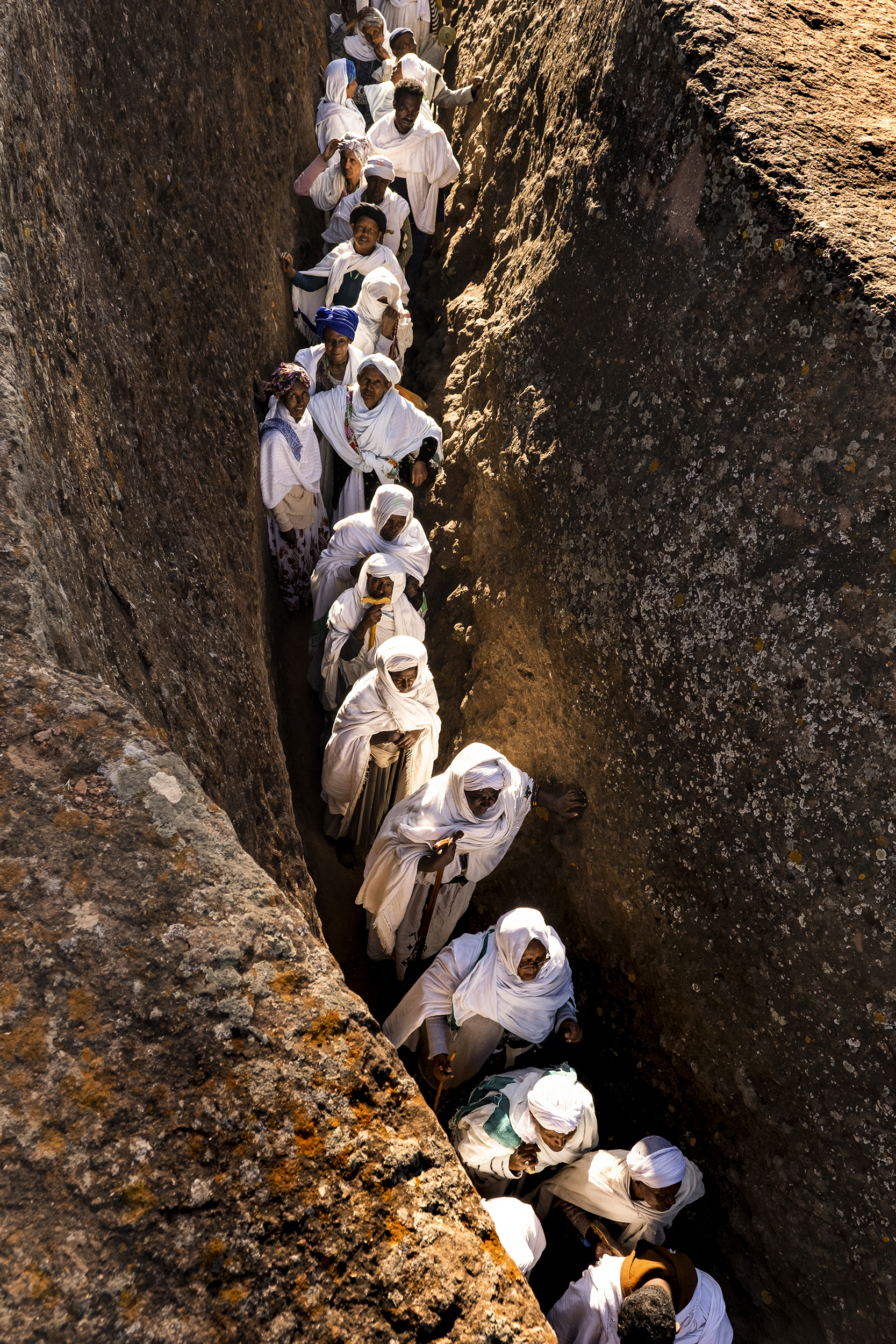
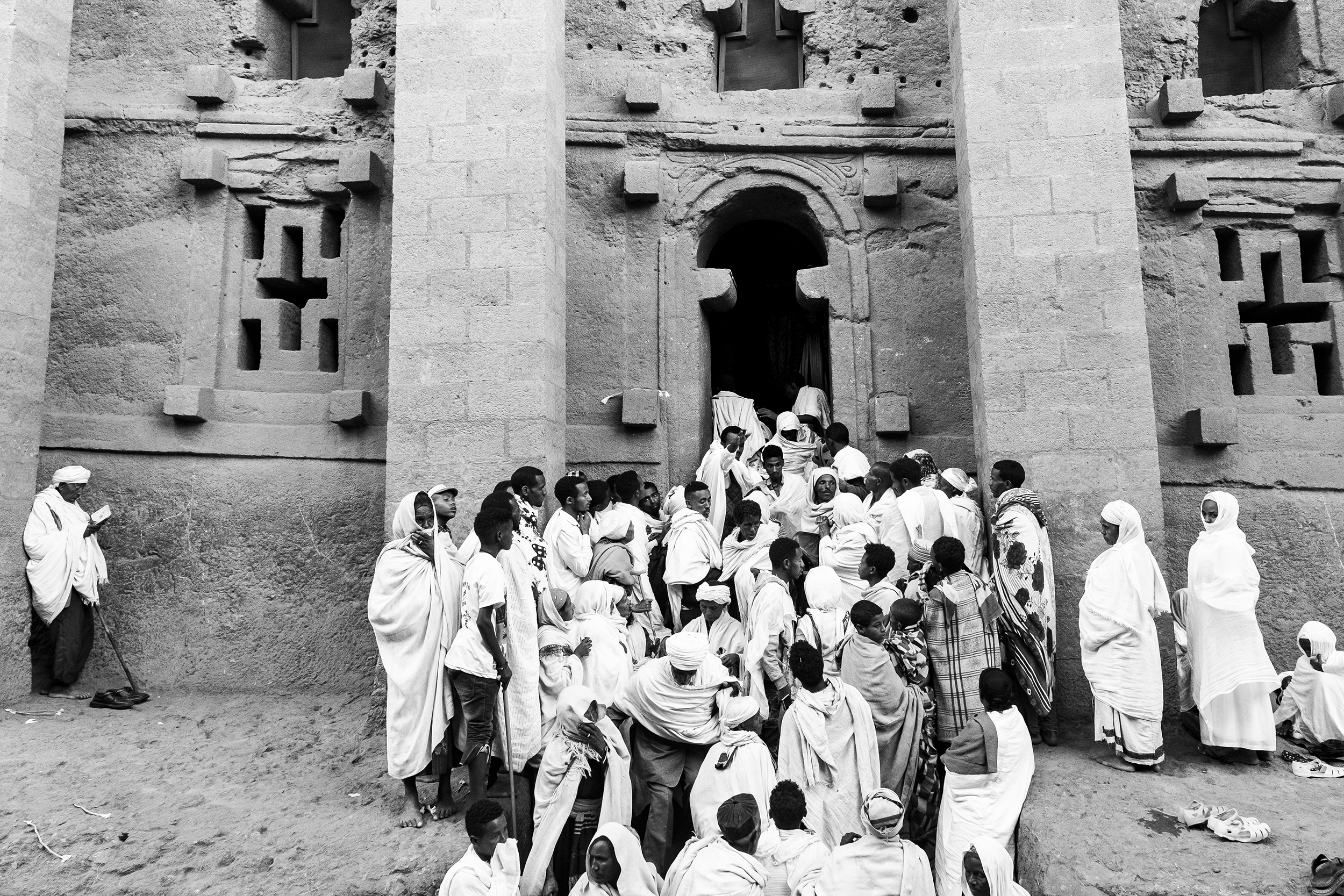
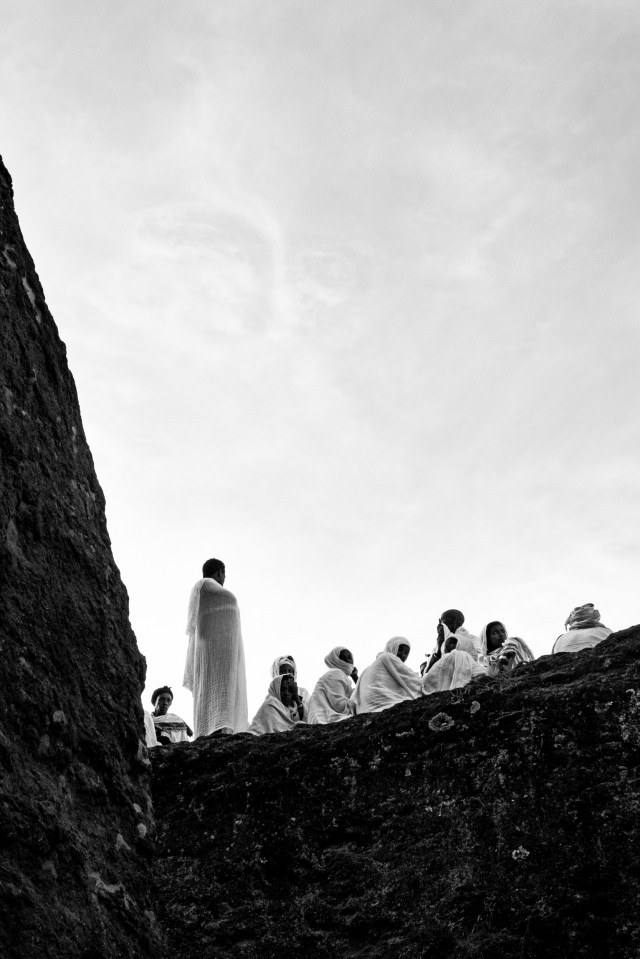
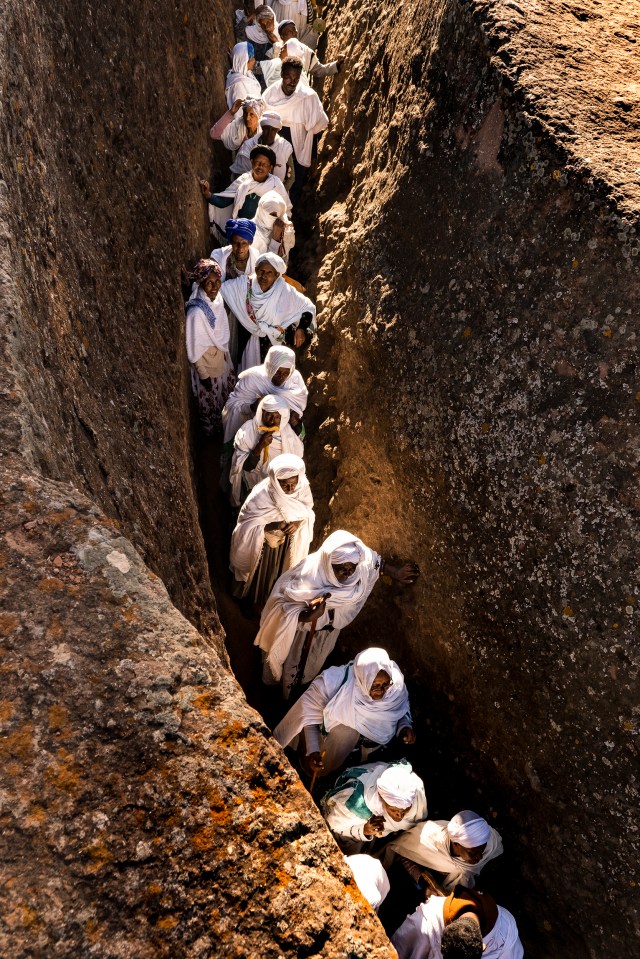
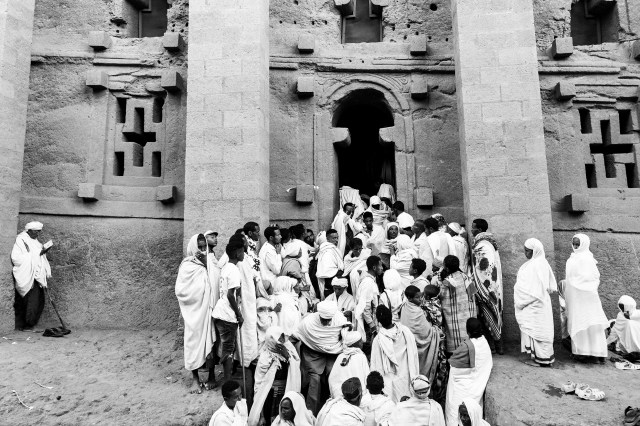
A photo essay highlights thousands of pilgrims observing Christmas in the quiet highland town of Lalibela.

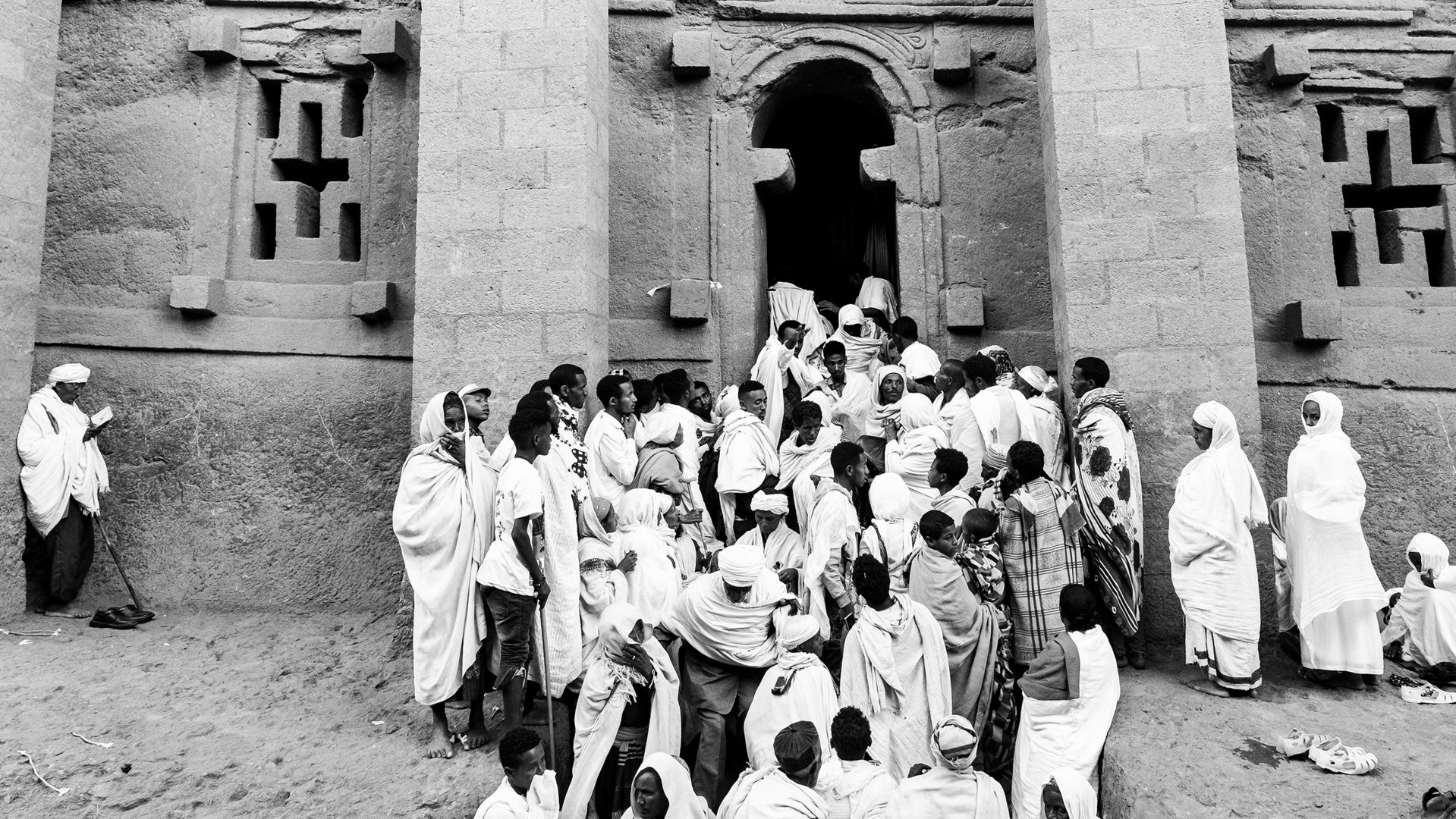
Pilgrims make their way in and out of Biete Medhane Alem (House of the Saviour of the World), the largest of the monolithic churches in Lalibela.

Photo by Andrew Faulk

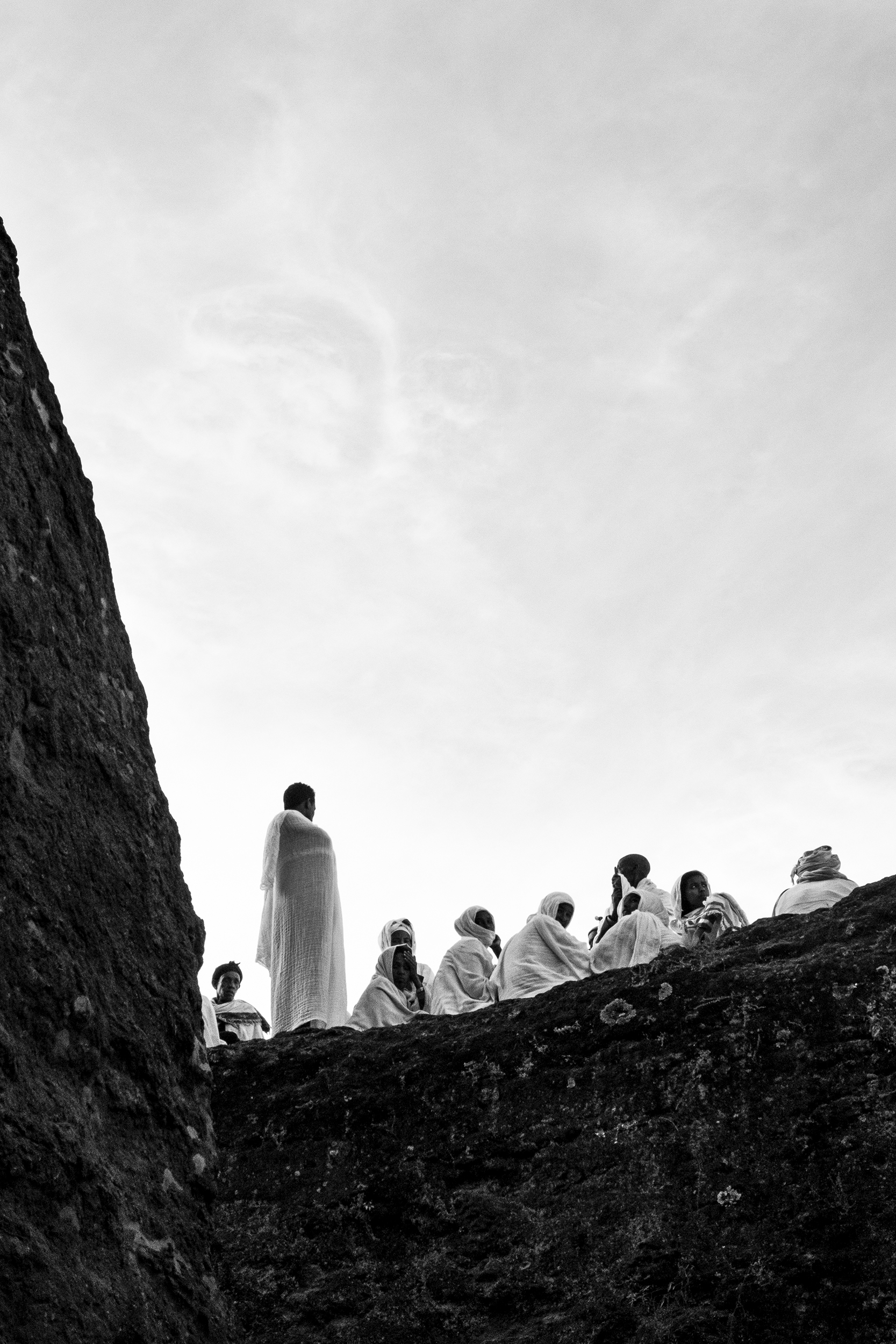
Each January, as Christmas is observed on the Ethiopian Orthodox calendar, the population of the quiet highland town of Lalibela swells with thousands of pilgrims. They arrive from farming villages, market towns, bustling cities, and distant provinces—some walking for days or weeks along dusty roads and others arriving by bus before climbing the last steep miles on foot. All come for Genna, the celebration of Christ’s birth, and to worship at one of Ethiopia’s most revered holy sites.

Lalibela’s medieval churches, carved directly from volcanic rock in the 12th and 13th centuries under King Lalibela, were created as a “new Jerusalem” for those unable to travel to the Holy Land. Each is hewn as a monolith, and they are connected by narrow passageways, trenches, and dimly lit tunnels. The most iconic, Biete Ghiorgis, takes the form of a cross cut deep into the earth—its walls descending into shadow while its roof levels with the surrounding ground.

In the cool mountain air, pilgrims wrapped in white cotton shammas press into the complex’s winding entrances. They bow to kiss stone thresholds, kneel on uneven floors worn smooth by centuries of devotion, and gather in candlelit chambers where chants echo off carved walls. The rituals are both communal and personal—moments of reverence link them to prior generations.

For many, the pilgrimage is a rare journey away from the demands of life, a chance to gather with family, friends, and strangers in shared worship. Here, the Christmas story is not only told and preached from the mountainsides but also felt—in stone, in song, and in the footsteps of faith.

Photo by Andrew Faulkk
The distinct cruciform structure of Biete Ghiorgis is one of 11 churches around Lalibela that are part of the UNESCO World Heritage Site.

Pastors

It’s Time to Make New Kingdom Friends

It’s not just God who is for us. We’re meant to be supported by a band of saints across dividing lines.

Two hands in a handshake.
CT Pastors November 4, 2025
Kelvin Murray / Getty

We—the authors of this article—have not known each other for long. In fact, we met just over two years ago. In many ways, our differences are apparent. But there is far more that unites us than separate us: our shared love for the kingdom, gospel unity, and tennis.

At a time when pastors and ministry leaders struggle with loneliness and isolation, we recognize that we need healthy relationships. What if pastors and ministry leaders were encouraged that it was not only God who was for them (Rom. 8:31) but that a band of saints across dividing lines was supporting them as well? As we mentioned in our first article, don’t be surprised if life-giving relationships like ours are already within reach for you too.

In October 2003 Perimeter Church and seven other churches launched Unite, a movement of churches working together in Atlanta. It started with white, African-American, Hispanic-American, and Asian-American churches gathering for a collaborative weekend of serving in our communities and then celebrating together the following weekend. 

Over 20 years later, significant collaborative efforts have taken place in our three areas of focus: supporting public schools, advocating for foster care and adoption, and fighting domestic sex-trafficking of minors. Nonprofit organizations such as Street Grace, who is focused on eradicating the sexual exploitation of children through prevention, protection, policy, and pursuit; Samaritan Health Centers of Gwinnett, who provide health and dental care for the poor and uninsured; and Salvation Army’s Home Sweet Home Initiative in Gwinnett have been born through Unite connections. But by far the biggest impact has been personal friendships and relationships. 

I (Chip) grew up in a white country-club atmosphere and did not have any deep friendships with people of color until our group of pastors launched Unite. Over ten years ago, I joined three other members of the leadership team in committing to go deeper in friendship. Our goal was not to start another initiative or to work on Unite but to support one another in the trenches of our lives.

The “Hermanos” (“brothers” in Spanish and what we call ourselves) are Tito Ruiz, David Park, Bryan White, and myself. A Hispanic American, Asian American, African American, and white man developed a deep friendship out of the love of Christ.

It was the first time I truly experienced genuine friendships with people of other cultures. Our friendships have not always been easy, and there are times when we are frustrated with each other. We have different perspectives, but I’ve been transformed through our commitment to each other and our vision of intercultural unity. These brothers have been an important part of my support through painful episodes of significant depression and anxiety.

Through our brotherhood, I now long for more foretastes of Revelation 7:9–10 to be evident in local churches: that even now, each of us can see the beauty of “a great multitude … from every nation, from all tribes and peoples and languages” standing “before the throne and before the Lamb … crying out with a loud voice, ‘Salvation belongs to our God who sits on the throne, and to the Lamb!” (ESV).

Sometimes our relationships also lead to changes beyond our personal lives. In the children’s book The Lorax by Dr. Seuss, there’s a powerful moment when the small creatures living in Truffula trees try to speak up individually, but no one listens. It’s only when their voices come together that the world finally hears them and starts to pay attention. That scene is a great picture of what happens when people work together instead of trying to make change on their own.

Collaboration has real power. A mentor used to challenge me (Robert) with a question: “What can we do together that we can’t do alone?” That mindset has shaped how I think about gospel unity and working across lines of difference.

Too often, I see movements trying to make an impact and become louder by gathering more voices from their own tribe. But that’s like turning up just one note on a piano. It’s loud, but it’s still only one sound. What we need is a symphony—all the notes working together to create something beautiful.

Not long ago, I helped bring together key leaders from both the African American and Asian American communities. The goal was simple: to grow in understanding, to learn from one another, and to realize that we are stronger together than apart. When we work separately, even with the best intentions, our efforts can stall. But when our voices come together, united in the gospel, we can reflect the beauty of what Paul describes in Philippians 1:27, standing side by side for the faith of the gospel.

During our time together, we listened deeply, asked hard questions, and encouraged one another in our shared journey as minority communities. We also had breakout sessions where we could be honest about the challenges we carry, ask each other thoughtful questions, and explore how we could become real friends and support one another.

It wasn’t just a valuable time of learning—it was a glimpse into the richness of the body of Christ working together. It wasn’t perfect. But it was a meaningful step toward the kind of gospel unity we long to see.

In the world of church planting, I have been encouraged by how many healthy church-planters live out the values we’ve explored in this series—especially when it comes to kingdom collaboration. I’ve seen firsthand how these principles are already being practiced by faithful believers around the world.

For example, when I lived in Philadelphia, I was part of a monthly prayer gathering with pastors and leaders from nearly every church in our community. What began as a group of strangers eventually grew into a network of friends who genuinely cared for one another and supported each other in ministry.

When one of the churches decided to plant a new church in a nearby community, the support didn’t just come from the sending church. Other congregations stepped in to help. Some gave financial contributions and others donated books, chairs, or sound equipment. One church even passed along all their vacation Bible school materials—curriculum, stage props, and more—after their own VBS ended.

This group of churches shared a deep desire to celebrate together whenever God’s kingdom advanced. When one part of the body thrived, all rejoiced. They saw this new church plant as a fresh outpost for the gospel, offering more people in the community ongoing chances to hear and respond to Jesus Christ.

How do you approach relationships in your life? We’ve learned that one of the better ways is to meet new people with the presumption that we are already friends, unless told otherwise. What if we approached others in the body of Christ not with suspicion or guardedness but with the belief that we’re already on the same team?

What if we lived out Romans 12:10, striving to “outdo one another in showing honor,” and began every relationship with the assumption that we are for each other? What kind of strength would that give us? How might it change the way we face the challenges of ministry? This kind of posture matters—especially now. Gospel unity isn’t just an ideal. It’s a powerful reality we’re invited to live into. And it starts with how we choose to live out of these kingdom relationships.

Chip Sweney serves on the executive leadership team at Perimeter Church, where he has been a pastor for nearly three decades. He is also the executive director of the church’s Greater Atlanta Transformation Division, which leads Perimeter’s outward-focused ministries across the metro Atlanta area.

Robert Kim serves as an associate professor of applied theology and church planting at Covenant Seminary and the director of church planting at Perimeter Church in Atlanta. He planted churches during his pastoral career and currently serves as a board member for the missions organization Serge. 

News

US Missionary Pilot Kidnapped in Niger

Local Nigerien missionaries are shocked and saddened; foreign workers there provide training, aid, and encouragement.

Kevin Rideout makes preflight checks before transporting a team from Hope Springs International in Niger.

Kevin Rideout makes preflight checks before transporting a team from Hope Springs International in Niger.

Christianity Today November 4, 2025
Image courtesy of Lee Hodges / Hope Springs International

On the night of October 21, three unidentified men kidnapped 48-year-old American missionary pilot Kevin Rideout from his home in a secure neighborhood blocks away from the presidential palace in Niamey, the capital city of Niger. The armed kidnappers then headed toward the western Tillaberi region in Niger, where militants linked to Islamic State (ISIS) and al-Qaeda are active, according to Reuters.

When Moussa Djibo, a Nigerien missionary with Calvary Ministries (CAPRO) in Niamey, heard the news, he was worried. “We … always thought Niamey was safe because it is the capital,” he said. “But after the kidnapping, we realized we are not safe. They can kidnap us too.”

The US embassy in Niamey issued a security alert on October 22 warning American citizens of a heightened risk of kidnapping in the country. “We are seeing efforts from across the US government to support the recovery and safe return of this US citizen,” a State Department spokesperson told CBS News. This is the first kidnapping of an American in Niger since 2020.

Rideout, a pilot for the mission organization Serving in Mission (SIM), has lived in Niger with his family for nearly two decades. He often flew between Niamey and SIM’s hospital in the village of Galmi until flights were paused last year due to insecurity, a colleague of Rideout in Niamey told The Washington Post. A 2014 article on the Rideout family noted that he and his wife, Krista, also worked in drilling wells to provide clean water, helping refugees, teaching literacy, and helping widows start microfinancing enterprises.

Local Nigerien pastors and missionaries noted the importance of foreign missionaries to provide financial support and encouragement in a country where Christians make up less than 2 percent of the population. More than 98 percent of the population is Muslim.

“We work hand in hand with the foreign missionaries,” Djibo said. “When they are not here, there is no one to teach or guide us. They know we are one in the work of the Lord. We are always together.”

Analysts believe that Islamic State Sahel Province or criminals connected to that group kidnapped Rideout. In recent years, the group and its militant rivals have grown in strength in parts of Mali, Niger, and Burkina Faso due to a security vacuum caused by junta leaders kicking out Western military assistance and closing the UN peacekeeping mission in Mali in 2023.

In July 2023, Niger’s general Abdourahamane Tiani ousted President Mohamed Bazoum in a military coup. Tiani vowed to restore security and ordered foreign troops, including the US military, to vacate the landlocked country. But Human Rights Watch reported that Islamist insurgents in Niger have killed at least 130 people in attacks between March and September this year.

Kidnapping of foreign workers in Niger has intensified in the past two years. Jihadists abducted at least 15 foreign nationals between July 2024 and April 2025. The number of terrorism-related deaths increased by 94 percent in 2024, according to the Institute of Economics and Peace, making the French-speaking county the 5th most affected globally, up from 10th in 2023.
The attacks also target the minority Christian population. Open Doors’ 2025 World Watch List ranked Niger as the 28th most dangerous country for Christians. Muslim mobs have set dozens of churches ablaze and attacked Christian communities.

Back in October 2016, Islamic extremists linked to al-Qaeda kidnapped Jeff Woodke, an American missionary with YWAM, from his home in Abalak, Niger. With the help of authorities in Niger, his captors released him more than six years later.

“They broke my hope,” Woodke later told ABC News. “They hated me for being an American, for being a suspected security agent, for being a Christian, doing missions work, all those things.”

Nigerien missionary Dan Karami Hassane said Rideout’s kidnapping should “raise an alarm for every Christian to pray,” as he worries about the missionary’s well-being.

Hassane grew up attending mosque in his hometown of Maradi before a friend gave him a Bible to read as a teen. He felt drawn to the love of the God of the Bible in contrast to the Quran’s teaching of Allah and became a Christian. Now a church planter, he disciples Christians in villages across Niger.

Though shocked by Rideout’s kidnapping, Hassane hopes it won’t deter foreign missionary efforts in Niger, which bring much needed training, finances, and spiritual support to local Nigerien missionaries and pastors. Often the locals are the ones preaching and teaching.


Olu Sunday, president and CEO of Royal Missionary Outreach International in Nigeria and Niger, noted that after the coup, the military government viewed foreign missionaries as spies and barred them from entering villages and remote areas. All the foreign missionaries who used to work with Sunday’s organization have now left. Local missionaries are struggling to fill the void.

“When we were together, they were seriously involved with the Christian converts and projects,” Sunday said. “But now we are [the] foster fathers to all they left behind. We must continue to sustain those local leaders and continue to give them hope.”

Djibo noted that in the mission school he attended, teachers let students know that dying in the mission field was a very real probability. “Even if they ask us to go preach to [the Islamic jihadists], we will find someone to go,” Djibo said. “We have signed that if we are to die, we will die. We don’t have such fear.”

He added that their only fear is about how their deaths and suffering could impact their families.

“Humanly speaking, we have no courage,” Djibo said. “But it is the Lord that has put this courage in us. He is the one protecting us.”

Books
Excerpt

The ‘Whole Counsel of God’ Requires Seeking Justice—and Naming Sin

An excerpt from Don’t Let Nobody Turn You Around on family history, gospel music, and the great Christian legacy of the Civil Rights Movement.

The book cover on a yellow background.
Christianity Today November 4, 2025
Illustration by Christianity Today / Source Images: Getty, IVP

My maternal grandmother, Willie Faye, was born in Forest, Mississippi, in 1932. That’s the same year segregationist Martin “Sure Mike” Conner was inaugurated as governor of Mississippi. 

From Reconstruction to the 1950s, Mississippi had more lynchings than any other state in the Union. Accordingly, Willie Faye’s parents kept a shotgun by the door to protect the family in case the Ku Klux Klan decided to pay them a visit and tried not to leave the house after sundown. Fearing the false allegations of looking at a White woman inappropriately, her first cousins, Billie and Buford, fled the state as teenagers. 

Yet Conner, a Yale-educated lawyer, practically ignored this violence while endlessly railing against the federal government and President Roosevelt’s New Deal for “meddling in the race question” and treading on states’ rights. 

Named after her father, Willie Frazier, Willie Faye—or Faye for short—was the sixth of eight children. By natural disposition, she became the glue binding a house full of conflicting personalities together. She found herself playing the role of mediator, defusing in-house rivalries and settling disputes. The siblings would have to pick cotton to help make ends meet, and they often went shoeless as they labored in the heat of the Mississippi Delta for depressed wages that weren’t magically corrected by the invisible hand of the market. Early on, she vowed that her future children would never pick cotton or go shoeless. 

Unlike Governor Conner, Faye would not attend an Ivy League school or any college at all. She’d leave high school at the age of 16 to get married. According to her mother, this was the best option given the social location of a Black woman of her day, and by this time, her family had uprooted and moved to Decatur, Illinois, in search of greater social justice and economic opportunities. 

Before leaving school, Faye sang in the Colored Girls’ Choir at Stephen Decatur High School. She also sang in the choir of her Black Pentecostal church and developed a passion for the formation and Christian education of children. Faye loved gospel music. Every Saturday morning when she cleaned the house, there was one voice her three children were sure to hear: Mahalia Jackson. 

Known as the Queen of Gospel Music, Jackson was her favorite artist—a muse Willie Faye would cherish in mundane, celebratory, and disheartening moments for decades. Her voice would pierce through denominational walls and inspire singers like Aretha Franklin. Dr. Martin Luther King Jr. would say, “A voice like [Mahalia’s] comes along once in a millennium.” It’s been described as not a voice but a force of nature. 

Mahalia, or “Halie” for short, was born in New Orleans in 1911. She grew up in the Black Pearl section of the city in a three-room house with 13 family members, including aunts and cousins. Her mother, Charity, died when she was five years old, leaving her with her Aunt Duke, a stern disciplinarian.

Three of Mahalia’s nicknames from childhood provide insight into her early social experience: “Hook” referred to her severely bowed legs and crossed feet, “Black” referred to her dark complexion, and “Warpee” was the name of a Native American character who walked around barefoot, as Mahalia often did because she couldn’t afford shoes. 

While the nicknames were often repeated affectionately, they exposed real pain points in her life. Born with deformities, with dark skin in a colorist society, and in poverty, Mahalia was about as far from privilege as one could get. Her ascribed status didn’t provide her with any advantages, but her faith, her diligence, and her voice would distinguish her in due time. 

Mahalia left school before finishing fourth grade to work and tend to family. However, her experience overcoming her disadvantages in a harsh urban environment developed a “mother wit” that’d eventually make her a wise counselor and formidable businesswoman. And throughout a very rough childhood, Mahalia always had the church. 

Her maternal grandfather, Paul Clark, was a Baptist preacher, and from a young age, she was known as a prayer warrior who almost never missed a church service. She sang her first hymn at four and was capturing the audience at Mount Moriah Baptist Church by 14.

Willie Faye and Mahalia shared a common American experience viewed through the lens of faith. Both Black women were born deep in the Jim Crow South and reared in the traditional Black church. The stench of slavery still lingered in the air of their environment and was visible in the scars of the family members who shaped their worldview. Both were nurtured by elders who were formerly enslaved themselves. They were cautioned by the wisdom of the enslaved and emboldened by the courage of those who’d survived America’s original sin. 

These women lived in an era that some have called America’s Second Slavery. Even after Emancipation, Black labor was still being stolen through the sharecropping system, and racial injustice was upheld in courts of partiality. Additionally, white supremacist defenders of the Lost Cause believed it their calling to literally terrorize the Black community to maintain political and economic dominance. During the late 19th and early 20th centuries, almost two or three Blacks were lynched every week in America. 

As Willie Faye and Mahalia were coming into womanhood, the “progressive” eugenics movement was giving “false scientific legitimacy” to forced sterilization. As a result, tens of thousands of Black women were victimized by non-consensual sterilization, including Civil Rights leader Fannie Lou Hamer, who called it a “Mississippi Appendectomy.” They both journeyed to escape Jim Crow’s jurisdiction but would still endure racism with a different accent and Midwestern flavor.

Willie Faye and Mahalia’s story is the story of the Black church’s Civil Rights generation, a generation whose Christian faith and social action prowess provided us with perhaps the greatest illustration of moral imagination in America’s history. For the purposes of this book, Willie Faye and Mahalia’s generation are those who served as the base of the Civil Rights movement—the progeny of the enslaved and the fruit of the Black church. 

They were Black Americans for whom the Christian church served as the center of spiritual, social, and political life. They talked about morality and heaven, but unlike the white evangelical church, they didn’t limit God’s will in the public square to personal piety. They recognized social justice as a required part of the kingdom plan. 

Unlike secularists, they clearly didn’t interpret the separation between church and state to be a severing of one’s faith from their sociopolitical engagement. Faith guided and anchored their social action. 

Unlike the social gospel of today’s progressive Christians, they believed the “whole counsel of God” was more than the justice imperative alone (Acts 20:27, RSV). It also involved the Bible’s tenets about sin and how sin exists in all of humanity, not excluding their community or themselves. 

Lastly, unlike much of Black secular activism, while it understood that “power concedes nothing without a demand,” they believed their social actions had to be aspirational, holy, and redemptive and that no group of people, not even their oppressors, was irredeemable. Willie Faye and Mahalia’s generation were not the originators of the Black church’s social action tradition, but they were perhaps its crown. They grasped the legacy and the lessons they learned from their elders and took “bigger steps and bigger risks.”

While Mahalia grew up in a Baptist church, when she moved to Chicago it became clear that she’d been heavily influenced by the sound of the Black Pentecostal church a few doors from her home in New Orleans. Many of the Baptist churches in Chicago didn’t appreciate the impassioned shouting and improvisation in her style. Gospel singer Sallie Martin said that early on “most of the big churches still didn’t receive her work. … Some were very, very much against her—and other singers looked down their noses at her.” 

Denominationalism and classism were at play here. Many Baptists considered their music refined, unlike the frenzied shouting of lower-class Pentecostals in what was called the sanctified church. But Mahalia would eventually compel some resistant Baptist audiences to “get happy” and applaud a more Pentecostal approach to worship.

Today, the Black Baptist church I attend welcomes shouting and impassioned praise, in large part based on Jackson’s legacy. She was the intoning voice of a generation of women who nurtured and powered churches, communities, and a social movement—women like Willie Faye who fed and supported the leaders before and after they preached and protested. But her voice didn’t just impact the women of her time; it became the pitch for the Civil Rights generation in general. 

If the Civil Rights Movement had theme music and Dr. Martin Luther King Jr.’s visionary words were the bars that laced the track, then Mahalia’s riveting contralto blessed the chorus, melodically expressing the ethic and motif of this world-changing social composition. 

She sang her signature versions of the songs “How I Got Over” and “I Been Buked and I Been Scorned” at the March on Washington in 1963 before Dr. Martin Luther King gave his famous “I Have a Dream” speech. During the speech, in the Black church’s time-honored call-and-response tradition, she would shout, “Tell ’em about the dream, Martin. Tell ’em about the dream.”

That theme wasn’t in his notes, and he hadn’t originally intended on mentioning it that day. But Mahalia had heard Dr. King speak about “the dream” in other addresses and had experienced its power. As fate would have it, her encouragement might have catalyzed the most memorable lines of one of the greatest speeches in American history.

How often did Willie Faye and hundreds of thousands of other Black Christians in her generation find respite in Mahalia Jackson’s voice? How often did they remove their soiled aprons and weathered fedoras after enduring another day of subordination and segregation and pull one of Mahalia’s records from its sleeve? 

I imagine, almost out of necessity, they put the vinyl on the turntable, carefully placed the phonograph needle down, and through her spirituals were persuaded or even compelled to push forward another day. Or perhaps some tuned in to her weekly CBS radio program, sank into the couch, or prepared soul food supper and let her powerful articulation of the sanctified gospel heal their souls. 

Their pain was too real and direct for this to have simply been a routine or formulaic exercise. No, this was soul-penetrating praise and worship in the spirit of the prophet Jeremiah and King David. It was embattled petitioners saying, “Lord, hear my prayer, listen to my cry for mercy; in your faithfulness and righteousness come to my relief” (Ps. 143:1). 

Through the music, we see how the spiritual and the sociopolitical were seamlessly tied together in the Black church social action tradition. The spirituals they sang in church were the same spirituals they sang during marches and protests. In church, they’d sing about faithfully pursuing God: 

Ain’t gonna let nobody turn me ’roun’
Turn me ’roun’
Ain’t gonna let nobody turn me ’roun’ 
I’m gonna wait until my change comes. 

For a social action march, they might adapt the song by singing, 

Ain’t gonna let no Jim Crow turn me around 
Turn me around, turn me around
Ain’t gonna let no injunction turn me around 
I’m gonna keep on a-walkin’, keep on a-talkin’ 
Marchin’ up to freedom land. 

In the same vein, the song “Keep Your Eyes on the Prize,” one of the most recognizable Civil Rights spirituals, was an adaptation of “Keep Your Hand on the Plow,” a gospel song based on Luke 9:62. Negro spirituals were ever present in the Civil Rights Movement. It was a way for Black Christians to take the church with them as they journeyed outside the four walls of the sanctuary. By singing spirituals in the field of life, Willie Faye and Mahalia’s generation was continuing a legacy of placing God at the center of their interactions in the world. 

Black Christians in that generation greatly invested in the church and made major sacrifices for it. Some weeks, Mahalia would be exhausted after five straight nights of revival singing at Greater Salem, where all the proceeds would go to the programming for the children’s ministry, “so those children wouldn’t have to run around the streets.” Faye and her husband, Bishop Thomas L. Cooper, helped build Church of the Living God, Pillar and Ground of the Truth, Temple #1 brick by brick and paid off the last of the mortgage for Temple #2 out of their own pockets. 

The Black Church’s social action, at its best, was a negro spiritual in action. While the Black Church was far from unanimous in its support of social activism, “from the beginning, the Civil Rights Movement was anchored in the Black Church.” Preachers and the people in the pews organized and financially supported the movement. Again, Willie Faye and Mahalia’s generation of Christian advocates didn’t disconnect the sacred from their engagement in the public square. 

Some secular movements have interpreted religion and talk of faith and heaven as merely a form of escapism—a means of disengaging from reality. But for many the hymns helped them better engage reality. There were indeed those in their community who tried to dismiss the here and now by solely focusing on the hereafter. However, the Civil Rights Movement was the opposite of escapism. It was an action-oriented initiative with a keen awareness of the principalities and spiritual wickedness in high places at play in society. 

Social justice outside of the existence of a loving and just God doesn’t make sense. The worldview at the center of the Black church’s social action tradition rejected the idea that this miraculously designed world came from nothingness. A godless particle or uncreated big bang couldn’t possibly create Mahalia’s voice, Zora Neale Hurston’s prose, George Washington Carver’s scientific mind, or a slave’s moral imagination. The “black sacred cosmos or the religious worldview of African Americans” saw the whole universe was sacred.

And acknowledging the spirit world and human limitation doesn’t require a surrender to anti-intellectualism. Look no further than the brilliant Black organizers and tacticians who orchestrated the Civil Rights Movement from church fellowship halls. Leaders like Rev. Fred Shuttlesworth strategically outwitted devious Birmingham commissioners and sheriffs, proving logic was neither scorned nor in short supply in Christian advocacy circles. 

Great minds were at work, but those minds weren’t obstacles to a greater faith. Faith and logic weren’t in conflict. These believers employed both. They were at peace and even celebrated dependence on a higher power (Prov. 13:4; Col. 3:23; Heb. 13:16). Their faith was refuge from the hopelessness of the skeptics. They knew prayer and a song of worship could accomplish things a philosophical treatise could not. 

This Black church tradition can still provide a model for how Christian orthodoxy and orthopraxy can help the church and a polarized nation overcome the toxic culture wars and move toward a greater faithfulness and civic pluralism. Our historic public witness can correct many of the erroneous approaches, attitudes, and practices much of American Christianity has fallen into in the public square today. The Black church has a word for this moment in the public square. 

Justin Giboney is an ordained minister, an attorney, and the president of And Campaign, a Christian civic organization. He’s the author of the forthcoming book Don’t Let Nobody Turn You Around: How the Black Church’s Public Witness Leads Us out of the Culture War.

Adapted from Don’t Let Nobody Turn You Around by Justin Giboney. ©2025 by Justin Giboney. Used by permission of InterVarsity Press. www.ivpress.com.

Books

You Can Be a Christian and a Patriot

Daniel Darling calls believers to their political duty, no matter the chaos.

The book cover on a blue background.
Christianity Today November 4, 2025
Illustration by Christianity Today / Source Images: Getty, Broadside Books

We hardly know how to refer to political philosophies in America these days: What we once called conservatism is now considered “zombie Reaganism” or the passé postwar consensus, overtaken today by populism. Daniel Darling, best-selling author and director of the Land Center for Cultural Engagement at Southwestern Baptist Theological Seminary (SWBTS), is what Russell Kirk called an imaginative conservative.

Kirk described this role not so much as a policy program but rather as a posture of deep gratitude for the American tradition. Like reflective conservatives before him, Darling reminds us in his latest offering that we need the virtue of prudence to navigate politics in a fallen world where there are no utopian solutions.  

In Defense of Christian Patriotism responds to the ubiquitous question of how to relate faith to politics in a contentious but trivializing age. Darling seems keenly aware of the binary temptations believers will face and weaves a path through each with care: neither to retreat from politics nor be obsessed with it, neither to idolize our country nor condemn it.

How should we understand our Christian obligation toward our nation? Patriotism is a duty of all citizens across the world. Just as we have duties to love our families and neighborhoods, we ought to love our countries as well. To borrow from Thomas Aquinas, love is the persistent will for the good of the other—the genuine good, not the perceived one.

That means that in countries with political corruption, citizens ought to work for an honest government even when that means opposing the powers that be. A nation, after all, is not only a government but also a people and a place. Wherever there is good in a national tradition, we ought to celebrate it. When the country needs the service of its people, we ought to give it.

For Christians, the call to true patriotism can be puzzling when the culture seems to have rejected the faith and made itself an enemy of the kingdom of God. Even when our own country is spiritually failing, we must love it the way God commanded the Hebrews in exile to love their Babylonian city and work for its good (Jer. 29:7). Christians have a duty to engage in politics despite its messiness.

This is especially challenging given the ever-increasing cadre of those who consider themselves politically homeless. We might ask ourselves whether our exhaustion from the bad behavior of our parties or politicians excuses us from voting thoughtfully, running for office, and helping to shape policy. What happens if the salt of the earth loses its saltiness? Christians of influence can help to preserve what might otherwise rot.

The problem with Christian nationalism is not that it is (or claims to be) Christian but that it is nationalist. Nationalism claims superiority for one’s own people and place over all others. Patriotism understands our own love and loyalty as compatible with that of other people’s love and loyalty to their own nations, as long as it’s all in service to the genuine good.

To love my own nation is not to discount another’s any more than loving my own family means discounting other families. We can and should love other families and nations in a broad sense, even if we do not have the particular obligations to them that we have to our own.

Darling points us to the story of Jonah. Jonah loved Israel. Since Nineveh and the Assyrians were enemies who had done terrible things, Jonah couldn’t bring himself to love them, even when his explicit mission from God was to call them to repentance and salvation. The fact that he still wanted them destroyed after they had repented and turned to follow God shows that Jonah was a nationalist, not a patriot—and a stubborn one at that.

Differentiating between the real and the overblown threat of Christian nationalism is an important element of responsible citizenship. We must acknowledge a sliver of dangerous and disturbing rhetoric coming from certain Christian circles while taking care not to define Christian nationalism so broadly that we capture normal American politics in our net.

While we can inordinately love our country, we can also inordinately hate it. We must properly lament the sins of our nation while insisting on appreciating its blessings. To do otherwise would be to work against the civil rights tradition, in which everyone from William Lloyd Garrison to Frederick Douglass to the NAACP to Martin Luther King Jr. insisted on the moral authority that the Declaration of Independence and the Constitution gave them to fight for the appropriate inclusion of all in the rights and privileges of American citizenship.

Patriotism rejects claims of ethnic superiority over the inhabitants of other nations, but that doesn’t mean it can’t acknowledge that some nations are exceptional when it comes to certain elements of their cultures or political systems. Every nation on earth has something to lament and something to celebrate. Some nations are famous for their food, others for their natural beauty, others for their art and culture.

America is exceptional in its politics. Its origin story really was without precedent—a true social contract. Its founding documents were revolutionary in their claims of moral and legal equality, creating a striking foil when the nation falls into hypocrisy. And in the bloodiest and most totalitarian of all centuries, America’s role as a stabilizing world power—even with many, many unjust choices—proved an overall gain for freedom-seeking people around the world.

In reaction to the excesses of the left, we’re seeing a sudden turn among famous atheists toward the utilitarian case for religion in society. On the other hand, polling shows that a huge portion of Americans who identify as evangelical do not attend church. Presumably, these two groups associate Christianity with a commitment to truth and a certain kind of cultural groundedness but not necessarily with a life of discipleship to the risen Jesus.

Neither Darling nor I deny that Christianity can play a useful role in grounding and stabilizing society. But our New Atheist friends and their churchless evangelical compatriots may not grasp how much it matters that the faith and commitment be real for them to have the consummate effect. Neither a personally nor a socially effective faith can be cultivated by oneself. Darling condemns the lone-ranger mentality commonly seen among those who identify as American evangelicals. This approach to faith enables the totalizing ideologies we see today on both the left and the right by removing believers from the schoolhouse of grace.

While nonbelieving or nominally Christian citizens can recognize the social usefulness of Christianity, only true believers can successfully reinvigorate the institutions whose loss is creating the most destruction: the family, masculinity, education, and civil discourse.

Progressives need to recognize that the unrelenting cultural attack against these foundations of the social fabric has been alienating and destructive. And some progressives have, including Richard Reeves on masculinity, David Blankenhorn on fatherhood, and Melissa Kearney on the two-parent privilege. However, the conservative Christian tribe can often turn a legitimate cultural battle into a mindless culture war. These fundamental moral issues are worth fighting for, but just as Paul exhorts us to live with others in peace whenever possible (Rom. 12:18), we ought to use our love, wisdom, and self-control to press for solutions.

Darling can’t answer every question in this book. Libertarians may object that his encouragement to vote doesn’t solve the rational action problem around low incentives to stay informed. Libertarians and progressives might raise the concern that distinctions between legitimate and illegitimate global action are fine in theory but in practice are subject to the cronyism of the military-industrial complex. Old-fashioned liberals may object that conservatives’ willingness to embrace the Civil Rights Movement now doesn’t answer for the unwillingness of many at the relevant moment.

This kind of pushback is fair enough, but so is the conservative response: Critique of the voting system or of the role of our military does not a positive program make. We still need to determine election outcomes by voting, and we still have to decide whether our departure from this or that global arena will leave a destructive vacuum. Darling admits readily that conservatives had to learn an important lesson when it came to civil rights, but I ask, did progressives learn their lesson from the terrible consequences that followed the social engineering of their utopian federal programs?

Fittingly, Darling closes the book with an encomium to the local and a call to build up our institutions for the good of the neighborhood. His call to vote, run for election, and engage policy questions responsibly does not necessarily translate to a fixation on the nation. After all, a robust Christian patriotism is probably best represented by nothing other than our own towns’ Fourth of July parades.

It’s these kinds of connections—families uniting in their neighborhoods to celebrate the country, cheering for veterans who fought to protect freedom on the other side of an ocean—that undergird the myriad of institutions we desperately need to function well. The great insight of the conservative is that institutions are easy to tear down but hard to build, so “seek the peace and prosperity of the city to which I have carried you into exile” and “pray to the Lord for it, because if it prospers, you too will prosper” (Jer. 29:7).

Rachel Ferguson is director of the Free Enterprise Center at Concordia University Chicago, assistant dean of its College of Business, and professor of business ethics. She is coauthor of Black Liberation Through the Marketplace: Hope, Heartbreak, and the Promise of America

Apple PodcastsDown ArrowDown ArrowDown Arrowarrow_left_altLeft ArrowLeft ArrowRight ArrowRight ArrowRight Arrowarrow_up_altUp ArrowUp ArrowAvailable at Amazoncaret-downCloseCloseEmailEmailExpandExpandExternalExternalFacebookfacebook-squareGiftGiftGooglegoogleGoogle KeephamburgerInstagraminstagram-squareLinkLinklinkedin-squareListenListenListenChristianity TodayCT Creative Studio Logologo_orgMegaphoneMenuMenupausePinterestPlayPlayPocketPodcastRSSRSSSaveSaveSaveSearchSearchsearchSpotifyStitcherTelegramTable of ContentsTable of Contentstwitter-squareWhatsAppXYouTubeYouTube