News

NBA Betting Scandal Highlights Need for Christian Voice on Gambling

Churches have a role in protecting vulnerable young men.

A man pulls a slot machine lever.

A man pulls a slot machine lever.

Christianity Today October 29, 2025
Illustration by Rick Szuecs / Source image: Envato, Sora

Last week, an illegal gambling probe exposed the NBA’s Terry Rozier, a guard with the Miami Heat, and over 30 other individuals in professional basketball and beyond. Since sports betting became legal in 2018, sports leagues have developed close relationships with gambling companies. In these connections, problematic behavior can thrive.

The Bulletin sat down with editor at large Russell Moore and Isaac Rose-Berman, a fellow at the American Institute for Boys and Men, to discuss smartphone betting, the most popular form of sports gambling today. They talk about why Christians are quiet and how the church can step up for vulnerable young men attracted to this vice. The entire interview can be heard in episode 195. Here are edited excerpts.

A complex matrix already exists in professional sports as it relates to player safety and profit margins. How does sports betting complicate the situation?

Isaac Rose-Berman: The NFL and other sports leagues make a lot of money off of sports betting, whether it’s via the advertisements that you see every time you run a game, the data that they’re able to license and sell to operators, or revenue sharing agreements with these companies. 

Of course, when DraftKings and FanDuel are making money, people are losing money. People in sports are now asking whether making that money in the short term will have long-term consequences. 

Think about kids growing up now. Are they NFL fans? Are they DraftKings fans? For the league, in the short run, that can be good. But if someone is not actually attached to a team and they’re just attached to betting on that team, that might not be so great in the long run. How sustainable is it for people to keep losing a lot of money for the long term? We’ve seen revenues from gambling go up so much, so quickly. Is this really sustainable? No one really knows the answer to that yet.

How have Christians traditionally viewed gambling?

Russell Moore: Many early Christians saw the gambling over the cloak of Jesus at the foot of the cross as an example of human depravity (Matt. 27:35–37). 

Much later, in American Christian life, opposition to gambling often merged the liberal-fundamentalist divide about whether our problems are fundamentally personal or social. Conservative evangelicals were concerned about the personal vice that happens with gambling. Liberal Christians were concerned about the social effect of what happens to families and communities through addiction.

Add to that smartphones, and you have the same thing that we saw with the move of porn from interstate video places to the ubiquity of the internet. The algorithmic push of smartphones creates a dopamine rush that brings a whole new level of complexity that Christians haven’t faced before.

Rose-Berman: Once, it might have been man or woman versus vice. Now, it’s man or woman versus vice combined with billion-dollar companies with incredibly intelligent algorithms that are motivating you to place more bets and lose more money. Online and mobile sports betting is male dominated because younger men are more likely to be on their phones. Men want this rush, especially if they’re sports fans. The consequences are really concentrated among those people who have serious problems.

These companies target losers. If you are gambling daily on a site like DraftKings or FanDuel and you take a couple days off, you’ll get a push notification saying, “Hey, come back now. Your next bet is on us.” Even though gambling has been around for millennia, it’s this new iteration that’s really scary. 

You can’t escape the advertisements for gambling. Even if you were to give up your smartphone, you wouldn’t be able to watch sports without being inundated with these ads. If you go to a game, you see DraftKing’s ads in the stadium. If you’re listening to the commentator on ESPN, they’re talking about the betting lines. 

I used to go to baseball games with my father, and I was a big baseball fan. Today, if you’re a 10-year-old there with your dad, he’s probably placing bets on the game while you’re not looking. Young men are growing up in a society where this is normalized. They see celebrities telling them that it’s cool to bet, and there’s no pushback. 

Does the US have legislation to limit these addictive and harmful apps?

Rose-Berman: There’s not much federal legislation at the moment. One bill, the SAFE Bet Act, doesn’t seem likely to pass in its current iteration. Online sports betting is a state-by-state issue, and different states have different regulations and different resources available. In some states where online sports betting is legal, there are only like four or five addiction counselors in the whole state. Their hotlines are overwhelmed. 

Is there any way to gamble responsibly?

Moore: I don’t think so. Even if there’s a small percentage of people who are drawn into addictive behavior, those people are disproportionately poor. 

The church ought to talk about this, but often people don’t want to feel legalistic or fundamentalist. You have this entire category of people’s lives where there’s no consideration of virtues that need to be cultivated. We are responsible to the vulnerable poor and to their families.

Rose-Berman: This is a battle that has been fought by Christians and Protestants historically in America, and it was lost. Battles against state lotteries, bingo, and casinos—these were battles that were lost. When that happened, Christians said, “This is not a winning issue. We’ll focus on other things—abortion or pornography—where we might have wider support.” I do think that is changing now. People are realizing the consequences here are disastrous. 

How can men in the church support young men tempted by online sports betting? 

Rose-Berman: This is a rigged game. That’s something a lot of people don’t appreciate. You’re not going to have young boys go tell their friends about this big slot win they had, because everybody recognizes that if you win big at a slot, it’s all about luck. Whereas in sports betting, it taps into the male ego, and everybody wants to feel really smart. When you place that long-shot parlay and you predict all of these things, you feel like a genius. And there’s nothing better in the world than that feeling. 

A lot of times, people make the mistake of saying sports betting is just like all other forms of gambling—the house always wins—when that’s actually not the case. It is possible to make money on sports betting; but the caveat there is, if you know what you are doing, these companies will kick you out. 

I have gone to schools and talked to kids, and that’s the message I give them. Look, if you are still able to bet, it’s because these companies have deemed you to be a sucker. You have to appeal to their ego and say, “You are not actually good at this.” 

When you look at the surveys of young men, something like 70 or 80 percent of them say either that they are winning money or that they’re not losing money. What we really need to do is combat this delusion, because if you go on social media, you think anybody is posting about their big losses? No, they’re only going to post about their big wins. 

We need people to understand that, actually, this is a rigged game, and you, as an 11-year-old boy with your hunch about who your favorite quarterback is, are no match for the million-dollar algorithms and analysts these companies are employing. Even if theoretically you were really good at this, they would show you the door. So play if you want, but don’t actually expect to win.

Culture

The Bigfoot and UFOs Podcast Introducing Listeners to Christ

“We want to make a space where people can scratch an itch about the weird stuff they’ve encountered, but our heart for this is for people to encounter God.”

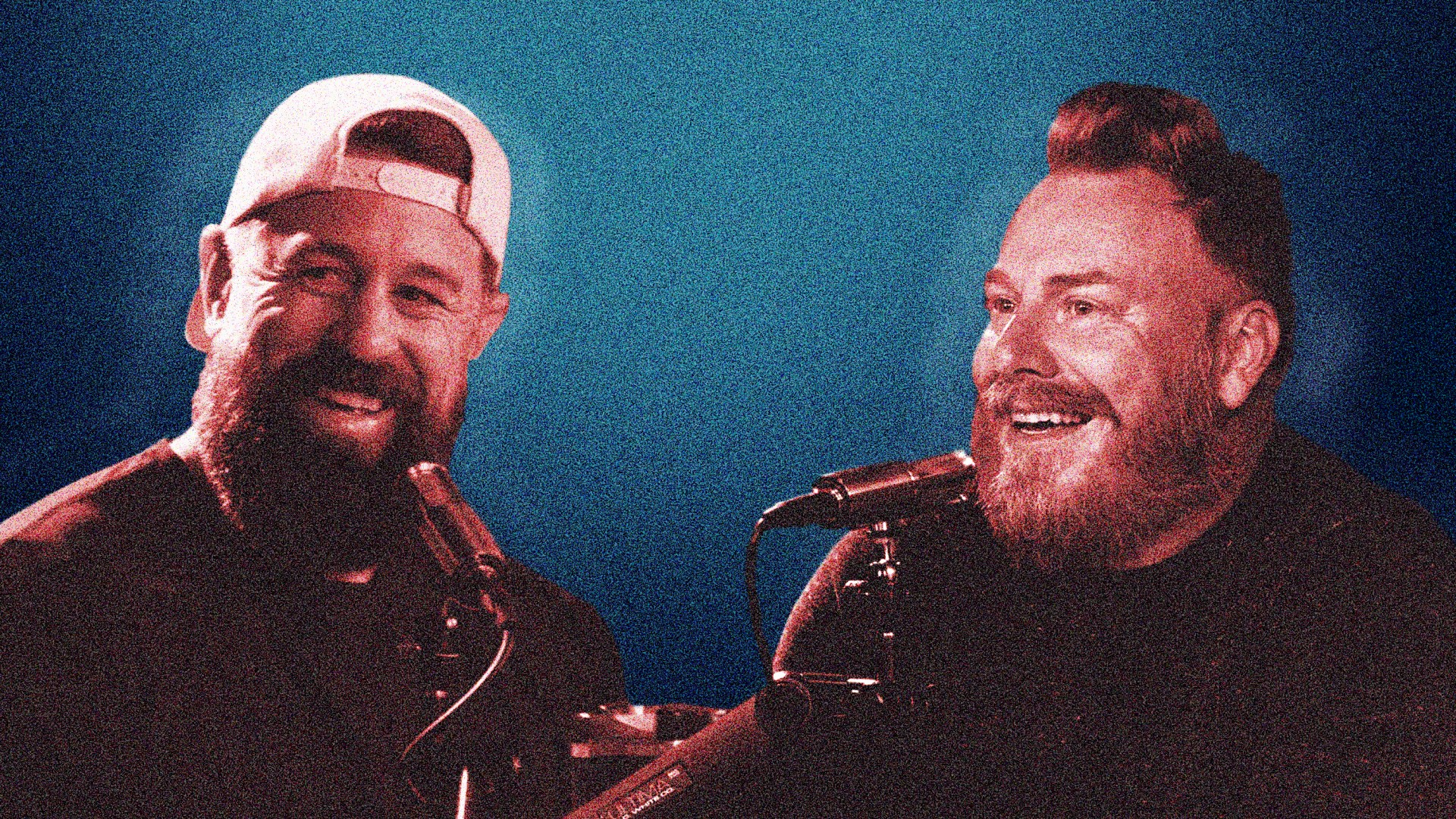
Lukas Rogers (left) and Nathan Henry (right), the co-hosts of Blurry Creatures.

Lukas Rogers (left) and Nathan Henry (right), the co-hosts of Blurry Creatures.

Christianity Today October 28, 2025
Illustration by Elizabeth Kaye / Source Images: Blurry Creatures

Saying you believe in Bigfoot is sure to get a laugh, especially in Christian circles. It’s like saying you believe in the boogeyman or the Easter Bunny—just too crazy.

But the Bible routinely tells stories that could fairly be characterized as paranormal, supernatural, or in some way beyond the realm of human understanding. And beyond the more familiar miracles, Scripture includes strange and murky stories: Who are the Nephilim described in Genesis 6? Are the other gods the Israelites too often worship in the Old Testament real beings or simply idols of their own making? Exactly who or what are the “spiritual forces of evil in the heavenly realms” of Ephesians 6? 

Reading these stories as a modern Westerner, I’ve tended to take the least mystical, least crazy-sounding interpretation on offer. But a year ago, my brother introduced me to a podcast that challenged my assumptions from a distinctly Christian perspective.

Nate Henry and Luke Rodgers are the creators and hosts of Blurry Creatures. They love Jesus and have spent the last five years digging into supernatural stories in the Bible, as well as present-day paranormal experiences. They spoke to me about their faith, work, and goals for the podcast.

This interview has been edited and condensed.

For those Christianity Today readers who aren’t familiar with the Blurry Creatures podcast, tell us a little bit about the show, its origin, and the topics you cover.

Luke Rodgers: There’s a lot of paranormal conversations and a lot of paranormal podcasts out there. There’s a lot of things that happen. People experience; people see things. These also become trending topics in mainstream media—things like UFOs and aliens or the Bigfoot phenomenon. 

There are a lot of spaces out in the ether where people talk about these things, but the church itself doesn’t address a lot of them. What we’ve created is a platform where we talk about weird things that people experience and weird things in the Bible—but all from a biblical worldview.

Our mission is really to find better answers for the unexplained and to do that through a biblical perspective. And it’s our belief that our faith has big-enough fences. There’s enough in the Bible to provide better answers for a lot of the things we don’t have answers for. 

When we started this podcast, the first episode was on Bigfoot. That was where we began. It’s the gateway drug. It’s the most-seen cryptid. Everyone’s familiar with it—it’s Americana at this point. But what do we do with this thing that people see? 

The biblical scholar Michael Heiser, whom we had in episode 34, his book The Unseen Realm has been a seminal piece of the worldview that we talk about in this show. And his whole thing was, there’s this unseen realm. Our faith is very supernatural. There’s a supernatural aspect to our faith—it’s in the Bible.

What Heiser said in our show was that if just one of those thousands of Bigfoot accounts every year is true, then it breaks the paradigm, and you have to figure out a way to make space within your understanding of reality for this creature—or for the UFO phenomena or for better understanding of demonology and angels. 

So our goal is to have conversations—to have more academic conversations, talk to the experts who have spent 10,000 hours on their subjects—and discuss something that’s very niche in a lot of ways but also something that’s very relevant to being a Christian. We have a very supernatural faith, and our thing is trying to put the supernatural back into our Christian faith and talk about weird stuff within that context. We hope that people come for the weird conversations and the weird stuff in the Bible and, whether they’re believers or not, that they have an encounter with the gospel inside of all of this weirdness. 

Nate Henry: Yeah, Luke and I had been in rabbit holes of Bigfoot and giants and Nephilim and ghosts—paranormal stuff. He had a sighting in a cemetery when he was younger. I saw something as a kid that I couldn’t explain. And then when I was about 30 years old, I got really into listening to stories about Bigfoot. 

We grew up in the church, and a lot of the other shows about this stuff don’t really give you answers. They just kind of stay in the spooky and the weird. And I thought, well … As a Christian, I think there should be some sort of answer to these things. So maybe we can marry these two things: the paranormal conversation and the theological conversation. Kind of put them together—and the Bible has all that in there already, but the church seems to tiptoe around it or not really give you a data-driven perspective on this stuff that people are experiencing.

What we’ve found is over the years that people of all walks of life have a story or three, sometimes a lot of stories they can’t explain, and they’ve found there aren’t many people they can talk to about these things, especially in the church. But I think we Christians should be the most open-minded to this stuff.

It’s interesting how God took me to this more theological route—those Bigfoot stories I’d been listening to didn’t have a Christian perspective. But I realized there’s this Christian overlap here and thought, Someone needs to have a podcast about this. So we got started in 2019, and the name Blurry Creatures came out of the frustration of whenever there’s a photo of a cryptid, it’s blurry.

God’s done a few things in my life where it’s like I get this flash of a vision, almost, that I don’t even understand, and then later it all makes sense. And I think in the last few years, now that we’re doing this full-time, it’s cool to look back and feel like that’s what happened here. It feels like a confirmation. This has become a lot more than I anticipated. It’s been a moment to trust God and see what happens. 

Rodgers: We didn’t even have a website until episode 30. We didn’t come out of the gate with a polished show and a way for listeners to support us. We didn’t know whether anyone would listen to this. But these were the fun conversations we wanted to have, and by about episode 30, people were reaching out, saying, “We can’t find your website.” “Do you guys have any T-shirts for sale?” We didn’t know what was happening. Nate had wanted it to grow, but it wasn’t like we architected that. 

I’ve started companies before, but I’ve never had a project where I felt like God was so involved that it seemed like he was kind of moving it. We didn’t have to push the ball up the hill every day. There’s a ton of work involved, but it has just kind of taken off. 

Part of that is we had such great timing—we got going right before 2020, when everyone had their paradigms broken in a lot of ways. And then people started saying, “Well, what are we meant to believe? What do we think about all these things now?” And then 2022 comes along, and we’re like, Should we talk about aliens? I really didn’t want to. But this became mainstream, so we decided to talk about how you contextualize things like aliens if you’re a Christian. We started talking more about the Bible, and we were like, We’re kind of like Christians in a band, not a Christian band, but this is who we are, so let’s lean into this.

Henry: We didn’t market ourselves as a Christian podcast as much as it was a creatures podcast with two Christian hosts, if that makes sense.

And I don’t think we want it to be cheesy. And there’s a lot of Christian media that’s marketed badly. It’s cheesy. It’s kind of PG. And the conversations we have are not PG. They’re about hardcore, weird, strange stuff—like a Christian saying, “I’m an alien abductee, and I believe in Jesus, but I also have this stuff that comes and takes me out the window every night.” And it’s like, Okay, what do I do with that?

Your podcast doesn’t claim to be systematic or biblical theology of the supernatural. You interview guests with all kinds of backgrounds and experiences. Do you ever worry that some listeners may become so fixated on the stories that they lose sight of maybe the gospel or other key elements of the Christian faith?

Henry: I don’t. With all the propaganda that goes around, you can’t really control anything like that these days. I think we’re going to make mistakes. We really try not to make mistakes, but we’re going to. Not every pastor preaches 100 percent accurately about everything at a church either. 

I think if people are kind of rogue, they’re always going to be a little strange and they’re going to get into this stuff anyway, whether we’re the gateway or not. There’s so much weird stuff on TikTok—it’s heartbreaking that people don’t have a better filter how to disseminate information. But in this internet age, even with the conspiracy theories that I would say are more likely to be true, people go off the rails. 

We present stuff with a lot of caveats. And we say listeners should spit out the bones. We share people’s stories, and we know their interpretations aren’t always 100 percent accurate. People see stuff, and they don’t necessarily know what they’re looking at. We don’t sort of present things as entirely black and white, and we mix up the topics enough to try to prevent people going crazy.

Rodgers: We also try to find a balance in the voices. We have everything from a Reformed pastor, Doug Van Dorn, who speaks about giants, which is a rarity in his tradition. But then we have theologians like Heiser. We’ve had Catholic and deliverance ministers from the Protestant space. We’re trying to find a balance of voices within Christendom because I think we’d do listeners a disservice if we made everything too narrow.

And then we always tell people, “Hey, use discernment and test the spirits.” This is all biblical stuff. And a lot of times we’re in the realm of conjecture, and we’re doing our best to hypothesize, but we’re not hypothesizing about the gospel. The gospel is what it is. 

Henry: A Christian archaeologist is digging up everything. He’s finding all kinds of things. And I think in some ways we do that too. We’re digging up the past, digging out these stories, and trying to see what the world looks like. 

In some cases, people who aren’t Christians are actually coming up with better answers to these questions because the church has its hands tied when it comes to the paranormal and strange. 

I’ve had many people approach and be like, “Isn’t it dangerous what you guys talk about?” And I say it’s dangerous notto talk about it, because you have all these wild groups springing up because they’ve got compelling UFO footage or they’ve had an abduction story, and they know something the church doesn’t want to talk about. They think the church won’t talk about it because the church doesn’t have any answers, so they develop all these theories instead. That’s why I think Christians do more of a disservice if we’re not talking about these things. 

But also, as a Christian, we all have different interests. We’re not just reading the Bible and praying 24/7. We all have jobs and hobbies. And I personally like these conversations. I think they’re fun and interesting. Sometimes we just interview a guy who’s had a Bigfoot experience. We say, “Tell us what it looked like. What did it smell like? Where were you? How does this eight-foot-tall beast go undetected?” Anybody can be interested in that if they’re just a curious human.

I’m sure you also meet Christians who might be inclined to dismiss these stories, especially the stuff outside the Bible. What would you say to those people who are instinctively skeptical, perhaps partly because of their faith? How would you encourage or speak to them?

Henry: I would just start with their belief in the Bible, which is full of supernatural stories, from Philip magically transporting from one place to another, to the prophecies of the Son of God being born into humanity, to Jesus transfiguring on a mountain. These stories are all throughout the Bible. 

So I would start there and suggest that it’s not actually strange to think that supernatural stuff still happens today. Many Christians tend to think, Well, that happened in the Old Testament, and then it got a little tame in the New Testament, and it doesn’t happen anymore. But that kind of thinking is relegated to certain places like Western culture. 

The rest of the world … Man, we went to Peru, and people were telling us wacky, wild stories. We talk to a lot of missionaries on the show, and they say, “Man, this supernatural stuff’s like a daily run for us.” So I think Christians in the West just live in a cultural pocket, and you kind of get ‘em out of their heads and go from there.

Rodgers: What we try to hammer in our shows is that we have a very supernatural faith. Everything from the Immaculate Conception, to an incarnate Christ, to a resurrected Christ, the talking donkey, to the Red Sea splitting, to God wrestling with Jacob, to the Lord coming to eat with Abraham, to Sodom and Gomorrah, to earthquakes swallowing up people—you can’t open up a Bible and not find the supernatural. 

As Nate said, we live in a post-Enlightenment paradigm in the West, and this is really an anomaly in human history. I don’t think ever before in human history have we had the luxury to separate the natural from the supernatural or the luxury not to believe in anything.

This is totally a Western paradigm. Atheism is a new Western paradigm. And what we’re trying to do is say, “Hey, the human authors of the Bible and the people in the Bible, not only did they not separate the natural from the supernatural; their worldview said those two things were inherently intertwined.” 

Sometimes in the West, we do separate these two things. We sometimes make church a TED Talk or a feel-good, self-help talk. Right? This is a sad reality. That’s not every church. I don’t want to paint with a broad brush. But I think if we examine our faith, if we actually open up the Bible and read it for ourselves, we might be pleasantly surprised or shocked at the amount of miraculous things that happened in both the Old and New Testaments. 

We talk about things outside the Bible, obviously, and I don’t think we need to be afraid of that. The writers of the New Testament and the Old Testament certainly weren’t afraid of reading things that were outside of Scripture. Everyone who wrote the 66 books of the Bible, they were well read. They weren’t dummies.

Heiser said that the Bible was written for us, but not to us. It was written to a people, to a culture that had nuances and knowledge we don’t have. The Old Testament was written to an ancient Hebrew people who had a worldview that we don’t have. So we’re trying to say that the things people experience now can be explained, and maybe they’re not new things—or maybe they’re old things, very old things. 

How do we talk about angels? How do we talk about demons? How can we make sense of UFOs and other creatures? Maybe we should talk about giants and why every culture in history has giant stories—and so does the Bible. As modern Westerners, we dismiss that as a sort of fairy tale. But we should ask ourselves, Do we really believe the Bible when we read?

Switching gears just a little bit, my understanding is that not all your guests or listeners are Christians. Can you describe the responses you’ve received from people outside the church? And have you ever worried that sharing your faith would limit your audience, especially early in your podcast?

Henry: We’ve actually won over a lot of people who I don’t think had ever considered some of these things. There are a lot of people in the truth-seeking world who feel welcome here, and they feel like they can have these conversations with us. Just like anything else, I think that you can build a bridge, sometimes just with respect and listening and asking questions. You can do that with a friend at work who doesn’t know what you believe. We do it on a podcast.

We also teach other people how to have hard conversations. Luke and I are in our 40s, and perhaps we couldn’t have done this in our 20s. We wouldn’t have known as much, and we would’ve had an attitude. In our conversations, we treat people like adults, and so far, it’s been good. 

At the beginning, when we released some overtly Christian stuff, we kind of thought it would turn off the paranormal crowd because they wouldn’t like a more definitive answer to some of the paranormal questions. But then the opposite happened.

Rodgers: We debated whether to go full Christian, even though that’s who we are. But now we get a couple of emails every week that say, like, “Hey, I found your show, and I didn’t want to listen because I thought it was Christian, but I decided to go back to church.” Or like, “I gave my life to Christ.” 

Or one said, “I got so burned by the church, but I listened to your podcast and was open to answers that I was looking for, and I read my Bible for the first time in 20 years.” And that’s incredible. This is why we’re doing it. 

And that kind of response changed everything. This is a vessel God is using to reach people who may be disenchanted with the church or with answers that they’ve gotten at church or with Christians. We want to make a space where people can scratch an itch about the weird stuff they’ve encountered, but our heart for this is for people to encounter God, encounter Jesus, and encounter the gospel.

Five years in, that’s it. That’s what makes it worth it. This is what makes all of it worth it. And yeah, is it a job for us? It is now. But is that more important than having people encounter the gospel? Absolutely not. 

I want God to use this as long as he wants to use it. And if he decides tomorrow that he’s done with Blurry Creatures, then we want to be done too. But if he wants to continue to use it for his purposes, then that’s what we want. And as long as he wants to do it, this has been the coolest gift, I think, in a lot of ways. 

Nate and I just don’t want to get in the way of whatever God wants to do with this. We do our best to steward this thing honestly. And it’s wild. It’s wild to get people saying that they found Christ through this tongue-in-cheek Bigfoot show. But man, isn’t that a cool thing that God’s deciding to do?

News

What Would a Liberal Democracy in Lebanon Look Like?

An interfaith group created a Youth Mock Parliament to imagine a nonsectarian government.

Shiite shaykh Rabih Koubayssi caring for both Muslim and Christian dead in Tyre, Lebanon.

Shiite shaykh Rabih Koubayssi caring for both Muslim and Christian dead in Tyre, Lebanon.

Christianity Today October 28, 2025
Images courtesy of Rabih Koubayssi.

This is the second part of a three-part series about the problem of sectarianism in the Middle East and how the interfaith group, Adyan Foundation, seeks to pave a new path in Lebanon and Iraq. Read part 1 here.

In September 2024, when Israel escalated its bombing campaign against Hezbollah in Lebanon, Shiite sheikh Rabih Koubayssi was one of the few clerics, Muslim or Christian, to stay in the targeted southern region. He was needed to bury the dead.

His first Islamic duty was to wash the bodies, which were often charred or missing a limb. He laid the body on an elevated table, turned it to face Mecca, and washed each part three times. Then he wrapped it in a burial cloth. Finally, he recited a Muslim prayer for Allah’s mercy. Assistants enclosed the body in a green bag, the color of Islam. He wrote the person’s name on the outside with a black marker.

On one occasion, a woman clad in an all-black abaya tossed flowers onto the hospital gurney carrying her dead father and brother. On another, Koubayssi discovered the body belonged to one of his students at the Islamic university.

Then on October 9, 2024, a Christian body arrived. Israel had bombed a civil defense center in the village of Derdghaya, damaging the church next to it. The strike killed five emergency workers, including Joseph al-Badawi, who had sent his parents and wife to safer areas while he remained on the job.

“How do I respect a Christian body?” Koubayssi asked himself.

The sheikh, a member of the Supreme Islamic Shiite Council of Lebanon, called Marious Khairallah, a Catholic priest in a village near Tyre who had also stayed behind during the war. The two had worked together in the local Forum for Religious Social Responsibility, run by Adyan Foundation, a Beirut-based interfaith organization.

Although the Christian cleric was only 10 minutes away by car, he could not come because of the bombings. Instead, he reassured his friend that Christians do not have similar rituals and that he should take care of the body as best he could.

Koubayssi wiped down Badawi’s body, leaving on the tattered clothes. He struggled to enclose the corpse in nylon as rigor mortis had steeled the right arm in a raised position above the head. Eventually, during a pause in the bombing, the sheikh and priest arranged to deliver a Christian coffin from a nearby Christian-Shiite village. Koubayssi also found a cross, which he laid inside.

The sheikh then coordinated with the Lebanese Army and Red Cross to ensure safe passage to Khairallah’s church, where the priest led Christian funeral rites. Badawi’s family watched over video, and Koubayssi added a Muslim prayer.

On October 26, Adyan honored the cleric during the group’s Spiritual Solidarity Day, which it celebrates annually on the last Saturday of the month. The interfaith group sought nominations to vote for who best demonstrated religious unity during the war, and Koubayssi won handily.

“[Muslim and Christian] blood mixed together,” he said of the Lebanese killed. “Allah created us all and wants us to support one another.”

Established in 2006, Adyan won the 2018 Japan-based Niwano prize, informally known as the Nobel Peace Prize for Religions, focused on peacemaking through interfaith cooperation.

Many consider the Lebanese south as a stronghold of Hezbollah. Koubayssi is a member of the more secular Shiite Amal party, working in its cultural department. He is also the secretary of the Committee for Muslim-Christian Encounter in Tyre, engaging with bishops and priests for religious harmony in the overwhelmingly Shiite region. He enrolls his children in a Catholic school, and sent them and their mother to seek shelter in a monastery during the war. A missile struck his apartment complex on the last day before the ceasefire, damaging his fourth-floor home.

Koubayssi favored proposal to fix Lebanon’s corrupt political system: Eliminate sectarian voting completely, and elect politicians based simply on merit. Currently, the president must be a Maronite Catholic, the prime minister a Sunni Muslim, and the speaker of parliament a Shiite Muslim. Parliament’s seats are assigned proportionally by sect.  

Yet many Lebanese believe change isn’t that simple, as the problem is demographic. When Lebanese leaders first established their political system during the colonial-era French mandate (1920–1946), it reflected the nation’s slim Christian majority. They gave Christians slightly more than half the parliament seats as well as the presidency, which held dominant power over the other branches of government.

But in 1989, to end a 15-year civil war, the Taif Agreement amended the distribution to a 50-50 Muslim-Christian parity, with numerous executive powers shifted to the prime minister.

While there has been no official census since 1932, many believe Muslims now represent 55–70 percent of the population. Some estimate Shiites as the clear plurality.

With sectarianism eliminated, Christians would likely lose many levers of political power. Lebanon is the only nation in the Middle East with a Christian head of state, symbolizing for many Arab Christians their historic legitimacy and presence in the region.

But various Sunni and Shiite leaders also oppose a straightforward one-person, one-vote republic. A secular government might cost them religious privileges. Or worse, a drastic reduction in Christian political power could upset the inherent checks and balances in a sectarian system, putting Sunnis and Shiites increasingly at odds. Lebanon has suffered a civil war already. Would liberal democracy spark further conflict?

Koubayssi argues that a representative government would empower all citizens regardless of sect. He believes Christian emigrants who left the country to escape corruption for better economic opportunities abroad would even return to their home country. Many of their villages in the south are empty of most but the elderly. Build a branch of the national university in Tyre and connect it with reliable roadways and public transportation, Koubayssi argues, and Christians would not seek work abroad or in the capital of Beirut.

Nuanced ideas abound. Some suggest eliminating sectarianism through a federal system that allows religiously similar areas to govern themselves. Others propose the creation of a sectarian senate to represent religious communities in major national issues and balancing it with a nonsectarian parliament responsible for regular legislation. These ideas can also be found in the Taif Agreement, which mandated the creation of a national committee to study ways to eliminate sectarianism. Yet the government never formed the committee.

What would a nonsectarian parliament look like?

In 2018, Adyan began a six-year Youth Mock Parliament (YMP) project, which was interrupted by COVID-19 before restarting. The YMP concept is simple: Recruit participants and voters ages 18–35, instruct them in the new, nonsectarian rules of the game, and see who they elect and the policies their representatives enact.

“The message to the real parliament is that reform can work,” said Alexandre Adam, Adyan’s executive director.

YMP eliminated the mandated 50-50 division of seats between Christians and Muslims, allowing participants to organize themselves into political parties as they wished.

The mock parliament also lowered the voting age from 21 to 18 for anyone with at least one Lebanese parent. Current law restricts passing citizenship rights through the mother to prevent franchising Palestinian and Syrian refugees, who are mostly Sunni Muslims. The government fears that could further imbalance sectarian demographics.

YMP also instilled electronic voting to address the difficulty of current requirements, which mandates citizens to vote in their original family village, many of which reflect only one sect. Critics say the law reinforces citizen ties to the politics of their religious community. Whereas online, greater anonymity permits individual thinking.

The first round involved 264 candidates—made up of youth connected to political parties and involved in civil society groups—and more than 11,000 voters. Fadi Badran, a Greek Orthodox Christian and Adyan’s projects manager, administered the mock elections, meeting with existing political and nonprofit groups to encourage their younger members to participate. There were a few hiccups, as Shiite parties didn’t engage and Christian parties boycotted the idea of a nonsectarian parliament. Participation was greatest in the Sunni-majority north of Lebanon.

These realities skewed the results. Sunnis won 60 percent of YMP seats, with the rest roughly evenly distributed between Shiites, Christians, and Druze. But in terms of political parties, the Sunni-led Future party only claimed one-third of the seats, with one-third won by the Change movement of independent nonsectarian activists. The remainder divided between smaller political affiliations.

Once seated, the mock parliamentarians elected members into leadership positions and committees to mirror the national body. In six general assembly sessions, they debated issues and passed 48 bills. These included the provision of mental health services in the social security program, the banning of underage marriage, and the disarming of all militias in the country.

In the second election cycle completed this August, participation rose to 17,000 voters, though the results were similar. The main difference was the real-world collapse of the Change movement, replaced by independent youth candidates who had grown disillusioned with the failure of senior politicians to make a difference in the real parliament. The 2025 legislative session is underway.

Badran described positive interactions between all elected delegates. But not all were on board with the majority agenda. Some slouched in the corner when debates went against their sectarian interests. Others were uncertain how to engage with members of different religious communities. Yet some gained valuable experience and ran in last May’s municipal elections, with a handful of members winning seats. Others joined the staff of their local representatives.

“I think they have changed,” said Badran. “I don’t know how effective they will be in their sectarian communities. But we are planting a seed.”

Can that seed blossom within another generation and influence the actual Lebanese parliament? If the idea is to implement Koubayssi’s vision of a sectarian-free political system, one of Badran’s colleagues, Abdo Saad, does not think the country is yet ready to try.

For Christians to accept losing their political privileges, there needs to be a wider understanding of what citizenship entails, said Saad, regional programs director for Adyan. This is lacking among all sects, he believes, even though the country has long had a robust civil society. But as a resident of Kurdistan, his job is not focused on Lebanon but on transplanting the nonsectarian seed to Iraq.

Part three will describe his approach, including how Adyan addresses—or avoids—the sensitive topic of religious conversion.

News

Brazilian Evangelicals See God at Work Among the Working Class

Small Pentecostal churches across poor peripheral neighborhoods fuel Protestant growth nationwide.

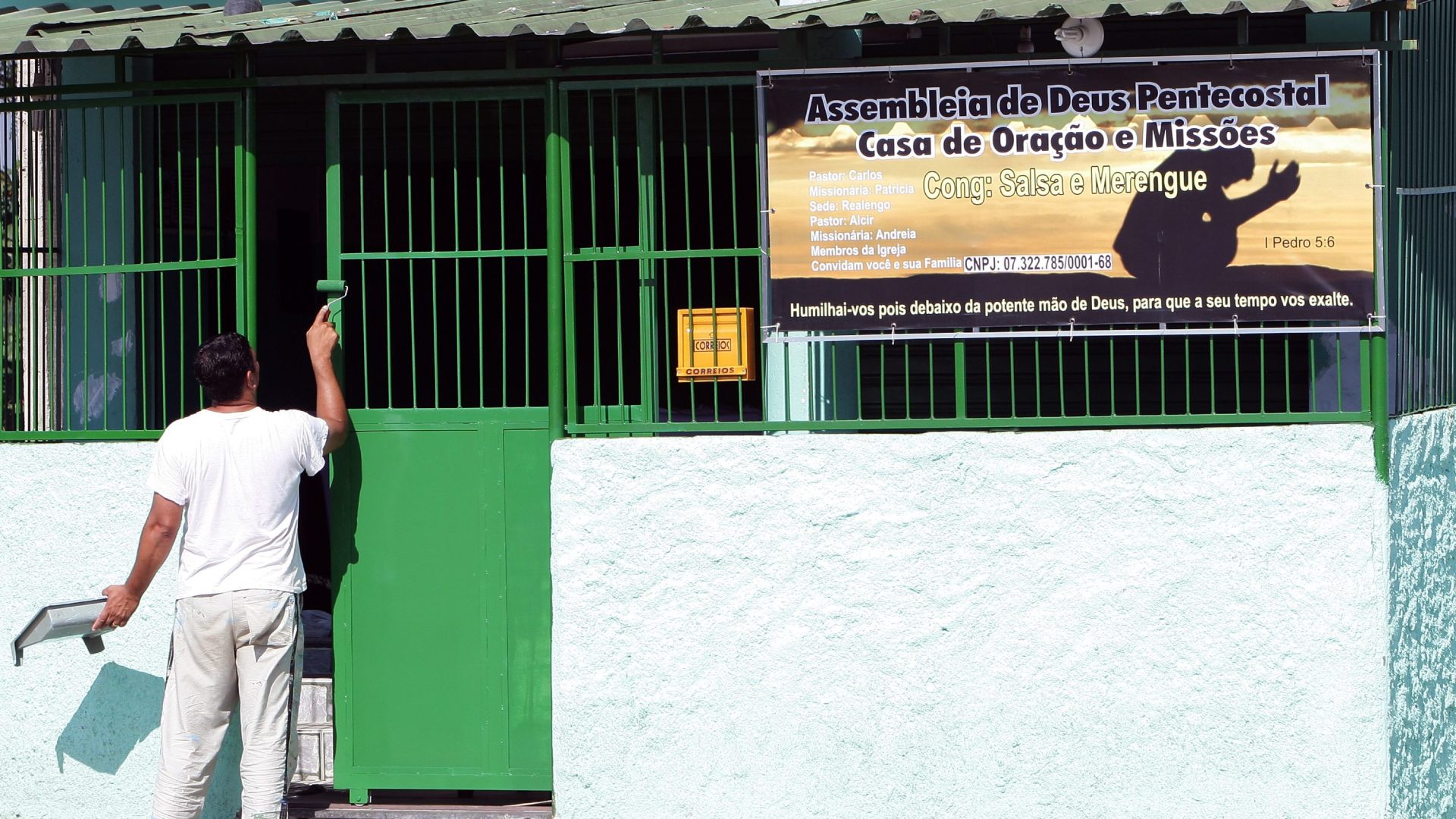
Man paints a gate of an Assemblies of God church in Brazil
Christianity Today October 28, 2025
Franco Origlia / Getty Images

Anderson dos Santos’s Saturday nights are busy. After working all day balancing wheels and fixing tires at an auto repair shop, he walks a mile home, takes a shower, and spends time with his family. Then he heads out again.

Santos makes several stops on his way to the Assemblies of God church on Rua da Horta in the city of Ilhéus. At each house, a child or teenager joins him.

The church in northeastern Brazil sits in a dangerous area, surrounded by rival neighborhood criminal groups. But Santos and his young friends tread the dimly lit streets together to the weekly youth service without fear. “Everybody knows us around here, so we can walk safely,” Santos said.

While major cities in Brazil feature megachurches drawing thousands to vast auditoriums, churches like Santos’s dominate the peripheral neighborhoods. These smaller Pentecostal congregations—led by bivocational pastors evangelizing amid poverty and crime—represent the most widespread face of the gospel in the country.

The proliferation of peripheral churches, most with around 50 members, is a defining feature of how evangelicalism developed in Brazil, taking off among poor populations in the outskirts of urban hubs. “In Brazil, more than half the population earns below the minimum wage, and churches reflect that same social profile,” said theologian Tiago de Melo.

Often working informal jobs or self-employed, these church leaders are scrappy and committed. Researchers say they bring an entrepreneurial spirit that has contributed to recent evangelical growth.

“These are people who come from an economic and social environment marked by precarious work,” like unemployment and odd jobs, said anthropologist Jefferson Arantes. For the past three years, he has interviewed pastors in the Campinas region of São Paulo State as part of his research.

“They are people deeply committed to God but not necessarily to denominations and institutions, which is why many end up turning their congregations into nondenominational churches,” Arantes added. “These conditions make the landscape very difficult to map, because these are small churches and many are autonomous, with no ties to denominations.”

Evangelicals—including Pentecostals and those in other Protestant traditions—now make up 26.9 percent of Brazilians over the age of 10. The country already has more than 597,000 religious buildings, and estimates suggest a new evangelical church opens every six days in São Paulo, Brazil’s largest city.

In his research, Arantes recounts how one small-church leader summed it up: “Can you imagine if there weren’t churches, man? We’d have to build 500 million asylums because people would lose it. Church helps people so much.”

But while neo-Pentecostal groups such as the Brazil-based Universal Church of the Kingdom of God preach prosperity theology, peripheral churches like Santos’s tend to offer congregants more traditional gospel teaching closer to classical Pentecostalism.

The churches still feature personal accounts of overcoming poverty, but only as a side effect of gospel transformation. After converting, people stop wasting money on drinking, gambling, and vanity and dedicate themselves more to studying or working. As a result, they can testify to their congregation—and their neighbors—how God has changed their lives and helped them leave poverty behind.

“The discourse of financial prosperity is present in the periphery, in the music people listen to, in the influencers they follow on social media,” Melo said. “In Brazilian Pentecostal liturgy, it shows up in testimonies, which are present in almost every service.”

Churches welcome participation from all segments of the community, including the elderly and children, and hold time for testimonies each week.

“The Pentecostal church, with its discourse and practice aimed at reducing the distance between leaders and laypeople, brought the solidarity that already existed among the poor,” said pastor Marco Davi de Oliveira, author of a book about black Pentecostals in Brazil. “The poor came to see themselves as coparticipants in God’s work on earth, no longer the rejected ones who could not read or write.”

The typical face of Brazilian evangelicalism is female, black, and Pentecostal, as shown by data from the research institute Datafolha in 2020 and 2024.

In the outskirts of cities like Ilhéus, the responsibility of being coparticipants in God’s work makes young people unafraid to walk at night through the hills alongside Anderson dos Santos.

The church’s schedule is full and so is Santos’s. In addition to the Saturday night gatherings, church members meet for Sunday school in the morning and then for an evening service. They hold house meetings on Mondays and street evangelism on Wednesdays and Fridays.

“For the kingdom, we must always be available,” Santos said at the close of a Sunday service.

The next morning at 5 a.m., he would begin his work again.

News

‘Drug Boat’ Strikes Prompt Questions about Human Dignity, Executive Power

When the president exercises lethal force without congressional authority, we all lose.

Christianity Today October 28, 2025
Illustration by Rick Szuecs / Source image: Midjourney

Since early September, the Trump administration has struck suspected drug-carrying boats in the Caribbean Sea, provoking Latin American nations who see the attacks as a direct affront. Thus far, the administration announced, US forces have attacked ten boats and killed at least 43 people. Last week, the administration expanded its purview, attacking two boats off the coast of South America in the eastern Pacific Ocean. 

After the first boat strike, The Bulletin sat down for two conversations to see how Christians can consider this news through the lens of human dignity—one with senior contributor Mike Cosper and editor at large Russell Moore, the other with homeland security expert Elizabeth Neumann. Neumann formerly served as assistant secretary for counterterrorism in the first Trump administration.

Here are edited and condensed excerpts from those discussions.

Americans are rightly concerned about the drug trade to the United States. Do these actions from the Trump administration signal a desire to do something decisive about drugs and addiction?

Russell Moore: I do think President Trump has a genuine concern about addiction issues. He often references his brother, who succumbed to alcoholism after many years of struggle. There was, at one time, a moral disapproval of anyone who had a drug problem; but today, almost every segment of American life realizes we have a nationwide problem with drugs, opioid addiction, and fentanyl deaths. Almost everybody also recognizes there are some external forces here that are taking advantage of people in pain. 

Mike Cosper: If these boat strikes constitute a war on drugs, there’s no precedent for this. The president is authorizing lethal force without the approval of Congress. In contrast, there is precedent for the navy or the coast guard to interdict these vessels, raid them, and arrest the people aboard. I have no sympathy for drug traffickers or terrorists whatsoever. That these summary executions took place by executive authority, with no clear legal authorization, says a lot about our culture that I think is deeply disturbing.

Elizabeth Neumann: Even if a boat were firing on us, it still would be unprecedented to take an entire boat out in our Western Hemisphere when you’re not in the middle of an active war. At least, then, you could argue that we were acting in self-defense. None of that appears to be at play.

When I served in the first Trump term, the administration was actively evaluating whether to designate cartels as foreign terrorist organizations. The steady hands of the counterterrorism community made a compelling case for why you didn’t want to do that. We were concerned that, by opening the aperture of how counterterrorism tools get used, the federal government could do a host of otherwise unacceptable things. If that authority was abused, the courts would stop it. We need those tools to keep America safe and bad actors at bay. 

Even with a terrorist designation, the government has to take detailed steps to do lethal attacks like this. It is a very rigorous process of identification and an evidence path that says why we believe particular people are a threat to the United States. You must present to lawyers enough evidence to demonstrate that they have proactively caused harm to the United States.

Moore: This is an important issue for Christians not just because of American constitutional questions, which we ought to be concerned about. In the Christian tradition, Romans 13 is a passage we have used to try to unpack what Scripture teaches about war. Romans 13 seems to give legitimate authority to the government to carry out war and police powers, for those of us who aren’t pacifists at least. Other restraints on power come throughout Scripture. Augustine and those after him developed “right authority” in this understanding of military power. War requires not just the right intention to be carried out ethically and morally: it has to be done by a right authority.

In the American system, that right authority is Congress. There’s a lot of latitude in terms of the outworking of that authority, but Congress ultimately holds this power. That’s why we ought to be really concerned about this. For Christians, these acts are a moral problem and a theological problem, not just a constitutional one.

It could be argued that the previous way of handling the drug cartels wasn’t working, and President Trump is a wrecking ball to provoke dramatic, needed change. How do you respond to that?

Cosper: You hear this a lot: The system’s broken, the drugs are getting in, the gangs are getting in, there’s violence in the streets. There’s truth to that. The question we must ask is, What kind of government do we want to be living with? Do we care about the expectation of accountability? Those who say the system was broken are right, but due process and precedent matter. God made all human beings in his image. Scripture says not to glory in the death of evil men (Prov. 24:17–18).

Moore: I do agree with the way that President Trump and Secretary Rubio are labeling the bad guys: Narco-terrorist gangs are villains. President Maduro is a villain. His authoritarian regime is unsafe for people. But will that labeling have any effect on how we see Venezuelans who have come to the United States seeking refuge illegally and are now being sent back? You have the worst of both worlds in Venezuela—the authoritarian strong man, and anarchy and chaos with these roaming gangs. 

Neumann: This opens up scrutiny for the world to make a case that we violated international law here. Certainly, Maduro is not happy about this. I’m not a fan of his. I’m not trying to defend him; but if we’re going to declare war in Venezuela, you really need to consult with Congress on this, if that’s what this was about.

These strikes make me very uncomfortable that we are now putting military men and women in harm’s way. If it was a drone strike, you’re not physically putting them in harm’s way, but we have ships out there now. We have members of the US Navy sitting off the coast of Venezuela, and Venezuela now actually has legal reason to retaliate. We gave them that legal reason. Are they going to do that? Probably not. There’s such an asymmetry there in terms of our power and their power, but it does put our troops in harm’s way. We should have taken that into account through all of the normal processes we use when we decide to use force.

You become an authoritarian regime by watching abuse of power against other people. All of a sudden, you’re the only one left; and, because you didn’t stand up for those guys, there’s nobody to come save you. We could approach this in lots of legal ways, judiciously with due process. This doesn’t have any of that.

We’re seeing a similar flex of force with immigration roundups, with the deployment of the National Guard in cities–a pattern of not wanting to be constrained by the rule of law, not wanting to follow the process that the system requires in order to ensure that our constitutional rights are not violated.

I certainly appreciate that sometimes the government moves really slowly. As an executive branch official, I was often frustrated by that. There’s plenty of room for improving the speed of government to be able to deal with threats, but you cannot skip the process altogether. 

If we believe that all men are created equal and endowed with their creator to the right of life, then it doesn’t matter if they’re American citizens or not. That’s our value as a country—that their lives matter. Even if they’re doing something wrong, their lives matter. Due process should be applied before a life is taken. As a Christian, I am also concerned that we are so willing to be performative and to demonstrate our power. We quickly snuffed out lives, and there wasn’t actually a real threat as far as we know.

Venezuela and President Maduro aren’t the only ones concerned. Mexico is concerned as well, and we need the cooperation of that ally as we try to figure out the difficulties surrounding immigration. What do we risk damaging in that relationship with actions like this?

Moore: There are so many complexities involved. On the one hand, we want a good relationship with Mexico; but Mexico has pitifully responded to the very real drug problem that is coming from there, not just with the gangs and the cartels but with the actual trafficking of drugs. We do have the right to expect more from them.

Cosper: A war against the drug cartels is very expensive, very complicated, and would require a certain kind of military sophistication. Does Mexico have what it takes to actually prosecute that and pull it off without us? I’m not confident that they do, and I think that’s part of why the situation looks the way that it looks.

Neumann: It’s important for us to remember that the world we get to live in now, that we are taking for granted, is actually rare in human history. We got here by recognizing all of the ways that power corrupts, all of the ways that it can abuse the minority or the weaker party. We set up systems and structures to constrain that, to restrain that power so that it’s harder for the abuse to occur.

There’s a sadness and a weightiness to this. We need to figure out how we as citizens and as Christians can stand up for those who are experiencing the abuse today and be able to call our government to account. We must say, We expect better out of you. We expect you to respect the dignity of life. People deserve due process before they are killed.

Because of the way that we interact with information online, it is easier to rile us up and keep us angry. A 2024 University of California Davis study reported that 26 percent of Americans believe violence is justified to achieve a political aim. With that number so high, I do think we have a pretty large group of Americans who are willing to say, “Forget the law, forget due process, forget your rights.” I just want this fixed. For example, the previous administration’s handling of the border was a disaster. That has led to people being very willing to say, “I don’t care how he does it; just fix it.”

The problem is that when you start pushing the line and abusing your authority in one space, you end up doing it in many other spaces. Because of that tendency, it is important that Americans speak up now and say that what happened wasn’t okay—pushing back with our voices, calling our representatives, calling the White House. We can say, “I am not comfortable with how my government is acting right now. They need to follow the law. They need to follow the Constitution. They need to respect that all life matters.” We can also pray. There is definitely a spiritual aspect to our culture’s devaluing of life. We have to acknowledge that there are unseen forces that we war with here too. 

As Christians, we have answers for this world’s numbness, loneliness, and lack of meaning and purpose. We can be at the forefront of solving this problem, but it’s not through politics. It’s not through culture warring. It’s through doing the very unexciting work of loving our neighbor in practical ways, especially the people who are very tough to love. That’s how we heal culture.

News
Wire Story

Top ACNA Leader Faces Sexual Harassment Allegations

Following a string of scandals, the accusations against Archbishop Steve Wood come amid plans for the denomination to overhaul its abuse response.

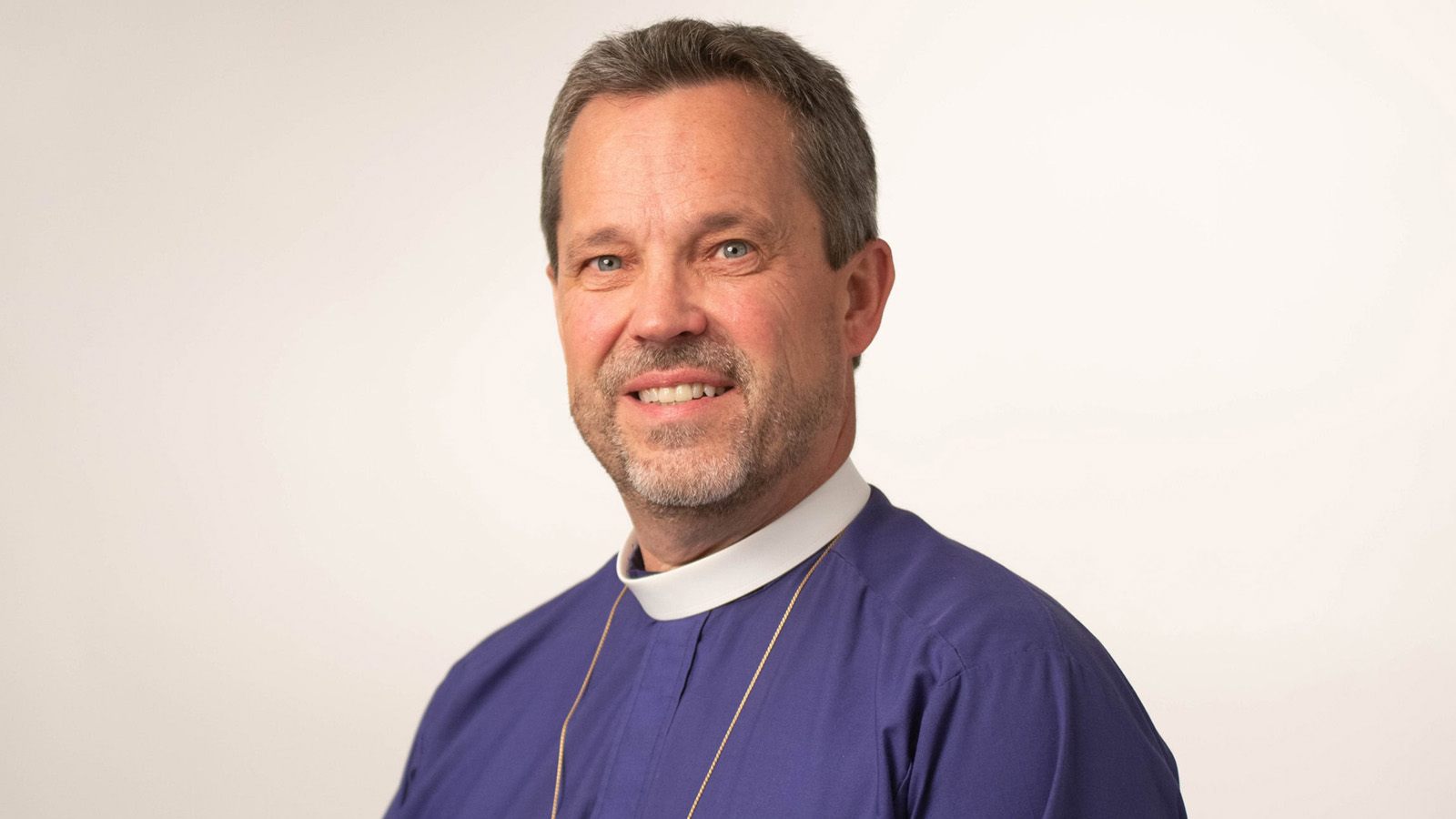
Steve Wood in white clerical collar and purple shirt with gold necklace.

Archbishop Steve Wood

Christianity Today October 27, 2025
Courtsy of ACNA / Religion News Service

Archbishop Steve Wood, who heads the Anglican Church of North America, faces allegations of sexual harassment, bullying, and plagiarism, according to a report released by The Washington Post on Thursday. The list of charges, signed by at least 10 individuals attesting to the allegations, is the latest in a string of crises to rock the small, conservative denomination. 

Claire Buxton, a former children’s ministry director at St. Andrew’s Church in Mount Pleasant, South Carolina, where Wood serves as rector, told the Post that Wood attempted to kiss her in his office in April 2024, just before he was elected to replace Archbishop Foley Beach as head of the denomination.

Buxton claims that before the incident, Wood gave her more than $3,000 from church funds and that church employees had commented on Wood’s “excessive praise and fondness” for her. Priests have also accused Wood of plagiarizing sermons and bullying staff members before becoming archbishop.

The presentment, as a formal complaint is known in the church, was submitted on Monday to Wood and other bishops.

“I do not believe these allegations have any merit,” said Wood, who also continues to serve as bishop of the Diocese of the Carolinas, in a statement to Religion News Service. “I place my faith and trust in the process outlined in our canons to bring clarity and truth in these matters and respectfully decline to comment further at this time.”

The charges in the presentment include alleged violation of ordination vows, conduct giving cause for “scandal or offense,” and sexual immorality.

“I was in shock,” Buxton told the Post. “It’s just bizarre to me how far we—the Anglican Church in North America and its leadership—have gotten away from basic morals and principles.”

The Post reported that a rector in Wood’s diocese wrote a letter to Wood in 2019, questioning his moral authority to serve as bishop. He accused Wood of preaching sermons he didn’t write, publicly cursing at colleagues, and using a $60,000 truck provided by the diocese for church visits—then left Wood’s diocese soon after.

Buxton told the Post that Wood began acting inappropriately with her in fall 2021, repeatedly showering her with money, calling her “Claire Bear,” and offering to send her to a luxury resort. Buxton said she was fearful that Wood would attempt to start a physical relationship with her.

When she confronted him in April 2024, Wood reportedly told her: “You know how special you are to me. You’re my favorite person in the world.” When she got up to leave, the Post reported, he put his hand against the back of her head and tried to kiss her.

By September 2025, less than a year into Wood’s tenure as archbishop, a group of Wood’s former colleagues had drafted a presentment and received signatures from at least 10 clergy and laypeople from the denomination, as required by church bylaws.

The Post reported that after the presentment was submitted, denominational officials asked those who signed the presentment to re-sign it and attest to the truth of the allegations “under penalties of perjury.” One of the presentment’s authors told the Post the group backing the presentment declined to comply, saying it was not required by church bylaws.

The Anglican Church of North America was founded in 2009 after some 700 churches split from the Episcopal Church and the Anglican Church in Canada over various disagreements, including the acceptance of women priests, LGBTQ+ affirmation, and the rewritten Book of Common Prayer. 

 In July 2021, a mother went public with allegations that Mark Rivera, a onetime lay leader at Christ Our Light Anglican Church in Big Rock, Illinois, had sexually abused her 9-year-old daughter. At least nine other people have also shared grooming or sexual misconduct allegations against Rivera, who has since been convicted of felony sexual assault and felony child sexual assault.

More than 10 clergy and other lay leaders in the ACNA’s Upper Midwest diocese have been accused of misconduct as a result, and its bishop, Stewart Ruch, stood trial in a proceeding that concluded October 15—but not before two prosecutors had resigned amid claims of procedural misconduct. The church court’s order is expected on or before December 16.

Meanwhile, the denomination has been shaken by dustups involving other bishops. One ACNA bishop was defrocked in 2020 due to his pornography use; in 2024, another bishop, Todd Atkinson, was ousted for inappropriate relationships with women. 

In September, Bishop Derek Jones, who oversaw a jurisdiction that endorsed ACNA’s chaplains, announced his departure from the denomination after the archbishop moved to investigate several misconduct allegations against him. The jurisdiction claimed the proposed investigation violated church bylaws, and has moved to exit the denomination, attempting to take its chaplains with it. The jurisdiction also sued the denomination for trademark infringement and unfair business practices.

Since he was elected last summer, Wood has named transparency as one of his priorities and has issued regular, direct communications with ACNA members. In March 2025, he hired a director of safeguarding and canonical affairs as a point person for the denomination’s efforts to protect vulnerable people from abuse and harm.

In July, that director played a key role at a town hall, where ACNA leaders detailed a proposed overhaul of the denomination’s clergy misconduct and abuse protocols. The rewrite aims to clarify the process, making it easier to submit complaints against bishops while also introducing “off-ramps” so that not every complaint becomes an investigation. After several cycles of public feedback, the proposed changes are intended to be voted on next year. If adopted, the revisions would go into effect in January 2027.

At the town hall, Wood reiterated the importance of misconduct protocols. “Discipline in the church is one of the most important things that we can give our attention to, our minds to,” he said.

Books

Anti-Fragile Faith in Chaotic Times

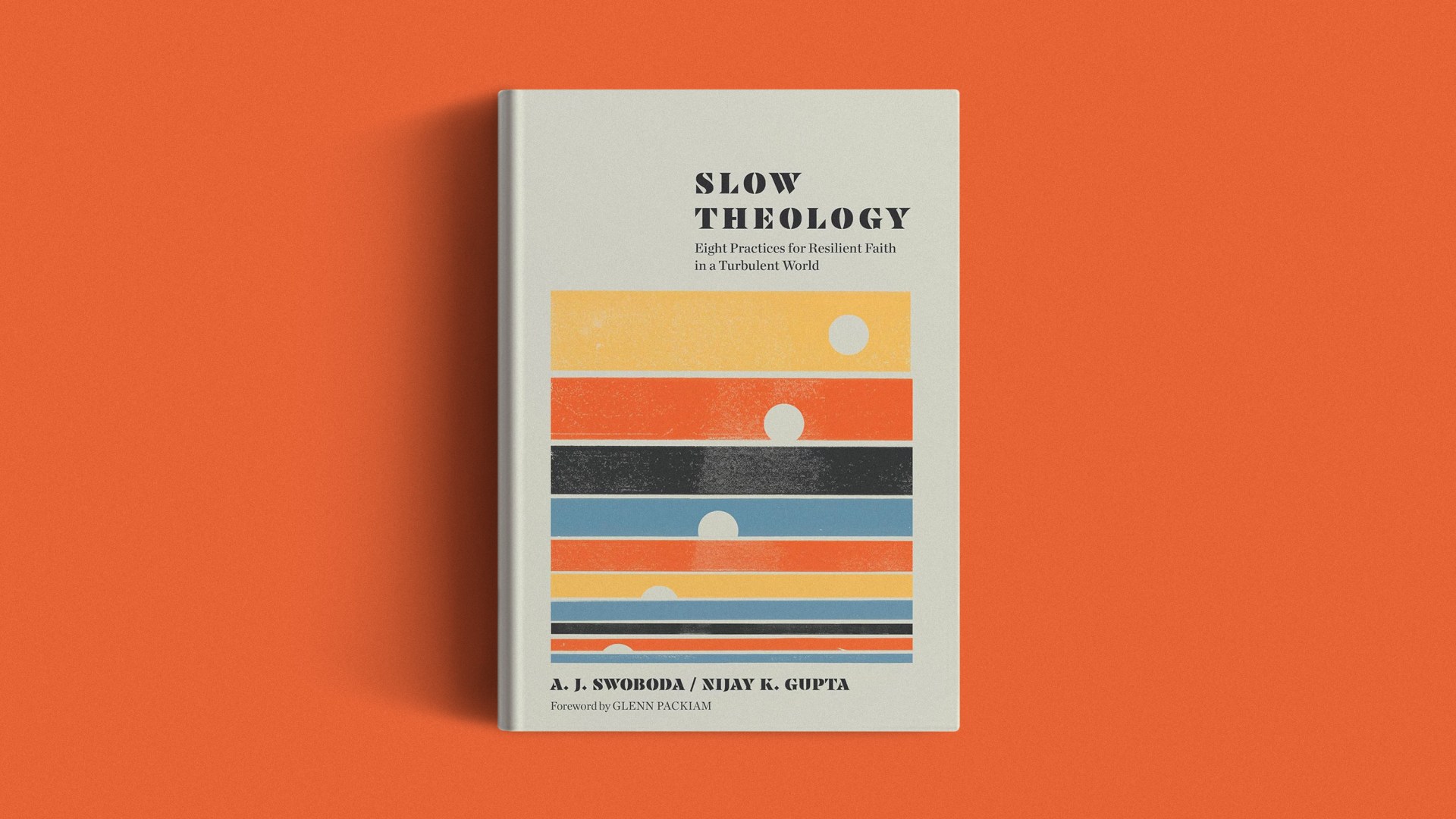
Slow Theology highlights how a long obedience in the same direction grows.

The book cover on an orange background.
Christianity Today October 27, 2025
Illustration by Christianity Today / Source Images: Getty, Brazos Press

I don’t use social media. It’s not because I’m strong but because I’m weak.

Social media is a “hot” environment where producing content requires a quick wit, constant attention, and clever takes, none of which I am good at. But more than that, I know that it would swallow me up into its countless debates, that my anxiety would spike, that moments of rage would produce comments later regretted, and that inevitably, I would form all kinds of strong but unfair opinions while losing myself in an endless scroll. 

It’s true that social media platforms can expose abuse, providing space for the voiceless to speak up against corrupted people and disordered power structures within society and the church. But regrettably, exposure of misdeeds or problems on hot media often produces hot resistance instead of needed institutional change, leaving people angry, disillusioned, and alienated. In that environment, legitimate criticisms are often seen as empty hostility, producing only more heat.

Rather than giving up on the church or institutions, we need to cool down the environment. Slow Theology authors A. J. Swoboda and Nijay K. Gupta recognize how our culture of speed and hot media inevitably focuses on problems and scandals while rarely producing healthy, constructive growth. As they wisely note, “Deconstruction in the proper dose can save one’s faith, but the wrong dose can be fatal.”

Hot environments can easily provoke rash and destructive action. In a hot media environment, we mustn’t toss the church aside but instead love it and tenderly care for it. Any criticisms must be given and received in that spirit, while we remember that we are the church.

Speaking clearly, compassionately, and truthfully into hot media culture, Swoboda and Gupta encourage eight practices they believe can foster “resilient faith in this turbulent world.” They have it exactly right when they ask readers, “What if, by God’s grace, every new question we asked was not a problem? What if it was just a way for our faith to become deeper?”

The first practice they recommend is to learn to linger with God. Our Creator has remained the sustainer of the universe for ages. God isn’t in a panic or rush—after all, he invented time. Only by spending slow time with God can we step away from panic and receive strength to push against injustice and sin.

Second, to appreciate the process that accompanies healthy theological reflection, they encourage us to“take the long view of faith” without expecting to know everything immediately. Convictions normally grow, evolve, and deepen. Furthermore, it is unreasonable to believe that each of us must personally study every doctrine and develop convictions on each point. Informed personal convictions can be useful, but only false piety has the hubris to expect strong opinions on all topics.

Third, they recommend cultivating both a sabbath attitude and a sabbath practice. Rhythms of work and rest teach us that we don’t need to express opinions on every matter and that not being able to help with some vital cause does not make us bad people. Rest reminds us that we can’t control the universe nor the shortcomings in the church.

Their fourth recommended practice is to “ponder the mysteries.” One reason people leave the faith, especially if they grew up in theologically insular spaces, is that they have felt lied to; they were given the impression that Christianity had easy answers to all the hard questions, whether about God, the Scriptures, or ethical issues. When believers discover that clichés and easy answers don’t survive the difficulties of life, they can be tempted to give up their faith entirely.

Slow Theology, however,reminds us that discovering complexity, paradox, and mystery can move us toward deeper faith, humility about ourselves, and awe regarding God. Swoboda and Gupta argue that, unlike a secret, which tries to keep people out, in theology, “mystery intends for those who are in it to keep seeking.” We should not confuse this view with sloth or sloppy thinking, since “a slow theology is not a lazy theology.” Instead, it is meant to approximate what Anselm of Canterbury (c. 1033–1109) meant by the phrase “faith seeking understanding.”

Thus, we arrive at lament, the fifth practice, where we talk through our difficulties with God. Questions about the prosperity of the wicked, economic injustice, and the suffering and mistreatment of the most vulnerable echo concerns we find in Scripture.

When God’s people in Scripture ask raw and honest questions of the Lord (Gen. 18:23–25; Ex. 5:22–23; Job 7:20–21; Jer. 12:1; 20:7), they don’t find their God to be an indifferent deity but a God who pronounces judgment, expresses compassion, and promises one day to make all things right (which affirms that things are not yet right). God cares more about injustice and abuse than we do. When we lament, he is quick to hear and promise that, in the end, he will set heaven and earth right.

The authors then encourage us in our lamenting to run toward problems rather than away from them—the sixth practice. They obviously do not recommend that an abuse victim return for more abuse, but they encourage us to wrestle with problems rather than ignore them, and to do this with God and as part of Christ’s body, which naturally takes us to our next practice which emphasizes the need for community, but present and historic.

Seventh, Swoboda and Gupta remind us of the practice to “believe together,” emphasizing our faith and life require the church. Too often, our theology and faith are overly individualistic. Yes, Christian faith is personal, but, thanks be to God, faith doesn’t need to rest on a comprehensive personal theology. Creeds, confessions, and denominations remind us we depend on others both across history and across the globe to inform, sustain, and grow our faith.

Creeds and confessions are now often viewed with skepticism, and the result is that each of us feels the weight to develop our own theology. “But doing theology alone was never God’s intent,” conclude our authors. In fact, doing so “increases the chance that we may distort the church’s message that has been handed down for generations.” It is good and right for us to wrestle with difficult doctrines and ideas, but we need each other—and an abundance of time—to handle those questions well.

Finally, the authors encourage us to never give up. We need each other to persevere, and this includes those who are not able-bodied or who live outside of neurotypical categories. Accordingly, “the slowest person in any church is almost always the one who exposes the theology of that church.”

Only with the full body of Christ do we slow down and discover areas in our theology and life that need revision. In this process, we are equipped to finish the race together. The authors beautifully interpret Jesus accordingly in John 15: “Make yourself at home in my household of love forever” (v. 9, MSG).

Our hot media environment and world need to be cooled by slow theology. Swoboda and Gupta call us to resist what is trendy and instead invest in what is local, relational, and embodied. Doing so allows us to cultivate a healthy appreciation for history, to develop the ability to think critically about our past and present, and to form a theologically informed habit of dwelling in love.

We should encourage “deconstructions” that reject idols, but not those that reject Jesus and his earthly bride. Dorothy Day once wrote, “As to the Church, where else shall we go, except to the Bride of Christ, one flesh with Christ? Though she is a harlot at times, she is our Mother.” We have no other mother; we need the church, even while considering its deep imperfections.

Real, abiding, life-giving love is present and patient with others; it willingly endures great trials and suffering because of a larger vision and hope. Don’t lose heart: God is patient with us, and we do well as individuals and as the people of God to grow patiently in grace and truth.

Kelly Kapic is Honorary Chair of Theology and Culture at Covenant College. His most recent books are You Were Never Meant to Do it All and You’re Only Human.

Church Life

Will There Ever Be Peace in the Middle East?

An explainer on sectarianism, and how it keeps the region divided.

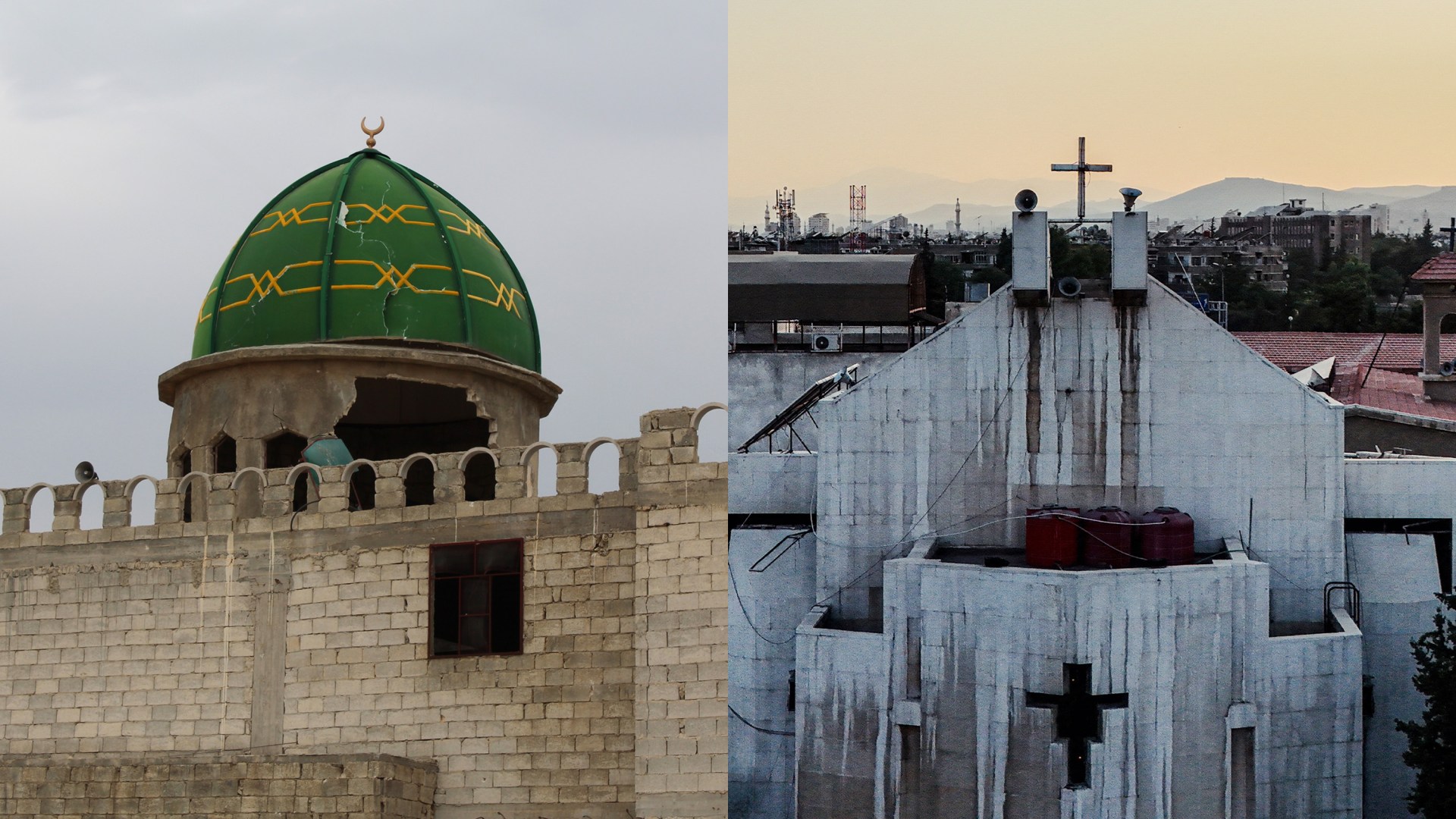
A mosque and a church damaged by bombings in Syria.

A mosque and a church damaged by bombings in Syria.

Christianity Today October 27, 2025
Illustration by Christianity Today / Source Images: Getty

This is the first part of a three-part series about the problem of sectarianism in the Middle East and how the interfaith group, Adyan Foundation, seeks to pave a new path in Lebanon and Iraq.

The Middle East is a diverse region with Muslims, Jews, and Christians living together, along with each religion’s many sects or denominations. Ethnically, the region is peopled with Arabs, Jews, Kurds, Armenians, and Berbers. And despite speaking Arabic, many Assyrians, Copts, Samaritans, Yazidis, and Kakai maintain a separate ethnic identity.

Each sect, with its distinctive history and beliefs, is often deemed at least somewhat heretical by the others. While in Western countries theological disagreements do not usually end up harming the larger society, in the Middle East, sectarianism can lead to conflict and violence between different groups.

Sectarianism in the Middle Eastern context is defined in this article as the politicized prioritizing of one’s religious or ethnic group at the expense of a larger national identity.

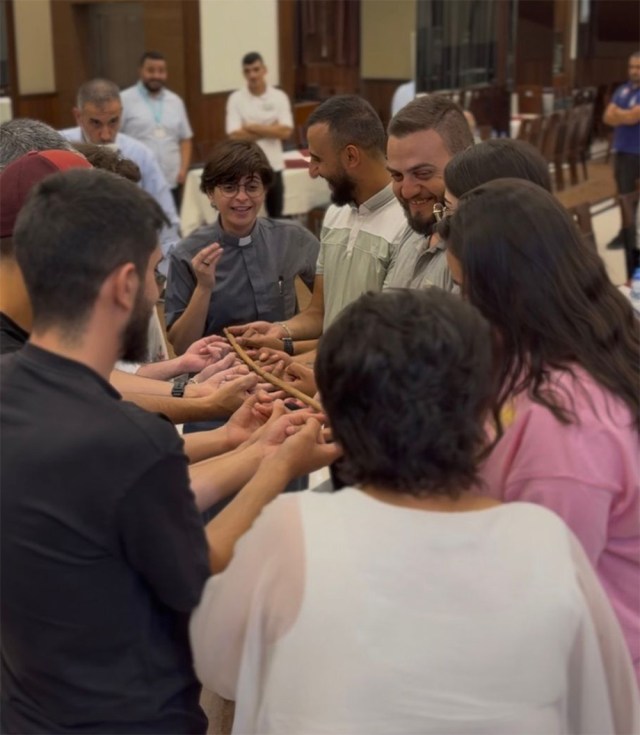
Linda Macktaby, a Congregationalist pastor in the National Union of Evangelical Churches in Lebanon, illustrates the difficulty of dealing with sectarianism through a simple game she calls “Stick,” which is played during workshops she leads through Adyan Foundation, a Lebanon-based organization promoting interfaith dialogue and equal rights in the Middle East. Adyan means “religions” in Arabic.

The concept of the game is simple: Six individuals balance a single bamboo rod on their outstretched pointer fingers and lower it until they can lay it on the floor. They must cooperate and go slowly—if anyone’s finger loses contact with the stick, that person is replaced by someone from the crowd of about 20 people. Macktaby appoints from among attendees a referee, who watches carefully for any violation. The outside group can also collectively decide to swap out the original six players.

“We need someone shorter,” an onlooker may call out. “You’re going too fast,” says another. Multilingual Lebanese often speak Arabic, English, and French, but when mixed with other nationalities, one language prevails and the less fluent are quickly replaced for the sake of communication. Across the many sessions she’s led, Macktaby finds that, before long, the crowd tends to remove the tall people—who then stand on the sideline criticizing the shorter players. Those displaced by language sulk into the background. Sometimes the tide turns against the women.

But Macktaby makes it worse. She starts shouting advice to the players. She makes a blind suggestion that someone from the crowd would have a steadier hand. And she criticizes the referee, sometimes inserting herself to expel an offender. Tensions rise. The stick falls. Not once in all the workshops she’s led has Macktaby seen a group successfully reach the floor.

After the game, Macktaby explains that the task appears simple, but the rule of finger contact makes it nearly impossible. She gently rebukes the participants: “Why did you allow me to interfere? I undermined the judge and played you off against one another.” Without fail, the workshop attendees—all friends before the game—divide themselves into sects.

And this, she explains, is where sectarianism comes from.

In the game of Stick, the challenge is to lay down the bamboo stick. In nations around the world, including in the Middle East, the challenge is to create a functioning society. In both Stick and politics, the rules and behavior of the leader can erode trust and cooperation.

Linda Macktaby supervising a game of “Stick.”

Many assume religion to be the root of division in the Arab world, but diverse beliefs and identities are a fact of life in most societies. Instead, those in charge—politicians, businessmen, and foreign interests—are driven by competition over resources and rely on sectarianism to manipulate the rules and play one group off another, Macktaby said.

In some nations, a strongman relies on his religious group to maintain legitimacy, such as how leaders in Saudi Arabia and Qatar have traditionally leaned on their conservative Wahhabi ideology within a largely Sunni Muslim population. But in Bahrain, a Sunni monarch governs a Shiite majority nation. Similar minority rule existed in Iraq prior to the overthrow of Saddam Hussein and in Alawite-led Syria before the recent fall of Bashar al-Assad.

In the Gulf states of Saudi Arabia, Qatar, and Bahrain, oil money has provided economic prosperity that has dampened dissent over which tribe within the dominant sect lays claim to leadership. In Iraq and Syria, nominally secular republican governments have given the appearance of popular assent. In all, the leader carefully guards access to state resources, doling out political and economic benefits to members of sects that cooperate with the regime.

Where there is rule of law, healthy competition over power can fuel a functioning society. But often in the Middle East, competition takes place within and between sects over who can get closest to the leader at the center of power. And such a leader may then rely on fear to keep each group in line.

Beware the fundamentalist Muslims, some might say. Or Christians, connected with neocolonialist powers in the West. Wielding the heavy hand of the state, the leader ensures the compliance of all.

Such rhetoric may not be entirely false. Traditional Muslims might oppose alignment with Western nations—popularly assumed to be “Christian”—that push to normalize homosexuality. Alternately, contemporary Muslims might prefer modern standards of human rights as opposed to strict enforcement of sharia law.

During the Syrian civil war, many Western Christians familiar with the Middle East understood the dilemma of the church in Damascus. Then the dictator fell, replaced by a former al-Qaeda member. The new leader promised fairness amid an environment of chaos, leading outside observers to ask: Should we believe him? Can he deliver? Would Syrians have been better off with authoritarian stability? Can they run a democracy without it devolving into religious violence?

Do these questions suggest that sectarianism infects Western minds also, when considering the Arabs? European sects overcame centuries of hostility to create their modern society. While historical and cultural circumstances vary, there is no fundamental difference between them in human—or sinful—nature.

Sectarianism becomes even more obvious in Middle East nations without a strong central government—namely, Lebanon and post–American invasion Iraq. Here, the rules of the game specifically appoint political positions to sectarian communities. These practices derive both from formal constitutional procedure and informal agreements by political elites.

In Lebanon, the president must be a Maronite Christian, the prime minister a Sunni Muslim, and the speaker of parliament a Shiite Muslim. The parliament is divided evenly between Christians and Muslims. Within each group, the religion’s sects are proportionally assigned seats. Protestants, for example, are allotted a single member.

In Iraq, ethnicity is a factor, as the president must be a Kurd. The other posts are determined by religion: The prime minister is a Shiite Muslim and the speaker of parliament a Sunni Muslim. Only women and religious minorities have a parliamentary quota, but political parties largely organize and secure seats according to their sectarian identity.

In principle, the system protects each sect from dominance by the others. Nations like Belgium and Switzerland have similar patterns to manage internal diversity, said Abdo Saad, the regional programs director for Adyan. By prioritizing national identity, strong institutions, and democratic practice, these countries have united their distinct language and religious groups.

But in the Middle East, France (in Lebanon) and America (in Iraq) had an outsized role in the early development of written and informal rules in partnership with local elites, Saad said. The two countries are now more democratic than their preceding systems of Ottoman, colonial, and Saddam Hussein rule, Saad added, but if ordinary people are asked if the government benefits them, they will laugh.

In 2019, both Lebanon and Iraq experienced popular uprisings against corruption and the sectarian nature of government. After failing to become a true revolution, the people voted the same parties back into power. Consider how in the US, many find fault with both the Republican and Democratic parties, but would not throw away their vote, so to speak, on a third-party candidate unlikely to win. The alternative of losing to the side one likes least makes it difficult for new political entities to emerge.

In practice, the system incentivizes citizens to rally behind their sectarian leaders. Each branch of government has checks and balances on the power of the other sect. But the result is that political life tends to revolve around issues of identity instead of ideology and political programs.

Voting does matter. The percentage of parliament that each sectarian party wins often determines the distribution of posts within government ministries. Yet informal agreements ensure that each sect presides over a certain influential sector—such as policing, finance, and public works—or else they rotate between these positions. Politicians then reward their supporters with jobs in these sectors. Corruption becomes endemic, including within the judicial system.

What can be done about sectarian governance? Parts two and three of this series offers Lebanese and Iraqi answers to the question of managing sectarian differences.

News

Christian Colleges Object to Trump ‘Overreach’ on Higher Ed

The administration’s compact with universities would freeze tuition for five years and cap the number of international students, among other measures.

A USC professor protests the Trump compact on higher education.

A USC professor protests the Trump compact on higher education.

Christianity Today October 27, 2025
Genaro Molina / Los Angeles Times via Getty Images

The Trump administration wants colleges to sign on to its new compact on higher education, but Christian colleges say it amounts to “undue government control.”

The Council for Christian Colleges & Universities (CCCU), which in the US represents 150 largely evangelical institutions, signed on to a statement from the American Council on Education that said the compact was “government control of a university’s basic and necessary freedoms.”

At the beginning of October, the Trump administration sent a ten-point memo that outlines changes colleges should make, including freezing tuition for five years, refunding students who drop out their first semester, capping the number of international students, removing race-and-gender-diversity consideration in hiring and admissions, and eliminating parts of the institutions that “belittle … conservative ideas.”

The Trump administration initially sent the compact to nine schools, but President Donald Trump has since said all colleges should agree to it.

The compact says a higher education institution could diverge from its requirements “if the institution elects to forego federal benefits.” A White House adviser on the policy told The Wall Street Journal that the government wouldn’t necessarily cut off federal funding to schools that don’t sign on, but it would prioritize grants and White House access to schools that do.

Of CCCU member schools, “I haven’t seen one that said, ‘Sign me up. I’ll take it,’” said CCCU president David Hoag in an interview.

Some of Hoag’s specific concerns are the five-year freeze on tuition and the requirement to refund tuition to students who drop out after a semester. Those requirements are financially unworkable for schools, he said, as health care costs rise every year and schools try to pay faculty fair salaries.

“Don’t put us in the box with the Ivy League schools that are charging very high tuition—$80,000, $90,000. We’re not even in that ballpark,” he said, adding that the average tuition of CCCU schools is about $30,000, which is further discounted 50 percent on average.

Federal aid flowing to Christian colleges, generally speaking, goes to student financial aid like Pell Grants, whereas federal research grants might go to large research schools like Johns Hopkins University.

David Turk, a retired provost who served for decades at the now-shuttered CCCU school Nyack College, said the compact’s financial requirements to freeze tuition for five years and refund those who drop out were “laughable.” He said CCCU schools are already struggling to pay faculty decent wages and contribute to employee retirement funds.

“These schools exist on a financial knife’s edge,” he told CT, adding that part of the reason Nyack closed was that it didn’t charge high enough tuition. “You can tell a state university to [freeze tuition]. They get taxpayer money.” 

Hoag is concerned that the admissions process requirements in the compact could ban faith statements, and the ban on diversity consideration in hiring could “conflict with certain programs that are mission-driven at our institutions,” he said.

Another requirement in the memo is a 15 percent cap on international students at each school. Turk, the longtime provost at Nyack College (later called Alliance University before it shut down in 2023), said the cap would undercut the purpose of historic missions schools like Nyack that were training global ministry leaders.

About 30 percent of Nyack’s student body was international when the school shuttered, he estimated. Campbellsville University, another CCCU school, has a student body that’s 30 percent international.

“I can’t imagine a CCCU school saying we’re going to limit our international students,” said Turk. “This is just not us. This is not what evangelical schools are about. This is not what the church is about.”

This compact comes at a time when Christian colleges have seen enrollment grow but are also navigating big changes under the new administration.

The administration has cast uncertainty on international student visas, and now a new Trump requirement for H-1B visas holders to pay a $100,000 fee presents a challenge for universities with professors and researchers on those visas.

Trump’s “one big, beautiful bill” that passed this summer also phases out the Grad PLUS loan program, which is a significant backer for graduate students at CCCU schools, said Hoag. The removal of federal loan programs is the “pendulum” swing away from the Biden administration writing off billions in student debt, he said.

Students will have to go to private banks for loans, which means they or their families must have good credit ratings.

“I’m not overly concerned with this current administration with religious liberty being attacked per se, but I am concerned about the funding piece,” said Hoag.

A week ago he was in meetings with boards of several colleges and put up slides showing the amount of Pell Grants and other federal financial aid for students at their schools.

“I’m putting numbers on slides that are $17 million to $75 million,” Hoag said. “My schools that are doing better—I say to them, ‘Remember your dependency needs to be on the Lord, not the federal government. How can you be thinking if some of that money goes away in the future?’”

Other Christian schools have seen benefits of a new administration. The Biden administration issued record-setting fines against the two biggest Christian colleges in the country: Grand Canyon University and Liberty University.

Grand Canyon faced a $37.7 million fine for misrepresenting the cost of graduate programs, and the school accused the government of “overreach.” The Trump administration rescinded the fine.

Liberty was fined $14 million for campus safety violations, and the school’s objection to the fines came up at the Trump administration task force tracking anti-Christian bias in the federal government.

Liberty and Grand Canyon are not part of the CCCU.

In addition to the CCCU, the Association of Catholic Colleges and Universities, the main representative of Catholic higher education in the US, signed the statement opposing the compact.

“The compact is just the kind of excessive federal overreach and regulation, to the detriment of state and local input and control, that this administration says it is against,” the statement said.

It added, “To be clear, we agree that higher education has room for improvement … but undue government control is not the way for higher education to deliver on all of its promise.”

So far, no school in the country has agreed to Trump’s compact.

Books
Review

Do Evangelical Political Errors Rise to the Level of Heresy?

A Lutheran pastor identifies five false teachings that threaten to corrupt the church’s public witness.

The book cover on a red background.
Christianity Today October 24, 2025
Illustration by Christianity Today / Source Images: Getty, Lexham Press

If we can learn anything from the history of Christian heresies, it is that they never truly vanish. Instead, they resurface in every generation with new twists.

Tim Perry sets out to identify the modern twists on ancient heretical teachings in a new book, When Politics Becomes Heresy: The Idol of Power and the Gospel of Christ. The term heresy originates with an ancient Greek word meaning “choice” or “the thing chosen,” and Perry believes many evangelicals have consciously chosen to embrace a mixture of politics and religion that is dangerously close to heresy.

Perry, a Lutheran pastor in the Canadian province of Manitoba, styles the book in the form of a catalog of heresies, akin to what the ancient church called a Panarion, a Greek term meaning something like “medicine chest.” Such works offered Wikipedia-like entries detailing the origins, essential doctrines, and key representatives of each heresy, along with suggested “cures.”

Early Christian theologians, such as the fourth-century bishop Epiphanius, drafted versions of these catalogs to help Christian leaders identify how heretical doctrines might be creeping into their congregations. Perry’s work attempts something similar. While the contemporary heresies differ from their ancient expressions—no evangelicals hold to the Gnostic hierarchy of “aeons,” for example—key features and false teachings persist.

Perry’s chief worry, as his title suggests, is a habit of allowing politics to displace the spiritual life. In his view, the church too often sees the voting booth, rather than the altar, as the place where God is most powerfully at work. Perry believes leading 20th-century evangelicals, like Harold John Ockenga and early CT editor Carl F. H. Henry, would share his concerns about the movement they helped shape.

As he argues, they would recognize “the loss of transcendence and the substitution of politics as a grave spiritual malady that requires spiritual medicine—namely, repentance—to cure it.”

Perry organizes his book around five heresies: Simony, Gnosticism, Arianism, Pelagianism, and Donatism.

Throughout church history, Simony has referred to the trafficking of religious things, often in the form of buying and selling church offices. The name derives from Simon Magus, the false convert in the Book of Acts who tries to buy the power to impart the Spirit (8:18). In medieval and Reformation churches, where politics and religion were more closely aligned, Simony was a common problem.

To understand the dynamics of Simony today, Perry appeals to the writings of Charles Taylor, author of the landmark book A Secular Age. He focuses on Taylor’s concepts of the “social imaginary,” the “immanent frame,” and the “buffered self,” showing how these terms capture a tendency to focus exclusively on the present moment and the political maneuverings that give it shape.

In this context, Perry writes, Simony means expecting the Bible “to speak immediately to a modern political matter, as though there is absolutely no room for reflection or disagreement.” When evangelicals misuse Scripture in this manner, he argues, they “traffic” it as a means of gaining political and cultural power.

Gnosticism is another heresy Perry finds lurking among evangelical communities. Gnostics, as he describes them, were an assortment of religious groups that were “entirely wedded to the spirit of their age.” They blended Christianity with other ancient religions and philosophical views, especially versions of Plato’s philosophy that viewed the immaterial realm as better and nobler than embodied life on earth.

As a result, their thinking embraced various dualisms that distinguished between spiritual and material realities. Gnosticism, writes Perry, encourages the “instrumentalization of matter, especially the body,” which it regards as inhibiting to the true spiritual life.

Perry sees parallels in the evangelical desire to maintain its relevance to modern culture by trying to embrace both trendy philosophies and the gospel. In its heyday, he argues, evangelicalism was a renewal movement fueled by a “well-defined sense of otherness.” He worries, however, that today’s evangelicals have lost this mentality, resulting in a “view of Jesus, whether on the right or left, [that] bears little resemblance to the Jesus of the Bible.”

Arianism, Pelagianism, and Donatism are the three heresies that round out Perry’s contemporary catalog. Regarding Arianism, he stresses that Arius, the early theologian and namesake of the heresy, was “conservative” in the sense of revering the Bible. Yet he also denied the full deity of the Son, which had crippling implications for the doctrine of salvation.

Perry suggests that evangelicals are often too pragmatic to see the consequences of subtle but dangerous innovations like Arianism, much less contend against them. “Even in our Christology,” he writes, “evangelicals tend to put the doctrine’s usefulness ahead of its truth.”

Pelagianism undermined the doctrine of original sin, claiming that even fallen human beings could attain sinless perfection through their own efforts. For the theologian Pelagius, Perry notes, “grace indeed accompanied both the will to do the good and the act itself, but grace was itself dependent on the free decision of the human will.”

Perry sees the modern temptation of Pelagianism in popular self-help movements that some evangelicals embrace. He writes, “What we see in the moral self-improvement of the evangelical right and the social transformation of the evangelical left is a false and finally Pelagian gospel that expects us to bootstrap our own moral and social perfection.” Once we embrace this kind of Pelagianism, Perry argues, we lay the groundwork for a hyper-partisan competition over which side’s agenda produces the best moral outcomes.

The Donatists, to consider Perry’s final example, were looking for the perfect church, unaffected by the sins of the fallen world. The Donatist controversy, as church historians call it, has roots in the Roman Empire’s persecutions of early Christians. The Donatists wanted to purge the church of those who, in some way, capitulated to pagan pressure to disavow Christ and worship false gods. For the Donatists, the Christians that “lacked such holiness weren’t actually members” of the authentic church.

Many issues arise when studying the Donatist movement, but in Perry’s analysis, one of the most important is the relationship between the church and the world—a conundrum that continues to divide evangelicals across the political spectrum. Perry asks a challenging question: How can we define norms of genuine Christian holiness at a moment when Christians have divided political loyalties and competing visions of cultural engagement?

In each chapter, Perry explains how the church can root out the modern versions of ancient heresies. His proposed solution to Simony, for example, is cultivating the virtue of prudence, which he describes as “the use of proper caution; deliberation in decision-making; using reason in both self and community governance.” Prudence demands communities whose members value careful thought, listen to expertise, and deliberately work to guide each other down the narrow path of biblical faithfulness.

Perry’s solution to Gnosticism is embracing moral and biblical realism, or what C. S. Lewis called the “Tao.” Evangelicals, in this view, should take greater pains to guard against letting any earthly philosophy supplant the morality of Scripture and the biblical story of salvation through Christ.

Turning to Arianism, Perry recommends a renewal of basic discipleship in the doctrine of the incarnation, a habit of confessing the Nicene Creed in worship, and patterns of reading Scripture in accordance with the Trinitarian theology that the creed affirms.

Similarly, regarding Pelagianism, he simply asks the church to reclaim the gospel and to reject the temptation of building the kingdom on our own. As he writes, we cannot “vote for God, nor by our votes or other forms of engagement bring in God’s kingdom.” But we can pray for our leaders, bear witness to God’s reign within our own spheres of influence, and testify to the good news of the gospel.

Finally, Perry argues that overcoming modern forms of Donatism involves learning to cultivate honest debates on important issues. As he emphasizes, this entails a “deliberate commitment to the investigation and, if necessary, condemnation of wrong ideas.”

The common theme running through all of Perry’s critiques concerns the perennially contested relationship between church and politics. A good summary of his thought lies in the quote he cites from Anglican scholar Oliver O’Donovan: “The Church has only the authority to persuade; when it gets itself mixed up in the authority given by God to the magistrate, namely, the authority to compel, there is no end to the mischief that results.”

Perry is surely correct that many evangelicals confuse the spheres of church and politics in ways that fall short of biblical faithfulness. Yet even where his indictments are well justified, they often lack a measure of specificity.

In defending his approach, Perry notes that too much specificity can distract readers from seeing broader patterns of heretical drift within evangelical communities. On the other hand, erring too far on the side of generalities arguably allows greater leeway for assuming that only other sorts of evangelicals are to blame.

It’s possible too that Perry has failed to exhaust the ways that contemporary heresies and related false doctrines manifest themselves in Christian circles. Take, for example, his discussion of Gnosticism.

The Gnostic tendency to instrumentalize the material world has all kinds of implications for how we understand the meaning of human life and the significance of divine of creation, especially in a technological age. How, one might ask, is the material world being instrumentalized today, and how should Christians respond?

The language of heresy is serious business, and in some cases, the book perhaps leans on it too strongly. Perry knows the term should not be used lightly, because heresy implies the damnation of souls. But he argues, “I have deliberately cast that indictment as heresy to indicate that it is a spiritual problem first.” This is a helpful clarification, because readers might not always see the connections between their spiritual lives and their political engagement.

But heresies also concern core Christian beliefs, not secondary issues of doctrinal disagreement or principled decisions about temporal political affairs. In a climate of intense partisan conflict, one pressing challenge is balancing the imperatives of seeking church unity (John 17:21) and purging the evil among us (1 Cor. 5:13), all the while engaging the world with the gospel. To that end, readers will need to evaluate the sins Perry describes on a case by case basis: Do they rise to the level of heresy, or are they are matters of principled disagreement on how the church should engage the surrounding culture?

Ideally, the kind of self-examination Perry advocates can lead to healthier forms of cultural engagement. I do hope, though, that Perry’s arguments do not lead readers to retreat from active citizenship in their local contexts or to dismiss the very idea of creating and maintaining secular political spaces. Either way, such considerations underscore the importance of local pastors and thoughtful Christian leaders, who help us navigate the tension of living as citizens of the city of God while acting as salt and light in the city of man.

Perry’s book is helpful in recovering an awareness of ancient heresies and showing how these errors never truly go away. May the church today heed his exhortations, seeking “prudence and patience, faithfulness in witness, and a political civility” in an age marked by sharp lines of political division. I think both early church fathers and 20th-century evangelical stalwarts would give that vision a hearty amen.

Stephen O. Presley is senior fellow for religion and public life at the Center for Religion, Culture & Democracy and associate professor of church history at The Southern Baptist Theological Seminary. He is the author of Cultural Sanctification: Engaging the World Like the Early Church.

Apple PodcastsDown ArrowDown ArrowDown Arrowarrow_left_altLeft ArrowLeft ArrowRight ArrowRight ArrowRight Arrowarrow_up_altUp ArrowUp ArrowAvailable at Amazoncaret-downCloseCloseEmailEmailExpandExpandExternalExternalFacebookfacebook-squareGiftGiftGooglegoogleGoogle KeephamburgerInstagraminstagram-squareLinkLinklinkedin-squareListenListenListenChristianity TodayCT Creative Studio Logologo_orgMegaphoneMenuMenupausePinterestPlayPlayPocketPodcastRSSRSSSaveSaveSaveSearchSearchsearchSpotifyStitcherTelegramTable of ContentsTable of Contentstwitter-squareWhatsAppXYouTubeYouTube