News
Wire Story

At Doug Wilson’s DC Church Plant, ‘Worship Is Warfare’

Pete Hegseth and other Capitol conservatives join Christ Church’s new location.

Looking along Pennsylvania Avenue towards the Capitol Building at sunrise in DC
Christianity Today July 15, 2025
Doug Armand / Getty Images

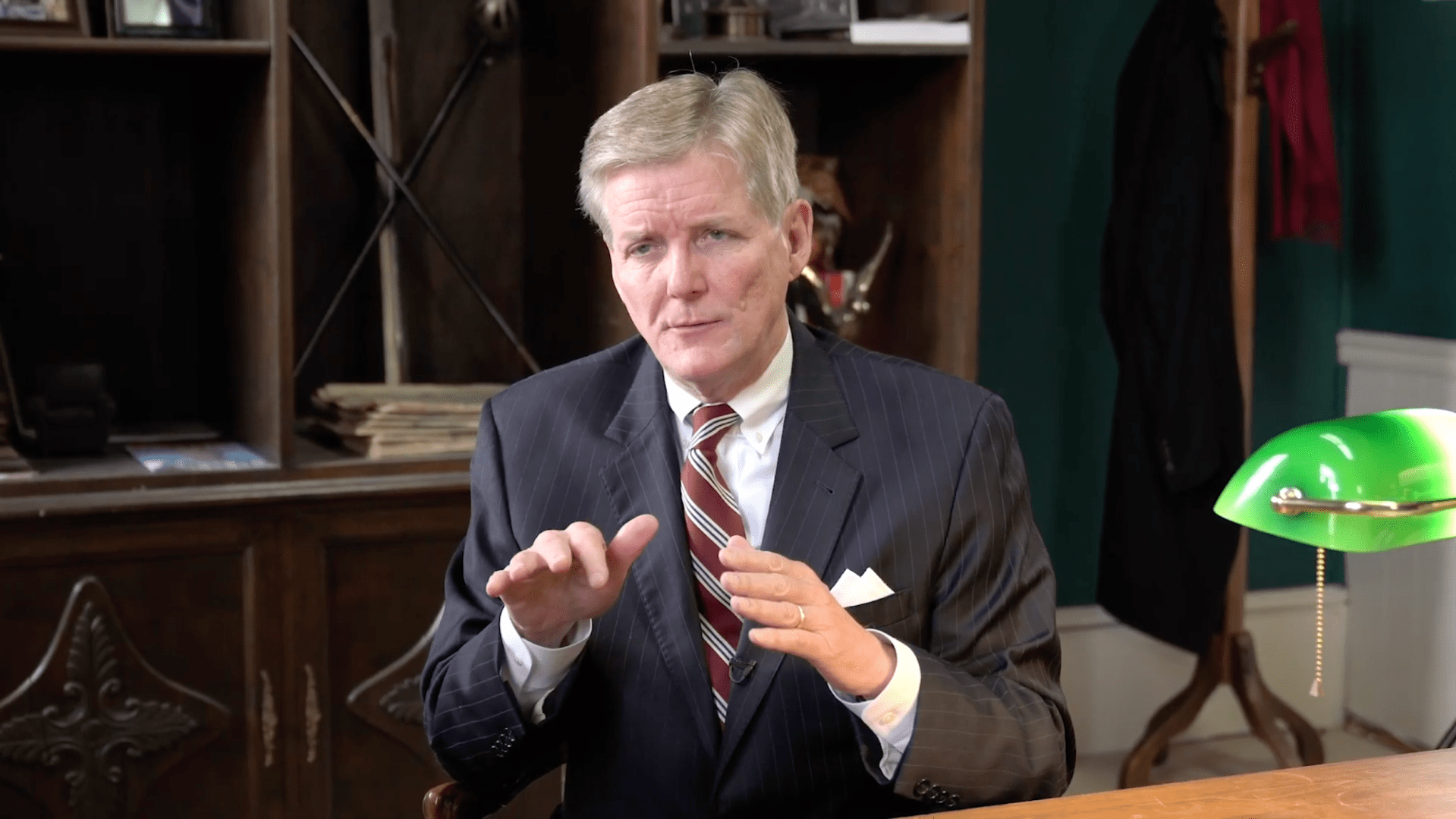
Pastor Jared Longshore isn’t exactly a holy roller preacher. Bearded and bespectacled, his sermon before the Washington, DC, plant of Christ Kirk church on Sunday was delivered in the subdued, heady style typical of the often buttoned-up Reformed Christian tradition.

But as Longshore stood underneath an American flag suspended just above his head, its stars and stripes facing toward the floor, the pastor made clear that the new congregation—an outpost of an Idaho church run by a self-described Christian nationalist—wanted to make some noise.

“We understand that worship is warfare,” Longshore said, leaning over the lectern. He paused for a moment, then added: “We mean that.”

Many in the roughly 120-strong congregation nodded in agreement, a few fanning themselves with church bulletins as they sat packed together in the small, non-air-conditioned room just a few blocks from the US Capitol.

And the message appeared to resonate with the most notable attendee among the crowd of worshippers: US Secretary of Defense Pete Hegseth. Children in the pews whispered excitedly when Hegseth entered, and the defense secretary was mobbed by supporters as he left the church.

While the service itself followed the traditional rhythms of Reformed Protestant liturgy—confessions of faith, Scripture readings and hymns sung in harmonies that emphasize fourths and fifths—Longshore’s sermon was full of political references. He lauded the Department of Government Efficiency and argued that liberty and equality are concepts that only make sense if they are attached to conservative Christianity.

“If you get rid of God, you lose all sense of what equality is,” Longshore said.

The church plant is the latest example of pastor Doug Wilson’s growing sphere of influence among a cadre of conservatives sometimes described as the “New Right.” Having founded Christ Kirk (also known as Christ Church) in Moscow, Idaho, decades ago, Wilson has since helped establish a small denomination—the Communion of Reformed Evangelical Churches—while also creating a Christian school, college, seminary, and printing press. Along the way, the stridently conservative pastor has sparked a number of controversies, from his blatant use of anti-LGBTQ slurs to his comments downplaying the atrocities of American slavery.

But Wilson’s political rise is more recent, tied mostly to his congregation’s headline-grabbing protests against pandemic restrictions and the pastor’s fervent, unapologetic embrace of Christian nationalism on his various YouTube channels. The result has been a flurry of prominent politically themed speaking engagements in the past two years, such as speaking alongside Russell Vought (who would go on to be the director of the Office of Management and Budget) at an event hosted in a US Senate office building; addressing the crowd at a Turning Point USA conference; or speaking on a panel at the National Conservatism Conference.

Hegseth, who has praised Wilson’s books, said he moved to Tennessee specifically to enroll his children in a school associated with the Christian education movement popularized by Wilson. He also became a member of a local CREC church in the area. In May, Hegseth had his pastor, Brooks Potteiger, lead a prayer service at the Pentagon.

In an interview with Religion News Service, the Idaho-based Longshore—who is one of many pastors associated with Christ Kirk and the CREC slated to preach to the DC startup until it installs its own pastor—dismissed the idea that the church was part of an effort to influence DC politics in an explicit sense. He echoed Wilson, who has said the nation’s capital is now home to many members of the CREC denomination and denied that Hegseth had any role in bringing the church to Washington.

But Wilson has also stated publicly that establishing the church is part of an effort to capitalize on “strategic opportunities with numerous evangelicals who will be present both in and around the Trump administration,” and Longshore acknowledged the effort is designed to be an indirect form of politicking.

“We do believe that culture is religion externalized, always, whatever the religion,” said Longshore, who serves as an associate pastor at Christ Kirk Moscow. “And politics is downstream from culture, and culture is downstream from worship.”

Photographs were prohibited as a condition of being able to observe the service, but political symbols filled the worship space. Old newspaper articles praising Ronald Reagan dotted the walls, as did multiple American flags.

Some ensigns were associated with the political right, such as the Revolutionary-era “Don’t Tread on Me” flag popularized among conservatives by the Tea Party movement. An “Appeal to Heaven” flag—another Revolutionary-era banner that has become associated with Christian nationalism and the January 6, 2021, attack on the US Capitol—was draped on the wall nearby.

Streetfronts in DCCourtesy of Google Maps / Religion News Service
Christ Kirk DC met in a building, center, on Pennsylvania Avenue owned by Conservative Partnership Institute in Washington.

Granted, the room wasn’t decorated by the church itself, but rather, the flags were likely an artifact of the church’s political ties. The building, situated along Pennsylvania Avenue just southeast of the Capitol, is one of several owned by a far-right think tank known as the Conservative Partnership Institute.

CPI is deeply connected to the MAGA movement: led by former US Senator and Heritage Foundation head Jim DeMint and President Donald Trump’s onetime chief of staff Mark Meadows, the group’s partner organizations include the Center for Renewing America, which was created by Vought, and America First Legal, an operation co-founded by current White House Deputy Chief of Staff Stephen Miller.

Christ Kirk’s own ties to the group appeared to extend to the pews: Spotted among the parishioners on Sunday was Nick Solheim, head of American Moment, an organization founded with the backing of then-senator JD Vance. The group is also listed among CPI’s partners.

Wilson’s various projects appear to be geared toward building a base of power distinct from others that have rallied behind Trump, such as Charismatic and Pentecostal evangelicals that surrounded the president during his first term.

Wilson and his allies were openly critical of the president’s decision to install Pastor Paula White as head of his White House Faith Office, challenging her appointment in part because of their opposition to women’s ordination.

And he has also shown a willingness to exert influence on other powerful, far-right religious institutions: Shortly after announcing Christ Kirk in DC, Wilson unveiled a similar effort at Hillsdale College.

Christian nationalism is a mainstay of Wilson’s projects, a trend that continued on Sunday. Longshore stressed he believes “Christendom” has “marked this land from its founding.” He made a similar argument during his sermon, in which he also suggested that the US has become a “fallen” or “lapsed” nation because it has drifted from its Christian roots.

It’s a common argument among purveyors of Christian nationalism. But it’s also a heavily disputed idea and one unlikely to sit well with DC’s deeply liberal population. Outside the building on Sunday, a pair of protesters stood jeering worshippers as they entered, with one holding a sign that read “Christ Church Is not Welcome.”

One of the protesters, who identified themself only as Jay, told RNS that Christ Kirk espouses values that are “fundamentally un-American” and “un-Christian.”

“But most fundamentally, they’re contrary to my deeply held values, and what I know are the deeply held values of DC,” Jay said.

The frustration was shared by at least one person inside the church. Nathan Krauss, who lives just outside DC and works in the federal government, said he attended the service as part of an ongoing personal effort to learn more about Christian nationalism.

A United Methodist, Krauss said the service was fascinating in part because he found much of it unoffensive. But he argued there was a clear disconnect between Scripture read by worship leaders and their support for Christian nationalism.

“I just really want to know: Is the creation of this church going to create more liberty for the oppressed or less liberty for the oppressed? Because from everything that I see that they’re about, it seems to be that there’s going to be less liberty for people, not more,” Krauss said.

Longshore, for his part, said the hope is for Christ Kirk DC to evolve from a “service” of Christ Kirk Moscow to a mission church and, eventually, a “particularized church” with its own established local leadership.

Asked about the protesters, Longshore quipped, “We love it,” noting that Christ Kirk is sometimes protested in Moscow as well. Washington, DC, of course, is a very different animal than Idaho. But Longshore argued that as a church leader preparing for “spiritual warfare,” he relished the challenge.

“What feels like crazy to you is actually normal stuff,” he said, referring to the protesters. “It’s like normal stuff from the land of the free, in the home of the brave. It’s what we used to be as American society, and what we still are, in large part, outside of the secular bubble.”

Theology

Beyond Buddhist Exceptionalism

Serenity in war undermines wishfulness about “Baseball Zen.”

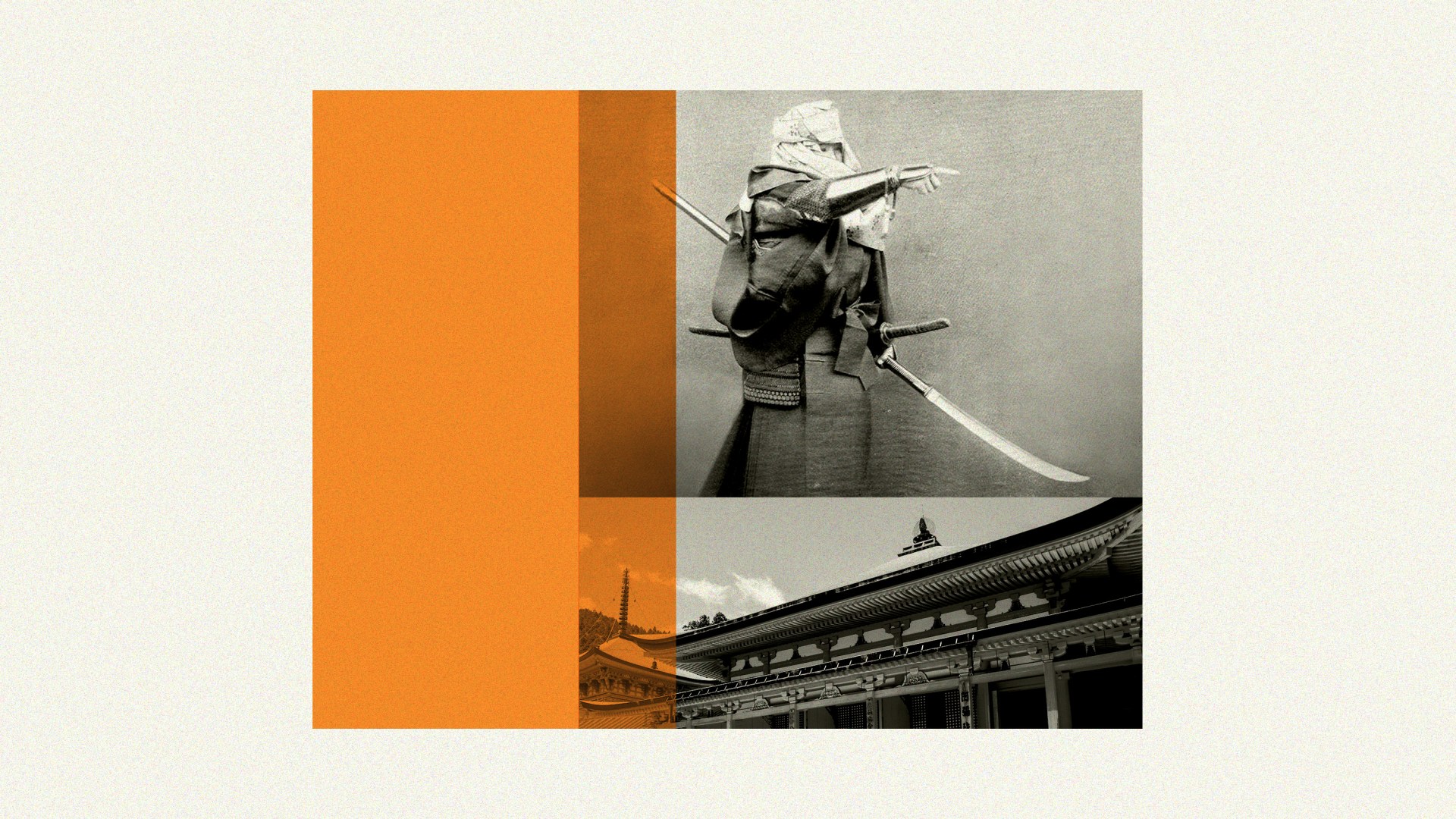
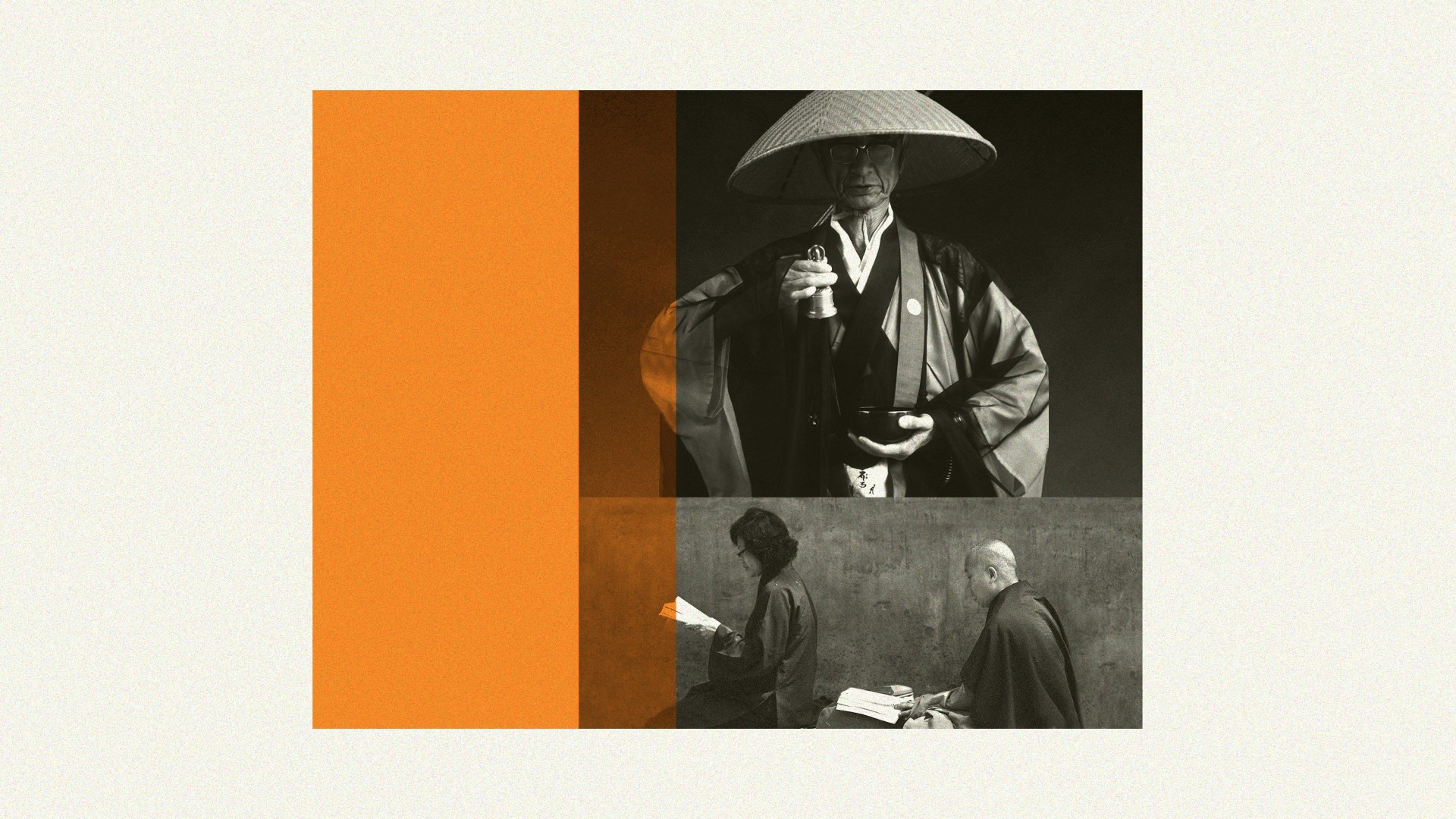
Buddhist warrior monk and a temple on Mount Hiei

A Buddhist warrior monk from Japan and a Buddhist temple on Mount Hiei.

Christianity Today July 15, 2025
Illustration by Christianity Today / Source Images: Getty, WikiMedia Commons

In this series

(For previous articles in this series, see here, here, and here.)

Philosophy professor Evan Thompson, who defines himself as “a good friend to Buddhism,” is also a critic of “Buddhist exceptionalism”: “the belief that Buddhism is superior to other religions in being inherently rational and empirical … a kind of ‘mind science’” that’s “based on meditation.”

Buddhism, particularly in its Zen variation, has gotten a great amount of press as a way of experientially finding one’s “true self,” with a typical article stating, “Meditation Is No Fad. It Could Make Your Career.” Major League Baseball’s television network between innings shows clips of sweet plays under the heading “Baseball Zen.”

And yet Methodist-turned-Buddhist Brian Victoria shows how Zen Buddhist priests during World War II taught Japan’s military leaders to be serene about killing others and, if necessary, themselves. As samurai warriors in previous centuries found Zen’s mind control useful in developing combat consciousness, so kamikaze pilots visited Zen monasteries for spiritual preparation before their last flights.

Some Buddhists taught that life is unreal, so we should not be attached to it. D. T. Suzuki, who taught at Columbia University in the 1950s and became the prime spreader in America of Zen’s mystique, stated in 1938 that Zen’s “ascetic tendency” helped the Japanese soldier to learn that “to go straight forward in order to crush the enemy is all that is necessary for him.”

This was the latest curve in a long history. Japanese Buddhists built a power center on Mount Hiei, which overlooks Kyoto, Japan’s capital from 794 to 1868. Buddhist armies based on the mountain became known for overthrowing emperors at will. Nine hundred years ago Emperor Shirakawa listed the “three things which I cannot bring under obedience: dice, the waters of a rushing river, and the priests on Mt. Hiei.”

One historian of Kyoto, Gouverneur Mosher, noted that “Buddhism did not retard war but rather promoted it.” Brian Victoria and others do not say that Buddhism leads to violence, but they also say it does not necessarily curtail it. Buddhists can be unattached to war, but they can also be unattached to peace.

For example, in the 15th century two Buddhist armies of about 100,000 men each fought for 10 years with Kyoto as the battleground. The city was destroyed. Then came more civil wars that culminated in 1571 when the armies of Japanese strongman Oda Nobunaga burned 300 Tendai temples and killed thousands of those priests.

Nonattachment can cut both ways.

That’s particularly true because Buddhism is exceptional in one way: Buddhists typically do not pray as Jews, Christians, or Muslims pray, because they turn their devotional meditations inward rather than outward. A leader at one Buddhist meditation center I visited said, “Take your glasses off.” I was not to read but to look within.

On Mount Hiei overlooking Kyoto, where Buddhist armies once ruled, monks I met there were trying to achieve nonattachment through Jogyo-do (constant walking). They also meditated for long stretches while fasting, drinking only a little water, and trying hard not to fall asleep. As one monk explained, “If we can remove the desire for food or sleep, we can get closer to the goal of leaving behind all desire.”

Mount Hiei was also the home of elite monks supposed to walk for at least 18 miles a day for 100 days up and down the mountain’s steep slopes. Others, wearing straw sandals, tried to do 1,000 days of walking 50 miles a day. (The monks I asked were vague on how often this was done over the centuries.)

Four short articles on Buddhism only scratch the surface. When I traveled to Japan, the country with the fourth-highest number of Buddhists, Buddhism changed for me from a strange religion with millions of adherents to one interwoven with the lives of particular faces in the crowd. One was a Japanese woman in her 40s with a mottled face, freckles, and some bruising under one eye.

She and others at a Buddhist temple on Mount Koyasan told me how her parents divorced when she was young and how neither wanted to take care of her. She was the fifth and youngest child, with grown-up brothers and sisters who had also abandoned her. Sent around to the homes of various relatives as half maid, half slave, she tried to have herself committed to an orphanage, but those who mistreated her would not allow an action that would bring public shame.

Hurt further by a hard marriage, she and her son, a toddler, began coming to the temple on a beautiful hill in central Japan about a two-hour drive from the crowded streets of Osaka. She believed she could find relief from her pain on a cool Saturday evening by entering a frigid river, her hands clasped before her. She wore a white robe, indicating purity, and threw handfuls of salt into the water as another purifying gesture.

She began chanting names of Buddha, fast, loud, seemingly without stopping for breath. She let out a scream (“VEE-AYE!”) and stood chanting for ten minutes. She later said that during that time she felt Buddha enter her body. She was numbing herself physically and hoped to numb herself emotionally. Seeking nirvana means seeking the elimination of individuality, but it also means hoping to attain a state where there will be no more pain.

One reason Buddhism gets a great press is because its adherents say it’s a nonreligious religion. But as Evan Thompson notes, the question of faith is inescapable in all belief systems, including Buddhism: “Buddhist faith is trust or confidence in the teachings of the Buddha, and trust or confidence in the possibility of awakening (bodhi) and liberation (nirvāṇa).” The Buddhist bottom line is that we don’t need a savior: If we work at it enough, we can save ourselves. 

Readers seeking further enlightenment might turn to CT’s 2023 “Engaging Buddhism” series. In it, Angela Lu Fulton observed, “While Westerners view Buddhism as a philosophy, Paul De Neui, a former missionary to Thailand and professor of missiology at North Park Theological Seminary, noted that this concept isn’t embraced by Buddhists in the East, who see Buddhism as a cultural identity. This means they are Buddhists because their parents are Buddhist.”

She also noted, “When Buddhism entered different countries, the religion’s elasticity allowed it to integrate with local religions. Because it rarely challenged local norms, many could easily accept Buddhism alongside their existing faiths. This practice of syncretism led the religion to look quite different depending on the country. In China, Buddhism was mixed with Daoism and traditional ancestor worship. In Cambodia, its cosmology includes ghosts and spirits, ancestors and Brahma deities.”

Bottom line: “By combining with local religions, Buddhism created a strong bond with people’s nationalities. Often when trying to minister to Buddhists, Christians find that the greatest barrier to evangelism is the mindset that ‘to be Thai (or another nationality) is to be Buddhist.’”

News

Pro-Life Groups Prioritize Education

Iowa becomes sixth state to require students learn about prenatal development.

Model and digital representation of an unborn child
Christianity Today July 15, 2025
Robyn Beck / AFP via Getty Images

Sixty years ago, Life magazine showed the world what a baby in the womb looks like. 

The 18-week-old unborn child on the front page of the April 30, 1965, edition captivated readers and quickly sold out. The photo essay inside, showing portraits from conception through all the stages of development, helped many see the humanity of the unborn. 

Pro-life advocates in Iowa hope a new law in their state will do the same.

Last month, the Iowa legislature passed a bill requiring prenatal development education in public schools. The state joins five others—Indiana, Idaho, Kansas, North Dakota, and Tennessee—that now require teachers to show classes the process of fertilization, the growth of an embryo, and the development of organs. 

In Iowa, students in grades 5 to 12 will be required to watch ultrasounds or computer-generated videos, like the one offered for free by the pro-life group Live Action.

“This legislation ensures that students in these states will see medically accurate, visually compelling educational materials in public school including resources like Live Action’s ‘Baby Olivia’ video,” Live Action’s president and founder, Lila Rose, said in a statement. According to Rose, the video “illustrates the humanity of the preborn child.”

Kristi Judkins, executive director of Iowa Right to Life, believes the law will give students information that will shape the choices they make in the future. It’s information she wishes she had learned in school. It might have prevented her from getting an abortion more than 40 years ago.

“I believe it would have 100 percent influenced my decision,” she said. “It’s fascinating when you think of just the creativity and the intricacy of the nervous system and the function of the heart. And when those things develop in an unborn baby, it’s just amazing.”

The shift in Judkins’s views came slowly. She said God used education about pregnancy to show her what she had not understood and change her heart.

“When I began to learn all of the intricacies around fetal development,” she said, “it became such a passion of mine to make sure that I conveyed the enthusiasm and the truth about what life developing—being fearfully and wonderfully made—truly means.”

Iowa Right to Life lobbied for the law. An early version of the bill faced criticism over Live Action’s “Baby Olivia” video. Critics say it calculates milestones based on fertilization rather than from the first day of the mother’s last menstrual cycle, which is the standard starting point. As a result, milestones appear two weeks earlier than they do on the timelines commonly used. Others say the pro-life animation is not as accurate as it should be.

The first draft of the legislation specifically required teachers to show students a video comparable to the “Baby Olivia” video. To advance the bill, Iowa lawmakers omitted references specifically to the “Baby Olivia” video.

“The key part was making sure that ‘Baby Olivia’ as a video was an option to be able to play to demonstrate the humanity of the unborn, in addition to other options that are out there,” Judkins said. “There are bipartisan organizations that focus on embryology, and they have wonderful materials.”

The bill has now been signed by governor Kim Reynolds. 

Judkins believes education inside and outside the schools is key to the future of the pro-life movement. She hopes videos about prenatal development will persuade more people to identify with the pro-life position. 

A recent Gallup poll found that 51 percent of Americans now identify as “pro-choice.” Sixty percent said the Supreme Court decision overturning Roe v. Wade and allowing states to regulate abortion was a bad thing. 

John Mize, CEO of Americans United for Life, said that to make more political progress, pro-life groups will have to prioritize persuasion. 

“How do we take the polls and move them 5 to 10 percent in the direction for life?” he said.

Mize believes education on fetal development could have a significant impact, convincing more people that life begins at conception. 

“Why are we not teaching that to children?” Mize said, citing a study that says the majority of biologists agree with the claim. “Nowhere in the content in most public school education are you going to receive anything that talks about human dignity in the womb and the fact that it is a human being.”

Pro-life groups in some states are not working on changing school curriculum but nonetheless agree that education is a top priority. Louisiana Right to Life policy director Erica Inzina said one of her group’s programs focuses on educating students.

“It’s … all voluntary and something that students sign up to do, but we feel like it’s very important to counteract the misinformation and the false narrative that they’re otherwise being bombarded with,” Inzina said. “We know that our opposition is very good about wording and promoting their cause in a way that is captivating to young people. So we do a lot to try to counteract that.”

Pulse, a part of the Louisiana organization which includes a summer camp and weekend events throughout the year, teaches young people to engage with issues of human dignity, become pro-life advocates, and help women considering abortion to find resources that could help them carry their pregnancies to term.

Education, Inzina said, can transform culture. 

“The goal … is that people would respect and value life so much and then also have access to the resources that are needed to support life so much that the concept of taking a life would be just absolutely something people wouldn’t even consider,” she said. 

“We don’t just want to make abortion unavailable; we want to make it unthinkable.” 
News

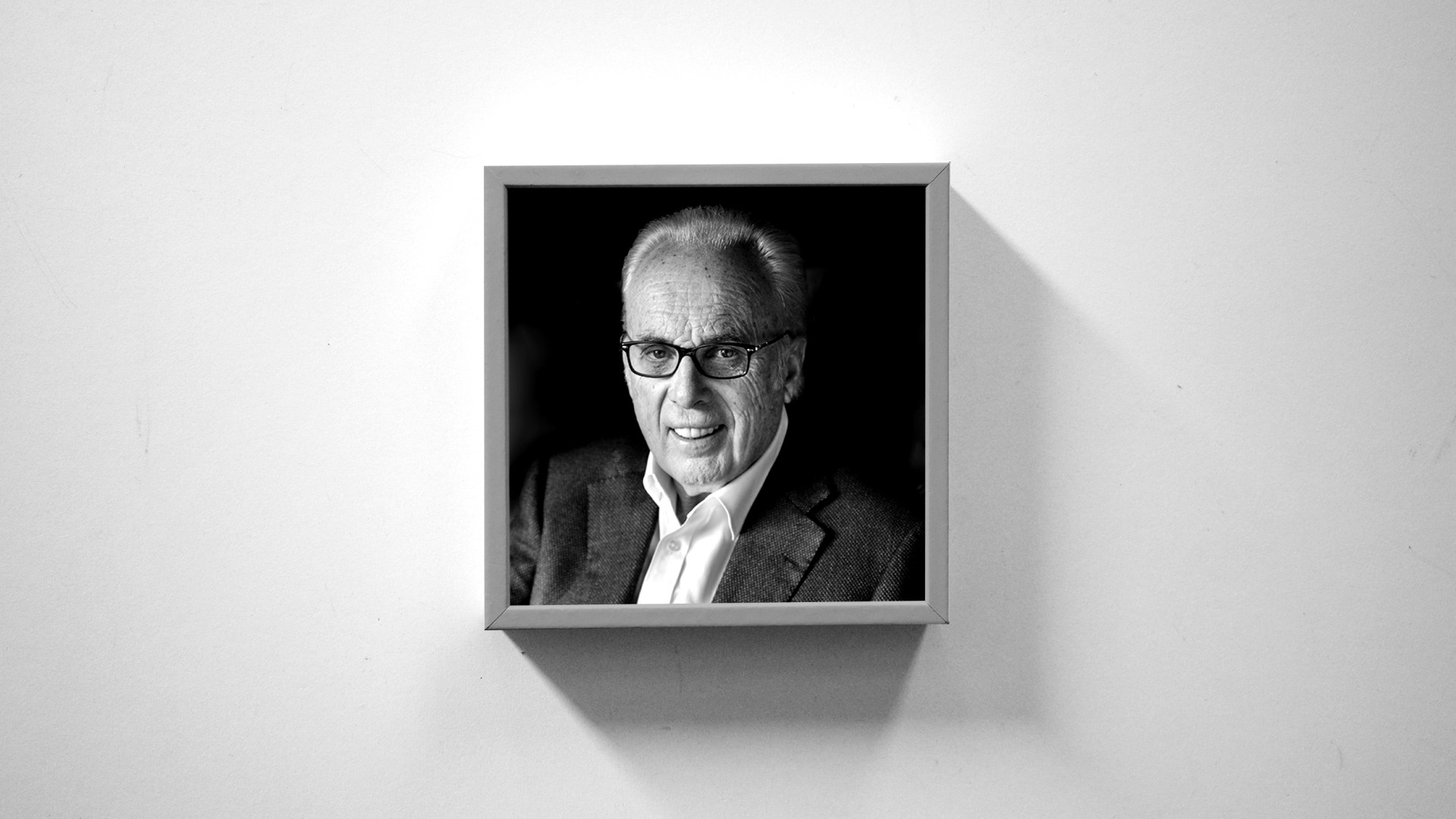
Died: John MacArthur, Who Explained the Bible to Millions

The Southern California preacher wanted to illuminate Scripture with Scripture and separate real Christians from false.

John MacArthur obituary photo
Christianity Today July 14, 2025
Grace to You

Expository preacher John F. MacArthur Jr., who taught Scripture to millions through taped sermons, radio broadcasts, Bible commentaries, and a best-selling study Bible, died Monday at the age of 86.

MacArthur said the most important mark of his ministry was that he explained the Bible with the Bible, not cluttering up sermons with personal stories, commentary on current events, or appeals to emotion, but teaching timeless truth. The longtime pastor of Grace Community Church said a good sermon should still be good 50 years after it is preached. 

“It isn’t time-stamped by any kind of cultural events or personal events,” MacArthur said. “It’s not about me. And it transcends not only time, but it transcends culture.”

He published the MacArthur Study Bible in 1997, with 20,000 notes on specific verses, as well as an index of important doctrines, introductions to each book of the Bible, and suggested Bible-reading plans. It sold 2 million copies in 22 years. 

His New Testament commentary—a series that Moody Publishers put out in 34 volumes over 31 years—also sold more than 1 million copies.

“He was the dean of expository preachers,” Left Behind author and former Moody editor Jerry Jenkins, who first proposed the idea of a MacArthur commentary, told Christianity Today. “A brilliant expositor. He preached 40-minute sermons, and they always seemed like they were 10 minutes.”

MacArthur also regularly sparked controversy, clashing with evangelicals who disagreed with him about the gifts of the Holy Spirit, biblical gender roles, and what is necessary to be saved.

He sometimes acknowledged these conflicts could have been handled with more humility. “I might have come in a little more like a lamb instead of a lion,” he said of one sermon. But MacArthur also believed the condemnation of Christians who are not real Christians was essential—and the second key mark of his ministry.

MacArthur’s most devoted followers were inspired by his fierceness. The satirical news site Babylon Bee frequently celebrated MacArthur as a warrior triumphing in ludicrous conflicts. Christian journalist Megan Basham praised his courage.

“MacArthur … has consistently refused to join the latest relevance-chasing fads. And it is this very refusal that has given his ministry enduring relevance for new generations,” she wrote on the social media platform X. “Forever grateful for the impact his teaching has had on my life.”

MacArthur was born to Irene Dockendorf MacArthur and John F. MacArthur Sr. on June 19, 1939. He was the son, grandson, great-grandson, and great-great grandson of evangelical preachers, going back to Canada and Scotland. 

His father was a Baptist pastor and traveling evangelist who launched a ministry to movie stars, including actors Roy Rogers and Dale Evans, in Southern California in the early 1940s. The elder MacArthur also had a radio ministry called Voice of Calvary, which was influential in the conversion of John M. Perkins, who went on to become a prominent evangelical advocate of racial reconciliation.

The younger MacArthur recalled that he began to imitate his father at age five or six, standing on a box in the backyard to preach to neighborhood friends and his three younger sisters, Jeanette, Julie, and Jane.

“I don’t ever remember a time when I didn’t believe the gospel,” MacArthur said. “I was one of those kids that never rebelled and always believed. And so, when God did his saving work in my heart, it was not discernible to me.”

As he grew older, MacArthur was more interested in sports than preaching. He wanted to play football in college, but his father insisted he go to Bob Jones University, which did not have an intercollegiate team at the time. Instead of playing football, MacArthur was put on a street-preaching team.

He “chafed a little” at Bob Jones, as he later recalled. A car accident convinced him he needed to submit to God completely. 

As he told and retold the story in sermons for years after, he was driving cross-country on a preaching tour with five other young people after his freshman year of college. The driver tried to pass someone on an Alabama highway and lost control. The two-door Ford Fairlane went into a spin and then flipped and rolled at 65, 70, or 75 miles an hour, landing on its roof. 

MacArthur was thrown from the vehicle, skidding down the road on his back.

“My back literally was raw down to the bone,” he recalled. “I stood up, and I realized I was alive.”

In the hospital on his stomach for several months, he decided to return to Bob Jones for a second year. He thought he discerned a call to ministry and felt he needed to commit everything to God.

“Lord,” he prayed, “I can see now that my life really is in your hands and you have absolute control of not only my eternal destiny but my time here in this world.”

MacArthur got another chance to play football a year later, though, and took it, transferring to Los Angeles Pacific College. He would later claim he was recruited by numerous professional teams, including the Washington Redskins and the Cleveland Browns, but school records show he wasn’t a standout player at the California college. One year, he had only five tackles and three rushing yards.

MacArthur decided in 1961 that he didn’t want to give his life to football anyway. He would rather follow his father into ministry.

His first job after seminary was associate pastor under his father at a church named for his grandfather: Harry MacArthur Memorial Bible Church. After a few years, he decided to go out on his own and accepted a call at Grace Community Church, an independent, nondenominational congregation in the Sun Valley neighborhood of Los Angeles, California. Two pastors in a row had died, leaving the congregation of about 400 eager to find someone young.

MacArthur, 29, was not impressed with the church. Grace’s motto was “in essentials unity, in non-essentials charity,” which he dismissed as silly and sentimental. The church had no real doctrine, according to MacArthur, and many of the longtime members and even leaders in the congregation were not real Christians.

“There were unsaved elders on that board, and unsaved people in leadership in the church,” MacArthur said. “But there were enough good people that knew what they wanted and knew that they needed to be taught the Word of God.” 

MacArthur preached his first sermon in 1969 on Matthew 7:21, which says, “Not everyone who says to me, ‘Lord, Lord,’ will enter the kingdom of heaven, but only the one who does the will of my Father who is in heaven.”

After that he started preaching through the New Testament one book at a time, beginning with the Gospel of John and then moving to Peter’s first and second epistles. MacArthur spent 30 hours a week preparing sermons and delegated almost all other pastoral responsibilities to the church’s elders and lay leaders. 

The church grew rapidly. Grace built a new building that could seat 1,000 in 1971 and expanded again in 1977, tripling in size. It became the largest Protestant church in Los Angeles by the end of the decade.

The demand for recordings of MacArthur’s sermons also exploded. Church members sent out 5,000 tapes every week, then 15,000, then 30,000. By the end of the ’70s, more than 100,000 Christians around the country were receiving MacArthur’s recorded sermons every week. The church also launched a separate ministry, Grace to You, to broadcast MacArthur’s messages on Christian radio.

“John’s ministry proves how timeless preaching can be when it is merely sound, clear biblical exposition,” Phil Johnson, executive director of Grace to You, said in 2011. “If the aim of preaching is the awakening of spiritually dead souls and the cleansing and transformation of lives spoiled by sin, then all that really counts is that the preacher be faithful in proclaiming the Word of God with clarity, accuracy, and candor.”

That preaching, however, was not without controversy. In 1979, MacArthur taught on Titus 2 and the apostle Paul’s instructions that women “be busy at home” and “subject to their husbands” (v. 5). He said that women should not work outside the home and families should not require two incomes.

The leaders of the church decided the staff, not just the leadership, needed to be all male. The announcement caused an uproar in the church and the surrounding community. A number of people left Grace, accusing MacArthur of “Christian male chauvinism.” 

The following year, the family of a man who had attended Grace sued for clergy malpractice—a first in the United States, according to the Los Angeles Times. Ministers at the church had counseled a suicidal young man named Kenneth Nally, telling him he should pray more, read the Bible, and listen to tapes of MacArthur’s sermons. When Nally took his own life, his parents hired a lawyer. They claimed ministers who provided counseling should be held to the same legal standard as psychologists. A California court ultimately dismissed the suit on First Amendment grounds.

Perhaps the most defining controversy came in the late 1980s, after MacArthur published The Gospel According to Jesus. He argued in the book that it wasn’t enough for sinners to accept Christ as Savior; true Christians must also recognize Jesus as Lord. 

According to MacArthur, American evangelicals had led millions of people astray with the “damning false assurance” of “insidious easy-believism.” And many professing followers of Christ with testimonies of being born again were, in fact, “seriously wrong about the most basic of Christian truths.” 

Critics, including a number of conservative evangelicals at Dallas Theological Seminary, accused MacArthur of mixing faith and works and denying justification by faith. Theologian Charles C. Ryrie wrote that MacArthur diluted and polluted the grace of God. New Testament professor Zane Hodges went further, calling MacArthur’s teaching “Satanic at its core.”

Other prominent evangelicals rallied to MacArthur’s defense. They argued he was only articulating traditional Christian ideas about repentance and discipleship. 

Theologian J. I. Packer, for example, identified MacArthur’s position with the Reformed teaching that faith “is a whole-souled reality with an affectional and volitional aspect as well as an intellectual one.” Southern Baptist Theological Seminary president Albert Mohler called The Gospel According to Jesus “a much-needed corrective to dangerous misunderstandings.”

Some observers said the two sides had just misunderstood each other.

“There is often a difference in what MacArthur says and what he apparently means,” wrote New Testament professor Darrell L. Bock. “Certain ambiguities in MacArthur’s style make it difficult to determine what his real position is.”

No one accused MacArthur of ambiguity in his attacks on charismatics. He said the Christians who believed they were filled with the power of the Holy Spirit were teaching a counterfeit, “aberrant” Christianity. He called them “harebrained people … prompted by Satan” and decried the charismatic movement’s widespread presence in Christian media.

“It has done a takeover, and it has redefined Christianity in people’s minds, and it’s an aberrant form of Christianity,” MacArthur said. “Its theology is bad, it is unbiblical, it is aberrant, it is destructive.”

MacArthur was also clear about Christians who believe that women can be called to teach the Bible, accusing them of ignoring unambiguous, universal commands in Scripture and engaging in “open rebellion” against the Word of God. Women should not ever speak in church, according to MacArthur, or hold positions of authority in church or in secular life.

MacArthur specifically attacked popular women’s Bible teacher Beth Moore, saying she had the natural ability to sell jewelry on TV but shouldn’t confuse that for a call to preach. He told her to “go home.”

There was another controversy in the 2020s, when a woman named Eileen Gray came forward to accuse him of shaming her publicly for leaving her abusive husband. David Gray, a children’s minister at Grace, confessed to hitting his daughter “way too harshly—brutally” on her legs, feet, hands, and head and dragging his two other children as a form of discipline. Gray said she had been instructed by Grace ministers to forgive him even if he didn’t repent and to show her children how to “suffer like Jesus.” When she instead took her children and moved out, MacArthur condemned her from the pulpit and instructed the congregation to shun her, suggesting she was not really a Christian.

David Gray was later sent to prison for physical and sexual child abuse.

Hohn Cho, an elder at the church, looked into the decision to disfellowship Eileen Gray in 2022 and concluded she had been treated unjustly. He urged leaders to make things right with her, at least privately. The elder told Christianity Today that MacArthur said to “forget it.”

Cho instead stepped down, only to discover at least eight other women at Grace with stories about being counseled to stay with abusive husbands, even when they feared for their own safety and the safety of their children.

Church leadership declined to respond to specific accusations but released a statement defending the church’s counseling as biblical and called the CT report “lies.”

MacArthur, on another occasion, said he struggled to deal with public criticism and accusation but was especially wounded by what he called “mutiny.”

“It’s happened several times,” he said. “And it’s a shock. You know, your own familiar friend has lifted up his heel against you, the one with whom you broke bread. You know? Like Scripture says about Judas.”

The waves of controversy, decade after decade, did not notably limit MacArthur’s influence. 

Grace’s 3,500-seat sanctuary still filled multiple times per weekend in 2025. MacArthur’s sermons were broadcast on more than 1,000 radio stations across America and distributed by Grace to You. More than 700 men were enrolled at The Master’s Seminary, where MacArthur served as chancellor, and around 5,000 attended an annual conference for church leaders.

The MacArthur Study Bible continues to sell and is currently available with the New King James Version, the New International Version, the English Standard Version, the New American Standard Bible, and the Legacy Standard Bible translations. The MacArthur Daily Bible smartphone app has been downloaded more than 5 million times.

Publishing veteran Chip Brown said people turn to MacArthur because they trust him as a pastor and because he “is just unpacking what the text says and how that fits into our lives.” 

MacArthur, for his part, said he hoped he would be remembered for teaching the Bible.

“I just really want to be known as someone who was a servant of the Lord,” he said, “faithful to the teaching of the Word of God and to the unfolding of the mysteries of the gospel of the New Testament.”

MacArthur is survived by his wife, Patricia Smith MacArthur; their children Matt, Mark, Marcy, and Melinda; 15 grandchildren, and nine great-grandchildren.

News

Kentucky Church Shooter Killed Pastor’s Wife and Daughter

Domestic violence and family disputes remain a top cause for violence on church property.

White church with grey roof surrounded by police tape adn cars.

Police assess the scene after a shooting at Richmond Road Baptist Church on July 13, 2025 in Lexington, Kentucky.

Christianity Today July 14, 2025
Michael Swensen / Getty Images

A Kentucky man looking for the mother of his children shot a state trooper, stole a car, drove to a small Baptist church, and opened fire on her relatives as they prepared lunch after the service on Sunday.

The suspect fatally shot the pastor’s wife and adult daughter—the sister of the woman he was looking for—in the church’s basement kitchen and injured the pastor and the woman’s brother-in-law outside before being killed by police, her sisters recounted in local news reports.

The incident took place in Lexington at Richmond Road Baptist Church, led by longtime pastor Jerry Gumm, who remains hospitalized. Gumm’s wife and mother of eight, Beverly Gumm, died on the scene along with her daughter Christina Combs.

“This church was a small church, and the majority of the individuals there are biologically related in some way or another. If not, they’ve been friends for many, many years,” said Fayette County coroner Gary Ginn. “They’re a very tight-knit group of people.”

The coroner’s office identified the suspect as 47-year-old Guy House. Police say he shot a Kentucky state trooper who tried to pull him over, then he fled the scene, carjacked a vehicle, and proceeded to the church. On Sunday, police indicated preliminary evidence pointed to a connection between the suspect and individuals at the church.

Officials have not identified a motive for the shooting, but Beverly Gumm’s daughter, Star Rutherford, said House came in the back door asking for one of her sisters.

When they told him the sister wasn’t there, he responded, “Well, someone is gonna have to die, then,” and shot at them, according to Rutherford’s account.

“Guy House wanted to hurt my sister or someone she loved,” Rutherford said in the Lexington Herald-Leader.

A county clerk stated that House, who had a criminal history involving theft and drug use, had been scheduled to appear in court for a domestic violence hearing on Monday but that the hearing did not involve the woman he was looking for at Richmond Road Baptist.

The shooting marks another deadly incident on church property—and another example of familial conflict spilling over into church life.

Around 14 percent of violent incidents involving deadly force at houses of worship stem from domestic conflicts, with the Faith Based Security Network tracking 269 such cases between 1999 and 2020.

“Year after year, domestic abuse spillover—when a fight at home comes to church—is one of the three most common killers at faith-based organizations,” the network’s founder and church security expert Carl Chinn said.

The other top causes for violence on church grounds are robbery and personal conflict; it’s much rarer for perpetrators to be religiously motivated. Most of the time (62%), deadly attacks occur during off-hours when no events are taking place, the network survey found.

Domestic violence also remains a key factor in gun deaths overall. Everytown for Gun Safety Support Fund reports that nearly half (46%) of shootings killing four or more people involve a perpetrator going after an intimate partner or family member.

The 2017 attack at First Baptist Church in Sutherland Springs, Texas—which remains the deadliest shooting at a US house of worship—stemmed from the shooter targeting the small congregation where his estranged wife attended with her family. The shooter’s wife’s grandmother was among his 26 victims.

“In a smaller church, the boundaries between family and church are thin and blurry, so family problems spill over,” Texas pastor Bart Barber wrote for CT after the 2017 shooting. “Working on the front lines of these sensitive issues, churches can become targets when things go wrong.”

News

‘Georgia’s George Bailey’ Accused of $140 Million Fraud

The investment opportunity widely promoted on conservative Christian politics podcasts was a Ponzi scheme, according to the SEC.

Christianity Today July 14, 2025
Youtube screengrab

Federal authorities are accusing a prominent Christian conservative of running a $140 million Ponzi scheme. 

Edwin Brant Frost IV, a businessman who once ran televangelist Pat Robertson’s presidential campaign in Georgia, allegedly took money from investors and used it to pay other investors and to buy himself and his family nice things. The Securities and Exchange Commission (SEC) claims Frost spent $335,000 on rare coins, $230,000 on family vacations in Maine, and $160,000 on jewelry.

He also made more than $570,000 political donations and spent $2.4 million on credit cards, according to the SEC.

First Liberty Building and Loan promised investors that their money would go to bridge loans for small businesses, reaping returns of up to 18 percent. 

Frost’s son, state Republican Party official Edwin Brant Frost V, told potential investors this was a way to “grow the patriot economy.” He said the suburban Atlanta company helped retired teachers and ministers “as well as doctors, lawyers, and everyone else you can imagine.” 

The investment opportunity was heavily promoted on political podcasts and radio programs and endorsed by conservative Christian commentators. Erick Erickson praised the Frosts as “a good Christian family” and said he knew them personally and they were “wonderful people.” Hugh Hewitt called the elder Frost “Georgia’s George Bailey,” comparing him to the hero in the movie It’s a Wonderful Life

First Liberty was neither chartered nor insured as a bank, however. It did not accept deposits, only investments, starting at $25,000. 

Some of the money did go to small businesses, many of which struggled to pay back what they owed, according to the SEC. Federal investigators also found increasing sums went to payments to old investors, who were encouraged to invest more and keep the whole thing going.

In a little more than a decade, the company got about 300 people involved the Ponzi scheme, according to the SEC investigation.

The Newnan Times-Herald identified one of them as John Vander Wiele, the owner of a recycling company with about 40 employees. When he sold a piece of property, he decided to put $25,000 into the financial opportunity he had heard about on conservative Christian podcasts.

Vander Wiele liked the fact that First Liberty was led by, as it said on the website, “authentic followers of Christ.” The Brants emphasized this when they met him in person too.

“They told me they were Sunday school teachers and churchgoers,” Vander Wiele told the Georgia newspaper. “It was like lending money to your neighbor. You feel good about it because you know where he lives.”

Joe Hubbard, a retiree, said he and his wife put their life savings into First Liberty investments. They also heard about the plan to “grow the patriot economy” on a political talk show. They met the Brants in person before investing and talked about church, Sunday school, and their shared conservative values.

The Hubbards don’t yet know whether they will ever see any of their money again.

“We’re out of our minds,” Hubbard said to The Newnan Times-Herald. “We can’t eat or sleep. We don’t know where to turn.”

One of the last things investors received from First Liberty before the company shut down was an email about more investment opportunities. The younger Frost said there was “very strong loan demand” and the investments were “helping local small businesses become great businesses!”

First Liberty always claimed it was lending money to people who were going to get loans from the Small Business Administration or commercial banks, allowing the small businesses to quickly pay off the borrowed bridge funding, earning investors between 8 and 18 percent interest. 

The promised amount should have been a red flag, according to Justin C. Jeffries, an SEC associate director in Atlanta. 

“We’ve seen this movie before—bad actors luring investors with promises of seemingly over-generous returns,” Jeffries said, “and it does not end well.”

Actual loan repayments did not earn enough to pay investors, according to the SEC investigation. Yet First Liberty kept recruiting more. 

Many of the borrowers defaulted, the SEC found. But First Liberty allegedly withheld that information from investors and told people who were interested in investing that defaults were exceedingly rare.

According to the SEC, the company “knowingly, intentionally, and/or recklessly … made untrue statements of material facts and omitted to state material facts, and engaged in fraudulent acts, practices and courses of business.”

A statement on the company’s shuttered website says First Liberty is now “cooperating with federal authorities as part of an effort to accomplish an orderly wind-up of the business.” 

The federal court froze Frost family assets on Friday and ordered First Liberty to repay the money it had taken, plus interest. 

The elder Frost agreed to the financial terms requested by the SEC without admitting any guilt or specific facts.

“I take full responsibility for my actions and am resolved to spend the rest of my life trying to repay as much as I can to the many people I misled and let down,” he said in a statement put out by his lawyer. “I would like to apologize personally to those I have harmed, but I am under restrictions which prevent me from doing so.”

Federal prosecutors have declined to say whether they will seek criminal charges. State authorities are also investigating.

The Associated Press reported that First Liberty’s collapse “rocked” conservative Christian networks in Georgia. The company had made generous donations to multiple congressional campaigns, state legislative campaigns, and Republican Party organizations, as well as political action committees promising to fight conspiracies to steal elections from Republicans.

The elder Frost came to prominence in Georgia politics in 1987 with aggressive, insurgent tactics meant to disrupt the Republican establishment and hand power to those he saw as true conservatives. He went on to organize for Pat Buchanan, who pledged to “make America first again,” and Alan Keyes, who warned about the moral crisis facing the country.

Frost had a copy of the December 25, 2000, issue of Time magazine, when George W. Bush was named person of the year, framed in his office. He said that God “clearly raised up Donald Trump for such a time as this” and that the 2025 inauguration would spark “a new and amazing awakening to our land.”

In an interview with historians documenting the modern conservative movement in Georgia, Frost said he became a born-again Christian in 1980 at a multilevel marketing business event.

One Kingdom, Every Nation: The Global Initiative

See how CT is interconnecting the global Church.

The Kingdom of God knows no borders. It’s rising in underground churches, flourishing in places of persecution, and stretching across continents, cultures, and languages—uniting believers around the world under one powerful confession: Jesus Christ is King.

Yet for many, the miraculous ways God is moving across the globe remain unseen and unheard.

That’s why Christianity Today launched The Global Initiative, as part of the One Kingdom Campaign—to illuminate the stories, struggles, and triumphs of the global Church.

You’re invited to be part of this mission. Help us proclaim His glory among the nations and His marvelous deeds among all peoples (Psalm 96:3).Support the One Kingdom Campaign. Give now.

News

Christians Question Suspicious Death of South Indian Preacher

Praveen Pagadala’s passing comes amid an increase in violence against Christians in a region long tolerant of the faith.

Praveen Pagadala
Christianity Today July 14, 2025
Illustration by Christianity Today / Source Images: Facebook

Last March, local residents found well-known Christian apologist Praveen Pagadala dead on the roadside near Rajahmundry in Andhra Pradesh. The 45-year-old was on his way to a gospel convention on his motorcycle.

Police claimed he had been driving drunk, which led to the fatal accident. Yet the Christian community questioned the account. Pagadala had previously received numerous death threats for criticizing the caste system and crediting Christianity with liberating India’s marginalized people.

Kaveti International Law Firm, which has taken up the case pro bono, questioned why footage from the scene showed no visible injuries except on his face, why his helmet remained intact, and why there were no skid marks or damages to his bike. The inconsistencies lead “to speculation that his death was not accidental but a targeted attack,” according to Kaveti Srinivas Rao, the lawyer on the case.

Thousands of people attended the apologist’s funeral procession in Secunderabad on March 27. In the weeks that followed, Christians in the two Telugu-speaking states of Andhra Pradesh and Telangana held protests, with hundreds calling for a reinvestigation into Pagadala’s death.

Police warned Christians against questioning their official determination in the case, claiming that such comments disturb communal harmony in the state. In April, police in Hyderabad arrested a pastor for spreading “propaganda” about Pagadala’s death. Two Christians filed a petition in June to Andhra Pradesh High Court asking the Central Bureau of Investigation to reopen the case.

The controversy around Pagadala’s death brings to light the concerning increase of violence against Christians in Andhra Pradesh and Telangana—states once considered relatively tolerant toward the Christian community. Yet now, the nationwide rise of Hindu nationalism has spread to this part of the country.

“Every week, there’s a new incident,” said Oliver Rayi, the chairman of the Andhra Pradesh Christian Leaders Forum. “What we have been seeing in northern India since 2014—coordinated attacks against religious minorities—is now being replicated in Andhra.”

Born to a Catholic mother and a Muslim father in the city of Kadapa in Andhra Pradesh, Pagadala often attended his mother’s church to learn to play the guitar, according to testimonies Pagadala shared online. Yet as a teen, he started drinking, smoking, and doing drugs. Police arrested him after he and his friends beat up a boy from a rival gang and threw him into the bushes.

His family was able to keep his record clean through a relative who worked in the police department, and around the age of 20, they sent him to live in Hyderabad. There, one of his friends invited him to church, which he started attending reluctantly. During one meeting, God convicted him of his sins, and he gave his life to the Lord.

In 2000, Pagadala said he had a vision to move to Indore in Madhya Pradesh state to preach the gospel. Although he didn’t speak Hindi, he quickly picked up the language and began evangelizing to locals. An older Christian couple took him in, and he later married their daughter Jessica. The Pagadalas had two daughters and adopted 12 orphaned girls, as India’s cultural preference for boys has led to orphanages filled with girls. Pagadala often said he was a “proud father” to 14 daughters.

Part of a homegrown apologetics network called Sakshi Apologetics, Pagadala often focused on the freedom and equality found in the kingdom of God, contrasting it with the caste system and the subjugation of women in the Hindu worldview. He grew in popularity as he debated Hindus and Muslims on television. With a deep understanding of the Quran and Hindu religious texts, he reeled out verses to passionately defend Christianity and the teachings of Jesus Christ.

His debates drew him a large audience among Telugu Christians, who shared clips of his arguments widely on social media. Pagadala often credits Christian missionaries in India for the progress Dalits and other marginalized communities have made in society. He also petitioned the Supreme Court to declare the anti-conversion laws in 12 Indian states unconstitutional, arguing that they violated the freedom of religion guaranteed in the Indian constitution.

His outspokenness also gained him enemies. The evangelist received death threats from both Hindu and Muslim fundamentalists. After Pagadala’s death, Christians wondered if his critiques had gotten him in trouble.

Their concerns are not ungrounded, as Christian persecution has been growing in Andhra Pradesh and Telangana in the past few years. Historically, the Telugu-speaking region has tolerated Christianity as Dalits converted to the faith en masse in the 19th and 20th centuries. The anti-caste movement in the area viewed Christianity and missionaries as allies, unlike in other states where they faced Brahmanical backlash.

Missionaries in Telugu regions learned the language, translated the Bible, and promoted the local culture. They also built schools, colleges, and hospitals. Christianity became embedded in Telugu cultural identity, making it more accepted than in Hindi-speaking states, where less Dalits converted to Christianity.

Hindu nationalist groups had limited presence in the region until 2014, when the Bharatiya Janata Party (BJP), led by Prime Minister Narendra Modi, won a majority of parliamentary seats. Unlike elsewhere, caste, not religion, is a primary marker of identity in Telugu states. Mainstream political parties in Telugu states speak out about Christian issues.

Yet lately the number of incidents against Christians has increased. In Andhra Pradesh, where the BJP is part of the ruling coalition, Christian leaders say fundamentalist Hindu groups have grown emboldened.

Data from the United Christian Forum (UCF) supports the claim. In Andhra Pradesh, UCF documented 37 incidents in 2024, up from single digits in 2014. The neighbouring Telugu state of Telangana reported 25 such incidents in 2024, up from 17 in 2014. Leaders say the real figures could be much higher, as most incidents go unreported due to fear of retribution.

In March, mobs attacked three churches in Andhra Pradesh. At the same time, the government issued a controversial order asking authorities to crack down on “illegal” churches. The directive was withdrawn 23 days later.

One case from Kajuluru village near Kakinada in Andhra Pradesh reveals the worsening plight of Andhra Christians.

In December 2023, a group of villagers, instigated by a Hindu nationalist group, stormed a church inauguration, beat up believers and pastors, and vandalized the building. The mob accused the congregants of demeaning Hinduism and building the church illegally. In the end, the police filed a case against the Christians.

“We have all the permissions, proper land titles, everything. But they are painting us as criminals,” said a church elder who asked to remain anonymous as he fears reprisals from authorities and Hindu groups. “To them, Christianity is a foreign religion. They want to erase us.”

The church is now locked, forcing congregants to worship inside of homes.

The situation is equally grim in Telangana, where church buildings have been vandalized, churchgoers and pastors have been assaulted, and Bibles have been burned.

According to a Christian rights activist from Telangana (CT agreed to keep him anonymous as he fears being targeted by Hindu nationalists), the incidents can no longer be seen as “one-off incidents.”

“The Hindu fundamentalist outfits have a well-coordinated approach,” he said. “They instigate locals to launch these attacks on churches in their neighborhoods on the pretext of nuisance, sound pollution, and permissions.”

The hostility on the ground is amplified by anti-Christian propaganda online. Telugu social media is rife with trolls and hate speech portraying Christians as “conversion mafias” funded by “foreign donations.” Widely circulated videos by Hindu fanatic groups demean pastors as “perverts” and “beggars” and call the Bible a “book of lies.” Some of these videos carry the disclaimer: “Conversion mafias pose grave danger to the country.”

“Christians have to become shrewd and discerning in a hostile world, as God instructs us in Matthew 10:16,” said Chittem Vijaya Kumari, a Christian leader in Hyderabad and president of Dalit Women Forum. “Besides fasting and praying, the community needs to launch a united fight against online hate. It is no longer an individual case and individual fight.”

Theology

How Buddhism Gained Popularity

Evangelicals who discuss theology need to understand the branches.

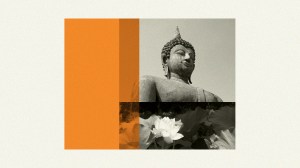
Mahayana Buddhists
Christianity Today July 14, 2025
Illustration by Christianity Today / Source Images: Getty, Unsplash

In this series

(For previous articles in this series, see here and here.)

Theravada Buddhism, the original variety, can be high-pressure: Become an arhat, a spiritually enlightened person who has replaced all desire. No emotion: Become indifferent to everything. One percent of Americans are Buddhist, and one-third of those are Theravada. Like Orthodox Jews, Theravada Buddhists don’t go with the flow of standard American life. 

Given how hard it is to be indifferent, it’s not surprising that Buddhist expansion 2,000 years ago ran into a wall. Many people did not want nonattachment if it meant a farewell to love. In practice, even Buddhist monks often found they made little progress toward eliminating desire. Ordinary people could make even less. This faith had limited appeal.

Religions compete for adherents, so it’s not surprising that innovative Buddhists developed the concept of bodhisattvas, enlightened beings who could have attained nirvana but purposefully chose to put it off to help others reach it more quickly than they otherwise would. The origin of this belief—that faith in a self-sacrificing bodhisattva is essential—is lost in the mists of time, but speculation abounds.

For example, British scholar Alan Bouquet, describing “Christian Influences on Early Buddhism,” wrote that from AD 50 to 200 some Buddhists learned about Christianity and introduced into Buddhism a new ideal of serving others, not just concentrating on their own spiritual progress: “The bodhisattva must sacrifice his or her possible attainment of release into identity with the Absolute, for the sake of others.”

The new Buddhism, called Mahayana (“great way”), developed many variants over the years. For example, in the 12th and 13th centuries, some Japanese Mahayana Buddhists gravitated to zazen (meditation). These became known as Zen Buddhists, who taught that the faithful should pay no attention to rational thought processes. They came up with famous Zen questions such as “What is the sound of one hand clapping?”

The goal is to force thinkers to conclude that rational thought is inadequate. One famous Christian medieval question—“How many angels can dance on the head of a pin?”—was an attempt to produce the opposite of mysticism. Students were to think through the problem and conclude that an infinite number could fit since angels are incorporeal spirits.

Theravada Buddhists like to point out Mahayana contradictions. In a karmic system, grace should play no part, and individual “merit” is all, so does it make sense to believe in bodhisattvas who can give great amounts of their accumulated merit to others who can then move up? Many Theravadas still try to achieve nirvana through ascetic self-effort based on monastic vows that both men and women can take. Ritual chanting and worship of relics may help in this process.

But Mahayana Buddhism has become more popular by developing a social orientation. Adherents should strive to have the capacity to become bodhisattvas, postponing entry into nirvana so they can help others by transferring their extra karmic merit to those they wish.

One popular Mahayana branch, called Pure Land (jodo in Japanese) tells the story of a monk who promised to create a Pure Land paradise in the West if he became a Buddha. Adherents of Jodo Shinshu say he succeeded, so in this Pure Land, evil does not exist. Those with faith in this Buddha get to go after death to the Pure Land, where conditions for liberation are excellent and the reincarnation process can be shortened. Mahayana is the dominant form of Buddhism in Japan and in many other countries, and the Pure Land approach is popular. Theravada Buddhism is dominant in Southeast Asia.

Some Buddhists repeat mantras that, when repeated thousands of times, will purportedly help the mind to overcome any surroundings. One school of thought teaches that constant invocation of the name Amitabha Buddha will transport the meditator to the Pure Land. A 17th-century Buddhist, Suzuki Shōsan, adapted Buddhism to the business world by instructing a merchant to “throw yourself headlong into worldly activity. …Your activity is an ascetic exercise that will cleanse you of all impurities. Challenge your mind and body by crossing mountain ranges. Purify your heart by fording rivers.”

Indicative of Buddhism’s diversity is the way Suzuki, often called the founding thinker  of Japanese capitalism, developed a prosperity gospel: “If you understand that this life is but a trip through an evanescent world, and if you cast aside all attachments and desires and work hard, Heaven will protect you, the gods will bestow their favor, and your profits will be exceptional.” Another priest praised merchants’ nonattachment: “They go out early in the morning and return late at night. They do not avoid the elements nor do they dislike hardship and misery. They cover their bodies with cotton clothing and fill their mouths with vegetable food. They do not dare to throw away a piece of thread or a scrap of paper.”

Is Buddhism a laid-back way of developing great work-life balance? One 17th-century book, Shimin Nichiyo, answered questions such as this one from an artisan: “I am busy every minute of the day in an effort to earn my livelihood. How can I become a Buddha?” The answer: “Do not neglect diligent activity morning and evening. Work hard at the family occupation. Do not gamble. Rather than take a lot, take a little.”

Many Americans on the cultural left have gravitated to Buddhism, particularly in its Zen variety, as an opponent of materialism. But some Mahayana believers view selling as spiritual. Bodhisattvas show nonattachment to nirvana by sacrificing their own welfare, so “the business of merchants and of artisans is the profiting of others. By profiting others they receive the right to profit themselves. … The spirit of profiting others is the bodhisattva spirit.”

For more about four major religions, please see Marvin Olasky’s The Religions Next Door: What we need to know about Judaism, Hinduism, Buddhism, and Islam—and what reporters are missing.

News

Traffickers Scam Nigerians with Promises of Better Jobs

How one Christian woman escaped forced labor and found her way home again.

A woman from Africa who was trafficked into working at a private household.

A woman from Africa who was labor trafficked.

Christianity Today July 14, 2025
Stringer / Getty

Joyce Vincent had a job with a microfinance bank in Nigeria earning 150,000 naira (about $98 USD) monthly when her friend told her of a job offer in Egypt. When she heard the job paid over 1,000,000 million naira (about $654) monthly, Vincent jumped at the offer.

“Who wouldn’t?” she asked.

In the spring of 2019, Vincent sold everything she owned. After all, if she immigrated, she would have no need for her pots, pans, gas cooker, and television set. Vincent put the money toward her travel expenses and borrowed some money to make up the difference.

On May 27, 2019, she started the journey by air through Ethiopia to Sudan. Then, she said, “the deadly journey began by road.”

Nigeria is experiencing what locals call the japa syndrome—a slang Yoruba term describing the desire to leave the country in search of better opportunities. The country’s national minimum wage of only 70,000 naira (about $46 USD) monthly makes higher international salaries more attractive. But overseas jobs don’t always offer a better life; scammers and labor traffickers may trick Nigerians into menial jobs with false promises of good salaries.

According to the UN Office on Drugs and Crime (UNODC), Nigeria “remains a source, transit and destination country for human trafficking, with 65% of the cases happening internally and 35% externally.” The UNODC listed poverty and greed as driving forces behind trafficking.

Along the road to Egypt, Vincent saw unburied corpses. When she reached Egypt, Vincent said, her passport was taken away. Her employers told her she would have to work for three years to pay back the money used to transport her to Egypt.

Vincent offered to pay them back with what remained from her loan and the sale of her belongings, but her employers refused. They sent her to work as a housekeeper for a family Vincent described as “very wicked.” Unable to speak Arabic and lacking any connections in Egypt, Vincent had no choice but to comply.

“I was required to work almost 24 hours without any rest and with very little food,” she recalled.

When she realized she was being trafficked for labor, Vincent said, she started looking for a way to escape and return home. Without her passport or knowledge of the area, this took time. The family rarely allowed her to go out. After four months, Vincent found her way to the Nigerian Embassy in Egypt.

At first, Vincent said, embassy staff turned her away because it was a public holiday. With nowhere to go, Vincent returned to her traffickers. During that time, one of the couriers who had smuggled her into the country sexually assaulted her.

Two years after her arrival in Egypt, Vincent got help from the embassy to go home.

According to the US State Department, the Nigerian government initiated investigations of 698 trafficking cases in 2024, a decrease from 1,242 cases in 2023. Corruption and officials complicit in trafficking crimes remain a significant concern in Nigeria.

The UNODC reported that Nigeria detected the highest number of trafficking victims of any country in Africa—but also initiated the highest number of prosecutions. Nigeria’s National Agency for the Prohibition of Trafficking in Persons (NAPTIP) claims to have rescued 24,000 trafficking survivors.

According to the UNODC, an increasing number of North and West African migrants are being smuggled from Africa to Europe annually, especially across the central Mediterranean. But the number of Nigerians trafficked through this route has decreased.

Jeremiah Adelu—the director of Voice of Migrant Association and also a trafficking survivor—said the government needs to do more to spread awareness about the dangers of irregular migration.

Adelu had set up a dry-cleaning business after graduating from school and failing to find a job. He was trafficked by a customer who always gave him generous tips.

“He asked how much I earn, and when I told him, he said he could help me migrate to Germany, where I could earn a higher income,” Adelu said. “The only catch is he said I had to pay 300,000 naira to help facilitate the journey.”

Like Vincent, Adelu sold off all his valuables to raise the money. Adelu began the journey to Germany but, unlike Vincent, did not have the luxury of traveling by air. His courier directed him through a land route that included crossing the desert to Libya.

Adelu recalled “seeing people dead, like skulls, like people just dropped dead” along the way and getting so thirsty that “the only option we had was to drink a urine. Somebody had to urinate for you to drink, because [of] the way the desert was very hot. Your throat gets dry easily.”

When he arrived in Libya, human smugglers took him to a place called Ali Ghetto,where they told him to pay a ransom of 3,000 Libyan dinar (about $555 USD). Because he did not have any money left, they asked him to call a family member who could raise the money.

“You are given 59 seconds to call who you want to call,” he said. “After the 59 seconds, they start flogging you.”

Adelu called his sister, who raised the money after three days.

After he was freed, Adelu decided to proceed to Germany across the Mediterranean Sea. He gave up after he lost some friends who died attempting to make the dangerous crossing.

Now back in Nigeria, Adelu runs Voice of Migrant Association, where he works with trafficked victims who have returned to Nigeria. Adelu also raises awareness about the dangers of irregular migration.

While acknowledging NAPTIP’s work to raise awareness about human trafficking—which includes creating policies and running ads on the radio, television, and social mediaAdelu told CT it’s not enough. He said the message needs to reach the more vulnerable people in rural areas who may never see a NAPTIP campaign.

“When the traffickers come, they don’t stay in the city anymore,” Adelu explained. “They go to the rural environment where campaigns are not going on, education is not going on, their town hall is not going on. They don’t even know anything about trafficking.” 

Adelu also said churches can use their influence with congregants more wisely.

“Because when a minister or a pastor tells a member, ‘I see your destiny is not in Nigeria. Your destiny is in UK; Your destiny is in Canada,’ that member will try to relocate by every means possible,” he said. This can make church members more vulnerable to human traffickers and scammers.

While many anti-trafficking initiatives in Nigeria are secular, some faith-based organizations do exist. One Lutheran-affiliated organization, Symbols of Hope, has run outreach initiatives to schools, churches, and traditional rulers in northeast Nigeria to warn of the dangers of illegal or irregular migration. Some Catholic nuns have also run awareness campaigns or set up recovery homes for survivors.

Reflecting on her experience, Vincent agreed that churches in Nigeria can do better, especially when helping survivors get their lives back together. She said she’s been disappointed by the lack of local support.

Vincent still struggles to make ends meet but said, “My help will come from God, not man.”

Apple PodcastsDown ArrowDown ArrowDown Arrowarrow_left_altLeft ArrowLeft ArrowRight ArrowRight ArrowRight Arrowarrow_up_altUp ArrowUp ArrowAvailable at Amazoncaret-downCloseCloseEmailEmailExpandExpandExternalExternalFacebookfacebook-squareGiftGiftGooglegoogleGoogle KeephamburgerInstagraminstagram-squareLinkLinklinkedin-squareListenListenListenChristianity TodayCT Creative Studio Logologo_orgMegaphoneMenuMenupausePinterestPlayPlayPocketPodcastRSSRSSSaveSaveSaveSearchSearchsearchSpotifyStitcherTelegramTable of ContentsTable of Contentstwitter-squareWhatsAppXYouTubeYouTube