
Ideas

AI Is Making Humans Dumber

Mimicry is not the same as having intelligence, or as comprehending love and art.

A digital seagull
Illustration by Zhenya Oliinyik

In this series

We are, I fear, entering a human intelligence drought even as artificial intelligence is beginning to blossom. And this is not a baseless fear. According to a long-term study of teenagers’ and adults’ reading and numerical skills, both have been declining since 2012.

A Financial Times article that covered the study noted that 18-year-olds self-reported a marked increase in “difficulty thinking or concentrating” and “trouble learning new things” over the same time period. 

These startling trends began before the COVID-19 lockdowns, which certainly had an additional adverse effect on students who were forced to switch to virtual classrooms. The first iPhone was launched in 2007, a few years before these trends started to appear in the data. It’s possible this is just a correlation, but given our real-world experience with smartphones, I think most of us would not be surprised that they are making us less able to concentrate, less able to read books or understand numbers—simply, dumber.

The Oxford English Dictionary defines intelligence as “the faculty of understanding.” To elaborate, I think intelligence refers to our ability to reason and understand information and experiences. Some of these experiences will be irreducible to data, like our feelings of love or beauty or injustice—things to which you can’t assign a number value.

Our intelligence is our holistic way of comprehending, interpreting, and reasoning through the information and experiences we receive and have. It is part of what separates us from animals and machines—we can think about ourselves thinking. 

There is a reflexivity to our intelligence that is lacking in other creatures or creations. A machine, even an advanced AI model, cannot contemplate itself in the act of thinking. It can only process more information, like analyzing its performance or finding errors.

But I can tell you what it’s like for me to think about myself thinking about writing this article. And in fact, that quality of reflective intelligence is important to the human experience. It’s part of what gives our inner worlds texture and richness. It’s probably not a coincidence that those inner worlds are also currently under threat by the same technological forces that are making us dumber.

Intelligence is also more than mimicry. It’s true that, given enough data and processing power, AI systems will be able to generate content that appears to capture profound human experiences like love, beauty, or injustice.

You’ll be able to ask ChatGPT for a love poem for your valentine or an explanation of a great work of visual art, and the result will be a reasonable mimicry of real human experience, because it has processed billions of pieces of data and trained itself on others’ love poems and art. But that is not the same as having intelligence, as comprehending and understanding love or art. It’s the difference between knowing that a rose is used as a symbol for love and knowing what love feels like. 

Understood as a unique human gift, intelligence demands a great deal of us. First, it compels us to humility. Any time an opportunity to comprehend information or an experience comes before us and we choose a posture of superiority or seclusion, we fail to exercise the full gift of intelligence God has given us. It is only in humility that we can accept a reality unfiltered by our prejudices and sins so that we can understand it in light of God’s revelation. 

How you will interpret information or an experience using your intelligence is largely determined by a posture of humility or pride—like a book that confronts your assumptions about politics or a walk in the park that confronts you with the beauty of God’s creation. Pride shuts down our intelligence by defaulting to our prior assumptions and biases. Humility remains open to revelation and possibility, to correction and wisdom, engaging with intelligence in a process of understanding. 

Second, we have a duty to exercise our intelligence by reading, reasoning, and practicing the virtue of temperance with our digital devices. Whether or not the data charted in the Financial Times article marks a direct causation between smartphones and a decline in intelligence in America, I think most of us have seen this decline in ourselves or those we love who are addicted to smartphones. 

We don’t need a study to tell us what common sense and personal experience show: Spending hours every day on digital devices that train our attention to adapt to 30-second videos harms our ability to read and understand. God has given us a great gift in intelligence, but we squander it on ephemera and nonsense when we could be using it to glorify him and work for the common good of our neighbor. 

Given the examples set by social media, we should expect that technology will only become more organized to appeal to our vices and worst instincts rather than training our intelligence, even as AI developers gain billions upon billions in funding. In other words, our society will probably continue to grow against our common good, including our collective intelligence. There’s just too much money to be gained in appealing to vice.

We have an opportunity to exercise what God has given us or to acquiesce to these social forces. We can practice humility and temperance, humbling ourselves before reality and using our technology in moderation. Whether technology makes us dumber or not is a choice we make. It is not inevitable. We can choose to read books, form our own opinions, and write our own ideas, or we can leave it all up to the algorithms, AI, and the machines. Let’s not squander the gift of intelligence.

O. Alan Noble is associate professor of English at Oklahoma Baptist University and author of several books, including On Getting Out of Bed: The Burden and Gift of Living.

News

Died: Jimmy Swaggart, TV Minister Caught in Scandal

The spellbinding Pentecostal preacher became, for many, an example of what is wrong with Christianity.

Jimmy Swaggart
Christianity Today July 1, 2025
Illustration by Christianity Today / Source Images: Getty

Jimmy Swaggart, the Louisiana televangelist whose name became a watchword for scandal, died in Baton Rouge on July 1. He was 90. 

Swaggart was one of the best-known and most successful TV preachers in the 1980s, reaching an estimated half-billion people every week with riveting sermons about the struggle against sin and the good gift of God’s redeeming grace. Then, at the peak of his popularity, Swaggart was caught at a rundown motel paying a woman for sex.

In 1988, he confessed on TV that he had sinned, face contorted with tears as he apologized to his congregation, those watching at home, his wife, his son, his son’s wife, other Pentecostal preachers and evangelists, the Assemblies of God, and, finally, Jesus Christ.

“I have sinned against you, my Lord,” Swaggart said, “and I would ask that your precious blood would wash and cleanse every stain until it is in the seas of God’s forgetfulness, never to be remembered against me.”

Forgetfulness couldn’t come fast enough for Swaggart, though, and when the Assemblies of God told him he couldn’t preach for a year, he rejected the discipline, left the denomination, and went back to doing what he had been doing. 

He was caught paying a woman for sex again in 1991. 

This time the confession was different: “The Lord told me it’s flat none of your business,” Swaggart said.

The televangelist went on to shift the blame to Satan and to talk about the scandal as spiritual warfare, describing his own sexual acts as demonic attacks on him. 

Swaggart also said Satan was behind all the criticism and condemnation. He argued that those who said he was wrong to stay in the pulpit through scandal were just giving voice to the Accuser, trying to convince Swaggart that he was a joke, “a sideshow,” and an international disgrace. He reminded himself the Devil is a liar and paid them no mind.

Swaggart’s ministry collapsed—but not completely. Eighty percent of his viewers disappeared. His 7,000-seat sanctuary emptied. Sales of his gospel albums slowed. Donations didn’t arrive in the mail as frequently. But Swaggart kept going. 

He’s been used as a case study of scandal ever since.

Christianity Today editor Rodney Clapp saw Swaggart as an example of the failure of the modern church. 

“Too often, in the spirit of an extreme individualism, the grand Reformation doctrines of sola Scriptura and sola fidei have been turned into pitiful escapes from responsibility and accountability,” he wrote. “Cases like Swaggart’s indicate just how much we need to restudy and then take seriously the New Testament doctrine of the church.”

More recently, historians such as Suzanna Krivulskaya have looked at Swaggart to see how ministers have avoided consequences. 

“Disgraced celebrity preachers experimented with obfuscation and confession” and “learned to rebrand their downfalls as evidence of the gospel’s effectiveness,” Krivulskaya wrote. “Resolute in their insistence on the right to preach despite being caught in acts they otherwise label immoral, charismatic ministers of the television age appeared to be unstoppable—scandal and all.”

Swaggart was born on March 15, 1935, in the tiny town of Ferriday, Louisiana, near the Mississippi River. He was the first child of Minnie Bell Herron and Willie Leon Swaggart. His father—known as “Sun” or “Son” Swaggart—played the fiddle at dances and parties. 

The younger Swaggart remembered a lot of parties in the earliest years of his childhood. He recalled them as drunken affairs, frequently ending in fights. His parents also drank and fought at home. Then, when he was five, they had a conversion experience, and everything seemed to change. 

“Jesus came to my house,” Swaggart would later say. “When they got saved, the fighting ended.”

Swaggart had his own religious conversion a few years later, at eight, standing in line for the movies. He heard God speak to him, as he would recall the story, and say he wanted young Jimmy to give him his heart. 

When the ticket machine jammed, Swaggart took it as divine intervention and gave himself to God. He felt God tell him that he had some special work for him to do and had set him apart “as a chosen vessel.”

He started preaching and preforming gospel music as a teenager. By 17, he’d dropped out of high school, married 15-year-old Frances Anderson, and gone into full-time ministry as a traveling evangelist. 

It was a hard life. He frequently played piano, sang, and preached from the back of a flatbed truck. The young family struggled to survive on meager donations, sometimes as little as $30 per week. In later years Swaggart would tell a story about awakening to find their campsite consumed by a flash flood.

“The Devil had tried to take our lives,” he said. “For years to come, I would dream about struggling against that current and almost drowning.”

Swaggart said his greatest struggle, however, came from the temptation to join his cousin Jerry Lee Lewis, who was on the road pioneering rock-and-roll with Johnny Cash, Carl Perkins, and Elvis Presley. Lewis was getting rich and famous singing and playing “Great Balls of Fire,” “Good Golly Miss Molly,” and “Whole Lotta Shakin’ Goin’ On.” 

Memphis record producer Sam Phillips, founder of the legendary Sun Records, wanted to sign Swaggart, too, to add some gospel music to the lineup. Swaggart turned him down after a great internal battle. 

“Jerry Lee can go to Sun Records,” he said. “I’m on my way to heaven.”

Swaggart was ordained in 1961 and brought his ministry to radio. Within a few years, his program was on 700 stations across the US. He built a church in Baton Rouge that could double as TV studio and made the jump to television in 1971 with The Jimmy Swaggart Telecast

Even people who didn’t believe Swaggart’s message were often mesmerized by his Pentecostal preaching. 

“He bobs and weaves and shouts and cries and spins his own magic,” historian Randall Balmer wrote in CT. “Raucous and controversial … Jimmy Swaggart has rarely had trouble keeping people’s attention.”

People magazine called him “a spellbinding performer” who would “rant, weep, thrust his Bible high in the air,” using the whole stage and “whipping his followers and himself to a devotional frenzy.”

The TV ministry grew until, at its zenith, his sermons were reaching an estimated 510 million people in 145 countries. In 1987, Swaggart was receiving an average of $500,000 in donations every day.

Then came the spectacular fall. A minister named Marvin Gorman was mad at Swaggart for Swaggart’s role in forcing him to confess to an extramarital affair with a deacon’s wife. Gorman sought revenge, and his son Randy was a police officer who knew Swaggart was a frequent guest at a Travel Inn, where men rented cheap rooms for quick sexual encounters.

The Gormans set up a sting operation and captured Swaggart on camera going into the motel with a 27-year-old. The woman, Debra Murphree, later said he’d been paying her $20 to pose for provocative photos and perform oral sex a few times a month for several years. She knew who he was but said he told her to call him “Billy.” 

Swaggart confessed to the Gormans. Then to church leaders. Then to everybody, including his wife and God. 

He didn’t offer many details but said he’d been succumbing to this temptation since the early days of his ministry—nearly 30 years. He agreed to stop preaching for three months but wouldn’t accept the Assemblies of God’s requirements for a longer restoration process.

Three years later, Swaggart was caught again when a police officer pulled him over for reckless driving in Indio, California. There was a 31-year-old woman named Rosemary Garcia in the car. She said she didn’t know Swaggart. He had picked her up.

In case the implication wasn’t clear, Garcia explained it to a Los Angeles TV station: “For sex. I mean … that’s what I do. I’m a prostitute.”

This time, Swaggart offered the world no tears. He returned to the pulpit after just a few days.

His reputation suffered, though, and the ministry was never the same. Early in 1992, Frances Swaggart sent out a fundraising letter pleading with supporters to help make up a $1.5 million deficit. 

“Despite what the world (and most of the church) says,” Frances Swaggart wrote, “we believe the best days for the ministry are ahead.”

In 1998, CT found the vast parking lot around his church mostly empty. Inside the sanctuary, large sections of seats were curtained off, the balcony was dark, and camera angles for the TV broadcasts were carefully controlled to keep viewers at home from seeing the “dearth of congregants.”

But not everyone turned away from Swaggart. Some at the church said they still believed he was anointed and that God didn’t withdraw anointing just because of a moral failing.

They forgave Swaggart his faults and even took some of the responsibility. 

“The man is human,” one woman said. “Maybe he got so caught up in being an example that he couldn’t tell someone something was terribly wrong. Now he has. He’s said it to the Lord, and the Lord is going to get him some help.”

Others thought the scandals actually made Swaggart a better minister: He wasn’t as judgmental as he’d once been, they said, and put a lot more emphasis on grace.

Besides, they argued, wasn’t that the point of the gospel? Swaggart’s life and message showed “somehow God can take things that are wrong, like this problem,” a family member said, “and turn them around to His glory.”

Others, however, took away very different lessons. They saw hypocrisy. They saw abuses of Christian theology. They saw evidence that the whole idea of God and forgiveness was all a fraud. 

“Religion is nothing more than an excuse,” one woman in California concluded. “Why does ‘God’ allow cheap grace? Because there’s no other kind but accepting responsibility for our own actions.” 

Swaggart, for his part, insisted that grace was real. He said that was the truth of his life, that God had healed him, forgiven him, and cleansed him of his sin. He returned to the theme again and again, in sermon and song.

He re-released two songs on streaming platforms on June 13, a few days before he suffered cardiac arrest and went into the intensive care unit in Baton Rouge. One song is called “Mercy Rewrote My Life”; the other “He Looked Beyond My Faults.”

“My faults were great, and I’d wandered so far away in sin,” Swaggart sings on the nearly-eight-minute track. “But his loving heart knew just where, my Lord, I had been. / I cried aloud, and Jesus heard my, my humble, humble plea. / He looked beyond all my faults and saw my need.”

At the time of his death, Swaggart’s ministry said he’d preached on television for longer than any other evangelist. Swaggart is survived by his wife, Frances, and son, Donnie.

Theology

The God Who Must Not Be Named

Contributor

Jesus, the writers of the New Testament, and observant Jews never say the name of God. So why is saying it such a trend among American Christians?

A name tag with a picture of Moses and the burning bush instead of a name.
Christianity Today July 1, 2025
Illustration by Elizabeth Kaye / Source Images: Getty / Wikimedia Commons

In the Bible, names matter. They aren’t mere ornaments or masks hiding deeper, private identities. According to Scripture, one’s name is one’s identity. To reveal one’s name is thus to manifest oneself. That’s why, when one’s life is so profoundly interrupted as to constitute an utterly new beginning—a revelation, an election, a conversion—one’s old name will no longer do. Abram becomes Abraham, Jacob becomes Israel, Simon becomes Peter, and Saul becomes Paul.

Few things are more important, therefore, than getting God’s Name right. (I’ll be capitalizing it from here on out.) I don’t know the last time you thought about the Name of God. But whether or not it entered your mind, it’s probably been in your prayers. That is, if you pray as Jesus taught us: “Our Father who art in heaven, hallowed be thy name” (Matt. 6:9, RSV throughout).

That God would consecrate his own Name is the first petition of the Lord’s Prayer. Not only, then, have you likely recently prayed about the Lord’s Name. The Name matters so much to Jesus that its sanctification precedes everything else we might ask of the Father.

Yet what is the Name of God? That’s the question.

God and Lord are candidates, as are other terms and titles in the Bible, from El Shaddai (Gen. 17:1) to King of heaven (Dan. 4:37). Years ago theologian Robert Jenson argued that Father, Son, and Holy Spirit (Matt. 28:19) is the personal Name of Israel’s God.

Beyond these, there is one moment in all of Scripture when God reveals his Name. At the burning bush, before the Exodus, the Lord declares his Name to Moses (Ex. 3). This is the Name by which Moses will announce exactly who sent him to Pharaoh, the Name by which the Israelites will know exactly who delivered them from slavery. Likewise, this is the Name that God declares to Moses after the Exodus, on Mount Sinai, when Moses asks God to show him his glory (33:17–34:9). God says this is his Name “for ever, and thus I am to be remembered throughout all generations” (3:15). And that Name is …

Well, what is it? How do you spell it? And how do you say it? Should you say it?

Scholars call the Name the Tetragrammaton because it consists of four consonants: יהוה in Hebrew; y-h-w-h in English. The revelation of the Name is easy to miss in translation, because in most versions the Name is rendered in small caps as “the Lord” (Ex. 3:15). God’s proclamation in the prior verse, “I am who I am” (v. 14), is a pun or riff on the Name’s connection to the Hebrew verb “to be.” The God of Israel is who he is: His sovereign freedom is unconditioned by anything in heaven or on earth. He alone is Creator, Redeemer, and Lord.

My hunch is that you, like me, have sometimes heard pastors, authors, and teachers pronounce aloud one or more Hebrew reconstructions of the Name. In American Protestantism, this has become something of a trend, even a fad. Preachers and scholars alike enunciate the Name with abandon. Nor is this habit limited to certain denominational subcultures or to traditions with a special emphasis on Israel, Judaism, and Zionism.

On the right, for example, Reformed theologian Peter Leithart has used the Name for decades. On the left, the same is true of the late Walter Brueggemann, an influential Old Testament scholar ordained in the United Church of Christ. Somewhere in the middle, you have a figure like John Mark Comer, who not only endorses writing and speaking the Name but also authored an entire book about it: God Has a Name: What You Believe About God Will Shape Who You Become (2017).

The motivations behind this renewal of attention to the divine Name are morally and theologically unimpeachable. Chief among these is a full-throated rejection of Marcionism, the heresy that the Old Testament is not inspired Scripture and that the Creator God of Israel is not the God and Father of Jesus Christ. Quite literally nothing is more important to handing on the gospel than repudiating this perennial falsehood. Gentile believers can be insecure in relation to Jewish heritage, and even when this insecurity avoids anti-Semitism, it perpetually drifts into pitting “the Old Testament God” against “the New Testament God.” This is a bit like comparing “the bride of my youth” to “the mother of my children.” They’re the same person.

The Lord of Hosts; the Almighty; the God of Abraham, Isaac, and Jacob—this is one and the same as the God revealed in the Incarnation. Jesus isn’t deity in general incarnate. He is Israel’s God in flesh and blood. And as Comer rightly says, this God has a Name. He’s particular. He has a nature, a character, a personality. He’s not us multiplied. He’s not our best ideas projected onto eternity. He’s certainly not Zeus or Baal or any other idol. He is himself, the Lord God of Israel; besides him there is no other (Isa. 45:5).

So far, so good. Should we then go further and join the vogue for saying the Name? After all, if this is the Name by which God shall be known and remembered forever, shouldn’t we use it? What else is the Name—or any name—for? Israel’s Scriptures are both our authority and our paradigm for talking about God, and they use the Name constantly—indeed, thousands of times. Why wouldn’t we follow their lead? In our prayers and our sermons, should we not imitate Moses and David, Isaiah and Ezekiel?

I don’t think so. In fact, I’d like to make the case that the recent fashion of speaking God’s Name is a mistake. An understandable mistake, but a mistake nonetheless.

To be clear, there is no obvious permission or prohibition to be found in the Bible. This is one of those places where we cannot simply cite chapter and verse. We must instead exercise practical wisdom rooted in historical, scriptural, and theological judgment. 

To begin, Christians should cease enunciating the Name out of respect for Jewish practice. Observant Jews do not speak the Name aloud. If they are reading the Bible and the Name is mentioned, they substitute Adonai, or “the Lord,” for it. English translations follow this practice. If, however, they want to be specific in their reference to the Name, whether in writing or in speech, Jews say HaShem, which literally means “the Name.”

It’s true that church practice cannot be settled by reference to the synagogue. Christianity and Judaism are divided over many things. Yet why add the Name to the list? Contemporary Jewish practice predates the writing of the New Testament. You may be sure that the Jews who wrote the New Testament were just as scrupulous in their reverence for the Name as Orthodox Jews are today. Nothing in the New Testament suggests an amendment to this reverence, and no one would suggest that the New Testament mandates pronouncing the Name.

Christian custom throughout history reflects this holy reticence. Given the agreement between the New Testament and patristic and medieval tradition, the burden of proof falls to those who would revise this long-standing discretion. If doing so erects unnecessary boundaries between Jews and Christians, offending the piety of men and women who descend from Abraham, love God, and seek to obey his commandments, why would we think this wise, loving, or necessary?

Second, there is a danger in Gentile fixation on Jewish language and history. This is the flip side of Marcionism. I’m thinking of the kind of Christian group that thinks it has found some secret level of faith in calling Jesus “Yeshua” or Peter “Simeon” or God “El.” The besetting temptation is to act as if the untranslated words contain a sort of magic. Hence, if we call Jesus “Yeshua,” then we are somehow closer to the “real” gospel or to the early church as it “actually” was. 

Lest I be misunderstood, I’m not knocking attention or sensitivity to the details of Scripture. Every jot and tittle are significant. Nor do I have in mind Jewish believers in Jesus who quite rightly want to make explicit Jesus’ Jewishness, his messianic identity, and the names and titles that belong to him. Rather, I’m thinking of Gentile Christians who see Gentile faith in Abraham’s God as somehow second-rate and therefore in need of sprucing up with transliterated Hebrew. We can sympathize with the impulse without sanctioning the practice.

Third, given the common preoccupation with speaking the Name, there is a deep irony for those who insist on it: The truth is that we do not know its pronunciation. The current favorite is a reasonable historical reconstruction, just as previous generations did their best. Yet for those who believe that using Hebrew words will bring greater spiritual insight or authenticity, a best guess isn’t going to cut it.

I have already alluded to the fourth reason why Christians should not speak God’s Name. Put plainly, this is the example set for us by Jesus and the apostles in the New Testament. Kendall Soulen, a professor of theology at Emory University, makes a powerful version of this argument in his recent book, Irrevocable: The Name of God and the Unity of the Christian Bible. Soulen draws attention to the fact that mention of God’s Name does not cease between the Testaments. On the contrary, the authors of the New Testament are positively enamored with it. They refer to it over and over again. Yet they do so in properly pious fashion: by not saying it.

At this point, one might make either of two objections. On one hand, the New Testament is written in Greek and quotes from the Septuagint, a Greek translation of the Old Testament. What of the Galilean Jesus and his disciples’ Aramaic speech? On the other hand, even bracketing translation, the practice of nonpronunciation reflects Jewish custom at the time. Even if Jesus did not speak the Name, perhaps this was for cultural rather than theological reasons.

In my view, this objection gives Jesus far too little credit. Had he wanted his followers to change this practice, he would have said so—and his apostles would have reported this to us. When Jesus merely alludes to the Name, as when he says, “Before Abraham was, I am,” he has to hide himself lest he be stoned to death (John 8:58–59). Just as the Lord’s Name can be transliterated into English, the same can be done into Greek. The issue has not been lost in translation.

Furthermore, it would be inaccurate to say that Jesus and the apostles merely observe a local convention, passively avoiding what might cause offense to the simple and unenlightened. They revel in the unspoken Name. This is evident in the extraordinary variety of euphemisms they deploy that refer to the Name without ever pronouncing it.

Once you see this in the New Testament, you’ll never be able to unsee it. Part of the reason you may not have noticed it before is its sheer ubiquity in the texts. Who, according to the apostles, is God? Answer: He is “Power” (Mark 14:62); he is “the Blessed” (v. 61); the one “who sits upon the throne” (Rev. 5:13), “who was and is and is to come” (4:8). He is “the Most High” (Acts 7:48), “Alpha and the Omega” (Rev. 1:8), “the Almighty” (Rev. 1:8), the “faithful Creator” (1 Pet. 4:19), the “Savior” (1 Tim. 2:3), and the “Majesty in heaven” (Heb. 8:1). He is—as the New Testament consistently quotes from the Septuagint—the Lord.

This practice is not theologically neutral. It teaches us about the nature of Jesus’ divinity. Jesus is Lord. That is the bedrock confession of faith in Christ (Rom. 10:9). Jesus isn’t a lord like Caesar. Jesus is Lord like God. Why? Because Jesus is God like God. He is, in the words of the Nicene Creed, “God from God, Light from Light, true God from true God.” Jesus is the Lord, the holy Name in human form.

In other words, for the apostles, Lord is more than a title. It is the very Name of God, even as it is also the Name of Jesus. He didn’t receive it at a given point in time. The Name belongs to him by nature. From all eternity, Jesus is the Lord. In him the Name “became flesh and dwelt among us” (John 1:14).

If Jesus is the Name, because the Name is his from everlasting to everlasting, then we should look to him to learn how we ought to address God. This is the fifth and final reason for principled nonpronunciation of the Name revealed to Moses. For, thankfully, we do not have to speculate about how we should speak to God. Jesus was quite explicit about it. His disciples asked him how to pray (Luke 11:1), and he told them. I quoted his answer above. Like Jesus, we should address God with these words (Matt. 6:9):

“Our Father.”

This address, to be sure, is not a replacement for the Name. Nor is it unique in the same way, for it is taken from the human family. (Though I should add that Paul claims the order is reversed; according to Ephesians 3:15, all earthly paternity takes its name from the heavenly Father.) Nevertheless, “Father” is how Jesus himself addressed God, and his command—both an imperative and an invitation—was for us to do the same.

It is difficult to overstate the significance of this summons. God is not our Father by nature. Whether as creatures or as sinners, we have no right to call him Father. To call God our Father is a gift. It is Jesus extending his own unique relationship with God to us, including us in his sonship so that we, too, might be children of God.

Paul recognizes the shocking grace of this act. Because “every one who calls upon the name of the Lord will be saved” (Rom. 10:13; Joel 2:32), when we are baptized in the triune Name, God the Father sends “the Spirit of his Son into our hearts, crying, ‘Abba! Father!’” (Gal. 4:6). The Holy Spirit is the Spirit of sonship, of adoption (Rom. 8:15), so that all who put their faith in God’s Name might become his sons and daughters—“born, not of blood nor of the will of the flesh nor of the will of man, but of God” (John 1:13).

On the eve of his crucifixion, before his arrest, Jesus prayed. Listening to his prayer, we become eavesdroppers on a mystery: the human petitions of God the Son to God the Father, offered in the power of God the Spirit. The High Priest of Israel is here interceding for God’s people before the throne. Over and over, he begs blessing and protection for his followers. Over and over, he addresses God as Father. And over and over, he speaks of the Name:

I have manifested thy name to the men whom thou gavest me out of the world; thine they were, and thou gavest them to me, and they have kept thy word. …

Holy Father, keep them in thy name, which thou hast given me, that they may be one, even as we are one. While I was with them, I kept them in thy name, which thou hast given me. …

I made known to them thy name, and I will make it known, that the love with which thou hast loved me may be in them, and I in them. (John 17:6, 11–12, 26)

Jesus has made known God’s Name to all who put their faith in him. He has kept us in the Name, for if we are God’s children, his Name is upon us. We are marked by it. We honor and revere it. We ask God to sanctify it. With Jesus in Jerusalem, we pray, “Father, glorify thy name.” And with Jesus, we hear the reply from heaven: “I have glorified it, and I will glorify it again” (John 12:28).

We do all this, however, not by pronouncing the Name but—to shift just two words around—by not pronouncing the Name. We certainly will not honor the Name through constant, casual chatter, slinging it around with a shrug. With regard to the Name, we believers ought to be like the Book of Esther, in which mention of God’s presence is all the more notable for its surprising and conspicuous absence. You will have noticed by now that this article is Esther-like in just this respect. The purpose is not to be coy. I am trying to practice what I preach, even in print.

In short, the church marks the holiness of the Lord’s Name through unswerving, unyielding, and reverent silence. By refusing to speak it aloud, we simultaneously indicate and participate in God’s work to set his Name apart from every other name in heaven or on earth. And by addressing God as Jesus showed us to do, we welcome others to do the same.

Brad East is an associate professor of theology at Abilene Christian University. He is the author of four books, including The Church: A Guide to the People of God and Letters to a Future Saint.

Theology

Muslims Believe in One God but No Savior

With original sin dismissed, Jesus has secondary status.

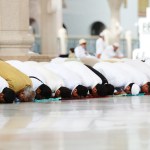
Muslims praying
Christianity Today July 1, 2025
Illustration by Christianity Today / Source Images: Pexels, Unsplash

In this series

(For the first article in this series, click here.)

Yesterday’s article looked at Ashura, the holiday coming up this weekend, as a way of reporting on Islam’s two major divisions. Today, let’s see what unites devout Muslims, starting with an ironclad monotheism.

Muslims believe in one God, all-powerful and ever present, uncreated, without beginning or end, completely sufficient to himself, and ordaining everything that occurs. The power of Islam moved Arabs and many other people from polytheism, often accompanied by grotesque practices, to monotheism.

Through most of its history, Judaism has emphasized ethnic connections with one particular people. In contrast, Islam has gained about 2 billion adherents—only 15 percent of them Arabs—by welcoming people of every skin color and ethnicity. Muslims say pre-Muhammad prophets of Allah, including Abraham, Moses, and David, were sent to only one nation, but Muhammad is special because he was sent to all people.

Muslims have had their own problems with racial reconciliation, given the history of Arab development of the slave trade, but the Quran, like the Bible, is colorblind. The several million Muslims now living in the United States can trace their ancestry back to many countries of Asia, Africa, and Europe. And admission to Islam is easy: Say “There is only one God, and Muhammad is his prophet,” and you are a Muslim.

Muslims revere the 114 chapters (suras) of the Quran, which in Arabic means “the reading.” Muslims fight shirk, which is any attempt to attribute Allah’s qualities to anyone or anything else. For instance, it is shirk, a sin, to think or say that anyone else can bring rain, satisfy desire, or cause babies to be born. It is shirk to believe that anyone else has godlike knowledge or to seek information from astrologers, palm readers, or the like.

This emphasis makes Islam stand out in opposition to animistic or polytheistic religions that involve many gods or spirits who need to be placated. In Islam, Allah has no subordinates or competitors. He is not our Father in heaven, so we don’t approach him as children. He is our Lord, the master, and as his servants (some Muslims use the word slaves) we are called to obedience, not love. A minority of Muslims, influenced especially by the mystical Sufi trend in Islam, speak of mutual personal affection with the deity.

Humanity’s high place in the universe carried a cost. Suras 15:27, 35:1, 51:56, and 55:15 relate that Islam has two kinds of supernatural creatures: angels (created out of light) and jinn (created out of fire). Muslims say that when Allah created Adam, he commanded the angels, and Satan from among the jinn, to prostrate before Adam as a sign of respect, although not a sign of worship. All except Satan did so. When Allah asked Satan why he disobeyed, Satan replied, “I am better than he is: You created me from fire and him from clay” (Sura 7:12). Allah cursed Satan, who pledged to destroy Adam and his descendants.

But to Muslims, the cost is not too much for us to pay on our own. Christians argue that ever since Adam and Eve’s sin in the Garden of Eden, humans habitually sin. The only way to reverse the curse is through the intervention of the supernatural—the work of God’s grace because of Christ’s sacrifice. However, the Quran states that in the Garden of Eden, Adam and Eve both sinned, then repented, without eternal consequences: “Adam was inspired with words of prayer by his Lord, so He accepted his repentance” (2:37).

That difference with Christianity is literally and metaphorically crucial. Islam has no cross on which Jesus (known as Isa) died for our sins and says we have no need of salvation because we are not dead in our sins. We are naturally able to do what the boss requires. By obeying Allah’s rules, we can get to heaven on our own.

Muslims do not acknowledge original sin and discount biblical passages that show its results. The Bible contains honest reporting about sinful individuals whom God chose not because of their own righteousness but because of his love. Muslims, though, see a record of great heroes that Jews and Christians somehow twisted during centuries of transmission. What for Christians makes the Bible ring true—its record of how Noah got drunk, Lot committed incest, and so on—makes part of it ring false to Muslims.

Muslims express reverence for much of the Bible, but when it and the Quran are in conflict, they go with the Quran. Some become angry about anything that shows God taking a human form. They are not pleased with biblical passages indicating that God walked with Adam in the Garden of Eden, wrestled with Jacob, or came to earth as Jesus in human flesh. Tahrif (meaning “distortion”) is the explanation held by most Muslims that the original biblical texts somehow have been altered or corrupted.

The difference is profound. The Bible emphasizes that God has pity on us and adopts us into his family. The Quran emphasizes that a just master allows us to be his servants but not his children. Chapter 53 of Isaiah describes the most important character in history in this way: “He was despised and rejected by mankind, a man of suffering, and familiar with pain” (v. 3). Muslims respect the rejected Jesus Christ as one of perhaps 124,000 messengers Allah has sent and one of the 25 listed in the Quran.

Yes, Jesus is in the list with Adam, Enoch, Noah, Abraham, Ishmael, Isaac, Lot, Jacob, Joseph, Job, Moses, Aaron, Ezekiel, David, Solomon, Elijah, Elisha, Jonah, Zechariah, John, three others not cited in the Bible, and Muhammad. But Muslims do not believe Jesus was crucified; instead, they hold that he was taken directly to heaven. There is therefore no resurrection. They do not see him as God.

Within Islam, that unbiblical depiction makes logical sense: Without original sin, we do not need a redeemer. Humanity is basically good but mistake prone. Muslims who sincerely repent and submit to Allah have their sins forgiven, with no help from Christ needed (Sura 39:53). Humans, using their intelligence and guidance from the Quran, can distinguish good from evil. Sincerity and good works bring salvation, as Sura 7:8 states: “As for those whose scale will be heavy with good deeds, only they will be successful.”

News

Hindu Mobs Killed His Friend. He Forgave Them.

As India releases the killer of Australian missionary Graham Staines and his sons, one  Indian Christian chooses acceptance.

A bus that was burned with a man looking at it
Christianity Today July 1, 2025
Illustration by Christianity Today / Source Images: Getty, Unsplash

Mahendra Hembram walked out of Keonjhar jail in India’s Odisha state in April to a hero’s welcome. Supporters adorned him with garlands and shouted, “Jai Shri Ram!” (“Hail Lord Ram!”). To awaiting reporters, Hembram claimed his innocence after 25 years in prison.

Associated with the Hindu extremist group Bajrang Dal, Hembram had been sentenced to life in prison for burning Australian missionary Graham Staines and his sons—ages six and ten—to death in 1999. Authorities granted him an early release on grounds of good behavior.

Vishwa Hindu Parishad, a Hindu extremist group affiliated with the ruling Bharatiya Janata Party, welcomed Hembram’s release. “It is a good day for us. We welcome the government’s decision,” the group’s joint secretary Kedar Dash told The Times of India.

Many in the Christian community criticized the jubilation at Hembram’s release.

“He is a convicted killer, convicted in the most horrendous crime, and is now being quietly merged into civil life after a long stay in jail,” John Dayal, activist and spokesman for the United Christian Forum for Human Rights, told CT.

The 1999 murders shocked the world as a mob of Hindu extremists set on fire a Jeep with Staines and his two sons inside. Yet authorities have shortened the sentences of all of the attackers, which some see as a sign of the growing wave of Hindu nationalism in the country. India’s Central Bureau of Investigation initially arrested 51 people involved in the killing. However, over the years, the court acquitted all the suspects except Hembram, Dara Singh, and Sudarshan Hansda, alias Chenchu.

Singh, who was also convicted of two other murders, was initially sentenced to death before judges reduced his punishment to a life sentence. He is currently pleading to be released immediately. Chenchu, who was a minor at the time, saw his sentence of 14 years reduced to 8.

Subhankar Ghosh, a close friend of the Staineses and eyewitness of the murders, didn’t feel outrage when he heard of Hembram’s release.

Rather, the response of Staines’ wife, Gladys, after the murders is a model for Ghosh. Gladys publicly forgave the killers and returned to run the leprosy home where her husband had served. Today, their legacy lives on in the remote village where they once lived.

“Even Gladys has forgiven them, so who am I to say that I will not forgive?” Ghosh said.

Graham Staines first came to India in 1965 to work at the leprosy mission of the Evangelical Missionary Society in Mayurbhanj (EMSM). Missionaries first established the home in 1895 after the king of Mayurbhanj, Sri Rama Chandra Bhanja Deo, invited them to come and work with lepers. Bhanj Deo was especially passionate about eradicating the disease, as his daughter suffered from leprosy.

Graham Staines (back row in green) in front of the leprosy mission house.Courtesy of Subhankar Ghosh
Graham Staines (back row in green) and attendees of a Christian camp in Manoharpur.

Gladys arrived in Mayurbhanj in 1981 as a missionary with Operation Mobilization. There she met Staines, and the two got married two years later. Beyond the leprosy mission, they also served at local churches and held Christian camps to strengthen believers in the area.

Local members of Bajrang Dal were outraged to see people from the Santhal tribe embracing Christianity and believed the missionaries were destroying Indigenous culture. According to a letter Hembram wrote to his sister-in-law after the murder, they were enraged to see villagers eating beef—as cows are sacred in Hinduism—and to see the missionaries distributing sanitary pads and bras to the tribe members.

Things came to a head in January 1999, when Staines, his two sons, and several other Christians organized a five-day church camp in the jungles of Manoharpur village. Ghosh, a botany professor who often served with Staines, had been invited as a speaker. On the night of January 22, 1999, Staines and his two sons were sleeping in their Jeep, which was parked in front of a small church in Manoharpur. Meanwhile, Ghosh and another Christian, Gilbert Venz, slept in a small thatched mud house, about 650 feet away the jeep, according to Ghosh’s unpublished book, Flames of Fire.

Around midnight, Ghosh woke up to the loud sounds of a large crowd screaming, “Maro, maro! Dara Singh zindabad!” (“Kill, kill! Long live Dara Singh!”). He had no idea what was going on, and when he tried to go outside to look, he found attackers had blocked the doors of the huts so they couldn’t get out. It was pitch-dark, he wrote, and the house had no windows, only a small ventilator through which Ghosh saw the vandals deflating the tires of Staines’ Jeep, beating up Staines and his sons, and pushing them into the Jeep when they tried to escape.

He saw villagers running around trying to help the missionary, but members of the mob threatened them and beat them up. As he watched the vandals set the Jeep on fire and his friends being devoured by the flames, he helplessly knelt and prayed.

“We are so sorry that we could not do anything at this hour of death for Graham and the kids,” Ghosh wrote in his book. “We were filled with remorse and sorrow. Our heart was beating vehemently, crying to the Lord, why such a thing has happened.”

Witnessing the heinous crime took a deep emotional toll on Ghosh, who struggled with depression and trust issues. Many of Ghosh’s friends, including some within the Christian community, blamed him for not going out and saving Staines, even though Ghosh had no way out of the hut.

The Graham Staines familyCourtesy of Subhankar Ghosh
Graham and Gladys Staines with their three children in 1996 which was 3 years before Graham and the boys were killed.

During the two-and-a-half-year trial, some lawyers falsely accused Ghosh and fellow ministry workers of killing Staines and then blaming it on the mob.

“The first three [or] four months were unbearable for me,” Ghosh said. “To see someone dying in front of my eyes [who was] doing good service and he was treated this way, I had almost become mad. I would not talk to people.”

Despite his grief, Ghosh believes he needed to accept what happened and forgive the killers. He went on to work at the leprosy mission, as well as to speak in churches and seminaries sharing Staines’ testimony.

“I have to reconcile the fact that Jesus went through all this, so who am I not to accept it?” Ghosh said. “Even in hard times, I have to accept these things. The Scriptures say that God, in Christ, was reconciling the world unto himself. And we are sent to be ambassadors of reconciliation.”

After a furlough in Australia, Gladys and her daughter, Esther, who was 13 at the time of the killing, returned to Odisha, where Gladys served at the leper clinic for five more years before returning to Australia. She told Indian news stations, “I have forgiven the killers, but the law must take its own course.”

For her work in India, Gladys won awards, including the Mother Teresa Memorial Award for Social Justice and the Padma Shri for Social Service, India’s fourth-highest civilian award.

“If we don’t experience the grace of God, we become bitter,” Gladys told CT in a 2003 interview. “We have to turn to God, not to others. Experience forgiveness and forgive others. Grace is available. Once you forgive, there will be healing.”

Gladys, who is now 74, last visited India with her daughter and grandchildren in December 2024.

Even after the Staineses left, their legacy lived on. EMSM now includes two leprosy mission homes, a rehabilitation center, a boys’ hostel named after the Staines boys, and the Graham Staines Memorial Hospital. The hospital was established in 2004 to fulfill Staines’ vision of providing health care to the marginalized people of Mayurbhanj. Although the rate of leprosy has decreased in the past few decades, Odisha continues to report more than 500 new cases a month.

Manoharpur, the remote village in eastern Odisha where the murder took place, has seen a growth in Christianity after the incident, Ghosh said. The village now has three churches, and many residents have accepted Christ.

“Those who had come to attack on that night, there were about 52 people,” Ghosh said. “Out of them, many have come to know the Lord and have joined the church.”

News

The Accelerating Cost of a Traffic Accident

More than a decade later, a Kenyan tries to recover from a motorcycle crash.

A road sign warns drivers of an accident-prone black spot on the busy Nakuru-Nairobi Highway in Kenya.

A road sign warns drivers of an accident-prone black spot on the busy Nakuru-Nairobi Highway in Kenya.

Christianity Today July 1, 2025
SOPA Images / Contributor / Getty

Joseph Wachana has sat under a large fig tree in Bungoma County, Kenya, for more than ten years now. He earns a few coins from locals who bring their old shoes for repair. Every morning, he jumps on one leg from his home to the fig tree—about 500 meters—supporting himself with a short wooden stick. He returns home the same way at night.

His spot at midodo (fig tree) market contains his investment—a small wooden box holding pieces of leather, different-colored strings, a pair of scissors, knives, and sharpening stones and needles. Next to him is a sack full of old shoes and sandals, along with old handbags.

Wachana—a once-energetic police officer—makes shoes for a living because a road accident in October 2012 left him with one leg.

“I was crossing the road heading home after work, and the next place I found myself was in a hospital bed,” Wachana said. A speeding motorcycle knocked him down on a zebra crossing (a pedestrian crosswalk) in the town of Busia.

Despite Wachana’s serious injuries, it took more than two hours for someone to take him to a hospital. Crowds gathered at the scene, blocking the road and causing a heavy traffic jam. A mob attacked the motorcyclist, focused on beating him up instead of helping Wachana’s bleeding leg.

Only when the police arrived and cordoned off the scene did someone transport him. The local hospital couldn’t offer more than basic first aid to stop the bleeding, so they referred him to Moi Teaching and Referral Hospital in Eldoret—a three-hour journey away.

According to the World Health Organization’s 2023 Road Traffic Injuries fact sheet, “Delays in detecting and providing care for those involved in a road traffic crash increase the severity of injuries. … Delays of minutes can make the difference between life and death.”

At the hospital in Eldoret, road crash victims filled the casualty unit. Ambulances came and went the whole night. Some patients died before admittance. Others waited for emergency surgery. Men, women, and children screamed in pain.

“It was[n’t] until around nine the following morning when my brother was booked into the [operating] theater,” Wachana’s younger sister Penina Naliaka said. The doctor told the family that Wachana’s leg had broken in multiple places.

Hospital staff said the family needed to bring eight pints of blood before he could have surgery to set the leg. This delayed treatment several more days, as family members traveled to the hospital to donate blood.

“The leg was rotting very fast toward the upper part,” Wachana recalled. “One doctor came and checked it and said the only option was to cut off the leg before the damage reaches the sensitive organs, which could be life threatening.”

Doctors amputated his leg above the knee. “This was a new beginning in my life, but I thank God I am still alive,” he said. “Many people who came in the same hospital never made it. They died.”

Survivors such as Wachana struggle to recover. Financial compensation is sparse, and work opportunities decrease. Some survivors, like Wachana, also lose their families—Wachana’s wife took their children and left when he couldn’t provide.

In Kenya, deaths and injuries from road accidents have increased for years. In 2024, the Kenya National Bureau of Statistics (KNBS) recorded 11,173 road crashes, an almost 12 percent rise from 2023. Casualties totaled 24,245 people in 2024. The country’s traffic-accident death rate more than doubles that of the US—Kenya with 28 deaths per 100,000 people, compared to just under 13 per 100,000 people in the US.

The KNBS attributed most road crashes to reckless and intoxicated driving. Additionally, gig drivers who do not own their vehicles may drive recklessly in an effort to pack as many ridesharing jobs into their days as possible.

Concerned church leaders in Kenya have held special prayer events at “black spots”—areas with high incidents of road crashes—to ask for divine intervention to reduce accidents. Road traffic injuries cost Kenya’s health care system $46 billion annually. As with Wachana, accident victims may face long wait times for transportation from the scene to a health facility for treatment.

Barklay Okero, a community engagement officer at the Kenya Red Cross, warned that post-crash care is severely underdeveloped. He said challenges include ambulance delays due to traffic congestion and limited coverage, lack of public knowledge of how to help those injured in a crash, poor police coordination, and limited access to trauma care.

Kenya’s government has launched the National Road Safety Action Plan 2024–2028 in an attempt to curb the alarming number of accidents. Some county governments have set up quick response centers to improve emergency response along dangerous roads where crashes are frequent.

In Kenya, a police officer who gets injured while on duty is supposed to receive compensation from the government. However, the complicated process prevents many from getting the help they need. In 2024, a task force led by former Kenyan chief justice David Maraga looked into the police injury payout system. Their report showed that many of the injured police officers are left without any meaningful help.

Since compensation claims need to be submitted in Nairobi, victims must travel to the capital to follow up on their claims. In Wachana’s case, that journey takes more than ten hours. And because Wachana was still in uniform but had signed out of work at the time of the accident, it’s unclear whether he qualifies for benefits.

“I tried to follow up, but I did not succeed,” Wachana said. “I ended up spending the little money I had saved.” Yet he has not lost hope. “The Bible assures me that God will never abandon his people.”

News

USAID Cuts Leave Yazidi Tents in Tatters

One member of the minority religious community found asylum in Europe and sends home his meager grocery store wages.

Yazidis who were displaced from their homes by Isis in Iraq.

Yazidis who were displaced from their homes in Iraq.

Christianity Today July 1, 2025
Lynsey Addario / Contributor / Getty

When Hadi Maao was five years old, his mud-brick home collapsed on him after Muslim extremists detonated car bombs in his northern Iraqi village. Seven years later, in 2014, ISIS jihadists forced his community in the district of Sinjar to flee to the mountains. Now 22, he is an asylum seeker in the Netherlands and sends a quarter of his meager earnings as a grocery shelf stocker to his family still sheltering in a United Nations camp for internally displaced Yazidis.

“Sinjar is not a place to live,” he said. “I’m afraid people are forgetting us.”

US Agency for International Development (USAID) cuts have made things worse, pausing the reconstruction of Yazidi villages and overwhelming medical centers. An evangelical organization is trying to fill the gap, while a new generation of Yazidis living abroad are seeking ways to help. In this three-part series, we will also cover the complications of Christian aid in Sinjar and explain the basics of the Yazidi religion that Maao and his people follow.

Maao is the youngest of four brothers and three sisters. All of his siblings currently live in Sardashti Camp in the Nineveh Valley, 12 miles east of the Syrian border. The money Maao sends home contributes to building a concrete house for his aging mother and father. They currently reside with his cousin’s family in the UN’s standard canvas tent.

At the International Religious Freedom Summit in February, Vice President JD Vance praised the first Trump administration’s action to bring aid to Yazidis and Christians “facing genocidal terror from ISIS.” Yet President Donald Trump’s executive order to freeze foreign funding and the subsequent dismantling of USAID has had a disastrous effect on the camps where Yazidis still live.

The camp is full of tattered tents that allow rain leakage, unhygienic bathroom facilities, and the threat of fire from spark-prone electricity cables, according to on-the-ground sources that CT spoke with. Cuts have halted the building of schools, community centers, and water purification units. An unused transformer, delivered prior to the stop-work order, was placed in storage.

Maao is from the village of Tel Ezer, also known as al-Qahtaniyah, where USAID sponsored one of five nascent youth centers. In the wake of ISIS attacks, the agency created a women’s media platform and sponsored a display of 300 cultural artifacts to showcase the region’s shared Yezidi, Muslim, and Christian heritage. USAID also contributed to building a cemetery in the village of Kocho, in addition to homes for families of 130 victims of ISIS. At least 150,000 were able to leave the camps and returned home.

Since 2003, Iraq received $9.3 billion in USAID assistance, which helped sustain 15,000 small businesses and provided vocational training to 75,000 Iraqis. In Sinjar, 30,000 Yazidis gained access to essential services, including medical clinics in more than a dozen Yazidi camps. One source, speaking on background, said they are now operating at 25 percent capacity. Iraqi government contributions maintain some staff presence, but patient cases rapidly exhaust preexisting supplies without adequate replacement. Authorities are encouraging Yazidis to travel to state facilities, but many are reluctant to return to Muslim areas given the memory of ISIS.

“Our wounds are not yet healed,” Maao said. “Our women have not returned, and the bones of our martyrs are still scattered across our ancient homeland.”

Yazidis are an ancient people whose faith has roots in ancient Mesopotamian and Zoroastrian religion. Aspects resemble Christianity and Islam, but ISIS followed medieval fatwas declaring that the community should be subject to death.

As ISIS expanded its self-proclaimed caliphate in 2014, the extremists drove tens of thousands of Yazidis to take refuge in the mountains. Maao described living in a cave for more than a week in 120-degree weather with little food or water. His father braved a return to a nearby village to get supplies. Another survivor, Hussein Salem, told CT he remembers bullets flying over his head and the lack of medication as his mother fell ill.

Only the airdrops and military support from a US-led coalition preserved their survival.

Maao’s family attempted to return to Tel Ezer in 2021 but did not feel safe. ISIS killed more than 1,200 Yazidis, kidnapped children to serve as soldiers, and enslaved more than 6,000 women in forced marriage and concubinage. One count estimates that 2,500 members of the community are still missing.

Sources said that since the defeat of ISIS, many large international organizations like Doctors Without Borders, World Vision, and Medair provided extensive aid to the Yazidi community. But as world crises multiplied in Ukraine and elsewhere, many aid groups have ceased operations. Smaller groups remain in the camps, many of which are evangelical.

Ashty Bahro, an Iraqi believer of Chaldean Catholic background, runs Zalal Life from Duhok in the Kurdistan region, serving three Yazidi camps and dozens of villages. Beneficiaries of the group’s food distribution, vocational training, and medical services also include area Christians and Syrian refugees.

Two mobile clinics regularly receive 800 people a month—but demand has skyrocketed since the USAID cuts. Last month in Aqry, 50 miles east of his headquarters, police turned away 300 people desperately pounding on the door for services. Previously, they rarely treated more than 20 people per day. Now they receive 70, and the regular demand has doubled.

“Jesus gives me patience,” Bahro said.

Maao had kind words for Christian ministries serving in the area. Through a different organization, he benefited from English language, digital skills, and leadership training. Ongoing mentorship helped him find secular work outside the camp, and he regularly seeks their advice and prayer.

A medical need prompted his harrowing journey to Europe. In 2016, his brother suffered a stroke and could not find local treatment. Frustrated by limited medical service in their isolated setting, in 2021 Maao and his nine-year-old nephew flew from Baghdad to Belarus to join a caravan of migrants. Many were seeking a better life in Europe. Maao’s goal was family reunification through asylum so that his brother could get the treatment he needed.

Relying on referrals for smugglers, they crossed borders while freezing in a forest, fleeing from police, and figuring out how to recover from tear-gas exposure. After two months in and out of detainment, their multination saga finished legally in the Netherlands, where they obtained temporary residency. His brother, his sister-in-law, and their three other children were subsequently welcomed, and his brother’s health is steadily improving.  

Life is difficult in the diaspora, Maao said. The Yazidi religion places great importance on local shrines—and there are no comparable buildings outside their homeland. Members are required to marry within their religion. And to limit community mingling with outsiders, basic education had been discouraged until recently.

Maao sees little hope for Yazidis in Iraq. Muslims accuse them of “devil worship,” claiming their peacock angel resembles Lucifer. He says they suffer regular religious discrimination. And as long as his people remain dependent on outside help, they will only continue to stagnate in the villages of Sinjar.

He is critical of the USAID cuts but dreams of a future when American help is no longer needed. He is studying at college as he volunteers to help other refugees. Last January, he told his story to a gathering of 70 social work students hosted by Refugee Work Netherlands. Few of them had even heard of his people, though afterward, some joined his call to help. But a new generation of Yazidis—scattered across the diaspora—can obtain the skills needed to raise awareness and uplift their community in Iraq, he said.

Maao’s desire is to teach his people AI. Ten years ago, he was ignorant of email. He would love to open a center to teach the digital skills he has received and enable Yazidis to develop their economy. In the meanwhile, he has learned to be resilient, has grown in confidence, and sees a future of purpose for himself and his people.  

“I miss my family,” he said. “But I can do more for them here than in Sinjar.”

Theology

What Christians Should Know About the Two Islams

Next weekend’s Ashura holiday features both celebration and mourning.

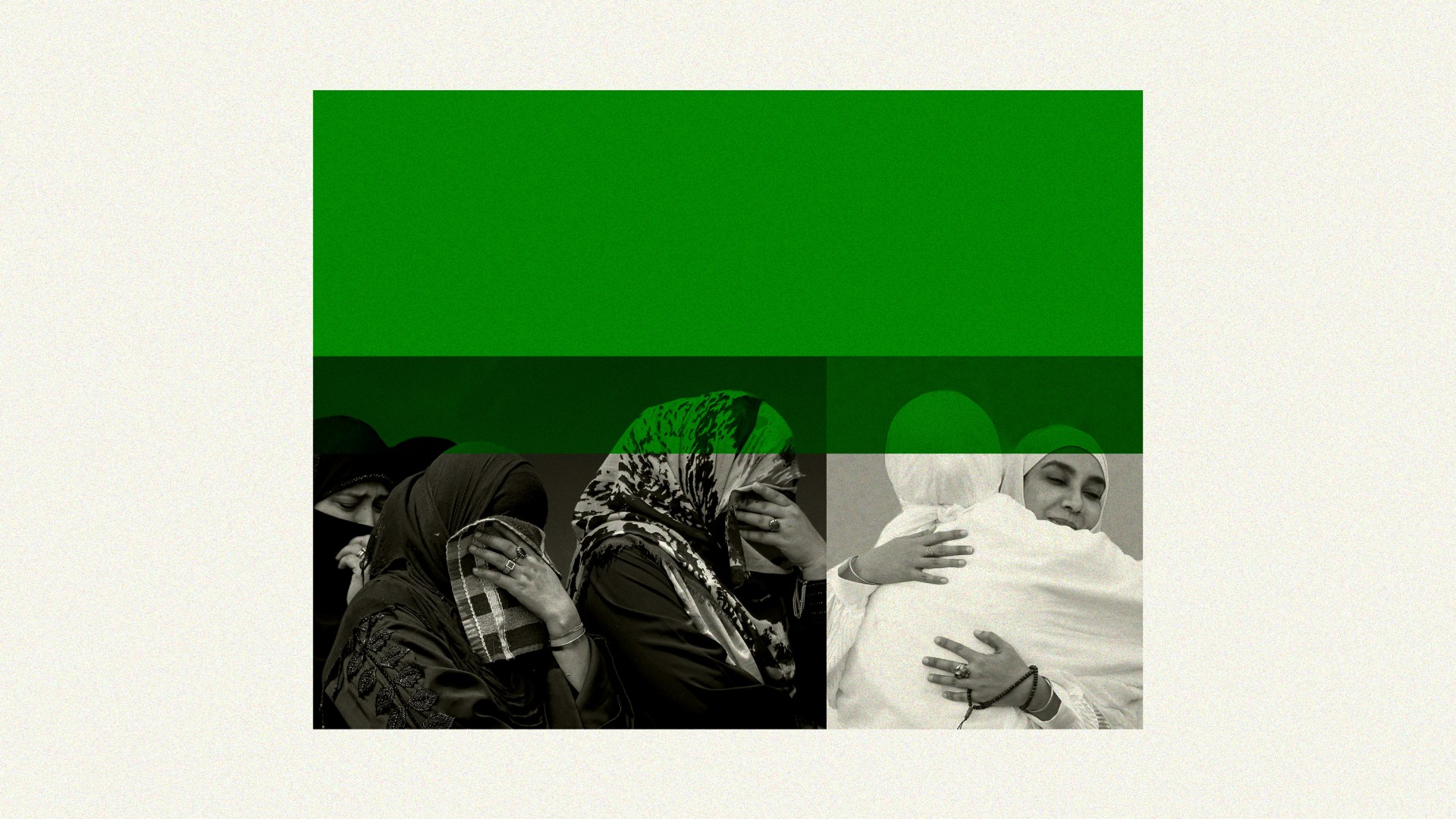
Shiite and Sunni Muslims
Christianity Today June 30, 2025
Illustration by Christianity Today / Source Images: Getty

In this series

To understand Islam, we need to understand its major divisions, Sunni and Shiite. One way to start is to grasp the dueling significances of a major Islamic holiday, Ashura, coming up next Saturday evening and Sunday, July 5 and 6. (Muslim holidays, like Jewish ones, go from sundown to sundown.)

Ashura is unusual because for some of the 85–90 percent of Muslims worldwide who are Sunni, it’s a modest day of celebration, but for the 10–13 percent who are Shiite, it’s a volcano of mourning.

With the US Independence Day coming up on Friday, I’ll offer an imaginary parallel. An estimated 300,000 free residents of what became the United States were British loyalists during the Revolutionary War, 15 percent of the total white population of approximately 2 million. (The 450,000 slaves were not asked their opinion, but at least 20,000 escaped to British forces during the war.) 

Some loyalists left when the war ended in 1783, but most stayed and eventually pledged allegiance to the new government. But let’s say they had not and remained a disaffected minority. For them and their posterity, the Fourth of July century after century would be a day of misery, not contentment. And that, magnified by religious fervor, is the backstory of Ashura.

For some Sunnis, Ashura commemorates the day Noah’s family left the ark, Joseph gained release from prison, God parted the Red Sea at the behest of Moses, and other great events. For Shiite Muslims, Ashura is a day to mourn the death of Muhammad’s grandson Hussein ibn Ali and most of his male relatives at the battle of Karbala, in modern-day Iraq, in AD 680.

Imam Johari Abdul-Malik, former Muslim chaplain at Howard University, said the dueling interpretations of one day make for an odd fit. “One Muslim community is saying, ‘Happy New Year!’ while the other is saying, ‘It’s so sad that our beloved Hussein was murdered.’ All Muslims are observing something on Ashura, but the spirit of it is quite different.”

The Sunni-Shiite split is most evident in the cold war between Saudi Arabia (Sunni) and Iran (Shiite). Since 2014 it is a hot war by proxy in Yemen. In the United States, most Muslims are Sunnis and are comfortable living as a minority as long as they can abide generally by the Quran and the Hadith, with interpretations and applications provided by a consensus of Muslims. When I taught a Journalism and Religion course at the University of Texas at Austin soon after 9/11, two Sunni Muslim students in my class impressed me with their thoughtful analyses of tensions.

On 9/11, one Sunni extremist, Osama bin Laden, became infamous, but he and other al-Qaeda members were outliers. Most Sunnis say that so long as a government does not prevent Muslims from carrying out their ritual duties, it should not be described as anti-Islamic, and no attempt should be made to overthrow it. Abu Hanifa, a major Sunni thinker more than a millennium ago, said, “Those who face in the direction of Mecca at prayer are true believers and no act of theirs can remove them from the faith.”

Other Muslims, though, hope for sharia, the complete rule of Islamic law. Some of the ardent yearn for a Muslim government similar to the original caliphate, which they say was a just system in which leaders gained authority by consensus. Others opt for autocracy. Outliers argue for violence to achieve a dictatorship of the purportedly righteous. 

Shiites believe descendants of Muhammad’s nephew Ali (who married Muhammad’s daughter, Fatimah) should rule because they are part of the Prophet’s bloodline. They also believe Allah gave Muslims a succession of imams—perfect teachers—up to the 12th, known as the Mahdi (guided one).

Most Shiites believe that this last imam disappeared, entered what is called “occultation,” and will return in days of chaos before the Last Judgment to implement God’s rule. Iran, the largest Shiite nation, currently views its supreme leader as the Mahdi’s representative on earth.

Ashura comes in the Muslim month of Muharram, which includes the anniversary of the martyrdom of the fourth Shiite imam, Ali ibn al-Hussein al-Sajjad, believed to have been poisoned to death during Islam’s first century. The history of imams generally is not a happy one. The wife of al-Hasan ibn Ali ibn Abi Talib, the second Shiite imam, purportedly poisoned him. The seventh, eighth, 10th (Ali al-Hadi), and 11th (Hasan al-Askari) imams also supposedly died by poison.

Some say a sense of oppression and threat is fundamental in Shiite Islam. On Ashura, Shiites reenact the “martyrdom of Hussein.” Near the battle site in Karbala, they reenact the burning of tents by Hussein’s victorious enemies and the capture of women and children. There and elsewhere on Ashura, dirge-chanting mourners process through the streets, sometimes flagellating themselves. In Karbala on Ashura afternoon, mourners walk barefoot to the shrine of Hussein.

Sunni extremists have sometimes piled on the psychology of grievance by turning Ashura into a day of violence. Two centuries ago, Sunni radical Ahmad Barelvi preached against Ashura practices and claimed he destroyed thousands of Shiite ritual mourning structures. On Ashura in 2004, a suicide car bomber rammed the funeral march to the Hussein shrine and killed more than 50 worshipers. Stories tell the toll, year after year, such as the bomb explosion in a Pakistani Ashura procession in 2009, or two separate bomb explosions among Ashura mourners in Afghanistan in 2011.

Perhaps in reaction to Shiite mourning, some Sunni scholars over the centuries publicized Ashura as a joyous time when believers should shout their delight. By AD 1300, some Sunnis bathed, dressed up, and shook hands prolifically on Ashura. To this day, many Sunnis in North Africa emphasize Ashura as a day for bonfires, charity, and carnivals. 

Last year in New York City, the Shiite view of Ashura gained the most publicity: Middle East Eye reported, “Carrying shrouds, beating their chests and chanting the names of those killed at Karbala, the cortege was led by men largely dressed in black. … There were groups chanting in Farsi, Urdu and Punjabi between the haunting, rhythmic thumping of chests, as mourners faced each other and periodically let out the name of Hussein or Karbala in remembrance.”

Apple PodcastsDown ArrowDown ArrowDown Arrowarrow_left_altLeft ArrowLeft ArrowRight ArrowRight ArrowRight Arrowarrow_up_altUp ArrowUp ArrowAvailable at Amazoncaret-downCloseCloseEmailEmailExpandExpandExternalExternalFacebookfacebook-squareGiftGiftGooglegoogleGoogle KeephamburgerInstagraminstagram-squareLinkLinklinkedin-squareListenListenListenChristianity TodayCT Creative Studio Logologo_orgMegaphoneMenuMenupausePinterestPlayPlayPocketPodcastRSSRSSSaveSaveSaveSearchSearchsearchSpotifyStitcherTelegramTable of ContentsTable of Contentstwitter-squareWhatsAppXYouTubeYouTube