News

Amy Grant Wants to Continue Bono’s PEPFAR Legacy

The pop artist is part of an unusual Nashville history surrounding the HIV/AIDS treatment program.

Amy Grant meeting Bono at Charlie Peacock's house in 2002 to discuss the HIV/AIDS crisis.

Amy Grant meeting Bono at Charlie Peacock's house in 2002 to discuss the HIV/AIDS crisis.

Christianity Today June 20, 2025
Ben Pearson, Courtesy of Charlie Peacock / Edits by Christianity Today

The queen of Christian pop is weighing in on proposed cuts to the successful HIV/AIDS program the President’s Emergency Plan for AIDS Relief (PEPFAR).

On Wednesday night during a concert at a Nashville-area church, she made a phone call to Republican senator Bill Hagerty’s office on speakerphone. She left a voicemail.

“Hi, Senator Hagerty, hi, this is Amy Grant,” she said. “I’m standing on stage singing to over a thousand people, and I wanted to speak on behalf of all of us to say that President Trump’s budget suggests that funding for PEPFAR should be cut by 50 percent this year. We want you to know that here in Nashville we want to see full funding of PEPFAR so we can stay on track to end the HIV/AIDS epidemic by 2030.”

The crowd cheered. 

Grant performed at the concert with a few other Nashville artists like Charlie Peacock in an evening billed as a celebration of the millions of lives saved through PEPFAR. She has described it as a “pro-life” program.

This year, PEPFAR programs, including faith-based organizations providing treatment on the ground, have experienced sudden and devastating cuts under the Trump administration as part of the dismantling of the US Agency for International Development (USAID). Congress is now considering long-term slashing of the program that currently treats 20 million people living with HIV/AIDS. 

“Blow on the embers, the fires in your own heart and conscience that need to be stirred,” Grant said in an interview with CT right before sound check at the concert. “Nobody is just eating bonbons, staring at YouTube all day, and making the world a better place. Engage, come on, come on, engage!”

The Christian world of Nashville music has a surprising history of engagement with the HIV/AIDS program over the decades.

In late 2002, before PEPFAR first launched, U2 lead singer Bono did the final stop of his Heart of America tour in Nashville. The year prior, 2.3 million Africans died because of HIV/AIDS. The medicine to save people’s lives existed, but it largely wasn’t making it to those in need. Even one USAID official then considered the main problem in Africa “overpopulation.”

Activists like Bono—and eventually President George W. Bush, who launched the program—disagreed.

Across America, Bono had been speaking and pushing for a program to address the AIDS crisis—including at Christian colleges and churches. On that tour Bono had said there is “nothing worse than a rock star with a cause” but he felt an urgency about the millions who were dying. Bono told churches the HIV/AIDS epidemic was “the defining moral issue of our time.”

“I think our whole idea of who we are is at stake. I think Judeo-Christian culture is at stake,” Bono said in a press gaggle at Wheaton College on one stop of the tour. “If the church doesn’t respond to this, the church will be made irrelevant.”

The church did respond. In Nashville, Bono and Grant, along with other Christian artists like Steve Taylor and Michael W. Smith, met at Peacock’s house to discuss HIV/AIDS in Africa.

Peacock remembered in his memoir, Roots & Rhythm,“The Spirit of Justice blew through Music City, and people felt the wind blow.”

At the meeting of musicians at his home, Peacock said Bono prayed and Peacock remembered feeling that “prayer is a way of breathing when the worst of disease, hunger, and poverty has sucked the oxygen out of people and the planet.” Then Bono picked up Peacock’s son’s guitar and played the song “They’ll Know We Are Christians by Our Love.”

The artists got behind the cause. Jenny Dyer, who works alongside Grant on the PEPFAR issue with her organization The 2030 Collaborative, said the artists “started talking about it from the stage, talking to their pastors, and we had Christians take a stand for it.”

Not long after in 2003, Congress created PEPFAR, which is now widely credited as a successful program that saved millions.

“So much good and life-giving change can be traced back to the December 9 gathering,” Peacock wrote in his memoir about the meeting of musicians at his house with Bono. “It took an Irishman to stir our hearts, but we got there. More importantly, hurting and dying global neighbors got desperately needed, tangible help from America.”

Grant told CT she and Bono have not crossed paths many other times—she’s bought tickets to his shows—but they did have dinner once to talk about advocacy. She said it made sense that musicians like her and Bono were drawn to advocate for a program like this.

Musicians can see “a group of people walk into a room feeling disconnected from themselves and from each other, and in the short span of a handful of songs, suddenly everybody is moving in rhythm,” she said. “Sometimes people in music want to put their talents and energies behind a cause they believe in because they see the minor miracle of what something as simple as music can do to a community.”

Grant also has a personal connection to one of the architects of PEPFAR in Congress: former senator Bill Frist, a Republican from Nashville.

Frist’s dad was the doctor for Grant’s parents and grandparents, she told CT. When Grant went through her divorce from Gary Chapman in 1999, Frist’s parents’ house was sitting empty because they had both recently died, and she rented it.

“Bill Frist was my landlord. We had time to sit around and chew the fat,” she said. That naturally drew her into the world of PEPFAR.

“It’s so crazy,” she said. “What circles does each of our lives naturally pull us into? Because how we invest in the world around us shouldn’t be a big mystery. … None of us do live isolated.”

Frist, Bono, and motherhood all drew her toward the program—“to have carried children and know how important my health was to me and the health of my children,” she said.

“The gift I bring to the table is empathy and the creativity to turn it into a song,” she said. “You have an illness that’s affecting the world, and it makes total sense to say, ‘Well, first off, let’s do the easiest connect through music, and then we’ll talk about the bigger issue.’”

Dyer, who has worked alongside Grant on this issue, spoke at the concert about the legacy of Nashville musicians: “Here we are 23 years later—and it worked. … We are almost at the end of the HIV epidemic status. We need your voice.”


Culture

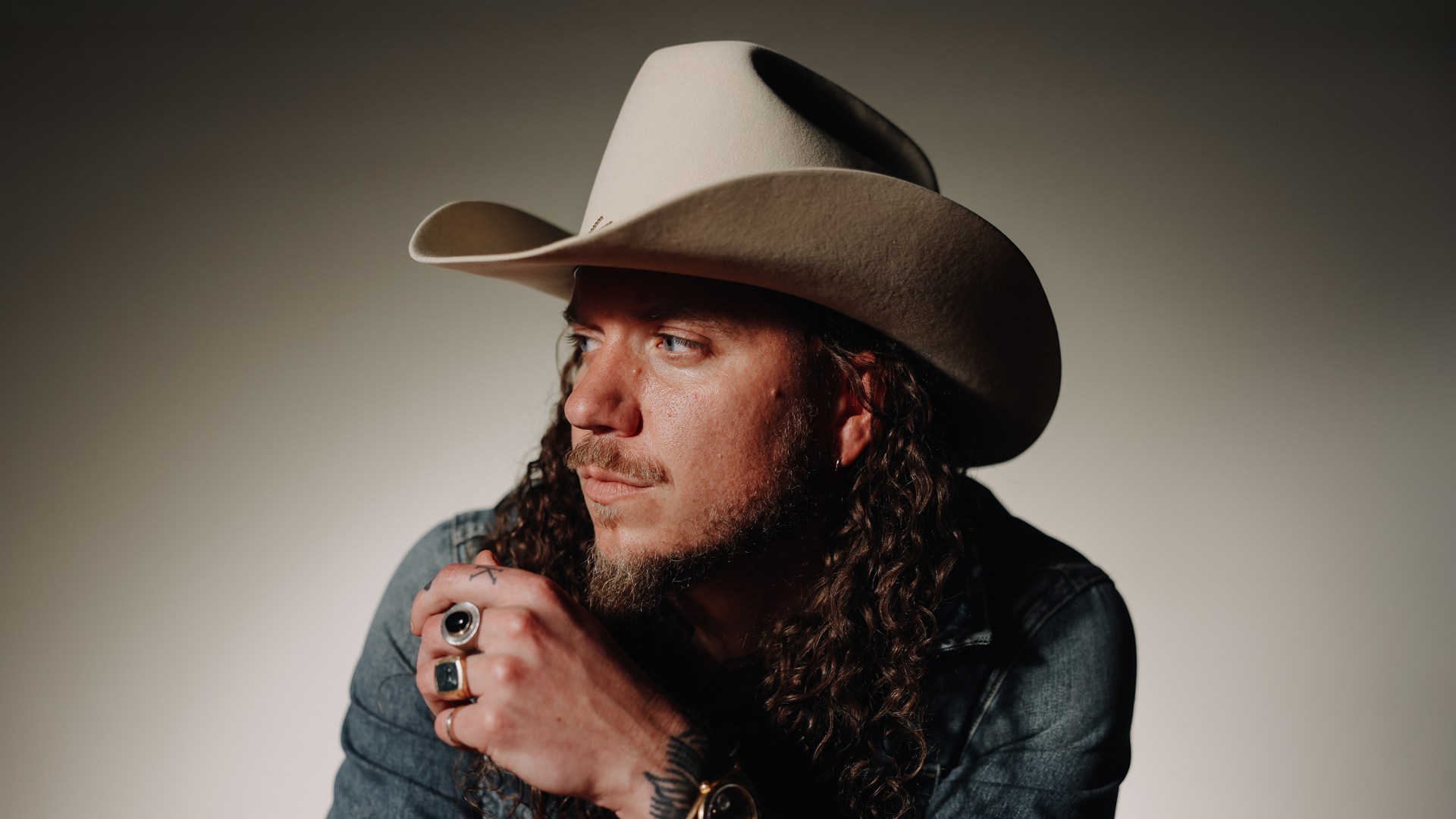
Amid Mainstream Fame, Brandon Lake Is ‘Still a Worship Pastor’

The “Hard Fought Hallelujah” singer remains “really passionate about reaching people who don’t know who Jesus is yet.”

Brandon Lake
Christianity Today June 20, 2025
Photography by Sadie Schwanberg

The week of June 2, four of the ten most-sung songs in American churches were cowritten by Brandon Lake. That’s nothing new for the long-haired worship artist, whose songs “Gratitude,” “Praise,” and “Trust in God” have become staples for congregations that use contemporary worship music. Lake has a knack for writing singable, hook-driven tracks with lyrics that feel personal and earnest, even when put to use in arenas or on the American Idol stage.

King of Hearts, Lake’s new album, dropped on Friday, June 13. It hit No. 1 on Apple Music in all genres the following day. The lead-up to the album’s release has been a long one; Lake released the single “Hard Fought Hallelujah” in November 2024 and has been building momentum by performing the hit song with country and hip-hop artist Jelly Roll. It currently sits at No. 75 on the Billboard Hot 100.

Lake, who has collaborated with Bethel Worship, Elevation Worship, and Maverick City Music, is also on staff as a worship leader at Seacoast Church in South Carolina. His ascent to mainstream success has come alongside his widespread popularity and influence as a worship artist. Lake says he still sees himself as a worship pastor first, even as his musical style and aesthetic has shifted toward country and Southern rock, and he finds himself performing for crowds of tens of thousands at events like Stagecoach Festival (a country music event in California that drew over 75,000 people this year).

Recently, Lake received some online criticism for suggesting that worship leaders should consider trying to make Sunday-morning worship services more accessible for “Bubba,” a visitor who might be uncomfortable with Christianese or unsure about singing the words “holy, holy, holy.” He says that the backlash to his comments is based on intentional misunderstanding.

This preference for accessible language and seeker sensitivity has become a part of Lake’s persona; he posts about bringing church to mainstream events and leading fellow performers in prayer before taking the stage. In today’s music scene, he’s the only artist who possesses such powerful influence in both the worship-music industry and the mainstream—arguably, he’s the first. He said that the expansion of his platform has intensified his desire to reach people who might not show up in church on a Sunday morning.

Brandon Lake spoke with CT about his dedication to his worship-pastor calling, why he’s so committed to meeting his listeners wherever they are in their faith journeys, and how platform does and doesn’t change things for him.

You have a song on the Billboard Hot 100 right now, and several songs you’ve cowritten, like “Gratitude” and “I Know a Name,” are some of the most-used worship songs in the US. In what ways do you think differently about being on stage at a worship event like Passion than you do about performing at a festival like Stagecoach?

When it comes to what I’m doing, I’m not doing anything different. I’m gonna be who I’m called to be. I’m gonna be unashamed about the message that I carry. I’m leading worship the same way that I was when I was 15 years old.

Maybe I have more expertise now, and obviously throughout my journey I’ve gotten to know the voice of God, and I’ve grown in my relationship with him. There’s maturity there. But I’m just trying to lead people into the presence of God, whether they realize that or not.

Now at an event like Stagecoach, I recognize that most people did not show up thinking that they might encounter the presence of God or hear songs that speak directly about God or connect them to the heart of God. And I realize that there are probably a lot more people in that place who are unfamiliar with church or just uninterested. I just want to be a servant. I think it’s about just trying to exercise good stewardship and use common language for the average person out there.

At the end of the day, I’m just trying to serve people. And I hope that by the end of whatever songs I’m singing, they feel like their feet were washed. You know, like, “Wow, that guy really blessed us.”

I’m not changing the gospel. I’m not changing my message. But if anything, I’m more careful in a setting like Stagecoach to not shove the message down their throats. They did not come here expecting anyone to be preaching Jesus. I’m going to do it in a way that’s not going to feel invasive. I want it to feel inviting.

In recent interviews, you’ve talked about the importance of accessible language and what some might call “seeker sensitivity.” You worked as a worship pastor for a long time, and I wonder how you think about seeker sensitivity now that you’ve had to navigate both the local church setting and these bigger arenas. What are some things you’ve learned from leading worship in these huge venues?

Well, let me just start by saying I’m still a worship pastor. That’s who God’s called me to be. And so whether it’s at Stagecoach or at Seacoast, where I’m on staff, I’m going to be a worship pastor on the platform, and I’m gonna be a worship pastor off of the platform.

I got the chance to lead several different artists in a time of prayer before we went out there at Stagecoach. And it might look slightly different because I’m not assuming everybody is gonna agree with what I’m saying or where I’m at with God.

But my message isn’t changing. If you go to any of my concerts, we sing things that are deeply spiritual. We sing biblical phrases and use language that might be unfamiliar for some people.

I am frustrated and a little disappointed that people have taken something I said out of context. I never said, “Don’t sing, ‘Holy, holy, holy.’” I’m saying we need to lead people into a place of understanding so that they think, “Wow, I do want to sing that, because I recognize that God is holy, that he’s set apart.”

I don’t always get that right, and I’m growing in this area. The more I’m around people who are less churched and unfamiliar with certain terminology, I don’t want to assume that they already understand. I’m trying to help lead people to that place, not leave them behind.

I know that I’m sometimes going to sing something that people don’t get. When I sing, “I wanna dance like David,” I’m not assuming everyone knows what David I’m talking about. They might be thinking, “What the heck?”

You can’t break down every single song at every show or Sunday service. But it’s something I’m trying to be a little more aware of. And it’s not about coddling the new person or the unbeliever. We often forget about the person who’s giving church a first try, or a first try in a long time.

I think so much of making someone feel welcome is about how you communicate something; it’s not just about what you’re saying. It’s also about your presence on the platform and how inviting and believable you are. When a leader carries an authenticity, that can lead someone to feel like, “I really trust what they’re saying, and I don’t even know what it means yet.” You know?

I’m all for edifying the saints, but I’m really passionate about reaching people that don’t know who Jesus is yet.

Some of these issues you’re grappling with are very pastoral. And as you said, you still see yourself as a worship pastor first, but you are also a performer with a very big, public platform now. That puts you in this sometimes-complicated position of being both a celebrity and a spiritual leader. How has the scale of your platform changed the way you think about the pastoral dimension of what you’re doing?

It’s been sobering to realize just how many people are paying attention. So I feel like I’m growing in the area of just having to be more careful. I’m more aware of the things I’m saying from the platform than ever before. I’m trying to use my voice to point people in the right direction while also saying, “I don’t have it all figured out.”

The more my influence grows, the more I’ve had to place boundaries around what I think God really cares about: how I am with my family and what kind of father and husband I’m being. I want that to speak louder than the songs I’m writing.

And honestly, having friends in my life that maybe aren’t as far along in their faith journey, I think they would tell you that the way I love my wife and my kids is probably more of a testimony than the music I’m making.

The bigger the things are getting, the smaller I’m trying to get. Transformation, I think, happens around the dinner table more often than it does at a conference.

News

A Brutal Attack Shocks a Village, and a Country

As violence shakes Benue State, Nigerian Christians turn to God for protection.

Smoke rises from a burned house following an attack on a Nigerian farming community on June 13, 2025.

Smoke rises from a burned house following an attack on a Nigerian farming community on June 13, 2025.

Christianity Today June 20, 2025
AP Video / Associated Press

Kpila Elijah, 22, has heard gunshots at least five times since moving to Markudi—the capital of Benue State, Nigeria—two years ago. Benue State has seen three other attacks in the past month—on May 25, June 1, and June 12. So, news of the June 13 attack on Yelwata, a Christian farming community two hours north of Markudi, did not surprise Elijah.

“These attacks have been happening in Benue State,” he said. “We have become used to it.”

But last Friday’s onslaught resulted in the highest death count from attacks in Benue so far. Armed Fulani herders descended on the Yelwata around 10 p.m. They wielded guns and machetes, set residential houses and food stores ablaze, and ambushed and slaughtered defenseless victims when they tried to escape. The attack continued until the early hours of June 14. The herders locked families inside their homes and burned them to the ground. Some bodies were burnt beyond recognition. An estimated 100 to 200 people, mostly farmers, have been reported dead.

“These herders used to live peacefully with us, but they suddenly turned against us,” Elijah said.

An April 2025 attack in Plateau State to the north resulted in 52 deaths. Security and Intelligence Limited, a company that tracks security challenges across Nigeria, estimates that at least 1,043 people were killed in Benue between May 2023 and May 2025. Many attacks appear to target Tiv and Idoma people.

Authorities said thousands of residents, including pregnant women and children, have been displaced by the Yelwata attack. Many still live in fear of future violence.

Michael Ajah, a resident of Yelwata, told local media that he lost 20 family members overnight. “This [my clothes] is what I came out with. There’s no other thing with me,” he said. One woman lost her five children and mother to the attacks.

Benue governor Hyacinth Alia confirmed the attack, noting that several local governments in the state have been under siege. “Nobody has the right to take another person’s life,” he said. Alia added that the terrorists also killed military and civil defence personnel who fought to defend the community.

This weekend’s attack prompted the US Commission on International Religious Freedom to reiterate its call for the US Department of State to designate Nigeria as a Country of Particular Concern (CPC) due to religious freedom concerns.

Motivation for the attacks arise from differences in religion, ethnicity, and way of life. The Fulani people practice Islam and live as seminomadic herders. The Tiv mostly identify as Christian and tend farms for a living. Idoma farmers typically follow Christianity or ethnic religions. Competition for limited land and water resources also plays a role. Yelwata is 98 percent Christian and has served as a settlement for internally displaced persons who fled previous attacks in neighboring towns.

Benue is known as the “food basket of the nation.” Agriculture drives the state’s economy, with more than 70 percent of the population engaged in farming. For years, the predominantly Tiv and Idoma Christian farming communities have experienced attacks by suspected Muslim Fulani herdsmen, stretching to Nigeria’s Middle Belt, or central region.

Fulani herders travel across Nigeria seeking grazing land for their cattle. This leads to conflicts with farmers who want to protect their crops. Some Fulani herders are armed, often with sophisticated weapons, which they claim are necessary to protect their cattle from rustlers and hostile communities. Many farmers have been driven away from their original communities.

In a statement, President Bola Tinubu called for peace and blamed “political and community leaders in Benue State” for making provocative statements that escalate tensions and lead to further loss of life. He urged Governor Alia to “immediately lead the process of dialogue and reconciliation.”

The president spoke after hundreds of  people took to the streets of Makurdi on June 15, carrying placards and green leaves to protest the government’s perceived inaction. “We are tired, we are helpless, we are broken,” one protester said.

Godgive Chukwunyere, a resident of Makurdi, decried the government’s failure to arrest and prosecute the herders. “Our prisons are filled with other Nigerians,” he told Christianity Today, “but none of [the Fulani herders] have been taken to court and sentenced. They are just allowed to do whatever they like and get away with it.”

Chukwunyere argues that Fulani militias intend to displace as many Nigerians as possible and create fear in the communities. “We just live by faith, trust God and, remain vigilant,” he said. “There is nothing we know as individuals that can be done.”

Several attempts to solve the lingering crisis have failed. The 2017 Benue Anti-Open Grazing Law—which bans free-range grazing and promotes fenced ranches—has been difficult to enforce, particularly in remote areas with little security presence. In May 2025, the Tiv Area Traditional Council issued a 10-day ultimatum ordering Fulani herders to vacate ancestral lands and farmers’ homes in the communities, but their demands were met by reprisal attacks.

The communities also set up vigilante groups to protect the people. But Elijah told CT their weapons have been no match for the herders.

“Since the government has failed to enforce laws, the people must now take care of themselves,” he said. “We continue to lean on God’s protection.”

Pastors

Pulling Weeds in the Pastoral Field of Dreams

A fertile spiritual imagination can grow faithful dreams or toxic weeds. Here’s how to spot and uproot the ones that don’t belong.

CT Pastors June 20, 2025
Henry Hemming / Getty Images

In western Montana, a weed imported from France, spotted knapweed, plagues some of our best agricultural areas and is moving swiftly into wilderness areas. Only sheep will eat it. Cattle, deer, and elk won’t touch it. A meadow of knapweed won’t support a cow. A hillside of it will not feed elk. An infestation of knapweed can destroy an entire field of hay or grains.

Beekeepers imported the plant for its purple blossoms that produce copious nectar even during drought years. The weed is unbelievably hardy, thriving in the driest of weather. It competes unfairly with natural flora; it grows over three feet tall so it shades shorter grasses. But if you clip it, knapweed will blossom at two inches off the ground.

Its most pernicious characteristic, however, is that knapweed is allelopathic. Knapweed’s roots secrete a toxic substance that stunts and even kills the plants in its vicinity.

Toxic weeds thrive in visions for ministry too. It is just as true of spiritual tilth as it is of good dirt: “It will produce thorns and thistles for you” (Gen. 3:18). A fertile spiritual imagination is just as good at growing weeds as a crop. I’ve noticed at least three weeds that can flourish in my pastoral visions.

The dream weed

I really dislike receiving phone calls, back to back, one from Euodia telling me that we should have vacation Bible school in June because that’s the only time we can get any teachers, and one from Syntyche saying that we should have VBS in August because three years ago at a Christian ed meeting, didn’t we decide always to hold VBS in August to promote Sunday school?

What gripes me is that I know the real problem: these two don’t like each other and are playing a game to see with whom I will side.

In such moments sprouts the dream weed, a mental flash, a phantasm from a subconscious reservoir of restlessness. It speaks to our disgust with the mess of the ministry. It shows us a place of benefits without blahs. It may be another church, another career, or just winning the lottery—my kingdom for a day without human foolishness!

At Dream Weed University, I’ve gotten any number of Ph.D.s, been a professor at every seminary in the country, and published hundreds of books and articles. I’ve pastored big churches, the mythical kind where all you have to do is hang around with a totally cool staff who do the down-and-dirty work with all the messed-up people.

The best way is through confession and repentance. Confession is simply recognizing a false vision for what it is and speaking to God about it: “Here it is again, Lord; the old dream weed is back.” Repentance is simply returning to prayer for the right thing: for people, for the church, for stamina and joy.

Dream weeds are intolerant of contact with anything specific. So I call a grump. I go out and bless a curmudgeon. I immerse myself in the details of church work. I fix the leaky toilet in the men’s room. I pick the popcorn off the floor from the Wednesday night program.

Every Sunday morning before people arrive, I sweep the outside walks as metaphoric prayer. God talks to us in parables and metaphors, so I return the favor. I talk to him in a metaphor: “Lord, as I sweep this morning, help me commit myself to washing the feet of this church.”

The greed weed

Such visions are good, but opportunism clings to them like burrs. In the middle of “seeing” the building made new, the pews full, and our Sunday school bursting at the seams, I also see a mental image of a new fly rod that I could purchase with the raise I’d get if my ministry thrived. It sickens me.

When my spiritual imagination is at its best, I am also at my worst. Hedonism works its way into the fabric of my visions like foxtails into socks.

Greed was the sin of Hophni and Phinehas, the sons of Eli. They looked with “greedy eye” at the sacrifices and offerings of the people of Israel, “fattening themselves” on the choicest parts of the offering.

If the power of ministry is the love of God working in and through us, what happens to our power for ministry when we cast a greedy eye on the sacrifices and offerings? We stop seeing the person; all we see is her money.

Before I make a pastoral call on people with financial resources, I pray through my motivations vigorously and relentlessly. I have to pull the greed weeds.

Patience pulls greed weeds, and a patient heart is an inhospitable environment for greed weeds. Funny thing is, once the greed weeds are cleared away, love appears. The fruit of the Spirit grows best in a well-cleared field of vision.

The hero weed

When we desire hero status in our churches, we become allelopathic to the people who serve with us. Like that toxic weed from France, we may come off as sweet as honey, but we stunt the growth of those around us. The poison of our pride places a limit on the good that we can do, and the good that those around us can do.

My visions are saturated with my face. It is repelling and embarrassing, but I must admit it: I can take a wonderful vision and muddy it with a mental image of my getting credit.

A parishioner was going through an especially acrimonious divorce. Of course, there were darling children involved. Of course, the couple fought over everything, including the Jimi Hendrix albums. I prayed for all parties involved, but one of them attended church regularly, so I felt for him a special pastoral responsibility.

I wanted to save the day. I felt like it was my job to go in and make a difference. I could “see” their accolades. I became more concerned with the glory for being a good pastor than being filled with love and pity for my suffering friend.

A couple of times, I decided to give an afternoon of prayer to the guy. I saw myself staying away from him. My impression, though vague, was that my whole responsibility was to pray and stay away.

After his divorce, his church attendance picked up. A year after the dust settled, I visited the gentleman. He went on to tell me that whenever he was at his lowest point, for some unexplainable reason, God had always shown up. “God has been so good to me!”

This man, who few would have mistaken for a mystic, had learned to pray. I could hardly contain myself. I wanted desperately to shout out “I prayed for you!” Thankfully, I held my tongue and smiled.

Private prayer is therapy for allelopaths.

A cleared field of vision

As we pull the dream weeds, greed weeds, and hero weeds, we find a cleared field ready to produce a crop. True vision for ministry can grow.

In my mind, I can still see nails protruding from badly weathered siding. If you pounded them in, they popped back out. The eighty-year-old wood wasn’t worth another coat of white paint. The sanctuary was so poorly insulated that the water in the Christmas tree stand froze every December.

I did not pray for the renovation of the sanctuary. But as I walked through the woods praying for the church, in my mind I saw not a broken-down church building, but a clean, white renovated sanctuary. I did not realize it then, but “seeing” the renewed sanctuary was a vision. It was so modest a spiritual phenomenon that I barely took it into account.

Over nine years, little project by little project, the church was made new. The sanctuary is now the brilliant white building I saw in my vision. Actually it is prettier than I thought it would be. The fulfillment exceeded the vision in beauty.

No aspect of church life is too spiritual or too material for visions. We need visions for deeper spirituality, more functional buildings, greater passion for God, steadier finances, and more effective Christian education. Seeing these ahead of time (even if not recognized as visions from God) constitutes the pastor’s spiritual field of vision. We simply need to clear that field of its weeds.

David Hansen is a retired pastor of Heritage Community Church in Cincinnati, Ohio and a former contributing editor for Leadership Journal.

This article is adapted from David Hansen’s contribution to Deepening Your Ministry through Prayer and Personal Growth, a book published by Leadership Journal.

Theology

Jewish Holidays: Fasting and Feasting

Despite a semi-somber religious calendar, American Jews have much to celebrate.

Feast from Passover and man blowing a horn for Rosh Hashanah
Christianity Today June 19, 2025
Illustration by Christianity Today / Source Images: Getty

In this series

(Last of a series. For previous episodes, look here, here, and here.)

I’ve dealt with heavy topics the past three days: tragedy, Talmud, messiah. Let’s conclude this brief tasting session with a quick run-through of the minimum evangelicals should know about the one thing that unites Jews, whether Orthodox, Conservative, or Reform: holidays (although ways of celebrating them vary enormously).

Two major holidays are Rosh Hashanah—we could call it not only New Year’s Day but also “new universe day” since it celebrates God’s creation of everything—and Yom Kippur, the Day of Atonement. Three traditional festivals are also important: Passover, Shavuot, and Sukkot. Like all Jewish days, the holidays start in the evening and run from just before sunset to nightfall.

Passover is an eight-day spring holiday that celebrates Israelite liberation from Egyptian slavery, as related in the Book of Exodus. The holiday is marked by two Seders—ceremonial dinners—and the exclusion from the household of anything that contains leaven. That commemorates the need to escape from Egypt so quickly that the Israelites did not have time to let their bread rise, but it also symbolizes removal of “puffiness,” pride.

Shavuot, coming 50 days after Passover, is when rabbis said God gave Moses the Ten Commandments. Christians know it as Pentecost. Shavuot services include reading the Book of Ruth for three main reasons: Shavuot was at wheat-harvest time in ancient Israel. Tradition says Ruth’s descendant King David was born and died on Shavuot. Ruth’s conversion to Judaism was her entry into the covenant of the Torah, as Israel entered into it at Mount Sinai.

Sukkot, a fall harvest festival, is historically important, but its proximity to Rosh Hashanah and especially Yom Kippur leaves it in the shadows of public awareness (though not for Orthodox Jews). Jews, including many non-Orthodox ones, fast on Yom Kippur in the hope that God will forgive their sins. Some also refrain from sex, bathing, and wearing leather shoes.

I don’t want to overemphasize the colorful, but some Orthodox Jews practiced on Yom Kippur a traditional atonement ritual called Kapparot in which they swung a chicken over the head while chanting a prayer for atonement. They then slaughtered the chicken and gave it to the poor, dramatically bringing home the teaching that apart from God’s mercy the person would be slaughtered.

Jews today celebrate the minor holiday of Hanukkah much more festively than they did in the past—likely due to its proximity to Christmas, which makes some Jewish parents imitate their neighbors in gift giving. Hanukkah does differ from Rosh Hashanah and other major holidays by having no restrictions on work. Hanukkah celebrates the victory of Jewish rebels over a remnant of Alexander the Great’s empire in 165 BC. The Greco-Syrians in charge of Palestine thumbed their noses at Judaism by sacrificing pigs on the temple altar, and a revolt began.

The Maccabees’ triumph led to a rededication of the temple in Jerusalem, which needed a lamp that would keep burning day after day.Although the lamp had only a one-day supply of oil, according to Jewish tradition it miraculously burned for eight days. That was enough time to get a fresh supply of oil, so Hanukkah lasts for eight days and spreads out the presents.

Purim is a festive holiday, also without a work restriction, near the end of winter. It commemorates the narrow Jewish escape from destruction recorded in the Book of Esther. Haman, an early Hitler in ancient Persia, wanted to kill all the Jews, but a providential ordering of events led to his death and Jewish triumph.

The Jewish calendar has other happy days, including Simchat Torah (which means “joy of the Torah”) and the weekly relief of a Sabbath, which, for Orthodox Jews, means freedom from good things that can enslave us, like motors and screens. But in Jewish history sad days seem to have been more common.

That brings us back to Tisha B’Av, the preeminent day of mourning in the Jewish calendar but one less frequently observed in American Judaism. After all, if politics is a measure of popularity, why mourn when 2 percent of the population produces 9 percent of the US Senate and 5 percent of the House of Representatives?

The 20th century in American culture was in some ways a Jewish century. Why mourn when an immigrant like Israel Beilin, who changed his name to Irving Berlin, had the opportunity to produce hugely popular songs like “God Bless America” and “Puttin’ on the Ritz” and George Gershwin could compose “Rhapsody in Blue” and Porgy and Bess?

Why mourn when Jews could find a home in Hollywood? Szmuel Wonsal changed his name to Sam Warner, one of the Warner brothers of film history, and some of the results were The Adventures of Robin Hood and Casablanca. Other Jewish-created studios produced films about individuals standing up to the crowd: Mr. Smith Goes to Washington, High Noon, and more.

Why mourn when Jewish comedy dominated laugh tracks: Groucho Marx, George Burns, Sid Caesar, Milton Berle, Jackie Mason, Billy Crystal, Jon Stewart, Joan Rivers, Bill Maher? Nevertheless, the catch phrase of comedian Rodney Dangerfield (born Jacob Cohen), “I don’t get no respect,” became famous.

For centuries Jewish boys gained respect by studying throughout the day. Adult males were to study whenever they could. Jews faced communal and internal pressure to excel. Since they needed to live close to each other—within easy walking distance of a synagogue so as not to break rules against traveling on the Sabbath—they faced constant competition from peers who also had to live by their wits.

Given centuries of Jewish response to threats, we don’t need DNA explanations of why Jews, as I noted in beginning this series, have garnered one-third of all Nobel Prizes won by Americans. Brainwork has consequences. Beyond that, God told Abraham in Genesis 12:3, “In you all the families of the earth shall be blessed” (ESV), and he repeated that in Genesis 22:18: “In your offspring shall all the nations of the earth be blessed” (ESV).

That promise is spiritually fulfilled in the coming of Abraham’s descendant Jesus, the Messiah. Maybe it’s also physically promoted in the way Selman Waksman, a Jewish immigrant from Russia, discovered in the 1940s streptomycin, the first effective antibiotic against tuberculosis, the deadliest disease in America early in the twentieth century. He and other Talmudic students who won Nobel Prizes for medicine showed that theology has multiple consequences.

Ideas

My Grandfather’s Greatest Legacy

His life as a pastor in rust-belt Illinois was rich in service, dignity, and the imitation of Christ. I want to follow in his steps.

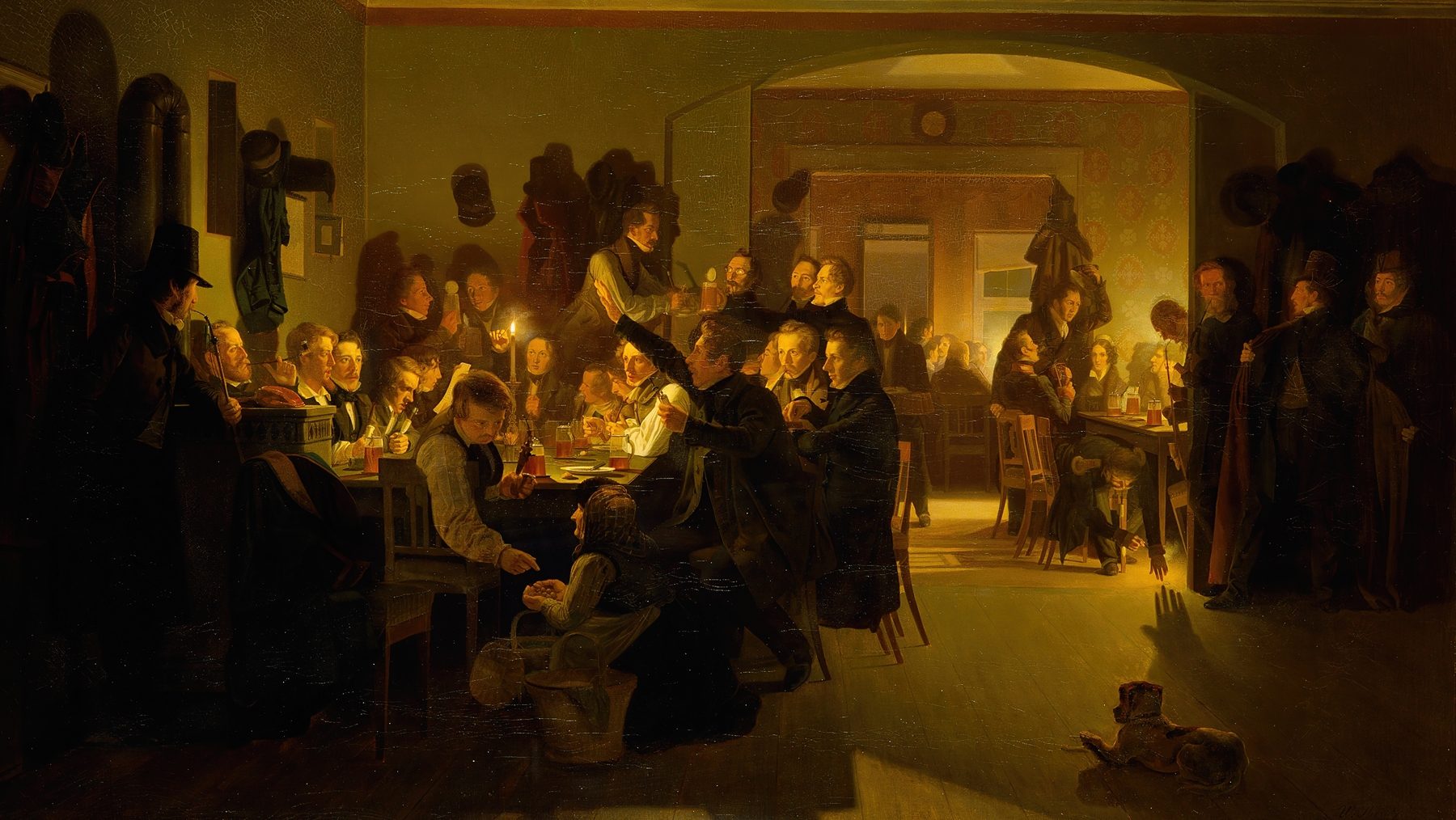
Justin Giboney's grandfather
Christianity Today June 19, 2025
Illustration by Christianity Today / Source Images: Courtesy of Justin Giboney, WikiMedia Commons

Living in a big city can leave me feeling almost nearsighted. My metro area starts to feel like the center of the universe, and I too easily forget the value and import of what’s happening in smaller places away from the centers of power. I suspect I’m not the only one. 

I noticed that myopia anew a few weeks ago as I drove down a familiar brick road in my mother’s hometown. Decatur is a city of about 70,000 in central Illinois, known as the Soybean Capital of the World and original home of the Chicago Bears. It’s struggling. After losing 400,000 manufacturing jobs over three decades, the economy is everywhere marked by one of America’s most effective bipartisan projects: deindustrialization.

Yes, both Republicans and Democrats, influenced by big-business lobbies with “corporate myopia,” deserve credit for the situation in Decatur and many places like it all around the country. American industry went overseas, executives got richer, the middle class was hollowed out, and our sense of community waned. But at least televisions got cheaper.

I was in town for a street-naming ceremony in honor of my late grandfather, Bishop Thomas Lee Cooper, a cleric in the Black Pentecostal denomination Church of the Living God, Pillar and Ground of Truth (PGT Nation). He served that community as a pastor and civic advocate for decades. He sought voter rights and equality in education and often worked with local sheriffs and courts to get people out of jail. Once they were out, he’d help them find jobs to rejoin society. In fact, he was called to help secure the release of Rev. Jesse Jackson from a Decatur jail in 1999. 

As a child, I’d sometimes stay with my grandfather for the summer. This meant entire days in church on Sundays. On weekdays, we’d drive around town delivering groceries; visiting and praying for the sick and shut-in, as they’re still called in the Black church; and attending community events.

My grandfather was known for his energy, impatience with delayed action, and generosity beyond his means. And like Decatur, he was small in stature but dignified. He didn’t graduate from high school or run in a circle of elites, but he was wise and upright. During the street-naming ceremony, his neighbors and fellow clergy members spoke of a legacy of integrity, faith, and service.

God often blesses us with forerunners, people who come before us and sacrifice to make our lives better (Mal. 4:5–6). “Someone’s sitting in the shade today because someone planted a tree a long time ago,” as the investor Warren Buffet once said. These forerunners go into tough places and take on challenges for the sake of our well-being. They’re called pillars of the community because they hold us up. Even with Decatur’s economic well-being still in flux, it’s clear my grandfather was a forerunner.

He also left a special inheritance—in the biblical sense, for in the Bible, inheritance is about more than money or property. It’s also about character and a characteristic approach to life (Prov. 13:22; 2 Tim. 2:2–10). The most fruitful legacy is an intangible resource that outlives the person handing it down. It’s a legacy that guides, inspires, and gives us a standard to uphold. 

We can recall Mahalia Jackson’s gospel-laden songs to guide us through trying times with a joyful outlook. The legacy of Fannie Lou Hamer should inspire a synthesis of tenacity and grace in civic engagement. The ever-astute Gardner C. Taylor’s legacy should set a standard for diligence in study and concision of speech. And looking beyond these three, if their generation could display love of enemy under the lash of Jim Crow, then we have no excuse for not doing the same today. They faced worse and did more with less.

As I preached in my grandfather’s church that Sunday, I saw my three sons and nephew watching me in the exact same pews from which I watched my grandfather and imitated his “whoop.” I realize I have an obligation to uphold that legacy of orthodoxy and love of neighbor. Squandering it under the temptations of the day would be a terrible disservice—and not only to my grandfather but also to Christ.

The truth is that we were commemorating my grandfather not based on his own merit but based on the way his life served and glorified Jesus. We were celebrating not his flawlessness but rather a life that pointed people to Jesus’ righteousness. This is a legacy we can all leave, whether we’re from big or small places. 

But what happens to these legacies if we’re too unrooted to know our neighbors or if we become anonymous in large spaces? 

We don’t have to romanticize small towns to admit that important things might be lost when we move from tight-knit communities to urban enclaves or their transient suburbs. We might want to think twice about trading close family ties for overpriced neighborhoods where nobody knows our names. Big-city loneliness runs deep. When the glitter rubs off of the big-city sheen, we can long for more simple and intimate spaces.

Yet we don’t have to demand everyone stay in place to acknowledge that America’s been mistaken in how it’s neglected its small towns in policy and culture. 

We’ve too often made idols out of the comfort and efficiency that fuel cosmopolitan life. Yet the endless social striving in these crowded environments can impact the soul, leaving us more isolated, individualistic, and desensitized to certain kinds of immorality. Perhaps many of us go to big cities because they make us feel bigger. We might also like proximity and access to the influential and powerful with little regard for their character and impact on the community. 

We’re all trying our best to be remembered and build legacies. But the Bible says, “Unless the Lord builds the house, the builders labor in vain” (Ps. 127:1). The truth is we’re all small. Our works are filthy rags, and we’re as forgettable as dust—outside our faith in the Creator and service to his kingdom.

Recent celebrity trials have reminded us how many ways people are tempted to compromise for the promise of fame and fortune. These stories should serve as a warning—a reminder to pray there’s something about us that gives people a clearer view of Jesus instead of ourselves and our weakness. As my grandfather knew well, the only legacy worth having is a mirror of Christ.

Justin Giboney is an ordained minister, an attorney, and the president of And Campaign, a Christian civic organization. He’s the author of the forthcoming book Don’t Let Nobody Turn You Around: How the Black Church’s Public Witness Leads Us out of the Culture War.

Ideas

Frederick Douglass Found His Mission in the Black Church

In newly formed Black congregations, the famous abolitionist and others were able to live out their faith—and affirm their full humanity.

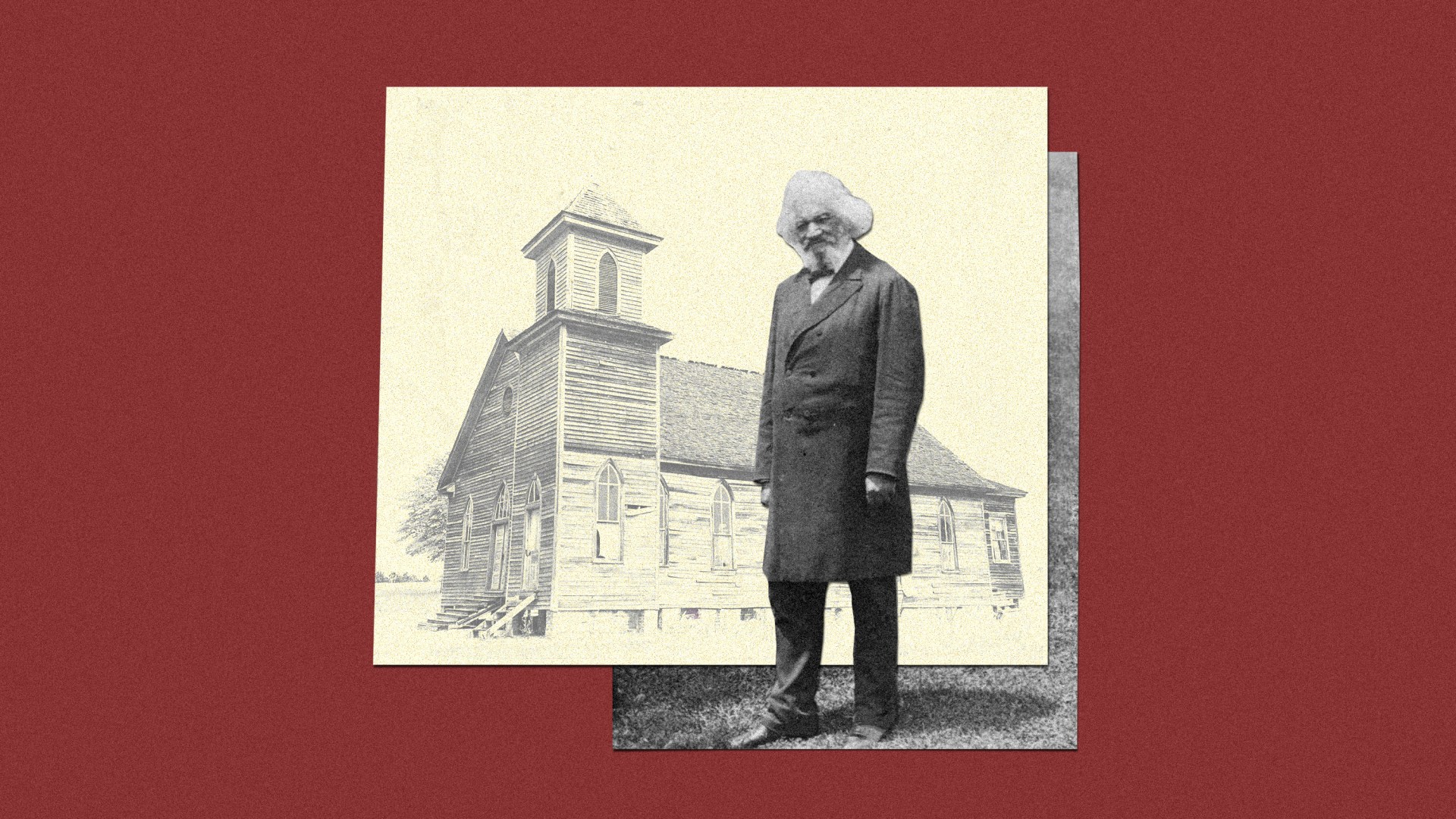
A collage of a church building with a cutout figure of Frederick Douglass.
Christianity Today June 19, 2025
Illustration by Elizabeth Kaye / Source Images: Wikimedia Commons

(For the previous article in this series, see here.)

“The negro can go into the circus, the theater, the cars … but cannot go into an Evangelical Christian meeting,” an elderly Frederick Douglass exclaimed in 1885 to a crowd in the nation’s capital. They had gathered to celebrate the 23rd anniversary of the abolition of slavery in Washington, DC, a result of the first emancipation law passed by the U.S. government in 1862. Three years later, in 1865, Union troops ordered the freedom of slaves in Texas on a day that came to be known as Juneteenth, and the 13th Amendment forbade the practice throughout the country.

But for the famed abolitionist, the meeting wasn’t just a celebration. It was also an occasion to critique evangelicalism, a movement with which he had a complicated relationship.

In his last autobiography, Life and Times of Frederick Douglass, Douglass tells the story of how he became a Christian around 1831 while listening to the preaching of a white Methodist minister. After his conversion, Douglass, who was a teenager at the time, was discipled by a slave whom he called “Uncle Lawson.” He writes that Lawson nurtured a love for the Bible in him, set an example of ceaseless prayer, and encouraged the belief that God would one day free Douglass for a “great work.” Lawson also connected Douglass to a fervent community of enslaved Christians who met to worship in seclusion.

Recalling his early days as a believer in Maryland, Douglass wrote he “saw the world in a new light.”

“And my great concern,” he said, “was to have everybody converted.”

But the beauty he found in the gospel was mixed with sorrow when his master, Hugh Auld, discovered the Lawson-led hush-harbor community where Douglass worshiped, and forbade him from attending the meetings. Douglass felt “persecuted by a wicked man” but became hopeful again when Auld himself converted to Christianity in an evangelical revival. Douglass had hoped it would turn Auld into a “more kind and humane” man, as he wrote in his first autobiographical narrative. But instead, Auld “found religious sanction and support for his slaveholding cruelty.”

Douglass’s muddled experience with evangelical Christianity mirrored what many other slaves experienced. Many of them came to faith through evangelicalism and were able to grasp the hope of emancipation—and equality. Yet they also saw white evangelical preachers espouse proslavery doctrines and comfort with tearing apart Black families to uphold the lucrative institution. With this hypocrisy in mind, Douglass famously wrote, “I love the pure, peaceable, and impartial Christianity of Christ: I therefore hate the corrupt, slaveholding, women-whipping, cradle-plundering, partial and hypocritical Christianity of this land.”

Although free and enslaved Black Christians could see the contradictory views held by their white counterparts, they left neither Christianity nor evangelicalism. Instead, they formed their own churches within the tradition—one of which became a home to Douglass after brief stops along the way.

After attending the Lawson-led hush harbor, Douglass was a member of the integrated Methodist community in Baltimore, Maryland. There, he worshiped with other slaves and slave owners, who he mentions were at times viciously violent to the enslaved churchgoers outside of service.

After escaping to freedom in his early 20s, he sought to join a Methodist Episcopal Church in Massachusetts, a state that had effectively abolished slavery decades beforehand. When Douglass arrived in the town of New Bedford, he expected to find a less hypocritical practice of Christianity. But what he saw was another form of degradation: Black congregants separated and seated behind their white counterparts. And their second-class status further reinforced during Communion, in which they were invited to partake after all the white members were served.

Douglass never returned. Instead, he joined a local branch of the African Methodist Episcopal Zion Church, a Black denomination that was formed in New York City in 1821.

Around the same time, other Black Christians were also joining African American, or as they were called back then, “African” churches. The first ones were formed in partnership with white people who supported separate meeting spaces for African Americans. In the South, some of the first Black congregations in Georgia and South Carolina were formed as African Baptist churches. They were established by preachers, such as George Liele and Andrew Bryan, who were born into slavery. In other parts of the region, enslaved and free Black preachers were also becoming pastors and leading their own flocks.

But after some slave revolts, slaver owners grew suspicious and the Southern Black churches became less prevalent – and independent. White supervision of worship services became more common, leading Black congregants to transform their churches into clandestine gatherings near swamps and hush harbors.

Meanwhile, in the North, the African church movement continued to grow. Black Baptists, Methodists, Presbyterians, and Episcopalians who converted during evangelical revivals formed separate denominations or new congregations, the most prominent of which were the African Methodist Episcopal (or AME) Church, the African Episcopal Church of St. Thomas, and the African Presbyterian Church.

The churches came about in a variety of ways. Some, like the AME and the African Episcopal Church of St. Thomas, were formed after the founders, Richard Allen and Absalom Jones, refused to accept racism and second-class treatment within the white church. The African Presbyterian Church was organized after free Black preachers attracted large Black crowds with public sermons and formed them into one congregation. Meanwhile, others—like Thomas Paul’s Abyssinian Baptist Church in New York—came at the request of Black congregants who initiated a process to separate from an integrated church.

But whether they worshiped in their own denominations or congregations, these new spaces gave Black believers the ability to live out their faith in a way that affirmed their full humanity. As a result, many churches became hubs for Black abolitionists, aids to those sojourning through the Underground Railroad, and purveyors of a Black evangelical theology that championed the imago Dei.

When Douglass moved to New Bedford, he began gravitating towards the abolitionist movement and the writings of William Lloyd Garrison, the publisher of the anti-slavery newspaper Liberator.

After becoming a member of New Bedford’s African Methodist Episcopal Zion Church in 1838, Douglass received his license to preach through the denomination. Thankfully, some of the historical documents we have from this time give us a window into his theology and speeches, which went beyond castigating proslavery evangelicals for their participation in a cruel institution. He also spoke to the heart of the matter: how they view Jesus.

In his 1885 speech at the nation’s capital, Douglass said that “of all the forms of negro hate in the world,” he wanted to be spared from the “one which clothes itself with the name of the loving Jesus.” He then touched on what most Christians know: Jesus associated himself with the poor and the lowly.

Even though the abolitionist was facing a crowd, his words were aimed at evangelist Dwight L. Moody, a white minister who had recently visited Washington. Moody was the most prominent evangelical evangelist of the time, attracting hundreds and thousands to his preaching tours. But when he came to the nation’s capital, he barred Black people from public revival meetings and made separate visits to their churches.  

As evangelical Christians, Douglass and Moody would have articulated the main tenet of the gospel: that human beings need to repent and receive forgiveness from God, and be transformed by the Holy Spirit, which comes only through Jesus Christ. But Douglass and many other Black Christians also saw their faith as a call to be fully formed by the life of Christ—who himself was lowly, poor, and despised.

Douglass rightfully understood Spirit-enabled conformity to the image of Christ would require white evangelicals to stop degrading Black people who had occupied a place of disrepute in society. He saw their comfort in doing so as evidence of a malformed Christianity, one that showed outward doctrinal marks but lacked a renewed view of creation that comes from authentic communion with Jesus.

Douglass’s speech in Washington came at a time when African Americans needed help. The Black community was discouraged. They were living under a president who sided with white Southerners on their reluctance to treat Black Americans as equals. They were also suffering from increasing racist violence and marginalization, a societal issue that the Supreme Court’s verdict on Plessy v. Ferguson strengthened.

Douglass saw the same spirit that had animated the cruelty of proslavery theologies being reinvigorated. With this in mind, he issued his critique—not to demean evangelicalism but to invite it not to repeat the sins of the past.

Jessica Janvier is an academic whose focus crosses the intersections of African American religious history and church history. She teaches at Meachum School of Haymanot and works in the Intercultural Studies Department at Columbia International University.

News

Inside Russia’s Massive Campaign to Abduct and Indoctrinate Ukrainian Kids

One kidnapped teen tells his story. 

Vladyslav Rudenko with a Ukrainian flag and boxing gloves
Christianity Today June 19, 2025
Courtesy of Save Ukraine

Three Russian soldiers forcibly entered Vladyslav Rudenko’s home in October 2022. He was only 16. They had guns. 

“Pack up your clothes and personal items,” they said. He wasn’t allowed to leave a note to his mother. No calls to relatives. No clues about his destination.

Moscow occupied Rudenko’s city of Kherson, Ukraine, a week after the full-scale invasion in February 2022. Soldiers detained hundreds and tortured dozens of people in the city. Then Russian authorities began targeting the kids.

The officers ordered Rudenko onto one of 17 buses filled with Ukrainian children. They started driving. When the bus reached Crimea, the southern peninsula illegally annexed by the Russians in 2014, border officials stamped Rudenko’s documents. He looked at the stamps. There was an entrance date. No exit date. 

That’s when he knew.

“We understood at that point that we might never come back,” Rudenko told Christianity Today.

There is no way to know exactly how many children Russians have abducted from Ukraine. The Ukrainian government estimates nearly 20,000 have been taken. Russia places the number much higher—claiming 700,000. Moscow insists these aren’t abductions, though, but humanitarian efforts, offering children a reprieve from war. Some were supposedly going to summer camps but then didn’t return to their parents in the fall. 

Russian families have illegally adopted some of the children.

Others appear to be living in reeducation facilities. The Yale Humanitarian Research Lab has identified more than 8,400 children living in at least 57 locations scattered across occupied Ukrainian territory, Russia, and Belarus. Some are in Russian military training centers—or worse, fighting against their own country, according to the Institute for the Study of War, a Washington-based think tank.

Christians are part of the efforts to bring kids back home, said Mykola Kuleba, an evangelical Christian and founder of Save Ukraine. His Kyiv-based humanitarian organization has a wide range of support, but Christians play a significant role, he noted. 

Kuleba is careful not to share the logistics of his organization’s “underground railroad,” but he said it’s a tedious and expensive process. Save Ukraine has rescued more than 600 children so far, about half the total number of children who have been returned home to Ukraine. 

Rudenko was one of them. 

In May, he and his mother, Tetiana Bodak, joined Kuleba in Washington, DC, where they met with American lawmakers. The International Criminal Court has said Russia’s child abductions should be considered a war crime. Many are urging US officials to make the return of children abducted in the war a nonnegotiable term of any cease-fire agreement and Kuleba and Rudenko were there to remind lawmakers not to forget the children.

Rudenko was eager to tell his story to anyone who would listen. The buses took him to a camp in Crimea called Druzhba, he said. Russian officers told the new arrivals to throw away anything promoting Ukrainian identity. Rudenko recalled one teenage girl who defied orders and wore a T-shirt with the words Glory to Ukraine. A military officer cut the shirt off of her. 

The daily routine included morning assemblies around the flagpole with a Russian flag. There were Russian propaganda videos, Rudenko said, and lessons about Moscow’s importance on the global stage and about how Ukraine would soon be part of Russia—also how their Ukrainian identity had been “upgraded” to Russian.

The daily dose of propaganda convinced some Ukrainian kids that their families didn’t want them anymore, Rudenko said. They said they wouldn’t want to go home. 

Rudenko refused to embrace a Russian identity. One day at dusk, he snuck outside, carefully avoiding the camp guards, and pulled down the Russian flag

“For everything that Russia did to my mother, to my family, and to me,” he told CT, “I just took it down and put my underwear there.”

The soldiers put him in solitary confinement for seven days, he said. It was a tiny room with a small window. They gave him pills they said would “calm him down.” Rudenko flushed them down the toilet.

In the spring, authorities transferred him to a military academy. He and 800 Ukrainian boys learned to handle weapons and operate drones and tanks. The officers tried to turn them into Russian soldiers.

Before Rudenko could be sent to the battlefield, though, his mother began working with Save Ukraine. They drafted a rescue plan that involved extensive paperwork (required by Russian authorities to prove parental rights) and thousands of miles of travel. 

Rudenko was only 60 miles from home, but a direct trip would have required travel through war zones and difficult security corridors. Instead, Bodak made a circular trip across Ukraine’s eastern border into Poland, then north into Belarus, through Russia, and southwest into Lazurne in occupied Ukraine. 

When Rudenko’s mother arrived at the military camp, Russian authorities interrogated her for three days and threatened her with 25 years in jail. 

Anastasia Dovbnia, Save Ukraine’s international relations manager, said Russian officers required the mother and son to state in a recorded interview their support for Russia’s occupation and their fear of returning to Ukraine—lies they manufactured to secure their freedom. 

“They’re still using pieces of this interview and circulating it all over to promote this false narrative of rescuing these kids,” Dovbnia said. 

Rudenko and his mother made it home to Kherson in May 2023, seven months after Rudenko was taken, six months after Ukrainian forces reclaimed the city from Russian control.

Rudenko is glad to be home, but he worries about the fate of those he left behind, including friends he made at the military camp who might already be on the battlefield. 

Dovbnia said some of them may have gone willingly due to years of indoctrination. “When you’re a kid, when you’re being told you’re an orphan and your family abandoned you and your homeland abandoned you, you are very prone to trust anybody who is providing you with any help,” she added.

During the second round of cease-fire negotiations in early June, Ukraine’s delegation delivered Moscow a list of 339 abducted children Ukraine wants to see immediately returned—a small percentage of the total but an achievable number in the near term. The United States has expressed its support for the return of Ukrainian children. 

Russian president Vladimir Putin has suggested he is open to a third round of negotiations after Moscow and Kyiv complete a prisoner exchange next week, but he has not publicly committed to honoring Ukraine’s request. Meanwhile, Moscow has plans to continue deporting Ukrainian children to “summer camps” in the months ahead. 

“We need strong US support,” Save Ukraine founder Kuleba said. “And the support of Christians who will pray for us, who will stand with us, who will support innocent children just to survive—to find them and to return them to their families.”

Inkwell

The Third Space Revival

A café, a cathedral, and a kingdom: how liminal communal spaces fuel creativity and connection with each other and with God.

Inkwell June 19, 2025
"Artists in Finck’s Coffee-House in Munich" by Wilhelm Bendz

Have you ever walked into a coffee shop—you know the type—filled with carefully curated furniture and wire-rimmed glasses and copies of Infinite Jest, and left with an essay, or an idea, or a method for making homemade cold brew that you never would have had if you’d stayed home?

Have you ever settled into the cozy haze of a British pub and had one of those conversations with your friends that takes on a life of its own, pulling in bartenders and neighboring booths, forming new bonds and strengthening old ones, turning all who partake into beautiful caricatures of themselves?

Have you ever sat among a strange yet sublime combination of midnight truckers, wits-end strung-outs, and broke college students at varying levels of sobriety and observed that, between the hours of midnight and 5 a.m., this is not, in fact, a Waffle House but a Waffle Home?

Have you ever joined the 6-a.m.-ers at the donut shop and realized, as the old regulars swapped bantering stories, that maybe the boomers weren’t being boomers when they said the internet could never replicate this?

If any of these sound familiar, you have been the recipient of the inherent magic of a third place. 

The term third place is nearly ubiquitous now, but it was first coined by sociologist Ray Oldenburg in his book The Great Good Place, which documents the phenomenon of third places and considers their value in larger society.

The term describes the idea that, while most of our lives are spent between our homes (“first places”) and our work (“second places”), a third set of places—cafés, pubs, barbershops, salons, bowling alleys, churches, and the like—give us another space to rest, create, play, and commune, a space to be human.

As Oldenburg explains in a 1997 article on the same topic, “What suburbia cries for are the means for people to gather easily, inexpensively, regularly, and pleasurably—a ‘place on the corner,’ real life alternatives to television, easy escapes from the cabin fever of marriage and family life that do not necessitate getting into an automobile.”

But such spaces have experienced a loss in recent decades, as Robert D. Putnam’s sociological tour de force, Bowling Alone (2000), laments. Using bowling as his guiding image, Putnam describes how the sharp decline of enrollment in bowling leagues is an example of the loss of the social capital such spaces have long provided to American communities. This spells trouble for society and culture.

The COVID-19 pandemic showed us just how bleak our individual and communal lives can look when left entirely without these hubs of social capital. Perhaps I’m an optimist, but I have sensed, since then, an uptick in our collective concern for cultivating third spaces. As G. K. Chesterton reminds us, “the way to love anything is to realize that it might be lost.”

The thing about third places—wide-ranging as they are in character—is that they breed culture in a way that would be impossible without them.

Coffee houses in Paris, London, and New England have served consistently as cradles of intellectual discourse from the early Enlightenment period to the American and French Revolutions and up through the literary circles of Eliot and Hemingway, earning such cafés the title “penny universities.”

The Eagle and Child pub, famed Oxford meeting place of the Inklings, spun from its cozy, wood-paneled walls and leather seats some of the most influential works of fiction and theology of the 20th century. There is a real sense in which Tolkien, Lewis, Williams, Barfield, and the rest were as much products of their time together at “The Bird and the Baby,” as the pub was familiarly known, as they were products of their individual reading lists.

And that famed rendition of Creed’s “Higher” by your buddy Brian that has become the stuff of legend in the friend group would certainly never have happened without the help of your local karaoke joint.

Third places produce culture. But how do they do it?

In The Four Loves, C. S. Lewis describes friendship as postured “shoulder to shoulder”:

Friendship arises … when two or more of the companions discover that they have in common some insight or interest or even taste which the others do not share and which, till that moment, each believed to be his own unique treasure (or burden). The typical expression of opening Friendship would be something like, “What? You too? I thought I was the only one.”

Friendship, then, develops out of a love between two people for a third thing. Lewis theorizes that this would have been true even in the earliest days of humanity:

We can imagine that among those early hunters and warriors single individuals … saw what others did not; saw that the deer was beautiful as well as edible, that hunting was fun as well as necessary, dreamed that his gods might be not only powerful but holy. But as long as each of these percipient persons dies without finding a kindred soul, nothing (I suspect) will come of it; art or sport or spiritual religion will not be born. It is when two such persons discover one another, when, whether with immense difficulties and semi-articulate rumblings or with what would seem to us amazing and elliptical speed, they share their vision—it is then that Friendship is born.

We see here, by inversion, the innately human progression that happens in third places. Kindred souls meet, and from their union flows art, literature, sport—the stuff of shared time, shared experience, and shared soul. Third places conceive friendship, and friendship gives birth to culture. This is only possible because third places are places of hospitality, providing time and space where such connections can flourish.

While I cannot, for the purposes of this essay, fully parse out what produces this effect, I would argue that it often has to do with cultivating a space that invites continued presence—comfortable furniture, aesthetically pleasing decor, rounded surfaces, and mugs (as opposed to to-go cups). Starbucks is hardly a third place. A drive-thru is the antithesis of one. But from a wider view, third places create culture because they are places that exist for the love of things, whether those things be good coffee, food, beer, sports, comedy, you name it.

This is why you have Philadelphia Eagles bars in Portland and why every flannel-donning espresso “granolite” in the Northwest Arkansas tri-state area finds themselves pulled, magnetically, into Onyx Coffee. The best third places convene lovers of particular things.

In the education world, I have often heard it said that great teaching boils down to a simple definition: loving the students and loving the material in the same room. Something similar could be said of true friendship. A true friend genuinely loves the other person in the room and genuinely loves the other thing in the room that unites them. A great third place provides all the necessary material for this process: the other person, the thing, and the physical room.

Without crossing into the dangerous waters of the precarious church–coffee-shop distinction, I must observe that churches too display a similar tendency. The church gathers its people with the express purpose of allowing them to love something outside of themselves—namely, God. When they do so, culture—fellowship, friendship, music, art, cathedrals—are birthed from the communion between them.

In the introductory chapter of Orthodoxy, G. K. Chesterton describes a hypothetical, whimsical fable, “a romance about an English yachtsman who slightly miscalculated his course and discovered England under the impression that it was a new island in the South Seas.”

Chesterton contends that such a sailor, once he had overcome his initial wave of embarrassment, would feel a peculiar mix of emotions—for “what could be more delightful than to have in the same few minutes all the fascinating terrors of going abroad combined with all the humane security of coming home again?”

He muses that the predicament of the sailor is really, in many ways, the predicament of the human race: “This at least seems to me the main problem for philosophers. … How can we contrive to be at once astonished at the world and yet at home in it?”

In this “mixture of the familiar and the unfamiliar which Christendom has rightly named romance,” Chesterton sees an essential human need:

But nearly all people I have ever met in this western society in which I live would agree to the general proposition that we need this life of practical romance; the combination of something that is strange with something that is secure. We need so to view the world as to combine an idea of wonder and an idea of welcome. We need to be happy in this wonderland without once being merely comfortable.

Chesterton asserts that the Christian faith is the best answer to this double spiritual need. And I would contend that he makes a solid case (you should read the book).

Consider how this paradox of wonder and welcome comes to bear in our third places. If Chesterton is right, it is unsurprising that we gravitate toward places that get at this deep human need for “practical romance.” Ultimately, the magic of third places lies in their ability to be places of both wonder and welcome.
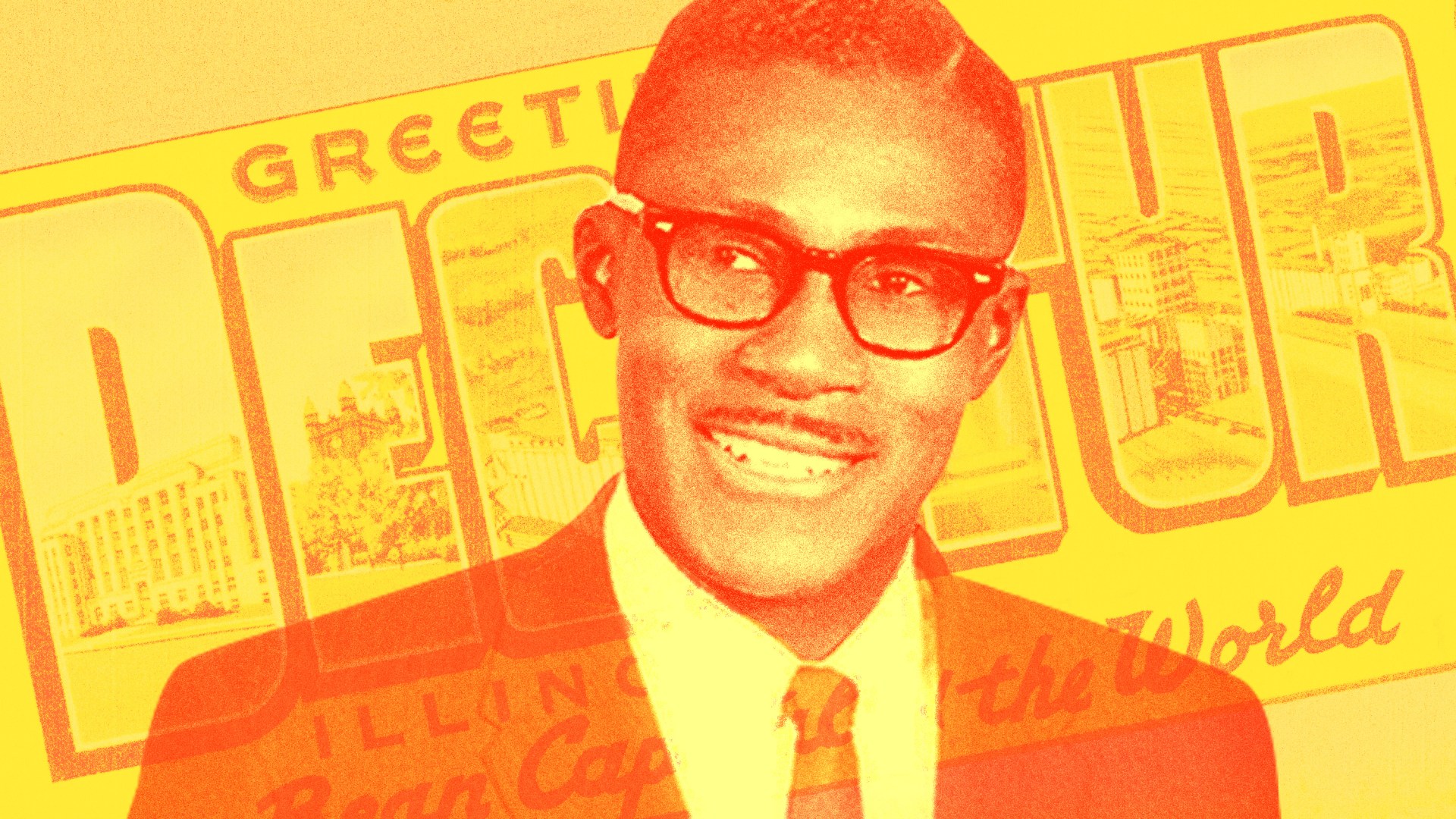
We all know the experience of walking into a local haunt. You step in the door and feel as if you are home. You say, “I’ll have the usual” or, “Put it on my tab.” Sometimes you want to go where everybody knows your name. Yet we also know that part of the allure of these places is that they are decidedly not our homes.

You never know when a friend might walk in. Or a literary agent. Or a cute girl who happens to be reading The Brothers Karamazov. And of course, she wants to be in the book club you are starting up. The rest, as they say, will be history—and you’ll be off on the adventure of a lifetime.

Wendell Berry, Paul Kingsnorth, and others have lamented the disappearance of the front porch as a loss of a fundamental part of American society. I join them, and I would be the first to celebrate a revival of the porch.

The third place is made of similar spiritual “stuff” as the front porch is. The third place is the best front porch we still have readily available in most of American culture. For third places, like front porches, are liminal spaces, in between. They are in our comfort zone and yet out of it. They are our home and yet not our home. They are wonder and welcome.

Charles Dickens tells of an episode in a café that awakened him to this reality:

One [coffee shop] in St. Martin’s Lane, of which I only recollect that it stood near the church, and that in the door there was an oval glass plate with “COFFEE ROOM” painted on it, addressed towards the street. If I ever find myself in a very different kind of coffee-room now, but where there is such an inscription on glass, and read it backwards on the wrong side, MOOR EEFFOC (as I often used to do then in a dismal reverie), a shock goes through my blood.

As biographers note, this scene constituted a profound awakening of Dickens’s imagination to the fantasy of the everyday, and he went on to paint his own fictional world with all the elvish realism of the “Moor Eeffoc.” It is no surprise that this awakening took place in a coffee room. He was not the first (and far from the last) to walk into a third space and leave with a transfigured vision of the world.

In some ways, these places function like large-scale icons. They awaken us, for a second, to the way things are all around us. We overhear a conversation at the table next to us and realize just what the main character should do in the last chapter of our novel. We hear a side-splitting new stand-up bit and are awakened to the gratuitous absurdity of existence. We see MOOR EEFFOC through the window and realize we are sitting in Fairyland.

And this brings me to the relationship between the coffee room and the cathedral.

The church, to state the obvious, is home. It is the place where we know and the place where we are known. Where—if it’s done right—we feel safe to be our most vulnerable. It is the place where the clamor of our masks and impressions should give way to our truest selves in communion with one another.

But it is also the place where we encounter the incomprehensible. The place where we go to meet with the living God who holds the universe in the palm of his hand, upholding stars and planets by the word of his power.

It is wonder and welcome. It is bread and wine—the most human and homely of things. It is the body and blood of the resurrected Christ—a thing more full of wonder and mystery than we could possibly imagine. And I dare not systematize what even the prophets could barely put pen to paper in describing, resorting as they do to the language of silver and gold and horses and cups and swords and eyes and stammering uses of “as it were.”

But I do have just an inkling as to why great third places speak so deeply to our souls. They do so because they give us a glimpse of something that we were made for.

Throughout the story of Scripture, there are two spaces which (though at times permeable) remain largely distinct. There is heaven—the place of wonder and adventure and perfection, where the Lord dwells. And there is earth—home—a place that is, through God’s creative mandate, truly ours.

Yet the whole arc of Scripture seems a dogged attempt at finding a third space where the two can somehow dwell together at last: A garden where God walks with man. A tabernacle where heaven moves upon the earth. A temple where the Holy of Holies is made accessible. A person in whom Word becomes flesh. A meal that is the bread come down from heaven, given for the life of the world. A Presence that places the good law of heaven directly on the hearts of humankind.

And we move at last toward a great Third Place, where heaven will come down to earth and wonder and welcome will finally, fully be one—and more than just the fresh batch of coffee will be made new.

Coby Dolloff writes and teaches at Pepperdine University in Malibu, California. His deepest interests lie at the intersection of theology and comedy. You can follow his work (if you’re not averse to a few memes) on his Substack.

Apple PodcastsDown ArrowDown ArrowDown Arrowarrow_left_altLeft ArrowLeft ArrowRight ArrowRight ArrowRight Arrowarrow_up_altUp ArrowUp ArrowAvailable at Amazoncaret-downCloseCloseEmailEmailExpandExpandExternalExternalFacebookfacebook-squareGiftGiftGooglegoogleGoogle KeephamburgerInstagraminstagram-squareLinkLinklinkedin-squareListenListenListenChristianity TodayCT Creative Studio Logologo_orgMegaphoneMenuMenupausePinterestPlayPlayPocketPodcastRSSRSSSaveSaveSaveSearchSearchsearchSpotifyStitcherTelegramTable of ContentsTable of Contentstwitter-squareWhatsAppXYouTubeYouTube