Inkwell

Like & Subscribe for Eternal Life

Attempting to find salvation through the internet

Inkwell December 1, 2024
Christina's World by Andrew Wyeth

MY LIFETIME OF SOCIAL MEDIA addiction can be traced back to a childhood memory: in third grade, I stole a parenting magazine from my dad’s home office because it contained a cartoon drawing of gravestones, and the illustration style led me to assume the accompanying content would be child friendly. It was not. It was a piece about the necessity of speaking to children about death, and about how understanding human transience can be helpful for giving children an appropriate perspective about their limited time on earth.

I did not yet have a perspective on my mortality but I soon developed one. Because I loved my life and didn’t want it to be forgotten, I hated the idea that all human beings, including myself, were destined to pass into obscurity. I wanted to find ways to escape this fate. If time on earth was limited, then I had better get to work making sure my days were as memorable as possible so that I could have the last word over death.

I spent a lot of time thinking about how to live on in people’s memories after I died. My third grade class was into illustrated historical biographies, the kind that featured luminaries like Benjamin Franklin or Eleanor Roosevelt and the indelible marks they left on society, which carried the suggestion that lives of exceptional accomplishment could never be totally erased. I applied myself to a few dozen hobbies in response, hoping that I was prodigiously gifted in at least one area. To hedge my bets if I had no gifts worth remembering, I kept a small and boring journal about daily life in the 1990s—if everything else failed I could at least try for immortality by placing myself on the historical record.

Self-mythologizing was hard and uncertain work. I accomplished nothing extraordinary, and even on the rare occasions I excelled at something, like a childhood piano recital or a high school paper, there were few people around to see or care. In addition to being exhausted by the sheer difficulty of the task, I was troubled by the spiritual incoherence of what I was doing. Why was I working so hard to impress people? Why did I even want the things I wanted? Was any of this okay? All these questions were about to be answered by the burgeoning social internet.


I SWITCHED FROM a simple phone to a smartphone in the mid 2010s, back when the mood around social media was still generally optimistic. Within my evangelical and charismatic Christian circles, that optimism was especially pronounced. Most of us interpreted the scriptural mandate to make disciples of all nations as an invitation for the Church to pursue the kind of cultural dominance that would make the Gospel inescapable and irresistible, and because social media seemed to put this goal within our reach, we spent time online for what we considered to be spiritual reasons.

Seeking to become known and seeking to elevate the Gospel were indistinguishable pursuits. The Christian figures we imitated commanded enormous audiences online; our favorite worship musicians had enough social media clout to hold brand sponsorships, and a few ministers we admired became such credible Instagram celebrities that when they offered an influencer seminar titled “Glow Up for Jesus,” a few of us booked flights to attend. The social internet intertwined spiritual devotion and personal gain. I loved that social platforms made me feel like I could be seen and known forever, and that I could pursue this feeling in Jesus’ name. Social media seemed like a boon to all of my existential anxieties, and, amazingly, it was free.


IN 2010, ZADIE SMITH argued in the New York Review of Books that we were mistaken in seeing the social internet as a set of neutral mediums that merely digitize the ways we exist offline. Building upon Jaron Lanier’s idea that representing reality via information systems always requires users to simplify their understanding of the world, Smith describes social media platforms as sites where we participate in referendums that limit how a person should be. She writes, “Facebook, our new beloved interface with reality, was designed by a Harvard sophomore with a Harvard sophomore’s preoccupations. What is your relationship status? (Choose one. There can only be one answer. People need to know.) Do you have a ‘life’? (Prove it. Post pictures.) Do you like the right sort of things? (Make a list. Things to like will include: films, music, books and television, but not architecture, ideas, or plants.)”

Smith says there is no way for our online personas to exist as true representations of our selves; she cautions that we are always translated according to whatever rubric is favored by the creators of our platform. Her essay, which began as a response to the Mark Zuckerberg biopic The Social Network, concludes by saying the film works best not as a portrait of Zuckerberg but of users of his platform—“500 million sentient people entrapped in the recent careless thoughts of a Harvard sophomore.”

If I had read this piece at its time of publication, its arguments would not have registered. I was convinced that being online to advance the Gospel protected me from most of the internet’s pitfalls; furthermore, I was busy writing pensive Instagram captions about faith or cavorting on Snapchat to show that I could love Jesus and have fun too, and wasn’t interested in critiques of how I spent my timeIn retrospect, though, it’s clear that Smith was already attuned to how profoundly all of us were being shaped by mediums we hadn’t given much effort to understanding.


IN 2016, as the presidential inauguration approached and the levels of outrage on my social media feeds pitched higher and higher, I scrolled through my phone and thought about how indistinguishable my posts had become from the posts of my friends, and how all of us were looking less and less distinguishable from the ads selected for me by the algorithm. I had been responding to those ads, and while the purchases they nudged me towards were fine—a book on first century Christians, a seminar on politics and faith—thinking about the steps I took towards those purchases distressed me.

During the election year, I had posted frequently in the name of bearing faithful Christian witness to a polarized moment, and noticed that with each post, the content on my screens shifted to mirror and intensify what I was thinking. I always put away my phone feeling validated enough to continue posting about my beliefs online, and sufficiently threatened to continue explaining my opinions to imaginary detractors. Whether or not my posts did anyone any good is unclear, but the purchases I made during this time are reminders that my activity made me so transparent to advertisers that they were able to persuade me of the urgency of my own opinions, and to convince me that I needed physical products to affirm the persona they were helping me create online.

How had I embedded myself in platforms that promised connections with other people, but simply refracted my own views back to me as if every person I knew was merely an accessory to my opinions? How had I convinced myself this kind of myopic self-affirmation was a good thing? And how had I missed the fact that the self-absorption encouraged by my online environment was a form of advertising, and that I had fallen for it completely?


A FEW MONTHS LATER, the Cambridge Analytica scandal broke, suggesting that the internet was not merely a marketplace for goods but a marketplace for ideological loyalties. I started thinking about fissures in my social circles, the sudden radicalization of a few friends, the recurrence in our conversations of arguments or pieces of information with no discernible source, and considered that there were worse things than being persuaded by an algorithm to buy texts on the early church. When I finally got around to reading Smith’s essay, it occurred to me that our lives were being shaped and stored in formats based on the minds of men like Evan Osnos and Kevin Systrom. I had partially accomplished my childhood goal of staving off death’s erasure by living on in someone’s memory.

This was not a good thing. By now it is generally understood that social media is hilariously misnamed; its primary nature is not relational but transactional. As Smith points out, we are appraised and remembered on the internet not because we are so beloved as people, but because everything we disclose as consumers is too lucrative to forget. Writing in Trick Mirror a decade after the publication of Smith’s essay, Jia Tolentino describes where we are now, living in a reality where Facebook is no longer a novelty but a defining institution of our time. Mark Zuckerberg, she says, “understood better than anyone that personhood in the twenty-first century would be a commodity like cotton or gold.”

Tolentino allows that humanity has been dealing with the market’s encroachments upon our consciousness for a long time. Billboards began advertising to travelers on public roads in the nineteenth century; television and radio began advertising to us in our homes in the twentieth. Now, however, she argues that social media is making our relationship to the market claustrophobically intimate. It monetizes our attention spans, harvests our personal data, and rewards its most compelling users with the privilege of becoming “influencers”—living advertisements. Tolentino concludes, “today, there is nowhere further to go. Capitalism has no land left to cultivate but the self.”

The internet as described by Tolentino and Smith—a place where we are held in the gaze of a constant watcher, circumscribed by the imagination of a distant and authoritative mind, consumed by the attentions of something intent on taking everything we have to give—is like the profane equivalent to how Paul describes God to the Athenians. “In him we live and move and have our being,” says Paul, and while he was speaking of the Lord, in our cultural moment this phrase could be mistaken for a dark and concise summation of the internet.


I ONCE TASTED, on a very small scale, what it is like to attract attention on the internet for my faith. One of my Instagram posts was referenced by a Christian podcast, and in the days that followed it was shared and re-shared enough for me to open my feed and see my own face propagating itself down the endless scroll. It felt wonderful. It was perversely life affirming to find my image embedded in the grids of strangers as if I was multiplying myself, colonizing spaces that were usually reserved for other people’s lives. In this one instance I had excelled at performing the kind of life that Instagram’s users and algorithms recognized as good, and now they were reproducing me.

I was being memorialized in ways I had only fantasized about as an existentially anxious child: my face implanted in people’s memories, my ideas veined into their conversations, a version of myself preserved somewhere on Meta’s database. Yet receiving exactly the kind of attention I craved made me uneasy. Online I could live forever, but if Lanier is right in saying that information systems require us to reduce reality to a simpler form, I could only last on these platforms as a reduced version of myself. Based on how people were interacting with the rest of my profile, it was becoming clear that I could prosper online by hawking a cocktail of orthodox Christianity spiked with ethnic specificity and progressive politics. Would it be wrong for me to hone in on these parts of myself and form them into a brand? I had a feeling that the answer was yes, but because I liked the attention I tried anyway.

I spent more time on my phone than I had before. I posted frequently, and when I wasn’t posting I was surveying my life and my thoughts for fragments that might be salable online. Were my spiritual epiphanies on-brand? Did I look good in the accompanying images? The ads cycling across my screens kept pace with these questions, churning out names of Christian influencers I could learn from, and, pragmatically, beauty and clothing recommendations that might make me look better in pictures. I only stopped trying to capitalize on my fifteen minutes of internet fame because I realized how much work it required to hold anyone’s attention. Propping up an internet persona, even one that I had ostensibly created in Jesus’ name, required a scaffold of anxious, spiritualized narcissism that I was building even when I wasn’t online.


THE INTERNET IS NOT a spiritually neutral structure. In Smith’s assessment, social platforms are constantly asking the question of how a person should be; in Tolentino’s assessment, they are asking to what ends a person should be used. These are spiritually fraught questions, and every time we use social media we are interacting with something that is trying to answer them for us. Even Christian communities, in which many of us believed in the internet’s capacity for good, are now reckoning with how we have been shaped by tools we originally thought ourselves to be in control of. How should a person be? How can a person be used? It is hard to look at the history and structure of the social internet and imagine its answers to these questions will be godly ones.

Christianity Today’s audio series, The Rise and Fall of Mars Hill, includes a reckoning with the megachurch’s early adaptation of podcasts and Twitter, and how its senior pastor’s virtuosic performance on mediums that highlighted his gifts as a speaker and writer helped obscure the growing toxicity of his leadership. In the concluding episode, Nick Bogardus, who served as Mars Hill’s public relations director when the church was at its most powerful, describes the dissociations between self and image that occur for ministers who constantly labor to maintain compelling public personas. He identifies this as part of the exchange Mars Hill agreed to make—intact personhood given up for aggressive expansion. Reflecting on Mark Driscoll, whose personal tumults helped devastate his organization, Bogardus says “it wasn’t just the story [of the church] that was shaped by the media, it wasn’t just the people that were shaped, it was Mark that was shaped.” Mars Hill successfully used internet mediums to form as large an audience as possible, and in return, those mediums formed the church.

Whether we are operating as megachurches or as individual Christians getting the glow up in Jesus’ name, it is hard to look at our recent history and ignore the costs that accrue to anyone who builds a platform online. Even in my single Instagram experience of note I could feel that a sacrifice was being demanded of me, but I was open to delivering it as long as I received what I wanted in exchange.

Should I have found all these things surprising? The Old Testament is, among other things, a meditation on our propensity towards idolatry, but it used to make me roll my eyes. I found it ridiculous to believe that people could be persuaded to make offerings to gods of their own making. Now I cannot think of a more accurate depiction of our behavior. On one of the last Sundays before the pandemic put a temporary end to in-person gatherings, I looked around my church and was embarrassed to see how many of us were on our phones. Our hands were scrolling and posting and liking under the pews as if these acts were components to a liturgy, each conducting our own set of prayers, probably to ourselves.


THERE IS A RICH discourse already at work to identify systemic and individual responses to what Tolentino calls the cannibalistic tendencies of our lives on the internet. Legal scholar Timothy Wu, popularly known for coining the term “net neutrality,” has produced an extensive body of work focused on policy solutions for a more civil world online. Jenny Odell’s How To Do Nothing advocates for lifestyle choices that resist the internet’s most destructive tendencies, as does Jaron Lanier’s bluntly titled Ten Arguments for Deleting Your Social Media Accounts Right Now. Their Christian counterparts might be Justin Earley’s The Common Rule, which includes a strong argument for limiting technology usage in order to better love God and people, and Tish Harrison Warren’s Liturgy of the Ordinary, which invites us to reconsider all our daily habits as acts of worshipful devotion. There are plenty of ideas for how individuals and societies can live more humanely in the internet age. What remains for me is the question of what continues to propel us down our current path even as the warning signs abound. By now, critiques of the social internet are mainstream, so if we know these platforms are harming us, why are we still here?

Revising a flawed system is both necessary and not enough. When Zadie Smith wrote about Facebook’s reductive vision of the world, she was issuing a warning, but the attribute she criticizes is the one I think we find irresistible in every form of social media. Perhaps the best encapsulation of Smith’s critique and social media’s continued allure is the hashtag #maincharacterenergy, which has launched a million TikToks framing their creators’ surroundings as mere backdrops to their personal dramas, and positioning the creators as the only protagonists on set. Even if we all know the shrunken, egocentric nature of social media to be terrible for us, why wouldn’t we choose it for the sake of our own immutability?

We clearly need to change the world we have built online, but without considering why we created it in the first place, I think the impulse to make the world over in ways that distort our importance within it will emerge elsewhere. If social media is analogous to the Bible’s descriptions of idolatry, the impulse behind it is analogous to its descriptions of empire. From Cain’s murder of Abel to Egypt’s enslavement of the Israelites to Rome’s conquest of surrounding nations, scriptural narratives are older variations on our current theme: we are prone to devouring the world in the name of our own expansion. The question I wrestle with now is how to confront not only the destructive systems we’ve built, but how to dismantle the impulse that led us to think they were in any way desirable.


WHEN I TRY TO IMAGINE what an opposing impulse would feel like, I think of two memories. In the first one I am alone in my room, and at some point I sense that I am no longer the only person present. There are eyes resting upon me, filled with compassion. I am being watched by someone who remembers me from a time before I could remember myself. I begin thinking about the Genesis narrative, in which the Spirit of the Lord hovers over the deep while the earth is still formless and void, and have the fleeting impression of my self, like the rest of Creation, being conceived in the mind of God before being born into the world.

In the second one my husband and I are standing on the California coast at nightfall, watching shadows sweep across the cliffs until we are enveloped in darkness. All we can see is a faint glow at the horizon outlining the curvature of our planet. Beneath our feet we feel faint, rhythmic tremors from waves thudding against the rocks we stand on. I can sense how negligible we are to this landscape: if we die right now, I think, nothing here will notice. Our surroundings are terrifying and sublime, and eventually they become overwhelming so we take shelter in our car. I feel like Elijah hiding in the cleft of the rock so that the vision of God will not annihilate him.

If social media encourages the impulse towards expansion and self-aggrandizement at any cost, these moments, which seem like holy visitations, do the opposite. When I think about them, I want to fall prostrate. I want to retract myself, not in self-loathing or terror, but in deference to the vast, bracing loveliness of the world around me and the presence of its Creator. These are the kinds of moments that make even the most complex virtual realities seem like dust. Being stored indefinitely in a human-made platform used to appear to me as a form of immortality, but it is mere entrapment in comparison to being known by the God who generated the world.

In the year after I deleted most of my social media accounts, I read Genesis repeatedly. While the internet gave me the unwelcome sense of living in the heads of various tech founders, the creation narrative makes me think that I am living in the mind of God. He originated me, and I existed in His mind before I existed anywhere else. He unfurled the universe out of His imagination, and the world still surges forth upon the words He uttered in the beginning.

He comprehends aspects of humanity that are not translatable or salable or legible to our cultures, the parts that none of us would bother documenting for one another, understanding us as he understands the rest of his own creation, which He formed to be expansive and mysterious and dauntingly beautiful. In him we live and move and have our being.

Most of our lives will be invisible to all but the eyes of the Lord, and while not being watched or recorded by the internet can seem in our culture like a form of death, I often think about the moments that were suffused only with His presence, and how standing before Him felt like standing on the precipice of eternal life.

Yi Ning Chiu is a writer who has contributed features to Relevant and Teen Vogue. You can find more of her work here: yiningchiu.com

Church Life

The Event Horizon of Advent

The Christmas season shows us our redeemed past and hopeful future.

Illustration by Sandra Rilova

Read Psalm 110

I ONCE HEARD SOMEONE CLAIM that if you could enter a black hole and reach the event horizon, you would see into the past and future simultaneously. My attempts to wrap my head around this have not yet been successful. I’m no physicist, but I do understand what it is like to stare at my past or to try to see into my future.

Typically, this causes problems. Looking to the past often leads to regret, shame, or depression about what has happened and cannot be changed. Looking to the future often leads to worry, fear, or anxiety about what may happen. The reason for this, I think, is that my gaze is focused solely on myself. In contrast, Christ calls us out of ourselves to look to him. During the Advent season we are invited to look to the past at what Christ has done, even as we look to the future hope of what he will do when he comes again.

David had his eyes set upon Christ when he composed Psalm 110. In the opening lines, God speaks to someone that David calls, “my lord.” In other words, God is talking to King David’s king. This King of Kings is our Savior, Jesus Christ (Acts 2:34–36). The psalm paints a portrait of Christ as victor over God’s enemies, ruler of the nations, powerful, vibrant, and just.

As if this picture wasn’t magnificent enough, the psalm adds another layer to the image: Christ is also a priest after the order of Melchizedek. The author of Hebrews explains why this is significant: “[Melchizedek is] without father or mother, without genealogy, without beginning of days or end of life, resembling the Son of God, he remains a priest forever” (Heb. 7:3). Christ is an eternal priest, unlike the Levitical priests of the Old Testament, a perfect and continuous mediator, intercessor, and advocate between God and his people.

In this poem, David invites us to focus our thoughts, our affections, and our desires on a vision of the priest-king Jesus Christ. As we look into the past and behold the birth, life, suffering, crucifixion, resurrection, and ascension of Christ we are drawn out of our regret, shame, and depression. Christ is king; he has the power to ensure there is nothing that has happened to us, or by us, that God will not use for good (Rom. 8:28). Christ is our priest; all our shame and guilt has been dealt with on the cross.

More than that, Christ has conquered death and the Holy Spirit who brought Christ to life dwells in us, giving us new life and hope for the future. Our worries, our fears, and our anxieties are put into proper perspective when we look to Christ and remember that just as he came once, he will come again to destroy evil, uphold justice, and save his people.

For a psalm so full of violent imagery—enemies made into a footstool, shattered kings, corpses filling the nations—David ends on a surprisingly calm note. In the midst of judging the nations the priest-king stops to take a break. The final portrait David paints for us is of Christ, pausing to take a drink of cool, refreshing water from a brook, then lifting up his head (v. 7). His pause indicates that the end of all things is not yet upon us. We stand in our present moment—the event horizon, if you will—between the first and second coming of Christ. Rather than obsessively staring at our own past or future, through this psalm, Christ invites us to look at him to find forgiveness, identity, peace, security, and hope in what he has done for us in the past, and in what he will do when he returns in the future to establish his reign as priest and king, once and for all.

Andrew Menkis is a theology teacher, with his poetry and prose published in Modern Reformation, Ekstasis, The Gospel Coalition, and Core Christianity.

This article is part of A Time for Wonder, a 4-week devotional to help individuals, small groups, and families journey through the 2024 Advent season. Learn more about this special issue that can be used Advent, or any time of year at http://orderct.com/advent.

Church Life

Paving the Way For God’s Perfect Plan

John the Baptist reveals the call for preparation.

Illustration by Sandra Rilova

Read Luke 1:14-17

THERE’S SOMETHING about the idea of starting from zero that makes me want to run and hide. As a recovering perfectionist, I like a beautifully constructed plan that articulates all the ins and outs of how things are supposed to go. The thought of being the one to “pave the way” without a guide or rule book is a daunting prospect for me. Have you ever been there? Maybe you’ve been the one who was called to be the “first” in your family. The first to graduate from college; the first to move outside of your hometown; the first to become a Christian. 

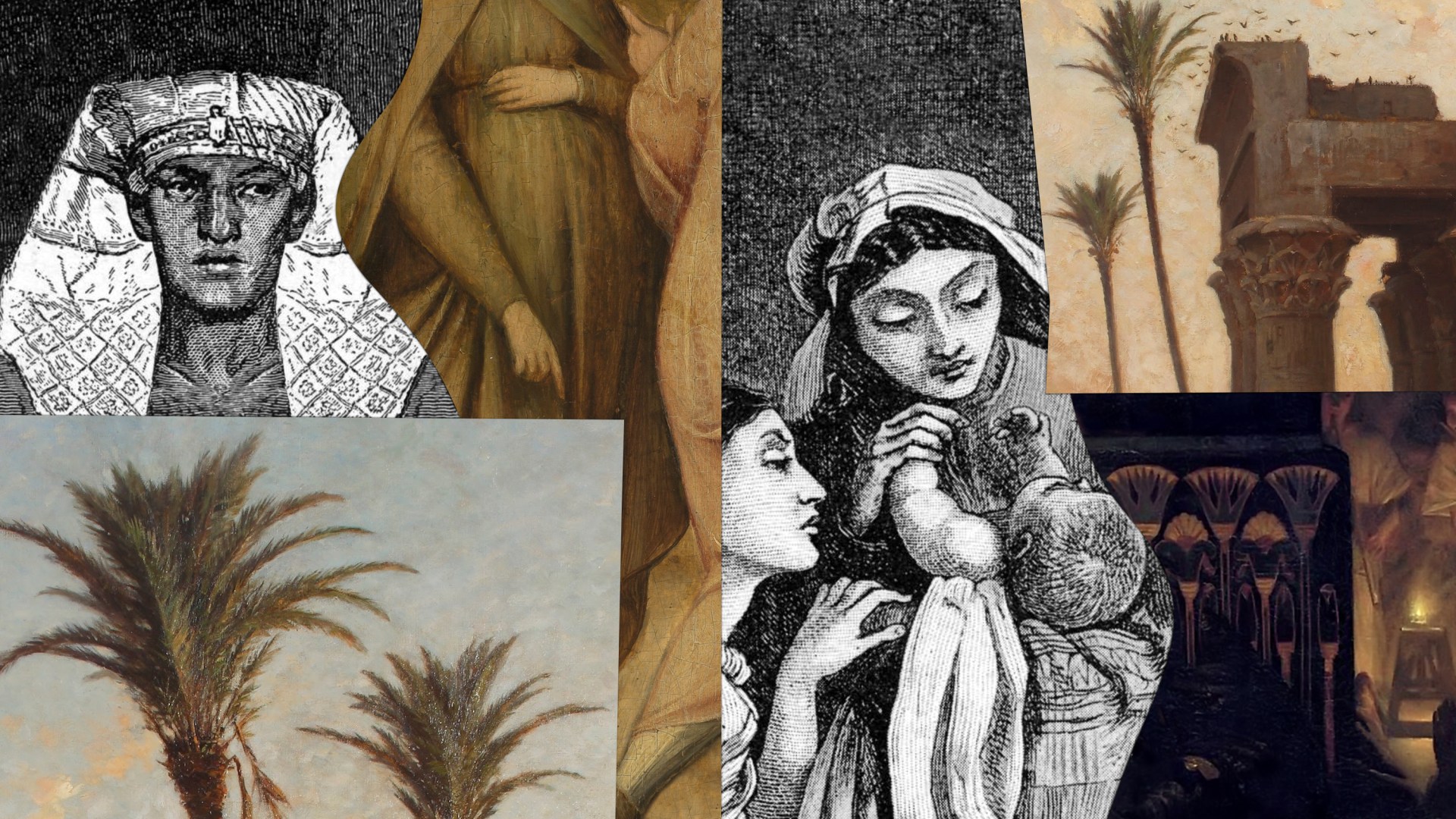
This is the position John the Baptist found himself in before he was even born. In Luke 1:17, we find the angel of the Lord proclaiming the pioneer that John would be: “And he will go on before the Lord, in the spirit and power of Elijah, to turn the hearts of the parents to their children and the disobedient to the wisdom of the righteous—to make ready a people prepared for the Lord.” John was left with the honorable, and I’m sure unnerving, task of preparing people for Jesus, the promised Messiah. How’s that for paving the way? 

And while I know that God equipped John with everything he needed before he was put on this earth, I can’t help but think about the weight and real human emotions that John might have felt and been burdened by. Was he afraid of making a wrong decision? Was he overwhelmed by the idea of authentically articulating who Jesus is? I can’t imagine starting at square one with no books on evangelism, no sinner’s prayer or sermon illustrations. 

It’s easy for impostor syndrome to kick in when we look at “paving the way” through the lens of our own abilities. But the beautiful lesson we learn from the life of John the Baptist is that paving the way has nothing to do with our abilities, and everything to do with our availability to God’s call. Being an available vessel grants us the privilege of being in constant collaboration with the Spirit at work within us. And when we are operating from that place of collaboration, there’s no task or call too big for God to accomplish. 

He used an old, unlikely couple and their baby as the vessel to spread the good news about the coming of the Savior of the world. Though it will inevitably look different in our own lives, it can be powerful to contemplate what God is inviting us personally to be a vessel for through the Advent season and beyond. It is clear through the lineage of Jesus that God delights in working through our imperfect, unlikely stories to shine his light and love … even if that means you’re one of the “firsts” in your sphere of influence to do so. As Christmas dawns and we consider the life of John the Baptist, paving the way for Jesus and his world-changing work, we can consider the invitation that God has bestowed upon our own lives, and whether we will accept it. It may be that there is a host of people you’re paving the way for. 

Jasmine Jones is a mentor and connector, passionate about empowering others to boldly live out their faith through her online community, The Purpose Corner.

This article is part of A Time for Wonder, a 4-week devotional to help individuals, small groups, and families journey through the 2024 Advent season. Learn more about this special issue that can be used Advent, or any time of year at http://orderct.com/advent.

Church Life

The Song of Mary Still Echoes Today

How the Magnificat speaks to God’s care for the lowly.

Illustration by Sandra Rilova

Read Luke 1:46-55

THE CHRISTMAS STORY is full of surprising celebration, even in the midst of challenging circumstances. Spending time with Mary’s Magnificat brings a unique event to mind: Imagine a small team from Nicaragua reaching the Little League World Series, only for most parents to be unable to attend due to immigration hurdles. Yet, across six states, the Nicaraguan American community rallied, traveling to the games and offering a chorus of support in place of absent parents. This heartwarming display of solidarity that occurred in the summer of 2022 captures for me the essence of Mary’s response to God’s invitation in Luke 1.

Advent, a season of anticipation for Jesus’ arrival, also compels us to examine the backdrop: a world of darkness, poverty, and desperation. Mary and Joseph find themselves on the run, seeking refuge for the birth of their child. Yet, amid the shadows, light arrives and beckons us to embrace its warmth. 

The core message? God’s promises often blossom in the most improbable circumstances. Luke 1 paints a vivid picture: The angel Gabriel announces Mary’s pregnancy, and instead of succumbing to fear, Mary bursts into song. Her song isn’t a plea, but a declaration of faith, a melody brimming with comfort for us. 

Mary’s song, particularly verse 48, reveals the cornerstone of her faith: “He has been mindful of the humble state of his servant.” The phrase “humble state” signifies poverty, insignificance, and captivity. Mary recognizes her reality as a marginalized woman in a society that often disregarded women and ostracized the poor. 

This scene plays out in the marginalized communities today—immigrants, people of color, those struggling on the fringes. Yet, Mary’s song transcends circumstance. It whispers hope, reminding us that God isn’t a distant god, but one who sees us right where we are. 

Mary’s song echoes another unlikely heroine—Hannah, an elderly, barren woman ostracized for her childlessness. Yet, God remembered her (1 Sam. 1:19). Hannah’s song, defying the social norms of her time, finds a new voice in Mary. This connection isn’t accidental. Luke draws the connection between these remarkable women, reminding us that God’s favor often rests on those deemed insignificant. 

Think of unlikely mothers throughout history—Sarah, Rebekah, Rachel—who birthed pivotal figures in God’s plan. God chooses the seemingly barren, the overlooked, to showcase his power. His promises flourish in the soil of impossibility. 

Mary concludes her Magnificat with a powerful declaration: “He has helped his servant Israel, remembering his mercy to Abraham and his descendants forever” (Luke 1:54–55, CSB). This is a testament to God’s unwavering faithfulness. He keeps his promises, fulfilling the prophecy whispered in Genesis 3:15 and the covenant established with Abraham in Genesis 12:3. 

The celebration of Jesus’ birth isn’t just about God’s faithfulness, it’s about the fulfillment of our deepest yearning—a Savior who redeems us. 

Mary’s encounter with God compels us to action. True gospel enjoyment means solidarity with the margins from which it came. Jesus didn’t just offer salvation; he walked with the ostracized, the hurting. 

In moments of doubt, confusion, or despair, the most potent act of faith is to stand with someone else, witnessing the birth of their promise. Just as Mary journeyed to support Elizabeth, we are called to create a community of support, a chorus of encouragement for those on their own difficult journeys. May we, like Mary, find solace in God’s presence. May we seek him in the faces of loved ones and strangers alike. May our hearts burn with the warmth of his love, a beacon of hope in a world yearning for light. 

Rich Perez served as a pastor and public speaker for 20 years. Today, he is a filmmaker, crafting narratives for brands and organizations.

This article is part of A Time for Wonder, a 4-week devotional to help individuals, small groups, and families journey through the 2024 Advent season. Learn more about this special issue that can be used Advent, or any time of year at http://orderct.com/advent.

Church Life

The Unexpected Fruit of Barrenness

How the kingdom of God delights in grand reversals.

Illustration by Sandra Rilova

Read Luke 1:39-45

I SAT ON THE COUCH AND WEPT, still dressed in stiff business casual. I had returned home from the classroom with the realization like a cold stone in my gut—I was not healthy enough to be a teacher. I could not finish my master’s program. I could not spend the hours or energy required to do this one thing I thought God had been leading me toward my whole life. This garden I planted and tended since my childhood, just now springing up, was to die. 

So, I gave it up. There was nothing to be done but pray that God would do something beautiful in the uprootedness of it all. I stood in the middle of dead dreams, unsure how—or what—to replant. 

While in vastly different times and with different implications, I find a resonance in the story of Jesus’ lineage and the way Elizabeth made her home in the wreckage of her uprooted dream. Her pain of a lost dream was compounded by the dishonor that barrenness brought in the ancient Near East. But in a moment, God reversed her story. “The Lord has done this for me,” she proclaimed. “In these days he has shown his favor and taken away my disgrace among the people” (Luke 1:25). Here was hope, growing soft and green in the darkness of the soil, as surprising as spring. God specializes in epic reversals. Elizabeth would bear not just any son in her old age—she was carrying the child who would prepare the way for the Messiah. 

I was still on that couch with crumpled tissues clenched in trembling hands when a wise man, now my husband, helped me sort out what was still growing in the garden: those seeds planted by the hand of God that I had missed. Years later, I’m harvesting different fruit than I thought I would—but it’s better fruit. I consider this my own mini-reversal. God took a dream I thought had been rendered useless and flipped it into a reality of teaching through writing and discipleship, things that fit the contours of my heart better than a classroom could. I’ve made my home in this garden, and I can’t imagine it any other way. 

God’s reversals fill the pages of Scripture. Consider the birth of Isaac to an elderly and once seemingly barren Abram and Sarai, Joseph’s rise from slave to ruler, or the way Haman’s plan to destroy the Jews was foiled by two Jews God lifted to positions of power in their place of exile. These stories speak to the way God delights in flipping situations upside down, bringing salvation in the most surprising ways. 

All of these foreshadow the most surprising reversal of all. God was born as a baby to usher in the upside-down kingdom of heaven where the last are first. He defeated death and rose from his garden grave as the firstborn in the resurrection, purchasing our eternal life. 

This ultimate reversal that flipped the principalities and powers upside down is what Elizabeth’s reversal first points to. Having a child meant that she would no longer be called barren, undoing her earthly shame. But the baby Mary carried would undo Elizabeth’s eternal shame. When Mary’s greeting reached Elizabeth’s ears, “the baby leaped inside her, and Elizabeth was filled with the Holy Spirit. Then she exclaimed with a loud cry, ‘Blessed are you among women, and your child will be blessed!’” (Luke 1:41–42, CSB). Elizabeth’s awe of God swelled as the Savior of the world, still in a womb, came through her door in the swollen belly of a virgin. The baby in Elizabeth’s womb leaped, like hope springing up, because Mary’s baby had arrived to save us. 

This God is leading us home to the new heaven and earth, a beautiful garden city where death is no more. And until then, he is planting new life in you and me. Our God gives us something better than our earthly dreams. He gives us himself. 

Alicia Hamilton authors Bible studies and disciples college students in New Hampshire.

This article is part of A Time for Wonder, a 4-week devotional to help individuals, small groups, and families journey through the 2024 Advent season. Learn more about this special issue that can be used Advent, or any time of year at http://orderct.com/advent.

Church Life

The Surprising Arrival of a Servant

Jesus’ introduction of justice through gentleness.

Illustration by Sandra Rilova

Read Isaiah 42:1-4

MAN OF SORROWS, lamb led to the slaughter. At the time of their recording in Isaiah 53, there was every possibility that these monikers would remain purely abstract. The Israel addressed in Isaiah is to face judgment, exile, and restoration under Assyrian captivity and Babylonian invasion. To a people under duress, Isaiah’s prophecies helped endow a messianic imagination and a vision of a salvific figure. 

But the first suggestion that this figure would not take on the form of a military revolutionary, as some might have hoped, lies in the word servant, from the Hebrew word ebed, used throughout Scripture to variously connote a slave, a vassal king, a subject, and a tributary nation. The word foretells a chosen servant who receives the delight of the Lord and the Spirit, and who brings long-awaited justice to the nations. 

Meekness, humility, and modesty characterize Christ from the start, who came into this world as flesh and blood, as an infant in full vulnerability. He is close to the hearts of all those who suffer, including those who face the physical corrosion and psychological turmoil of poverty, disaster, and war. Christ was born into a world that had sought to destroy his infant flesh; the slaughter of the Holy Innocents under Herod’s heinous regime is evidence enough of this earthly brokenness. It is, as the poet Czesław Miłosz describes in his poem “Theodicy,” a world that “lies in iniquity,” where “there is pain, and the undeserved torture of creatures.” It is a world to which the servant described by Isaiah must bring justice. 

Yet this justice is to come through an exquisite tenderness, a strength that lies precisely in gentleness. A reed that is bruised is so frail as to snap at the slightest touch, yet this servant shall not break it. A wick that burns faintly is close to being snuffed, yet this servant shall fan it back into flame. It is Christ who sees possibility and hope for the bruised, for the weary, for the exhausted.

Theologian Eugene Peterson once explained in Eat This Book that a metaphor is “a word that bears a meaning beyond its naming function; the ‘beyond’ extends and brightens our comprehension rather than confusing it.” The metaphors of the reed and the wick help to illuminate an understanding of human difficulty; the actions taken by the servant illustrate how Christ tends to the lowly. It is, as Dane Ortlund describes in Gentle and Lowly, Christ’s most natural instinct to move toward sin and suffering. 

This is the Messiah for whom the world waited amid the silence of God—the one we commemorate in the season of Advent, in which each day is suffused with the dark mystery of anticipation. 

At the heart of faith is a contradiction: a Savior born to die, an infant whose being prefaces a demise by the cruelest of tortures. Even under such indescribable physical, emotional, and mental duress, this servant will become neither faint nor discouraged. Justice will roll over the earth, not just from the jagged deserts familiar to the lands of ancient Jerusalem but beyond, to the distant coastlands that reach the waters.

It is a victory, a realization of justice that is achieved by servanthood, an obedience to the point of death (Phil. 2:8). It is an example of William Langland’s Pacientes vincunt—the patient are victorious, or perhaps, those who suffer shall win. Or as the imagined voice of Christ cries out in Shūsaku Endō’s novel Silence, “It was to be trampled on by men that I was born into this world. It was to share men’s pain that I carried my cross.” 

Christ comes into the world as an infant, growing in the obedience and servanthood for which he has been called. Advent brings this swell of anticipation—a cradling of hope—for the arrival of the Savior, by whom justice will be established on earth through the humility of servanthood. 

Jonathan Chan is a writer and editor. Born in New York, he was raised in Singapore and educated at Cambridge and Yale. 

This article is part of A Time for Wonder, a 4-week devotional to help individuals, small groups, and families journey through the 2024 Advent season. Learn more about this special issue that can be used Advent, or any time of year at http://orderct.com/advent.

Church Life

After Disaster, God Draws Near

How Jeremiah’s prophecy points to Advent’s promise.

Illustration by Sandra Rilova

Read Jeremiah 31:31–34

THE PROPHET JEREMIAH writes from a social, political, and spiritual landscape cramped and dark, like falling into a pit, humid and heavy with the weight of regret. His words, the message from God, match the tone. Read any part of Jeremiah’s prophecy and you’ll see the theme: the failure of God’s people. They couldn’t keep their part of the covenant God made with them, and the young prophet delivers God’s response with unflinching force. Right in the beginning, Jeremiah’s earliest vision establishes what will follow: “From the north disaster will be poured out on all who live in the land” (Jer. 1:14). 

Like Moses before him, Jeremiah initially protests the work God has called him to do, proposing his age as a disqualifier (Jer. 1:6). By traditional accounts, Jeremiah heard the call from God around 627 BC, which makes him something like 20 years old when the book opens. For 40 years, he continues warning of a disaster from the north. 

Not unlike the time of the judges, God’s people are once again caught in a vicious, self-induced spiral of breaking their commitments to God and seeking vindication and consolation anywhere and everywhere else. Jeremiah delivers news of God’s wrath, and he prophesies about the ways God will respond to the people’s unfaithfulness. 

The disaster arrives in 587 BC as Babylon destroys Jerusalem, bringing swift destruction to what had been eroding for centuries. Like a flood, the prophesied pouring-out wipes out God’s dwelling place in the land of Israel—an undoing of creation. 

You could fairly assume that for a person like Jeremiah—an Israelite from Benjamin’s tribe—these were times more dire than what we see in Judges. That was before David, before the temple. With the breaking of Jerusalem, David’s kingdom washed away in a flood of Babylonian destruction. Jeremiah occupies this undone space. 

Jeremiah hears from God not to take a wife or have children. At this point in history and within this Israelite culture, you’ll find no category for a single, childless man. One Old Testament scholar, Joel R. Soza, even suggests that the concept of a bachelor is so incomprehensible that there exists no word in the Hebrew language to describe it. The idea is that Jeremiah doesn’t just carry news of Israel’s tragedy, he not only occupies that place, but he actually embodies the undoneness of it all. Something laden with potential, now barren. 

Jeremiah 31 is a common reading in the Christmas season. The familiarity of the passage might mean we miss the force of its words, and that this message of a new hope passed through chapped lips. Sometimes, those of us on this side of history merely nod at parts of the old stories with which we’d do better to sit. That’s part of the waiting period, of Advent. 

This is the prophet who inhabits an unfaithful land, who delivers God’s harshest judgments, who feels them, and who endures long enough to say these words: 

“The days are coming,’ declares the Lord, ‘when I will make a new covenant with the people of Israel.’” (Jer. 31:31) 

Jeremiah tells a shattered people that, one day, God will again draw near. And this time, his ways will be written on hearts and he will be known beyond instruction. He will forgive and will establish a new covenant, one freed from the actions and inactions of men, one that begins a return to peace and fruitfulness, to Eden. Though dim still, it brightens. 

Aaron Cline Hanbury is a writer and editor.

This article is part of A Time for Wonder, a 4-week devotional to help individuals, small groups, and families journey through the 2024 Advent season. Learn more about this special issue that can be used Advent, or any time of year at http://orderct.com/advent.

Church Life

When You’re Ready for Jesus to Return

The weariness of trial reveals our priorities.

Illustration by Sandra Rilova

Read Haggai 2:6-9

THERE WAS A MOMENT, in the aftermath of my husband’s premature death, when I thought about Jesus coming back and longed for his return with an urgency I had never before experienced. I always knew we were supposed to long for the return of our King—a kind of obligation of anticipation. But I confess I had previously liked my life too much. 

But now, I wanted him to stop all the delays. I imagined the moment arriving and seeing Jesus and thinking, Yes, yes, there you are. Fantastic! And then pushing past him as quickly as politely possible to search for my husband. (Is this what it will be like? A busy airport arrival lounge?) 

I imagined throwing myself into his arms once again. (Dear God, please let it be a little bit like that.) I have never known such longing. And I know that this reveals my longings to be out of order. Of course they are. I feel a bit badly about this, but I can confess it to the God who knows us, and who I have discovered made us more resilient than we know and capable of so much love that the vastness of this love’s loss causes grief to feel like an ocean. 

Advent isn’t normally about feeling badly about ourselves or our lives. That’s Lent’s job—the party pooper of the Christian liturgical year. Advent is more like that event planner friend who is cooking up a great feast and making all kinds of fantastic plans for the next month. We wait. We mark off days on the calendar. We are impatient as we prepare.

Enter Haggai. His name even means “festival,” so he’s perfect for Advent. He’s also just what the returned exiles of 520 BC needed to get them moving on their temple rebuilding project, which they had been neglecting. The temple had fallen into disrepair during their forced absence. There was government pressure to leave the temple in ruins, and the people had been focusing their efforts on their own houses rather than the work of rebuilding God’s house. 

Haggai hears the call to speak into the lives of God’s people. He stirs himself for the task and stirs the pot, prophetically speaking. He urges the people into action. They come to see their priorities have been misaligned and their longings have been in the wrong order. They find their courage. They start to rebuild and repair the temple. 

“Work, for I am with you,” says the Lord (2:4). I wonder if there’s a moment in the life of a prophet like Haggai, when they see that the message God gave them to deliver has both landed—hit the mark almost exactly—and they experience a moment of pleasure. A job well done. That is a fine thing to consider. 

The sun came up for Haggai and his work crew, and it comes up now for us, each day as the morning turns to afternoon and we turn to work and toil. We sweep. We tidy. We build new temples and patch up the old ones. There is garbage to be taken out and fresh flowers to be put in vases. There is holiness to be seen to, and lived out of and toward, as much as we can muster, while we wait. 

And what about our hearts that long? They can also be an offering. Our longings will all be swept up in joy that might feel even more vast than the ocean that grief becomes. We believe, and we wait. 

We are in the afternoon of the most promising of days. So much more is to come. “I will shake all nations, and what is desired by all nations will come, and I will fill this house with glory,” says the Lord Almighty (2:7). Come, Lord Jesus. Come.

Karen Stiller is author of Holiness Here, The Minister’s Wife, and other books about the church.

This article is part of A Time for Wonder, a 4-week devotional to help individuals, small groups, and families journey through the 2024 Advent season. Learn more about this special issue that can be used Advent, or any time of year at http://orderct.com/advent.

Church Life

Zechariah’s Furnace of Transformation

What silence and solitude do to the soul.

Illustration by Sandra Rilova

Read Luke 1:18-20

IT IS TEMPTING to dismiss Zechariah as a fool for doubting Gabriel. After all, if a visitation from an archangel is possible, why not a miraculous pregnancy? Surely Zechariah, being a priest, knew the story of Abraham and Sarah, who also bore a son in their old age. But we know that logic can become puny in the face of deep disappointment or pain—and in Zechariah’s case, the pain ran decades deep. 

“Your prayer has been heard,” the angel told him—a prayer he surely quit long ago, when the last hope for children disappeared with Elizabeth’s fertility (Luke 1:13). After that, Zechariah must have resigned himself to his reality: He was childless, and always would be. That an angel had just blasted through the roof of that reality did not dispel it completely. After so many years of heartache, Zechariah had trouble believing. 

Some time ago, my husband and I experienced a miscarriage. When we became pregnant again a few months later, I struggled with dread every day. Every time I felt a twinge, I was terrified it was a harbinger of something worse—stabbing pain, a gush of blood, unstoppable, irreversible loss. I found it difficult, almost impossible, to believe I was actually going to have a baby. One afternoon, as I sat on the couch, battered by wave upon wave of anxiety, I asked God for a clear sign the pregnancy would be successful. If this baby will be born healthy, let someone knock on our door right now. But even as I prayed, I knew no sign could take away my anxiety. The experience of loss was still too keen. If I’d seen an actual angel—who knows? But I’ve never waited for anything as long as Zechariah had.

To Zechariah, Gabriel said, “And now you will be silent and  not able to speak until the day this happens, because you did not believe my words” (v. 20). Later, we are told Zechariah was struck deaf as well (v. 62). This sounds like a punishment. To be rendered suddenly without hearing or speech is to be isolated from others, forced into solitude—as Henri Nouwen writes in The Way of the Heart, “Silence completes and intensifies solitude.” Yet Scripture does not present solitude and silence as punishments, but as invitations.

Solitude, writes Nouwen, is “the furnace of transformation.” In the silence, stripped of worldly props and scaffolds, we are forced to confront our own “frightening nothingness.” It is this excruciating vulnerability that becomes the doorway to God’s presence, to the place where we surrender to his love. This is the solitude that Zechariah, through silence, was compelled to enter—the solitude of Moses’ 40 years in the desert, and of Jesus’ temptation in the wilderness.

With no distraction from his doubt—and no way to voice it, either—all that was left for Zechariah to do was listen. In the silence, God spoke to him again, and this time, he believed. When Zechariah finally spoke months later, it was to prophesy about the Messiah, in a song bursting with wonder, faith, and love. In the silence, Zechariah was transformed from a man of resignation to a man full of hope. 

Silence, waiting, the relinquishing of control—these are painful experiences before they are life-giving ones. But the promise of the gospel is that someday life will come. Until then, we wait—like Zechariah, like Elizabeth—for the promises of God to be made manifest. Help us, Lord, to surrender to you in the silence and waiting, so that we too may be transformed.

Christina Ho is the author of the audio series “The Last Two Years” and the cofounder of Estuaries.

This article is part of A Time for Wonder, a 4-week devotional to help individuals, small groups, and families journey through the 2024 Advent season. Learn more about this special issue that can be used Advent, or any time of year at http://orderct.com/advent.

Church Life

How Insecurity Thwarts a Kingdom

Herod’s violence reveals the futility of earthly power.

Illustration by Sandra Rilova

Read Matthew 2:-1-12

IT WAS A GROUP of astrologers “from the east” who first informed Herod that an heir to the Jewish throne had been born in his territory (v. 1). They must have traveled a long way, and I wonder if they had any idea what kind of man this king was. I imagine Herod making his visitors wait outside in the sun while he finished his lunch. And when he finally listened to their account of an auspicious star pointing to a royal birth, the significance of the story was difficult for him to digest. 

Matthew tells us that “all Jerusalem” felt the upheaval in Herod’s soul, where insecurity and contempt burned through stability and reason (v. 3). The deadly pistons of conspiracy churned, fueled by a reservoir of fear that he wouldn’t have been able to acknowledge; but it must have escaped like steam from his expression and tone, obvious to anyone in his orbit. 

He received the news of God’s chosen deliverer as a threat. The existence of a tiny, legitimate, messianic king of Israel felt like an assault on the identity that Herod had constructed for himself, a brittle tower of power and self-importance. And the urgency of his arrogance and fragility was the only justification for wielding the coercive violence of the state to kill babies in broad daylight. 

The Magi refused to participate in his plot. They were wiser men than Herod realized, which isn’t surprising. His kind of pride and hatred make it difficult to truly see others for who they are; all of his internal energy was expended on convincing the world that he was as great as he imagined he should be.

After their visit with Jesus, the Magi escaped back to their country. It is scandalous and wonderful that these foreigners were the first to worship Jesus in Matthew’s account. Although sometimes in subtle and subversive ways, Matthew highlights the radical inclusion of the nations in the new people of God throughout his gospel. In fact, many of my friends from places like Iran, Azerbaijan, and Kazakhstan all want to claim the Magi as having come from their homeland. 

Matthew’s version of the events also reveals a parallel with the Old Testament Exodus story. Like Herod, Pharoah had ordered the slaughter of babies in a desperate attempt to eliminate a perceived threat to power. The shrewdness of Shiphrah and Puah, wise midwives whose names are worth remembering, thwarted his evil plan (Ex. 1:15–21). And Moses, God’s chosen deliverer, was rescued and raised in exile, which was, of course, God’s plan all along. 

I live as an exile on the island of Cyprus. I was unjustly deported from my former home by a leader who considers me a threat to national security. He doesn’t want the good news of God’s deliverance to spread. He cannot see the wisdom of our work caring for refugees. And he cannot see the goodness of the people we serve. But, now seven years later, I can see the hand of God moving us to complete a greater plan. And I am learning to focus on its goodness, and on his goodness, even when I am called to dark government offices to respond to false accusations in our new home as well. His kingdom is coming. 

I imagine that Joseph and Mary were too inspired by the greatness of their son to let their lives be defined by bitterness toward Herod and the dark politics of the world around them. There were days to redeem and long afternoons to join in the work of hoping for the renewal of all things, even as they made the long walk back from Egypt and watched Jesus suffer alienation, false accusations, and persecution. In the end, after our own long days of waiting, we all join the Magi in worship.

Ryan Keating is a writer, teacher, and pastor on the island of Cyprus. His poetry can be found in publications such as Ekstasis and Fare Forward.

This article is part of A Time for Wonder, a 4-week devotional to help individuals, small groups, and families journey through the 2024 Advent season. Learn more about this special issue that can be used Advent, or any time of year at http://orderct.com/advent.

Apple PodcastsDown ArrowDown ArrowDown Arrowarrow_left_altLeft ArrowLeft ArrowRight ArrowRight ArrowRight Arrowarrow_up_altUp ArrowUp ArrowAvailable at Amazoncaret-downCloseCloseEmailEmailExpandExpandExternalExternalFacebookfacebook-squareGiftGiftGooglegoogleGoogle KeephamburgerInstagraminstagram-squareLinkLinklinkedin-squareListenListenListenChristianity TodayCT Creative Studio Logologo_orgMegaphoneMenuMenupausePinterestPlayPlayPocketPodcastRSSRSSSaveSaveSaveSearchSearchsearchSpotifyStitcherTelegramTable of ContentsTable of Contentstwitter-squareWhatsAppXYouTubeYouTube