Ideas

How (Not) to Talk About ‘Christian Nationalism’

Contributor

The phrase is increasingly useless—unfairly applied to ordinary Christians yet too weak to sufficiently condemn “another gospel” in our midst.

Christianity Today March 13, 2024
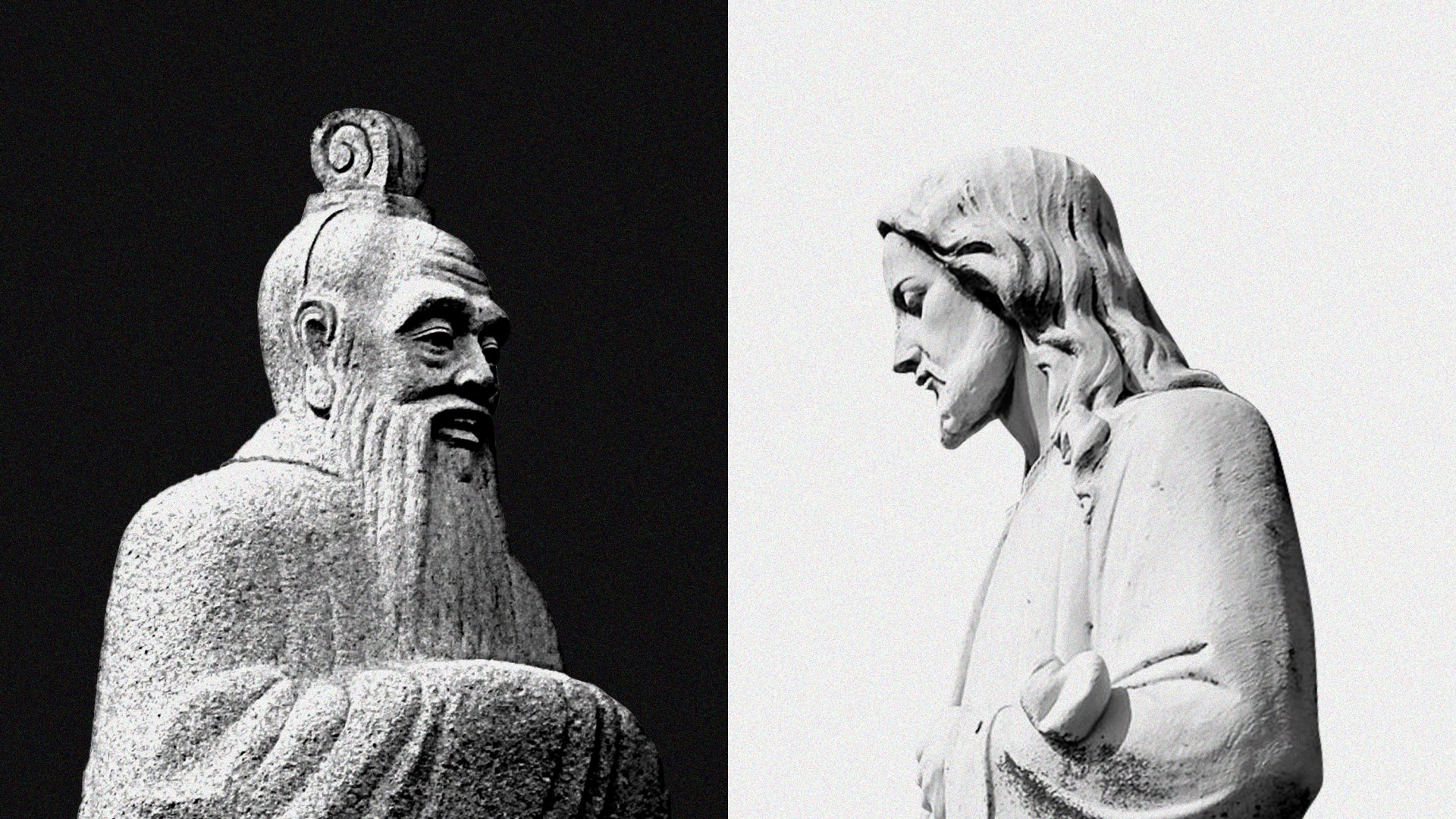
Illustration by Mallory Rentsch Tlapek / Source Images: Getty

Some years ago, the Reformed philosopher Alvin Plantinga gave a useful definition of fundamentalist. He noted that, in academic settings, it served as little more than a smear word; he offered an expletive I can’t print here, so let’s just substitute son of a gun.

Where it retained any content beyond the smear, Plantinga argued that fundamentalist meant “considerably to the right, theologically speaking, of me and my enlightened friends.” Thus did academics, journalists, and many Christians come to deploy fundie to mean a “stupid [son of a gun] whose theological opinions are considerably to the right of” their own. And because there’s always someone to one’s right, the F-word is essentially relative: It has no stable reference, but it certainly can never refer to me.

These days we might say the same about Christian nationalism. The phrase has lost all substantive content. In nearly every conversation, it has little reference beyond those “stupid [sons of guns] whose political opinions are considerably to the right of mine.” Allegations of Christian nationalism can mean almost anything: Maybe the accused is a literal Nazi. Or maybe he’s just a lifelong Republican whose big issues are abortion and tax rates.

Recently there have been thoughtful, good-faith efforts to define the phrase in a useful way. I suggest instead that we put it out to pasture. Though it may once have had limited reference to specific groups and ideas, it no longer does; the phrase is all heat and no light. In too many uses, it’s slanderous. In almost every case, it’s largely an exercise in boundary drawing.

To be sure, sometimes a boundary is exactly what we need. I don’t give eugenicists or Holocaust deniers a fair hearing. But these are marginal cases, and in a free and democratic polity, the nature of public discourse is that it’s rough-and-tumble, pluralistic, and more than occasionally unpleasant. We listen to those with whom we disagree, perhaps especially when our disagreement runs deep. If we are Christians committed to hospitality and love for enemies, our willingness to listen should only increase.

Moreover, responsible opponents of Christian nationalism (CN)—those not recklessly slinging the term at every son of a gun to their right—have legitimate concerns. I count five.

First, Christian nationalism often comes with a modifier: white.

This is indeed worthy of our excoriation, as are all ethno-nationalisms. But notice why it is worrisome: not because it is Christian nor primarily because it is nationalist, but because it is racist. Any and all political movements defined by the social elevation and political privileging of one race over others is worthy of our condemnation, full stop.

Second, CN opponents are rightly worried about lawlessness, often lawlessness as typified in the Capitol riot of January 6, 2021.

Sometimes lawlessness means an unwillingness to play by the rules. Sometimes it means a refusal to accept political loss. Sometimes it means a resort to violence. In these and other forms—excepting nonviolent civil disobedience in service to a just cause—lawlessness should be repudiated by Christians (not only the 13th but the 12th chapter of Romans is relevant here). Notions of a religious coup d’état in Washington, even if they look more like revolutionary cosplay than a serious mass movement, should be strangled in the crib.

Third, what CN critics are often worried about is not nationalism per se but conspiracy theories and fearmongering.

Fear “is not a Christian habit of mind,” argues novelist Marilynne Robinson. She’s right. Believers may reasonably debate the state of the world and our country. But we may not reasonably debate the lordship of Christ or the hope of his appearing (Titus 2:11–15). Even if our worst fears came true—if we were subjugated by a regime that made worshiping the Lord a social and legal burden or outright crime, as is the situation of many Christians now and in church history—our calling would be the same: to count the cost, carry the cross, and follow Christ to Calvary.

Fourth, some advocates of “Christian America” seem to envision a kind of second-class status for nonbelievers.

Here, Christians who fear “dhimmitude” in the Muslim or secular world seek to turn the tables and make Christian identity a special legal status. Sometimes this is packaged with a vision of the Bible as a sort of governing document, adopted alongside or instead of the Constitution. I confess I am skeptical that large numbers of Americans actually want this, just as I have yet to encounter an actual flesh-and-blood theocrat. If anti-CN pundits were to limit their jeremiads to this group, their aim would be true, but I suspect they’d have a vanishingly small target.

Fifth and finally, CN critics are right to oppose the habit of clothing all of the above—racism, lawlessness, fearmongering, and injustice—in the language and symbols of the faith.

This reduction of Christ to a means of worldly gain is widespread and, lamentably, goes back to the time of the apostles (Phil. 1:15–18). It trades on Christ’s name for a merely political cause. It declares that Christ is Lord to be obeyed while sidelining his actual life and teachings. It dismisses the fruit of the Spirit (Gal. 5:22–23) as weak and ineffective while embracing the works of the flesh—enmity, strife, anger, dissension, licentiousness, and factionalism (vv. 19–21)—as strategic assets.

If these five issues—a weak word for sinful distortions of the gospel—were all that Christian nationalism discourse concerned, I might not propose we retire the term. But this discourse also encompasses ideas that shouldn’t be flagged as “extreme” or unworthy of engagement. Here are six beliefs and practices we ought to uncouple from the label Christian nationalist.

1. Putting God into politics. This one is easily addressed. In the United States, people of all faiths and none are welcome to bring their deepest convictions into the public square. No one has to pretend. This is not France. No Christian, Jew, or Muslim is wrong—morally, theologically, or constitutionally—to bring faith into democratic debate.

2. Putting politics into church. This one’s hairier, but it’s also unavoidable. The gospel makes public claims that pertain to the world outside the walls of the sanctuary. These claims concern Christ’s sovereign rule over the nations and his passionate affection for the poor, the marginal, and the vulnerable (Luke 6:20–26; Matt. 25:31–46). Worship of a crucified Messiah can never truly be apolitical—even Amish separatism and other peace churches’ conscientious objection are themselves political actions.

3. Supporting Christian candidates for office. Humanly speaking, there is nothing more natural than the desire for representation in democratic assemblies. Christians are not unique in wanting to vote for people who share our faith, and that tendency isn’t worth worry. Some Christians will only vote for fellow Christians, which may be unwise—taken as a nonnegotiable criterion, I think it is—but it hardly rises to the level of a political pathology.

4. Believing divine providence guides America. In a weak sense, all Christians believe this, and when nonreligious outlets overreact to providential language it’s just that: an overreaction. But many Christians endorse a much stronger version. They speak of America as a light to the world, a city set on a hill with a special role in God’s plan for the world.

I wish fellow Christians would give up this belief. It claims too much; it ignores the church; it forgets Israel (Rom. 11:1–2, 28–29); it overinvests in a nation that will, like all others, one day pass away (Is. 40:15, Matt. 24:35). And yet there is nothing more American than American exceptionalism. From our founding onward, this belief has always been with us, often with religious overtones. Christians who disagree with me on this issue aren’t radicals. They’re ordinary Americans, especially by the standards of older generations and immigrants. You might as well accuse them of liking barbecue or apple pie.

5. Believing America is, or should be, Christian. Like American exceptionalism, the notion of an informal “Christian America” is deeply embedded in US history, culture, and law, as historian Mark Noll has documented. This legacy can be seen in a recent essay by Sen. Josh Hawley at First Things that argues that “Christian culture has been America’s common ground,” and that this ground both can and should be recovered today.

Hawley may or may not be right. But his thesis—which is not a call for theocracy or even for an established church like that of the United Kingdom—is arguable. It lies within the bounds of reasonable public discourse. It’s no less American than arguments for a secular America. Both deserve a hearing. Neither is ludicrous or worthy of contempt.

6. Doubting liberalism, democracy, or American order. All right, here’s the sticking point. Perhaps a charitable reader can accept the first five points as acceptable, non-extreme perspectives for American Christians. But there are also Christians who are openly illiberal, skeptical of democracy, or uncertain about our entire republican project. Aren’t they beyond the bounds? Aren’t they dangerous? Shouldn’t we apply a special phrase to such people, and shouldn’t that term express disapproval in the strongest of terms?

Maybe. But hear me out on why I’m not convinced.

All too often, Christian discussion of these matters operates from a myopic “end of history” mindset. It ignores most of Christian history and casts liberal democracy as the “final form” of human social and political arrangements. In this view, we stand at the last stage of a long line of progress. There’s nowhere else to go, nothing to do except maintain our own excellence.

From a Christian perspective, this can’t be right. The church can and will live in all different circumstances, and the end of history is not early 21st-century America but the return of Christ. Politics change; governments rise and fall; maps are redrawn; and until Jesus appears, we have no reason to think that kind of history is finished. Certainly, there is much to treasure or conserve in our time. But treating the way things are now as sacrosanct or best frozen in amber is theologically indefensible.

The upshot? Christians can question anything. We are free to be skeptical of whatever the world takes for granted.

Sometimes that skepticism won’t be justified. But often, Christian skeptics of the established order help us see what we would otherwise miss. Dorothy Day, Jacques Ellul, Ivan Illich, Wendell Berry, Alasdair MacIntyre, Cornel West, and Stanley Hauerwas have each placed a question mark next to some modern shibboleth: liberalism, democracy, human rights, capitalism, industrialism, the nuclear family, digital technology, American empire—whatever it may be, they’ve put it in the dock and interrogated it. This may feel like it pulls the rug out from under us. But sometimes that’s just what we need.

So doubting democracy, too, should not be denigrated as Christian nationalism. And as for the five pathologies above, we are justified in both opposing them and affixing derogatory labels. But Christian nationalism is not the best on offer.

It’s not that it’s too strong a term. It’s that it’s too weak. A better option comes from the apostle Paul: All this is “another gospel” (Gal. 1:7, NET). The political manifestations are only symptoms of this spiritual disease. It’s within Christ’s own body, which means we have work to do. We should be chastened, though, even as we are heartened: for nothing but the power of the Spirit is sufficient to cure it.

Brad East is an associate professor of theology at Abilene Christian University. He is the author of four books, including The Church: A Guide to the People of God and Letters to a Future Saint: Foundations of Faith for the Spiritually Hungry.

Theology

My Disabled Son Is the Image of God

As a pastor, I’ve wrestled with the theological implications of my child’s disability.

Christianity Today March 12, 2024
Courtesy of Greg Harris / Jalen Laine Photography / Edits by CT

When my nine-year-old son Benji was an infant, we were in and out of hospitals for the first few months of his life. He suffered from focal motor seizures and received innumerable pokes and prods to figure out the right medication and dosage to get them under control.

Then, one grey and rainy November afternoon—amid countless sleepless nights, doctor appointments, and learning how to be parents for the first time—we received a call to set up an appointment with a geneticist about our son’s newly discovered diagnosis: 1p36 deletion syndrome. We were told not to Google anything, but of course we Googled everything.

Before the appointment, my wife and I prepared several big questions, including: Is this hereditary? Is this degenerative? What else do we need to know about this syndrome?

On the day of the appointment, we arrived early and waited expectantly to satisfy our curious and concerned minds. The specialist was behind and arrived late, even by doctors’ standards. He came into the small office, still talking on the phone. A few moments passed while he finished his conversation. Then he hung up, saying Goodbye and then Hello to us in what felt like the same breath. He tossed his phone and a folder on the table before slumping into the chair.

After we asked our questions, he flipped open the folder to glance at the papers before closing it quickly. A faint buzzing noise prompted him to reengage his phone and reply with a text. Then his phone hit the table for the second time in less than a minute. He straightened up and leaned forward slightly. After glancing at us, at our infant son, and then back to us, he said:

This is your life now. You just need to love him as he is. The information in this folder has all the answers I could give you.

He slid the folder to our end of the table and then stood up from his chair. And after one last glance at us and Benji—almost as soon as he had entered—he left the room with our questions unanswered. Inside the folder was the same journal article we had found through our forbidden online search weeks earlier. It seems we were told not to Google the diagnosis beforehand because it would steal the expert’s thunder. But the truth of the maxim this meeting could have been an email was epitomized in this brief and cold exchange.

My wife and I still remember how unhelpful, even harmful, that first meeting was. And yet even a broken clock is correct twice a day—and sometimes words of helpful and enduring wisdom can come from someone as uninterested as that expert: You just need to love him as he is.

A few months later, on a warm evening in San Diego, I sat with my sleeping son in a hotel room at a conference for families with “1p-ers” (as we affectionately call the tongue-twisting diagnosis). My wife was out for the night with the other moms while I was sitting under a dim reading lamp, working my way through Andrew and Rachel Wilson’s book The Life We Never Expected.

One insight about addressing God in our prayers as “our Father” was particularly moving for me as a son of the Father who was learning to be a father to my son. The book said, “Everything I say in the rest of my prayer is founded on the truth that God is good, wants to do me good, and will do me good—so if God doesn’t immediately give me what I’m asking for, then it’s because somehow there is something better.” And I wept, not because Benji is who he is—he’s truly a delight—but because I was grieving a life as his father that I’d never expected.

As time passed, however, I found myself grieving my unexpected life less and delighting in my son more. Sure, the occasional observations of other children his age leaping and bounding past him in developmental milestones would trigger momentary pangs of disappointment and concern. But for the most part, I was just trying to get to know and understand my son.

The greatest teachers are those who poke and prod us to ask better questions than the ones we’d assumed were “essential.” And the longer I have spent time with this sweet, blonde-haired, blue-eyed boy, the more he has taught me about myself, life, and God.

One of the first questions my son prompted me to ask was about the imago Dei and what it means that humans are made in the image of God. Did my son have less of God’s image than the rest of us because of his genetic deletion, chromosomal abnormalities, developmental delays, and other exceptionalities? This isn’t the kind of question you say out loud in polite company—but it was one I wondered about, and I suspect others have too.

In this regard, I’ve been helped by biblical scholar Carmen Imes’s insights in her brilliant book, Being God’s Image. According to the Bible, she argues, human beings aren’t just made in the image of God—they are the image of God.

In her book, Imes points out that the Hebrew word translated as “image” is also used to describe idols: The “imago Dei is concrete. Like a statue that represents a king or a deity, so humans represent Yahweh to creation. Being God’s image is our human identity,” writes Imes, which means “God’s image is not something we bear; it’s something we are” (emphasis mine).

From our earliest stages of development to our final breath, we human beings are ourselves a physical representation of God’s presence on earth by virtue of our concrete existence alone. “Although our status as God’s image may lead to certain actions, ‘image’ is not something we do, but who we are,” Imes says, and it’s not “a capacity that can be lost”—intellectual or otherwise. There’s nothing we need to do or become to be qualified to represent God.

And so, I confidently say my son is imago Dei, just as I would for anyone else. Yet another question my son has prompted me to ask is, How intentional and purposeful is my son’s genetic deletion in God’s sovereign will?

When we think about the human experience, Bible folk are quick to quote Psalm 139, which tells us that we are knit together in our mother’s womb and that we are wonderfully made. But I’ve asked myself, How comfortable am I inserting my son’s name where the psalmist says “me,” “my,” and “I”? How purposefully and wonderfully was my son knit together in my wife’s womb? Would I say these things about my son without exceptions or qualifications?

One of my biggest hang-ups about seeing Benji as fearfully and wonderfully knit together was the fact that he was missing genetic material. I wrestled with whether the significant implications and issues stemming from such a microdeletion was the result of God’s intentional design.

But in a Torah Tuesday episode from Carmen Imes on Exodus 4:10–12, I was reminded that God does not shrink away from the disabilities experienced by his people. In fact, as surprising as it sounds, God takes the credit for disabilities such as deafness, muteness, and blindness. In this text, Moses raises an objection to his commissioning by describing his ineloquence and, furthermore, by rooting his ineloquence in being “slow of speech and tongue” (v. 10).

In their article “Mosaic Disability and Identity in Exodus 4:10; 6:12, 30,” Jeremy Schipper and Nyasha Junior demonstrate that the Hebraic phrase for “slow of speech and tongue” is a term for a physical disability found in ancient medical texts. And in response to Moses’ complaint about his speech impediment, they say, “God responds to Moses by assuring him that God controls all physical conditions.”

God’s response to Moses’ objection clarifies God’s intentionality in the diverse mosaic of human (dis)ability. The intentionality of disability can be disconcerting for many, to the extent that looking to persons with disabilities after reading Psalm 139 or Exodus 4:10–12 tempts us to wonder—as Adam and Eve did in the Garden—did God really say … ?

However, if all persons are imago Dei (Gen. 1:26–27), and if each person is wonderfully woven together and designed purposefully by God (Ps. 139:13–15), and if God takes credit for the lived experiences of our disabilities (Ex. 4:10–11), then we stand on stable biblical ground to assert that—while my son is a born sinner like everyone else this side of Eden—he is also who he is by God’s design.

Will we love him as he is? As frustrating as it was to hear this from an under-prepared and overly distracted specialist, these words are instructive for the church today. North American society is generally unwelcoming in its approach to the disabled community—and sadly, the church is often worse.

In her punchy and profound book, My Body Is Not a Prayer Request, Amy Kenny discusses the ableism she faces in the church as a woman with disabilities. She laments that local churches are among the most difficult spaces to inhabit for persons with disabilities. In one place she says, “I am hurt that I must justify my own existence at church. Belonging shouldn’t have the admission price of assimilation.” Kenny is right, and I’m thankful for her advocacy.

As a pastor within the local church and the father of three unique images of God, I’ve come to believe that disciples of Jesus experience two kinds of transformation in our lives in fulfilling the two greatest commandments: in loving God and loving each and every person as ourselves.

The world tells us to love our tribe and put ourselves first, but the gospel beckons us to love God and treat even the most distant stranger as our neighbor. Because of the goodness of Jesus, and so the world knows we belong to him, we are called to inhabit and exhibit a twice-transformed life that is patterned after the two most important mandates given to us by Christ—to love God with all our heart and love our neighbor as ourselves.

At next Sunday morning’s service, look around at your sanctuary and evaluate whether your church building hosts the kind of space and community where disabled persons can find a robust and rich belonging. But before that, we need to ask ourselves whether we truly believe all people, even those with disabilities, are made in God’s image and according to God’s will.

Scripture tells us that God’s way “is perfect” (Ps. 18:30) and that he is “righteous in all his ways and faithful in all he does” (Ps. 145:17). So, if we really believe each and every human being around us is fearfully and wonderfully made, will we love and serve them just as they are?

Greg Harris serves as a pastor in Vancouver. He is passionate about “deep discipleship” in the local church and spiritual formation for the often spiritually forgotten.

Church Life

Mamie Johnston: A Brave Missionary in Manchuria

Bandits, Japanese invaders, and Communists all threatened her life. Her dedication never wavered.

Christianity Today March 12, 2024
Illustration by Elizabeth Kaye / Source Images: Wikimedia Commons

In 1923, 26-year-old Mamie Johnston (韩悦恩, Han Yue-en) was sent by the Presbyterian Church in Ireland, under the sponsorship of its Women’s Missionary Association, to Faku County in northeast China’s Liaoning Province, part of the region then known as Manchuria. Johnston’s adventures in China would span 28 years. She lived through bandit attacks, the Japanese invasion of China, and the rise of the Communist regime.

Thanks to the short memoir Johnston composed 30 years after leaving China, the compelling tales of her missionary experience, including her rustic life in Manchuria and her legendary wit and bravery when dealing with the Japanese, have been preserved.

Fulfilling an early invitation

Johnston’s fascination with China began when she was just eight years old. Isabel “Ida” Deane Mitchell, a female medical missionary from the Presbyterian Church in Ireland, was preparing to travel to Manchuria. She invited the young Johnston to come and join her in China when she was old enough. This invitation remained in Johnston’s heart and would guide her own mission plans nearly 20 years later.

Mitchell settled in Faku, Manchuria, in 1905. The first Western medical doctor ever seen in Faku County, she adopted the elegant Chinese name Qi Youlan (齐幽兰, “serene orchid in the valley”). Tragically, in 1917 she succumbed to an infection she contracted while treating a diphtheria patient, dying at age 38.

Johnston’s dream of joining Isabel in China was shattered. Nevertheless, she applied to become an overseas missionary, setting her sights on either India or China. Ultimately, the Presbyterian Church in Ireland dispatched her to northeast China as a missionary educator.

After arriving in Shanghai by boat in 1923, Johnston proceeded to Beijing to study Chinese at a language school. She then took a position at a teacher training school in Shenyang, the nearest city to Faku.

The following year, she traveled to Faku (known at that time as “Fakumen”) by mule cart. Along the way, she spent a night at a large inn. The compassionate landlady, noticing that Johnston had brought no bedding for herself (local people brought their own quilts and pillows when they stayed at an inn), arranged for her to sleep in the master bedroom.

As Johnston drifted off to sleep amid the scent of opium, which was widely used in China at the time, she heard the landlady say, “This poor girl doesn’t even have a quilt. Although she’s a foreigner, she’s just like us—she knows hardship and has the grits to endure it.” The landlady then covered Johnston with her own quilt, tucking her in like a child. Johnston later wrote, “At that moment, my heart was deeply warmed. This is my country, my people.”

Upon her arrival in Faku, Johnston discovered that the dormitory assigned to her was the very house where Isabel Mitchell had lived. It seemed that the Lord, the master of time, had not forgotten Mitchell’s initial invitation.

Encounters with bandits

A remote area, Faku was often plagued by bandits who broke into homes to kidnap and extort residents. One evening, Johnston and her roommate heard noises on the other side of the wall. Quickly, they rallied the teachers at the girls’ school. Following Johnston’s direction, the teachers rang bells, played the piano, or blew whistles while she and her roommate each grabbed a long stick and charged out of the room, waving their “weapons” in the darkness and playing the part of ferocious foreign devils. Fortunately, the bandits were frightened and retreated, saving the school from calamity.

Before coming to China, Johnston and other missionaries were taught that the church would never pay a ransom to kidnappers, as doing so would only encourage more kidnappings. This understanding prepared her for the possibility of being kidnapped and killed in Manchuria.

In the late 1930s, she and a Chinese female assistant traveled to the China-Mongolia border to visit an established church. One night, while they were resting at an inn, a group of bandits also staying there broke into the room. Confronted by the rough Manchurian brutes, the two female Christians won their respect and trust through their humble and generous attitudes and engaging explanations of the Bible.

The leader of these bandits, known as Da Jia Hao (大家好, “good big family”), even ordered the bandits in the areas the two ladies were passing through to secretly protect them, ensuring their safe arrival at their destination. The only literate steward among the bandits also taught Johnston and her assistant a set of indispensable code words to help her travel safely.

Navigating the Japanese occupation

Following the Mukden incident in 1931, Japan invaded northeast China and established the puppet state of Manchukuo in northeastern China. Japanese soldiers perceived missionaries as rivals, insisting that Christians must venerate the Japanese emperor as a god. Non-compliance resulted in persecution, even death, for both Chinese believers and Western missionaries. Missionaries’ sermons had to be submitted to the police in advance. All correspondence was scrutinized, and a pass, complete with a detailed explanation of the purpose of the trip, was required for travel.

From 1937 to 1944, the Presbyterian Church in Ireland faced financial hardship and could not sustain overseas missionary expenses. Thirty-five missionaries left Manchuria with no replacements, but Johnston stayed. The missionary and educational work in Faku fell squarely on her shoulders.

In addition to compiling teaching materials, she had to be prepared for unannounced inspections by the Japanese army. Any books bearing the word China on the cover or the phrase Published by the Shanghai Commercial Press were destroyed. Johnston and her colleagues clandestinely packed the books and concealed them in a movable space under a window seat in the church. One day, when two Japanese officials conducted a search, they unknowingly sat on that very seat as she reported on the library’s cleanup of unapproved books.

Johnston was under constant surveillance, with police frequently appearing in her classroom. Once, on a train, a man posing as a fellow traveler interrogated her for several hours. Upon arrival at the station, she was immediately escorted to the station’s police office for further questioning. Fortunately, she remained vigilant and gave no grounds for suspicion. Later, a Chinese friend noticed the words completely harmless written next to her name at the police station.

Embodying wisdom and courage, Johnston once helped a Chinese pastor who had been arrested on fabricated charges and placed in a military prison in Tieling, a small city in Manchuria. Unable to obtain a pass for foreigners, she disguised herself as a Chinese woman, donning a leather hat to conceal her golden hair, an old woman’s ragged coat, and a thick brown scarf to hide her face. She quietly took the early-morning bus from Faku to Tieling to deliver a message to Mr. Shang, a Korean translator involved in the pastor’s interrogation, encouraging the pastor to persevere.

On her return trip near dusk, knowing that the police would scrutinize the entry pass, Johnston disembarked near Faku. She traversed wintry fields and crawled under electric fences, arriving home at midnight covered in mud. She undertook this perilous journey multiple times until the pastor was released.

From northeast to southwest China

Following the outbreak of World War II’s Pacific War, Johnston and other missionaries were expelled by the Japanese and forced to leave northeast China. They first sought refuge in Canada, then returned to Ireland six months later before heading to India and finally returning to China.

By 1945, northeast China was under Communist control, so Johnston was dispatched to Kunming in Yunnan Province, southwest China, to establish Sunday schools for the local churches and to oversee kindergartens and teacher training.

In late 1949, Kunming fell to the Communist government. The church began to propagate the notion that accepting foreign aid was treasonous and that missionaries were potential spies. Pastors were compelled to have congregations chant anti-foreigner slogans during their worship services. As the only foreigner in her church, Johnston was in a risky situation. After the pastor chanted the slogan, he would console her with a hymn that said, “In Christ there is no east or west.” She recognized that she had become a burden to the church, but she couldn’t simply leave China. The decision to stay or leave was no longer hers to make but was dictated by government policy.

When she was finally permitted to leave Manchuria after numerous obstacles, Johnston was escorted by various military personnel on a journey that took her from relative comfort to abhorrent conditions. She traveled via military planes and ships, staying first at hotels and later, temporary prisons. Her journey took her from Chongqing to Wuhan, Hankou, Guangzhou, and eventually Hong Kong. She transitioned from being neatly dressed to being ragged, from eating freely to dieting on rationed food, and from sharing a room with people to sharing a room with rats. She was forced to witness soldiers shooting a car full of prisoners. This final trip across China was like hell on earth.

When guards stormed into Johnston’s cell in the middle of the night, shining a torch in her face and shouting, “You are now in the hands of us Communists!” she felt unexpected joy and strength. She was no longer fearful but filled with profound peace and certainty that, like all Christians, she was safe in God’s hands. It was a peace she had felt before during her many years in China. The notion that she was worthy of suffering for Jesus imbued her then, as it always had, with genuine love and compassion, equipped her to live joyfully and patiently with those around her, and gave her a sense of calm and freedom that transcended life and death.

Johnston was expelled from China by the new Communist government in 1951. Upon returning to her hometown in Ireland, she summed up her adventures in an interview, stating with deep emotion, “China: that is my place of dedication.”

Su La Mi is a Christian writer and editor who taught liberal arts at a university in northeastern China.

News

UK Christians Asked to Give Up Their Banks for Lent

Climate activists say finance is a justice issue and moving accounts can have a significant impact.

Christianity Today March 11, 2024
DGLimages / Getty Images

Rosie Venner has been talking a lot about banks. She thinks it matters—to God.

“We are called to be good stewards, to love our neighbors, to seek peace, to act justly. Surely this should shape how we relate to money and where we bank,” she said.

Venner is a British Christian climate change activist working on the Money Makes Change campaign with the JustMoney Movement, a group that aims to be “the go-to organisation for Christians and churches” applying the teachings of their faith and the biblical calls to justice to the way they handle their money. Which brings her to British banks, and the choices they make when investing the money deposited by Christians who are concerned about the negative environmental effects of burning fossil fuels.

Barclays, for example, which is considered by some experts to be a key corporation controlling global financial stability, was the biggest funder of the fossil fuel sector in Europe from 2016 to 2021, some years investing more than 23 billion pounds (about $30 billion US) and investing in oil extraction in the Arctic Circle and the Amazon rainforest.

Altogether, according to the most recent data, banks pumped more than 733 billion pounds (about $942 billion US) into the fossil fuel industry per year.

Venner would like Christians to pull their money out of banks like that, because the Lord has shown us what is good and requires us to act justly (Micah 6:8).

JustMoney is partnering with a number of Christian climate organizations—Just Love, Operation Noah and Switch It Green—to encourage Christians to make financial changes during Lent. They’re calling it The Big Bank Switch. It’s an invitation for believers during the traditional period of fasting and self-examination to “align their money with their values by switching from a bank that funds planet-destroying fossil fuels to one that doesn’t.”

Those who sign The Big Bank Switch pledge to transfer their bank accounts to a green bank in late April. So far more than 100 Christians have promised they will switch banks. The activists hope to persuade 1,000 people to change banks by the end of the campaign.

“The very practical action of switching banks allows individuals to influence policies by removing our support for fossil fuel expansion,” said Stefan Spence, who has been heading up the campaign for Just Love UK. “Companies and governments rely on public support, so the clear message sent by The Big Bank Switch campaign will require a response. It’s an appropriate time, as other campaigns like Make My Money Matter are applying similar pressure, and in the last few years, banks have started updating their sustainability policies.”

Historically, Spence said, banks have based investment decisions solely on returns for shareholders and concerns about financial risk. The only ethical consideration was for legal compliance. As a result, banks sometimes invested their money in ways that their depositors find morally offensive. The money going to fossil fuel companies makes it less likely that Great Britain will effectively reduce carbon emissions, which for many Christians is an important ethical issue.

“As Christians, we understand that the earth and heavens were made to declare the glory of God,” Spence said. “The plants, animals, and people on Earth are beautiful and precious. God’s command to steward creation involves us caring for both people and the environment.”

He points to verses such as Proverbs 22:16 as clear Scriptural mandates. The Bible says God hates it when people try to get ahead in ways that make the rich richer and hurt the poor. And people who “sow injustice” will reap calamity (v. 8).

And banking doesn’t have to be like that, according to Spence. Investors could take ethical considerations into account as they weigh potential profit against financial risk.

Spence notes that this isn’t the first time Christians have used their finances to create social change. Throughout the 1970s and 1980s, anti-apartheid campaigns effectively used boycotts to push corporations to stop financing projects in South Africa.

Operation Noah, one of the first Christian climate charities in the UK, has also spent a decade encouraging Christians and faith-based organizations to divest themselves of investments that harm the environment.

“This pressure does actually work,” said Cameron Conant, Operation Noah’s communication officer. “I think sometimes people can get disheartened and feel like campaigning doesn’t work, but I can say as a campaigner who has campaigned for a number of years now, it does actually work.”

Conant has seen many individuals change their view, but also points to success moving larger institutions. Last year, the Church of England divested of all oil and gas investments that were not in “genuine alignment” with agreed-upon goals of limiting carbon emissions.

The strategy, according to Conant, is to help people see that they do have an influence and to connect action to Christian faith.

“Who funds fossil fuels? Who allows them to happen? It’s our political system and banks,” Conant said. “We’ve tried to speak with a unified Christian voice to say this is something Christians should be united on, that we’re called to care for God’s creation, and that just like we shouldn’t be funding tobacco or arms or gambling as churches and as faith organizations, we shouldn’t be funding fossil fuels.”

And it may already be working. The Global Fossil Fuel Divestment Commitments Database shows that faith-based organizations are at the forefront of the divestment movement. And major banks are taking notice. Barclays announced last month that it will stop directly financing new oil and gas projects.

Holly-Anna Petersen said Christian Climate Action, of which she is a member, has also had a lot of success in urging Christian organizations to think more carefully about the impact their money is having on climate change. Recently, activists held a vigil outside the Church of England cathedral in Sheffield, urging the church to change banks.

“For Christian organizations that often do their own campaigning, to be the subject of a campaign was a bit uncomfortable,” Petersen said. “They also were quick to see the harm their banking was doing and so were very receptive.”

Christian Aid was convinced to switch banks too.

“It might be convenient to stay with the bank you’ve always been with. It certainly does take some effort to switch. But the climate crisis is funded and fueled by money,” said Ashley Taylor, Christian Aid’s senior advocacy advisor. “Doing what we can to help turn off that cash flow will be essential if we’re going to end the suffering of our brothers and sisters living with the worst climate impacts.”

Taylor encourages others not to underestimate the impact they can have.

“Actions speak louder than words,” she said. “It’s easy to declare a climate emergency, to say we care about the plight of those suffering and that we don’t stand with polluters. But by banking with those that fund polluters, we risk being part of the problem we claim to oppose.”

Venner said making that connection is key. She remembers when she first realized that the bank where she did business was part of the system she was concerned about. Her banking, she realized, was connected to the very issues she was praying about.

“I worked for an international development charity,” she said. “I met people from all around the world and heard the struggles of communities being moved off their land or having their livelihoods threatened because of mining, large-scale agriculture, or oil and gas projects. The finance that enabled those projects came from the banks I walked past on the high street—it was a direct link to people I cared about, communities I prayed for.”

This Lent, she hopes to help other Christians make that same connection with The Big Bank Switch.

“I think it’s coming at the right time,” Venner said. “Many Christians are concerned about the climate crisis and are waking up to the role of finance within this.”

News

New Zealand Christian Bookshop Closures a Sign of the Times

Nearly half of Manna Christian bookstores are shutting down, leaving some without a Christian bookstore in their town and highlighting concerns of misinformation.

Christianity Today March 11, 2024
Illustration by Elizabeth Kaye / Source Images: Unsplash / Pexels

For the last 25 years, Colin Marshall has been able to walk a couple of minutes down the road from his church in Auckland, New Zealand, to pick up Christian books and materials from his local Manna Christian bookstore. But come the end of March, that will no longer be the case.

When he first heard the news about the closure, the minister of St. John Presbyterian Church said he felt “sadness” more than anything else. “It’s a reflection of the economic realities out there, I think as much as anything,” he said.

Bible Society New Zealand, which runs 14 Manna Christian bookstores across the country, has announced that it’s shutting down nearly half of its bookstores—three this month and another three in May. It’s also shutting down its offices in Wellington and said its services would be consolidated at its head office in Auckland by the end of March.

The decisions were made “in response to the dynamic challenges the economic climate presents,” and sustaining retail operations at some of the stores has been “financially challenging for some time,” the ministry stated in a press release.

Rachel Afeaki, the World Evangelical Alliance’s South Pacific regional general secretary and board member for the New Zealand Christian Network, said the bookstores’ departure was a reflection of “the times that we live in.” She said the digital age had a “huge impact” on people wanting to read books, as customers find better deals online and increasingly embrace digital formats.

In her own family, she encourages her four young boys to read for 20 minutes a day but said it was quite a “struggle” because they were so accustomed to screens. Even for herself, Afeaki received three books last Christmas to read, but she laughed that she was still trying to get through one. “But it’s easy enough for me to read off my phone, it’s easy enough for me to listen to an audio[book] or a podcast because I’m moving, I’m on the go, I’m driving.”

Stewarding resources well

Manna Christian Stores began in 1972 with a shop in Invercargill in New Zealand’s South Island with a goal to partner with churches and local communities and provide Bible and Christian resources, according to its website. Growing into 14 stores throughout New Zealand, it ran workshops and conferences to train leaders and equip believers, as well as partnering with mission groups to spread the gospel.


SILENCE: SELF-JUSTIFICATION STOPPER

The tongue is our most powerful weapon of manipulation. A frantic stream of words flows from us because we are in a constant process of adjusting our public image. We fear so deeply what we think other people see in us that we talk in order to straighten out their understanding. If I have done some wrong thing (or even some right thing that I think you may misunderstand) and discover that you know about it, I will be very tempted to help you understand my action! Silence is one of the deepest disciplines of the Spirit simply because it puts the stopper on all self-justification.

One of the fruits of silence is the freedom to let God be our justifier. We don't need to straighten others out.

Richard J. Foster in
"Seeking the Kingdom"

BLESSED ARE THE RESTRAINED

We might have much peace if we would not meddle with other people's sayings and doings….Blessed be the true, simple, and humble people, for they shall have a great plenitude of peace.

Thomas a Kempis in
"The Imitation of Christ"

RUDE INTOLERANCE

Religious tolerance is not always a sign of good will. It can be a sign of careless, perhaps hypocritical religious indifference of the most high-handed philosophic relativism. It can also be a mask behind which to hide downright malice. During the Nazi era, for example, arguments for Christian openness to other perspectives were used by German Christians in an attempt to neuter the church's protest against the neopaganism of Hitler and his minions. The Confessing Church in Germany found in [John 10] a theological basis to stand against Hitler. There are times in which the only way to keep alive the nonvindictive, nonjudgmental, self-sacrificing witness of Jesus Christ is to stand with rude dogmatism on the rock that is Jesus Christ, condemning all compromise as the work of the Antichrist.

Ronald Goetz in
"Exclusivistic Universality" (Christian Century, April 21, 1993)

REAL INTEGRITY

Integrity is like the weather: everybody talks about it but nobody knows what to do about it….Integrity entails not only a discernment of the right action but a willingness to act on one's conclusions.

Stephen L. Carter in
"Integrity"

FIXING THE ROAD

If we are to better the future we must disturb the present.

Catherine Booth in
"The Life of Catherine Booth" (Vol. 2)

NO CHURCH WITHOUT CHRIST

The Church of God apart from the Person of Christ is a useless structure. However ornate it may be in its organization, however perfect in all its arrangements, however rich and increased with goods, if the Church is not revealing the Person, lifting Him to the height where all men can see Him, then the Church becomes an impertinence and a sham, a blasphemy and a fraud, and the sooner the world is rid of it, the better.

G. Campbell Morgan in
"Giant Steps"

THE RIGHT MIX

Afflictions are sweet preservatives to keep the saints from sin.

Thomas Brooks in
"Precious Remedies Against Satan's Devices"

IMAGING THE ARTIST

A Christian, above all people, should live artistically, aesthetically, and creatively. We are supposed to be representing the Creator who is there, and whom we acknowledge to be there. It is true that all people are created in the image of God, but Christians are supposed to be conscious of that fact, and being conscious of it should recognize the importance of living artistically, aesthetically, and creatively, as creative creatures of the Creator. If we have been created in the image of an Artist, then we should look for expressions of artistry, and be sensitive to beauty, responsive to what has been created for our appreciaton.

Edith Schaeffer in
"The Art of Life"

CONTINUITY COUNTS

When we wonder why the language of traditional Christianity has lost its liberating power for nuclear man, we have to realize that most Christian preaching is still based on the presupposition that man sees himself as meaningfully integrated with a history in which God came to us in the past, is living under us in the present, and will come to liberate us in the future. But when man's historical consciousness is broken, the whole Christian message seems like a lecture about the great pioneers to a boy on an acid trip.

Henri Nouwen in
"The Wounded Healer"

Copyright © 1996 Christianity Today. Click for reprint information.

In 2017, it joined with Bible Society New Zealand to form the Bible Society New Zealand Group, with a goal to “place a Bible in every empty hand to reach and fill empty hearts everywhere,” its website stated.

Last December, Bible Society New Zealand’s chief executive Neels Janse van Rensburg told the Otago Daily Times that the bookstore chain hadn’t been profitable for “some years.” He pointed to an increase in building leases in multiple locations after the COVID-19 pandemic, as well as rising paper prices and international freight costs that make selling books in New Zealand costly.

“We have to be good stewards of what we’ve been entrusted with and if we go on down this path, we are not good stewards,” van Rensburg told the newspaper. “We have to make hard decisions of how to save the whole or end up in a position where you have to close the whole.”

The flagship Invercargill store is one of the stores that will be shutting down.

New challenges of disinformation

The reality facing Bible Society New Zealand is one that Christian ministries all over are grappling with, said Auckland-based Jay Mātenga, head of the World Evangelical Alliance’s Global Witness department.

“[It’s] one of the things we discovered in missions as we moved increasingly to online instead of hardcopy magazines, as the banks decided no longer to accept checks. … It made it more difficult for people to donate,” Mātenga said. “There’s a whole raft of changes that people are having to get used to.”

This also leads to challenges of disinformation, he noted. In the past, brick-and-mortar establishments primarily controlled access to Christian resources and could ensure that its books were written by pastors, theologians, and church leaders they believed to be theologically sound.

“Now, all sorts of weird and wonderful ideas are floating around,” Mātenga said. “Even pastors are having difficulty in trying to help guide people into a much more robust, well-researched truth.”

The internet and its expanse of information has both empowered Christians to do their own research and opened new avenues of learning. But for those lacking training or experience to discern information well, that freedom can also become a challenge.

“Unfortunately, this plays into the whole elitist types of attitudes. … Those with less education particularly in theology would argue, ‘Well, theologians and Christian leaders are just an elitist group.’” He argued a very strong, robust, and often long training process allows theologians to be able to assess what is helpful or unhelpful for Christlike development.

With this reality in mind, it’s important for churches themselves to have well-stocked libraries for their congregation to use, Mātenga said.

Manna stores will still have a digital presence—Bible Society has said it remains “resolute” in its commitment to serving customers and that Manna’s online shop would continue operating to ensure access to its resources and services.

Finding new owners

Bible Society New Zealand was not available for comment for this article, but in its announcement said the decisions were made after “long and prayerful consideration.”

Mātenga believed the closure of Bible Society’s Wellington-based office was due to sound business practices rather than other reasons such as lack of donations. “I mean, Auckland’s [size] is just so large,” he said, citing access to international transport hubs and the availability of staff. He noted these were his observations as an outsider.

Bible Society said it recognized the “profound impact” the closures would have on its staff affected by the changes and the communities it served and said that it would “carry this responsibility with the utmost empathy and understanding.”

While the digital age brought benefits, there were still lots of people who preferred physical books, said Joel Shoaf, pastor of Bay Baptist Church in Napier, a city on the eastern coast of New Zealand’s North Island. One of the stores hit by the closures is the Hastings shop, only about a 20-minute drive from his church.

“We’ve ordered many, many, many books from them … so it’s going to be sad not to be able to do that locally,” said Shoaf.

It’s also the only Christian bookstore in the immediate area for the roughly 160,000 people who live in Napier and Hastings. Fellow Napier pastor Rangi Pou, who leads Potter’s House Church, agreed, noting that other bookstores in Napier sold very little Christian material.

Pou said some church groups in the area run shops that generally stock a couple of Bibles and other books donated by the congregation. “But other than that, I don’t know of anywhere else where you can walk in and just buy Christian books.” The next closest Manna store is in Palmerston North, which is nearly a two-and-a-half hour drive from Napier.

Bible Society asked for offers to buy any of the stores, saying that outside involvement could be “crucial” in preserving the “essence of these community spaces.”

Pou said his congregation was not in a financial position to buy the shop, though there were other larger churches in the area that probably did have the capacity.

“But it’s a financial decision,” Pou said. “No one is going to purchase anything that doesn’t make money. It is a business.”

Theology

Ezekiel’s Visions, AI’s Revisions

I asked ChatGPT to illustrate passages from the Old Testament prophet, and the results raise important questions for the church.

Christianity Today March 11, 2024
Courtesy of A.G. Elrod

Children have an uncanny ability to ask deep questions about things we adults have come to take for granted. One of the earliest such questions I remember asking my father was about language: Why do some people speak different languages than us?

He answered by telling me about the Tower of Babel (Gen. 11:1–9): about how, when everyone spoke the same language, they cooperated to build a tower so high it would reach into heaven. He told me that God, frowning on their arrogance, made them speak differently, then scattered them throughout the earth. And that’s why, my father concluded, so many languages are spoken throughout the world.

Of course, this only raised many more questions for me—some of which I’m still pondering today. It occurs to me that every significant advancement in technology and society comes on the back of an advancement in communication. The Protestant Reformation rode on the back of the Gutenberg printing press. When electricity let language move almost instantaneously over great distances, significant changes followed. And the advent of the internet heralded an era of unprecedented technological growth and social change.

In a way, it seems to me we are still trying to build that tower, every technological advancement another brick in the wall. Now, we have a new technology literally built of our words: generative AI models like ChatGPT. To many technophobes and technophiles alike, these programs feel like the tower’s tallest height. Some predict a new era of prosperity; many others portend doom. Will God confound our tongues and scatter us again?

The child in me wants an answer to that question. But it is too big a question for our purposes here. Instead of telling you what to think about these new technologies, I hope to encourage you to think about them. As a PhD researcher exploring the biases of these AI models and their far-reaching implications for society, culture, and faith, I’ve made it my mission to critically examine these technologies and their potential impact on our lives.

When we accept a new technology uncritically, we invite danger. The most striking recent example of this is our indiscriminate adoption of social media. Less than 10,000 days old, social media is still a relatively new technology. And yet, consider how much it has changed our lives—for better and worse. We didn’t ask the big and important questions about social media as it steadily permeated every aspect of our society, including many churches.

The risk in generative AI is even greater. I expect it will be far more significant—not least as a source of unnoticed bias, half-truth, and outright deception—than anything in recent history. It is essential for the church, often a voice of reason in our ever-evolving societies, to apply a critical and discerning eye to this new tier of our tower.

In this article, I’ll share insights from my current research on these AI models’ theological biases and social implications by exploring how they interpret biblical apocalyptic literature from the Book of Ezekiel. Prompting OpenAI’s ChatGPT to generate imagery inspired by these passages lets us critically examine how this model “reads” and represents Scripture.

Images are powerful because they can bypass our reasoning intellect and impact our emotions directly. As its use spreads, AI could influence our perception of biblical stories and, by extension, our faith and church life. Scrutinizing these AI-generated images, we will uncover subtle biases and limitations, and that should prompt us to consider their potential effect on our Christian communities.

Two methodological notes

First, because these models are rapidly evolving, it’s important to be clear about which technologies we are using and how. For this article, I used the current (as of early 2024) version of ChatGPT Plus. This platform employs two distinct generative AI technologies. The first is GPT-4 Turbo, OpenAI’s advanced language comprehension and generation system, which interprets my requests and generates creative text responses. The second is OpenAI’s DALL-E 3, an image generation model integrated into ChatGPT Plus.

My interaction with the chatbot was designed to maximize its interpretive capabilities. As with humans, asking an AI model to do more interpretation can help force it to reveal its biases—to show its hand. My approach invited three levels of interpretation:

  1. Understanding the task: I give a prompt like, Generate images that depict the imagery found in this biblical Hebrew text, accompanied by the passage in its original language.
  2. Language translation: The model translates the biblical language into English to instruct the image generation model.
  3. Image generation: The final interpretation occurs in the generation of the images themselves.

Second, before we go further, a word about interpretation is helpful.

Whenever we engage in interpretation, we bring all of who we are to the task. When we attempt to imagine descriptions of the indescribable—and most prophetic and apocalyptic imagery fit into this category—we inevitably bring our knowledge and experience to the act.

For example, what does a wheel within a wheel covered with eyes look like? Five hundred years ago, a European like Sante Pagnini might have envisioned chariot-like wheels. During the Renaissance, Raphael depicted the angels in the vision as the infantile cherubim typical in the art of his day. Or, from the perspective of an early 19th-century mystic like William Blake, the living creatures of the vision are depicted in a way that reflects the Romanticism movement of his time. And in 1974, Josef Blumrich saw the wheels of the vision as a reference to spacecraft, reflecting the contemporary fascination with UFOs.

Of course, no one would assume any of these depictions are strictly accurate. They’re reflections of the people and their times, perhaps even more than they are reflections of the biblical text. Herein lies the problem: Visual depictions make one person’s interpretation of Scripture concrete—even unforgettable. They force themselves upon the imagination.

So before we begin using AI tools to illustrate our books, commentaries, and Bible studies, we should remember that images invariably overlay words with bias. And AI models aren’t immune to this any more than humans are. They’re trained on human work, which means they pick up our assumptions and biases, and not only those of people who share our faith. This should give us pause.

With that in mind, let’s look at some AI-generated biblical interpretations.

Ezekiel’s first vision

My first prompt for ChatGPT Plus uses the text of Ezekiel 1:4–21 in the original Hebrew.

Courtesy of A.G. Elrod

There are several key visuals in this passage:

  • The four living creatures, each with four faces (a human, a lion, an ox, and an eagle) and four wings
  • Wheels within wheels, gleaming like beryl, each wheel full of eyes around the rim, moving in all directions alongside the creatures
  • Fire, shining metal, and lightning

Admittedly, this is a lot for a single image. Let’s see how the AI interprets the scene:

Courtesy of A.G. Elrod

Beginning with the overall impression, such a vision undoubtedly would’ve made Ezekiel fall on his face (v. 28). The image is frightening. The AI has prominently featured the peripheral imagery of fire, lightning, a storm, and gleaming metal. At the bottom, there are what appear to be men, some of whom are carrying rods and tree branches, as well as a hooded, winged angel.

At the center of the image is an attempt at visualizing the living creatures. They appear without skin and seemingly fused together, with three of the four heads disembodied. In the center of each head is a glowing orb or a gem, and the faces are skeletal. There are indications of rings behind the living creature(s) that are probably an effort to render a wheel within a wheel. The most prominent wheel functions like a rainbow and is covered with circles rather than eyes. Inside the circles we see a virus, a galaxy, and faces, among many other indistinct images.

This interpretation appears to be heavily layered with symbolic meaning—but remember that AI models are designed to simulate an understanding of significance. Sometimes that produces images that look profound but, on closer examination, have no deeper meaning or coherence.

If you came across this image without context, there’s little chance you’d identify it as Ezekiel’s first vision. Instead of a helpful interpretation, we see a failure in the model’s capabilities. It appears that Ezekiel’s detailed description was too much for the model to follow.

Even so, we can spot a few biases. For instance, the wheel covered in circular images is reminiscent of medieval iconography. Halos appear around the faces, bringing to mind early Christian depictions of holiness. The central figure’s strong resemblance to Leonardo da Vinci’s Vitruvian Man might indicate a bias toward linking importance or profound meaning with scientific progress. And it seems ChatGPT isn’t limiting itself to historically Christian cultures: The dot in the center of the forehead (bindi) and the many limbs (Vishnu) are reminiscent of Hinduism.

Next, let’s see how the model performs if given fewer elements of Ezekiel’s vision, just the description of the eye-covered wheels.

Courtesy of A.G. Elrod

This one may be more easily identified as a representation of the scriptural text. But here, the model has synthesized organic and mechanical aesthetics—this angel is machine and animal. The intricate design conveys an otherworldly intelligence, a common theme in modern human interpretations of angelic beings.

The mechanical gears and the interconnected structure may also subtly reflect our modern fascination with complex machinery and interconnected systems, suggesting a contemporary bias in the AI’s training data. The fluid blend of these elements produces a visual that is at once ancient and futuristic. And while arguably closer to the textual description than the first attempt, this image still clearly reveals ChatGPT’s layers of cultural and temporal biases.

For a final prompt using this passage, I used only the verses depicting the living creatures:

Courtesy of A.G. Elrod

Here, the AI’s interpretation of the four faces offers a striking image—but it strays from the biblical account, focusing mainly on the lion and human faces. The horns and some suggestion of wings might gesture toward the ox and eagle, but three of the four faces look most like lions.

This highlights a common challenge in AI image generation: the tendency to prioritize certain patterns or features over others. The image falls short of a balanced depiction of the scriptural vision, again revealing the AI’s limitations in synthesizing complex, multifaceted descriptions into a comprehensive whole.

All three images from this passage underscore AI’s inability to translate the rich and multifaceted language of apocalyptic literature into a single, accurate visual. The biases evident in these images—a fusion of medieval iconography, Renaissance humanism, and Eastern religious motifs—speak to the AI’s reliance on the diverse historical and cultural inputs upon which it’s been trained. This should induce caution in the use of AI in our faith practices, as it shows how the technology could powerfully shape—and very possibly distort—our understanding of Scripture.

Ezekiel’s vision of the valley of dry bones

For the second exercise, I gave AI a more manageable vision, using Ezekiel 37:1–14. I also adjusted the prompt to provide ChatGPT with step-by-step instructions.

Courtesy of A.G. Elrod

In this well-known and often illustrated vision, we expect to see the following elements:

  • The prophet standing amid scattered bones
  • The progression of transformation, where the bones assemble themselves into human forms, gaining flesh and being covered with skin
  • A valley that, while desolate, carries an air of hope for divine intervention

Here’s what the model produced:

Courtesy of A.G. Elrod

Overall, the AI has done a good job of capturing the scene’s texture. While there’s a sense of desolation and hopelessness in the foreground, as the eye follows the valley’s path toward the upper-right corner of the image, there are signs of hope: a blue sky shining through the clouds and light pouring in from above. In the distance, the bones progress toward their resurrection as living flesh.

But there are also some oddities we should note. Foremost is the nonsensical text at the bottom of the scene. This may be the AI attempting to complete step two of the instructions by adding a prompt to the image itself—or the model may simply be hallucinating. What begins as a promising sentence quickly devolves into verbal chaos. Insofar as it’s intelligible, it’s the opposite of what we are witnessing and completely divergent from the biblical passage.

Second, while the prophet makes his expected appearance in the scene, there’s also the curious and unaccountable presence of a woman dressed similarly to the prophet. She could be a picture of the final stage of the bones’ resurrection, but her placement in the foreground makes this explanation unlikely. This might be another example of the model hallucinating.

Then there’s the valley itself. The model seems to have understood the inherent strangeness of the scene, which it represents with a decidedly alien landscape. The decision makes a certain sense, but it means the miraculous is separated from the “real” world. The model also brings in historical Christian iconography not explicitly mentioned in the text: white birds and light pouring through openings in the clouds.

Though the scene proved a more manageable task for the AI, its rendering of the valley is again a visual commentary replete with the biases and limitations of its programming. The use of Christian motifs reflects a tendency to draw on familiar religious symbolism, perhaps indicating that the model is parroting more than interpreting. And the addition of unexplained elements raises questions about the AI’s basic reliability, while the landscape’s otherworldly ambiance makes an unorthodox theological statement.

Ezekiel’s vision of the temple

What’s the first image that pops into your mind when I say the word temple? Would you see Buddhist monks sitting in the lotus position somewhere in East Asia? Maybe the Parthenon in Greece? The biblical temple in Jerusalem? Or perhaps even a college basketball team?

These initial reactions tell us something about our own visual biases. AI models have the same kind of bias, and the most common input for a given word or topic tends to inform the most common output. For this final task, I prompted the model several times with Ezekiel’s vision of the temple (40–48).

Courtesy of A.G. Elrod

The first image (top left) presents an unusual blend of Greek and Asian styles in temple architecture. At the highest level, there’s a resemblance to the Parthenon, complete with its many Doric columns. But as the eye travels downward, the design takes on distinctly Asian characteristics, including the prominent dragon heads common in Chinese art.

The setting seems to be a swampy area, which might be the AI’s way of visualizing the flowing water described in the passage.

The second image (top right) seems to have taken a cue from the many measurements interspersed throughout the text, resulting in an image that is part blueprint, part illustration. Oddly, the blueprint elements seem to have nothing to do with the actual measurements present in the passage. Most of the words are nonsense, and the numbers necessary for a useful blueprint are nonexistent. Again, we see ample attention to the passage’s mention of water and a structure reminiscent of the Parthenon.

In the third image (bottom left), we’re treated to a similar fusion of blueprint and illustration. This time, the blueprint elements are more prominent and include words and numbers. A few of the words (for example, “side rooms”) make sense, but most are nonsense or misspellings (“inner sencttury”). Many of the numbers are legible, but none are sensical. As in the first image, special attention is given to palm trees mentioned in the passage, and we again see an mixture of classical and Asian elements.

The last image attempts an interior view of the temple. The columns and arches featuring intricate friezes and relief sculptures are reminiscent of ancient Roman or Greco-Roman art. Meanwhile, the grand arches and domes suggest an influence from Byzantine or Islamic architecture as well as Gothic architecture, known for its ribbed vaults and pointed designs.

Here, the model appears to be drawing on diverse elements of its training rather than adhering strictly to the scriptural account. And indeed, this is the case with each of the images: They tell us more about what the model “knows” than about the text itself or the AI’s interpretation of the texT.

All four images also include a revealing paradox. Traditional computing systems excel in precision and rule-based calculations, where the output faithfully mirrors the input with mathematical exactitude. But AI models, designed to mimic human-like understanding, instead excel in simulating our creativity and association.

Our expectation that a computer would effortlessly generate precise architectural renderings from Ezekiel’s meticulous measurements clashes with the reality of these images. Instead of a faithful reconstruction, the AI has produced a pastiche of architectural styles with no mathematical correspondence to the biblical text.

The pattern of this world

New technologies inevitably impact how we think about and interact with our world. We often find the old adage holds true: The times change, and we change with them. This is why it’s paramount that we think through possible implications of these changes in advance so we can navigate them with foresight and wisdom.

Generative AI must be no exception to this rule. Essentially a form of highly advanced pattern recognition, it can and does express distinct biases that may have profound implications on how we understand the Bible.

In the images I’ve shared here, ChatGPT reveals a tendency to favor the familiar and visually exciting over faithfulness to the text. It’s as if the model sifts through a global mosaic of art and architecture, choosing the grand and the dramatic over the scripturally precise. And AI images of Scripture may incorporate many subtler assumptions and suggestions—influenced by secular humanism, progressive social ideologies, different religions, and other unknown inputs—less noticeable than the failings I’ve documented here.

Because of how they’re trained, these generative models will always tend to follow prevailing cultural trends. They will bend with the spirit of the age rather than stand against it. That makes them consistently risky as a source of biblical interpretation, in words as well as images like these, for Christians are called not to “conform to the pattern of this world, but [to] be transformed by the renewing of” our minds (Rom. 12:2).

Indeed, just as AI outputs are influenced by the models’ training material, so does what we take in affect how we see the world and interpret Scripture. We are no more immune to the input-affects-output phenomenon than are these machines. This means that if we’re consuming AI-generated images of biblical passages—not to mention continuing our more ordinary doomscrolling in our social media feeds—we would do well to remember that we become what we absorb (Phil. 4:8–9).

None of this is to deny that these new technologies are remarkable and potentially valuable tools that will only become more impressive. On the contrary, the obvious usefulness of generative AI is exactly why Christians must be an informed part of the AI discussion going forward.

It’s hard not to feel small and powerless in the shadow of this growing tower. Yet our role is not to be mere spectators of the world but discerning participants, “as shrewd as snakes and as innocent as doves” (Matt. 10:16). Amid rapid technological advancement, our challenge is to engage with wisdom, ensuring that Christ remains the compass by which we navigate this new terrain. As we hear the echoed voices of those working on this tower saying, “Come, let’s … make a name for ourselves” (Gen. 11:3–4), we do well to remember that we already have a Name.

A.G. Elrod is a lecturer of English and AI ethics at the HZ University of Applied Sciences in the Netherlands. He is also a PhD researcher at Vrije University Amsterdam, exploring the biases of generative AI models and implications of their use for society, culture, and faith.

News

Indian State Moves to Criminalize Praying for the Sick

A proposed ban on “magical healing” is the latest government initiative targeting Christian practice and evangelism in Assam.

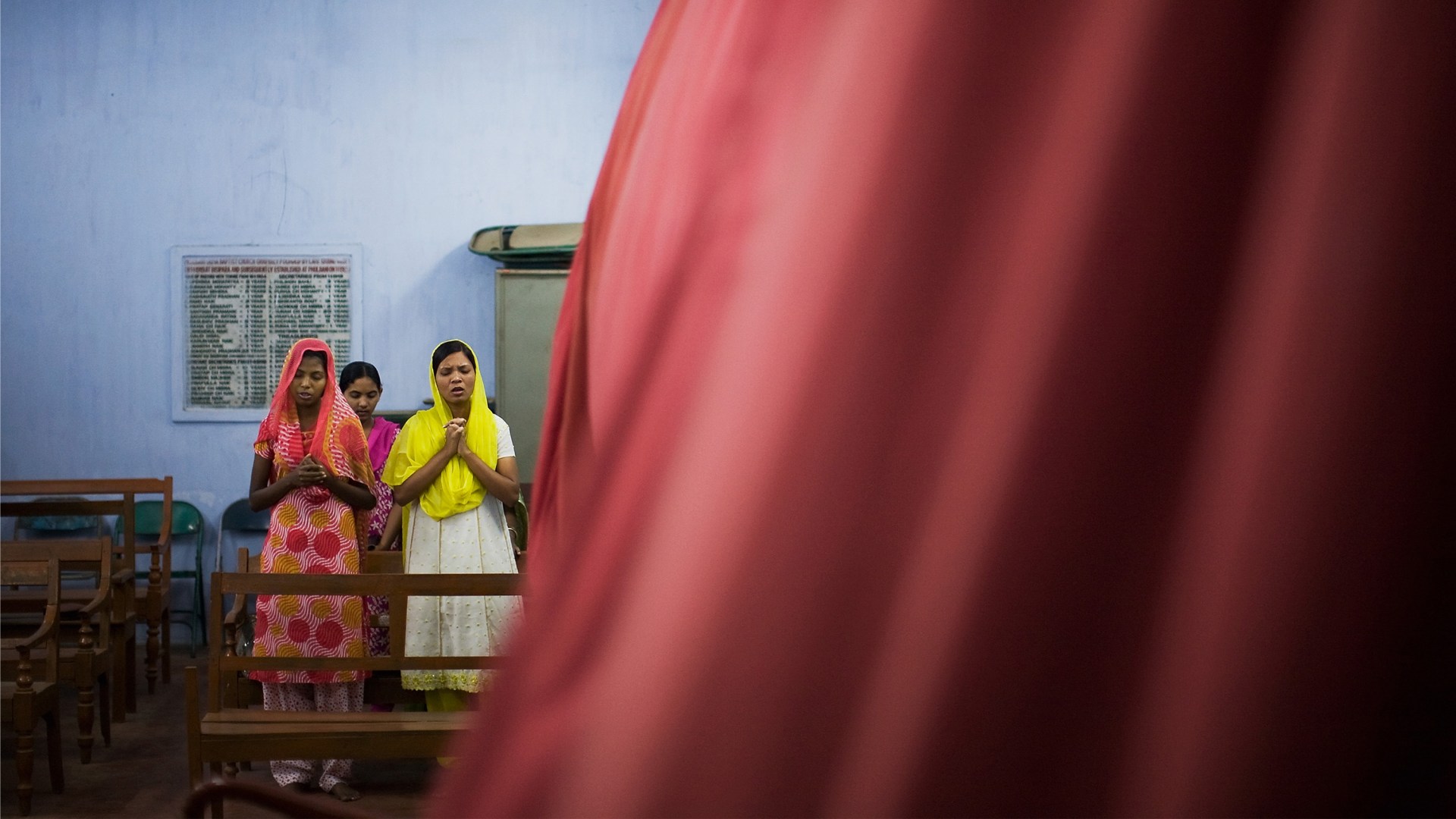
An interdenominational prayer service held in the wake of the attacks on the passing of the Healing (Magical) Bill.

An interdenominational prayer service held in the wake of the attacks on the passing of the Healing (Magical) Bill.

Christianity Today March 11, 2024
Courtesy of Assam Christian Forum

State lawmakers in India are seeking to curtail evangelism with a ban on “magical healing” that could penalize Christians who offer prayer or any “non-scientific” practices to comfort people who are sick.

Last month, the northeastern state of Assam introduced the bill, which Christian leaders say unfairly targets their community’s custom of praying for the sick. Though church healing meetings in India have drawn people to Christ, local Christians insist that prayer is a legitimate, universal spiritual practice and not an unethical tool for conversion, as Hindu nationalists claimed.

The proposed ban, which passed the 126-member state assembly on February 26, states that:

No person shall take any part in healing practices and magical healing propagation for treatment of any diseases, any disorder or any condition relating to the health of a person (relating to human body) directly or indirectly giving a false impression of treatment to cure diseases, pain or trouble to the human health.

Any first-time offender can face one to three years in prison, a fine of 50,000 rupees (about $600 USD), or both. A subsequent conviction may result in up to five years’ imprisonment and/or a fine of 100,000 rupees (about $1,200 USD).

The bill must be ratified by the president of India to become an act. Assembly leaders in Assam say that the healing ban does not target any particular religion, but they were clear about their aims to restrict evangelism and conversion.

“We want to curb evangelism in Assam, so in that direction, the banning of healing … will be a very, very important milestone,” said Himanta Biswa Sarma, the chief minister of Assam. The state is governed by the Hindu nationalist Bharatiya Janata Party (BJP), the national ruling party of Prime Minister Narendra Modi.

“Healing is a very, very dicey subject, which is used to convert tribal people,” said Sarma. “We are going to pilot [this bill], because we believe that religious status quo is very important. Whoever is Muslim, let them be Muslims; whoever is Christian, let them be Christians; whoever is Hindu, let them be Hindus, so there can be a proper balance in our state.”

The bill has drawn flak from the Christian community and the opposition party.

The Assam Christian Forum (ACF), an umbrella body of all Christian churches in Assam, has spoken out against the ban as a violation of religious freedom and against lawmakers’ characterization of prayer as “magical healing.”

“Prayer is a universal practice across religions, used to invoke divine healing,” the forum stated. “Labeling it as magical healing oversimplifies the profound spiritual dimensions of faith and life.”

ACF clarified that Christian prayers for healing are acts of compassion, not conversion. According to the forum’s spokesman Allen Brooks, leaders are concerned that any prayer that may follow healing could be perceived as “a motive to convert the other person to Christianity,” in which case “everybody will go to jail.”

In the neighboring state of Nagaland, the Chakhesang Baptist Church Council criticized the Assam bill as wrongly banning Christian practices in a secular country. The council praised its own state for upholding the right to freedom of religion.

The council’s executive secretary, C. Cho-o, also objected to the term “magical healing” as dismissive of supernatural intervention. “Healing is the work of God, not the work of Christians,” he said. “So, when divine healing takes place, Christians cannot claim responsibility, nor can they be blamed for it!”

Officially called the Assam Healing (Prevention of Evil) Practices Bill, 2024, the proposed law would criminalize any “non-scientific healing practices with ulterior motives for exploiting the innocent people.”

Besides the punitive provisions, the bill empowers police “to enter and inspect any practices within the local limit of jurisdiction of such person where he has reason to believe that an offence under this Act has been or is likely to be committed.” It gives officers a free hand to seize any advertisement, record, or document as evidence.

Healing meetings are common in India and have drawn many people to Christ after they have personally experienced healing or have watched their loved ones recover. Local Christians can recount testimonies around the power of healing for the church. (They shared responses anonymously with CT out of security concerns.)

One leader saw how healings can be an entry point for the gospel, attracting people looking for an answer for their physical suffering.

“Signs and wonders abound, and many people come to know Jesus as healer first, and then as they walk with him as their Lord and Savior,” he said. “But to call this a conspiracy or magic would be belittling it. It definitely is not evil, but the grace of God.”

A convert shared how transformative healing ministries were for her in the three years since she began attending church.

“My family was surrounded with bouts of sicknesses and illnesses. Since I have begun to follow Christ and my family has joined me, we have gotten rid of the bondage of illness,” she told CT.

Hindu right-wing groups have for years alleged that Christian groups are engaging in unethical conversion tactics under the guise of “healing crusades” in India. They have accused Christians of promoting superstitious beliefs, making false claims about miraculous healings, and using deception to convert people, especially from economically disadvantaged communities, to Christianity.

The Organizer, a weekly publication associated with the BJP, ran a special report expressing that the Assam bill will thwart Christian missionaries from luring “villagers with magical healing” and will prevent them from converting tribals.

The Assam Tribal Christian Coordination Committee (ATCCC) has appealed to the government to review the bill, expressing concerns that its current wording could be misused to target the Christian community.

Like other local Christians, the ATCCC stated that the bill should not link “magic healing” with proselytization or conversion, as the Christian church aims to share Jesus’ teachings of love and peace.

The committee urged the chief minister to ensure the bill’s integrity and to maintain the secular principles of the country’s constitution while passing it, fearing that its current form could lead to more harm than good.

The Angami Baptist Church Council (ABCC) from Nagaland condemned the Assam bill as an attempt to target Christian humanitarian work by misleadingly equating divine healing with “magic” used for conversions. It stated Christian healing combines science and prayer, not magic.

The council urged the “sister states” of northeast India to promote peaceful coexistence instead of sowing division through such discriminatory laws.

A pastor in Guwahati, Assam’s largest city, believes that even if the ban is brought into action, it will not stand for long.

“In Assam, we have both tribals and non-tribals who will not obey the law that is being imposed in the state,” said Kamleshwar Baglary of Harvest Baptist Church.

He believes that migrants from other states are responsible for the recent political mayhem in Assam.

“Most of the people used by the Hindu fundamentalist organizations are paid workers to execute their plan in the state,” Baglary said. “They cannot rule in Assam with their ideologies.”

While responding to the bill, the ACF also expressed concern over demands by pro-Hindu, right-wing groups like Sanmilito Sanatan Samaj and Kutumba Surakshya Parishad, which have demanded that schools remove Christian symbols like statues of Jesus and Mary, alleging that the institutions are being used for religious conversion activities.

The situation has escalated with anti-Christian posters being pasted on the walls of several Christian schools, including Don Bosco School, St. Mary’s School, and Carmel School. These posters serve as an ultimatum to remove religious symbols within a specific timeframe. The Assam healing legislation has only added fuel to the fire.

Brooks, the ACF spokesman, has defended the schools as providing equal opportunities beyond caste, creed, and gender, and has clarified that ACF’s healing prayer services are not intended for conversion.

He argued that the new law unfairly targets the Christian community’s practices and undermines their long-standing service to the society of Assam. Christian missions have helped preserve the Assamese language and have established educational institutions that have produced many notable figures, including former chief ministers and chief justices.

“Our destiny as a nation lies in our diversity, while respecting each other’s individuality,” he said.

Inkwell

Variations on The Planets

Inkwell March 10, 2024
Photography by Martin Penot

How do you contain a small explosion?
Just behind the eyes. It has to beat, beat
against the skin –

so if the stars, if they
have taught us anything, surely it is
that creation is not vacuumed. Not ours.
Begun before we had eyes and tongues and
telescopes and hours of our own. Begun
in fire – productive fire – and with a Word
(not Ours). If we need anything, down here,
self-important and soggy and afraid –
if we down here need anything, it’s to
be told we’re smaller than we think but not
alone – not thrown like whittled dice into
this pitch arena.

No, shadowed instead
by bodies bigger than us. And like poor
misguided parents we name them! Oh! the
audacity of naming time! All those
ancient rocks lined up for what? To mark a
thousand solstices that the builders would
never see? You named today a planet
thirteen thousand years into our past – you
named it after a man you love, perhaps
– or who loves you. And now you think you have
immortalised him. And so now he is
past immortal – before he was born his
planet bears his name and now he lives is
it still spinning? Still hurtling? Is that how
this works? Or has the quick time up there won
out again, its pace never quite in step
with our dull turning?

This is why, of course –
we find stars in ice and all the things that
we don’t think are quite eternal enough:
flowers and fireworks and babies’ eyes – all
as if to hold in stasis something of
light, to hold in our hands the echoes of
what was trapped and freed in fairy-tale terms:
long ago and far.

So, in all their bright
and silent hiddenness, these distant golds
become oil-work in our inherited
hunt – the yelp of every human life since
time remembered – for some ever-distant,
never found and fraught vanishing point where
we’ll find grounded everything we’ve questions
for:

how did the atoms come together?
And when? And will we forgive them one day
for doing it without us? How many
moons? Stars? Ages? How many ways can a
child forgive its parents? How far are we
prepared to go? For the men we love? The
women who made us? The children we did
not mean to make? So, because these old and
moulded galaxies are hidden, we find
we cannot stop chasing them, because in
them we see and cite the corners of all
our mundane mysteries – those old, glittering
things that garment us, fragment us, name us
in their own namelessness –

which is why, of
course, we sift on through the dark and draw our
lines between the stars to make animals
and omens, webbing around that trig point
in the black – which is where, of course, we find
that all those things that made it worth seeking
were beside us down here all along, that
every reason we ever had to search
is grounded in a pinnacle in time,
a moment, a sigh, and it is finished.
And it is only just beginning.
And

it was over long before we knew to
look. And we keep looking, keep finding the
same old impressive reasons to find and
name some never forgotten corner of
a long-awake world, just to be told it
was never ours to keep – only to name.
And names change, and the constellations are,
it seems, different across the equator.
And I only knew that when I crossed the
equator,

so maybe we have to cross
the dark to see that when it was finished
it was very good, see that when it was
finished, this was left in place: that every
etched steppe of light was named, was ours to name.

Ruby Dunn’s poetry has been published by the North American Anglican, Stanchion, and Hyacinth Press journals, amongst others. Her academic work has been published by the University of St Andrews Arts and Divinity Faculty Journal, and she currently lives and works in Oxford. You can read more of her work at rubydunnwrites.wordpress.com

Inkwell

This Small Thing

Inkwell March 9, 2024
Photography by Rob Potter

It greets me again on some cold November evening
Crested with cherry and yellow hearted
A most magnificent leaf on the ground by the train station

Tuesday morning and the windows are foggy
My room is cold and my bed is warm
And it sings it’s bright hello in crisp morning sunlight

On the 9:36 to Euston I find it in a stranger
who can’t hold in his laugh, hand over mouth
Chuckling through his nose. He is wonderful.

Three old ladies outside a bistro chattering
Canyon laugh lines and bright lipstick
When they dimple at me, I return my biggest smile

And on Saturday I do the dishes at my sister’s house
Through the kitchen window the tall grass
On the mountainside dances in the amber evening

Something soft blooms in my chest in answer
To the cobweb glistening with dew, dragonflies,
The little yellow boat at Portnoo pier, darling and weathered

To mist below the hill and the first sip of a good cup of tea
My niece’s laugh and my father’s teaspoon collection
And that silk moth I saw sunsoaking on a hot afternoon and I know

It cannot all be luck. My days are threaded with joy
So small and featherlight, a breath against the wind.
Woven together in defiant splendour

These small things
And Your glory therein.

Mary Clement is a debuting poet and student at St Mary’s University, Twickenham, where she is the president of the Creative Writing Society. She studies and works in Creative Media, though her first love is poetry. 

Inkwell

I Closed the Infinite Door

Inkwell March 9, 2024
Photography by Gabriella Clare Marino

I closed the infinite door for the weekend
and followed my weightless heart to a coffee shop
to read fiction like I’m fourteen
and reconnect with the deep magic.

My good wolf finds me here,
pokes his muzzle under my book
and puts a paw in my hand.
He carries scars of self-defence all over his thin body.

I meet his eye and embrace him,
draw him into deep armchair,
his muzzle in my shoulder.
We will repair each other.

I want to throw him a feast, he deserves one,
but you must feed the starving slowly back to themselves.
Then I must follow him into new country,
where I am at long last safe in myself.

Here, I’ll feed up the right wolf,
on full presence and companionship, 
on baths, real rest and undistracted work, 
on sheer play and grateful prayers.

This is the jubilee year of grace and peace,
it is his year and he knows it.
I follow him to Richmond Park,
to plant self-destruct buttons and grow pomegranate trees,
to sharpen screens into black glass arrowheads.

There are many perfect days ahead,
we can taste them.

Taking in the view, 
I scratch his ear and let him know,
‘I have decided to live myself to death.’

Isaac Withers is the Creative Director of Peter’s House Ltd, a Catholic Creative Agency and is currently training as a counsellor.

Apple PodcastsDown ArrowDown ArrowDown Arrowarrow_left_altLeft ArrowLeft ArrowRight ArrowRight ArrowRight Arrowarrow_up_altUp ArrowUp ArrowAvailable at Amazoncaret-downCloseCloseEmailEmailExpandExpandExternalExternalFacebookfacebook-squareGiftGiftGooglegoogleGoogle KeephamburgerInstagraminstagram-squareLinkLinklinkedin-squareListenListenListenChristianity TodayCT Creative Studio Logologo_orgMegaphoneMenuMenupausePinterestPlayPlayPocketPodcastRSSRSSSaveSaveSaveSearchSearchsearchSpotifyStitcherTelegramTable of ContentsTable of Contentstwitter-squareWhatsAppXYouTubeYouTube