News
Wire Story

This Is My Body, Prepackaged for You

Coronavirus sparks demand for double-sealed communion.

Christianity Today March 12, 2020
Ruby-Rose / Lightstock

Every week at University United Methodist Church in Chapel Hill, North Carolina, congregants come forward for Communion.

But in light of concerns about the new coronavirus, the church has ordered boxes filled with hundreds of prepackaged Communion cups and wafers.

“In a variety of ways, we’re just minimizing the level of physical touch that’s happening in the life of the church while still trying to continue somewhat normal activities,” said the Rev. Justin Coleman, who is coordinating with his staff and communicating with fellow clergy in his area about best practices for corporate worship under the new circumstances.

“What we’re saying related to Communion is that what we’re trying to do is minimize any kind of unnecessary touch here.”

Coleman said the purchase of the special cups is part of a “proactive way of thinking about our adjusting practices moving forward” along with changing how people greet one another, fill out registration cards to note their presence, and contribute to the weekly offering.

His historic church of some 1,800 members—with children’s and youth ministries as well as a significant percentage of senior adults—is far from the only one considering such packaged products for a sacred tradition across a range of Christian churches.

“Yes, we have seen a tenfold increase in sales of these items,” said Audrey Kidd, an executive of the United Methodist Publishing House, when asked if the church supplier Cokesbury had received more requests for the packaged option for Communion.

A spokesperson for LifeWay Christian Resources, an arm of the Southern Baptist Convention that offers church supplies, said it has seen a slight increase in the sale of Fellowship Cups, pre-filled Communion cups that come packaged with both juice and a wafer, but it is unknown how long or if that trend will continue.

Celebration Communion Cup, a Florida-based manufacturer of a similar product, has also seen a recent spike in interest.

“We did see an increase of about 8% in sales closing out the month of February,” said Robert Johnson, president of the company that started in the 1990s and sells between 40 million and 50 million cups annually to suppliers, churches and individuals.

He said his customer service representatives have reported that coronavirus is “at the top of mind” of callers who are concerned about what they are touching during Communion.

“We always tell people our product is aseptically prepared, meaning it’s not touched by human hands during the process,” Johnson said. “It’s completely automated.”

The exception to that rule is when gloved staffers are involved in the quality control inspection of products, he said.

Celebration Communion Cup products use a two-seal process, with a top cellophane-like seal over the wafer that sits on top of a foil lid covering the container of grape juice. Though some customers use the products for visits to sick and shut-in members or on retreats, Johnson said they are primarily used in traditional worship services.

His website on Wednesday was selling boxes of 100 cups for $22.99 and 500-count boxes for $87.99, prices he said were reduced for pre-Easter, and not coronavirus concerns. Fellowship Cups currently sell for $22.99 for 100 on LifeWay Christian Resources’ B&H Publishing website and $23.99 on Cokesbury’s website.

Coleman, whose church ordered some 10 boxes of Fellowship Cups—each with 500 of the juice/wafer sets—from Cokesbury, said his church staff is still figuring out the best way to safely use—and dispose of and recycle—the special cups that resemble single-serve coffee creamers at fast-food restaurants.

“Now you have contact with lips and you have extra juice in a little cup that’s left over,” he said, noting that issues of sterility go beyond just receiving Communion. “You’ve got to be careful there as well.”

He said the emphasis on trying to continue Communion emanates in part from the high regard his United Methodist Church has for the sacrament—one of two, along with baptism.

“In the tradition of our church we’d say that it’s a guarantee that you receive the grace and presence of God through the sacrament of Holy Communion,” said Coleman, of the denomination whose founder John Wesley wrote a sermon titled “The Duty of Constant Communion.” “If you’re unsure of it in any other form, be sure of it in this form.”

Dr. Amy Behrman, a member of a Presbyterian Church (USA) congregation and a professor of emergency medicine at the University of Pennsylvania, said it is wise for churches to be considering how best to offer Communion at a time when the country is dealing with flu and coronavirus cases.

“I certainly think that communal meals and Communion in particular is an opportunity for us to avoid potentially infecting each other by sharing objects, much less sharing food or drink directly,” said Behrman, who attends Overbrook Presbyterian Church in Philadelphia.

She said Communion is one of the times when churches can work to reduce risks of cross-contamination through what people eat or drink or through “fomites” that can transfer a virus.

“For instance, if I had influenza and I drank out of a cup or even used a cellphone, like I’m using right now, and then you picked it up and then you touched your mouth, you could be infected from me,” Behrman said, “ even though you and I never actually were close to each other physically.”

Coleman, the senior pastor in Chapel Hill, said his church is also considering how it might offer “pre-blessed” prefilled Communion cups and wafers to members to take home if they have to suspend in-person worship services for a time and worship via the church’s livestreamed service.

“When they engage with us virtually, they will already have been blessed,” he said of the Communion elements. “We are thinking about this taking place on a livestream, so that people at the given moment in the service could partake.”

Church Life

Should Your Church Stop Meeting to Slow COVID-19? How 3 Seattle Churches Decided.

A global health expert offers tools for your congregation to respond now.

Christianity Today March 12, 2020
Lauren DeCicca / Stringer / Getty Images

Editor’s Note: For up-to-date global cases of COVID-19, follow this map from the University of Washington or this map from John Hopkins University. It is likely case numbers are higher than depicted due to community transmission or mild cases that are untested, but author and global health expert Daniel Chin points out that those cases are mostly likely to occur where we see the virus already clustering. Therefore, those areas without cases or with low numbers of cases are not yet in the same risk category as others, like Washington state or New York. But Chin warns that we should assume that case numbers will rise across the country, thus even lower-risk places should plan a response now and follow local public health recommendations.

As I write this, my heart is very heavy. I just spent the second Sunday morning of Lent in my living room with my wife, watching a livestream of the worship service from my church. The church was empty because this past Friday, the King County Public Health Department in Washington state sent a notice to faith-based organizations, recommending that they cancel all gatherings with 50 or more people. Pretty much all churches in the Seattle area have already stopped their in-person worship services along with most other church activities. Since the evangelical church that I attend has over 1,500 worshipers in four services each Sunday, we livestreamed our worship services. As this article was being prepared for publication, Gov. Jay Inslee took it further, banning gatherings larger than 250 people in three metro counties, and WHO declared COVID-19 a global pandemic.

But my heart is not heavy because I could not gather with others to worship (as much as I appreciate corporate worship). It is heavy because I can see where the COVID-19 epidemic is going to take us, while most of those in our society and churches do not. Seventeen years ago, I was working for the World Health Organization (WHO) in Beijing when the SARS coronavirus epidemic broke out in China. I was thrust into leading much of WHO’s support to China and worked 24/7 for over three months to help contain that epidemic. I saw firsthand the effects of SARS on the people of China, the extraordinary social distancing efforts undertaken by the government, and the cost that the society paid to contain that epidemic.

After working for WHO and then the Bill and Melinda Gates Foundation in China, my wife and I moved to Seattle in 2015 to lead the foundation’s work to control tuberculosis in several countries. For a quarter of a century, I’ve answered a calling as a follower of Christ to stop the spread of diseases and work to eliminate them, and now I heed that calling to speak to my brothers and sisters in Christ to take this epidemic seriously and respond.

When COVID-19 first surfaced publicly in China in January, this was not an issue for most churches in the Seattle area. But it generated a lot of anxieties among local Chinese churches because Chinese Spring Festival was happening and their members were going to and coming from China. Church members were extremely concerned about being infected by a traveler from China, and the number of Sunday worshipers declined by half. The leadership of a large majority–ethnic Chinese evangelical church asked me to help guide their church’s local response. Subsequently, the large American evangelical church I attend, which draws congregants from a wide geographic base, made the same request, along with a smaller neighborhood church deeply engaged in its local community through service programs like Scouts, childcare, and youth work.

From working with these churches, each with diverse approaches to kingdom engagement, I learned that a robust church response requires a proper understanding of how COVID-19 spreads and harms, how to protect ourselves and others from being infected, and how to properly assess the risks we face in our communities.

Understanding how COVID-19 spreads and harms

Several factors have come together to help the COVID-19 effectively and stealthily invade our community without notice.

First, it is hard to know whether you have COVID-19 or just the common cold. Eighty percent of people with COVID-19 have mild symptoms like fever, cough, runny nose, and general tiredness, which matches the common cold. This means a person may be carrying and transmitting the virus without knowing it.

Second, you don’t have to be around an infected person to get infected. Infected people can cough and generate respiratory droplets, which then land on nearby surfaces. Or people with the viruses on their hands can deposit the viruses onto a door handle when they open the door. Because these viruses can stay alive on surfaces for at least several hours, people who touch a surface with the viruses on it and then touch their nose or eyes can become infected.

Third, about 20 percent of infected people develop a more severe illness and may need to be hospitalized; 3 percent of all those infected die. However, the virus is particularly aggressive among the elderly and those with chronic illnesses, resulting in a death rate several times higher for these vulnerable individuals.

Therefore, this virus is particularly difficult to control because it causes complacency among the vast majority of people who have the infection, which facilitates its transmission from person to person while causing the greatest harm to the most vulnerable individuals.

Adding to the difficulty is the fact that we currently do not have enough test kits to diagnose this infection. Right now in Seattle, there are barely enough tests for those admitted to the hospital with pneumonia. Though more tests should become available soon, we need to make testing so widely available in Seattle that anyone who wants the test can get it. Only then can we shine a light on the real size of this outbreak, which is what is needed to contain it.

How to protect ourselves and others from COVID-19

By now, you are probably looking for some good news. Fortunately, there is some.

First, we know it is possible to protect ourselves and others from being infected. However, the approaches are so ordinary that we underestimate how effective they can be: Wash your hands frequently, avoid touching your face, be friendly but don’t shake hands, keep away from sick people, and stay home when you are sick.

You don’t have to be afraid when you hear someone coughing near you. If that person is not coughing directly in your direction and is within six feet, the viruses can’t get to you because they are in large respiratory droplets that fall to the ground. The virus does not float and circulate in the air.

Second, the virus can be beat. All around the world, there are many examples of COVID-19 entering a community and then never gaining a foothold—all because people apply basic public health principles. There is nothing sexy about rapidly identifying and isolating infectious cases and their contacts. But it works. However, it needs to be applied aggressively and effectively right at the start.

Unfortunately, what we see over and over is that the response is late. By the time the virus gains a foothold in the community, beating it requires much more aggressive social distancing. I believe this virus is already firmly established in many of our communities. Even so, many churches are reluctant to act. By the time an outbreak spirals out of control—like the ones in China, South Korea, and northern Italy—extreme social distancing measures, like locking down cities or regions, become necessary. But the social cost of such extreme distancing will be high, not to mention the economic cost.

Simple tools are needed to formulate a response

As part of our mission in this world, the church can be a strong agent to prevent sickness and protect the vulnerable. We are an integral part of our community, and many social contacts run through our church. If we can recognize the early signs of a local COVID-19 outbreak, we can lead in protecting those inside and outside our churches. But I have worked with enough disease control efforts to know that it is not enough to convince people they should act. People need to be given simple tools to help them take action.

Churches in the US are in uncharted territory regarding how to respond to the current epidemic. We will all continue to learn as this epidemic evolves. But based on my recent experience, here are two simple tools to help churches make good decisions in real time: (1) a simple way to assess what kind of actions a church should take based on the local risk of transmission, and (2) a framework that can help churches develop a specific plan to prevent infection and increase social distancing that can be implemented as soon as it is necessary.

Daniel P. Chin / CT

How to determine your church’s risk and response

As cases of COVID-19 increase, we are seeing a lot of anxiety and uncertainty about what the church should do. But responses can be based on sound epidemiologic principles. I use traffic light imagery to help churches think through their local risk of transmission and what kind of actions they should take (see figure). After all, all transmission of this virus occurs locally. Your actions should not be based on what is happening 50 miles away; they should be based on what is happening in your particular community.

Your church is in a “green light” zone when there are no known cases of COVID-19 in your community. What should you be doing?

  • Implement all of those boring but effective public health measures like hand-washing and staying home when you are sick.
  • Educate your church about the COVID-19—its symptoms, how it spreads, how it affects the elderly and those with chronic illnesses, and what they can do to protect themselves from being infected.
  • Carry out discussions within the church and make concrete plans to modify, cancel, or replace church activities as needed. The church leadership should be engaged in this process. Now is the time lay a good foundation in preparation for what the church might face next.

Because of the huge mobility of people and ease of travel, many communities have started to see COVID-19 cases imported into their community. As soon as a case from another community enters your community, your church is in the “yellow light” zone. If no one who came into contact with this case is infected, this indicates there was no further transmission of COVID-19. When one or more of the contacts are infected, but no one else in the community is infected, this means transmission has not spread to the broader community. The church is still in the yellow zone. At this point, what should your church be doing?

  • If your church hasn’t completed a concrete response plan, do it now.
  • Begin implementing this plan, modifying some activities to reduce risk and inform the entire church about this.
  • Establish a system to rapidly communicate any changes in church activities to the entire congregation.
  • Be hypervigilant, and check regularly with your local public health department about additional cases that could move your community and church into the “red light” zone.

Your church moves into the “red light” zone as soon as a resident of your community becomes infected but has not traveled recently to another area with cases and cannot be linked to any other case. This raises alarm because it means transmission in the community was previously undetected. Epidemiologists call this community transmission. A community is also in the red zone when multiple generations of transmission in the community are linked to an imported case. As soon as you are in the red zone, your church should do the following:

  • Implement various social distancing measures and protect the vulnerable groups.
  • As more community transmission takes place, temporarily discontinue more and more activities, including corporate worship, and move if possible to livestreaming or to small group worship.
  • Watch for recommendations or mandates from your local public health department; you may be asked to limit social gatherings.

How to make decisions on your church’s activities

In my work with the three churches in Seattle, I found that they all initially struggled with diverse opinions about what activities to cancel or modify when planning their response to COVID-19. I developed a framework to help them. Using a spreadsheet, we listed church activities, thought of possible transmission of the virus during each activity, rated risks, provided modifications or substitutes, and then made decisions for each (see figure for an example).

The key is to work out the how transmission, whether direct or indirect, can occur through each activity. Keep in mind the ways COVID-19 is transmitted. When assessing the risk of direct transmission, ask: How likely are people to cough, sneeze, or generate respiratory droplets toward others? How likely is direct hand contact? Activities like singing, talking at very close quarters, giving handshakes, and hugging will have increased risk. To decrease risk, consider increasing distance between people, preferably to more than six feet.

When assessing the risk of indirect transmission, ask: How likely will people touch surfaces that could be infected? Activities that involve touching surfaces, such as offering plates, Communion plates, Bibles, and coffee dispensers will increase risk. To decrease risk, implement frequent hand-washing and use of hand sanitizers.

Consider the age groups involved when planning what activities to modify or cancel. The much higher risk of severe illness among the elderly and those with chronic illnesses means we need to protect this group from infection.

Daniel P. Chin / CT

Remember, the decision of what church activities to modify, cancel, or substitute largely depends on the level of community transmission (see figure). If the level is low, you may just modify some activities but not cancel any. But as the level of community transmission increases, canceling activities becomes a better idea because it is increasingly likely that an infected person will enter the church unknowingly. Finally, follow public health recommendations.

When using this approach, a pastor said, “We determined that children’s ministry was high risk because kids are constantly touching each other and we can’t control it. If they spread infection among themselves, they can bring it home to their parents and grandparents. Besides, many of our teachers are elderly, and we don’t want them to get infected. So, we quickly decided to close children Sunday school.”

An elder said, “Our choir had people of all ages participating. But with singing during rehearsals or when standing in rows and singing during worship, there was a medium-to-high risk of transmission. So, we decided to substitute the choir with a quartet, especially since some choir members were elderly.”

An executive pastor said, “I was getting calls and emails from individual ministry leaders about what to do with their activities. It was really helpful to list all the activities and review their risk of transmission all in one go because we could compare the risk of one activity to that of another. This helped us to be consistent when making decisions about individual activities, and we were able to clearly communicate why we made these decisions. That was so helpful to our team.”

When developing your church’s response plan, communicate with church members. Some members’ anxiety will decrease when they know that your church is making a plan. They can better understand the rationale behind the church’s decision process and take comfort knowing it is based on good science. Develop a communication process because decisions often have to be made in real time and then clearly and effectively communicated to the congregation.

Your church needs to have a plan to respond now

Reflecting on our experience in Seattle over the past weeks, I am struck by how fast this outbreak took off. COVID-19 is going to hit many communities hard and fast. There is no time to waste. Because our church activities can facilitate the transmission of this virus, our churches should “first do no harm,” a dictum I learned in medical school. Using the tools described above, which are based on our current understanding about this virus, our churches can have a response plan in place to quickly protect ourselves and the most vulnerable among us. By implementing such a plan, our churches can play a major role in stemming the tide of this epidemic and reduce its harm on society.

The approach discussed here is admittedly heavy on good public health and epidemiological approaches for decision making but light on empathetic response and engagement around those who have the virus and are suffering from its more potent effects. I hope that, having understood how the virus spreads and harms, this response plan can also include ways to serve with compassion those who are sick, care for the most vulnerable, and become a congregation more sensitized to and engaged with the needs of the world.

Daniel Chin is a physician trained in pulmonary and critical care medicine and epidemiology with 25 years of global public health experience. In 2003, he led much of WHO’s support to China to contain the SARS epidemic.

Theology

A Nigerian Pastor Reflects on Partnering with Christ in Suffering

Christians can find a strange happiness as we grow in our willingness to face persecution.

Christianity Today March 12, 2020
Matthew T Rader / Unsplash

Christians being persecuted for their faith is a daily reality in contemporary Nigeria. I live in a community where Christians are discriminated against and denied our rights to development, good infrastructure, stable jobs, education, and so on. We also face the danger of being attacked by our Muslim neighbors. I still live with the traumatic memory of the death of my dear cousin who pastored a church in the city of Kaduna. During the religious crises in Kaduna, he was killed in the presence of two of his children.

Christian farmers, in particular, face persecution as Muslim herdsmen migrate into our region and seek to overtake our ancestral land. Guerrilla warfare and raiding tactics are often used to chase rural Christians out of their farmlands. In many cases, herdsmen release their cows to graze on a Christian’s farmland, destroying the farmer’s crops and livelihood. Last year, Zinnia (a pseudonym)—a Christian mother of four who was the breadwinner for her impoverished family—lost four hectares of crops in this manner. Her fields were so destroyed that Zinnia could not harvest a single grain. Zinnia felt she wouldn’t be given a fair hearing and that seeking legal justice could instigate more raids against her community. So she decided not to take the case to court. Her family endured this tragic loss because of their faith in Christ. Experiences like Zinnia’s are shared by many Christians here.

Faith in Christ does not shield us from suffering or pain. In fact, Scripture assures us that our faith in Jesus will often bring suffering. As the apostle Peter wrote, “Don’t be surprised at the fiery trials you are going through, as if something strange were happening to you. Instead, be very glad—for these trials make you partners with Christ in his suffering, so that you will have the wonderful joy of seeing his glory when it is revealed to all the world” (1 Pet. 4:12–13, NLT). Our natural instinct is to avoid pain, yet when Jesus foretold his crucifixion, he linked his suffering directly to our discipleship: “The Son of Man must suffer many things . . . and he must be killed and on the third day be raised to life. . . . Whoever wants to be my disciple must deny themselves and take up their cross daily and follow me” (Luke 9:22–23).

Jesus wants our idea of suffering and pain to be transformed to such an extent that we begin to see it as a positive way of life. Our human view of happiness as the absence of suffering, sorrow, and pain must give way to Christ’s perspective. “Unlike the Christian symbol of today, Jesus’ first hearers knew the cross only as the ultimate instrument of torture, humiliation, and suffering. Following Jesus means denying ourselves and allowing Christ to work in both blessings and trials. It means choosing to desire whatever Christ desires. It means bearing suffering and persecution from the world like Jesus did,” the Africa Study Bible notes. “People who believe that Christians should enjoy life on earth free from suffering or persecution of any kind do not fully understand what it means to be a follower of Jesus.”

To follow our crucified Lord means to willingly follow him into mistreatment, rejection, and suffering. “If the world hates you, keep in mind that it hated me first,” Jesus told his disciples (John 15:18). He also said, “You will be handed over to be persecuted and put to death, and you will be hated by all nations because of me” (Matt. 24:9). Jesus willingly and resolutely absorbed mistreatment and suffering in his ministry and on the cross. By calling us to take up our cross daily, Jesus wants us to recognize the significance of suffering in our walk with him. If Jesus suffered, leaving us an example to follow, it then is a serious spiritual shortcoming if we try to ignore or reject suffering. In fact, our knowledge of Christ will be incomplete if we aren’t willing to experience suffering. Consider what Paul said: “I want to know Christ . . . I want to suffer with him, sharing in his death” (Phil. 3:10, NLT). There is a unique knowledge of Christ that we can gain only as we walk through times of suffering.

To have a testimony in this life requires the willingness to face pain and persecution. For some, this means enduring severe hardship, trauma, violence, and even death. For others, this means enduring milder forms of mistreatment, such as being mocked, misunderstood, or ostracized. But whatever our context, if we don’t cultivate a willingness to suffer with and for the Lord, it is impossible to please God. And without a knowledge of the place of suffering in God’s eternal plan, we’ll be unable to endure that suffering.

If we see suffering only as a terrible thing that we must resist or avoid, we fail to grasp its significance. Suffering is meant to help us find the secret of real joy and true happiness—the kind that can be attained only through persecution. Suffering exposes our vulnerability but also causes us to dare greatly. In this sense, suffering can be an expression of God’s love—a method of pruning, refining, and purifying us. And Jesus—the Son of the Father of all creation, God’s Chosen One—has majestically displayed the significance of suffering by taking away its pains, curses, and shame and replacing them with blessings, honor, and eternal glory! What Christ has done on the cross can transform our perception of human suffering into a rich experience with far-reaching implications for this life and the life to come.

Of course this does not mean we aren’t hurt, wounded, or traumatized by persecution. But it does mean we find resilient hope and joy in God’s eternal plan. As one Nigerian Christian expressed, “Believers should be hopeful that one day all suffering, persecution, [and] killing by Fulani jihadists [and] Boko Haram will become just a past story.” God allows us to suffer, in part because true suffering prepares us to experience eternal, divine joy.

We find a strange happiness as we grow in our willingness to suffer for the Lord: Somehow we are mysteriously participating in the sufferings of Christ. If we are insulted for our faith, we are blessed as “the Spirit of glory and of God rests on [us]” (1 Pet. 4:14). If we suffer for Christ, we can praise God for the privilege to bear his name (vv. 12–19). When we share in his sufferings, we know we will also share in his glory (Rom. 8:17–18).

When Zinnia told me about her ordeal, she was happy that she was persecuted because of her faith in Christ. She told me that what happened made her faith even stronger. She was determined to serve Christ, come what may. There can, indeed, be joy in suffering—when we know that it is for Christ’s sake we are being persecuted. It gives us a perfect opportunity not only to read or know about the suffering of Christ but also to participate in it.

Sunday Bobai Agang is an ordained minister with the ECWA and provost of ECWA Theological Seminary in Nigeria. He also serves as an associate research scholar in systematic theology and ecclesiology for Stellenbosch University, South Africa.

This piece is part of The Cross, CT’s special issue featuring articles and Bible study sessions for Lent, Easter, or any time of year. You can learn more about purchasing bulk print copies of The Cross for your church or small group at OrderCT.com/TheCross. If you are a CT subscriber, you can download a digital copy of The Cross free at MoreCT.com/TheCross.

Theology

7 Lessons from Singapore’s Churches for When Coronavirus Reaches Yours

Advice from Christians in the “Antioch of Asia” on how your congregation can survive, and thrive, amid the COVID-19 outbreak.

Christianity Today March 11, 2020
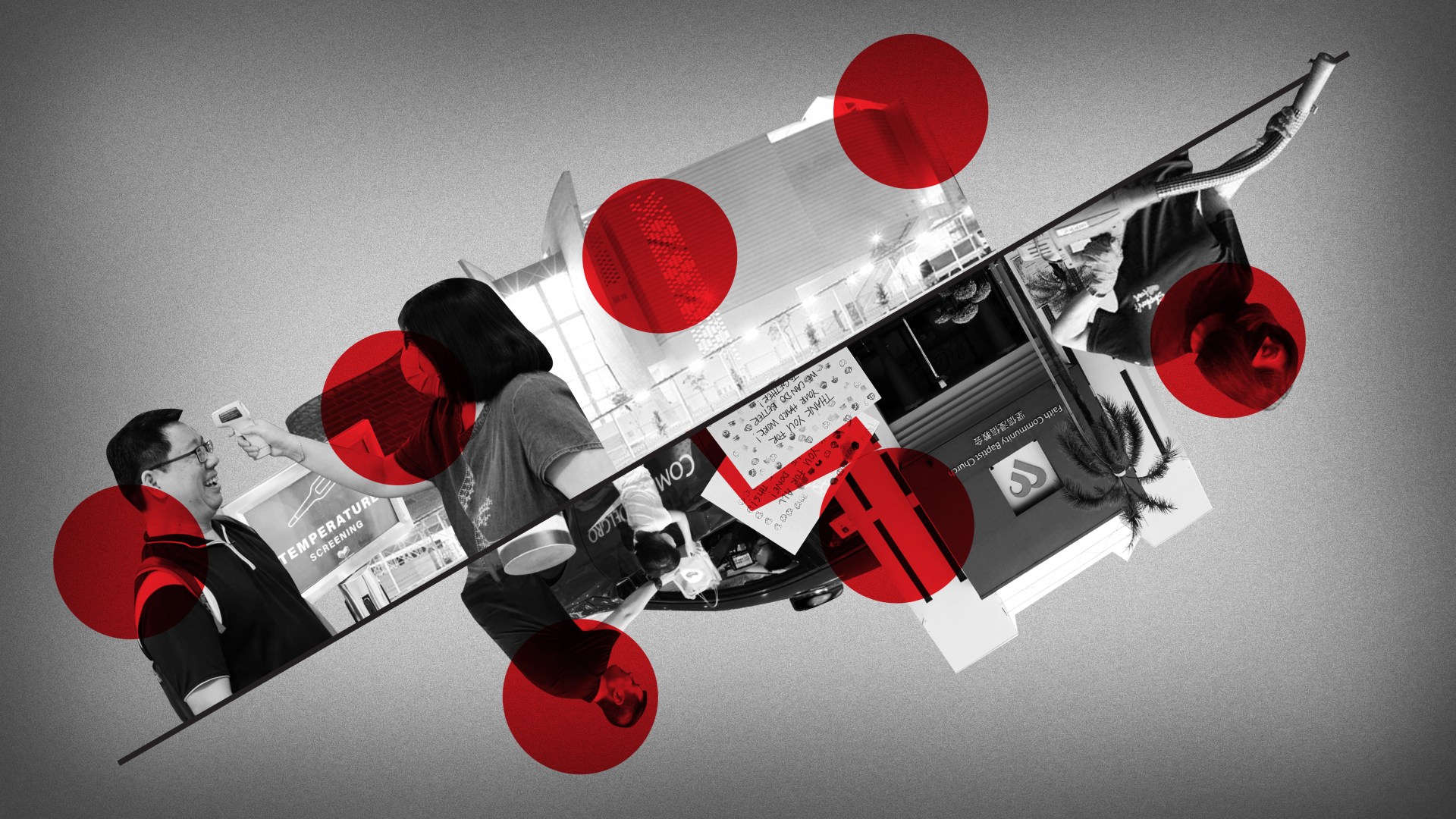
Illustration by Mallory Rentsch / Source Images: Courtesy of Cornerstone Community Church / Faith Community Baptist Church / City Harvest Church / Grace Assembly of God

Stores emptied of sanitizer, canned food, toilet paper, and water. Fights over the sale of limited supplies of face masks. Anger as congregations continue to gather for worship, prompting accusations of a lack of “social responsibility.”

The COVID-19 virus has spread from Asia to Europe and North America rapidly over the past week, bringing with it a level of panic and angst—everywhere from the supermarket to the stock market to the local church—not seen in recent times. The global tally is now more than 125,000 infected and more than 4,600 dead.

Churches in Singapore, which Billy Graham affirmed as the “Antioch of Asia,” have already weathered the anxiety now sweeping the world. On February 7, the nation-state’s government raised its national risk assessment level from Yellow to Orange, indicating “moderate disruption” to daily life—and in particular to large gatherings of people.

March 7 marked the one-month anniversary of Singapore—which has seen 166 cases but zero deaths—going Orange. This means that for the past month, local churches—which account for about 1 in 5 Singaporeans—have been forced into an extended period of self-examination, reflection, and action.

The process has not been straightforward, with a senior pastor afflicted with the coronavirus (and subsequently discharged), entire denominations suspending services, church-based preschools closing, and very public online disputes—in a nation that strictly enforces religious harmony—on how the situation is being handled by church leaders.

To help churches in the United States, Italy, Brazil, and other countries now facing decisions that churches in China, Korea, and Singapore have been grappling with for weeks, here are seven lessons the Singaporean church has learned over the past month:

1) Your church’s worship will change. Hold tight to what is sacred—and hold everything else loosely.

Congregations are creatures of habit. Churches are built on traditions, liturgies, and order in worship. Over time, every church’s line between what is fundamental to the faith and what is merely institutionalized response gets blurred.

Does Communion have to be actual wine and unleavened bread to still count as holy? If you don’t actually lay hands on someone, are prayers of healing still effective? Does a church have to gather in the flesh to count as a congregation?

Every church, and every member of your church, will have different views on such often-undiscussed questions. The COVID-19 outbreak presents a needed moment of doctrinal stocktaking.

Every church board and pastoral staff team in Singapore has come together many times over the past month to grapple with what is non-negotiable in God’s eyes.

“The biggest lesson for me has been navigating the road between fear and wisdom,” said pastor Andre Tan of The City Church. “It is especially tough as fear often has a way to masquerade itself as wisdom. How many precautionary measures are actually sound judgment and how many are too much, such that they teeter over into irrational fear and anxiety?

“It is a tough road to navigate, as we had to both convey safety to our members—by way of implementing recommended health measures—and yet not succumb to the cultural climate of fear, anxiety, and self-preservation,” Tan told CT. “We do so in all our notices by ensuring that we are not just communicating measures but also casting a vision for how to be the people of God in this time.”

In practical terms, a church’s response will vary depending on its doctrine, local context, and exposure to suspected cases of COVID-19. There is no correct answer; all are seeking the most appropriate response in extraordinary times. Precautions that Singaporean churches have taken to maintain services include:

  • Taking temperatures at worship services and smaller-scale gatherings.
  • Mandating travel declarations and recording contact details of attendees to facilitate tracing of contacts if needed.
  • Suspending gatherings of more vulnerable groups, such as the elderly or children.
  • Suspending Communion, or moving to alternatives such as pre-packaged bread and wine.
  • Moving away from hymnals to limit physical points of communal contact and using projection screens instead.

Some have chosen to suspend their services entirely. The Roman Catholic archdiocese, which accounts for about 7 percent of Singapore’s 5.8 million people, took the unprecedented step of suspending Mass in its 32 parishes starting February 15, advising congregants to continue to fulfill their spiritual obligations by tuning in to online sermons, spending time in prayer, and reading the Word at home.

2) Be a strong leader. Your members will want guidance.

“In moments of crisis, people are looking for leadership,” said Ian Toh, pastor of 3:16 Church. “The first responsibility of the leader is to remain calm. Panic causes tunnel vision, which is terrible for decision-making. Strong leadership reminds people that God is in control of every situation and there is never a reason to panic.”

Toh told CT his leadership team found their role was “to teach from the Bible, minister to and encourage those who are fearful.” The process drove them to their knees, seeking divine wisdom in an unprecedented situation.

“The biggest lesson that I have learned dealing with COVID-19 is the need to be humble as a church leader," said Toh. “There is so much that I do not know and have to learn. And that increases my desire and the need to seek the face of the Lord daily.”

As the virus continues to spread globally, church leaders around the world should be aware that their flocks are watching their shepherds intently. Signals of faithfulness will have implications long after the COVID-19 season is over.

“A senior leader once told me, ‘A leader’s action is a theological statement,’” said Rick Toh [no relation], pastor of Yio Chu Kang Chapel. “As leaders, we need to have a theological stance on all things. We need to process our fears before God and let our actions be inspired by faith and guided by sound theology. Let not disease, or earthly decree, but doctrine guide our decisions.”

3) There’s no better time to up your church’s tech game.

While the Singaporean government has said an upgrade to the Red risk assessment level is “unlikely,” local churches have explored improvements to their video recording and live-streaming capabilities in preparation for a worst-case total lockdown scenario.

Seeing the need, various groups have put together websites and webinars with free advice for churches on how to switch to livestreaming.

For example, the Bible Society of Singapore partnered with ThunderQuote, a procurement-related startup founded by Christians, to launch Streams of Life, a resource center listing various livestreaming options ranked by difficulty level.

“It is a wonderful time for the ecclesia to exercise practical wisdom and explore creative methods of ministry,” the Streams of Life team states on its website.

In a similar vein, Singapore Bible College conducted an “Introduction to Instant Message Broadcast and Live Video Streaming” workshop, while digital-exploration ministry Indigitous partnered with church IT specialists to host a “So You Want to Livestream Your Church Service” webinar via the Zoom video conferencing platform.

Church worship and AV teams are also navigating the music licensing challenge that livestreaming presents. Many local worship groups have explicitly granted permission for churches to play their songs on livestreams without fear of copyright or licensing issues.

Awaken Generation, founded by Calvin and Alarice Hong, was “keenly aware” of how small churches could find it difficult to afford livestreaming licenses for worship services. “Given the backdrop of things, we simply felt that it was really not the time to enforce our strict rights in collecting livestreaming communication fees,” the worship group told CT. “So it was our honor to offer these songs for use.

“They were written by and for the people of our nation, and it was our privilege to see them used as an offering as the nation rallied together to intercede and break down barriers of fear.”

Bible Study Fellowship’s 7,500 members in Singapore have kept up their weekly lectures and discussions via Zoom.

Faith Community Baptist Church (FCBC) chose to suspend weekly gatherings from mid-February as an act of social responsibility. “This decision was a very difficult one to make,” said senior pastor Daniel Khong. “We were constantly checking ourselves to make sure that we were not responding out of fear, and weighing out all the various considerations. But our main church building sits in the heart of a neighborhood with a population of about 46,000 people. With how dense this area is, this could potentially become a major cluster for the virus to spread.”

An unexpected result: The move to livestreaming seems to have strengthened the church community, Khong told CT.

“Many of our cell groups come together in homes to watch our service livestream. We deliberately end our livestreamed services early so that our cell groups can go out and pray over their neighborhood. Many have said they now feel a sense of responsibility for the spiritual well-being of their community, and some were even able to share the gospel with people they met.”

FCBC members are now on a journey of rethinking their understanding of church, said Khong. “The church today must be a people of purpose that are willing to go beyond the constraints of ‘place’ or ‘program.’”

4) There’s no better time to up your church’s prayer game.

At noon every day since Valentine’s Day, the historic bells sound at St Andrew’s Cathedral in the heart of Singapore’s civic district, while phone alarms go off across the island. It’s a signal to believers that it is time to stop whatever they are doing for a moment of united prayer in the face of the COVID-19 threat.

“For such a time as this, unity is the key,” said LoveSingapore, a local prayer and church unity movement, in announcing its PraySingapore@12 initiative. “We believe in the power of prayer agreement. For such a time as this, we need every believer to arise and seek God together for Singapore. A prophetic act, just like the ringing of church bells, summoning the faithful to action when their village or town is threatened.”

In a similar move, the Assemblies of God of Singapore has called for united prayer across its churches at 7 p.m. daily, in an initiative it has dubbed COVID–19:00.

“It’s crucial that in times of crisis, the church rises up to be a standard,” said Dominic Yeo, general superintendent of Singapore and secretary of the World Assemblies of God Fellowship. “As salt and light, the church needs to stand strong in the Lord so that others can see the hope we profess.”

5) Expect backlash—from both outside and inside the church.

Inflammatory comments about race and religion are banned in Singapore under the Sedition Act and the recently updated Maintenance of Religious Harmony Act. However, since two coronavirus clusters formed in two churches, and negative associations have spread from the Shincheonji sect responsible for much of South Korea’s outbreak, the church at large has come under scrutiny as Christians continue to meet in relatively sizable gatherings.

The criticism is unfortunate but unavoidable; non-Christians cannot be expected to understand the tenets and teachings of our faith.

But more painful is the criticism that has come from fellow Christians with every decision their leaders have to make. Decide to suspend services, and be castigated for a lack of faith. Decide to continue to gather, and be derided as “socially irresponsible.”

If you are pastoring a church in an area where a case of COVID-19 has surfaced, prepare for unprecedented pressure from all levels: from your board to your staff to those in the pews. They will respond based on their own faith convictions and public health opinions. Be prepared to go deeper into prayer than you’ve ever gone. Be prepared for the reality that your decisions will not please everyone.

And be prepared to lose members no matter what. Churches in Singapore have reported declines in attendance of 20–30 percent, with even greater numbers opting out of elderly gatherings and children’s church.

One consolation, from the Singaporean church experience, is that you will likely be pleasantly surprised by how many of your members will step up to the plate to volunteer to serve during services or to bless the neighboring community.

Crisis shows the true character of a Christian. The anxiety around COVID-19 will allow you to really discern the spiritual state of your flock, said pastor Benny Ho of Faith Community Church in Perth, Australia, and a continuing committee member of LoveSingapore.

“If we respond to this crisis correctly, it can turn out to be a defining moment of discipleship for our nation,” said Ho. “In the face of imminent dangers, our priorities are rearranged. This is a great opportunity to have deep conversations about what we are living for. Are we merely existing, or are we truly living? Are we living for the right stuff? Are we marching to the right drumbeat? Are we governed by biblical or worldly values? Are we living for what really matters?”

6) Love your neighbor. Good deeds will go a long way with a fearful public.

While much of the secular world’s response to the virus has been inward-looking, driven by fear, pastors in Singapore agree that the COVID-19 situation presents a God-given chance to shine in the darkness of the moment. However, for that to happen, the church must look beyond its own concerns and awaken to the opportunity.

“Having put in place the necessary measures in the church, we realized that this crisis has presented an opportunity to help and reach the community,” said Lim Lip Yong, executive pastor of Cornerstone Community Church.

After the initial window of adjusting to the new normal, churches have begun to observe how their local community has been affected. The needs are both practical—such as education on public hygiene for the elderly—and emotional, with panic and uncertainty the prevailing mood in the weeks after the first confirmed cases surface locally.

“One of the distinct things that we wanted to affect was the atmosphere of the community,” Lim told CT. “At the onset of the outbreak, people acted in fear. In Singapore, panic buying took hold of many people. Healthcare workers were chased off public transport for fear that they had come into contact with outbreak patients. Highly discriminatory remarks were made against Chinese nationals.

“We can never fully remove these negative elements in society,” he said, “but what we can do is ensure that there are more positive vibes being generated than negative ones. So we sent our people out to care—to be kind and go the extra mile to help.”

Among other efforts, his church staff and members have reached out to migrant workers—many of whom have been unable to earn a living after projects were canceled due to virus fears—and taxi drivers, whose business has been badly affected with people choosing to stay home during this period.

Similarly, Christians across Singapore have kickstarted many acts of love and kindness, including:

  • A song of hope written by a 12-year-old.
  • Blessing neighborhood cleaners.
  • Giving migrant workers free masks and vitamins.
  • Making thousands of handmade notes to encourage healthcare workers.
  • Organizing a blood drive to help local blood banks that run low on supplies as people avoid hospitals.

Viruses spread quickly, acknowledged Lim. “But kindness is infectious too.”

Who is hardest hit in your area? Those directly afflicted with the virus? Those whose jobs have been disrupted by fear of it? Those emotionally weary of responding to it? Many of their doors would otherwise have been closed to the church, but Christians in Singapore have found new inroads through acts of love in this time of coronavirus.

7) Amid all the bad news in the headlines, the Good News of Jesus Christ is more relevant than ever.

“The world has a virus infection that is far greater than all the viruses we’ve ever known throughout its history. That virus is sin,” said Edmund Chan, leadership mentor of Covenant Evangelical Free Church.

“And with this virus, there is absolutely no immunity, no survivors, and no hope. And it infects 100 percent of all humanity. No one is spared from this.

“The world is in need of a Savior. The world is in need of salvation.”

Headlines that regularly ratchet up the local and global death counts are daily reminders of our mortality, forcing everyone to look beyond the routines of life and to consider what lies beyond. Memento mori; we all will someday die, by COVID-19 or otherwise.

It is a matter of urgency that your church is able to look beyond your present difficulties and look out for opportunities to share the hope that we have in Jesus.

“We need conversations on deeper issues,” said Ben K. C. Lee, pastor of RiverLife Church. “Is the meaning of life and our time on this earth the prolonging and preservation of life for as long as possible? Is it to be occupied with temporal things: material wealth and comfort? Or is it to fulfill Jesus’ desire to see all the rooms in our Father’s house that he has prepared being filled to the brim?”

This starts with a public, visible expression of the victory and hope that we have in Jesus. There is an unprecedented opportunity to share the reason for our posture of faith amid fearful times, said Chua Chung Kai, pastor of Covenant Evangelical Free Church.

“We do not live as those without hope—that’s what the gospel is all about! But we have friends, neighbors, and family who do not know that hope. They may open up to share their fears and concerns during such crisis,” Chua told CT. “As the Old Testament prophet Daniel wrote [in Dan. 12:3], ‘Those who are wise shall shine like the brightness of the sky above; and those who turn many to righteousness, like the stars forever and ever.’”

The panic is tangible. But so, too, can be the love of the church, said Chua.

“These are gospel moments. We can spread love, not fear, nor the virus. Let’s not waste this epidemic.”

Edric Sng is founder and editor of Christian websites Salt & Light and Thir.st, and is a pastor at Bethesda (Bedok-Tampines) Church in Singapore.

In addition to the translations of this article in Spanish, Portuguese, and Korean (see yellow links at top), you can find translations of other select CT coronavirus articles here.

They Made CT’s Cover. Now They’re Using Their Voices to Redefine Global Missions.

Following the April 2019 story, this Thai church planting movement is better able to share their proven training model with others.

They Made CT’s Cover. Now They’re Using Their Voices to Redefine Global Missions.

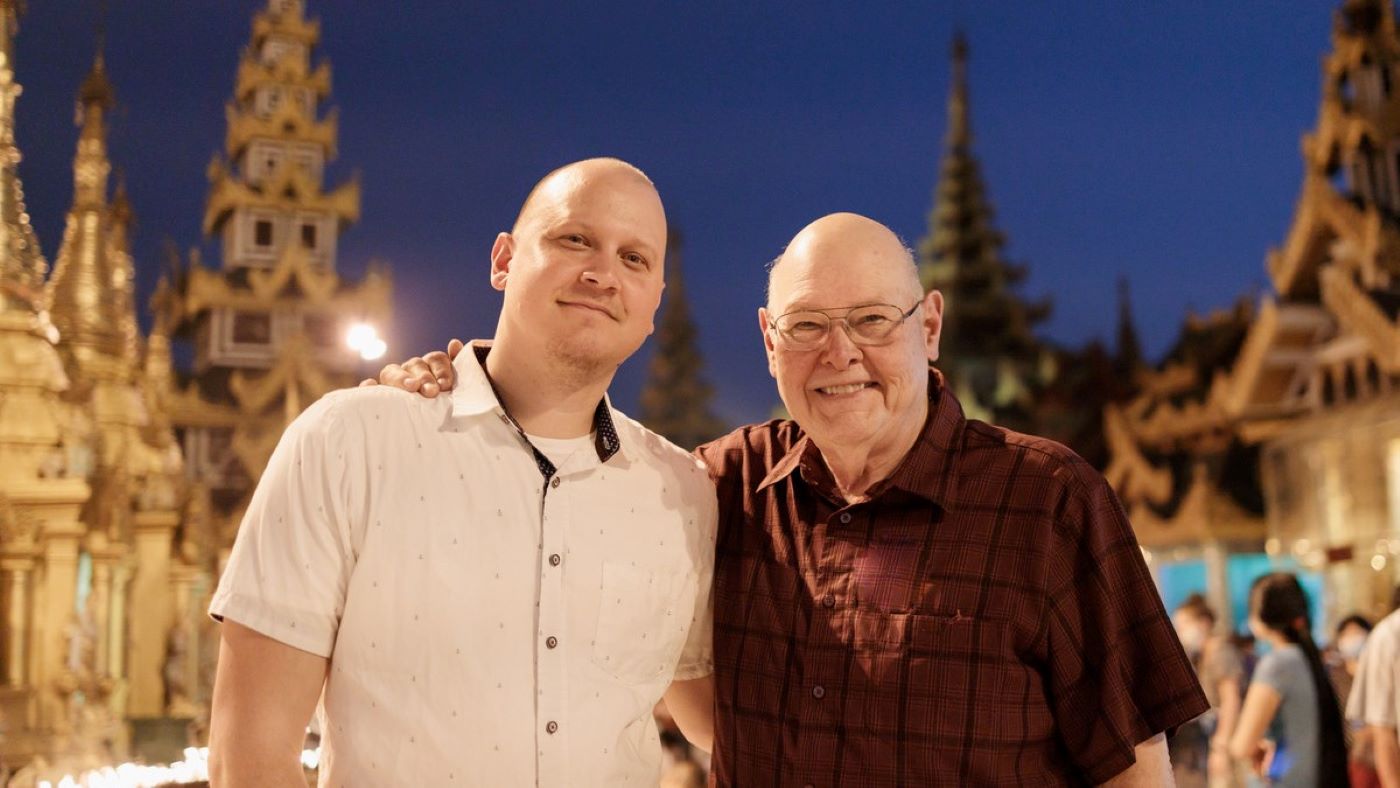
Ellis Craft (left) and Bob Craft (right)

Thousands of Thais are learning about Jesus. But unlike decades past, these encounters aren’t coming via Western missionaries. Instead, they’re hearing the good news from fellow Thai people who travel village to village, in a movement led by the Thai church network Free in Jesus Christ Church Association (FJCCA). Since 2017, when the church planting movement first got off the ground, the Thai church has seen explosive growth in a manner similar to the early church in Acts.

This news made the cover of Christianity Today’s April 2019 issue where it also highlighted the behind the scenes work of Bob Craft and Dwight Martin at the US-based ministry partner, Reach a Village (RAV). The organization resources the church planters by supporting the data mapping work of Dwight Martin, an American missionary-kid born in Thailand who returned with IT skills useful for the Thai church. He maps the ratio of reached versus unreached villages as a way to help the movement strategically expand. RAV encourages local ministry partners to develop their own strategy, curriculum, and training materials, but they primarily help to resource Thai leaders on the ground by funding three key areas: 1) Training of Thai church leaders and planters, many of whom have only been believers for 1-2 years, 2) Scripture resources for church planting, and 3) Mobilizing them to reach new villages.

Since the story was published, the movement has continued to see explosive growth, even hosting a baptism event in September 2019 where 630 Thai individuals were baptized—the biggest baptism ever recorded in Thailand.

One key reason why their evangelism may be so fruitful? In a Buddhist culture valuing consensus, Thai church planters have learned to minister to multiple family units in a village at once, instead of the more Western model of individual evangelism. “The movement has the right spiritual and cultural DNA” said Bob Craft, who believes that their approach is a significant factor propelling their growth.

CT’s story spurred greater visibility and credibility for Reach A Village, as well as for the FJCCA movement’s leaders in Thailand. Initially, missionary Dwight Martin was assigned by the Evangelical Fellowship of Thailand, an organization that represents the evangelical church in the country, to keep statistics of church growth and churches planted. But now, Thai pastor Somsak has taken a more prominent role alongside Martin. According to Bob, “Somsak was already a member of the Evangelical Fellowship of Thailand as a pastor and was going to those meetings and seeing Dwight Martin present. But now at the most recent event, Somsak himself was asked to speak, because the FJCCA has planted 15 percent of the churches in the country in three years.” Bob added that the movement as a whole has become an example to other churches, and the training methods are now spreading more broadly to other church groups.

“Our hope is that the CT article will bring attention here in the United States and in Thailand to the good practices and the quality things that are happening in their midst,” Bob said. “The article is bringing glory to God and credit to the local people who are involved.”

Greater national attention has its challenges. Bussing people from various villages for a mass baptism caught the attention of local religious leaders and fostered some opposition. Believers in one village were even hindered from attending the event by local residents. And while nothing particularly bad has happened yet, said Bob, Christian leaders are concerned what this heightened attention will yield. The FJCCA leaders have prayerfully considered and discussed this recent response to the baptism service.

“To be Thai is to be Buddhist,” said Ellis Craft, son of Bob and missionary-kid from Thailand and the Philippines. “The religion is such a big part of Thai national identity, so following Jesus means not only giving up your religion but could be seen as being ‘disloyal’ to your country by turning to a religion deemed largely Western.” “There is an advantage to moving quietly and in unseen ways, like yeast leavening a loaf of bread.” Bob said, referencing Jesus parable describing the kingdom of God, “I think Jesus had it down pat that this is a very effective way.”

Internationally, the recognition that CT helped to bring has caused a greater outpouring of prayer, donors, and interest in Thailand. This outside attention caused the leadership at FJCCA to invite Martin onto their board and to serve as a “gatekeeper” in dealing with missionaries and organizations outside the movement. Reach a Village is thankful for this outpouring of interest in Thailand and invites those interested in supporting the movement to contact their US offices at reachavillage.org.

Bob and Ellis were also thankful that the article focused on making missions count. “We hope what we are trying to accomplish in data and mapping will encourage other missions’ agencies,” said Bob. “Our hope is that it makes those of us involved in missions more accountable, not only to the donors, but to ourselves and to God. The great impact of the fruit He has given needs to be measured and this helps us evaluate the effectiveness of our stewardship.”

Bob added, “Here in the states, I was hoping that this article would open a broader conversation about missions in this century…and it did.”

Katie Bracy is digital marketing specialist at Christianity Today.

Theology

For Me, Science and Faith Are the Same Adventure

A virologist reflects on being female and Christian in the sciences.

Christianity Today March 10, 2020
Illustration by Mallory Rentsch / Source Image: Courtesy of Anjeanette Roberts

When I was six or maybe seven years old, I used to sit alone on my parents’ bedroom floor and watch Star Trek reruns. I traveled with the crew of the Enterprise to “where no man has gone before” and felt especially fascinated by alien cultures: Romulans, Vulcans, and Klingons. The stories captivated my imagination.

My mother, too, helped fuel my curiosity by taking me to the library every week. At age 11 or 12, I joined a science fiction book club that opened my mind to more possibilities. I devoured the works of Isaac Asimov, Roger Zelazny, and Arthur C. Clarke. Maybe space travel beyond the moon would be possible in my lifetime, I hoped. Or maybe I could be a starship captain when I grew up. Eventually, I settled on becoming a scientist—arguably the next best thing.

Just after my 12th birthday, while perusing titles in a small bookshop, I happened upon a series of books by C. S. Lewis (who was unknown to me at the time) and used birthday cash to purchase The Lion, the Witch, and the Wardrobe. A subsequent snowstorm left me confined to the world of Narnia, and the stories began unlocking connections between exploration, discovery, and Christian ideas.

On a hot summer day the following year, the lifeguard at our neighborhood pool approached me as I sat on the edge and dangled my feet in the water. I was serving my time-out for breaking the rules. She bent over and asked, “Are you saved?” Although her question made little sense to me at the time, that interaction set me on a path that reached its peak when I gave my life to Jesus the following fall.

As I think back over my childhood love of learning and also my faith conversion, I see them not as separate, concurrent narratives but rather as one integrated story. In other words: My love for science and my love of Jesus have been shared experiences for most of my life. Both invite me into spaces of curiosity and imagination. Both encourage me to ask questions, seek truth, and explore the world around me. And both call me to discover what’s possible, real, and trustworthy.

Free to Question

I pursued science in large part because science placed fewer constraints on what I could do and how I could contribute as a woman. By contrast, in organized Christian institutions, I often found my pursuits limited or discouraged by others’ policies, perspectives, and practices. Although some colleagues in science had strange perspectives about women’s abilities and roles in science and education, research science was on the whole a more level vocational playing field.

In research, everyone was expected to back up ideas with sound reasoning, well-controlled experiments, and reproducible data. The best questions and insights were valued irrespective of gender or race or any other personal identifier. In sum: Science provided the perfect environment for asking questions and exploring possible answers.

Over the years, Christian fellowship has provided a similar space to seek truth and ask hard questions. I love that God promises that those who seek wholeheartedly will find (Jer. 29:13) and that his promise is not limited by any human identifier. One might say that God has the best nondiscrimination policy.

My confidence is anchored in my identity in Christ and the truth of God’s self-revelation. Yes, I’m a woman, a scientist, an academician (and single!), but I am first a child of God and a follower of Jesus. My primary identity comes from the fact that I am made in God’s image for the purpose of knowing, serving, and following him and also for the purpose of loving others made in God’s image.

Science and Faith in Harmony

When I was heading off to graduate school, I had a good friend offer me one of the most significant and invaluable challenges of my life. She said, in so many words, “In the next five years or so, you will study and become an expert in molecular biology and virology, but in the next five years, how much will you grow in your knowledge of and relationship with God?”

That same day, I prayerfully resolved in my heart before God that I would put him first and make my relationship with him a priority during my time in graduate school. Fulfilling that commitment required determined action. I sought Christian fellowship, joined a local church and campus ministry, joined and led Bible studies, and tried to carve out a weekly Sabbath around my studies and research.

During my post-doctoral years, I discovered the Rivendell Institute at Yale, a group of Christians committed to integrating Christian thought with each academic discipline and bringing a Christian voice to academic conversations. I began to think more deeply about the integration of faith and science, and I began to reflect on the nature and purpose of God’s self-disclosed revelation.

More than anything else, my graduate and post-graduate work deepened my belief in this truth: God assures us that he has in fact revealed himself to us in nature, Scripture, the Incarnation, and the lives of those transformed by spiritual rebirth in Christ. His purpose for creation is for us to come to know, love, and trust him, and so of course he reveals himself to us reliably.

As I see it, Christian faith resonates deeply with the noblest aspects of science: seeking truth and sharing knowledge for the betterment of all.

Science Leads Me to Deeper Worship of God

I work now as a research scholar for an organization called Reasons to Believe, where I write about theological perspectives on viruses. I’m also engaged in alleviating tensions around high-conflict issues like the origin of life, the extent of evolution in creation, and the existence of natural evil. Navigating these polarized debates is challenging, and unfriendly fire often comes from both directions. But when I focus on the things Jesus calls me to, I find my way through the hazards and am able to love those who view issues differently than I do.

Here, too, just as in graduate school, my identity in Christ is still my anchor. I find myself once again running in two concurrent pathways, where both faith and science are inviting me to go “further up and further in,” as C. S. Lewis writes in The Last Battle. I flourish not because of what science or the world tells me about being a woman in science or a woman in the church. I flourish because God enables my curiosity and imagination. He points me toward intellectual adventure and tells me who I am—his beloved child, pursued at a great price.

The same is true for all of us. God loves each of us and longs for us to know his enduring presence. That presence is revealed through what early theologians called the “book of nature” and the “book of Scripture.” Both unveil a God who creates with near-infinite diversity, acts with intimate relatability, and proclaims our incomparable worth.

Although not all of us have an aptitude for science, we’re all called to explore these “books” with the full capacity of our God-given curiosity. Only then can we surrender ourselves to the Lord of all for the blessing of those around us, the proper stewarding of creation, and the flourishing of generations to come.

Anjeanette Roberts conducted SARS-CoV research at the National Institutes of Health from 2003 to 2006 and holds degrees in chemistry (BS), cell and molecular biology (PhD), and Christian apologetics (MA). She blogs at Theorems and Theology and speaks frequently in schools, universities, civic organizations, and churches. Follow her on Twitter and Facebook.

News
Wire Story

Eugene Cho Named President of Hunger Advocacy Org

In his new role at Bread for the World, the former Quest Church pastor urges evangelical involvement, saying, “The great commission is not a competitor to the great commandment.”

Christianity Today March 9, 2020
MinJae Kim / Flickr / Creative Commons

Bread for the World, a prominent Christian advocacy group dedicated to ending hunger, has elected Seattle pastor and author Eugene Cho as its new president.

It’s a dramatic change for Bread, which is well known in Washington for galvanizing religious groups to protect federal policies that help the impoverished. Recent years have seen the group fight to stop proposed cuts to the Supplemental Nutrition Assistance Program, also known as food stamps, and push for more flexibility allowing the government to provide aid for nations in need.

Cho will be replacing David Beckmann, a Lutheran minister who is retiring from his post after shepherding the organization since 1991.

John Carr, director of the Initiative on Catholic Social Thought and Public Life at Georgetown University and chair of Bread’s board, described Beckmann as “one of the preeminent Christian leaders of our generation,” but insisted Cho is a new leader for a new era.

“(Cho) is a powerful voice in a humble package,” said Carr, who also described Cho as a bridge-builder. “It’s a new generation and different set of experiences: A pastor, a builder, somebody who’s from the West Coast, and somebody who is not anchored in the traditional network of denominations. He emerged as the right leader for Bread at the right time.”

Cho, who is ordained within the Evangelical Covenant Church, achieved acclaim after he and his wife, Minhee, founded Quest Church in Seattle in 2001. He served there for 18 years before stepping down in 2018 and also founded One Day’s Wages, a nonprofit organization dedicated to alleviating extreme global poverty.

“If there’s something that’s concerned me about how the larger umbrella of evangelicalism engages justice work, (it’s) that they see it as a competitor to evangelism … that’s really concerned me,” Cho said. “The great commission is not a competitor to the great commandment.”

Cho said he also plans to draw upon his experience as an immigrant in his new role. Born in Seoul, South Korea, he grew up listening to his parents tell stories of hardships they endured while living in what is now North Korea.

“Every now and then my father shares some stories that it’s hard for me to believe—stories like having to pull up grass from the ground to satisfy hunger pains,” he told RNS.

Cho also has had first-hand encounters with policies that help those who have fallen on hard times. When he found himself unemployed 20 years ago, it was Washington’s Women, Infants, and Children Nutrition Program—a state initiative similar to the federal SNAP program—that helped his family stay afloat.

“We’ve experienced it on a personal level and want to make sure we’re advocating for the programs within our government—both at the local and national level—that can really come alongside those who are vulnerable,” he said.

Carr said Cho’s experiences are different from Beckmann’s but in ways he believes will prove helpful as Bread strives to maintain its status as a bipartisan organization.

“This is somebody who’s built a local church and served people in a pastoral way,” said Carr. “He’s not your typical church bureaucrat—and I can say that, because I’m a former church bureaucrat.”

Cho insists he is not blind to the challenges of working to influence lawmakers on Capitol Hill, particularly in an era marked by partisan rift. He pointed to his new book, Thou Shalt Not Be a Jerk: A Christian’s Guide to Engaging Politics, as evidence of his belief in the importance of bipartisan work—even if some dismiss him as “naive.”

As a Christian organization, he said, Bread’s religious roots are “one of the unique things” it brings to the work of political bridge-building, including the “importance of prayer and of spiritual intervention.

“We want to pray for our leaders that we might disagree with, that might have views that are contrary to the things that we believe are so important,” he said. “We’re living in these incredibly divisive times, and maybe in the most minute way I would love for Bread for the World—and even in a more minute way, my work—to be a small little brick among the many, many bricks that need to be built in the coming years and decades that turn the tide of the toxic politics.”

Theology

Justification Isn’t Just About Me

The Cross calls me to cross the pew.

Christianity Today March 9, 2020
Hero Images / Getty

Folks will use and abuse you if you let them. Statements like this were common in my childhood home. I grew up in a family that kept to itself. Our relationships with outsiders were mainly casual; we children were cautioned against anything deeper. People will take more than they give and might even reject you in the end, we learned. Be friendly, but always maintain some distance.

Today, as an adult, I’m part of a new family: the church. I belong with brothers and sisters that I’m called to love and honor above myself. Yet the deeply ingrained childhood lessons repeat and, at times, appear to ring true: People are takers, and loving them demands more than I have or care to give.

Unfortunately, living in Christian community sometimes corroborates these old messages. There are needy members within the household of faith. These people take up space in my thoughts, my phone, and the chairs around my kitchen table. From my perspective, I’m constantly checking on, meeting with, praying for, forgiving, encouraging, challenging, and feeding people whose responses don’t always deliver the fruit I want for my labor. I’ve poured time and resources into people whose affections for me (or for Christ) have grown cold. Some have misjudged my intentions toward them, some have made damaging faith decisions, and others battle yet continue to lose to the same unrelenting sins. I’ve left small-group meetings and church services feeling discouraged and fighting a desire to pull away. Perhaps I can be friendly at a distance? Maybe you’ve asked yourself the same question.

Loving your neighbor as yourself is a hard practice. We talk of the polarization of the broader American church—congregations across the country that are divided by faith, creed, color, and politics. Yet many of us are disconnected from people who are not across the country but across the pew. The command to love and serve—not merely tolerate—each other requires more commitment and sacrifice than we care to give, and so we do the polite minimum from afar.

The seasons of Lent and Easter bring thoughts of surrender and sacrifice. This year, as I consider the ultimate act of self-giving—the one that won my justification—I’m surprised to find it speaking to this heart that struggles to love and serve others.

We typically think of justification in personal rather than communal terms. After all, the doctrine deals with our individual position before God. The apostle Paul says in Romans 3:23 that “all have sinned and fall short of the glory of God.” Each of us is a lawbreaker standing before a just Judge whose expressed commands we do not and cannot keep on our own. To abide with this Judge, we need a righteousness granted apart from our keeping of the law.

Amazingly, Paul’s bad news is followed by the greatest news ever: All who believe “are justified freely by his grace through the redemption that came by Christ Jesus. God presented Christ as a sacrifice of atonement, through the shedding of his blood” (3:24–25). The Judge doesn’t sweep away our sins, but he sent his Son to satisfy the demands of our redemption. Jesus lived sinlessly (crediting his active obedience to us); he died on the cross (paying the debt of our sins) and “was raised to life for our justification” (4:25). Those who trust in him are pronounced righteous and forgiven by virtue of his life, death, and resurrection.

The Judge is our Justifier (3:26)! He earned our reconciliation with God, and we no longer stand at a distance. On the contrary, we are encouraged to draw near—not to be condemned, but to receive mercy and grace “to help us in our time of need” (Heb. 4:16). We are welcomed before God as beloved children, for the Son shares with us all that he is and has.

This Easter season, as we celebrate the personal benefits of our justification, may that worship also warm our hearts toward Scripture’s imperatives to love as we have been loved. May it draw us into deeper reflection upon the extent of Christ’s sacrifice for us—and what that means for our relationships with others. Ephesians 5:1–2 urges us: “Follow God’s example, therefore, as dearly loved children and walk in the way of love, just as Christ loved us and gave himself up for us.” Friends, we are called to be imitators of the One who loved us unto death.

Yes, justification deals with our individual standing before God, but the basis of our justification—Christ’s work—demonstrates incredible self-denial for the sake of another. Our justification came at a high price for Jesus. He entered a broken humanity, people alienated from God and each other. Beyond the physical pain of the Cross, he suffered the humiliation of moving close to a people who take freely from him on the one hand and reject him on the other.

In Knowing God, J. I. Packer calls Christ’s coming “a great act of condescension and self-humbling.” For the sake of our atonement, God the Son descended to take on humanity. He was made like us in every way but sinfulness (Heb. 2:17; 4:15). He submitted to the limits of flesh as Mary’s vulnerable infant. The One for whom all things were created became a poor servant. Christ—the righteousness of God—dwelled with people who accused him of sin. He gave himself to their hands and was betrayed, tried, beaten, spat upon, and stripped naked. Jesus’ great act of condescension culminated on a cross. There, he humbled himself to the point of death (Phil. 2:6–8). Our Justifier became sin “so that in him we might become the righteousness of God” (2 Cor. 5:21).

Justification impacts us in many ways, but one crucial implication of our justification is righteousness lived in loving community. We “are justified freely by his grace” and are called to extend that same grace to those across the pew. Christ suffered, rose, and ascended to the Father, leaving behind a believing people whom Martin Luther called simul justus et peccator—“at the same time just and sinner.”

We are declared righteous in Christ and are empowered by his Spirit to live righteously, yet “the evil [we] do not want to do—this [we] keep on doing” (Rom. 7:19). We are simultaneously saintly and sinful. We share union in Christ, yet our relationships are easily broken. We open our doors for gracious fellowship but quickly shut our hearts when misunderstood. We are compelled to love and serve sacrificially but often find ourselves staying at arm’s length.

Brothers and sisters, may we remember “the Son of Man [who] did not come to be served, but to serve, and to give his life as a ransom for many” (Matt. 20:28). He doesn’t stand at a distance but is ever drawing us closer to himself and to each other. It is he who calls us to outdo one another in showing love. So let his voice rise above those who tell us that we don’t have enough to give our all—especially when Jesus stands near to give more grace and help than we could ever receive.

Nana Dolce serves as an instructor for the Charles Simeon Trust and has an MA in theological studies from Palmer Theological Seminary. She teaches the Bible in her local church and writes for various ministries. Her website is MotherhoodandSanctity.com.

This piece is part of The Cross, CT’s special issue featuring articles and Bible study sessions for Lent, Easter, or any time of year. You can learn more about purchasing bulk print copies of The Cross for your church or small group at OrderCT.com/TheCross. If you are a CT subscriber, you can download a digital copy of The Cross free at MoreCT.com/TheCross.

Books

What Edith Blumhofer Taught Me on Writing About Strong Women

A tribute to a pathbreaking Pentecostal historian who also knew the value of a cannoli to a grad student.

Christianity Today March 8, 2020
Wheaton College

When I started writing my biography of Charismatic evangelist Kathryn Kuhlman, I went to Edith Blumhofer for advice. Edith wrote a masterful biography of Pentecostal superstar Aimee Semple McPherson, and another of hymn writer Fanny Crosby, so she knew more than anyone the challenge of writing about strong women in conservative Christian contexts—women who were held to unattainable standards, lived and ministered under intense scrutiny, and sometimes stumbled into ignominy. “People always want to talk about the scandal,” Edith warned me. “You have to talk about the scandal, of course, but you can determine that it won’t be the center of the conversation.” Help the reader to understand the larger story of the person under scrutiny, Edith recommended. And always let these women be human.

Edith, who died on March 5 at the age of 69, was a renowned historian of American Christianity, who wrote groundbreaking books on the history of American Pentecostalism, the Assemblies of God, Christian hymnody, American evangelicalism, and clear-eyed biographies that were deeply sympathetic but never hagiographic. She was also a gifted and beloved teacher. In both her professional work and personal life, Edith saw the human.

I met her in in the late 1990s when I was a student at the University of Chicago Divinity School. Dr. Blumhofer, as I knew her then, was the Associate Director of the Pew-funded Public Religion Project. I was lucky enough to be invited to participate in one of the Project conferences, held at the Drake Hotel in downtown Chicago. New to Chicago and to the academic world, I was completely freaked out by the whole experience. I had a social anxiety attack of epic proportions—but Edith was there. She was a beacon of warmth and generosity and it was immediately apparent that she loved students. I have memories of her smile and the way she made sure each of us felt a part of the conference. At the end of the day, the grad students went home with Drake-crafted cannolis packed into to-go bags. I also carried away a life-long affection for Edith.

When I think of her now, I remember sitting in her light-filled office at the Institute for the Study of American Evangelicals at Wheaton College. She was on my dissertation committee and always available when I needed a break from research at the Billy Graham Center across the street. This was the early 2000s, and we were reflecting, for some reason, on the pros and cons of women hyphenating their names when they got married. In her wonderful Brooklyn-inflected voice, Edith told me that hyphenating was never really an option for her. “What was your name before you married?” I asked. She smiled grimly and said, “Waldvogel.”

“Edith Waldvogel-Blumhofer” might have been too much for her to contemplate as a new bride, but she would have been justified in retaining such a proud Pentecostal name, a surname associated with Ridgewood Pentecostal Church of Brooklyn, New York, and Pilgrim Camp, in Brant Lake, New York, ministries with a long heritage and proud legacy. For Edith, Pentecostalism was personal, and this showed in her ability to dissect the religious tradition with the insight of an insider and the skill of a trained historian. People didn’t become Pentecostal in Edith’s work because they were poor misguided hicks who needed something—anything—to keep them from despair. She rejected the “compensation narrative,” which was popular at the time and is still all too common. Edith demonstrated in her nuanced work that Pentecostalism was far from a sop for the desperate, but instead diverse, dynamic, and fascinating. With her defining studies on the history of early Pentecostalism and the Assemblies of God denomination, Edith brought her Harvard-trained abilities to the study of an often maligned religious tradition.

She led the way in the late 20th-century flourishing of Pentecostalism studies. And from her Pentecostal perspective, Edith also wrote about evangelicalism before it was cool to write about evangelicalism. In 1987, she joined in the work of studying evangelicalism in America as the project leader and then director of Wheaton’s Institute for the Study of American Evangelicals. The field was just nascent then. Without her influence, it would be unrecognizable now. There’s a whole history to be written just about the connections she helped to make. From the outside, it sometimes seemed like Edith Blumhofer knew every single Pentecostal scholar or scholar of Pentecostalism in the United States. She was always glad to make an introduction or broker an exchange of emails between the many students or colleagues who shared friendship with her as their connection point. A recommendation from Edith carried weight for book proposals, dissertations, panels, articles, and anything else associated with Pentecostal history.

But more important than what she did is who she was. Edith embodied her life work. She was a Harvard-trained historian of Christianity who bridged the worlds of Pentecostal and evangelical studies. She was a woman of deep faith, who sang the beloved hymns of Fanny Crosby while analyzing the larger importance of hymnody for Christianity in America. A female religious leader within a conservative form of Christianity, she led projects and institutes, authored books, and established herself as a respected authority. She was a daughter of Pentecostalism, who understood the subtleties of God’s “peculiar people.” And to me, she will always be remembered as a friend and a trusted advisor, someone who let me park in her driveway when I took the train into Chicago, someone who showed me how to write about difficult women, someone who knew the value of a cannoli to a grad student. For all of this and more that you gave to the world: Thank you, Dr. Blumhofer.

Books
Review

When Following God into Dark Places Reveals the Darkness in Your Own Heart

How shepherding others through messy situations brings our own sin and insufficiency to the surface.

Christianity Today March 6, 2020
Source image: Mads Perch / Getty

Over the past two decades, I’ve read a number of Christian books that make the case for walking alongside people in need and offer a framework for how to do it. Some have been written by prominent theologians, others by pastors, activists, missionaries, and organizational leaders. They’re all compelling and helpful. But I’ve always found the actual process messier, murkier, and more protracted than the tidy frameworks, guidelines, and stories of transformation would suggest.

Promises in the Dark: Walking with Those in Need Without Losing Heart

Promises in the Dark: Walking with Those in Need Without Losing Heart

New Growth Press

176 pages

$16.99

Seven years ago, when my husband and I agreed to serve as lay leaders over a racially and socioeconomically diverse church community, we had no idea how challenging it would be. One family who became homeless lived with us for just under five months. During that time, we worked closely with them to resolve their most pressing concerns. But we were also busy helping others under our care with problems ranging from dating issues and financial stress to pornography addiction, domestic violence, mental illness, racism, sexual assault, and divorce.

Even in that small community, the needs were overwhelming. And the books we had consulted didn’t provide us with much practical or spiritual guidance on navigating the mess in real time. Even the pastors weren’t sure how to help us. They mostly said, “Thank you for all you’re doing. We’re praying for you.” Eventually, burnout set in and forced us to take a sabbatical.

For a while, we went back to our comfortable, upper-middle-class existence, but the conviction to walk alongside the needy didn’t subside. We had seen too much evidence that God “is close to the brokenhearted and saves those who are crushed in spirit” (Ps. 34:18). We still believed that our gifts, time, energy, and resources were given by God to serve, love, and refresh others.

In time, we befriended two people from a background of multigenerational poverty and trauma. They struggled with chronic housing insecurity, disability, and other forms of disenfranchisement. After supporting them through a health and housing crisis for a year, we decided to make a serious financial and relational commitment to walk alongside them for the long haul. If we thought our previous experiences prepared us for this commitment, though, we were wrong. It brought a whole new awareness of how the combination of structural injustice and personal sin derails people and conspires to keep them derailed. It also forced us to wrestle much more deeply and intensely with our own sin and insufficiency.

Servants and Sinners

Last fall, just as some of the pressures with our ministry reached new heights, a new book arrived in our mailbox: Eric McLaughlin’s Promises in the Dark: Walking with Those in Need Without Losing Heart. In it, we found both a fellow traveler and a contemplative field guide for the weary servant.

McLaughlin’s thesis is that when we follow Jesus into places of need, the toll it takes on our hearts reveals the unmistakable reality that we are not merely helpers, healers, and servants but also sufferers, sinners, and broken creatures in need of our own healing and renewal. As such, the only way to face the tragedy and brokenness in the world without burning out or becoming cynical is to admit our own need, cling to the promises of God, and anchor our hope in the sea of his faithfulness.

It sounds simple enough, but I read many of McLaughlin’s pages through tears, stopping frequently to pray and process. The book reads like a confessional, but it’s also instructive and convicting. Every bit of wisdom and insight has been hard earned. McLaughlin is an American family-practice physician living, working, and raising three children in Burundi, a mostly rural nation in the heart of sub-Saharan Africa. Burundi experienced decades of political instability following its independence from Belgium in 1962, including two genocides and a civil war. It remains one of the world’s poorest nations, coming in 185th out of 189 countries and territories, according to the Human Development Index. McLaughlin and his wife, Rachel, an obstetrician/gynecologist, have been there since August 2013.

The circumstances in which McLaughlin is ministering are extreme, but the lessons he has learned in Burundi apply anywhere there is human need—in other words, everywhere. In fact, I could have used a book like this when I first started working as a physician assistant at one of the world’s most advanced cancer hospitals back in 2000. Even though it was a state-of-the-art institution, I still witnessed daily the tragic limits—and sometimes the dire consequences—of human intervention. I struggled to find meaning amid all the powerlessness, suffering, death, and grief.

McLaughlin’s book is a courageous and transparent treatment of things most missional people avoid discussing openly but most assuredly wrestle with—futility, failure, insufficiency, despair, guilt, fear, pride, doubt, lack of resolution, unanswered questions, and suffering. But it gives equal weight to the things of God that intersect with them—grace, hope, divine goodness, promise, consolation, patience, daily rhythms, prayer, light, community, resurrection, and redemption. Each chapter explores a single theme through story, confession, self-reflection, God’s promises, and God’s character, concluding with a list of questions for readers.

The God of Eucatastrophe

On numerous occasions, McLaughlin refers to eucatastrophe, a word coined by author J. R. R. Tolkien. In cinema, the term refers to a sudden, joyful turn of events at the end of a story when all seems lost. Unlike deus ex machina, an inept plot device used to wrap up an otherwise dead-end storyline, eucatastrophe is built on the assumption that rescue is woven into the grand narrative from the start.

Christian hope, McLaughlin asserts, is built on the belief that God specializes in eucatastrophe. If humanity had been left to its own devices after the Fall, we would know nothing but catastrophe. But God has revealed himself to be invested in our rescue. As McLaughlin puts it, “Tolkien said the incarnation of Jesus was the eucatastrophe of history, and the resurrection is the eucatastrophe of the incarnation.” And Jesus’ return to fulfill his promise in Revelation 21:5—“I am making everything new!”—will be the eucatastrophe of death, pain, and suffering. It will bring a sudden glimpse of previously unseen truth—that, all along, all things have been in the process of being restored. That means everything we do here and now, no matter how seemingly insignificant or futile, is being woven into that mighty arrival, that joyful rescue, that stunning renewal and resurrection.

McLaughlin underscores the point: “My conviction is that, as this hope of future resurrection shapes us… the false dichotomy of hope for the present world and hope for the future world rightly dissolves, for the same one is transforming all things with his single living hope.” This hope empowers us to live and toil faithfully in the constant, unresolvable tensions of the difficult present. Hope, then, is not a state of mind we generate so much as a gift we receive. And yet, it can be learned and cultivated as we fix our gaze on God, the weaver of eucatastrophe.

I read the book several times before grasping the significance of the eucatastrophe metaphor. In my first reading, I was so flooded by painful memories from years of taking care of sick patients and years of doing difficult ministry that the negative emotions were front and center. I realized I had gotten through those years with very different and not necessarily healthy coping strategies. In my second reading, I attempted to retroactively apply what I was reading to past experiences, to create meaning out of them in new ways. In my third reading, I almost shouted for joy at the thought of God lovingly, wisely, and actively weaving every present struggle into his grand eucatastrophe.

More Consolation Than Desolation

No book that tackles suffering, injustice, death, and evil would be complete without delving into the realm of theodicy. Promises in the Dark does this in a way that’s neither overly philosophical nor overly simplistic.

McLaughlin acknowledges the questions people typically ask: “Where is God in all this suffering? If God is all-good and all-powerful, then why is there evil in this world?” Instead of engaging those questions, though, he opts for a different question based on his observation that, even amid the worst he has witnessed, he has “never been so acutely aware of the positive presence of the goodness of God in the world.”

That question is this: “If God isn’t there or he isn’t good, then where did all the goodness come from? Its presence also cries out for explanation. If we could speak of the ‘problem of evil,’ could we also speak of a philosophical ‘problem of good’?” Indeed, training ourselves to recognize the good that’s present, even amid so much suffering, can offer a powerful safeguard against encroaching cynicism.

McLaughlin also points out that many of us approach the problem of evil wearing post-Enlightenment blinders. We tend to think of the Enlightenment in terms of positive and expansive progress rather than constraint, but parts of its legacy may actually hinder the sort of flourishing that God intended. Prior to the Enlightenment—going all the way back to Abraham, Isaac, and Jacob—people defined God by the stories of his relationship with his people, and those stories thoroughly shaped their understanding of his character. But afterward, people began to define God by abstract concepts like omnipotence, omniscience, and omnipresence. Thinkers and theologians have long attempted to define and understand evil, but only after the Enlightenment did Christians really begin struggling to reconcile the presence of evil with their abstract conceptions of God.

If, when faced with suffering, evil, and death, we choose to define God by the stories of his relationship with his people, we will find far more consolation than desolation. God’s story with us is that Jesus voluntarily subjected himself to all the suffering, injustice, and forsakenness that human beings endure. As McLaughlin observes, “He walked the paths of suffering and injustice. He knows the pain of violence and hatred and all their blood-soaked consequences.” As a result, “suffering is holy ground.” As for death, whose sting we still feel acutely in the present, we know it is the last enemy to be defeated. “In a strangely redemptive mystery,” McLaughlin writes, “death, like suffering, has become sacred ground because God has walked there as well.”

The Struggle to Remember

After I finished Promises in the Dark the first time, I had a hard time summarizing it to my husband without looking at it. I would start telling him how deeply it had affected me then find myself unable to articulate why.

After two more readings, I realized that the problem wasn’t the book itself but the condition of my heart. I must confess that despite many years of walking with God and following him into hard places, I’m still struggling to incorporate the promises of God, the story of his relationship to me in Christ, and the hope of the resurrection into the language of my thought life. I know God’s promises. I’ve known them for decades. But my heart forgets them so easily when confronted with evil that steals and destroys.

It’s reassuring that the author does too. After writing 15 chapters on how God’s promises sustain us, McLaughlin confesses that sometimes the signs pointing to Jesus’ kingdom feel insufficient. He rehashes how hard it is to “hope in the promises of God while our feet still pound the dust of a world full of brokenness.” He confesses his fear and his impulse to escape to safety and shelter. It’s a comfort to read those words. You find a sense of fellowship in them.

Hearkening back to the charge Moses gave the Israelites in Deuteronomy 6:6–9, McLaughlin writes, “We must return again and again to God’s promises. We must write them on our doorposts and speak them to one another as we walk along the roads of our world. We must sing them together and let them direct our dreams.” After reading his epilogue, you almost get the sense that he wrote the book to embed these truths more deeply in himself. We’re all like the person in James 1:23–24 who looks at his face in a mirror and immediately forgets what he looks like. So we rely not on our own ability to remember and persevere but on others to speak, sing, and write the truth to us over and over until our race is finished.

Judy Wu Dominick is a writer and speaker living in Dallas.

Apple PodcastsDown ArrowDown ArrowDown Arrowarrow_left_altLeft ArrowLeft ArrowRight ArrowRight ArrowRight Arrowarrow_up_altUp ArrowUp ArrowAvailable at Amazoncaret-downCloseCloseEmailEmailExpandExpandExternalExternalFacebookfacebook-squareGiftGiftGooglegoogleGoogle KeephamburgerInstagraminstagram-squareLinkLinklinkedin-squareListenListenListenChristianity TodayCT Creative Studio Logologo_orgMegaphoneMenuMenupausePinterestPlayPlayPocketPodcastRSSRSSSaveSaveSaveSearchSearchsearchSpotifyStitcherTelegramTable of ContentsTable of Contentstwitter-squareWhatsAppXYouTubeYouTube