News
Wire Story

Texas Bans Abuse NDAs in Law Named for Kanakuk Victim

The Lone Star State joins Missouri in passing new legislation to protect survivors of child sexual abuse.

Texas Capitol in Austin with Texas flag and US flag
Christianity Today June 23, 2025
Brandon Seidel / Getty

A new Texas law, signed by Texas Gov. Greg Abbott on Saturday, bans non-disclosure agreements (NDAs) in cases involving sexual assault, child sexual abuse, and human trafficking and releases victims from existing NDAs in such cases.  

State lawmakers had passed the bill at the end of May, after similar legislation passed in Missouri weeks earlier.

The laws are named in honor of Texas native Trey Carlock, who died by suicide when overcome by the trauma of an NDA related to sexual abuse at Kanakuk Kamps in Missouri, his sister Elizabeth Carlock Phillips has said while advocating for the legislation.

Texas and Missouri leaders are in a growing push to end the misuse of NDAs against abuse survivors who enter civil settlement agreements.

The use of NDAs to silence sexual abuse survivors makes such agreements controversial, Jeff Dalrymple, director of abuse prevention and response for the Southern Baptist Convention Executive Committee, has told Baptist Press.

“In addition to legal considerations, ministry leaders should carefully consider both ethical and moral implications of NDA use. There may be situations in which an NDA could be an appropriate tool for a ministry to use, for instance, to protect the private information of ministry participants or in employment transitions,” Dalrymple said in April.

“However, they should never be used to prevent survivors of abuse from sharing their stories or to allow responsible parties to avoid responsibility for their actions.”

Jeff Leach, a Southern Baptist and member of Cottonwood Creek Church in Allen, was among five authors of the House version of the Texas bill.

Carlock sued Kanakuk after enduring what he described as a decade of child sexual abuse by then camp director Pete Newman, and accepted a civil settlement with a restrictive NDA that family members say led to Carlock’s 2019 suicide.

“I am proud to be Trey’s sister,” Phillips said when Texas was considering the bill, “and I hope Texas will be proud of Trey’s Law.”

Newman is serving two life sentences plus 30 years in a Missouri state prison for sexual crimes involving multiple minors at Kanakuk. Civil lawsuits are still being filed related to the abuse, most recently in April.

As Christianity Today previously reported:

Many child victims do not speak about what happened to them for decades. More than half of the victims of abuse in the Boy Scouts waited until they were 50 to disclose, according to Child USA. A 2014 German study found the average age for child sexual abuse survivors to disclose what happened to them is 52.

Most states have no laws limiting the use of NDAs. Since 2017, when the #MeToo movement started to bring attention to the problem of sexual harassment, several states have passed laws restricting the use of NDAs in the workplace.

In Maine, for example, the law now says an NDA can prevent disclosure of factual information “only if the agreement expressly provides for separate monetary consideration.” In Illinois, an NDA has to be the “documented preference of the employee” and “cannot use language that would completely prohibit employees from making truthful statements.” In Oregon, the victim of sexual assault has to ask for an NDA, and employers cannot make the request for an NDA a condition of a settlement offer. 


Two states—California and Washington—now completely prohibit NDAs from covering sexual harassment or abuse but only for conflicts between employers and employees. NDAs may still be used in other legal settlements. There are no legal restrictions on settlements involving children. 

Tennessee passed a bill in 2018 nullifying NDAs in childhood sexual abuse cases and is the only other state to have done so to date. But more than a dozen states have passed legislation limiting to varying degrees the use of NDAs in employer-employee settlement agreements regarding sexual abuse claims, the international law firm Ogletree Deakins reported, in addition to the federal 2022 Speak Out Act.

Trey’s law becomes effective August 28 in Missouri and September 1 in Texas.

Additional reporting by Christianity Today.

Culture

Andrew Peterson: ‘C.S. Lewis Gave Me a Way to Think About Jesus’

The creator of The Wingfeather Saga discusses the books that changed his life with CT’s editor in chief Russell Moore.

An open book with a lion and a Tolkien map showing through holes in the pages.
Christianity Today June 23, 2025
Illustration by Elizabeth Kaye / Source Images: Unsplash, Wikimedia Commons

Recently on The Russell Moore Show, Russell Moore spoke with singer, songwriter, and author Andrew Peterson about the authors who, by God’s grace, helped hold their faith together when it could have come apart. Listen to the full conversation on our website or wherever you get your podcasts. This excerpt has been edited for clarity and length.

One of the things that I noticed when I was thinking about the authors that I love the most is that almost all of them write in multiple different ways. Novels, short stories, essays, poems—some combination of those four. You as an author do this too, including writing children’s books.

What about in your own childhood? What books mattered to you, and how did you come across them?

When I was a kid, I was reading a lot of Hardy Boys, The Chronicles of Narnia, [and] Lloyd Alexander’s Chronicles of Prydain and The Black Cauldron (which became a really bad Disney movie). I loved Beverly Cleary, including The Mouse and the Motorcycle.

Then around eighth grade, I begged my dad and mom for a series of fantasy novels called Dragonlance Chronicles, which were these Dungeons and Dragons–adjacent adventure stories. My parents were very nervous because it was the ’80s; the most evil thing you could do was play Dungeons and Dragons. I remember getting in huge trouble because I had borrowed my friend’s Dungeon Masters’ guide. I had the book in my bedroom that I’d borrowed like contraband.

I’ve literally never once played. But my friends did, and I loved the pictures. I was always into drawing trolls and dragons.

It was a big deal that my parents agreed to buy me this series. And man, Dragonlance just lit me up. I loved reading what I see now is really bad fantasy, but at the time it was an escape.

We have a podcast series by my colleague Mike Cosper on the Satanic Panic, Devil and the Deep Blue Sea. One of the things that’s interesting to me is that though my parents were comparatively very relaxed, all around me there were people for whom Dungeons and Dragons was going to lead you right into sacrificing goats. Many of them were suspicious of anything that depicted gods or evil figures. But the same people didn’t seem to have the same problem with Narnia.

We’ve bumped into that with my children’s fantasy book series, The Wingfeather Saga. People that are really upset about Harry Potter give Lord of the Rings and Narnia and George MacDonald a pass. I don’t really know why. I don’t think it’s a bad idea to be careful, but when there is a moral undergirding to a story … In Harry Potter, for example, the power of sacrificial love is the central theme.

What about C. S. Lewis? When did he come into your life?

I liked his books as a kid, but I didn’t always love the fact that they seemed to be trying to teach me something. I’m a pastor’s kid, and I was wary of that; what I wanted was pure story. If I sniffed a Sunday school lesson … I didn’t really fall in love with the Narnia books until I reread them in college.

I was also reading all the time as a kid—except for the required reading. I don’t think that in most ways you and I are “rebellious.” So where does that come from?

The thing that popped into my head is the C.S. Lewis quote:

I thought I saw how stories of this kind could steal past a certain inhibition which had paralyzed much of my own religion in childhood. Why did one find it so hard to feel as one was told one ought to feel about God or the sufferings of Christ? I thought the chief reason was that one was told one ought to. An obligation to feel can freeze feelings. And reverence itself did harm. The whole subject was associated with lowered voices; almost as if it were something medical. But supposing that by casting all these things into an imaginary world, stripping them of their stained-glass and Sunday school associations, one could make them for the first time appear in their real potency? Could one not thus steal past those watchful dragons? I thought one could.

This comes up with the Wingfeather animated series. The team is amazing, and screenwriting is a completely different discipline than what I do—so I’m not writing the scripts, but I’m reviewing them and making notes. There are times when I think the writers think of Wingfeather as a kid’s show written by a Christian, and there will be moments where they’ll try to make a moral point. My most consistent note in the sidebar of the scripts is often “no teachable moments.” This is not a Sunday school lesson. They’re running for their lives; let them run for their lives. Which is not to say that stories don’t teach us. I would hope that if the parents are watching the show, the teachable moment is at the dinner table after it’s over. But that sense of moralizing—I’m allergic to that.

With C. S. Lewis, one of the things that you maybe picked up as being “teachy” actually had the opposite effect on me. For instance, when he would say something like, “Now of course you should never go into an actual wardrobe”—to me that gave a kind of wink-nod, conspiratorial, “You’re in this as we’re going through this story together.”

When I was a teenager and I was about to lose my faith, I found Mere Christianity because I knew Lewis from the Narnia books. And part of what was important to me about that book was not the arguments; it was a similar tone to “You really probably don’t want to go into a wardrobe.”

Did you have a moment similar to that when it comes to Lewis’s nonfiction work?

I remember reading Mere Christianity in college, and I’ve reread it since. You get the sense that he was actually honest. The only reason he was able to write about some of the doubts that we have is because you could tell that he had also experienced those doubts and there was no shame involved. It felt like talking to a friend; his voice is so clear.

I was in the middle of a desolate season when I read Till We Have Faces; it was like God slipped that book under the door.

I had kind of lost my faith after high school and was just casting about. But I was playing music, a language that resonated with me. It was hearing Rich Mullins’s music that was the doorway for me back to rediscovering C. S. Lewis and then rereading Lord of the Rings.

All those authors were multidisciplinary—G. K. Chesterton too. Murder mysteries and books of theology and poems. That was so intriguing to me—there were all these entryways into their work, but you got the sense they were all talking about the same thing.

And my hunch is that’s why those writers have such staying power. It’s because they weren’t just doing one thing.

Then there’s Frederick Buechner. My first book of his was The Eyes of the Heart. I couldn’t believe how good it was. He has a way of constructing a sentence that nobody else really does. That book also came to me at the right time.

What about Wendell Berry?

I discovered Wendell Berry because of a friend who was reading a book of his poems on the road and mentioned Jayber Crow.

That became one of the books that changed my life.

I had exactly the same sort of experience reading Wendell Berry, right around the time I was moving to Kentucky. What Buechner was doing in a solitary way Berry was doing in the context of a community. You had that sense of membership that shows up in the essays, in the poems, in the short stories, in the novels, and it all fit together.

C. S. Lewis gave me a way to think about Jesus. That has never left me. And then Frederick Buechner gave me a way to think about my faith and my story. And then Wendell Berry helps me think about how I live in a practical way, not just in community with my family and my church and my neighbors but with the frogs that live in the pond and the birds that come to the feeder and the plants that are growing in the front yard. When I finish a Wendell Berry book, I end up with concrete changes in the way that I go about my days.

Church Life

Fleeing a Massacre, Syrian Muslims Found Comfort Through Church

Revenge attacks against deposed president Assad’s heterodox Alawite sect led local evangelicals to model reconciliation between diverse sects.

Muslim women walk near a church in Syria

Muslim women walk toward a church in Syria.

Christianity Today June 23, 2025
Ozan Kose / Contributor / Getty

This is a three-part series about the Alawite sect in Syria and the March massacre in its community.

A small congregation in the Tartous countryside of western Syria held an unusual Mother’s Day service this March.

The passages were customary, as the pastor read from Proverbs 31 and 1 Corinthians 13. So were the praise songs, including an Arabic version of “How Great Thou Art.”

The crafts, snacks, and cake were like those served at any youth-focused event. Fifty moms and their kids enjoyed the cool weather at a lakeside pavilion under pleasant gray skies. Enthusiastic girls acted out the parable of the prodigal son, emphasizing that God’s love is for everyone. This, too, was a typical message.

The unusual aspect was who was in the audience. Half the families were Syrian Alawites, a heterodox Muslim sect, three weeks removed from a massacre that killed more than 1,700 men, women, and children from their community.

In Syria, Mother’s Day is celebrated on March 21, and the event offered a small measure of joy amid great tragedy. The service was so successful the church repeated it twice more in the following weeks, according to Bassem Khoury, the church’s pastor. Christianity Today agreed not to use his real name as the country remains unstable.

“Suffering is an opportunity to direct people to God’s love,” Khoury said.

Khoury described how his evangelical church ministered to hundreds of Alawites fleeing the coastal villages of Jableh and Baniyas and as far away as Hama and Homs, cities 50 miles to the east. Local Christians offered food, medicine, and words of comfort. Khoury preached about Jesus—but also about reconciliation between Syria’s diverse religious groups, Sunni Muslims, Alawites, and Greek Orthodox Christians. And the families witnessed a unity the pastor prays his nation may one day reflect.

Khoury served from extensive experience. Throughout the 14-year Syrian civil war, he has offered aid to Alawites, Muslims, and Christians displaced by the fighting. Some came from Raqqa, once the seat of the self-proclaimed ISIS caliphate. Others came from Aleppo, where current Syrian president Ahmed al-Sharaa led a rebel offensive.

They arrived at Tartous and the nearby city of Lattakia, seeking safety in the Alawite stronghold of then-president Bashar al-Assad. Assad and his father, Hafez, who seized power in a 1970 coup, hailed from the sect and promoted fellow Alawites to key positions in government and the military. Others toiled in the agricultural fields, as the regime cultivated loyalists from all sects rather than depending on a single group.

Alawites, a ninth-century offshoot of Shiite Islam, make up the majority of residents in the Syrian coastal and mountainous region, living among Sunni Muslims and Christians, mostly from the Greek Orthodox church. The sect, which represents 10–13 percent of the overall population, relocated to relative isolation in the 13th century to escape persecution for their heterodox beliefs. (In coming parts of this series, CT will explore Alawite beliefs and why other Muslim groups consider them heretical.)

During the civil war, rebels seized much Syrian territory but never dislodged the regime from Tartous and Lattakia. Jableh hosted a major army installation near the military base of Assad’s Russian allies. Baniyas suffered a massacre of its Sunni residents in 2013 after the government dispelled a rebel attack. But overall, the area remained religiously mixed. As the war continued to rage, local relative stability led many internally displaced people from all sects to seek refuge.

Khoury first came in more peaceful times, commuting from about an hour away. In 2009, he began planting a church in a village of Alawites and Greek Orthodox Christians, not far from the famous Crusader-era Krak des Chevaliers castle. With the outbreak of civil war in 2011, his small congregation dwindled to near zero as members fled the conflict.

But as displaced Syrians arrived, Khoury relocated to the Tartous countryside full-time. He introduced himself to weary individuals arriving at the village square and provided food and medical aid, following up with home visits. Word spread, and more came. And in every encounter, he was clear about his faith. Over time, Khoury worked with a network of 10 evangelical churches that provided aid to 2,000 families.

The chaos of war provided an opening for Christian witness outside his church’s own community. Still, local authorities accused the church of exploiting the displaced, Khoury said. Khoury countered that he never spoke against anyone’s religion, only presenting his own.

And then in December, the Assad regime fell.

“Syria was an exhausted country undergoing a slow death,” Khoury said. “And now with the rapid political changes, we are experiencing PTSD.”

The rapid rebel triumph was a shock, he said, and fear ruled the area. Sharaa, the new president, reassured religious minorities they would be included in the new Syria. The new regime even offered to place a guard at Khoury’s church, which he declined. But in December, videos circulated of an arson attack on an Alawite shrine in Aleppo and the burning of a Christmas tree in a Christian village near Hama.

Mysterious messages then appeared on social media, stoking anti-Alawite prejudice. Syria’s majority Sunni population already harbored resentment toward the sect due to Assad’s long and oppressive rule. And Islamic extremists recalled medieval and Ottoman-era fatwas declaring Alawites to be non-Muslims and worthy of death.

The massacre began on March 6, triggered when groups formerly connected to Assad attacked the military base in Jableh. By March 8, the government announced it had regained control of all affected areas. But during that time and in the days that followed, militias affiliated with the new regime went house to house throughout the area, killing Alawite residents.

Khoury knew what to do—the same as before. But this time, his neighbors also needed help. While their village was not attacked, all Alawites felt under threat. As thousands streamed into the area and cars clogged the roads, he posted the church number on social media. Anyone requesting assistance was welcome.

From the civil war onward, Khoury has viewed his service through a lens of biblical reconciliation. Through the cross, Jesus broke the barriers between peoples to create a diverse church, he teaches. The church should then reach out to help a diverse world learn how to live together in peace.

By opening his church’s doors, Khoury gave opportunity for Muslims to hear directly from Christians about their religion, helping dismiss characterizations about worshiping three gods or aligning with Alawites against the Sunnis. But Khoury also sat Alawites and Sunnis together, and as everyone mixed, they became friends.

In groups of 25, the displaced families presented problems requiring immediate solutions. Many fled under duress and needed clothes. Restless kids needed toys. But church members also facilitated discussions about Syria. Sects often held wrong ideas about one another, which political and religious extremists exploited to further the conflict. Now members of the various groups imagined what a shared future might look like.

Still, in the weeks following the massacre, most Alawites remained holed up in their homes, fearful of more revenge attacks on their community. The church designed the Mother’s Day event to draw them out, to remember the beauty of nature, and to encourage those who were suffering to continue living life, Khoury said.

After the kids created purple-and-white paper hearts adorned with messages to their moms, Khoury led the mixed religious assembly in discussion about the prodigal son. The older brother, they observed, represents those who reject the other, no matter what. Khoury remembers an attendee saying, “But God is not what I imagined as a God of punishment. He is a God of forgiveness and love, awaiting our return.”

Khoury said in the past, local Alawites did not oppose the church but generally left them alone. Attitudes have warmed considerably since the massacre. For Palm Sunday, the church marched in leafy procession through the village streets, with several neighbors joining in. For Easter, they held two outdoor gatherings for the youth, hosting more than 200 children in total. Six new families are now regularly attending services, with 30 kids added to Sunday school.

Khoury does not know whether the current openness of Syrians will continue. He is encouraged by the lifting of sanctions and the appointment of a female Christian as minister of social affairs. But his church will continue to serve, he said, without discrimination between sects, in hope of a better future.

“Syrians were left like sheep without a shepherd,” Khoury said. “We introduce them to Jesus, who will never leave his people.”

The next story will introduce Ziad, an Alawite who survived the massacre.

News

Kenyans Protest Police Killings

Churches call for prayer, justice after death of 31-year-old blogger.

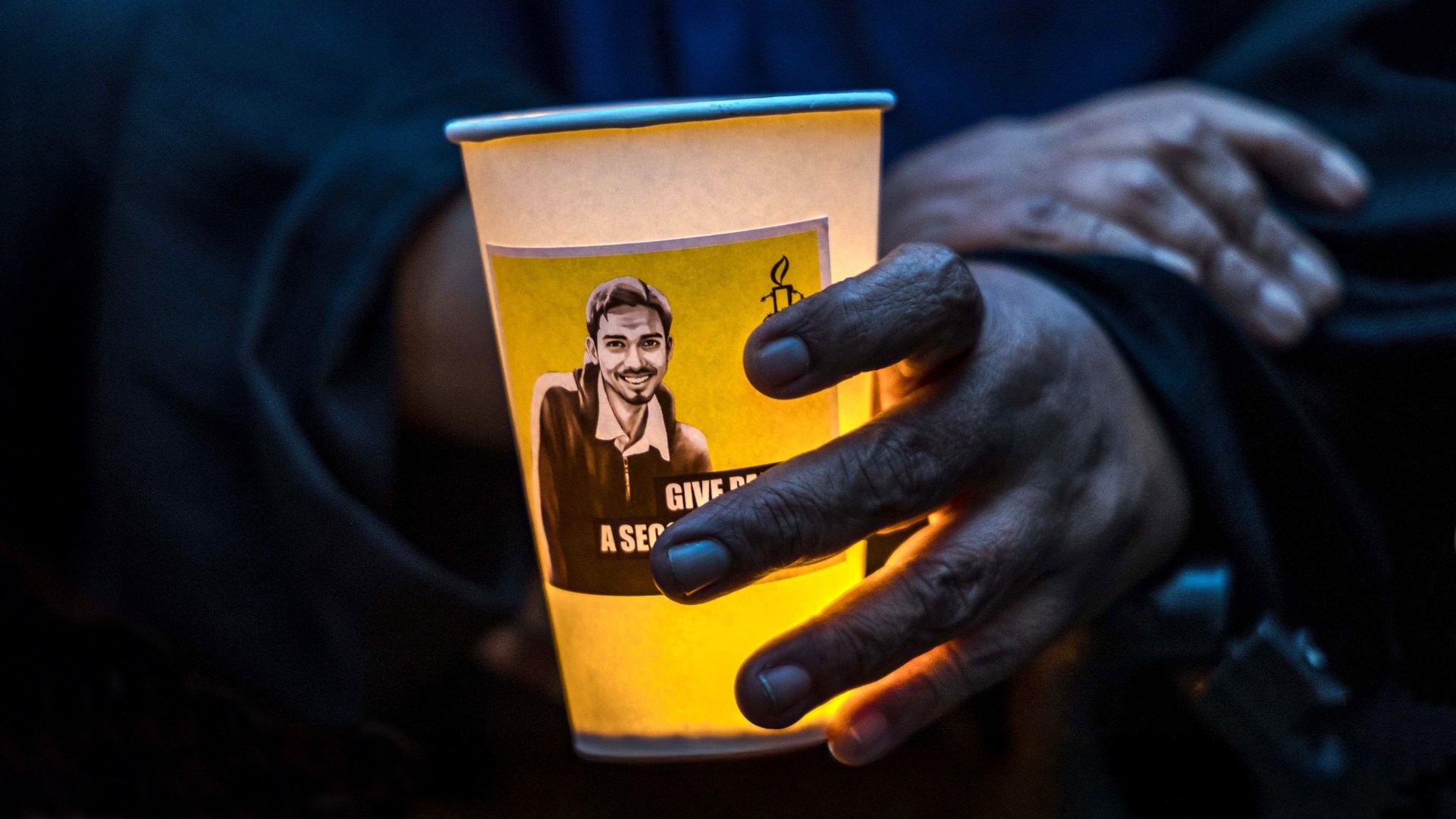
People take part in a demonstration in Kenya following the death of blogger Albert Ojwang while in police custody. 

People take part in a demonstration in Kenya following the death of blogger Albert Ojwang while in police custody. 

Christianity Today June 20, 2025
Anadolu / Contributor / Getty

Kenyans are expecting large demonstrations next Wednesday, June 25, in response to accusations that police killed a popular blogger earlier this month. The date marks one year after government forces killed at least eight people who were protesting tax increases. 

A police officer in Nairobi, Kenya, shot a bystander Tuesday during ongoing demonstrations. A blogger, Albert Ojwang, died in police custody a week earlier. Ojwang’s killing reignited long-standing accusations of extrajudicial killings by security forces, many of whom have never been punished. Two police officers involved in Tuesday’s shooting have been indicted and will be arraigned in court soon. The bystander survived and is now in stable condition.

The Kenya Coalition of Church Alliances and Ministries (KCCAM) is convening for a national day of prayer on Sunday for Kenya’s concerning increase in police-brutality cases, the latest involving Ojwang’s death. Church leaders asked the police to allow peaceful demonstrations to proceed without interference.

KCCAM urged the president to have security agencies protect Kenyans: “We note your statement on Ojwang’s killing and ask you to assure the nation of swift and just accountability and instil visible measures to reform the security sector in line with the values enshrined in our Constitution.”

Public tension has been building since June 7, when detectives arrested 31-year-old Ojwang, a secondary school teacher and blogger who had made derogatory comments about Eliud Lagat, second in command in the National Police Service (NPS). Ojwang’s arrest came as part of an investigation initiated after Lagat filed a complaint. The NPS transported Ojwang over 220 miles (350 kilometers) from his home in western Kenya and booked him in Nairobi’s Central Police Station that night. The following morning, he was dead.

The NPS initially issued a statement claiming he had died from hitting his head on a wall while in police custody. An investigation by the Independent Policing Oversight Authority ruled out the possibility of death from self-harm. An autopsy report by five pathologists concluded that Ojwang had died from head injury, neck compression, and other injuries. Someone had interfered with the footage from police-station cameras.

In a statement, police said Ojwang was found in his cell and rushed to Mbagathi District Hospital, where he was pronounced dead. Doctors at the hospital refuted that statement, saying Ojwang arrived at the hospital already dead.

Kenyans called for the resignation of NPS’s Lagat, who had complained about Ojwang’s blogging. Lagat has now stepped aside. The head of the police station, an officer on duty that night, and a camera technician have now been arrested in connection with Ojwang’s death. The technician admitted to accepting 3,000 Kenyan shillings (about $23) to delete and alter footage from the night of Ojwang’s death. Three detainees who allegedly assaulted Ojwang in a deal to get released have also been arrested. Twenty-three people, including 17 police officers, have been interrogated in connection with the case.

Kenyan president William Ruto condemned the death. Kenyans are remembering the deaths of 58 citizens who reportedly died last summer at the hands of security forces amid protests against proposed tax increases. Some see Ruto’s government as repressive, brutal, and responsible for “disappearing” opponents.

The Missing Voices report released in May this year by the International Commission of Jurists cites “159 cases of extrajudicial killings and enforced disappearances in 2024.” Ruto has promised to stop extrajudicial killings by law enforcement agencies. Activists and rights groups have criticized him for failing to stop the killings and have accused him of abetting police overreach.

The Kenya Christian Professionals Forum supported the police inspector general’s directive to indict officers linked to the death of Ojwang, and condemned the use of violence by police and other security agencies: “We strongly … urge the government to facilitate and enable the truth to come to light.”

News

Amy Grant Wants to Continue Bono’s PEPFAR Legacy

The pop artist is part of an unusual Nashville history surrounding the HIV/AIDS treatment program.

Amy Grant meeting Bono at Charlie Peacock's house in 2002 to discuss the HIV/AIDS crisis.

Amy Grant meeting Bono at Charlie Peacock's house in 2002 to discuss the HIV/AIDS crisis.

Christianity Today June 20, 2025
Ben Pearson, Courtesy of Charlie Peacock / Edits by Christianity Today

The queen of Christian pop is weighing in on proposed cuts to the successful HIV/AIDS program the President’s Emergency Plan for AIDS Relief (PEPFAR).

On Wednesday night during a concert at a Nashville-area church, she made a phone call to Republican senator Bill Hagerty’s office on speakerphone. She left a voicemail.

“Hi, Senator Hagerty, hi, this is Amy Grant,” she said. “I’m standing on stage singing to over a thousand people, and I wanted to speak on behalf of all of us to say that President Trump’s budget suggests that funding for PEPFAR should be cut by 50 percent this year. We want you to know that here in Nashville we want to see full funding of PEPFAR so we can stay on track to end the HIV/AIDS epidemic by 2030.”

The crowd cheered. 

Grant performed at the concert with a few other Nashville artists like Charlie Peacock in an evening billed as a celebration of the millions of lives saved through PEPFAR. She has described it as a “pro-life” program.

This year, PEPFAR programs, including faith-based organizations providing treatment on the ground, have experienced sudden and devastating cuts under the Trump administration as part of the dismantling of the US Agency for International Development (USAID). Congress is now considering long-term slashing of the program that currently treats 20 million people living with HIV/AIDS. 

“Blow on the embers, the fires in your own heart and conscience that need to be stirred,” Grant said in an interview with CT right before sound check at the concert. “Nobody is just eating bonbons, staring at YouTube all day, and making the world a better place. Engage, come on, come on, engage!”

The Christian world of Nashville music has a surprising history of engagement with the HIV/AIDS program over the decades.

In late 2002, before PEPFAR first launched, U2 lead singer Bono did the final stop of his Heart of America tour in Nashville. The year prior, 2.3 million Africans died because of HIV/AIDS. The medicine to save people’s lives existed, but it largely wasn’t making it to those in need. Even one USAID official then considered the main problem in Africa “overpopulation.”

Activists like Bono—and eventually President George W. Bush, who launched the program—disagreed.

Across America, Bono had been speaking and pushing for a program to address the AIDS crisis—including at Christian colleges and churches. On that tour Bono had said there is “nothing worse than a rock star with a cause” but he felt an urgency about the millions who were dying. Bono told churches the HIV/AIDS epidemic was “the defining moral issue of our time.”

“I think our whole idea of who we are is at stake. I think Judeo-Christian culture is at stake,” Bono said in a press gaggle at Wheaton College on one stop of the tour. “If the church doesn’t respond to this, the church will be made irrelevant.”

The church did respond. In Nashville, Bono and Grant, along with other Christian artists like Steve Taylor and Michael W. Smith, met at Peacock’s house to discuss HIV/AIDS in Africa.

Peacock remembered in his memoir, Roots & Rhythm,“The Spirit of Justice blew through Music City, and people felt the wind blow.”

At the meeting of musicians at his home, Peacock said Bono prayed and Peacock remembered feeling that “prayer is a way of breathing when the worst of disease, hunger, and poverty has sucked the oxygen out of people and the planet.” Then Bono picked up Peacock’s son’s guitar and played the song “They’ll Know We Are Christians by Our Love.”

The artists got behind the cause. Jenny Dyer, who works alongside Grant on the PEPFAR issue with her organization The 2030 Collaborative, said the artists “started talking about it from the stage, talking to their pastors, and we had Christians take a stand for it.”

Not long after in 2003, Congress created PEPFAR, which is now widely credited as a successful program that saved millions.

“So much good and life-giving change can be traced back to the December 9 gathering,” Peacock wrote in his memoir about the meeting of musicians at his house with Bono. “It took an Irishman to stir our hearts, but we got there. More importantly, hurting and dying global neighbors got desperately needed, tangible help from America.”

Grant told CT she and Bono have not crossed paths many other times—she’s bought tickets to his shows—but they did have dinner once to talk about advocacy. She said it made sense that musicians like her and Bono were drawn to advocate for a program like this.

Musicians can see “a group of people walk into a room feeling disconnected from themselves and from each other, and in the short span of a handful of songs, suddenly everybody is moving in rhythm,” she said. “Sometimes people in music want to put their talents and energies behind a cause they believe in because they see the minor miracle of what something as simple as music can do to a community.”

Grant also has a personal connection to one of the architects of PEPFAR in Congress: former senator Bill Frist, a Republican from Nashville.

Frist’s dad was the doctor for Grant’s parents and grandparents, she told CT. When Grant went through her divorce from Gary Chapman in 1999, Frist’s parents’ house was sitting empty because they had both recently died, and she rented it.

“Bill Frist was my landlord. We had time to sit around and chew the fat,” she said. That naturally drew her into the world of PEPFAR.

“It’s so crazy,” she said. “What circles does each of our lives naturally pull us into? Because how we invest in the world around us shouldn’t be a big mystery. … None of us do live isolated.”

Frist, Bono, and motherhood all drew her toward the program—“to have carried children and know how important my health was to me and the health of my children,” she said.

“The gift I bring to the table is empathy and the creativity to turn it into a song,” she said. “You have an illness that’s affecting the world, and it makes total sense to say, ‘Well, first off, let’s do the easiest connect through music, and then we’ll talk about the bigger issue.’”

Dyer, who has worked alongside Grant on this issue, spoke at the concert about the legacy of Nashville musicians: “Here we are 23 years later—and it worked. … We are almost at the end of the HIV epidemic status. We need your voice.”

Culture

Amid Mainstream Fame, Brandon Lake Is ‘Still a Worship Pastor’

The “Hard Fought Hallelujah” singer remains “really passionate about reaching people who don’t know who Jesus is yet.”

Brandon Lake
Christianity Today June 20, 2025
Photography by Sadie Schwanberg

The week of June 2, four of the ten most-sung songs in American churches were cowritten by Brandon Lake. That’s nothing new for the long-haired worship artist, whose songs “Gratitude,” “Praise,” and “Trust in God” have become staples for congregations that use contemporary worship music. Lake has a knack for writing singable, hook-driven tracks with lyrics that feel personal and earnest, even when put to use in arenas or on the American Idol stage.

King of Hearts, Lake’s new album, dropped on Friday, June 13. It hit No. 1 on Apple Music in all genres the following day. The lead-up to the album’s release has been a long one; Lake released the single “Hard Fought Hallelujah” in November 2024 and has been building momentum by performing the hit song with country and hip-hop artist Jelly Roll. It currently sits at No. 75 on the Billboard Hot 100.

Lake, who has collaborated with Bethel Worship, Elevation Worship, and Maverick City Music, is also on staff as a worship leader at Seacoast Church in South Carolina. His ascent to mainstream success has come alongside his widespread popularity and influence as a worship artist. Lake says he still sees himself as a worship pastor first, even as his musical style and aesthetic has shifted toward country and Southern rock, and he finds himself performing for crowds of tens of thousands at events like Stagecoach Festival (a country music event in California that drew over 75,000 people this year).

Recently, Lake received some online criticism for suggesting that worship leaders should consider trying to make Sunday-morning worship services more accessible for “Bubba,” a visitor who might be uncomfortable with Christianese or unsure about singing the words “holy, holy, holy.” He says that the backlash to his comments is based on intentional misunderstanding.

This preference for accessible language and seeker sensitivity has become a part of Lake’s persona; he posts about bringing church to mainstream events and leading fellow performers in prayer before taking the stage. In today’s music scene, he’s the only artist who possesses such powerful influence in both the worship-music industry and the mainstream—arguably, he’s the first. He said that the expansion of his platform has intensified his desire to reach people who might not show up in church on a Sunday morning.

Brandon Lake spoke with CT about his dedication to his worship-pastor calling, why he’s so committed to meeting his listeners wherever they are in their faith journeys, and how platform does and doesn’t change things for him.

You have a song on the Billboard Hot 100 right now, and several songs you’ve cowritten, like “Gratitude” and “I Know a Name,” are some of the most-used worship songs in the US. In what ways do you think differently about being on stage at a worship event like Passion than you do about performing at a festival like Stagecoach?

When it comes to what I’m doing, I’m not doing anything different. I’m gonna be who I’m called to be. I’m gonna be unashamed about the message that I carry. I’m leading worship the same way that I was when I was 15 years old.

Maybe I have more expertise now, and obviously throughout my journey I’ve gotten to know the voice of God, and I’ve grown in my relationship with him. There’s maturity there. But I’m just trying to lead people into the presence of God, whether they realize that or not.

Now at an event like Stagecoach, I recognize that most people did not show up thinking that they might encounter the presence of God or hear songs that speak directly about God or connect them to the heart of God. And I realize that there are probably a lot more people in that place who are unfamiliar with church or just uninterested. I just want to be a servant. I think it’s about just trying to exercise good stewardship and use common language for the average person out there.

At the end of the day, I’m just trying to serve people. And I hope that by the end of whatever songs I’m singing, they feel like their feet were washed. You know, like, “Wow, that guy really blessed us.”

I’m not changing the gospel. I’m not changing my message. But if anything, I’m more careful in a setting like Stagecoach to not shove the message down their throats. They did not come here expecting anyone to be preaching Jesus. I’m going to do it in a way that’s not going to feel invasive. I want it to feel inviting.

In recent interviews, you’ve talked about the importance of accessible language and what some might call “seeker sensitivity.” You worked as a worship pastor for a long time, and I wonder how you think about seeker sensitivity now that you’ve had to navigate both the local church setting and these bigger arenas. What are some things you’ve learned from leading worship in these huge venues?

Well, let me just start by saying I’m still a worship pastor. That’s who God’s called me to be. And so whether it’s at Stagecoach or at Seacoast, where I’m on staff, I’m going to be a worship pastor on the platform, and I’m gonna be a worship pastor off of the platform.

I got the chance to lead several different artists in a time of prayer before we went out there at Stagecoach. And it might look slightly different because I’m not assuming everybody is gonna agree with what I’m saying or where I’m at with God.

But my message isn’t changing. If you go to any of my concerts, we sing things that are deeply spiritual. We sing biblical phrases and use language that might be unfamiliar for some people.

I am frustrated and a little disappointed that people have taken something I said out of context. I never said, “Don’t sing, ‘Holy, holy, holy.’” I’m saying we need to lead people into a place of understanding so that they think, “Wow, I do want to sing that, because I recognize that God is holy, that he’s set apart.”

I don’t always get that right, and I’m growing in this area. The more I’m around people who are less churched and unfamiliar with certain terminology, I don’t want to assume that they already understand. I’m trying to help lead people to that place, not leave them behind.

I know that I’m sometimes going to sing something that people don’t get. When I sing, “I wanna dance like David,” I’m not assuming everyone knows what David I’m talking about. They might be thinking, “What the heck?”

You can’t break down every single song at every show or Sunday service. But it’s something I’m trying to be a little more aware of. And it’s not about coddling the new person or the unbeliever. We often forget about the person who’s giving church a first try, or a first try in a long time.

I think so much of making someone feel welcome is about how you communicate something; it’s not just about what you’re saying. It’s also about your presence on the platform and how inviting and believable you are. When a leader carries an authenticity, that can lead someone to feel like, “I really trust what they’re saying, and I don’t even know what it means yet.” You know?

I’m all for edifying the saints, but I’m really passionate about reaching people that don’t know who Jesus is yet.

Some of these issues you’re grappling with are very pastoral. And as you said, you still see yourself as a worship pastor first, but you are also a performer with a very big, public platform now. That puts you in this sometimes-complicated position of being both a celebrity and a spiritual leader. How has the scale of your platform changed the way you think about the pastoral dimension of what you’re doing?

It’s been sobering to realize just how many people are paying attention. So I feel like I’m growing in the area of just having to be more careful. I’m more aware of the things I’m saying from the platform than ever before. I’m trying to use my voice to point people in the right direction while also saying, “I don’t have it all figured out.”

The more my influence grows, the more I’ve had to place boundaries around what I think God really cares about: how I am with my family and what kind of father and husband I’m being. I want that to speak louder than the songs I’m writing.

And honestly, having friends in my life that maybe aren’t as far along in their faith journey, I think they would tell you that the way I love my wife and my kids is probably more of a testimony than the music I’m making.

The bigger the things are getting, the smaller I’m trying to get. Transformation, I think, happens around the dinner table more often than it does at a conference.

News

A Brutal Attack Shocks a Village, and a Country

As violence shakes Benue State, Nigerian Christians turn to God for protection.

Smoke rises from a burned house following an attack on a Nigerian farming community on June 13, 2025.

Smoke rises from a burned house following an attack on a Nigerian farming community on June 13, 2025.

Christianity Today June 20, 2025
AP Video / Associated Press

Kpila Elijah, 22, has heard gunshots at least five times since moving to Markudi—the capital of Benue State, Nigeria—two years ago. Benue State has seen three other attacks in the past month—on May 25, June 1, and June 12. So, news of the June 13 attack on Yelwata, a Christian farming community two hours north of Markudi, did not surprise Elijah.

“These attacks have been happening in Benue State,” he said. “We have become used to it.”

But last Friday’s onslaught resulted in the highest death count from attacks in Benue so far. Armed Fulani herders descended on the Yelwata around 10 p.m. They wielded guns and machetes, set residential houses and food stores ablaze, and ambushed and slaughtered defenseless victims when they tried to escape. The attack continued until the early hours of June 14. The herders locked families inside their homes and burned them to the ground. Some bodies were burnt beyond recognition. An estimated 100 to 200 people, mostly farmers, have been reported dead.

“These herders used to live peacefully with us, but they suddenly turned against us,” Elijah said.

An April 2025 attack in Plateau State to the north resulted in 52 deaths. Security and Intelligence Limited, a company that tracks security challenges across Nigeria, estimates that at least 1,043 people were killed in Benue between May 2023 and May 2025. Many attacks appear to target Tiv and Idoma people.

Authorities said thousands of residents, including pregnant women and children, have been displaced by the Yelwata attack. Many still live in fear of future violence.

Michael Ajah, a resident of Yelwata, told local media that he lost 20 family members overnight. “This [my clothes] is what I came out with. There’s no other thing with me,” he said. One woman lost her five children and mother to the attacks.

Benue governor Hyacinth Alia confirmed the attack, noting that several local governments in the state have been under siege. “Nobody has the right to take another person’s life,” he said. Alia added that the terrorists also killed military and civil defence personnel who fought to defend the community.

This weekend’s attack prompted the US Commission on International Religious Freedom to reiterate its call for the US Department of State to designate Nigeria as a Country of Particular Concern (CPC) due to religious freedom concerns.

Motivation for the attacks arise from differences in religion, ethnicity, and way of life. The Fulani people practice Islam and live as seminomadic herders. The Tiv mostly identify as Christian and tend farms for a living. Idoma farmers typically follow Christianity or ethnic religions. Competition for limited land and water resources also plays a role. Yelwata is 98 percent Christian and has served as a settlement for internally displaced persons who fled previous attacks in neighboring towns.

Benue is known as the “food basket of the nation.” Agriculture drives the state’s economy, with more than 70 percent of the population engaged in farming. For years, the predominantly Tiv and Idoma Christian farming communities have experienced attacks by suspected Muslim Fulani herdsmen, stretching to Nigeria’s Middle Belt, or central region.

Fulani herders travel across Nigeria seeking grazing land for their cattle. This leads to conflicts with farmers who want to protect their crops. Some Fulani herders are armed, often with sophisticated weapons, which they claim are necessary to protect their cattle from rustlers and hostile communities. Many farmers have been driven away from their original communities.

In a statement, President Bola Tinubu called for peace and blamed “political and community leaders in Benue State” for making provocative statements that escalate tensions and lead to further loss of life. He urged Governor Alia to “immediately lead the process of dialogue and reconciliation.”

The president spoke after hundreds of  people took to the streets of Makurdi on June 15, carrying placards and green leaves to protest the government’s perceived inaction. “We are tired, we are helpless, we are broken,” one protester said.

Godgive Chukwunyere, a resident of Makurdi, decried the government’s failure to arrest and prosecute the herders. “Our prisons are filled with other Nigerians,” he told Christianity Today, “but none of [the Fulani herders] have been taken to court and sentenced. They are just allowed to do whatever they like and get away with it.”

Chukwunyere argues that Fulani militias intend to displace as many Nigerians as possible and create fear in the communities. “We just live by faith, trust God and, remain vigilant,” he said. “There is nothing we know as individuals that can be done.”

Several attempts to solve the lingering crisis have failed. The 2017 Benue Anti-Open Grazing Law—which bans free-range grazing and promotes fenced ranches—has been difficult to enforce, particularly in remote areas with little security presence. In May 2025, the Tiv Area Traditional Council issued a 10-day ultimatum ordering Fulani herders to vacate ancestral lands and farmers’ homes in the communities, but their demands were met by reprisal attacks.

The communities also set up vigilante groups to protect the people. But Elijah told CT their weapons have been no match for the herders.

“Since the government has failed to enforce laws, the people must now take care of themselves,” he said. “We continue to lean on God’s protection.”

Pastors

Pulling Weeds in the Pastoral Field of Dreams

A fertile spiritual imagination can grow faithful dreams or toxic weeds. Here’s how to spot and uproot the ones that don’t belong.

CT Pastors June 20, 2025
Henry Hemming / Getty Images

In western Montana, a weed imported from France, spotted knapweed, plagues some of our best agricultural areas and is moving swiftly into wilderness areas. Only sheep will eat it. Cattle, deer, and elk won’t touch it. A meadow of knapweed won’t support a cow. A hillside of it will not feed elk. An infestation of knapweed can destroy an entire field of hay or grains.

Beekeepers imported the plant for its purple blossoms that produce copious nectar even during drought years. The weed is unbelievably hardy, thriving in the driest of weather. It competes unfairly with natural flora; it grows over three feet tall so it shades shorter grasses. But if you clip it, knapweed will blossom at two inches off the ground.

Its most pernicious characteristic, however, is that knapweed is allelopathic. Knapweed’s roots secrete a toxic substance that stunts and even kills the plants in its vicinity.

Toxic weeds thrive in visions for ministry too. It is just as true of spiritual tilth as it is of good dirt: “It will produce thorns and thistles for you” (Gen. 3:18). A fertile spiritual imagination is just as good at growing weeds as a crop. I’ve noticed at least three weeds that can flourish in my pastoral visions.

The dream weed

I really dislike receiving phone calls, back to back, one from Euodia telling me that we should have vacation Bible school in June because that’s the only time we can get any teachers, and one from Syntyche saying that we should have VBS in August because three years ago at a Christian ed meeting, didn’t we decide always to hold VBS in August to promote Sunday school?

What gripes me is that I know the real problem: these two don’t like each other and are playing a game to see with whom I will side.

In such moments sprouts the dream weed, a mental flash, a phantasm from a subconscious reservoir of restlessness. It speaks to our disgust with the mess of the ministry. It shows us a place of benefits without blahs. It may be another church, another career, or just winning the lottery—my kingdom for a day without human foolishness!

At Dream Weed University, I’ve gotten any number of Ph.D.s, been a professor at every seminary in the country, and published hundreds of books and articles. I’ve pastored big churches, the mythical kind where all you have to do is hang around with a totally cool staff who do the down-and-dirty work with all the messed-up people.

The best way is through confession and repentance. Confession is simply recognizing a false vision for what it is and speaking to God about it: “Here it is again, Lord; the old dream weed is back.” Repentance is simply returning to prayer for the right thing: for people, for the church, for stamina and joy.

Dream weeds are intolerant of contact with anything specific. So I call a grump. I go out and bless a curmudgeon. I immerse myself in the details of church work. I fix the leaky toilet in the men’s room. I pick the popcorn off the floor from the Wednesday night program.

Every Sunday morning before people arrive, I sweep the outside walks as metaphoric prayer. God talks to us in parables and metaphors, so I return the favor. I talk to him in a metaphor: “Lord, as I sweep this morning, help me commit myself to washing the feet of this church.”

The greed weed

Such visions are good, but opportunism clings to them like burrs. In the middle of “seeing” the building made new, the pews full, and our Sunday school bursting at the seams, I also see a mental image of a new fly rod that I could purchase with the raise I’d get if my ministry thrived. It sickens me.

When my spiritual imagination is at its best, I am also at my worst. Hedonism works its way into the fabric of my visions like foxtails into socks.

Greed was the sin of Hophni and Phinehas, the sons of Eli. They looked with “greedy eye” at the sacrifices and offerings of the people of Israel, “fattening themselves” on the choicest parts of the offering.

If the power of ministry is the love of God working in and through us, what happens to our power for ministry when we cast a greedy eye on the sacrifices and offerings? We stop seeing the person; all we see is her money.

Before I make a pastoral call on people with financial resources, I pray through my motivations vigorously and relentlessly. I have to pull the greed weeds.

Patience pulls greed weeds, and a patient heart is an inhospitable environment for greed weeds. Funny thing is, once the greed weeds are cleared away, love appears. The fruit of the Spirit grows best in a well-cleared field of vision.

The hero weed

When we desire hero status in our churches, we become allelopathic to the people who serve with us. Like that toxic weed from France, we may come off as sweet as honey, but we stunt the growth of those around us. The poison of our pride places a limit on the good that we can do, and the good that those around us can do.

My visions are saturated with my face. It is repelling and embarrassing, but I must admit it: I can take a wonderful vision and muddy it with a mental image of my getting credit.

A parishioner was going through an especially acrimonious divorce. Of course, there were darling children involved. Of course, the couple fought over everything, including the Jimi Hendrix albums. I prayed for all parties involved, but one of them attended church regularly, so I felt for him a special pastoral responsibility.

I wanted to save the day. I felt like it was my job to go in and make a difference. I could “see” their accolades. I became more concerned with the glory for being a good pastor than being filled with love and pity for my suffering friend.

A couple of times, I decided to give an afternoon of prayer to the guy. I saw myself staying away from him. My impression, though vague, was that my whole responsibility was to pray and stay away.

After his divorce, his church attendance picked up. A year after the dust settled, I visited the gentleman. He went on to tell me that whenever he was at his lowest point, for some unexplainable reason, God had always shown up. “God has been so good to me!”

This man, who few would have mistaken for a mystic, had learned to pray. I could hardly contain myself. I wanted desperately to shout out “I prayed for you!” Thankfully, I held my tongue and smiled.

Private prayer is therapy for allelopaths.

A cleared field of vision

As we pull the dream weeds, greed weeds, and hero weeds, we find a cleared field ready to produce a crop. True vision for ministry can grow.

In my mind, I can still see nails protruding from badly weathered siding. If you pounded them in, they popped back out. The eighty-year-old wood wasn’t worth another coat of white paint. The sanctuary was so poorly insulated that the water in the Christmas tree stand froze every December.

I did not pray for the renovation of the sanctuary. But as I walked through the woods praying for the church, in my mind I saw not a broken-down church building, but a clean, white renovated sanctuary. I did not realize it then, but “seeing” the renewed sanctuary was a vision. It was so modest a spiritual phenomenon that I barely took it into account.

Over nine years, little project by little project, the church was made new. The sanctuary is now the brilliant white building I saw in my vision. Actually it is prettier than I thought it would be. The fulfillment exceeded the vision in beauty.

No aspect of church life is too spiritual or too material for visions. We need visions for deeper spirituality, more functional buildings, greater passion for God, steadier finances, and more effective Christian education. Seeing these ahead of time (even if not recognized as visions from God) constitutes the pastor’s spiritual field of vision. We simply need to clear that field of its weeds.

David Hansen is a retired pastor of Heritage Community Church in Cincinnati, Ohio and a former contributing editor for Leadership Journal.

This article is adapted from David Hansen’s contribution to Deepening Your Ministry through Prayer and Personal Growth, a book published by Leadership Journal.

Theology

Jewish Holidays: Fasting and Feasting

Despite a semi-somber religious calendar, American Jews have much to celebrate.

Feast from Passover and man blowing a horn for Rosh Hashanah
Christianity Today June 19, 2025
Illustration by Christianity Today / Source Images: Getty

In this series

(Last of a series. For previous episodes, look here, here, and here.)

I’ve dealt with heavy topics the past three days: tragedy, Talmud, messiah. Let’s conclude this brief tasting session with a quick run-through of the minimum evangelicals should know about the one thing that unites Jews, whether Orthodox, Conservative, or Reform: holidays (although ways of celebrating them vary enormously).

Two major holidays are Rosh Hashanah—we could call it not only New Year’s Day but also “new universe day” since it celebrates God’s creation of everything—and Yom Kippur, the Day of Atonement. Three traditional festivals are also important: Passover, Shavuot, and Sukkot. Like all Jewish days, the holidays start in the evening and run from just before sunset to nightfall.

Passover is an eight-day spring holiday that celebrates Israelite liberation from Egyptian slavery, as related in the Book of Exodus. The holiday is marked by two Seders—ceremonial dinners—and the exclusion from the household of anything that contains leaven. That commemorates the need to escape from Egypt so quickly that the Israelites did not have time to let their bread rise, but it also symbolizes removal of “puffiness,” pride.

Shavuot, coming 50 days after Passover, is when rabbis said God gave Moses the Ten Commandments. Christians know it as Pentecost. Shavuot services include reading the Book of Ruth for three main reasons: Shavuot was at wheat-harvest time in ancient Israel. Tradition says Ruth’s descendant King David was born and died on Shavuot. Ruth’s conversion to Judaism was her entry into the covenant of the Torah, as Israel entered into it at Mount Sinai.

Sukkot, a fall harvest festival, is historically important, but its proximity to Rosh Hashanah and especially Yom Kippur leaves it in the shadows of public awareness (though not for Orthodox Jews). Jews, including many non-Orthodox ones, fast on Yom Kippur in the hope that God will forgive their sins. Some also refrain from sex, bathing, and wearing leather shoes.

I don’t want to overemphasize the colorful, but some Orthodox Jews practiced on Yom Kippur a traditional atonement ritual called Kapparot in which they swung a chicken over the head while chanting a prayer for atonement. They then slaughtered the chicken and gave it to the poor, dramatically bringing home the teaching that apart from God’s mercy the person would be slaughtered.

Jews today celebrate the minor holiday of Hanukkah much more festively than they did in the past—likely due to its proximity to Christmas, which makes some Jewish parents imitate their neighbors in gift giving. Hanukkah does differ from Rosh Hashanah and other major holidays by having no restrictions on work. Hanukkah celebrates the victory of Jewish rebels over a remnant of Alexander the Great’s empire in 165 BC. The Greco-Syrians in charge of Palestine thumbed their noses at Judaism by sacrificing pigs on the temple altar, and a revolt began.

The Maccabees’ triumph led to a rededication of the temple in Jerusalem, which needed a lamp that would keep burning day after day.Although the lamp had only a one-day supply of oil, according to Jewish tradition it miraculously burned for eight days. That was enough time to get a fresh supply of oil, so Hanukkah lasts for eight days and spreads out the presents.

Purim is a festive holiday, also without a work restriction, near the end of winter. It commemorates the narrow Jewish escape from destruction recorded in the Book of Esther. Haman, an early Hitler in ancient Persia, wanted to kill all the Jews, but a providential ordering of events led to his death and Jewish triumph.

The Jewish calendar has other happy days, including Simchat Torah (which means “joy of the Torah”) and the weekly relief of a Sabbath, which, for Orthodox Jews, means freedom from good things that can enslave us, like motors and screens. But in Jewish history sad days seem to have been more common.

That brings us back to Tisha B’Av, the preeminent day of mourning in the Jewish calendar but one less frequently observed in American Judaism. After all, if politics is a measure of popularity, why mourn when 2 percent of the population produces 9 percent of the US Senate and 5 percent of the House of Representatives?

The 20th century in American culture was in some ways a Jewish century. Why mourn when an immigrant like Israel Beilin, who changed his name to Irving Berlin, had the opportunity to produce hugely popular songs like “God Bless America” and “Puttin’ on the Ritz” and George Gershwin could compose “Rhapsody in Blue” and Porgy and Bess?

Why mourn when Jews could find a home in Hollywood? Szmuel Wonsal changed his name to Sam Warner, one of the Warner brothers of film history, and some of the results were The Adventures of Robin Hood and Casablanca. Other Jewish-created studios produced films about individuals standing up to the crowd: Mr. Smith Goes to Washington, High Noon, and more.

Why mourn when Jewish comedy dominated laugh tracks: Groucho Marx, George Burns, Sid Caesar, Milton Berle, Jackie Mason, Billy Crystal, Jon Stewart, Joan Rivers, Bill Maher? Nevertheless, the catch phrase of comedian Rodney Dangerfield (born Jacob Cohen), “I don’t get no respect,” became famous.

For centuries Jewish boys gained respect by studying throughout the day. Adult males were to study whenever they could. Jews faced communal and internal pressure to excel. Since they needed to live close to each other—within easy walking distance of a synagogue so as not to break rules against traveling on the Sabbath—they faced constant competition from peers who also had to live by their wits.

Given centuries of Jewish response to threats, we don’t need DNA explanations of why Jews, as I noted in beginning this series, have garnered one-third of all Nobel Prizes won by Americans. Brainwork has consequences. Beyond that, God told Abraham in Genesis 12:3, “In you all the families of the earth shall be blessed” (ESV), and he repeated that in Genesis 22:18: “In your offspring shall all the nations of the earth be blessed” (ESV).

That promise is spiritually fulfilled in the coming of Abraham’s descendant Jesus, the Messiah. Maybe it’s also physically promoted in the way Selman Waksman, a Jewish immigrant from Russia, discovered in the 1940s streptomycin, the first effective antibiotic against tuberculosis, the deadliest disease in America early in the twentieth century. He and other Talmudic students who won Nobel Prizes for medicine showed that theology has multiple consequences.

Apple PodcastsDown ArrowDown ArrowDown Arrowarrow_left_altLeft ArrowLeft ArrowRight ArrowRight ArrowRight Arrowarrow_up_altUp ArrowUp ArrowAvailable at Amazoncaret-downCloseCloseEmailEmailExpandExpandExternalExternalFacebookfacebook-squareGiftGiftGooglegoogleGoogle KeephamburgerInstagraminstagram-squareLinkLinklinkedin-squareListenListenListenChristianity TodayCT Creative Studio Logologo_orgMegaphoneMenuMenupausePinterestPlayPlayPocketPodcastRSSRSSSaveSaveSaveSearchSearchsearchSpotifyStitcherTelegramTable of ContentsTable of Contentstwitter-squareWhatsAppXYouTubeYouTube