Ideas

My Grandfather’s Greatest Legacy

His life as a pastor in rust-belt Illinois was rich in service, dignity, and the imitation of Christ. I want to follow in his steps.

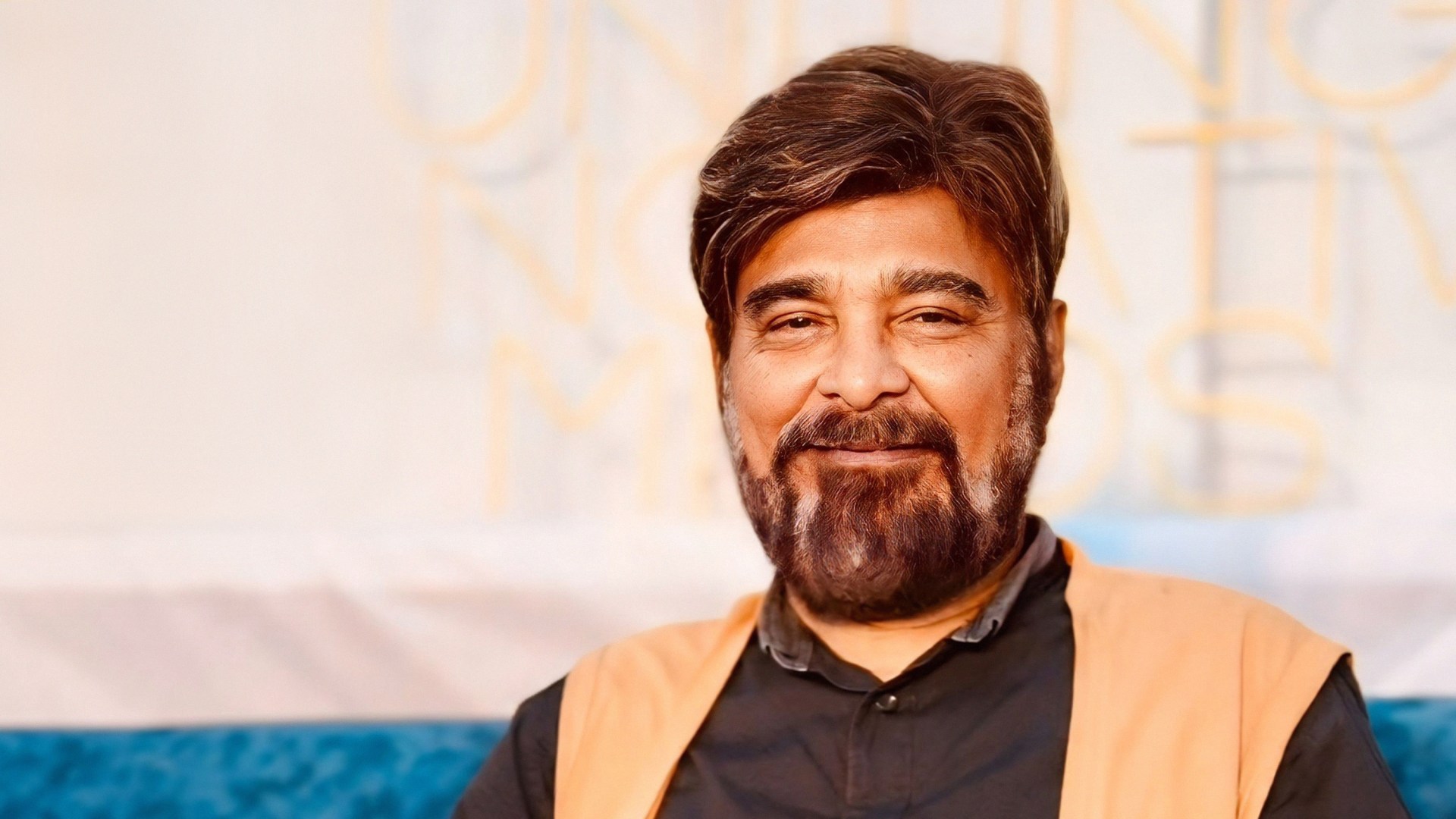
Justin Giboney's grandfather
Christianity Today June 19, 2025
Illustration by Christianity Today / Source Images: Courtesy of Justin Giboney, WikiMedia Commons

Living in a big city can leave me feeling almost nearsighted. My metro area starts to feel like the center of the universe, and I too easily forget the value and import of what’s happening in smaller places away from the centers of power. I suspect I’m not the only one. 

I noticed that myopia anew a few weeks ago as I drove down a familiar brick road in my mother’s hometown. Decatur is a city of about 70,000 in central Illinois, known as the Soybean Capital of the World and original home of the Chicago Bears. It’s struggling. After losing 400,000 manufacturing jobs over three decades, the economy is everywhere marked by one of America’s most effective bipartisan projects: deindustrialization.

Yes, both Republicans and Democrats, influenced by big-business lobbies with “corporate myopia,” deserve credit for the situation in Decatur and many places like it all around the country. American industry went overseas, executives got richer, the middle class was hollowed out, and our sense of community waned. But at least televisions got cheaper.

I was in town for a street-naming ceremony in honor of my late grandfather, Bishop Thomas Lee Cooper, a cleric in the Black Pentecostal denomination Church of the Living God, Pillar and Ground of Truth (PGT Nation). He served that community as a pastor and civic advocate for decades. He sought voter rights and equality in education and often worked with local sheriffs and courts to get people out of jail. Once they were out, he’d help them find jobs to rejoin society. In fact, he was called to help secure the release of Rev. Jesse Jackson from a Decatur jail in 1999. 

As a child, I’d sometimes stay with my grandfather for the summer. This meant entire days in church on Sundays. On weekdays, we’d drive around town delivering groceries; visiting and praying for the sick and shut-in, as they’re still called in the Black church; and attending community events.

My grandfather was known for his energy, impatience with delayed action, and generosity beyond his means. And like Decatur, he was small in stature but dignified. He didn’t graduate from high school or run in a circle of elites, but he was wise and upright. During the street-naming ceremony, his neighbors and fellow clergy members spoke of a legacy of integrity, faith, and service.

God often blesses us with forerunners, people who come before us and sacrifice to make our lives better (Mal. 4:5–6). “Someone’s sitting in the shade today because someone planted a tree a long time ago,” as the investor Warren Buffet once said. These forerunners go into tough places and take on challenges for the sake of our well-being. They’re called pillars of the community because they hold us up. Even with Decatur’s economic well-being still in flux, it’s clear my grandfather was a forerunner.

He also left a special inheritance—in the biblical sense, for in the Bible, inheritance is about more than money or property. It’s also about character and a characteristic approach to life (Prov. 13:22; 2 Tim. 2:2–10). The most fruitful legacy is an intangible resource that outlives the person handing it down. It’s a legacy that guides, inspires, and gives us a standard to uphold. 

We can recall Mahalia Jackson’s gospel-laden songs to guide us through trying times with a joyful outlook. The legacy of Fannie Lou Hamer should inspire a synthesis of tenacity and grace in civic engagement. The ever-astute Gardner C. Taylor’s legacy should set a standard for diligence in study and concision of speech. And looking beyond these three, if their generation could display love of enemy under the lash of Jim Crow, then we have no excuse for not doing the same today. They faced worse and did more with less.

As I preached in my grandfather’s church that Sunday, I saw my three sons and nephew watching me in the exact same pews from which I watched my grandfather and imitated his “whoop.” I realize I have an obligation to uphold that legacy of orthodoxy and love of neighbor. Squandering it under the temptations of the day would be a terrible disservice—and not only to my grandfather but also to Christ.

The truth is that we were commemorating my grandfather not based on his own merit but based on the way his life served and glorified Jesus. We were celebrating not his flawlessness but rather a life that pointed people to Jesus’ righteousness. This is a legacy we can all leave, whether we’re from big or small places. 

But what happens to these legacies if we’re too unrooted to know our neighbors or if we become anonymous in large spaces? 

We don’t have to romanticize small towns to admit that important things might be lost when we move from tight-knit communities to urban enclaves or their transient suburbs. We might want to think twice about trading close family ties for overpriced neighborhoods where nobody knows our names. Big-city loneliness runs deep. When the glitter rubs off of the big-city sheen, we can long for more simple and intimate spaces.

Yet we don’t have to demand everyone stay in place to acknowledge that America’s been mistaken in how it’s neglected its small towns in policy and culture. 

We’ve too often made idols out of the comfort and efficiency that fuel cosmopolitan life. Yet the endless social striving in these crowded environments can impact the soul, leaving us more isolated, individualistic, and desensitized to certain kinds of immorality. Perhaps many of us go to big cities because they make us feel bigger. We might also like proximity and access to the influential and powerful with little regard for their character and impact on the community. 

We’re all trying our best to be remembered and build legacies. But the Bible says, “Unless the Lord builds the house, the builders labor in vain” (Ps. 127:1). The truth is we’re all small. Our works are filthy rags, and we’re as forgettable as dust—outside our faith in the Creator and service to his kingdom.

Recent celebrity trials have reminded us how many ways people are tempted to compromise for the promise of fame and fortune. These stories should serve as a warning—a reminder to pray there’s something about us that gives people a clearer view of Jesus instead of ourselves and our weakness. As my grandfather knew well, the only legacy worth having is a mirror of Christ.

Justin Giboney is an ordained minister, an attorney, and the president of And Campaign, a Christian civic organization. He’s the author of the forthcoming book Don’t Let Nobody Turn You Around: How the Black Church’s Public Witness Leads Us out of the Culture War.

Ideas

Frederick Douglass Found His Mission in the Black Church

In newly formed Black congregations, the famous abolitionist and others were able to live out their faith—and affirm their full humanity.

A collage of a church building with a cutout figure of Frederick Douglass.
Christianity Today June 19, 2025
Illustration by Elizabeth Kaye / Source Images: Wikimedia Commons

(For the previous article in this series, see here.)

“The negro can go into the circus, the theater, the cars … but cannot go into an Evangelical Christian meeting,” an elderly Frederick Douglass exclaimed in 1885 to a crowd in the nation’s capital. They had gathered to celebrate the 23rd anniversary of the abolition of slavery in Washington, DC, a result of the first emancipation law passed by the U.S. government in 1862. Three years later, in 1865, Union troops ordered the freedom of slaves in Texas on a day that came to be known as Juneteenth, and the 13th Amendment forbade the practice throughout the country.

But for the famed abolitionist, the meeting wasn’t just a celebration. It was also an occasion to critique evangelicalism, a movement with which he had a complicated relationship.

In his last autobiography, Life and Times of Frederick Douglass, Douglass tells the story of how he became a Christian around 1831 while listening to the preaching of a white Methodist minister. After his conversion, Douglass, who was a teenager at the time, was discipled by a slave whom he called “Uncle Lawson.” He writes that Lawson nurtured a love for the Bible in him, set an example of ceaseless prayer, and encouraged the belief that God would one day free Douglass for a “great work.” Lawson also connected Douglass to a fervent community of enslaved Christians who met to worship in seclusion.

Recalling his early days as a believer in Maryland, Douglass wrote he “saw the world in a new light.”

“And my great concern,” he said, “was to have everybody converted.”

But the beauty he found in the gospel was mixed with sorrow when his master, Hugh Auld, discovered the Lawson-led hush-harbor community where Douglass worshiped, and forbade him from attending the meetings. Douglass felt “persecuted by a wicked man” but became hopeful again when Auld himself converted to Christianity in an evangelical revival. Douglass had hoped it would turn Auld into a “more kind and humane” man, as he wrote in his first autobiographical narrative. But instead, Auld “found religious sanction and support for his slaveholding cruelty.”

Douglass’s muddled experience with evangelical Christianity mirrored what many other slaves experienced. Many of them came to faith through evangelicalism and were able to grasp the hope of emancipation—and equality. Yet they also saw white evangelical preachers espouse proslavery doctrines and comfort with tearing apart Black families to uphold the lucrative institution. With this hypocrisy in mind, Douglass famously wrote, “I love the pure, peaceable, and impartial Christianity of Christ: I therefore hate the corrupt, slaveholding, women-whipping, cradle-plundering, partial and hypocritical Christianity of this land.”

Although free and enslaved Black Christians could see the contradictory views held by their white counterparts, they left neither Christianity nor evangelicalism. Instead, they formed their own churches within the tradition—one of which became a home to Douglass after brief stops along the way.

After attending the Lawson-led hush harbor, Douglass was a member of the integrated Methodist community in Baltimore, Maryland. There, he worshiped with other slaves and slave owners, who he mentions were at times viciously violent to the enslaved churchgoers outside of service.

After escaping to freedom in his early 20s, he sought to join a Methodist Episcopal Church in Massachusetts, a state that had effectively abolished slavery decades beforehand. When Douglass arrived in the town of New Bedford, he expected to find a less hypocritical practice of Christianity. But what he saw was another form of degradation: Black congregants separated and seated behind their white counterparts. And their second-class status further reinforced during Communion, in which they were invited to partake after all the white members were served.

Douglass never returned. Instead, he joined a local branch of the African Methodist Episcopal Zion Church, a Black denomination that was formed in New York City in 1821.

Around the same time, other Black Christians were also joining African American, or as they were called back then, “African” churches. The first ones were formed in partnership with white people who supported separate meeting spaces for African Americans. In the South, some of the first Black congregations in Georgia and South Carolina were formed as African Baptist churches. They were established by preachers, such as George Liele and Andrew Bryan, who were born into slavery. In other parts of the region, enslaved and free Black preachers were also becoming pastors and leading their own flocks.

But after some slave revolts, slaver owners grew suspicious and the Southern Black churches became less prevalent – and independent. White supervision of worship services became more common, leading Black congregants to transform their churches into clandestine gatherings near swamps and hush harbors.

Meanwhile, in the North, the African church movement continued to grow. Black Baptists, Methodists, Presbyterians, and Episcopalians who converted during evangelical revivals formed separate denominations or new congregations, the most prominent of which were the African Methodist Episcopal (or AME) Church, the African Episcopal Church of St. Thomas, and the African Presbyterian Church.

The churches came about in a variety of ways. Some, like the AME and the African Episcopal Church of St. Thomas, were formed after the founders, Richard Allen and Absalom Jones, refused to accept racism and second-class treatment within the white church. The African Presbyterian Church was organized after free Black preachers attracted large Black crowds with public sermons and formed them into one congregation. Meanwhile, others—like Thomas Paul’s Abyssinian Baptist Church in New York—came at the request of Black congregants who initiated a process to separate from an integrated church.

But whether they worshiped in their own denominations or congregations, these new spaces gave Black believers the ability to live out their faith in a way that affirmed their full humanity. As a result, many churches became hubs for Black abolitionists, aids to those sojourning through the Underground Railroad, and purveyors of a Black evangelical theology that championed the imago Dei.

When Douglass moved to New Bedford, he began gravitating towards the abolitionist movement and the writings of William Lloyd Garrison, the publisher of the anti-slavery newspaper Liberator.

After becoming a member of New Bedford’s African Methodist Episcopal Zion Church in 1838, Douglass received his license to preach through the denomination. Thankfully, some of the historical documents we have from this time give us a window into his theology and speeches, which went beyond castigating proslavery evangelicals for their participation in a cruel institution. He also spoke to the heart of the matter: how they view Jesus.

In his 1885 speech at the nation’s capital, Douglass said that “of all the forms of negro hate in the world,” he wanted to be spared from the “one which clothes itself with the name of the loving Jesus.” He then touched on what most Christians know: Jesus associated himself with the poor and the lowly.

Even though the abolitionist was facing a crowd, his words were aimed at evangelist Dwight L. Moody, a white minister who had recently visited Washington. Moody was the most prominent evangelical evangelist of the time, attracting hundreds and thousands to his preaching tours. But when he came to the nation’s capital, he barred Black people from public revival meetings and made separate visits to their churches.  

As evangelical Christians, Douglass and Moody would have articulated the main tenet of the gospel: that human beings need to repent and receive forgiveness from God, and be transformed by the Holy Spirit, which comes only through Jesus Christ. But Douglass and many other Black Christians also saw their faith as a call to be fully formed by the life of Christ—who himself was lowly, poor, and despised.

Douglass rightfully understood Spirit-enabled conformity to the image of Christ would require white evangelicals to stop degrading Black people who had occupied a place of disrepute in society. He saw their comfort in doing so as evidence of a malformed Christianity, one that showed outward doctrinal marks but lacked a renewed view of creation that comes from authentic communion with Jesus.

Douglass’s speech in Washington came at a time when African Americans needed help. The Black community was discouraged. They were living under a president who sided with white Southerners on their reluctance to treat Black Americans as equals. They were also suffering from increasing racist violence and marginalization, a societal issue that the Supreme Court’s verdict on Plessy v. Ferguson strengthened.

Douglass saw the same spirit that had animated the cruelty of proslavery theologies being reinvigorated. With this in mind, he issued his critique—not to demean evangelicalism but to invite it not to repeat the sins of the past.

Jessica Janvier is an academic whose focus crosses the intersections of African American religious history and church history. She teaches at Meachum School of Haymanot and works in the Intercultural Studies Department at Columbia International University.

News

Inside Russia’s Massive Campaign to Abduct and Indoctrinate Ukrainian Kids

One kidnapped teen tells his story. 

Vladyslav Rudenko with a Ukrainian flag and boxing gloves
Christianity Today June 19, 2025
Courtesy of Save Ukraine

Three Russian soldiers forcibly entered Vladyslav Rudenko’s home in October 2022. He was only 16. They had guns. 

“Pack up your clothes and personal items,” they said. He wasn’t allowed to leave a note to his mother. No calls to relatives. No clues about his destination.

Moscow occupied Rudenko’s city of Kherson, Ukraine, a week after the full-scale invasion in February 2022. Soldiers detained hundreds and tortured dozens of people in the city. Then Russian authorities began targeting the kids.

The officers ordered Rudenko onto one of 17 buses filled with Ukrainian children. They started driving. When the bus reached Crimea, the southern peninsula illegally annexed by the Russians in 2014, border officials stamped Rudenko’s documents. He looked at the stamps. There was an entrance date. No exit date. 

That’s when he knew.

“We understood at that point that we might never come back,” Rudenko told Christianity Today.

There is no way to know exactly how many children Russians have abducted from Ukraine. The Ukrainian government estimates nearly 20,000 have been taken. Russia places the number much higher—claiming 700,000. Moscow insists these aren’t abductions, though, but humanitarian efforts, offering children a reprieve from war. Some were supposedly going to summer camps but then didn’t return to their parents in the fall. 

Russian families have illegally adopted some of the children.

Others appear to be living in reeducation facilities. The Yale Humanitarian Research Lab has identified more than 8,400 children living in at least 57 locations scattered across occupied Ukrainian territory, Russia, and Belarus. Some are in Russian military training centers—or worse, fighting against their own country, according to the Institute for the Study of War, a Washington-based think tank.

Christians are part of the efforts to bring kids back home, said Mykola Kuleba, an evangelical Christian and founder of Save Ukraine. His Kyiv-based humanitarian organization has a wide range of support, but Christians play a significant role, he noted. 

Kuleba is careful not to share the logistics of his organization’s “underground railroad,” but he said it’s a tedious and expensive process. Save Ukraine has rescued more than 600 children so far, about half the total number of children who have been returned home to Ukraine. 

Rudenko was one of them. 

In May, he and his mother, Tetiana Bodak, joined Kuleba in Washington, DC, where they met with American lawmakers. The International Criminal Court has said Russia’s child abductions should be considered a war crime. Many are urging US officials to make the return of children abducted in the war a nonnegotiable term of any cease-fire agreement and Kuleba and Rudenko were there to remind lawmakers not to forget the children.

Rudenko was eager to tell his story to anyone who would listen. The buses took him to a camp in Crimea called Druzhba, he said. Russian officers told the new arrivals to throw away anything promoting Ukrainian identity. Rudenko recalled one teenage girl who defied orders and wore a T-shirt with the words Glory to Ukraine. A military officer cut the shirt off of her. 

The daily routine included morning assemblies around the flagpole with a Russian flag. There were Russian propaganda videos, Rudenko said, and lessons about Moscow’s importance on the global stage and about how Ukraine would soon be part of Russia—also how their Ukrainian identity had been “upgraded” to Russian.

The daily dose of propaganda convinced some Ukrainian kids that their families didn’t want them anymore, Rudenko said. They said they wouldn’t want to go home. 

Rudenko refused to embrace a Russian identity. One day at dusk, he snuck outside, carefully avoiding the camp guards, and pulled down the Russian flag

“For everything that Russia did to my mother, to my family, and to me,” he told CT, “I just took it down and put my underwear there.”

The soldiers put him in solitary confinement for seven days, he said. It was a tiny room with a small window. They gave him pills they said would “calm him down.” Rudenko flushed them down the toilet.

In the spring, authorities transferred him to a military academy. He and 800 Ukrainian boys learned to handle weapons and operate drones and tanks. The officers tried to turn them into Russian soldiers.

Before Rudenko could be sent to the battlefield, though, his mother began working with Save Ukraine. They drafted a rescue plan that involved extensive paperwork (required by Russian authorities to prove parental rights) and thousands of miles of travel. 

Rudenko was only 60 miles from home, but a direct trip would have required travel through war zones and difficult security corridors. Instead, Bodak made a circular trip across Ukraine’s eastern border into Poland, then north into Belarus, through Russia, and southwest into Lazurne in occupied Ukraine. 

When Rudenko’s mother arrived at the military camp, Russian authorities interrogated her for three days and threatened her with 25 years in jail. 

Anastasia Dovbnia, Save Ukraine’s international relations manager, said Russian officers required the mother and son to state in a recorded interview their support for Russia’s occupation and their fear of returning to Ukraine—lies they manufactured to secure their freedom. 

“They’re still using pieces of this interview and circulating it all over to promote this false narrative of rescuing these kids,” Dovbnia said. 

Rudenko and his mother made it home to Kherson in May 2023, seven months after Rudenko was taken, six months after Ukrainian forces reclaimed the city from Russian control.

Rudenko is glad to be home, but he worries about the fate of those he left behind, including friends he made at the military camp who might already be on the battlefield. 

Dovbnia said some of them may have gone willingly due to years of indoctrination. “When you’re a kid, when you’re being told you’re an orphan and your family abandoned you and your homeland abandoned you, you are very prone to trust anybody who is providing you with any help,” she added.

During the second round of cease-fire negotiations in early June, Ukraine’s delegation delivered Moscow a list of 339 abducted children Ukraine wants to see immediately returned—a small percentage of the total but an achievable number in the near term. The United States has expressed its support for the return of Ukrainian children. 

Russian president Vladimir Putin has suggested he is open to a third round of negotiations after Moscow and Kyiv complete a prisoner exchange next week, but he has not publicly committed to honoring Ukraine’s request. Meanwhile, Moscow has plans to continue deporting Ukrainian children to “summer camps” in the months ahead. 

“We need strong US support,” Save Ukraine founder Kuleba said. “And the support of Christians who will pray for us, who will stand with us, who will support innocent children just to survive—to find them and to return them to their families.”

Inkwell

The Third Space Revival

A café, a cathedral, and a kingdom: how liminal communal spaces fuel creativity and connection with each other and with God.

Inkwell June 19, 2025
"Artists in Finck’s Coffee-House in Munich" by Wilhelm Bendz

Have you ever walked into a coffee shop—you know the type—filled with carefully curated furniture and wire-rimmed glasses and copies of Infinite Jest, and left with an essay, or an idea, or a method for making homemade cold brew that you never would have had if you’d stayed home?

Have you ever settled into the cozy haze of a British pub and had one of those conversations with your friends that takes on a life of its own, pulling in bartenders and neighboring booths, forming new bonds and strengthening old ones, turning all who partake into beautiful caricatures of themselves?

Have you ever sat among a strange yet sublime combination of midnight truckers, wits-end strung-outs, and broke college students at varying levels of sobriety and observed that, between the hours of midnight and 5 a.m., this is not, in fact, a Waffle House but a Waffle Home?

Have you ever joined the 6-a.m.-ers at the donut shop and realized, as the old regulars swapped bantering stories, that maybe the boomers weren’t being boomers when they said the internet could never replicate this?

If any of these sound familiar, you have been the recipient of the inherent magic of a third place. 

The term third place is nearly ubiquitous now, but it was first coined by sociologist Ray Oldenburg in his book The Great Good Place, which documents the phenomenon of third places and considers their value in larger society.

The term describes the idea that, while most of our lives are spent between our homes (“first places”) and our work (“second places”), a third set of places—cafés, pubs, barbershops, salons, bowling alleys, churches, and the like—give us another space to rest, create, play, and commune, a space to be human.

As Oldenburg explains in a 1997 article on the same topic, “What suburbia cries for are the means for people to gather easily, inexpensively, regularly, and pleasurably—a ‘place on the corner,’ real life alternatives to television, easy escapes from the cabin fever of marriage and family life that do not necessitate getting into an automobile.”

But such spaces have experienced a loss in recent decades, as Robert D. Putnam’s sociological tour de force, Bowling Alone (2000), laments. Using bowling as his guiding image, Putnam describes how the sharp decline of enrollment in bowling leagues is an example of the loss of the social capital such spaces have long provided to American communities. This spells trouble for society and culture.

The COVID-19 pandemic showed us just how bleak our individual and communal lives can look when left entirely without these hubs of social capital. Perhaps I’m an optimist, but I have sensed, since then, an uptick in our collective concern for cultivating third spaces. As G. K. Chesterton reminds us, “the way to love anything is to realize that it might be lost.”

The thing about third places—wide-ranging as they are in character—is that they breed culture in a way that would be impossible without them.

Coffee houses in Paris, London, and New England have served consistently as cradles of intellectual discourse from the early Enlightenment period to the American and French Revolutions and up through the literary circles of Eliot and Hemingway, earning such cafés the title “penny universities.”

The Eagle and Child pub, famed Oxford meeting place of the Inklings, spun from its cozy, wood-paneled walls and leather seats some of the most influential works of fiction and theology of the 20th century. There is a real sense in which Tolkien, Lewis, Williams, Barfield, and the rest were as much products of their time together at “The Bird and the Baby,” as the pub was familiarly known, as they were products of their individual reading lists.

And that famed rendition of Creed’s “Higher” by your buddy Brian that has become the stuff of legend in the friend group would certainly never have happened without the help of your local karaoke joint.

Third places produce culture. But how do they do it?

In The Four Loves, C. S. Lewis describes friendship as postured “shoulder to shoulder”:

Friendship arises … when two or more of the companions discover that they have in common some insight or interest or even taste which the others do not share and which, till that moment, each believed to be his own unique treasure (or burden). The typical expression of opening Friendship would be something like, “What? You too? I thought I was the only one.”

Friendship, then, develops out of a love between two people for a third thing. Lewis theorizes that this would have been true even in the earliest days of humanity:

We can imagine that among those early hunters and warriors single individuals … saw what others did not; saw that the deer was beautiful as well as edible, that hunting was fun as well as necessary, dreamed that his gods might be not only powerful but holy. But as long as each of these percipient persons dies without finding a kindred soul, nothing (I suspect) will come of it; art or sport or spiritual religion will not be born. It is when two such persons discover one another, when, whether with immense difficulties and semi-articulate rumblings or with what would seem to us amazing and elliptical speed, they share their vision—it is then that Friendship is born.

We see here, by inversion, the innately human progression that happens in third places. Kindred souls meet, and from their union flows art, literature, sport—the stuff of shared time, shared experience, and shared soul. Third places conceive friendship, and friendship gives birth to culture. This is only possible because third places are places of hospitality, providing time and space where such connections can flourish.

While I cannot, for the purposes of this essay, fully parse out what produces this effect, I would argue that it often has to do with cultivating a space that invites continued presence—comfortable furniture, aesthetically pleasing decor, rounded surfaces, and mugs (as opposed to to-go cups). Starbucks is hardly a third place. A drive-thru is the antithesis of one. But from a wider view, third places create culture because they are places that exist for the love of things, whether those things be good coffee, food, beer, sports, comedy, you name it.

This is why you have Philadelphia Eagles bars in Portland and why every flannel-donning espresso “granolite” in the Northwest Arkansas tri-state area finds themselves pulled, magnetically, into Onyx Coffee. The best third places convene lovers of particular things.

In the education world, I have often heard it said that great teaching boils down to a simple definition: loving the students and loving the material in the same room. Something similar could be said of true friendship. A true friend genuinely loves the other person in the room and genuinely loves the other thing in the room that unites them. A great third place provides all the necessary material for this process: the other person, the thing, and the physical room.

Without crossing into the dangerous waters of the precarious church–coffee-shop distinction, I must observe that churches too display a similar tendency. The church gathers its people with the express purpose of allowing them to love something outside of themselves—namely, God. When they do so, culture—fellowship, friendship, music, art, cathedrals—are birthed from the communion between them.

In the introductory chapter of Orthodoxy, G. K. Chesterton describes a hypothetical, whimsical fable, “a romance about an English yachtsman who slightly miscalculated his course and discovered England under the impression that it was a new island in the South Seas.”

Chesterton contends that such a sailor, once he had overcome his initial wave of embarrassment, would feel a peculiar mix of emotions—for “what could be more delightful than to have in the same few minutes all the fascinating terrors of going abroad combined with all the humane security of coming home again?”

He muses that the predicament of the sailor is really, in many ways, the predicament of the human race: “This at least seems to me the main problem for philosophers. … How can we contrive to be at once astonished at the world and yet at home in it?”

In this “mixture of the familiar and the unfamiliar which Christendom has rightly named romance,” Chesterton sees an essential human need:

But nearly all people I have ever met in this western society in which I live would agree to the general proposition that we need this life of practical romance; the combination of something that is strange with something that is secure. We need so to view the world as to combine an idea of wonder and an idea of welcome. We need to be happy in this wonderland without once being merely comfortable.

Chesterton asserts that the Christian faith is the best answer to this double spiritual need. And I would contend that he makes a solid case (you should read the book).

Consider how this paradox of wonder and welcome comes to bear in our third places. If Chesterton is right, it is unsurprising that we gravitate toward places that get at this deep human need for “practical romance.” Ultimately, the magic of third places lies in their ability to be places of both wonder and welcome.

We all know the experience of walking into a local haunt. You step in the door and feel as if you are home. You say, “I’ll have the usual” or, “Put it on my tab.” Sometimes you want to go where everybody knows your name. Yet we also know that part of the allure of these places is that they are decidedly not our homes.

You never know when a friend might walk in. Or a literary agent. Or a cute girl who happens to be reading The Brothers Karamazov. And of course, she wants to be in the book club you are starting up. The rest, as they say, will be history—and you’ll be off on the adventure of a lifetime.

Wendell Berry, Paul Kingsnorth, and others have lamented the disappearance of the front porch as a loss of a fundamental part of American society. I join them, and I would be the first to celebrate a revival of the porch.

The third place is made of similar spiritual “stuff” as the front porch is. The third place is the best front porch we still have readily available in most of American culture. For third places, like front porches, are liminal spaces, in between. They are in our comfort zone and yet out of it. They are our home and yet not our home. They are wonder and welcome.

Charles Dickens tells of an episode in a café that awakened him to this reality:

One [coffee shop] in St. Martin’s Lane, of which I only recollect that it stood near the church, and that in the door there was an oval glass plate with “COFFEE ROOM” painted on it, addressed towards the street. If I ever find myself in a very different kind of coffee-room now, but where there is such an inscription on glass, and read it backwards on the wrong side, MOOR EEFFOC (as I often used to do then in a dismal reverie), a shock goes through my blood.

As biographers note, this scene constituted a profound awakening of Dickens’s imagination to the fantasy of the everyday, and he went on to paint his own fictional world with all the elvish realism of the “Moor Eeffoc.” It is no surprise that this awakening took place in a coffee room. He was not the first (and far from the last) to walk into a third space and leave with a transfigured vision of the world.

In some ways, these places function like large-scale icons. They awaken us, for a second, to the way things are all around us. We overhear a conversation at the table next to us and realize just what the main character should do in the last chapter of our novel. We hear a side-splitting new stand-up bit and are awakened to the gratuitous absurdity of existence. We see MOOR EEFFOC through the window and realize we are sitting in Fairyland.

And this brings me to the relationship between the coffee room and the cathedral.

The church, to state the obvious, is home. It is the place where we know and the place where we are known. Where—if it’s done right—we feel safe to be our most vulnerable. It is the place where the clamor of our masks and impressions should give way to our truest selves in communion with one another.

But it is also the place where we encounter the incomprehensible. The place where we go to meet with the living God who holds the universe in the palm of his hand, upholding stars and planets by the word of his power.

It is wonder and welcome. It is bread and wine—the most human and homely of things. It is the body and blood of the resurrected Christ—a thing more full of wonder and mystery than we could possibly imagine. And I dare not systematize what even the prophets could barely put pen to paper in describing, resorting as they do to the language of silver and gold and horses and cups and swords and eyes and stammering uses of “as it were.”

But I do have just an inkling as to why great third places speak so deeply to our souls. They do so because they give us a glimpse of something that we were made for.

Throughout the story of Scripture, there are two spaces which (though at times permeable) remain largely distinct. There is heaven—the place of wonder and adventure and perfection, where the Lord dwells. And there is earth—home—a place that is, through God’s creative mandate, truly ours.

Yet the whole arc of Scripture seems a dogged attempt at finding a third space where the two can somehow dwell together at last: A garden where God walks with man. A tabernacle where heaven moves upon the earth. A temple where the Holy of Holies is made accessible. A person in whom Word becomes flesh. A meal that is the bread come down from heaven, given for the life of the world. A Presence that places the good law of heaven directly on the hearts of humankind.

And we move at last toward a great Third Place, where heaven will come down to earth and wonder and welcome will finally, fully be one—and more than just the fresh batch of coffee will be made new.

Coby Dolloff writes and teaches at Pepperdine University in Malibu, California. His deepest interests lie at the intersection of theology and comedy. You can follow his work (if you’re not averse to a few memes) on his Substack.

Theology

Don’t Blame Bible Prophecy for a War with Iran

Columnist

We’re living in the last days. But Jesus never said we’d know exactly when the end would come.

A boy watching an explosion from an Israeli airstrike in Iran.
Christianity Today June 18, 2025
Illustration by Christianity Today / Source Images: Getty

This piece was adapted from Russell Moore’s newsletter. Subscribe here.

After Israel’s recent bombing of Iran, a friend told me about a preacher who asserted that Russia might be the Gog and Magog of the Book of Ezekiel, that Iran might be one of the hostile nations pictured by the prophets, and that all of this just might be pointing toward the imminence of the literal apocalypse.

“Are we going to do this again?” my friend said.

By “this,” he meant the tying of prophecy charts to contemporary geopolitical events in ways that leave audiences hyped up or terrified and then exhausted and even cynical.

Prophecy chart fevers usually skip a generation. One cohort might grow up hearing, as clear as the words on the page, that the Bible teaches no more than 40 years will pass between the founding of the nation of Israel and the Second Coming—but it’s harder to do that after 1988 comes and goes.

A generation accustomed to hearing that the Soviet Union is almost definitely Gog and Magog will be less open to the same sort of confidence when they are told that Iraq is a new Babylon, that Saddam Hussein is a new Nebuchadnezzar, and that, therefore, the Rapture is right around the corner.

The prophecy charts always come back, though, and eventually they gain an audience. Why? With human nature as complicated as it is, one shouldn’t be surprised that there are more cynical reasons and less cynical reasons.

The apostle Paul warned of the time when “people will not endure sound teaching, but having itching ears they will accumulate for themselves teachers to suit their own passions, and will turn away from listening to the truth and wander off into myths” (2 Tim. 4:4, ESV throughout).

At times, the Bible speaks about those “itching ears” as wanting heresy or the justification of sin. At other times, the problem is not the outright contradiction of the Bible but foolish controversies, genealogies, and dissensions (Titus 3:9), or the pull to “quarrel about words, which does no good” (2 Tim. 2:14).

Itching ears don’t imply a group of people who necessarily want something evil, but it does point to those who want something interesting. To have the code that unlocks what’s really going on, to know that one is part of the terminal generation left standing at the end of everything—that can be exhilarating and terrifying all at the same time, like a horror movie or a roller coaster.

Walker Percy wrote that modern people tend to secretly love catastrophes because a hurricane or an earthquake or a war makes a person feel suddenly alive. He argued that what kills us is not danger but a sense of meaninglessness, of everydayness. The sense that everything is falling apart can jolt us out of that kind of deadness.

The protagonist Will Barrett in Percy’s novel The Last Gentleman reflects on how happy his father was when he remembered Pearl Harbor. It was not that his father was a sadist or a masochist. But when he thought about Pearl Harbor, he would suddenly have purpose and life. “War is better than Monday morning,” Will concludes.

Words like “I know what’s happening is the worst thing that leads to the best thing” will gain a much readier audience than “The kingdom of God is not coming in ways that can be observed, nor will they say, ‘Look, here it is!’ or ‘There!’ for behold, the kingdom of God is in the midst of you” (Luke 17:20–21).

Add to that the phenomenon that the monk Thomas Merton once referred to as “mental snake-handling.” Merton asked why small, isolated, persisting congregations of people take up rattlesnakes in a service. It’s because, he argued, surviving the snakes is proof, right now, that one is in God’s favor. Judgment Day is now, it is visible and palpable.

People often look for such a jolt—in metaphorical and not often literal terms—when their lives are bored, over-routinized, or otherwise lacking in purpose or meaning.

“In Christian terms, the mental snake-handling is an attempt to evade judgment when our conscience obscurely tells us that we are under judgment,” Merton wrote. “It represents recourse to a daring and ritual act, a magic gesture that is visible and recognized by others, which proves to us that we are right, that the image is right, that our rightness cannot be contested, and whoever contests it is a minion of the devil.”

The life of faith is difficult. One must walk forward, following a voice one cannot hear audibly, into a future one cannot control. One must entrust one’s life to the mercy of God, demonstrated in a crucifixion and resurrection and ascension that others witnessed firsthand but which we have heard about and found true. A certainty about where events we care about fit into the ultimate plan, and a certainty that we are on the right side of it all, can make that faith feel almost like sight. At least for a little while.

Add to that a scary situation seemingly outside of our control. What should we do about Iran? I don’t know. The possibility of a regional war with a potentially nuclear Iran is enough to set our nerves on edge.

We can debate about what the United States should have done or should do going forward, though easy solutions are impossible and every possibility seems perilous. Given how easily and quickly hostilities can accelerate, it’s not irrational to worry about a potential World War III.

Not many people want another war, and not many people want a nuclear Iran. How to achieve both objectives is fraught with peril and will require wisdom and prudence, much more than we seem to have in this trivial and trivializing time.

That means that we have no easy answers. That’s disconcerting, and it lays on all of us a heavy responsibility to make decisions that will be good and just—whether history continues another trillion years or wraps up tomorrow.

Will Iran tip us into World War III? I don’t know. Or bigger yet, could this be the moment when we see, as Jesus promised, his coming in the eastern skies? I don’t know that either.

We want to see signs that we can track, to hear approaching hoofbeats by which we can know that the final judgment is upon us. Jesus, however, told us that what would shock us about his return is not the drama leading up to it but its ordinariness. People will be marrying and having children and working jobs, he said (Matt. 24:36–44).

That ordinariness leads people to conclude, the apostle Peter warned, that everything would continue as it always has. They will ask, “Where is the promise of his coming? For ever since the fathers fell asleep, all things are continuing as they were from the beginning of creation” (2 Pet. 3:4).

That sense of illusory ease and even boredom is actually heightened over time by promise after promise that this time—I just know it—we are finally at the brink.

The inner core of Jesus’ disciples wanted what we want: the definitive prophecy chart that could be timestamped by events. But Jesus wouldn’t give it. And he told them not to trust anybody who said they could (Mark 13:21–23).

“When you hear of wars and rumors of wars, do not be alarmed,” Jesus said. “This must take place, but the end is not yet” (v. 7). The time between his ascension and his second advent, Jesus said, would be rumbling with birth pains, but none of us have a sonogram to tell us when or where.

Are we in the last days? Yes. Everything from the empty tomb onward are the last days (Heb. 1:2). Could Jesus return at any moment? Absolutely. But can we track that coming based on the bombing schedules of Israel or Iran? No.

We should act, at every moment, whether in peace or in war, as though it might be a millisecond to Judgment Day. But we do not know when that is.

Instead, we have the word of Jesus that the kingdom is advancing, invisibly like fermenting yeast or germinating seed. We have the word of Jesus that he will not leave us as orphans; he will come to us (John 14:18).

That’s all the prophecy chart we need.

Russell Moore is the editor in chief at Christianity Today and leads its Public Theology Project.

Ideas

Not Just Any Hope Will Do

Biblical hope is not selfish, aggressive, or complacent. It’s not naive or scared of suffering. It rests on the foundation of Jesus Christ.

Jesus with storm clouds a hand reaching
Christianity Today June 18, 2025
Illustration by Mallory Rentsch Tlapek / Source Images: Unplash, WikiMedia Commons

I remember the day my hope failed. 

The seminary where I taught in South Africa had run out of money. Facing impending closure, faculty and students packed into a classroom to pray. These people had saved and sacrificed for years to arrive here from across the continent. Some had survived war, famine, drought, or dictatorship. As I listened to their voices crying to the Lord, suddenly I ran out of words. I realized, These people have a way of hoping that I have never learned. 

Since then, I’ve come to think about hope in terms of quality more than quantity. That’s not because the numbers look great here in the American church: According to a recent Pew Research Center study, less than half of religiously affiliated US adults (47 percent) felt hopeful in their past week. That’s 12 percentage points higher than atheists, but it’s still a lot of hopelessness.

Yet a more troubling picture emerges if you look at the type of hope we do have. One anthropologist, Omri Elisha, who studied suburban Christians in Tennessee, concluded that Christians tend to talk about hope as a “motivational linchpin” for evangelical outreach and service. When the Christians he studied tried to put that hope into action, then, they became mired in “compassion fatigue.” They were immersed in admonitions to have more hope, but their way of hoping wasn’t working. 

What we need is not just more hope but the right kind of hope. 

Hope is a way of orienting oneself toward an unknown future that anticipates good. But that definition leaves room for a lot of variety. Hope is a multidimensional thing; it cannot be quantified on a simple scale from less to more. When it comes to the nitty-gritty of hoping in hard times, we need to pay attention to which narratives of hope we’re following. 

As an anthropologist, I study those narratives, which we absorb from our surrounding cultural settings to make sense of the world. We take in stories and assumptions about how to avoid the bad, attain the good, and get from the one to the other. In other words, we’re immersed in cultural narratives telling us how to hope.

Sometimes we hope because we trust in progress, powerful leaders, or our own prowess. Sometimes we hope for the comfort of cozy houses and lucrative jobs. If we’re honest, many of our ways of hoping have little to do with the hope that has propelled the church to follow Jesus through the ages (Rom. 8:24–25). We need less of the shallow maxims embroidered on decorative pillows and shouted in political rallies. How instead do we find a thickstubbornreal hope that can sing the blues and walk a tightrope

Take, for example, the hope that King Ahab exemplified in 1 Kings 22. Ahab was a terrible king by any standard. In one of his many misdeeds, he decided to conquer neighboring Ramoth Gilead and found 400 prophets to tell him exactly what he wanted to hear: Have hope, because everything is going to be fine

But one prophet, a man named Micaiah, was bold enough to tell Ahab that his hopes were delusional. Ahab pouted about Micaiah like a grumpy toddler. “There is still one man through whom we can inquire of the Lord,” Ahab said, “but I hate him because he never says anything good about me, but always bad” (v. 8). When Micaiah broke the news that Ahab’s imperial ambitions would fail, Ahab threatened to put Micaiah in prison then went to war anyway. Because he was scared, Ahab disguised himself as an ordinary citizen. Nevertheless, a stray arrow struck him through a crack in his armor, and he died a disgraceful death.

You have probably seen people clinging to Ahab’s kind of delusional hope. He cared only for outcomes that would be favorable for himself, surrounding himself with counselors willing to whitewash realities he didn’t like. He expected troubles to resolve easily: just a little battle, like a half-hour sitcom. He clung to power and longed for a mythical past when he had even more power. He was terrified of real danger but also terrified of having his sin exposed. He hoped for a future of more control, more power, more of himself. 

Delusional hope is not always so selfishly aggressive. It can also produce dangerous passivity, as Martin Luther King Jr. warned half a century ago. When Birmingham officials imprisoned King for leading civil rights demonstrations, white clergy wrote an open letter counseling King to delusional passivity: “We recognize the natural impatience of people who feel that their hopes are slow in being realized, but we are convinced that these demonstrations are unwise and untimely.”

In his now-famous response, King taught a different way of hoping. “Maybe I was too optimistic,” he reflected. “Maybe I expected too much. I guess I should have realized that few members of a race that has oppressed another race can understand or appreciate the deep groans and passionate yearnings of those that have been oppressed, and still fewer have the vision to see that injustice must be rooted out by strong, persistent and determined action.” 

King rejected naive optimism. In its place, he taught a weather-beaten Christian hope: “We must come to see that human progress never rolls in on wheels of inevitability. It comes through the tireless efforts and persistent work of people willing to be co-workers with God.” 

King wasn’t merely disappointed that people failed to advocate for justice. He was disappointed in their dangerous kind of hope, the notion that justice would simply appear out nowhere, following neither action nor repentance. Delusional hope of this kind is an alluring lie. It tells us we need not bother becoming coworkers with God.

Biblical hope is never delusional. It is not naively optimistic or afraid of suffering. In fact, it grows perseverance out of suffering (Rom. 5:3–5). It rests on the foundation of Jesus Christ, who interrupts our broken world with grace (1 Pet. 1:13) and is characterized by selfless action and discipline (1 Pet. 1:13). As theologian Miroslav Volf put it, abiding Christian hope “is not based on accurate extrapolation about future from the character of the present.” Unlike shallow optimism, it never depends upon good omens but trusts in God and his goodness even, Volf says, “against reasonable expectation.”

For the past four years, I’ve been interviewing Christians about the ways they hope in relation to racism. I’ve noticed that Christians who are committed to pursuing kingdom justice for the long haul have generally scoured away optimistic, power-loving, Ahab-style ways of hoping. They live in a deeper and more biblical hope that rests on grace, grows out of suffering, aims for shalom, and calls for action. 

You can assess the shape of your own hope using prompts I’ve used in interviews. Try filling in the blanks in this sentence: “I used to hope ____, but now I hope _____.” Try filling in what you hope for, and then also answer a second time with adverbs. Perhaps you have hoped eagerly, naïvely, or blindly. Then ask yourself these questions: Why do you hope? What is the goal of your hope? And how does your hope shape your life? What concrete difference does it make? 

When I asked these questions of Christians who had worked for decades to bring about justice in difficult circumstances, they told me of a profound hope that combined both lament and joy. “I find no hope in [denying] what really is happening,” one woman told me. “My hope is not shiny or happy at all. It’s totally bruised and bloodied, and it’s scraping by my fingernails. On [some] days you may not be able to see it. But there’s maybe a scrap of it hanging on and pressing on.”

These days, when I encounter disappointments, I’m not just trying to scrounge up scraps of a tired old hope. I’m looking to my brothers and sisters in Christ across the globe and across the centuries, learning how to dig my fingernails into a rugged hope founded firmly on Christ, who died and rose again. 

Christine Jeske is associate professor of anthropology at Wheaton College and the author of four books, including the forthcoming Racial Justice for the Long Haul: How White Christian Advocates Persevere (and Why). She previously worked for a decade in Nicaragua, China, and South Africa.

Theology

Jews Do Await a Messiah

Since Talmud study is not enough, hopes for a breakthrough remain.

Elijah on a chariot of fire and Jerusalem
Christianity Today June 18, 2025
Illustration by Christianity Today / Source Images: WikiMedia Commons

In this series

(For previous articles in this series, see here and here.)

In antisemistic environments, Talmud study helped keep Judaism alive. Boys and men, especially the smartest, established a virtual reality. Talmud exegesis became a form of mental ski jumping that trained the mind to stay focused and the body to be poised yet relaxed, regardless of the buffeting winds. But did it offer hope?

The Talmud still trains intellects. In theory, it builds a wall far from the border of improper conduct so no one will wander into sin. Yet anyone observing human nature sees that all sin and fall short of the glory of God. At one point the apostle Paul cried, “Wretched man that I am! Who will deliver me fromthis body of death?” (Rom. 7:24, ESV). When that realization hits, what then?  

Up to the destruction of the temple in AD 70, Israelites transferred the sin to an innocent animal, a scapegoat, and slaughtered the beast in the temple as payment for transgression. But the sacrifices stopped when the temple was destroyed. Even with all the precautions the Talmudists took, it was still likely that everyone at some time would break God’s law. How, then, could people be saved?

Christians have an answer to that problem: Christ’s sacrifice is the good-for-all-time safety net that animal sacrifices once were. The Talmud offers the alternative answer of setting up barriers so far away from the real barriers that humans could ensure they usually wouldn’t break the commands. But some rabbis suggested a third alternative: Yes, humans will inevitably mess up, but repentance, prayer, and changed behavior can make up for that. A finalist for Jewish GOAT (greatest of all time) said so.

In Judaism, Abraham, Moses, and David are prime GOAT contenders. The MVP of the past 2,000 years is probably Maimonides (1135–1204). He developed a list of 13 principles of faith that he said are the minimal requirements for Jewish belief. Over the centuries they gained wide acceptance, similar in some ways to the Nicene Creed in Christianity, the Five Pillars of Islam, or the Four Noble Truths in Buddhism.  

The principles include these: God exists. He is one and unique. He has no body. He is eternal. Prayer should be direct and directed to God alone. God gave Moses the written Torah (the first five books of the Bible) and the oral Torah (the Talmud). God knows the thoughts and deeds of every person. God will reward the good and punish the wicked. The messiah will come. The dead will be resurrected.

Back up for a minute. Maimonides’s 12th principle is “I believe with perfect faith in the coming of mashiach, and though he may tarry, still I await him every day.” Mashiach, commonly translated as “messiah”? Yes. Many Jews, like Christians, await the coming of a messiah. The difference is in not just the number of visits but the concept itself. The mashiach (pronounced ma-SHEE-ak) is not a divine savior and does not sacrifice himself to pay for the sins of others.

So what is he? Judaism has no set doctrine of this, and messianic anticipation, while certainly present, is not at the center of modern Jewish life. Jewish and Christian categories do not translate easily—or at all—into each other. Typically, though, Jews picture the mashiach as a great leader who is also learned and wise.

Many leading rabbis believe the time of the mashiach’s return depends on the conduct of mankind. Some say he will come when things are getting worse (to save the day), and some when things are getting better (as a reward). He could be from the living or, according to views in the Talmud, possibly even from the dead—maybe David or Daniel. Orthodox Jews believe the prophet Elijah, taken to heaven alive, will return to announce the mashiach’s imminent appearance.

When the mashiach comes, Jews will return to Israel, wickedness will decrease, Jerusalem will be rebuilt, religious courts of justice will be reestablished, and a descendant of King David will be enthroned. Jerusalem will be a focus for international monotheistic reverence. All nations will be at peace with one another. Temple worship will be restored with new thanksgiving sacrifices but without sin offerings, which will not be needed because sin will have vanished. Elijah will answer all questions about doctrine and will show who has the right ancestry to be the high priest in resumed temple worship.

Maimonides wrote that in this messianic age men will be neither immortal nor transported to paradise. Instead, Jews will live in Israel under a great king known throughout the world, with nations living in peace. Although some will still be rich and others poor, wars will no longer rage, and people will be able to study philosophy and God’s laws. The mashiach eventually will die, but his son will succeed him as Israel’s king.

When? Speculation abounds. Over the centuries some said the mashiach would come if Israel repented for even a single day or observed even one or two Sabbaths properly. Others said he would come when a generation lost hope. In recent years Zionists have thought the creation of Israel as an independent country showed the importance of human effort. A better life in America made both repentance and hopelessness less likely for a time. Many examine current events.

Overall, Jewish and Christian theologies share some Scriptures but are radically different. Jews do not regard Jesus of Nazareth as the Messiah, and Christians agree that Christ is not the mashiach of Talmudic study. He rode on a donkey, not a stallion. Jews are right to long for an era of God-fearing world peace. Christians see God through Christ’s sacrifice bringing about that—and more—at a future date.

Books
Review

Christian Discipleship Is Rooted in Truth, but Pulled by Beauty

Two recent books illuminate the importance of a robust theological imagination.

A brain full of beautiful images and a picture of Jesus.
Christianity Today June 18, 2025
Illustration by Elizabeth Kaye / Source Images: Pexels, Wikimedia Commons

Every few weeks, it seems, we hear statistics about an American epidemic of loneliness, the purposelessness of young men, an increase in anxiety and depression in younger generations, and growing political tribalism. But we haven’t identified reliable pathways through the morass.

Meanwhile, our church cultures are not immune to these larger challenges. Although the number of those leaving the church may be stabilizing, Pew reports the “stickiness” of religion is declining. What can account for a disconnect between the gospel the church proclaims and the lives we often lead? What has captured our imaginations?

It’s possible for Christians to hold broadly similar doctrines while differing dramatically in how those doctrines shape their lives and outlooks. Accordingly, Christian leaders who care about discipleship in 21st-century American evangelical churches should be asking not only what we believe but how.

I’ve come to believe that much of our discipleship gap results not from an informational deficit but from an imaginative one. Although we need deep familiarity with theological truths, we first need to form a more robust Christian imagination so we can incorporate these truths into a coherent way of life. This has less to do with knowing facts, important as they are, than with learning to think, dream, and love more Christianly.


Two recent books on beauty and the imagination are helpful starting points. In Judith Wolfe’s The Theological Imagination, based on her lectures at Cambridge University, she describes the imagination as a faculty with which we make sense of the world.

This isn’t a matter of fanciful storytelling but something we use to give narrative shape to the sensory data all around us. When we read someone’s facial expression, experience a work of art, or even tell our life stories, we take differing data points and make them into a coherent whole. That person is unhappy. That artwork is meant to evoke feelings of anger. This spiritual experience is where it all changed for me.

In other words, our imaginations run like operating systems in the background, working below the level of conscious thought. This helps explain why Christians who read the same books, hear the same sermons, and profess the same beliefs might end up following divergent paths, both personally and socially. Given substantially similar rational inputs, our imaginations will make meaning in unpredictable ways that escape our notice.

What does it look like to understand this process theologically? Wolfe reminds us that cultivating a theological imagination isn’t like putting on a new set of glasses. It doesn’t mean superimposing a new worldview atop the existing one, like “a pattern to which to adjust our perceptions.” Instead, a theological imagination incorporates sense data in light of the Christian story and necessitates a particular posture of faith. Christianity, she writes, “makes sense of the world by enabling us to hold open horizons that we always rush to foreclose, and to sustain uncertainty in the light of a divine promise.” To behave and believe Christianly, we need a certain imaginative flexibility, one that can embrace the already-and-not-yet grammar of the gospel.

Yet as Wolfe notes, “Realiz[ing] this capacity requires a deep faith in a God whom we cannot grasp and take full hold of.” A theological imagination looks very much like Hebrews 11, which credited saints like Abraham with faithfulness even as their future was obscure: “For [Abraham] was looking forward to the city that has foundations, whose designer and builder is God” (Heb. 11:10, ESV). A theological imagination, then, is both humble and confident, as its chief mover is not the individual but God.

A second recent book, Matthew Z. Capps’s Drawn by Beauty: Awe and Wonder in the Christian Life, focuses less on imaginative formation. Instead, it reads more like an eager churchman reminding us of a rich heritage of beauty we’ve neglected. Although I gathered a full reading list from Capps’s footnotes, I often wished he would do less compiling and more synthesizing. He quotes a wide range of sources, including the church fathers, Reformed writers like Jonathan Edwards and James K. A. Smith, and Baptist leaders like Albert Mohler and Wayne Grudem. But he doesn’t always go deep in analyzing their thoughts or extending the conversations their works have launched.

Drawn by Beauty: Awe and Wonder in the Christian Life (Christ in Everything)

Drawn by Beauty: Awe and Wonder in the Christian Life (Christ in Everything)

192 pages

$14.80

Given the diverse perspectives held by the figures Capps cites, it’s unclear whether his argument comes from a particular theological angle. If recovering beauty is indeed a worthy pursuit of many evangelical traditions, perhaps this conglomeration of thinkers through the ages works. But for me as a reader, putting them all together without referencing their very different starting points seems shortsighted. After all, theological and church traditions represent more than scattered positions along a spectrum of Christian thought. On a deeper level, they give us ways of thinking about (or constructing and imagining) the world and what is possible.

If a theological imagination can help us construct reality along the lines of the Christian story and in the manner of Jesus, then each book has a fundamental question to answer: To what end does beauty or a theological imagination point? What is its ultimate goal?

In his 2013 book Imagining the Kingdom, James K. A. Smith gives his own answer, rooted in the weekly Christian liturgy. Each Sunday—as we participate in a call to worship, praise God in song, confess our faith and our sin together, hear the Word preached, and take the Lord’s Supper—we are not simply going through motions but enacting the drama of the gospel; we are inhabiting a Christian imagination. We are enfolded into the Christian story. It becomes ours. We are being built together like “living stones” into the house of God, the body of Christ (1 Pet. 2:5). Wolfe, too, looks to Christian worship as the experience that most profoundly forms a theological imagination.

Capps does gesture to requisite moral action as the outcome of beauty, but he ultimately ends his book by calling readers to experience and appreciate art. These are worthy pursuits, as they point to what Makoto Fujimura, in Art + Faith, calls “the ‘heavenly breaking in’ to the broken earth.” But is artistic appreciation the end goal of beauty? Capps encourages readers to consent to beauty’s pull, and he notes that it participates in the perfect beauty of the triune God. Ultimately, however, the book seems to suggest an individualized response—both to God’s beautiful life and to beautiful experiences and works of art here on earth.

This misses the telos of beauty, which (like any good earthly gift) must always find its resting place with God—in part now and in full on the canvas of eternity. Beauty must also create something. Martin Luther King Jr. had one name for that something—the “beloved community”—while David Brooks, in a recent address, spoke of the “creative minority.” According to Brooks, these communal manifestations of beauty can change culture when they “find a beautiful way to live” and “the rest of us copy.” Beauty needn’t be housed simply in a lovely face; it can live in a community that instantiates goodness and truth.

Although Capps discusses that beauty isn’t meant to be enjoyed in isolation, affirming that the triune God is both community and the source of all beauty, functionally his book ends with an individualized benediction: Go and appreciate art.


While neither book aims to help us practically construct a more Christlike imagination, they both leave us with markers. Capps is at his best when he applies insights on beauty to questions of spiritual formation. Wolfe—through her examples from theater, fiction, and visual art—concludes with an extended quote from C. S. Lewis’s character Reepicheep, the stalwart mouse who appears in The Voyage of the Dawn Treader: “When I can swim no longer, if I have not reached Aslan’s country, or shot over the edge of the world in some vast cataract, I shall sink with my nose to the sunrise.” These are words we feel.

Reading Reepicheep’s words made me tear up and pass the book to my husband, for we have many memories of reading Lewis to our children when they were small. Reepicheep’s trust in Aslan’s country, his insistence upon remaining faithful even if he doesn’t reach the Promised Land, is deeply moving. And like words that are not only beautiful but also good and true, Reepicheep’s demand to be shared.

In this moment of cultural upheaval, we would do well to heed scholars like Wolfe and thoughtful pastors like Capps as they recover beauty’s necessity for lives and communities of deep, transformative faith. Beauty, as lived out, is evangelistic. It adorns truth and goodness as their attractive pull. As beauty leads the way, as it becomes the texture of a community, a person may begin to desire the Christian story before he or she acknowledges its truth claims. Beauty pulls.

As Wolfe acknowledges, a theological imagination does construct “theories and images to guide us.” Even so, she observes, “they are light, tentative, humble, because when we construct theologically, we are not building towers; we are building boats. And we trust the sea.”

Ashley Hales is editorial director for print at Christianity Today.

News

Pro-Life Advocates Want FDA to Re-Review Abortion Drug

Study of insurance data raises questions about safety.

Protestors pray in front of the Supreme Court.
Christianity Today June 18, 2025
Chip Somodevilla/Getty Images

The father of the abortion pill has died, but questions over the safety of his creation live on.

Étienne-Émile Baulieu, the scientist who developed RU-486, which also known as mifepristone, died at home in Paris at 98 on May 30, 2025. The same month, a conservative, faith-based think tank in Washington, DC, released a study claiming the drug is more than 22 times more dangerous than previously reported.  

Mifepristone, which is taken along with misoprostol, was used to terminate more than 600,000 pregnancies in the 12 months after the Supreme Court ruled that states could regulate or ban clinics that perform surgical abortions. Today, more than 60 percent of abortions in America are medication abortions. 

The US Food and Drug Administration (FDA) approved the abortion pill in 2000 and says it is safe for women to use up to 10 weeks into pregnancy. As with any medicine, some people suffer side effects. But according to the FDA, fewer than 0.5 percent of women suffer serious adverse effects from mifepristone.

The Ethics and Public Policy Center, led by conservative Catholic commentator Ryan T. Anderson, announced it did a much larger study and came to a very different conclusion. The policy center’s study looked at insurance data from more than 865,000 women over a period of six years. Nearly 11 percent—around 94,000—experienced a harmful side effect, including infection, sepsis, and hemorrhaging. 

Anderson said the study is the “equivalent of a category 5 hurricane hitting the prevailing narrative of the abortion industry” and “reveals, based on real-world data, the shocking number of women who suffer serious medical consequences because of the abortion pill.”

Experts in the field of women’s health disagree. Stella Dantas, former president of the American College of Obstetricians and Gynecologists, said the study “manipulates data to drive a myth” and it was not peer-reviewed and published in a scientific journal. 

Jennifer Lincoln, an ob-gyn in Oregon, said there is lots of evidence the drug is safe.

“Thousands of people have used mifepristone in conjunction with misoprostol to have abortions that are without complication 99.7 percent of the time,” she said. “It is safer to take than Tylenol and far safer than a full-term pregnancy and birth.”

The Ethics and Public Policy Center stands behinds its study and is asking the FDA to review the data. The regulatory agency last looked at the safety of mifepristone in 2019, during Donald Trump’s first term as president.

Pro-life advocates say that based on the policy center’s findings, the FDA should look again.

“If they’re serious about the practice of medicine and serious about the care of American people as patients, action is required based on this data,” said Brick Lantz, vice president of advocacy and bioethics at the Christian Medical and Dental Associations. 

Lantz said the high rate of complications is truly alarming, and if those findings were happening in any other field of medicine with any other elective procedure, he’s confident physicians would lose their licenses for continuing to prescribe the drug.

Katie Glenn Daniel, director of legal affairs and policy counsel at the Susan B. Anthony Pro-Life America, said there have been other studies that raise questions about the safety of mifepristone too and it’s time for authorities to take these concerns seriously. 

She pointed to a peer-reviewed paper based on a study done by the pro-life Charlotte Lozier Institute. The paper examines the claim mifepristone is safer than Tylenol. 

Charlotte Lozier Institute director of life sciences Cameron Louttit found the claim is baseless. He said “those spreading it lack the evidence they routinely claim.” He argues it has been repeated so often, though, that it has “profoundly influenced public opinion” and made people think the drug is safe. 

Daniel shares that concern and said deregulation that allows the drug to be mailed to people only increases the risk.

“When there’s no doctor involved, there’s no adequate screening, it should come as no surprise that there would be more women going to the emergency room,” Daniel said.

She hopes the FDA reviews the effects of loosening the rules on the availability of the drug at the same time the agency looks at the Ethics and Public Policy Center data on its safety. 

“What they’re gonna find is that putting these drugs in the mail—including sending them to kids—is extremely dangerous,” she said. 

Christina Francis, a doctor in Indiana and the CEO of the American Association of Pro-Life Obstetricians and Gynecologists, said allowing people to purchase any drug without requiring them to consult with a doctor increases the likelihood of misuse and thus serious complication.

Women may take the drug when they’re further along in their pregnancies than the FDA says is safe, for example. Or, Francis said, they may not get screened first for the possibility of an ectopic pregnancy.

As a doctor in Indiana, she has personally seen an increase in complications from mifepristone as the drug has become more common. 

She recalls one woman she treated who took mifepristone while 11 weeks pregnant. The woman showed up at the hospital where Francis works bleeding so severely that she needed a transfusion. She retained tissue that ultimately needed to be removed surgically, and additional complications impacted her kidney.

“Honestly, I wasn’t surprised to see the number of complications that they reported,” she said. “Women are not seeing a physician in person, many times not even interacting with a physician at all. They can go on these websites and just fill out a form and get these drugs shipped to them.”

Francis is pro-life and would like to see an end to all medication abortions. But the issue with the safety of mifepristone should matter to anyone who cares about women’s health, she said. Another review by the FDA would be good, she said, and she would like to see regulations around dispensation tightened again, at the very least.

“This is not how we provide medical care to women in this country—or shouldn’t be how we provide medical care to women in this country,” she said.

Theology

Was Seinfeld ‘Too Jewish’?

How attitudes toward Torah define American Judaism.

Jerry Seinfeld and the Torah
Christianity Today June 17, 2025
Illustration by Christianity Today / Source Images: Pexels, WikiMedia Commons

In this series

(For the first article in this series, click here.)

As America is becoming more politically polarized, American Jews are becoming more theologically polarized. According to Pew surveys, four in ten Jewish adults under 30 describe their religion as atheist, agnostic, or “nothing in particular” rather than Jewish. But 17 percent from 18 to 29 self-identify as Orthodox, compared with just 3 percent of Jews 65 and older.

The two opposed divisions in American Judaism are Orthodox and Reform, which has a similar place in Judaism as theological liberalism does in Christianity. In Judaism, a middle-of-the-road group is called Conservative, and 4 percent of Jews belong to branches like Reconstructionists (as my father was), who believe religious tradition is important but don’t believe in God. Five percent of Americans raised in Jewish households (including me) have faith in Jesus.

Orthodox and Reform Jews share genes but sometimes not much more. Pew research shows half of Orthodox Jews in the US saying they have “not much” or “nothing at all” in common with Jews in the Reform movement. Just 9 percent feel they have “a lot” in common with Reform Jews. The alienation goes the other way as well: Six in ten Reform Jews say they have “not much” or “nothing” in common with the Orthodox. Recent events and social media attacks, though, have reminded all Jews, regardless of belief, that they are one people. Nazis did not make distinctions.

Two leading products of American culture exemplify two kinds of Jewish households. Seinfeld ruled American television during the 1990s, ending its final season in 1998 on top of the Nielsen ratings. NBC entertainment head Brandon Tartikoff, a Jewish graduate of Yale, thought Seinfeld would flunk out because it was “too Jewish,” but the humor struck a chord.

Why? Like Woody Allen’s films, Seinfeld offered wildly stereotypical but entertaining portrayals. Many Reform Jews are thoughtful and committed, but there’s something in the Reform Jewish blogger Robert Schurz’s self-description as a “Seinfeld Jew” with “a worldly set of values” but also “pride in the artistic, literary, scientific, and political contributions of Jews all over the world.”

A cultural milestone that offered a different impression of Judaism was The Chosen, the 1967 novel by Chaim Potok that spent 39 weeks on bestseller lists, selling 3.4 million copies. It portrayed Orthodox families and teenagers who studied the Talmud, as Jews had done for centuries. In those days Talmud study seemed to be dying out, but it’s now making a comeback, particularly among the one-sixth of American Jews from 18 to 29 who are Orthodox.

Few evangelicals know about the role of the Talmud in Jewish life throughout the centuries. As Jewish sage Jacob Neusner wrote, “Nearly all Christians view Judaism not as a religion in its own terms, but merely as Christianity without Christ, pretty much the same religion but deeply flawed by the rejection of you know who. … Few grasp that Judaism is not merely ‘not-Christianity.’”

That’s true. To put it another way, traditional Judaism has, in a loose sense, its own new testament, the Talmud, encyclopedia-length and compiled from rabbinical debate during the five centuries after Christ. The Talmud records many mutually conflicting rabbinical views: It should not be thought of as a work of dogma, a catechism, or Scripture. The Talmud backstory is that Moses wrote down many of God’s instructions but that God also gave him an oral Torah that elucidated the text in countless ways. From a Jewish perspective, those teachings form the basis of Jewish tradition.

That backstory stayed back for a millennium, as temple sacrifices were a physical way of demonstrating devotion. Until AD 70, Jews could show their faith in God by following his rules for conduct, but they also had ritual sacrifice. Temple slaughterers must sometimes have been wading in blood, as those aware that they had broken the rules sacrificed cattle, sheep, doves, and other animals.

When Roman armies destroyed the temple in 70, they eliminated that safety net. Thereafter, rabbis argued that since their eternal lives depended on observing the rules, Jews had better not even come close to breaking them. The way to do that was to set up a second set of rules far beyond the biblical set. Saying they were merely going by the oral Torah, Talmudic rabbis created a new safety net by regulating almost every aspect of behavior throughout the week.

For example, where Exodus 23:19 states, “Do not cook a young goat in its mother’s milk,” the Talmud says goats should not be cooked in any milk. Lips touching goat were not to touch milk at the same meal. Meat and dairy products of any kind could never be eaten together or within a period of several hours. Dishes or utensils used in one class of food were not to be used with another.

The Bible stipulates that God rested from his work on the Sabbath and his followers should do so also. Talmudic rabbis saw melakhah—the Hebrew word often translated as “work”—as any creative activity. They laid out 39 categories of forbidden activity, including sowing, plowing, reaping, grinding, kneading, baking, shearing wool, and spinning.

To preclude any transgression, they defined those activities expansively. Forbidden activities included weaving or separating two threads or more. Tying, untying, or sewing two stitches or more. Tearing, writing, or erasing two or more letters. Kindling a fire. Carrying any object outside the home.

To this day, Orthodox Jews do not light a fire of any kind on the Sabbath. Since driving a car requires putting a key into the ignition, which produces a spark, driving is prohibited. Animals also should not work on the Sabbath. Any use of electricity—turning on a light or a stove, opening a refrigerator that turns on a light—is also forbidden. (The refrigerator light is normally taped so as not to go on.)

Rabbis in essence tell followers, Behave the way you know you should. You can do it. Discipline your behavior, and your heart will eventually change. Observe rituals before you know why, and understanding will come. The idea is that the rules, if followed, will so restrain our evil impulses that we will act in a decent way most of the time. Talmudic wisdom passed from one generation of sages to the next, with vigorous debate about practical applications, spiritual meaning, and much else.

Apple PodcastsDown ArrowDown ArrowDown Arrowarrow_left_altLeft ArrowLeft ArrowRight ArrowRight ArrowRight Arrowarrow_up_altUp ArrowUp ArrowAvailable at Amazoncaret-downCloseCloseEmailEmailExpandExpandExternalExternalFacebookfacebook-squareGiftGiftGooglegoogleGoogle KeephamburgerInstagraminstagram-squareLinkLinklinkedin-squareListenListenListenChristianity TodayCT Creative Studio Logologo_orgMegaphoneMenuMenupausePinterestPlayPlayPocketPodcastRSSRSSSaveSaveSaveSearchSearchsearchSpotifyStitcherTelegramTable of ContentsTable of Contentstwitter-squareWhatsAppXYouTubeYouTube