Ideas

Our Rights Come from God

Staff Editor

Good government can and must secure our life and liberty, but our rights don’t depend on anything as flimsy as citizenship.

Undocumented immigrants are shackled before boarding an ICE charter jet.

Undocumented immigrants are shackled before boarding an ICE charter jet.

Christianity Today April 9, 2025
John Moore / Getty

It was an “administrative error,” the Trump administration conceded in a court filing at the end of March, to deport a Salvadoran man named Kilmar Abrego Garcia from his home in Maryland to El Salvador’s brutal CECOT prison. But error or not, the administration averred, what’s done is done. Though Abrego Garcia had been granted a withholding of removal by an American judge in 2019, the US government declined to fetch him back. The administration is uninterested in correcting its mistake.

As of this writing, Abrego Garcia’s case remains in contention, and the White House is enmeshed in many similar court battles, not least those concerning the deeply troubling detentions of foreign students for their political views.

Just this week, the Supreme Court ruled that though the administration would be permitted to move forward with deportations of Venezuelan migrants to the same Salvadoran prison, it could not do so on a whim. People subject to “detention and removal” under the law in question are “entitled” to “judicial review,” the conservative majority held, to determine whether the allegations against them are true “before such removal occurs” (my emphasis). Indeed, the court affirmed, citing Reno v. Flores (1993), “It is well established that the Fifth Amendment entitles aliens to due process of law.”

Let’s set aside the details of these cases for a moment. I find it absurd to justify the Venezuelan deportations under the Alien Enemies Act of 1798, because that law is only applicable in situations of “declared war,” and we are not in such a situation and have not been since September of 1945. But suppose you disagree. That’s fine. The point is about the rule of law itself. It is about due process and the very source of our rights.

My contention with the court is that we owe due process of law to all people in the United States, regardless of the allegations against them or their immigration status. But I would quibble with one word of the majority opinion’s phrasing: entitles. In the Fifth Amendment and elsewhere, the Constitution guarantees due process and rule of law for all. But at a fundamental level, our entitlement to these goods does not come from any law, not even the supreme law of the land.

Good government can and must secure our rights to life, liberty, property, religion, speech, assembly, and more. But the state does not and cannot create those rights. It has not that power. It is only their guardian.

The foundational insight of US law and politics is that these rights predate the government, that they are real and enduring regardless of who is in power and with what agenda, and that they do not depend on anything as flimsy as legislation or citizenship or—God forbid—executive orders. They are an unalienable endowment. And though the preexistence of our rights certainly can be assumed and asserted in secular terms, as in our Constitution, here at Christianity Today, let’s cut to the chase: Our rights come from God.

Individual rights, human rights, constitutional rights—whatever phrase you prefer—exist because of the imago Dei, because of God, “with whom is no variableness, neither shadow of turning” (James 1:17, KJV throughout). They do not come from princes, “in whom there is no help” (Ps. 146:3).

As the poet John Milton argued in 1649 in a proto-republican text, “No man who knows ought, can be so stupid to deny that all men naturally were borne free, being the image and resemblance of God himself.” Every person is God’s creature for whom Christ died and therefore of incalculable worth. No person has authority to say otherwise. There is no divine right of kings, nor of presidents.

This divine origin of our rights has two implications for our present politics, implications to which we as American Christians would do well to attend, whatever our political aims. One is that our rights cannot be limited without due process of law, and the other is that our rights cannot be denied, regardless of who we are.

On the first point, as Milton observes, human government is necessitated by the Fall:

Till from the root of Adam’s transgression, falling among themselves to do wrong and violence, and foreseeing that such courses must needs tend to the destruction of them all, [humans] agreed by common league to bind each other from mutual injury, and jointly to defend themselves against any that gave disturbance or opposition to such agreement. Hence came cities, towns and commonwealths. And because no faith in all was found sufficiently binding, they saw it needful to ordain some authority, that might restrain by force and punishment what was violated against peace and common right.

That authority to restrain is not boundless. The foundation of God-given rights remains, even if we are obliged by the fruits of sin and death to build on it a prison. This means that our rights do not go away even when we are accused of some grave evil, but they may be constrained if we are found guilty under due process of law.

Of course, the state rarely needs to hear that. The government doesn’t have to be told twice about its opportunities to constrain our rights. What it must be told not twice but endlessly is the converse: that our rights cannot be constrained without due process and, therefore, that when due process has not been provided, the government is obliged to make things right.

Practically speaking: Perhaps Kilmar Abrego Garcia’s withholding of removal should be revoked. Perhaps he should be deported. I will be agnostic on that question here. But “administrative error” is not and never will be an acceptable means to that end. Abrego Garcia must be returned to the United States and given due process of law. And maybe that process will not go the way he hopes. So be it. But the process must happen.

It must happen for his own sake, because of his own rights. But it also must happen for my sake and yours and the sake of everyone in this country where we seek—rightly, haltingly, insufficiently, in our best moments—to be, in John Adams’s words, “an empire of laws and not of men.”

Ah, you may be thinking, but Abrego Garcia is not one of “us.” He is not a US citizen. True enough, but it doesn’t matter.

It might well matter if our rights came from the law. In that case, we should have to rely on what the law tells us about citizenship and the durability of rights across borders. But my core argument is that our rights do not come from the law. The law is merely their defender. Our rights come from God. And that means, to my second point, that they cannot be denied, regardless of who we are.

Citizenship is not a trifling matter. There are many circumstances where it makes a difference. But God does not dole out the imago Dei according to citizenship. If we imagine we can justly deny each other God-endowed rights on that basis, we act above our station. Think what you please about this president or that policy, but the state does not trump God, not even if national security is at stake.

Now, as it happens, this reality is duly reflected in our Constitution. As the Supreme Court observed this week—echoing past decisions and father of the Constitution James Madison—“It is well established that the Fifth Amendment entitles aliens to due process of law.” The Constitution is typically precise in its language. It says citizen when it means citizen (for example, in the qualifications to be president or in the Privileges and Immunities clause) and person when it means person.

The Fifth Amendment, which says the government may not take “life, liberty, or property, without due process of law,” says person. Though there is some legal ambiguity around some constitutional rights accorded to the people, a phrase sometimes understood as the citizenry and sometimes as the whole population, there is no ambiguity here. Due process in the United States does not depend on citizenship. The Fifth Amendment guarantees it to everyone in the US and directly ties it to our most basic rights, the rights that come from God.

Let me conclude by noting the utter banality of everything I’ve written here. This is basic, basic stuff if you are an American: I am drawing on the Preamble of the Declaration of Independence and the Bill of Rights, words every schoolchild should know.

It is even more basic if you are a Christian. I am drawing on Genesis 1 and the first sentence of the Nicene Creed. Our rights come from God. That is not the formulation every Christian in every time and place would use to express the divine source of human worth, but it is a perfectly useful and defensible one. It is one American evangelicals have long employed (sometimes to our compatriots’ scorn). We should keep on saying it, particularly those of us who helped elect an administration in which due process is apparently not a priority.

And while we may or may not want to move our immigration policy in a more restrictionist direction—this is a matter on which reasonable Christians and Americans can disagree—the way to do that is to change the law, then follow it. What we must not do is ignore or distort the law. We must not willingly let errors stand. We must not abrogate God-given rights with untenable shortcuts we will come to regret.

Bonnie Kristian is the editorial director of ideas and books at Christianity Today.

Culture

Ins Choi, the Accidental Preacherman

The creator of “Kim’s Convenience” wrestled with the call to pastoral ministry. But his faith and art have led him there nevertheless.

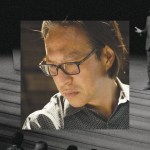
Ins Choi acting in Son of a Preacherman

Ins Choi in Son of a Preacherman.

Christianity Today April 9, 2025
Photography by Chelsey Stuyt

Would Jesus wear Birkenstocks, flip-flops, or Crocs if he were here today?

It’s a cool spring night in early April, and close to 120 of us are seated elbow to elbow in the basement of an Anglican church on a quiet residential corner in Vancouver, Canada. In the center of the space, standing on piles of Persian carpets, is a performer with salt-and-pepper hair, a band of musicians behind him.

The man continues singing a jazzy ditty: Would Jesus ban plastic bags? Would he be a fan of Jesus Christ Superstar? Would he look at the church and say, “What the?”

We laugh loudly and often as the performer asks his amusing questions: how Jesus would act and what he would say about us, the world, and the church. But the performer, Ins Choi, never laughs along—as if to underscore that these silly thought experiments are actually worthy of contemplation.

Most people are better acquainted with Choi’s art than with the artist himself. He’s the creator behind Kim’s Convenience, the hit play turned TV series on the life of a Korean immigrant family in Toronto, which won rave reviews as a “charming, understated family dramedy” with a “quietly revolutionary” approach to portraying Korean food culture on screen. Cast members have garnered best actor and actress accolades from the Canadian Screen Awards, with one actor (Simu Liu) going on to score the role of Shang-Chi in the Marvel universe.

But here, in the darkened confines of Pacific Theater, hosted by Holy Trinity, Vancouver, there is no caricature of the stereotypical Korean immigrant—speaking in broken English, working hard to save up money, insular in thinking—to serve as comedic relief. Instead, the 51-year-old actor-playwright lays bare his life experiences with aching vulnerability, albeit replete with self-deprecating and sometimes incongruous humor.

Few people are able to hold an audience’s attention span for 80 whole minutes. But Choi can, and with apparent ease. Most of Son of a Preacherman—a world premiere, running until April 13—is a monologue, backed up by a trio of talented musician-actors (Ben Elliot, Rachel Angco, and Haneul Yi). Alternating between song and spoken word, Choi weaves together the threads of his life story, including his family’s sojourn out of North Korea into the south and his supposed destiny—to be a preacher just like his father, grandfather, and cousins.

Throughout Son of a Preacherman, Choi breaks the fourth wall over and over again. We are intimately present as he wrestles with his artistic vocation, which he embarks on after a dream in which Jesus flicks him on the forehead (twice). We hear his plaintive cry of trust in God despite friends encouraging him to give up on his craft. When he tells the audience, “Thank you for coming,” before closing the show with a stirring, hopeful poem, we are collectively (and disappointingly!) jolted from our immersion in his world.

That God, Jesus, and church are mentioned repeatedly in the play without cringe or kitsch is a testament to Choi’s finesse. In life and art, he navigates the tensions between creative calling and cultural expectations, between devotion and self-expression.

Choi was born in South Korea in 1974. His family resettled in Scarborough, Ontario, and lived above their uncle’s grocery shop, where Choi would while away his time writing poetry and songs.

He grew up in Toronto Korean Bethel Church, an immigrant community, where his father’s effusive preaching style piqued his interest in the art of storytelling. Sticking pictures on the walls of the tiny storage-locker room that was his office, the pastor would pore over books, then write his sermons, rehearsing them out loud. At the pulpit, he mimicked different animal noises: a rooster, a cow, a sheep, a dog. “He would play the fool, a clown,” Choi said in an interview with CT.

God found the 15-year-old preacher’s son not in the pews of his father’s church but at a Korean youth group gathering in downtown Toronto, where Choi was sitting in the back with the cool skateboarders and hoping to meet girls. Choi had been to other events like this. But this time, when the speaker invited students to come to the front if they wanted to meet Jesus, something prompted him to go forward. He grabbed his skateboard, pretending he was going to go to the restroom. Instead, he walked down the center aisle, weeping and falling to his knees as a counselor prayed over him.

“It was quite an emotional, euphoric moment of experiencing the God I heard about,” the one whom his father and grandfather had dedicated their lives to, Choi said. “It was like a reunion.”

When Choi didn’t get into university, he attended Bible college, dropped out, then studied theater at Toronto’s York University. He struggled to land roles, frustrated by the one-dimensional bit parts regularly offered to actors of Asian descent. He began working as a part-time children’s pastor at his father’s church while spending long hours penning poetry and plays at the coffeehouse Tim Hortons.

He also began pursuing a master of theological studies from the evangelical Anglican Wycliffe College in Toronto. Marion Taylor, who taught Choi Old Testament, said that his time there helped the fledgling artist to integrate his gifts in drama and production with his faith.

Choi would seize the opportunity to “dramatize Scripture and make it his own in class,” she said. In one instance, Choi memorized parts of the opening chapters of the Book of Lamentations. As he was practicing his oration in a big hall at the college, a passerby who overheard his recitation thought someone was having a nervous breakdown. “He was just lamenting over the destruction and the blood [in the book],” Taylor said.

After seminary, Choi began writing a play about a Korean immigrant family running a convenience store in Toronto, based on the parable of the Prodigal Son. No one wanted it when he first shopped the script around theaters in Toronto, Choi tells us in Preacherman.

His breakthrough came in 2011 with a performance at the Toronto Fringe Festival. When the play ended, there was complete silence. Choi felt stricken by self-doubt; perhaps the audience had hated it. Then cheers and applause filled the space. Choi’s career took off; he went on to be the writer, cocreator, and executive producer for the TV adaptation.

Watching Kim’s Convenience, you might be able to tell its creator is a Christian. There are characters like Umma (Jean Yoon), a devout believer who always exhorts others to “praise the Jesus,” and pastor Nina Gomez (Amanda Brugel), the earnest, awkward leader of her rambunctious Korean flock. The characters are sweetly sincere and relatable in expressing their faith, which heightens the comedy when they reveal their flawed humanity. It’s like Appa (Paul Sun-Hyung Lee) says: “Every time you gossip, you make the baby Jesus cry.”

The show, which debuted in 2016, faced criticism in its later years, with the majority-Asian cast lamenting the production team’s lack of diversity and accusing them of creating racist storylines. After its fifth and final season, Choi walked away from the project, saying that he had “nothing more to give this.” Kim’s Convenience was eventually canceled in 2021.

Outside the TV series, Choi’s body of work mainly revolves around playwriting. He staged Songs, Stories, and Spoken Words in 2018 and Bad Parent in 2022, which details the ups and downs of new parenthood. (Much of the latter’s material was drawn from his experiences as a first-time dad.)

Now with Son of a Preacherman, Choi has returned to the stage—possibly the place where he feels most comfortable showcasing the intricacies of a baptized imagination, as C. S. Lewis puts it. Preacherman isn’t Choi’s first explicitly Christian work. There’s Subway Stations of the Cross, an hour-long solo show in which a homeless man brings an urgent message from God, and The KJV: The Bible Show, in which Choi shares his experiences with the translation.

It’s lonely being a writer, Choi told CT. The social aspects of theater—lunching together, working with designers and the director, and having a common goal—attracted him back to acting. “It’s such a public, communal experience. … I missed it a lot,” he said. “It was good for me to be in community—like church.”

Haneul Yi, a young Korean Canadian actor and musician, is part of Preacherman’s ensemble. One of his favorite songs in the show is “I Rejoice,” which speaks about the struggles Choi faced as a Korean Canadian artist: feeling overlooked and forgotten, perennially an outsider in the spaces he hoped to inhabit. It’s one of the few songs in the play directly addressed to God.

Yi said Choi told the cast that two identities define who he is: a follower of Jesus and an artist. “I can really see both in his life; it just shines in the words he says and the actions he takes,” Yi said.

In Preacherman, Choi explains how he contemplated following in his father’s and grandfather’s footsteps and becoming a preacher. It was a well-trodden path, one that felt safe and familiar. But he wrestled with, and eventually surrendered to, a stronger desire to act and write.

“When I’m on stage, when I’m acting, I feel like God is smiling on me,” Choi said in a 2021 interview. “I feel like he’s shining his light on me, because it’s what he created me to do.”

Choi’s creative work still reflects much of what a serious expounder of the Word does: probing and interrogating theology and praxis in a gritty, rubber-meets-the-road kind of way. In Preacherman, he incorporates a hilarious spiel on what the biblical prophets would say and do if they all got together: Who would be ostracized, and how would they react to the only one (Samuel) who got a sequel?

In Subway Stations of the Cross, he conveys the surprising grace of God in the guise of a social outcast through a poem: “God is calling for you / God is falling for you / It’s appalling how much God is falling for you.”

“I’m not a preacher,” he declares in Preacherman. “I never became a preacher.” But as a friend texted him after the preview in Toronto, “The irony is that you are preaching the gospel through your storytelling.”

“Serving your audience is also a ministry,” Choi told CT. “I feel like people go to a theater [and] all of a sudden they feel like they’re part of a group experiencing a show together. They laugh together, they gasp together, and so they feel less alone.”

Son of a Preacherman examines the tension between art and faith with unflinching honesty. Ultimately, Choi shows us that this tension is good, even necessary, shaping us into the people God made us to be. Artist and Christian can be one and the same.

Isabel Ong is the East Asia editor for Christianity Today.

Theology

How Christians Embrace Nihilism

Columnist

The church’s current temptation is a Christology empty of Jesus and a biblical authority void of the Word.

Jesus on the cross fading into shadow
Christianity Today April 9, 2025
Illustration by Christianity Today / Source Images: Unsplash

This piece was adapted from Russell Moore’s newsletter. Subscribe here.

“It turns out that when you mix narcissism and nihilism, you create an acid that corrodes every belief system it touches.” This is the assessment my friend David Brooks offers in the latest issue of The Atlantic about the state of a movement he once claimed for himself: American conservatism.

Brooks notes that despite the people-versus-elites messaging, virtually all of the national leaders he sees celebrating cruelty and vice are wealthy Ivy Leaguers. He dubs them “Vineyard Vines nihilists.” Brooks argues that this would be bad enough were it just a political matter, but the nihilism, he argues, has “eaten away at Christianity” too.

Many of these nihilists, Brooks writes, “ostentatiously identify as Christians but don’t talk about Jesus very much; they have crosses on their chest but Nietzsche in their heart—or, to be more precise, a high-school sophomore’s version of Nietzsche.”

“To Nietzsche, all of those Christian pieties about justice, peace, love, and civility are constraints that the weak erect to emasculate the strong,” Brooks continues. “In this view, Nietzscheanism is a morality for winners. It worships the pagan virtues: power, courage, glory, will, self-assertion,” as well as domination over “those sick sentimentalists who practice compassion.”

When it comes to Christianity, at least one thinker did see the embrace of nihilism coming—40 years ago.

In his 1986 book The Seduction of Christianity, French philosopher Jacques Ellul warned that a move of Christianity toward nihilism—literally, the belief in nothing—was already happening in recognizable stages.

Christianity moves toward nihilism, Ellul argued, when we see “the transforming of a living movement of relationship into an achieved and definite situation.” Ellul said that this kind of “freezing” of a relational religion into an artifact was anticipated by the New Testament itself. 

“This was the mistake of the disciples when they saw the transfiguration and proposed to set up the tents so that they could remain in the ineffable light in company with Moses and Elijah,” Ellul wrote. “It is the mistake of an attempt to solidify in an arrested comprehensive and explicable system that which is an unforeseeable movement toward some outcome.”

When I first read this passage many years ago, I disagreed with Ellul’s assessment. And in many ways, I still would.

At first glance, Ellul seems to be making the sharp distinction between “doctrine” and “experience” that was characteristic of much of 19th- and 20th-century Protestant liberalism. As a careful student of Karl Barth, Ellul would have known that an experiential Christianity shorn of an objective Word led to its own kind of nihilism—the “natural theology” that evolved into the Volk religion of German blood and soil that led, ultimately, to death camps.

And if what Ellul means by “freezing” is the transformation of the living, relational revelation of Christ into a commitment to a canonical, textual authority that stands outside of and over the person and the church, I would argue that this “freezing” isn’t the source of our present nihilism. If anything, it’s the exact opposite.

Many of those urging evangelicals to “get real”—and, thus, to get over the “losing” mentality of the Sermon on the Mount—speak loudly about the authority of the Bible but strangely say very little about the actual words of the Bible.

In fact, many of those most gleeful in empowering the kind of Nietzscheanism that Brooks describes are far more conversant with natural law than with the biblical text, with a “worldview” abstracted from the text rather than the actual text itself—with its narrative and poetry and calls to sacrifice as well as with its doctrinal systems and moral admonitions.

If I can think of one defining characteristic that I could have—and should have—seen coming, it would be those who love Christology but not Jesus, biblical authority but not the Bible, conservatism but not that which is to be conserved.

That, in fact, is the stage Ellul was most prophetic in seeing from afar—what he calls “dissociation.” He wrote, “It breaks the link between the Word and him who speaks it, between persona and proclamation (e.g., the fact that the word of Jesus is true only because it is he who speaks it).”

Ellul argued that this happens whenever there is, contra to the New Testament, the articulation of a “‘Christian’ morality that is independent of faith” and conversion. He wrote that the perennial temptation of the church is to take up an effort “to achieve objective conduct without reference to the spiritual life, without the knowledge of God in Jesus Christ.” In that sense, the old song is right: “There’s nothin’ cold as ashes / After the fire is gone.”

As Flannery O’Connor put it:

Our response to life is different if we have been taught only a definition of faith than it is if we have trembled with Abraham as he held the knife over Isaac. Both of these kinds of knowledge are necessary, but in the last four or five centuries we in the Church have over-emphasized the abstract and consequently impoverished our imagination and our capacity for prophetic insight.

Christianity is more than just “a personal relationship with Jesus.” That’s true. But it certainly cannot ever be less than that.

When people created to be in communion with God, through Christ, in a living communion, replace that with “the experience of the numinous” generically, they end up with a dead moralism.

But when they replace that living faith with a set of ever-narrowing doctrinal requirements or “worldview propositions,” they end up filling the need for vitality with what seems most alive at the moment. In our moment, that’s politics.

Politics comes ready-made with its own version of revival and lots of heretics to hunt and boundaries to police, all with the added bonus that one need not actually crucify the flesh and can actually celebrate the “utilitarian” purposes of what Jesus said led to death.

The American church has not yielded fully, or even (I think and pray) mostly, to nihilism. But as God warned Cain, it “is crouching at the door. Its desire is for you, but you must rule over it” (Gen. 4:7, ESV throughout).

The hour, though, is late. The tents are here on the mountaintop, but where’s Moses? Where’s Elijah? Where is the glory? To find that again, we must listen for the voice that once thundered from the cloud: “This is my beloved Son, with whom I am well pleased; listen to him” (Matt. 17:5).

A church that turns from nihilism will be disoriented—just as Peter, James, and John were when the voice spoke. But the end result will be the same: “And when they lifted up their eyes, they saw no one but Jesus only” (v. 8).

Many of our evangelical clichés have proven to be truer than we knew. “Jesus plus nothing equals everything,” the pulpit aphorism went. It’s true—Jesus plus nothing does equal everything. Jesus plus nihilism, though, is impossible. We must love the one and hate the other.

Russell Moore is the editor in chief at Christianity Today and leads its Public Theology Project.

News

Trinity Evangelical Divinity School Moving to Canada

The influential seminary, once called a “love gift to the worldwide church of Christ,” has long struggled financially.

A building on the Trinity Evangelical Divinity School's Chicago-area campus.
Christianity Today April 9, 2025
Trinity Evangelical Divinity School screengrab

A prominent but troubled evangelical seminary has agreed to be acquired by a Canadian university and move to British Columbia, the school’s leaders announced Tuesday.

The move comes after years of financial struggle and declining attendance at Trinity Evangelical Divinity School—known as TEDS—an Evangelical Free Church school whose alums have played an outsized role in shaping American evangelicalism.

Trinity will continue to hold classes at its Bannockburn, Illinois, campus north of Chicago during the 2025–2026 academic year but will move to the campus of Trinity Western University in Langley, British Columbia, in 2026. Current faculty will get a contract for the coming year, but it’s unclear how many will move to Canada in the future.

The school said current students will be able to complete their program through in-person and online options. Students who are US citizens will still be eligible for federal financial aid, though the school said details about scholarships for students have yet to be determined.

Along with moving, TEDS will part ways with Trinity International University, its parent nonprofit, which will continue to run online classes and operate a law school in Santa Ana, California. Trinity International President Kevin Kompelien said that given the challenges in higher education, the divinity school needed to ally itself with a larger institution.

“I believe a school like TEDS will thrive best and accomplish our mission most effectively as part of a larger theologically and missionally aligned evangelical Christian university,” Kompelien said in a statement.

Founded by Scandinavian immigrants, Trinity was born from a merger in the 1940s of the Chicago-based Swedish Bible Institute and the Minnesota-based Norwegian-Danish Bible Institute. Though affiliated with the Evangelical Free Church, a Minneapolis-based denomination with 1,600 churches, the school has long sought to influence the wider evangelical world. Longtime former dean Kenneth Kantzer, who led the school from 1960 to 1978 and helped it grow to national prominence, called TEDS “the Free Church’s love gift to the worldwide church of Christ.”

Among the school’s alumni are historian Randall Balmer, Sojourners founder Jim Wallis, New Testament scholars Scot McKnight and Craig Blomberg, disgraced evangelist Ravi Zacharias, Christian television host John Ankerberg, and Collin Hansen, editor-in-chief of The Gospel Coalition. Longtime professor Don Carson also was one of the founders of The Gospel Coalition, helping launch the so-called Young, Restless and Reformed movement that led to a Calvinist revival among evangelicals. Kantzer went on to be editor of Christianity Today magazine. The school is also home to a number of centers, including the Carl F. H. Henry Center for Theological Understanding, named for a prominent evangelical theologian.

But over the last decade, Trinity has fallen on hard times. In 2015, the divinity school had 1,182 students—the equivalent of 753 full-timers—making it one of the nation’s larger seminaries. By the fall of 2024, that had dropped to 813 students and 403 full-time equivalents. In 2023, the university shut down its on-campus programs, leaving it with too much property and not enough students. The university ran a $17.3 million deficit in 2023, according to its latest financial disclosure to the IRS, after shutting down its in-person undergraduate program. Trinity’s 2024 audit shows a $7.6 million deficit, with a similar deficit expected this year. A $19 million long-term loan is also coming due in 2026. 

The entire Trinity campus is currently under contract, and the school hopes to close on that sale in October. After the sale is complete, Trinity will lease back part of the campus for the rest of the academic year and use the proceeds to pay off the $19 million loan. About 100 students currently live on campus and their leases will become month to month for the upcoming academic year.

A university spokesman said many details of TWU’s acquisition of TEDS remain to be sorted out, such as what happens to the Henry Center and other centers at the school and how many professors will move to Canada. The two schools are doing due diligence in hopes of finalizing the acquisition by the end of 2025. 

Trinity Western will not take on any of TED’s financial obligations as part of the merger. The Canadian school’s president said the merger will lead to a “stronger combined future.”

“We are privileged to continue a longstanding legacy of evangelical scholarship and expand the impact of a global Christian education,” TWU President Todd F. Martin said in a statement. “We are driven by the same heartbeat for the gospel, and together, we can do even more to serve the Church and societies worldwide.”

Historian Joey Cochran, a TEDS alum, said news of the move to Canada is another sign that evangelicalism in the Midwest is on the decline. Institutions like TEDS, he said, once helped shaped the movement, but now most of the power has shifted to the South, he said, pointing out that Baptist seminaries in the South dominate theological education, with nearly 20,000 students enrolled in the six seminaries run by the Southern Baptist Convention or at Liberty University. That’s more than a quarter of the 74,000 seminary students in the US, according to data from the Association of Theological Schools, which includes Protestant, Roman Catholic, Orthodox and Jewish graduate schools of theology.

“We are seeing, in real time, the Southern-ification of evangelicalism,” said Cochran.

Mike Woodruff, pastor of Christ Church, a multisite evangelical church based in Lake Forest, Illinois, not far from the TEDS campus, said news of the move and merger is sad but not unexpected.

“Most graduate schools in theology are struggling,” he said. “It’s just a very different world.” 

Woodruff said his church had hired grads from TEDS in the pasts and that professors from TEDS have taught in the church’s programs. The school’s presence will be missed, he said. 

“It’s a loss,” he said. 

Mark Labberton, former president of Fuller Theological Seminary in Pasadena, California, said Trinity, like many seminaries, including Fuller, has faced serious headlines in recent years, like nearly all institutions of higher learning. While the school had outsized influence, it was tied to a smaller denomination, so had fewer resources to draw on. And while many TEDS graduates were known for their ability to innovate and influence, the school itself was less so.

“It would be known for faithfulness but not creativity alongside faithfulness,” said Labberton.

Ed Stetzer, dean of the Talbot School of Theology at Biola University, said TEDS was often referred to as the “Queen of the Seminaries” and was well respected for its influence in theological education. News of the move and the school’s troubles is unsettling, he said.

“It’s a jarring moment in theological education, and a sign of the times,” he said. “Seminary education is in trouble—and more closures and mergers are coming, unless seminaries and churches find new and innovative ways to partner.”

David Dockery, a former Trinity International University president who now leads Southwestern Baptist Theological Seminary in Fort Worth, Texas, said he has hope for the future of TEDS. The school has reinvented itself before, moving from Minneapolis to downtown Chicago and later to the Chicago suburbs.

“This in many ways will be Trinity 4.0,” he said. “It now has an opportunity for a new and next phase, and I pray God’s blessings upon them as they make this important transition.”

Ideas

O Death, Where Is Your Pod?

A controversial Swiss device advertises a quick and painless death. The cross shows us another way.

Half of a suicide pod over a coffin
Christianity Today April 9, 2025
Illustration by Christianity Today / Source Images: Getty, AP

Millions of people travel to Switzerland each year in pursuit of its natural beauty, hiking, and skiing in the Alps. But increasingly, visitors are arriving as “suicide tourists” seeking to control their own deaths. According to Kalima Carrigan, professor at the University of Amsterdam, suicide tourism is “travelling to Switzerland for an assisted death … a ‘one-of-a-kind’ event which may be more appropriately characterised as a limit case of medical tourism.”

Several other European countries, such as Austria, Belgium, Luxembourg, the Netherlands, and Spain, permit physician-assisted suicide, but in other European countries assisted suicide is illegal and sometimes punishable by prison time. British lawmakers and citizens are actively debating assisted-dying legislation making its way through Parliament.

Across the pond, Ecuador recently legalized euthanasia; Colombia had already legalized assisted dying. Canada, ten US states, and Washington, DC, also permit physician-assisted death.

While Western countries are increasingly legalizing assisted dying, individuals—often accompanied by family and friends—still travel to other countries in order to end their lives. (Though Canada has deemed physician-assisted suicide to be legal, United States citizens cannot travel there as suicide tourists.)

One company, Exit International, faces questions surrounding its 3D-printed Sarco suicide pod, which has been called the “Tesla of euthanasia.” It allegedly enables an individual to commit suicide without the help of a physician or anyone else. According to the device’s creators, the Sarco 3.0 ensures “a peaceful and reliable death to the user inside.”

As a technology scholar, I see disturbing patterns around these conversations. The language of “suicide tourism” reveals our desire to bring death under our control and convenience. Uncomfortable though it may be, the differences between controlling one’s vacation and controlling one’s death are not as vast as we might think. The devices that we use for the perfect vacation habituate us to desire devices for the perfect death.

The designers of this device use words such as elegance, portability, and speed as unique selling features. This device may not stay confined to Switzerland; its creators have promised to make it available elsewhere—like the United Kingdom—as soon as legislation permits.

These 3D-printed pods come with many different features. The sleek design evokes the adventures of space or sea travel. Portability allows these pods to be used anywhere—at a beach, in a forest, or in the mountains, where the clear hood allows the viewer to take in the surroundings. A detachable coffin makes for convenient cleanup and disposal. According to the founders, in 60 seconds, the Sarco 3.0 replaces oxygen with nitrogen so that the person in the pod reliably dies.

Perhaps the most novel feature of this new device is that it requires no specialized skills or assistance: The user can just push a button and go. While not available yet, future iterations of the device will allow users to activate it with voice control or eye movement. The user-directed features of the Sarco 3.0 are significant since many nations have laws against aiding and abetting suicide.

Two philosophers of technology—Jacques Ellul and Albert Borgmann—can help us make sense of things like suicide pods and suicide tourism.  

Jacques Ellul, a Christian sociologist and philosopher, authored the influential book The Technological Society in 1954. In this book, Ellul developed the concept of la technique,or in English simply technique. Technique, according to Ellul, is aimed at maximum efficiency and optimization: “Technique is the totality of methods rationally arrived at and having absolute efficiency (for a given stage of development) in every field of human activity.” Technique is the “one best way” to do something.

Technique encroaches on every field of human activity: education, parenting, manufacturing, and countless other fields. Education seeks a technique for the one best way to teach students how to perform math problems. Parents desire a technique for the one best way to quell tantrums. Manufacturing pursues the one best way to produce parts in a factory.

The search for the one best way and for total optimization also finds its way into the world of tourism. Cruise lines and Disney vacations promise absolute vacation efficiency so people can squeeze the most out of their limited time away. Every inconvenience and interruption has been removed so participants can have a reliably good time on vacation. All the diversions and detours have been avoided for maximum efficiency. Though it may not go by the language of technique, tourism often seeks easy and reliable ways for people to have the best vacations.

The same is true for medical tourism. People travel to other places for the best, cheapest, or most efficient medical operations. For example, around 1.5 million people travel to Turkey each year as medical tourists—including so many Americans that the US Embassy and Consulates has offered guidance on how to go about doing it.

The forces behind tourism and medical tourism have spilled over into suicide tourism. The endless pursuit for the one best way tries to tame something as wild and uncontrollable as dying. A technological society that desires total optimization will inevitably create something like suicide pods. A world of technique will inevitably seek an efficient methodology for death.

The makers of the Sarco pod describe on their website other obvious methods available to commit suicide yet present their device as the pinnacle of efficiency, control, and reliability. As Exit International puts it, “Death is a voyage of sorts … Sarco makes it an event to remember?” (One might almost think they’re selling cruises.)

While Ellul helps us see how technological societies seek absolute efficiency and optimization, Albert Borgmann reveals our obsession with ease and convenience. Like Ellul, Borgmann was a philosopher of technology and was also deeply influenced by the Christian faith.

According to Borgmann’s “device paradigm,” technology has so stamped contemporary life with its peculiar pattern that it now characterizes and influences all facets of life. Technology is the characteristic way in which the world is taken up today. For example, death, dying, and technology form a triptych at life’s end. Seldom does a person now die without tubes and cords attached to the body.

Devices not only surround us but also form us. They dictate our values, morals, expectations, and experiences. According to Borgmann, devices are attractive because they are quick, easy, foolproof, and safe. Using devices like smartphones or smartwatches makes little demand on our skills, efforts, or abilities. There is no training needed to operate them. Furthermore, they offer uniformity and consistency—they work the exact same way every time.  

But death is not a device. It is not easy or safe. It demands skills and abilities such as patience, endurance, faith, and trust. Death is never uniform or consistent, nor is it ultimately under our control (Job 14:5). However, a device like the Sarco 3.0 brings ease and consistency to dying. Suicide pods make no demand on our skills and abilities beyond merely getting in and pushing a button. The devices that fill our pockets and accompany us on our vacations furtively form us to think that death should be just as easy, safe, and consistent.

The Christian tradition has much to say about death and dying, including about the tools and technologies that surround them. Starting in the Middle Ages, Christians have talked about the Arma Christi,or the “weapons of Christ.” These are the instruments used in the Passion, such as the cross, the crown of thorns, and the nails.

The Arma Christi also includes more peripheral items, such as the sponge that was offered to Jesus on the cross and the lance that pierced his side. It is easy to lose sight of the fact that these are all manifestations of technology. The cross was a violent technology of the Roman Empire. Crowns, nails, sponges, and lances were all tools and technologies of the time.

There was nothing elegant or speedy about the Passion. The death of Jesus was neither safe nor easy. This messy, violent, and horrific death has transformed our relationship with life, death, and dying. Yet the resurrection of Jesus enables us to see tools and technologies, life and death in a new light and with new hope.

A world of technological devices and suicide pods needs a radically different message: “For I resolved to know nothing while I was with you except Jesus Christ and him crucified” (1 Cor. 2:2). While designers and engineers, legislators and marketers hope for elegant, portable, and speedy ways to die, the Christian tradition hopes in something radically different in the cross of Christ and the empty tomb.

As Wendell Berry puts it in his novel Hannah Coulter, “It is this body of our suffering that Christ was born into, to suffer it Himself and to fill it with light, so that beyond the suffering we can imagine Easter morning and the peace of God.” It is in these wild and mysterious places, suffering and death, that we find an even more radical hope: victory over death and eternal life.

A. Trevor Sutton is a pastor, author, speaker, and professor. He is the author of several books, including Redeeming Technology: A Christian Approach to Healthy Digital Habits.

News

Uncovering Good Reporting amid Troubled Times for Journalists

Zenger Prize winners showcase the courage and empathy needed for sound truth-telling.

A hand writing being uncovered from black paint
Christianity Today April 9, 2025
Illustration by Mallory Rentsch Tlapek / Source Images: Getty, WikiMedia Commons

A 2019 novel by Jason Liegois, The Holy Fool: A Journalist’s Revolt, equates reporters with the holy fools of Russian literature, those who spoke truths that normal people could not or would not say. Most Americans are not so charitable: A Gallup survey last month showed seven in ten people had zero or little trust in mass media to report news “fully, accurately, and fairly.” 

Good polling data on evangelical views of journalism is hard to find, but a survey last year by George Mason University and The Washington Post showed that only 13 percent of self-defined “white evangelical Protestants” in six swing states trusted journalists to be fair reporting on politics. The rest did not.

Yet those who lambast journalists generally miss out on some excellent, even courageous, stories. One example: Last month, The Bulletin, a Christianity Today podcast, featured an interview I did with Caitlin Dickerson of The Atlantic. To report and write her article “Seventy Miles in Hell,” published last August, she walked—as tens of thousands of would-be US immigrants have done—through the Darien Gap jungle in Panama.

Dickerson showed the trip’s dangers: “Looking down at a thrashing river, I held on to ropes that made it safer—slightly—to creep across sheer rock faces behind parents with crying babies strapped to their chests.” Like the migrants, she had to make it past jaguars and vipers and survive by “exceeding what I would have thought physically possible.”

Amid the hardship, Dickerson also recorded examples of empathy: “We came upon a fallen tree trunk covered in wet moss that we would have to cross like a balance beam above a racing river.” A little girl was “unsure of what to do,” so a teenaged boy not related to her “reached over, wrapped an arm around her belly, and carried her across.” 
That’s one example of courageous, ground-level reporting, and today the Christian foundation Zenger House is announcing its fourth annual Zenger Prizes for thoroughly researched journalism that conveys a biblical understanding, whether or not the writers are Christians.

The name comes from John Peter Zenger, a brave 1730s Christian newspaper editor who told the truth about a corrupt New York royal governor. He went to prison for eight months during a time when laws defined journalism as public relations that should make government or church leaders look good.

Today’s 12 Zenger Prize recipients include Dickerson as well as Jason DeParle, for his November 24 New York Times article headlined “At Bible Study for the Homeless, a Search for Meaning.” (That piece and all the other winning articles since 2022 can be accessed at the Zenger Prize landing page.) The Times rarely runs a story about daily Bible studies, but DeParle described vividly and positively the Lamb Center in Fairfax, Virginia, which has been a sanctuary for the homeless for more than three decades.

Harvest Prude of Christianity Today is another Zenger Prize winner for her September 2024 article “The Christians Trying to Restore Our Faith in Elections.” Prude profiled officials and volunteer poll watchers who face criticism, threats, and even demonization. She describes one: “Christine Johnson is the type of American who kisses her ballot and thanks God whenever she votes.”

Zak Keefer is a Zenger winner for “I lied about everything,” his story last July in The Athletic about NFL player Grant Stuard, who hid his parents’ trauma and became the caretaker for his siblings, sometimes at age 11 driving them to school. Stuard eventually professed faith in Christ, transformed his own life, became an NFL linebacker, and helped his family recover and his mother to become sober.

Liz Essley Whyte won for her August 7, 2024, Wall Street Journal story, “Doctors Can Now Save Very Premature Babies. Most Hospitals Don’t Try. “Medical advances have increased survival rates for babies born during the 22nd week of pregnancy. At some hospitals, two-thirds stay alive. Many hospitals, though, either lack the capability or choose not to resuscitate due to high costs, disability risks, and pessimism about treatment.

Wednesday’s announcement lists Zenger winners who reported on Hurricane Helene, US-Mexico border issues, a Trump rally, and social workers in India who saved the lives of baby girls. Other writers described how doctors and volunteers tried to rescue 370 children in a Sudan orphanage and how a retired professor taught 400 Afghan women to drive.

The complete list of this year’s winners, with links to their winning writing, is at zengerhouse.com, which also features winners from the previous three years and their articles: Past winners include five CT writers: Emily Belz, Kara Bettis Carvalho, Angela Lu Fulton, Sophia Lee, and Andy Olsen. The Zenger House website includes a 13-minute video with highlights of interviews of eleven of this year’s prize winners.

The 12th winner this year is posthumous: Marshall Allen, who died last year of a heart attack at age 52, is receiving a prize not for a particular article but for years of investigating overcharges by hospitals. Allen’s work culminated in his 2021 book Never Pay the First Bill: And Other Ways to Fight the Health Care System.

Allen, once a missionary in Kenya, described in The New York Times in 2018 his “natural progression from the ministry to muckraking. … Both are valid ways of serving a higher cause. The Bible endorses telling the truth.”

Marvin Olasky, CT’s executive editor for news and global, chairs the Zenger House board and is one of five judges. He recuses himself from voting on CT writing.

News

An Old Idea Is New Again in Europe: Spiritual Formation

Evangelicals across the continent are experimenting with discipleship.

Blurry people walk past a church in Potsdam, Germany

People walk past a recently restored church in Potsdam, Germany.

Christianity Today April 9, 2025
Christoph Soeder/picture alliance via Getty Images

How do you transform European hearts? 

It’s one thing to tell people about Jesus. It’s another to get them to change the way they live and help them develop the kind of daily practices that, as the late American philosopher Dallas Willard once wrote, “actually lead to the transformation of life.”

That thought drove Michael Stewart Robb, a Munich-based American theologian who wrote a book on Willard, to found the Sanctus Institute in 2017. He wanted something—an infrastructure, an organization—to teach Christians to foster the day-to-day disciplines and practices that shape people spiritually. Today the institute brings together ministers and ministries with an interest in spiritual formation from across the continent. 

Evangelicals in other parts of Europe have started exploring and rediscovering ways of connecting with God too. From Methodist band meetings in Bulgaria to urban monks in Paris and Berlin and spiritual retreats in Portugal, missionaries, pastors, and everyday Christians are looking for ways to not only pursue converts but also help people conform to the image of Christ. 

According to Willard, who died in 2013, American evangelicals started feeling a pressing need to emphasize discipleship after World War II. Many ministers and Christian leaders felt the Sunday sermon alone, or even the Sunday sermon plus a midweek Bible study, didn’t provide people enough sustenance to really live like Christians. Churches had put too much emphasis on head knowledge and belief, not enough on formation.

Today, ideas about the importance of discipleship are widespread in the United States, Robb said. Americans can easily find books—including titles by Willard and a range of writers including Richard Foster, Henri Nouwen, Richard Rohr, Elizabeth Oldfield, Ruth Haley Barton, Barbara Peacock, Diane Leclerc, James Wilhoit, John Mark Comer, and many others—as well as retreats and seminars on the topic. Many seminaries teach spiritual direction and offer specialization in spiritual formation. 

“You can’t run a seminary in North America unless you say you do spiritual formation. It’s part of the package,” Robb said. “In Europe, you don’t really see that.”

Robb said Protestant seminaries in Europe still offer theological education as it was conceived by Friedrich Schleiermacher, known as the “father of liberal theology.” You study biblical theology, systematic theology, and practical theology. Spiritual life and individual piety never really come up. If class discussion does turn to the idea of application, professors will most likely cover issues of social or political action. 

So church leaders, including those in evangelical or Pietist traditions, often have no training in spiritual formation. But that has started to change. A growing number of educational programs in Europe help Christians—both leadership and laity—go deeper in their spiritual lives. 

The European Nazarene College in the central German town of Gelnhausen, for example, offers a certificate in spiritual formation. Several organizations in the UK provide formation retreats and training in spiritual direction as well.

The growth of interest in spiritual disciplines, practices, and habits among Christians, Robb said, results from a new openness to ideas about personal transformation.

“People are curious and searching, sometimes quite radically, for something that helps them deal with life,” he said. 

Younger generations seem both dissatisfied with the lack of spiritual formation in the churches they were raised in, Robb said, and attracted to historic Christian practices that could help them find meaning and peace amid the strain of daily life. 

In Bulgaria, Global Methodist Church pastor Daniel Topalski has resurrected an old Wesleyan discipleship practice called “band meetings” or classes. These are similar to small groups but place emphasis on confessing failures, monitoring spiritual progress, and supporting each other in the effort to live a holy life.

“These classes provide meaningful forms and structures to develop a mature Christian personality,” Topalski said. “They are about making sanctification a daily business.”

Topalski was inspired by Methodist history. As the pastor of a 100-person congregation in Varna, a city on the country’s Black Sea coast, and presiding elder for the Bulgaria Annual Conference, he’s been thinking since 2011 about the best way to cultivate what he calls “Methodist DNA.” Topalski latched on to the 18th-century practice of having band meetings, which were made up of small groups of about five people who would confess their sins to each other and talk about where they saw the Holy Spirit working in their lives.

Reintroducing the concept to his congregation, Topalski emphasized that the meetings weren’t about information but transformation. 

“Christianity isn’t just theory,” he said. “It’s about the state of our souls.” 

Slowly but surely, people signed up. He organized four bands, each with fewer than a dozen people, and trained four leaders to lead them. They meet after worship on Sundays and help each other “go further,” Topalski said. 

In Paris, Americans Paul and Jordan Prins are looking back to a different period of Christian history to recover practices of spiritual formation. They’ve adapted the Rule of Saint Benedict, established for a monastery in Italy in the 6th century, to help them live more like monks in a modern European metropolis. 

When the Prins landed in Paris in 2016, they went through a difficult period trying to plant a church in one of Europe’s densest urban environments, the third arrondissement, where more than 32,000 people live in less than half a square mile on the right bank of the river Seine. As they struggled, they wondered what it meant to live as Christians in this context. They talked about being more intentional about spiritual practices and started experimenting with fasting and contemplative prayer.

Now the couple is part of a network of Christians exploring similar spiritual formation efforts in urban environments in Germany as well as in the UK, Ireland, Sweden, and Italy. The Urban Monastics, as they call themselves, try to combine ancient spiritual practices with everyday, mundane acts of grace and goodness, including basic hospitality. 

“Our motto is to be present with God and present with others,” said Paul, who has a degree from Bethel Seminary near Minneapolis. “It’s a way of life that says Christianity is about more than salvation, but experiencing that God is present in the city.”

The Prins lean on traditionally Catholic forms of spiritual practice more than other evangelicals do, but they’re not the only Americans in Europe who have felt the need to emphasize formation. 

Benjamin Seidl, the European regional director of the Florida-based mission-sending agency New International, said life in a cross-cultural context raised critical questions about the spiritual formation of missionaries. 

“We spent years assessing the overall spiritual health of our organization,” Seidl said, “and we realized we needed more to help our missionaries rediscover what it means to be formed in light of the gospel in a cross-cultural context.” 

The leaders of New International, though, didn’t have immediate clarity on which practices would help with formation. Should they require missionaries in eight European countries to practice morning devotions? Small groups? Contemplative prayer? Fasting?

“We asked ourselves, Do we even know what spiritual formation is?” Seidl said. “It’s such a diverse and diffuse thing. There’s no clear direction for how it should be done for people who live this weird, mysterious, beautiful, and sometimes chaotic European life.”

New International is still in the process of answering that question, but the organization has started doing regular retreats, setting apart dedicated time for missionaries to focus on their own spiritual lives. When Seidl spoke with CT, his wife, Jasmin Seidl, was attending a “soul-care retreat” in Portugal with New International missionaries. 

Jasmin said the retreat incorporated spiritual formation by way of guided reconnection to God, self, and others. “This was done by quiet times of rest and self-reflection, guided prayer, lectio divina, meditation, and the exchange of personal insights in a group setting,” she said. 

The retreat also included an entire day of silence and solitude. Other initiatives New International is exploring include mental health support and counseling. 

Not everyone fully agrees with the new emphasis on spiritual formation, however. In the Czech Republic, confessional Lutheran pastor Ondřej Stroka and his wife, Kimberly, expressed some skepticism. 

For years, they said, their church in the northeastern part of the country had all kinds of programs, such as Bible studies and prayer groups, to help people grow deeper in their faith.

“People were just used to doing these things and not giving any thought to the reason why,” Kimberly said.

While the Strokas welcome rediscovering ancient liturgy or biblical habits, they’re not sure these efforts brought the benefit they were supposed to. Spiritual practices became social obligations. Many gatherings became formulaic and rigid. Sometimes they seemed burdensome—introducing a kind of legalism into the community that contradicted the things the Strokas said they believed.

“We preach the gospel, Christ crucified,” Ondřej said. “We don’t want people to get the impression that if you don’t go to events that God will punish you.”

Back in Munich at the Sanctus Institute, Robb has been thinking about the meaning of gospel too. For him, the big concern is not that people add too many requirements but that the idea can get a bit thin. 

“The orthodox evangelical understanding,” he said, “is something more than mere conversion. It’s about moral formation and dying to self.”

Intellectual assent to the message of Christ can’t be the end of things, in Robb’s view. It should catalyze discipleship and formation. Christians and congregations can develop practices that bring powerful change. 

“The work of the Spirit will be working through what the individual is doing and what the congregation is going to be doing,” Robb said. “Obviously that has an effect on the kinds of churches that you can have on the continent and the kinds of transformation you will or won’t see.”

Spiritual formation can change European hearts, he believes. And that could change Europe.

News

Teacher Who Was Angry About Abortion Pleads Guilty to Attempted Assassination

The substitute teacher believed his death would be meaningful if he killed Brett Kavanaugh.

Nicolas Roske in a Maryland police station confessing to the attempted assassination of Supreme Court Justice Brett Kavanaugh.

Nicholas Roske turned himself in to Maryland police and confessed his plans to try to assassination a Supreme Court justice.

Christianity Today April 8, 2025
U.S. District Court for the District of Maryland

A 29-year-old man pleaded guilty on Tuesday to attempting to assassinate Supreme Court Justice Brett Kavanaugh in 2022. 

Nicholas John Roske, a substitute teacher who was raised in a nondenominational evangelical church in Los Angeles, California, traveled across the country with a 9 mm Glock, two magazines of ammunition, a tactical vest, a knife, a face mask, pepper spray, zip ties, and tools to break in to the Kavanaugh home in Chevy Chase, Maryland. 

Roske texted his younger sister he loved her before going through with his plans, though, and she convinced him to call 911 instead. He was arrested around 2 a.m. on June 8, 2022.

“I’ve been mentally ill basically as long as I’ve been an adult,” Roske told the arresting officer. “And I’ve been wanting to have a sense of purpose for a long time.”

Roske said he was angered by news the Supreme Court was going to overturn Roe v. Wade and allow states to regulate abortion. He read about the draft of the Dobbs v. Jackson Women’s Health Organization decision that was leaked online in May 2022 and started making a plan. 

“What was your plan?” a detective asked him.

“Break in, shoot him, and then shoot myself,” Roske said.

Roske told police he thought abortion was a civil rights issue.

“I was under the delusion that I could make the world a better place by killing him,” he said.

According to the transcript of Roske’s confession, Roske also said he was angry the Supreme Court might loosen restrictions on purchasing guns, making it easier for people like him to acquire weapons. He was able to buy a pistol from a California gun store even though California has some of the strictest gun laws in the country and Roske had been deemed a threat to himself or others and placed in involuntary psychiatric care three times as an adult.

Roske thought about suicide a lot and made multiple plans to end his life, including once planning to drive off a cliff, he told police.

In 2022, he was planning to die again but thought his suicide should somehow be meaningful. He researched the possibility of killing someone convicted of sexually abusing children, but he ultimately rejected the idea and turned to plans to assassinate Kavanaugh.

The Los Angeles Times reported that Roske was homeschooled until around age 13 and attended Shepherd’s Community Church, a nondenominational church that has since relocated, merged with another congregation, and become part of the Evangelical Free Church of America. 

Roske was part of the youth group and memorized Bible verses with Awana, a classmate said. 

It is unclear when Roske began to be angered by conservatives on the Supreme Court. After graduating from a public high school, he studied philosophy at Cal State Northridge, about 10 miles from his parents’ home in Simi Valley. He worked for a while as an office manager at a pest control company before becoming a substitute teacher. He told police he had only a few friends and hadn’t spoken to any of them recently.

Roske lived with his parents but described his relationship with them as “strained.” When he registered to vote in California in 2022, he did not affiliate with any of the six political parties in the state. Roske told police he did not consume a lot of news but followed the stories about mass shootings in Buffalo, New York, and Uvalde, Texas, and the Supreme Court battle over abortion rights. 

News of the draft of a Supreme Court decision overturning Roe v. Wade prompted a wave of violence in 2022 and 2023. More than 50 pro-life pregnancy clinics across the US reported vandalism, including broken windows and graffiti with threatening messages. Six clinics were set on fire.

In 2023, a graduate student from New Mexico pleaded guilty to firebombing a pro-life organization’s headquarters in Wisconsin. In 2024, three activists pleaded guilty to spray-painting “If abortions aren’t safe than [neither] are you,” “YOUR TIME IS UP!!,” and other messages on the walls of a pregnancy center in Florida. 

Roske said he spent a month planning to kill Kavanaugh, buying equipment online, visiting a local gun store, practicing shooting at local range, and searching “assassin skills” on Google.

But he told police that when he saw security outside Kavanaugh’s home, he realized he hadn’t actually planned very well.

“I hadn’t thought that far ahead,” he said. “It just hit me that, like, this isn’t just something in my head. This is real.”

President Joe Biden signed a law giving Supreme Court justices around-the-clock protection by the US Marshals a few days later.

Roske’s sentencing is scheduled for October. He faces a maximum possible sentence of life in prison.

Books

Nominate a Book for the 2025 Christianity Today Book Awards

Instructions for authors and publishers.

Christianity Today April 8, 2025
Pixabay, Pexels / Edits by CT

Dear publishers and authors,

Each year, Christianity Today honors a set of outstanding books encompassing a variety of subjects and genres. The CT Book Awards will be announced in December at christianitytoday.com. They also will be featured in the January/February 2026 issue of CT and promoted in several CT newsletters. In addition, publishers will have the opportunity to participate in a promotion organized by CT’s marketing team.

Here are this year’s award categories:

1. Apologetics/Evangelism

2a. Biblical Studies

2b. Bible and Devotional

3a. Children

3b. Young Adults

4. Christian Living / Spiritual Formation

5. The Church / Pastoral Leadership

6. Culture, Poetry, and the Arts

7. Fiction

8. History/Biography

9. Marriage, Family, and Singleness

10. Missions / The Global Church

11. Politics and Public Life

12a. Theology (Popular)

12b. Theology (Academic)

In addition, CT will be naming a Book of the Year, chosen from the entire pool of nominees by a panel of CT editors.

Nominations

To be eligible for nomination, a book must be published between November 1, 2024, and October 31, 2025. We are looking for scholarly and popular-level works and everything in between. A diverse panel of scholars, pastors, and other informed readers will evaluate the books.

Authors and publishers can nominate as many books as they wish, and each nominee can be submitted in multiple categories. For larger publishers (those with 50 or more employees), there is a $40 entry fee for each nomination (defined as each title submitted in each category). For smaller publishers (those with fewer than 50 employees), the entry fee is $20 per nomination. And for self-published authors, the entry fee is $10 per nomination.

To enter your nominations, click here to access the submission form (which will require logging into a Google account). You will be asked to include contact information, the title and categories for each nominee, PDF attachments, and an estimate of the resulting nomination fees, based on the payment scale mentioned above. We will verify these totals and begin sending payment invoices in early June.

Finalist books

If your book is chosen as one of the four finalists in any category, we will contact you and ask that you send a copy of the book directly to each judge assigned to that category. We will provide mailing addresses for each judge.

Deadline

The deadline for submitting nominations is Thursday, July 3, 2025.

Questions about any aspect of the process? Email us at bookawards@christianitytoday.com.

Thank you!

Christianity Today editors

Ideas

Institutions Don’t Maintain Themselves

The church and other institutions that give our lives shape require our commitment, our forgiveness, and our work.

A collage of an institutional building held up by people instead of columns.
Christianity Today April 8, 2025
Illustration by Elizabeth Kaye / Source Images: Getty

Of the church, Dietrich Bonhoeffer says, we should come to expect everything and nothing: everything because it is Christ’s body on earth and nothing because, even so, it is composed of broken, sinful people. 

For all that brokenness, the church is the institutional context in which we come to understand God, ourselves, and the world. But it is not the only institution that shapes us—we are shaped too by marriage, family, our local communities, state and national citizenships, schools, professions, summer camps, athletics, and more. By the same token, the church is not the only institution that disappoints us.

At their best, all these institutions can have lasting, meaningful influence on their members. They can call us to a higher standard of character and orient our lives. But the flip side of that kind of investment is that when things go wrong, the fallout can be immense. 

The United States (and the West more broadly) is undergoing a long crisis of confidence in almost all our institutions. For many this includes the church, but it also goes much further. Revelations of sexual abuse by Roman Catholic clergy were shocking decades ago, but now it seems there’s always some major institution in the midst of some horrible scandal. 

The result is a vicious cycle: We spot decay in our institutions and so lose faith in them. Once we lose faith, we become less interested in reform and renewal.  Decay further proliferates. Now we’re at a nadir of institutional trust, and the higher our hopes for an institution, the worse the disappointment when they’re not met.

Looking beyond church and state, maybe the most conspicuous example of this cycle is the precipitous decline in marriage and birth rates across the developed world. After all, many reason, why chance the calamity of a broken home if you don’t begin with the conviction that family is an institution worth the risk? The rise in family estrangement—of  adults going “no contact” with their parents rather than working through mild and mundane offenses—is a related phenomenon.

Jesus told Peter to forgive the brother or sister who sins against him “not seven times, but seventy-seven times” (Matt. 18:21–22). I’ve come to think Christians have some obligation of forgiveness to our institutions, too—some duty of love and sacrifice to preserve and repair these rightfully time-honored ways of organizing and shaping our lives.

Of course, this is easier said than done, as I’ve learned firsthand with my alma mater, Wheaton College, which provided simultaneously the most edifying and disappointing experience of my life. 

After transferring to Wheaton from Seattle University at the end of freshman year, I first knew I was in for a culture shock during a get-to-know-you activity in introductory art-survey class. In the style of the poem “Where Im From,” my classmates began offering paeans to their places of origin. Some common themes quickly emerged: corn fields, private Christian schools, youth groups, and the wry, mildly self-deprecating humor characteristic of Midwestern evangelicals. 

I didn’t hear anything that remotely resonated with my own upbringing in secular Seattle. But then, I’d come to Wheaton under different circumstances than most.

For many students, Christian college is the capstone of a childhood centered on spiritual formation. It’s where you go to finish years of initiation into American Christianity. But for me, it was a place to start. I’d come to real faith in young adulthood through spiritual crisis at the conclusion of a long series of painful events. That was how, at the end of my first quarter of college in Seattle—spiraling, unable to save myself, desperate for a change—Wheaton seemed like just the institution I needed. 

I don’t regret that choice, but Wheaton could not and did not meet my hopes. The transfer proved to be a difficult adjustment. Yet now, when asked where I’m from, I say that even though I lived in Seattle for 19 years, 4 years was enough to make me identify with Wheaton, Illinois. 

Wheaton as an institution challenged and even disappointed me. It was often socially alienating and particularist. Yet it also made me who I am today, and for that I have a deep sense of gratitude—and duty. I love Wheaton, and learning to love Wheaton taught me to better love the church and all the other thick institutions that, while never perfect, give life meaning from generation to generation. It taught me how to commit.
Becoming part of the church universal requires that commitment. This may not always mean staying in the same local congregations, but it does mean loving institutions that will disappoint us and being vulnerable with people as broken as ourselves. The faults of these institutions are real and often serious, sometimes so serious that we are justified in losing trust, maybe even in leaving or shutting the whole thing down. 

Yet more often, I think, faults are reparable, and we must repair them if we want to have a society that can be called humane. Where did we ever get the idea that these institutions would somehow maintain themselves? That they would always be there for us, meeting all our hopes, in perfect working order, without repair or forgiveness from us?

The church is unique in its indispensability, but it is not alone among valuable institutions full of broken, sinful people. We must learn to expect institutions to disappoint us without losing appreciation for what they do achieve. Institutions—especially those that facilitate our worship, sanctification, and education—are worth the striving, the hardship, even sometimes the pain. The reality is that when we fail to forgive and to maintain the good institutions that shaped us, we suffer—we are suffering now. It is commitment to these flawed yet essential institutions that makes communal life possible.

James Diddams is the managing editor of Providence: A Journal of Christianity & American Foreign Policy. His website is jamesdiddams.org.

Apple PodcastsDown ArrowDown ArrowDown Arrowarrow_left_altLeft ArrowLeft ArrowRight ArrowRight ArrowRight Arrowarrow_up_altUp ArrowUp ArrowAvailable at Amazoncaret-downCloseCloseEmailEmailExpandExpandExternalExternalFacebookfacebook-squareGiftGiftGooglegoogleGoogle KeephamburgerInstagraminstagram-squareLinkLinklinkedin-squareListenListenListenChristianity TodayCT Creative Studio Logologo_orgMegaphoneMenuMenupausePinterestPlayPlayPocketPodcastRSSRSSSaveSaveSaveSearchSearchsearchSpotifyStitcherTelegramTable of ContentsTable of Contentstwitter-squareWhatsAppXYouTubeYouTube