Church Life

Justin Zoradi Believes Education Can Eradicate Poverty

The founder of These Numbers Have Faces focuses on outreach by degrees.

Justin Zoradi Believes Education Can Eradicate Poverty

Justin Zoradi Believes Education Can Eradicate Poverty

Jered Scott

When most kids get home from school on Friday, it's a feeling of celebration: Weekend! But not for Justin Zoradi. At dinner every Friday, his mom would open the newspaper to discuss current events—local, national, global. "I remember thinking it was really dumb," Zoradi says. "But she'd say, 'It's important that you realize your life isn't just about your little town and your soccer team and your fourth grade class. You need to know how other kids in the world live—and to know how great you have it.' "

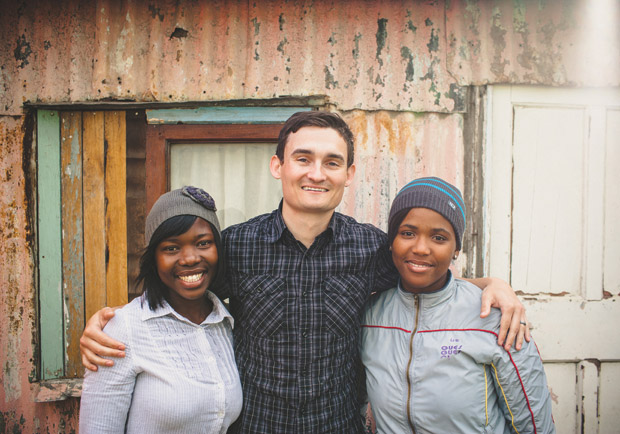
Zoradi isn't rolling his eyes anymore. Today, he's founder and director of These Numbers Have Faces, a nonprofit that provides college scholarships for students in South Africa, Rwanda, and soon Uganda. Zoradi, 30, discovered the need while on a service project in South Africa in 2006, when he met several bright students who wanted to go to college but couldn't afford it. Zoradi remembers thinking, This is injustice, and I have to do something about it.

After returning to the United States, Zoradi felt God's prodding one day. "Suddenly, bam, it hit me," he says. "God was saying, 'Are you going to deny opportunities to others that you demand for yourself?' It wasn't a feeling of guilt. It was a feeling of empowerment, responsibility, and clarity of my role in the world."

Question & Answer

I hear there was a particular student in South Africa who got to you.

Xolani was graduating in the top five of his class. He wanted to study accounting and be the first in his family to go to college, but they were very poor. He told me, "I've worked so hard to get to this place, and now I have nothing." That was sobering. [Xolani later received one of the first scholarships.]

Describe the work of These Numbers.

We empower young people around the world to become leaders and to change their countries from the inside out. And we do it by providing college scholarships for young people who would never have a chance to go to college. But the scholarship isn't free: our students have to do 50 hours a year of community service, and they have to commit to give one year of tuition back into the program.

You give scholarships to students of all faiths. Why?

South Africa is ethnically diverse, and a few dozen Muslims apply for scholarships every year. Our director in South Africa saw it as a remarkable opportunity to reach Muslim students in ways that no one else can. For example, we're often the first Christians who've ever been in their homes. Two of our female students, a Christian and a Muslim, have become very good friends. In a country where there's been so much division, this is huge stuff. This is God's light breaking in, in powerful ways.

What's next for These Numbers?

We've given out 20 scholarships in South Africa and five in Rwanda, where we just started this year. We're looking at five in Uganda for next year, and we're hoping to then increase those numbers in the coming years. We'd love to do even more countries. That's our vision.

More: TheseNumbers.org, JustinZoradi.com

Hometown: Portland, Oregon

Family: Trisha (wife)

Church: Imago Dei, Portland

Reading now: The Empathic Civilization, by Jeremy Rifkin; The War of Art, by Steven Pressfield

On your iPod: Bon Iver, Alkaline Trio, Justin Bieber

Favorite movie: Fight Club

Favorite Bible verse: 1 John 3:18

Favorite website: The Atlantic

Your hero: My dad and Nelson Mandela

What makes you laugh?: My wife

Also in this issue

The CT archives are a rich treasure of biblical wisdom and insight from our past. Some things we would say differently today, and some stances we've changed. But overall, we're amazed at how relevant so much of this content is. We trust that you'll find it a helpful resource.

Cover Story

50 Women You Should Know

Excerpt

How We Hide Our Suffering

Tullian Tchividjian

Downton Abbey's Real Legacy

The Yes and No of Healing

Sharon L. Lewis

News

Uganda Tells 1 Million Couples: You're Not Really Married

Isaiah Mbuga in Kampala

Review

The Foreign Mission Field Two Minutes Away

Jeff Haanen

News

How Not to Care for Widows

Sarah Eekhoff Zylstra

'Once Upon a Time:' When Pagans Get Real

Joy Craun

News

Christian Colleges Try Massive Online Courses

Melissa Steffan

Review

The Love We Dare Not Ignore

Love Isn't Easy in Man Camp Ministry

Ruth Moon in Williston, North Dakota

Is It Stealing From God to Split Your Tithe Between the Church and Other Charities?

Gary Moore, Amie Streater, and Douglas LeBlanc

How to Eat, Play, Love—And Do Other Christian Acts

Interview by R.M. Stone

Ajith Fernando: On the Anvil of Suffering

Tim Stafford

News

Why Churches Worship Illegally—In Paris

Allison J. Althoff

News

Opening the Adoption Files

Ken Walker

Wilson's Bookmarks

John Wilson

The Bonds of Freedom

Roger Olson

Review

Born to Sing: No Plan B

Josh Hurst

Review

Review: Finding God

Matt Reynolds

Review

Review: The Gentle Giant of Dynamite Hill

Matt Reynolds

My Top 5 Books on The Cold War

Paul Kengor

How Books Helped Save My Soul

Editorial

Abusing the Megaphone

A Christianity Today Editorial

Letters to the Editor

The Regnerus Affair

News

Is Megachurch Worship Addictive?

Compiled by Ruth Moon

News

Quotation Marks

News

Go Figure

The Spiritual Sex

A Women's Issue

News

Gleanings

Compiled by CT Staff

The Confessions of Scott Stapp

Mark Moring

View issue

Our Latest

Worship, Bible Studies, and Restoration in South Korea’s Nonprofit Prison

Jennifer Park in Yeoju, South Korea

Somang Prison, the only private and Christian-run penitentiary in Asia, seeks to treat inmates with dignity—and it sees results.

News

‘I’m Not Being Disrespectful, Mama. I Just Don’t Understand.’

America’s crisis of reading instruction is by now well-known. But have you checked on your kid’s math skills lately?

The Bulletin

Sunday Afternoon Reads: Lord of the Night

Finding God in the darkness and isolation of Antarctica.

The Russell Moore Show

Why Do Faithful Christians Defend Harmful Things?

Russell answers a listener question about how we should perceive seemingly harmful political beliefs in our church congregations.

The Complicated Legacy of Jesse Jackson

Six Christian leaders reflect on the civil rights giant’s triumphs and tragedies.

News

The Churches That Fought for Due Process

An Ecuadorian immigrant with legal status fell into a detention “black hole.” Church leaders across the country tried to pull him out.

The Bulletin

AI Predictions, Climate Policy Rollback, and Obama’s Belief in Aliens

Mike Cosper, Clarissa Moll, Russell Moore

The future of artificial intelligence, Trump repeals landmark climate finding, and the existence of aliens.

Apple PodcastsDown ArrowDown ArrowDown Arrowarrow_left_altLeft ArrowLeft ArrowRight ArrowRight ArrowRight Arrowarrow_up_altUp ArrowUp ArrowAvailable at Amazoncaret-downCloseCloseEmailEmailExpandExpandExternalExternalFacebookfacebook-squareGiftGiftGooglegoogleGoogle KeephamburgerInstagraminstagram-squareLinkLinklinkedin-squareListenListenListenChristianity TodayCT Creative Studio Logologo_orgMegaphoneMenuMenupausePinterestPlayPlayPocketPodcastprintRSSRSSSaveSaveSaveSearchSearchsearchSpotifyStitcherTelegramTable of ContentsTable of Contentstwitter-squareWhatsAppXYouTubeYouTube